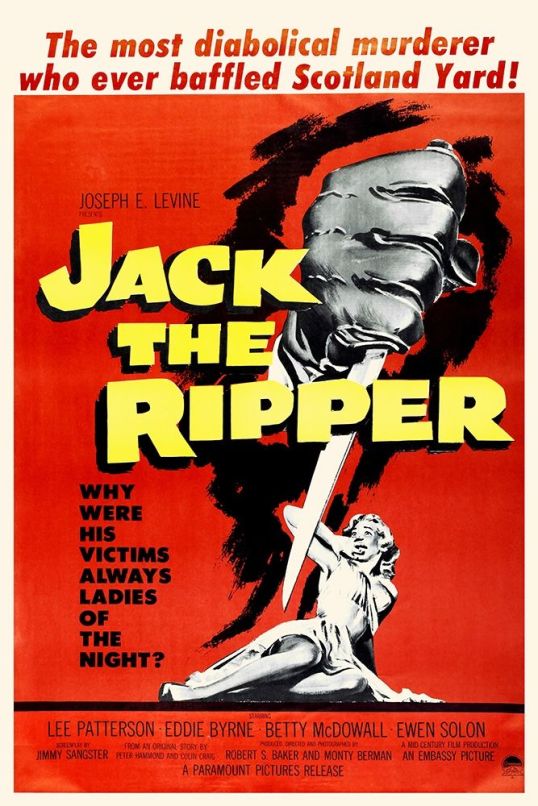
October True Crime: Jack The Ripper (dir by Monty Berman and Robert S. Baker)


The year is 1888 and London is a city in fear.

A mysterious, cloak-wearing serial killer know as Jack The Ripper is stalking the fog-strewn streets and killing prostitutes after asking them if they know the whereabouts of Mary Clark.  The newspapers are full of stories about the murders and editorials condemning the failure of Scotland Yard to capture the killer.  The citizens of London’s Whitechapel district are resorting to vigilante justice and any stranger is liable to be accused of being the Ripper.

When an American policeman named Sam Lowry (Lee Patterson) shows up in Whitechapel, he is accosted by a group of suspicious citizens.  Fortunately, before one of them can stab Sam, he’s saved by his old friend, Scotland Yard’s Inspector O’Neill (Eddie Byrne).  Sam explains that he’s come to London to not only help his old friend O’Neill catch the killer but to also study how the city of London has responded to the horror of the Ripper’s crimes.  O’Neill introduces Sam to both the world weary coroner, Sir David Rogers (Ewen Solon), and to Anne Ford (Betty MacDowell), the liberal-minded ward of Dr. Tranter (John Le Musurier).  As Anne shows Sam around London and speculates about why the Ripper has managed to avoid being caught by the police, O’Neill tries to discover the Ripper’s identity before he can strike again.

As you may have guessed from the plot description, this 1959 film doesn’t exactly stick to the historical fact when it comes to the murders of Jack the Ripper.  For instance, the names and the number of victims have been changed and, needless to say, the NYPD didn’t loan any of its detectives to Scotland Yard.  Then again, there’s very few films about Jack the Ripper that actually stick to the facts of the case.  (Murder By Decree came perhaps the closest, though it still insisted on pushing the ludicrous Royal Ripper theory.)  When one watches a Jack the Ripper film, it’s with the understanding that the story is probably going to be fictionalized.  Considering that there’s probably no chance of the Ripper’s identity ever being conclusively established, it’s to be expected.

As for the film itself, it actually has quite a few effective moments.  The heavy fog and the black-and-white cinematography creates the properly ominous atmosphere and the murders themselves are surprisingly brutal for a film from 1959, leaving no doubt that this film’s Ripper is a cruel sadist regardless of what other motives he may have.  The film itself ends with a properly macabre twist.  Patterson, Byrne, and MacDowell aren’t particularly interesting in the lead roles (and Patterson’s pompadour looks a bit ludicrous on a Victorian-era policeman) but the suspects, victims, and witnesses are all well-played by a cast of very British character actors.

There are apparently several versions of Jack the Ripper out there.  Though the film was a British production, it was filmed with an eye towards the international market and, as a result, there were several different edits depending on what the film could get away with in each country.  Apparently, one version actually switched from black-and-white to color whenever blood was spilled and certain European countries got a version that featured a few fleeting moments of nudity.  The version edited for American audiences, not surprisingly, doesn’t feature any of that but it’s still a watchable and entertaining Jack the Ripper film.

One final note: my personal opinion is that Jack the Ripper was some guy that no one has ever heard of.  He was probably not a doctor.  I doubt he was a Freemason.  He certainly was not a part of a Royal conspiracy or any of that other nonsense.  He may have been a butcher but it’s just as possible that he could have been a hatmaker or a carriage driver or a petty criminal who paid for his drinks through mugging.  He was probably never suspected at the time and I imagine he died without ever telling anyone what he had done.  People find comfort in conspiracies and elaborate cover-ups but often, the simplest solution is the correct one.

(That said, every time that Jeff and I go to London, we do the Jack the Ripper walking tour.  It’s always interesting to hear the weird theories that people come up with.)
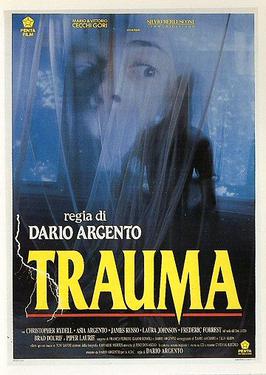
The Films of Dario Argento: Trauma


In 1993’s Trauma, Dario Argento tells a story of giallo horror, complete with a killer who wears black gloves, a camera that stalks through the streets of a rainy city, and plenty of eccentric red herrings.  The story is set and was filmed in Minneapolis, Minnesota, making this one of the two Argento films to be completely shot in America.

Trauma was also the first of Argento’s films to star his daughter Asia Argento.  Asia, who was 16 at the time of filming, plays Aura Petrescu, the daughter of Adriana (Piper Laurie) and Stefan (Dominique Serrand).  Aura is a bulimic drug addict, with track marks up and down her arms.  Having recently escaped from a mental hospital run by the eccentric Dr. Judd (Frederic Forrest), Aura is preparing to jump off a bridge and end her life when she’s grabbed by David (Christopher Rydell).  David works as a headline writer and an artist for a local TV news station.  David is also a recovering addict who takes sympathy on Aura and buys her breakfast.  Aura thanks David by stealing his wallet and running out of the restaurant.

After being  caught by the police, Aura is then returned to her home, a baroque mansion where Adriana works as a fake psychic.  When Aura arrives, Adriana is preparing for a séance.  She’s been hired to contact the spirit of a victim of The Head Hunter, a serial killer who has been chopping off people’s heads in Minneapolis.  As a storm rages outside, Aura again flees from the house.  Stefan and Adriana chase after her.  Soon, while a terrified Aura screams in the rain (in a scene that will remind some of Asia’s mother, Daria Nicolodi, freaking out at the end of Tenebrae), the Head Hunter is holding up what appeas to be the heads of her parents.

Terrified for her life, Aura goes through David’s wallet, finds his number, and calls him.  After setting Aura up at his house, David investigates who is chasing her and how those people are connected to The Head Hunter.  David also falls in love with Aura and Aura falls for him.  Unfortunately, as so often happens in the films of Dario Argento, the world is full of people who don’t care how in love two people are.  The people who are after Aura are determined to get her and if that pushes David back into the world of drug abuse, so be it.

Trauma is middle-of-the-road Argento, featuring some scenes that are touched with genius and other scenes that just feel a bit bland.  The cast is an interesting mix of veteran performers like Piper Laurie, Frederic Forrest, and Brad Dourif and younger actors like Christopher Rydell and Asia Argento.  Dario Argento is known for being a director who prefers for his actors to come in, hit their marks, and deliver their lines with a minimum amount of fuss and he’s complained about American method actors (like Tenebrae’s Anthony Franciosa, with whom Argento had a notoriously difficult relationship) who want to discuss every little detail of their character and their performance.  One can only imagine how he handled working with actors as outspoken and creative as Laurie, Forrest, and Dourif.  It must be said that those three actors all give memorable performances but none of them seem to be acting in the same film as Rydell and Asia Argento.  Rydell and Asia give rather earnest and straight-forward performances while Laurie, Forrest, and Dourif are all a bit more eccentric in the way they interpret their characters.  Piper Laurie, in particular, rejects subtlety and delivers her lines with all of the melodramatic force she can summon.  (It should be said that this is absolutely the right approach for the character that she’s playing.)  That said, it’s Fredric Forrest who truly seems to be on a different planet from everyone else, giving a performance that can only be described as weird.  Again, much as with Laurie’s self-aware melodrama, Forrest’s approach works well enough for his odd character, who I assume was named for the Dr. Judd who appears in Cat People.

The most controversial aspect of the film was the casting of Asia Argento as Aura, with some complaining of nepotism and others accusing Dario of exploiting his own daughter.  Personally, I think Asia does a perfectly acceptable job in the lead role, even if it’s obvious that she still had room to develop as an actress.  At the time the film was made, Asia was herself bulimic and the film’s most powerful scenes are the ones dealing with Aura’s own fragile sense of self-worth.  Along with being hunted by a serial killer and having lost her entire entire family, Aura is also an outsider in America.  The film paints a portrait of a society that doesn’t care about those living on the fringes.  The only person that Aura has to look out for her is David, himself a former resident of the fringe.  Christopher Rydell gives a good performance of David, playing him as someone who is trying to do the right thing and protect the victimized, even at the risk of his own sobriety.

(That said, there is one scene in which David receives a panicked phone call from Aura and Rydell’s underreaction suggests that the actor was not informed of just how desperate Asia Argento would sound when she later dubbed in her part of the conversation.)

Argento’s camera glides down dark hallways and through the streets of the city.  He films Minneapolis in the same way that many directors would film New Orleans and, as such, the film becomes a vision of Middle America through European eyes.  Because there’s a few issues with pacing and some clunky dialogue that was probably due to the Italian script being translated into English, Trauma is not Argento’s best.  It’s middle-of-the-road Argento but it remains intriguing, nonetheless.

The (Reviewed) Films of Dario Argento:

  1. The Bird With The Crystal Plumage
  2. Cat O’Nine Tales
  3. Four Flies on Grey Velvet
  4. Deep Red
  5. Suspiria
  6. Inferno
  7. Tenebrae
  8. Phenomena
  9. Opera
  10. Two Evil Eyes

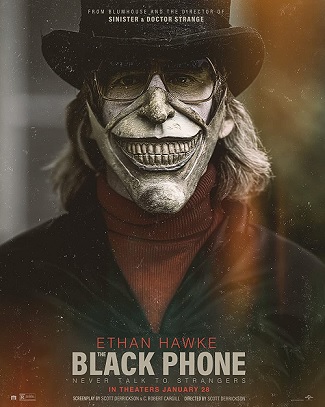
Horror Film Review: The Black Phone (dir by Scott Derrickson)


“Arm like a mint!” a character exclaims at a key moment in 2021’s The Black Phone and I’ll admit right now that, when I heard that line, I rolled my eyes so violently that I’m lucky that I didn’t lose one of them.

It’s one of those lines that reminds us that we’re watching a movie that’s based on a short story and that the dialogue that works in a piece of literature can often sound awkward and forced when heard on film.  It’s a line that, at least for a few moments, took me right out of the movie’s reality and reminded me that I was watching was indeed just a movie.

There’s actually a few moments like that in The Black Phone but, fortunately, there’s more than enough that works about this movie to make up for what doesn’t work.

Taking place in a Denver suburb in 1978, The Black Phone deals with the evil activities of a serial abducted and murderer who is known only as The Grabber (Ethan Hawke).  The Grabber (who really should demand a better nickname) has spent years grabbing children off of the street and then holding them prisoner in his basement before killing them.  The Grabber drives a van and he usually wears a mask.  The mask is creepy but it also tells us something about The Grabber’s personality.  Obviously, when he talks the kids into getting into his van (or getting close enough for him to grab them), the Grabber can’t wear his mask so he’s not wearing the mask so he won’t be identified.  Instead, he wears the mask as perhaps a way to keep his “normal” life separated from his life as The Grabber.  Maybe that’s how this middle-aged man justifies being everyone’s worst nightmare.  Perhaps he tells himself that he’s not responsible for what he does when he puts on the mask.  Once he puts on the mask, anything bad that happens is the fault of The Grabber.

The Grabber’s latest victim is Finney (Mason Thames).  While Finney waits in the basement, his father (Jeremy Davies) struggles with his own alcoholism and his sister, Gwen (Madeleine McGraw), tries to get someone — anyone — to take her psychic visions seriously.  Gwen is determined to find and rescue her brother but, early on, the audience realizes that only Finney can save himself.  Fortunately, Finney has some help in the form of the ghosts of the Grabber’s other victims, all of whom call Finney on a black phone in the basement.  They offer Finney advice on how both to survive and how to fight against The Grabber.  Some of the ghosts are angry.  Some of them are surprisingly cheerful.  All of them are understandably eager to help Finney fight their murderer.

It’s an effective film, even if it does feel a bit overlong.  The film is based on a short story and it’s hard not to feel that the story would have been better served by a 30-minute short film than an obviously extended feature film.  That said, The Grabber is a genuinely creepy villain and the film leaves you feeling as if anyone in the film could easily become his next victim if Finney doesn’t figure out a way to get out of that basement.  Interestingly, by casting the handsome Hawke as a child abducted and murderer and the nervous Jeremy Davies as an imperfect father who wants to do better, the film challenges our assumptions about both characters.  The Black Phone is a film that effectively captures the terror of everyday life.

Horror Film Review: White Zombie (dir by Victor Halperin)


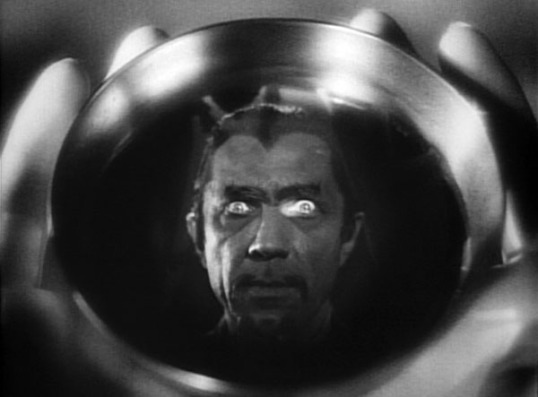
In the 1932 film, White Zombie, Bela Lugosi plays one of his most evil characters.

Lugosi is “Murder” Legendre, a voodoo master who lives on the island of Haiti.  He owns a sugar cane mill, one that has an ever-growing amount of workers.  All of Legendre’s workers do their work without complaint.  Actually, they work without talking at all.  Even when one of them falls to his apparent death, the rest continue to work as if they didn’t even notice.  Legendre has made himself into a wealthy and feared figure because everyone knows that he has an army of zombies who serve him.  He’s not only evil but he’s also someone who enjoys being evil and causing as much trouble as possible.  And yet, because his magic is powerful, the island’s rich plantation owners often pay him for favors.

Among those who are willing to pay Murder for his services is Charles Beaumont (Robert W. Frazer), a plantation owner who is in love with Madeleine Short (Madge Bellamy) and jealous of her fiancé, Neil Parker (John Harron).  Charles wants Madeleine to love him so Murder gives Charles a potion to slip into Madeleine’s drink.  When Madeleine drinks the potion, she appears to die.  After her funeral, Charlies and Murder break into her crypt and retrieve Madeleine.  Madeleine is now in a state of limbo, not quite alive but also not quite dead.  She can still play the piano but she cannot speak and she stares straight ahead with a blank look in her eyes.  She is now one of Murder’s zombies.  Needless to say, Charles isn’t happy about this and neither is Neil.

Now, one thing I should make clear is that the zombies in White Zombie are more like the zombies of Haitian mythology than the zombies that one would expect to find in a George Romero film.  The zombies in White Zombie do not eat human flesh.  They’re not in a process of decay.  They are not immortal.  These zombies are not the walking dead.  Instead, they’re brainwashed victims who have been turned into slaves by Murder and his magic potions.  Murder uses them to punish his enemies and to work in his mill.  As I said at the start of this review, Murder Legendre is one of Bela Lugosi’s most evil characters.

White Zombie is usually considered to be the first feature length zombie film.  Though it was released 91 years ago and watching it requires a bit of adjustment on the part of modern viewers, White Zombie still creates and maintains a memorable atmosphere of ominous magic and growing menace.  The scenes in Murder’s sugar cane mill are especially strong, with Murder’s zombies silently marching from one task to another.  The acting is a bit inconsistent.  Watching the film, it’s easy to see that it was made at a time when Hollywood was still making the transition to sound.  But the important thing is that Bela Lugosi is absolutely fantastic as the menacing Murder Legendre, smirking as he casts his spell and, in one of the film’s most famous scenes, walking straight towards the camera with an evil gleam in his eyes as if he’s coming straight for the audience.  Flaws aside, White Zombie features one of Bela Lugosi’s best performances and is more than worth watching for that reason alone.

Horror On The Lens: Silent Night, Bloody Night (dir by Theodore Gershuny)


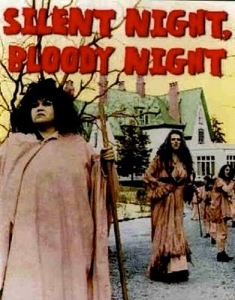
The 1974 film Silent Night, Bloody Night is an oddity.

On the one hand, it’s pretty much a standard slasher film, complete with a menacing mansion, a horrible secret, a twist ending, and John Carradine playing a mute newspaper editor.

On the other hand, director Ted Gershuny directs like he’s making an underground art film and several of the supporting roles are played by actors who were best known for their association with Andy Warhol.

Personally, I like Silent Night, Bloody Night.  It has a terrible reputation and the film’s star, Mary Woronov, has gone on record calling it a “terrible movie” but I like the surreal touches the Gershuny brought to the material and the sepia-toned flashbacks have a nightmarish intensity to them.  The film makes no logical sense, which actually makes it all the more appealing to me.  As the saying goes, your mileage may vary.

Watch and decide for yourself!

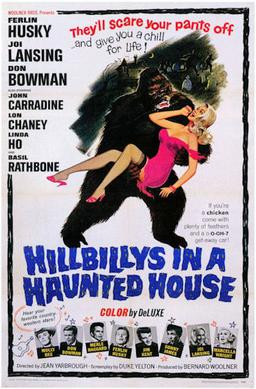
Horrific Insomnia File #63: Hillbillys in a Haunted House (dir by Jean Yarbrough)


What’s an Insomnia File? You know how some times you just can’t get any sleep and, at about three in the morning, you’ll find yourself watching whatever you can find on cable or streaming? This feature is all about those insomnia-inspired discoveries!

If you were having trouble getting to sleep last night, you could have jumped on Tubi and watched a film from 1967 called Hillbillys In A Haunted House and it would have put you right to sleep.

Hillbillys In A Haunted House has some big names in the cast but, unfortunately, none of them get to do much.  Instead, the main characters are country singer Woody Wetherby (Ferlin Husky), his partner Boots Malone (a very pointy Joi Lansing), and their road manager, Jeepers (Don Bowman).  When we first see them, they’re driving to Nashville and even worse, they’re singing about the fact that they’re driving to Nashville.  They’re scheduled to perform in “the Jamboree.”  However, after they’re delayed by a bunch of cops having a shoot out with two spies, Boots announces that Jeepers is a nervous wreck and that they really need to stop and rest for the night.

Unfortunately, they’re in the town of Sleepy Junction and there’s not much to Sleepy Junction because everyone in town recently moved to Acme City.  As a result, there are no hotels or motels in Sleepy Junction.  But there is a big, deserted mansion that is rumored to be haunted.  With a storm approaching and Jeepers’s nerves even more on edge then before, they head to the mansion.  At the mansion Woody sings a song and then some neighbors stop by and they all sing another song.  Are you getting the feeling that there’s a lot of singing in this movie?  You’re right, there is.  It’s all studio-perfect singing too.  Woody lip-syncs like a pro.

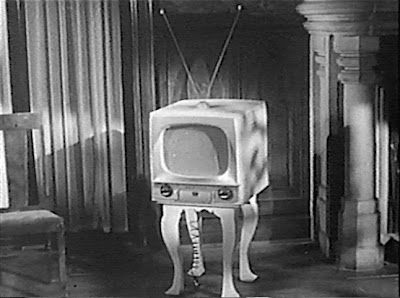
Anyway, the mansion is also being used by four spies, played by Basil Rathbone, John Carradine, a hulking Lon Chaney, Jr., and Linda Ho.  The four of them live in the surprisingly clean basement of the mansion.  Living with them is a gorilla.  The spies planning on stealing a formula for rocket fuel from Acme City but first they need to do something about the hillbillys that are currently in the haunted house.  Carradine and Rathbone try to scare them out with some remote control ghost action.  Jeepers may be a coward and Woody may be a redneck and Boots may have atrocious taste in clothes but all three of them are Americans and they’re not going to stand for any spy nonsense!

If you think it sounds like this was stupid, you’re right.  Carradine and Rathbone both struggle to maintain a straight face.  Poor Lon Chaney Jr. often appears to be out of breath.  There’s way too much singing.  Seriously, couldn’t the hillbillies have just driven another few miles to Acme City and found a hotel?

The film will put you to sleep, though.  It has its uses.

Previous Insomnia Files:

  1. Story of Mankind
  2. Stag
  3. Love Is A Gun
  4. Nina Takes A Lover
  5. Black Ice
  6. Frogs For Snakes
  7. Fair Game
  8. From The Hip
  9. Born Killers
  10. Eye For An Eye
  11. Summer Catch
  12. Beyond the Law
  13. Spring Broke
  14. Promise
  15. George Wallace
  16. Kill The Messenger
  17. The Suburbans
  18. Only The Strong
  19. Great Expectations
  20. Casual Sex?
  21. Truth
  22. Insomina
  23. Death Do Us Part
  24. A Star is Born
  25. The Winning Season
  26. Rabbit Run
  27. Remember My Name
  28. The Arrangement
  29. Day of the Animals
  30. Still of The Night
  31. Arsenal
  32. Smooth Talk
  33. The Comedian
  34. The Minus Man
  35. Donnie Brasco
  36. Punchline
  37. Evita
  38. Six: The Mark Unleashed
  39. Disclosure
  40. The Spanish Prisoner
  41. Elektra
  42. Revenge
  43. Legend
  44. Cat Run
  45. The Pyramid
  46. Enter the Ninja
  47. Downhill
  48. Malice
  49. Mystery Date
  50. Zola
  51. Ira & Abby
  52. The Next Karate Kid
  53. A Nightmare on Drug Street
  54. Jud
  55. FTA
  56. Exterminators of the Year 3000
  57. Boris Karloff: The Man Behind The Monster
  58. The Haunting of Helen Walker
  59. True Spirit
  60. Project Kill
  61. Replica
  62. Rollergator

Cleaning Out The DVR: The Neighbors Are Watching (dir by Haylie Duff)


“Your neighbors will always have your back,” Betsy (Elena Kent) tells Amy (Kabby Borders) while welcoming her to the neighborhood.

But will they?

That’s the question posed by the Lifetime film, The Neighbors Are Watching.  At first, it certainly seems like the neighbors are supportive of Amy as she starts her new job as a teacher and she tries to restart her life after ending a bad marriage.  And it certainly seems like a wonderful neighborhood.  Amy’s even got a surprisingly big house, considering that she’s a teacher.  I guess she lives in one of those states where teachers get paid a decent salary and don’t have to hand over half of it in union dues.  Either that or this is just another example of Lifetime understanding that it’s more fun to watch people in big houses than to watch people in small houses.

With the support of the neighborhood, Amy starts to date Henry (Will Holland), the guy who has just moved in across the street from her.  And, with the exception of one skeevy moment where he glances up at Amy’s bedroom window while she’s getting dressed, Henry seems like a great guy.  He says that he owns a home repair business and he even volunteers to fix her back door for her.

But strange things are happening and soon, the neighbors will turn against Amy.  It starts when someone leaves Amy strange messages and newspaper clippings about how her previous marriage ended because she killed her abusive husband in self-defense.  Then Henry starts to act strangely and Amy even thinks that she sees him at his house with another woman.  When Amy confronts him, Henry gaslights her and claims that she’s obviously seeing things.  All of the neighbors come outside to watch as Amy and Henry argue.  And when Amy thinks that she sees Henry putting a dead body in the trunk of his car, the police react as if Amy is the one who did something wrong by calling them.  Is Amy truly losing it, as Henry suggests, or is someone trying to frame Amy and make her look bad?  And will Amy’s neighbors, including Betsy, have her back?

The Neighbors Are Watching was one of those Lifetime movies that got better as it went along.  The first half, which featured Amy and Henry as a couple, featured a bit too much overwritten, cutesy flirting and a few too many scenes of Betsy trying to convince everyone to drink wine.  But, once it became apparent that Henry was a bad guy who was trying to make everybody think that Amy was going insane, the film became much more entertaining.  In fact, all of the cutesy dialogue made sense once you understood that Henry was trying to create the impression of a movie-perfect romance.  There’s a good twist towards the end and Lifetime regular Kabby Borders is likable and sympathetic as Amy.  This is the third film that Haylie Duff has directed for Lifetime and she definitely understands the importance of embracing the melodrama.  Despite the rough start, I enjoyed watching The Neighbors Are Watching.

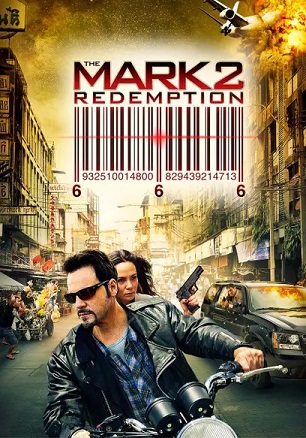
October Positivity: The Mark: Redemption (dir by James Chankin)


2013’s The Mark: Redemption picks up almost immediately where The Mark left off.

The world is in chaos as millions of people have mysteriously vanished.  The economy is collapsing.  Crime is out of control.  Cities are burning.  The G20 Economic Summit is meeting in a surprisingly small conference room in Berlin.  The world looks to a mysterious investor named Phillyp Turk (Ivan Kamaras) for leadership.  It does this despite the fact that everything about Phillyp — from the way he speaks to the way he looks to the way that he spells his name — would seem to indicate that he’s a crazy supervillain.  Was the world not paying attention to all of those comic book movies?  Do they not know a cartoonishly evil businessman when they see one?

In Bangkok, Mr. Pike (Gary Daniels) and his men are still searching for Chad (Craig Sheffer) and Dao (Sonia Couling).  Chad still has the biometric chip — the Mark of the Beast, as it were — in his bloodstream and Pike is determined to capture Chad and somehow get the chip out.  In between thinking about all of their friends and family who have vanished, Chad and Dao try to find the inventor of the chip so that he can hopefully remove it.  Along the way, Dao talks about her younger sister, who has disappeared into Bangkok’s underworld but who, in one of those coincidental twists that boggles the imagination, also happens to have been an early test subject for the chip that is currently in Chad’s blood stream!

As for Cooper (Eric Roberts), he’s being held captive by Turner’s men.  Just as in the first film, Cooper proves himself to be a clever manipulator.  The only difference is that, in the sequel, Cooper finally understands that he was one of the bad guys and he doesn’t feel quite right about that.  Cooper finds an ally in Warren (Johann Helf), one of Mr. Pike’s less bloodthirsty associates.

The Mark: Redemption is quite an improvement on the original film.  It helps that, in the sequel, the action is opened up as opposed to solely taking place in one claustrophobic location.  Mr. Pike and his men chase Chad and Dao all over Bangkok while Turk flies from New York to Berlin and back again.  If the first film felt confined, the second film truly does capture the feel of a global catastrophe.  As well, Craig Sheffer’s performance here is far more lively than in the first film.  In the first film, he seemed as if he had mentally checked out.  In the second film, he actually makes some sort of effort to portray the character.  Of course, the film is ultimately stolen by Eric Roberts, who seems to be having a blast playing the sardonic Cooper.  Roberts keeps the film lively and things are all the better for it.

The Mark: Redemption ends with the promise of a third film but, as far as I know, it was never made.

Previous Eric Roberts Films That We Have Reviewed:

  1. Star 80 (1983)
  2. Blood Red (1989)
  3. The Ambulance (1990)
  4. The Lost Capone (1990)
  5. Love, Cheat, & Steal (1993)
  6. Love Is A Gun (1994)
  7. Sensation (1994)
  8. Dark Angel (1996)
  9. Doctor Who (1996)
  10. Most Wanted (1997)
  11. Mr. Brightside (2004)
  12. Six: The Mark Unleased (2004)
  13. Hey You (2006)
  14. In The Blink of an Eye (2009)
  15. Enemies Among Us (2010)
  16. The Expendables (2010) 
  17. Sharktopus (2010)
  18. The Dead Want Women (2012)
  19. Deadline (2012)
  20. The Mark (2012)
  21. Miss Atomic Bomb (2012)
  22. Lovelace (2013)
  23. Self-Storage (2013)
  24. This Is Our Time (2013)
  25. Inherent Vice (2014)
  26. Road to the Open (2014)
  27. Rumors of War (2014)
  28. Amityville Death House (2015)
  29. A Fatal Obsession (2015)
  30. Stalked By My Doctor (2015)
  31. Joker’s Poltergeist (2016)
  32. Prayer Never Fails (2016)
  33. Stalked By My Doctor: The Return (2016)
  34. The Wrong Roommate (2016)
  35. Dark Image (2017)
  36. Black Wake (2018)
  37. Stalked By My Doctor: Patient’s Revenge (2018)
  38. Clinton Island (2019)
  39. Monster Island (2019)
  40. Seven Deadly Sins (2019)
  41. Stalked By My Doctor: A Sleepwalker’s Nightmare (2019)
  42. The Wrong Mommy (2019)
  43. Exodus of a Prodigal Son (2020)
  44. Free Lunch Express (2020)
  45. Her Deadly Groom (2020)
  46. Top Gunner (2020)
  47. Deadly Nightshade (2021)
  48. Just What The Doctor Ordered (2021)
  49. Killer Advice (2021)
  50. The Poltergeist Diaries (2021)
  51. A Town Called Parable (2021)
  52. My Dinner With Eric (2022)

Late Night Retro Television Reviews: Check It Out 1.4 “X-Ray Marks The Spot”


Welcome to Late Night Retro Television Reviews, a feature where we review some of our favorite and least favorite shows of the past!  On Saturdays, I will be reviewing the Canadian sitcom, Check it Out, which ran in syndication from 1985 to 1988.  The entire show is currently streaming on Tubi!

This week, it’s physical time!

Episode 1.4 “X-Ray Marks The Spot”

(Dir by Stan Harris, originally aired on October 23rd, 1985)

Oh, the drama never ends in Canada!

Cobb’s has just switched over to a new insurance plan and all of the employees are going to have to get physicals to make sure that they qualify.  That means that everyone has to come in on Monday, regardless of whether it’s their day off or not.  (Since the store only seems to have 3 cashiers and one stockboy, I’m not sure they can afford to give anyone a day off.)  The physicals will be done right in the store parking lot which …. wait, what?  That’s a bit intrusive.

(Actually, I assume they have some sort of mobile doctor’s office but that’s never really made clear in the dialogue, which led me to imagine all of the characters getting poked and prodded in the middle of the parking lot.)

That’s not the only problem!  Murray the stock boy put a lot of cans in the storeroom and, after a torrential downfall, he discovered that he put all the cans underneath a hole in the roof.  The cans got wet and their labels peeled off.  Christian suggests just donating the cans to charity and taking a tax write-off but Howard points out that some of the cans were dog food.  “Okay,” Christian says, “give it to poor people with pets!”

(Actually, that’s not a bad idea….)

Howard, himself, is upset because he nearly got run over by a kid driving a car.  He tells Edna that he hates kid.  Howard picks the worst time to tell Edna this because, before coming to work, she took a pregnancy test and guess who is expecting?

Edna tries to keep the news from Howard until he’s in a better mood but then she discovers that she’ll have to get an x-ray at the physical and, when she tells Howard why she can’t do that, Howard is not particularly enthused about the prospect of being a father.  Edna gets upset and leaves Canada for Florida!

How will all of this get resolved?

Well, the mystery of the cans is solved when Murray gets them ex-rayed.  I’m not sure if it’s a good idea to sell people food that was just zapped with radiation but whatever.

Edna leaving is temporarily resolved when Marlene, who is the best character on the show, become Howard’s new secretary.  Marlene turns out to be so bad at her job that I was cringing at my own memories of my first day as an administrative assistant.  Fortunately, Edna returns and takes her old job back.

She also tearfully tells Howard that the test was incorrect and she’s not pregnant.  Edna sits down at her desk, opens the desk drawer, and discovers the stuffed Panda bear that Howard bought while she was gone.  “Awwwwwww!” the studio audience said.  And, I’ll be honest, I said it too.

The first half of this episode really didn’t work for me, largely because both Don Adams and Dinah Christie (in the roles of Howard and Edna, respectively) had a tendency to go BIG in their performances and that pretty much made it impossible for me to really get emotionally involved with their story.  It was a bit too obvious that they weren’t lovers but that they were instead just two actors reciting their lines.  The second half of the episode was a marked improvement, when both Adams and Christie dialing back their performances and actually talking like real human beings.  Shaky start aside, the episode did kind of earn that “awwww” from the audience.

Next week, a contest goes wrong!

Lisa Marie’s Week In Televison: 10/22/23 — 10/28/23


I’ve got so much stuff piling up on the DVR.  I’ll get caught up on it all in November!

Big Brother (24/7, CBS and Paramount Plus)

I wrote about this stupid show over at the Reality TV Chat Blog!  I will be so happy when this season is over.  Every day, I pray for the cancellation of this show.

Check It Out! (Tubi)

I watched the fourth episode of Check It Out! on Friday.  My review will drop in a few hours.

Degrassi Junior High (YouTube)

I wrote about Degrassi Junior High here!

Dragnet (Weekday Morning, MeTV)

I woke up early enough on Monday that, when I turned on television, I found myself watching the episode of Dragnet where Joe Friday served on a review board that was investigating whether a police officer had failed to properly identity himself.  It was not one of the more interesting episodes of Dragnet.

Dr. Phil (YouTube)

On Sunday, I watched an episode of Dr. Phil in which Phil interviewed a woman who shaved her head and faked having cancer.  The woman said that she felt very guilty.  Dr. Phil didn’t buy it.

On Tuesday morning, I watched Dr. Phil talk to a woman who was in an abusive marriage with a total jerk.  Dr. Phil called the jerk a “loud-mouthed bully” but it didn’t really seem to do much good.  Later, on Tuesday evening, I watched an episode about an out-of-control teen named Taylor.  Phil yelled at the parents but he didn’t seem to do much good for Taylor.

On Saturday night, I watched an episode about a disastrous wedding that was still tearing a family apart.  Seriously, it was a really bad wedding.  I think the only solution was for the wife to get a divorce.  “Wow,” Dr. Phil said, in his condescending way.

Gun (Tubi)

I wrote about Gun here.

Highway to Heaven (Tubi)

I wrote about Highway to Heaven here!

The Hitchhiker (YouTube)

I watched several episodes of The Hitchhiker this week, while choosing which ones to feature on the site.  It was a bit of an uneven show but, when it worked, it worked.  I loved Page Fletcher’s super-judgmental monologues.

It’s The Great Pumpkin, Charlie Brown (Apple TV+)

Erin and I watched this classic on Thursday.  Read Erin’s’ thoughts on it here!

Jennifer Slept Here (YouTube)

I wrote about Jennifer Slept Here here!

The Love Boat (Paramount Plus)

I wrote about The Love Boat here!

Nightmare Café (YouTube)

I wrote about Nightmare Café here!

T and T (Tubi)

I wrote about T and T here!

Toy Story Of Terror (Disney Plus)

Erin and I watched this on Thursday, after we watched It’s The Great Pumpkin Charlie Brown.  I love the toys!  This isn’t their best adventure but it’s still nice to see and hear everyone again.

The Vanishing Shadow (Night Flight Plus)

I watched Chapter Three of this serial on Friday night.  In this episode, the invisibility ray was used.

Welcome Back Kotter (Tubi)

I reviewed Welcome Back Kotter here!

Yes Prime Minister (Monday Morning, PBS)

A member of Jim’s cabinet had a plan that he felt would help the economy and reduce unemployment.  Sir Humphrey felt that the cabinet member was a pointless radical and encouraged Jim to ignore him.  This episode featured one of my favorite sources of humor on this show, Jim’s tendency to just agree with whoever last spoke to him.  It feels like a very realistic portrait of the way governments work.