Late Night Retro Television Reviews: Highway To Heaven 1.16


Welcome to Late Night Retro Television Reviews, a feature where we review some of our favorite and least favorite shows of the past!  On Thursdays, I will be reviewing Highway to Heaven, which aired on NBC from 1984 to 1989.  The entire show is currently streaming on Tubi and several other services!

This week, Mark has a near-death experience.

Episode 1.16 “Going Home, Going Home”

(Dir by Michael Landon, originally aired on January 23rd, 1985)

While driving through Oklahoma at night, Mark mentions to Jonathan that they are near the location of his grandfather’s old farm.  Jonathan suggests that they stop off to see the farm and see if any of Mark’s old friends are around but Mark explains that he had no friends when he lived with his grandfather.  As Mark puts it, he was sent to live with his grandfather after his mother died and he spent the whole time complaining about how much he would have rather stayed back in California.  Mark says that his greatest regret is that he never told his grandfather that he loved him.

Awwwww!  That’s so sad!

Suddenly, a cow appears in the middle of the road.  Mark swerves to avoid it and the car ends up in a ditch.  Jonathan, being an immortal angel, is not injured.  Mark, however, hits his head on the steering wheel and goes into a coma.  A local farmer rushes Jonathan and Mark to the town doctor.  When Jonathan tells the comatose Mark that it’s not his time to die, the doctor replies that the time of Mark’s death is up to God.

Yikes!

Mark does eventually wake up.  Feeling much better, he goes for a walk around the town with Jonathan.  Mark is surprised to see that the town has not changed at all since he lived there.  The cars are all vintage.  1930s swing music is playing from the radios.  And, on the bridge near the location of his grandfather’s farm, Mark meets a 9 year-old boy (Sean De Veritch) who is reading a copy of Superman #1.  The boy says that his name is Mark Gordon.

Jonathan explains that Mark has not woken up at all.  He’s still in his coma and now, he’s getting a chance to tell his grandfather that he loves him.  But, Jonathan explains, old Mark cannot reveal his true identity so he’ll have to get Young Mark to say the words.  Good luck with that, seeing as Young Mark is obsessed with going back to Oakland.

Soon, Mark and Johnathan are working on the farm and helping Carl Fred Simms (John McLiam), who is also Mark’s grandfather, keep his land from falling into the hands of a greedy land developer.  To the show’s credit, it doesn’t take much for Old Mark to convince Young Mark to start treating his grandfather with more respect.  Old Mark explains that Young Mark will always regret not appreciating his grandfather and that’s all it takes for Young Mark to shape up.  Young Mark even finds a the location of an underground well but, by that point, old Carl is already on the verge of death.

This is one of those extremely sentimental and earnest episodes that are pretty much this show’s trademark.  It’s not subtle but it is extremely sincere and, as a result, it’s hard not to get caught up in the episode’s emotions.  There’s a lot about this episode that would normally bring out my snarky side but everyone seems to be so committed to the story that they’re telling that one has to appreciate their efforts.

Catching Up With The Films of 2023: Nyad (Dir by Elizabeth Chai Vasarhelyi and Jimmy Chin)


64 year-old swimmer Diana Nyad swimming all the way from Cuba to Florida (and making it on her fifth attempt) is one of those inspiring stories that I totally missed when it happened.  I can’t remember for sure exactly what was going on in my life in 2013 but paying attention to inspirational sports stories was apparently not high on the agenda.

Fortunately, any amazing true story will eventually be turned into a film and that film will eventually premiere on Netflix in time for Oscar consideration.  That’s certainly the case with Nyad, which stars Annette Bening as the title character and Jodie Foster as her best friend and coach, Bonnie Stoll.  The film follows Nyad as she spends four years of her life trying to make it from Cuba and Florida and prove the naysayers wrong.  Along the way, she learns about humility, she learns to value her friends, and she also starts to deal with the various traumas of her youth.

It’s not a bad film.  It may sound like a traditional sports biopic and, in many ways, it is.  The directors are documentarians making their feature debut and they do have a tendency to rely a bit too much on archival footage of network news reporters announcing that Nyad will be making another attempt to make the swim.  The film (and the characters) unquestioning love for Cuba can be a bit hard to take, considering that the story takes place at a time when Raoul Castro was still ruling the country.  (The amount of “Visit Cuba” shirts felt more than a little excessive.  Don’t visit Cuba as long as Jose Daniel Ferrer is being detained.)  That said, the cinematography is gorgeous and the film does a wonderful job of showing just how physically and mentally exhausting Nyad’s accomplishment was.  It’s not just that Diana is physically drained from the experience.  She also occasionally suffers hallucinations as a result of exhaustion and exposure and, often times, she’s unaware of how far along she is in her journey.  While Diana swims, Bonnie and the rest of her team steer her, trying to keep her moving with the unpredictable current.  This is a film that will leave you respecting professional swimmers and their support teams.

The film’s cast does a great job bringing the story to life.  As portrayed in the film, Diana Nyad can be a bit of a pain to deal with and, to her credit, Annette Bening doesn’t try to soften any of the character’s rough edges.  Nyad is a egotistical, grandiose, impractical, demanding, and frequently self-centered and it says a lot of about Bening’s performance that the audience still ends up sympathizing with her and her desire to not be dismissed as obsolete at the age of 60.  That said, the film truly belongs to Jodie Foster and Rhys Ifans, playing Nyad’s coach and her navigator.  While Nyad rails against age and insists that her destiny is to successfully make the swim,  it falls to the characters played by Foster and Ifans to just keep Diana alive.  Foster is the film’s heart, playing Bonnie as a tough but caring coach who understands that, even though they drive each other crazy, she and Nyad are meant to make the journey together.  While the film portrays Nyad’s accomplishment, what it truly celebrates is her friendship with Bonnie.  We should all be so lucky to have a friend and supporter like Bonnie in our lives.

It may not break any new cinematic ground but Nyad still does a good job of telling a worthy story.

Retro Television Reviews: Turn-On 1.2 “Episode Two”


Welcome to Retro Television Reviews, a feature where we review some of our favorite and least favorite shows of the past!  On Thursdays, I will be reviewing Turn-On, which aired on ABC in 1969.  The entire show is currently streaming on YouTube!
After watching and writing about the only aired episode of this show, I thought I was done with Turn-On.

However, after I published last week’s review, my friend Mark informed me that there was a second episode.  It never aired, even though it was listed in the official schedule before the pilot was so universally despised that ABC announced the show’s cancellation before the episode had even ended.  However, the second episode is available on YouTube and …. well, I am a completist.  As much as that first episode gave me a migraine, I felt an obligation to check out the second episode and see what direction that show would have followed if it hadn’t been abruptly canceled halfway through its premiere.

So, with that in mind, let’s take a look at the second episode of Turn-On!

Episode 1.2 “Episode #2”

(Dir by Mark Warren, unaired, though originally scheduled for Febraury 12th, 1969)

The second episode of Turn-On! opens much like the first.  Two computer technicians sit behind the console that will be programming the next 30 minutes.

One of them asks, “What do you think would happen if (George) Wallace had been elected president?”

“The Mason-Dixon Line would now be the Canadian border,” the other replies.

(The joke’s on him.  The Mason-Dixon line moved up to Boston, even without Wallace in the White House.)

The technician turns a key.  Robert Culp and Mel Stewart appear, standing against a white background.

“Why can’t I ever get the girl?” the black Stewart asks.

“There are some things the public isn’t ready for,” the white Culp replies before running off with a young black woman.

A few second later, Culp reappears, sitting behind an anchor desk and sign that reads, “Register communists, not firearms.”  Culp reads a news story, announcing that a man was shot by a “38 caliber communist.”

“Who knows what evil lurks in the hearts of men?” a voice asks.  “I do,” Theresa Graves replies.

A woman plays a trombone while sitting on artificial turf.  “I play even better on grass,” she says.

An astronaut attempts to enter a toilet stall, just for a voice to say, “I’m sorry, you have reached a disconnected toilet.”

A bunch of Klan members sit in a theater and look bored.

Mel Stewart plays with an abacus.

A man with a waxed mustache says that he just read Lady Chatterley’s Lover.  “I’m going right out to buy a greenhouse.”

Mel Stewart is sworn in as “the first black Justice of the Supreme Court.”  (Uhmm …. hello?  Thurgood Marshall anyone?  He’d been on the Court for two years at this point.)  After administering the oath to Stewart, a judge shakes his hand and says, “Congratulations, boy.”  Stewart does a double-take while silly sound effects play.

A cartoon tank rolls by, with a sign that reads, “Go home, everyone!”

“It’s time to Turn-On!” an old lady on a motorcycle declares.

The man with the mustache introduced tonight’s hosts, Robert Culp and France Nuyen.  Culp and Nuyen toss a bomb back and forth.

Mel Stewart paints a Campbell Soup can but is told by a Renaissance art critic that, “You are too ahead of your time.”

An executive has a tantrum at his desk.

A boss is told that his son has been bothering everyone in the office.  “Boys will be boys!” the boss.  “He’s also asking everyone why we don’t have a union!”  “Get rid of him.”

Mel Stewart appears behind a desk, announcing that you should never put “an unqualified man in office just because he’s black.”

A woman in a tattered dress complains that her detergent is hungry.

A cardboard monk carries a sign that reads, “Sanctify Fanny Hill.”

A policeman announces that muggings are down from last year and that the muggers need to try harder.

The man with the waxed mustache appears in a bridal gown and reads a letter from a woman wanting to know why men have not been molesting her like they have her friends.  “Your time will come,” he says, “Wear a tight sweater and hang out in a seedy neighborhood.”

A cardboard priest carries a sign that reads, “Candid Camera Bugs Confessionals.”

Robert Culp appears as a anchorman and says that the Commission’s Report on Civil Disorders is so shocking that another commission has been appointed.

“Money is the only that means anything you!” a wife yells at her husband, “What about love!?”  “I love money,” he replies.

(At this point, Turn-On‘s humor basically just feels like scrolling a neurotic communist’s twitter timeline.)

A blonde woman (who is introduced as being “The Body Politic”) says that she is forgiving the president.

A Southern gentleman says that “We will oppose integration by burning crosses and all other lawful means.”

Robert Culp plays a doctor who tells Mel Stewart that he’s dying and then gives him a cigarette.

“Does your wife believe in the pill?” a voice asks.  “My kids sure don’t.”

“This little piggy went to market,” a cop says as he plays with a corpse’s toes in a morgue.

A naked man (seen from behind) paints a clothed woman.

A cardboard monk carries a sign that asks us to “Pray for Rosemary’s Clooney.”

Hamilton Camp wears a straight-jacket and announces that all public assemblies have been banned in the name of free speech.

Two Depression-era bank robbers rent a car from Robert Culp.

An old woman cut-out carried a sign that reads, “Get a lot when you’re young,” which really isn’t bad advice, to be honest.

The Body Politic woman says that she’s opposed to “unilateral withdrawal.”

“Due to an oversupply, there’s a shortage!” Hamilton Camp declares.

Robert Culp, as the anchorman, says that the city council had to postpone discussion on absenteeism due to a lack of a quorum.

“I got the job!” Mel Stewart tells France Nuyen.  “I thought they didn’t hire people of your race,” Nuyen replies.  Stewart whispers, “I lied.”

“IBM plays monopoly,” reads the sign being carried by a cardboard cut-out.

A psychiatrist tells his patient that it will cost $500 for him to help her break her dependence on her father.  He suggests that she borrow the money from her father.

And it just keeps going and going.  There’s an extended sequence of people having dumb conversations while facing each other nose-to-nose.  At one point a cardboard cut-out carries a sign that announces, “The Wages of Sin Are $2.00.”

Robert Culp brags about how he cured himself of vanity.

And so it goes until eventually, the computer is turned off and the episode ends.

This unaired episode was actually a slight improvement over the episode that actually did air.  A lot of this is because Robert Culp, with his longish hair and snarky delivery, was a better fit for the show’s sensibility than the more straight-laced Tim Conway.  (Conway often seemed confused by his episode’s humor while Culp, on the other hand, comes across as being someone who appreciated a good “grass” joke.)

At the same time, for all the quick cuts and two-line skits, there was an odd blandness to this episode and one could already see the pitfalls that would have appeared if the show hadn’t been canceled.  For all of the show’s attempts to be hip and unpredictable and random, it ultimately all felt a bit formulaic.  By the end of the second episode, the abrupt cuts to people looking shocked or smiling at the camera felt just as hackneyed as the laugh tracks that appeared on other television shows.  What is shocking once is amusing twice and boring the third time.

Anyway, that’s it for Turn-On!  It’s a show that was definitely a product of its time and, as a history nerd, I appreciate it as a time capsule.  But it’s also easy to see why audiences in 1969 were not exactly turned on by Turn-On.

Next week, we’ll start in on a show that aired more than one episode!


Late Night Retro Television Reviews: Monsters 1.15 “The Mother Instinct”


Welcome to Late Night Retro Television Reviews, a feature where we review some of our favorite and least favorite shows of the past! On Wednesdays, I will be reviewing Monsters, which aired in syndication from 1988 to 1991. The entire show is streaming on Tubi.

This week’s episode of Monsters is all about killer worms!

Agck!  Seriously, nothing freaks me out more than carnivorous creatures that slither around.  Obviously, most worms are too small to be dangerous and I assume the same can be sound of most snails.  Still, thought of giant worms bursting out of the ground and eating people …. I mean, obviously, it might make a good film but it’s not something that I would necessarily want to see in person.  If I ever saw something like that happens in my back yard, for instance, I would probably have to move to another house.  That would suck because I like this house.  Seriously, killer worms, stay away!

Anyway, where were we?  Oh yeah, the show….

Episode 1.15 “The Mother Instinct”

(Dir by Bette Gordon, originally aired on February 18th, 1989)

Nelson (Tom Gilory) is a real loser.  He’s a loser in business and a loser in life.  He’s got a gambling addiction and, despite being married to the loyal Sheila (Finn Carter), he simply cannot bring himself to remain faithful to his wife.  Nelson is in debt and desperately needs money.  His original plan is to ask his wealthy mother-in-law (Elizabeth Franz) for the money but she can see straight through him and refuses to give him a cent.

However, Nelson discovers that his mother-in-law has been growing melons in her green house that can provide temporary, superhuman strength.  (Usually, the mother-in-law is confined to a wheelchair but, whenever she drinks the super-powered melon juice, she can walk and literally toss people around her house.)  Nelson wants to steal the melons and sell them.  His mother-in-law refuses to give her permission so Nelson forces Sheila to help him steal them.

What Nelson didn’t expect was that the melons would be protected by carnivorous worms!  Nelson pressures Sheila to discover how her mother-in-law deals with the killer worms but it turns out that his mother-in-law has one last trick up her sleeve.  “Never miss with a mother’s instinct,” Nelson’s mother-in-law says as the episode reaches its tasty conclusion.

This episode suffered from being a bit rushed, which is something that happens when a show attempts to tell an hour-length story in only 20 minutes.  The killer worms were a bit too obviously puppet-like to really be scary but they still had their own silly charm to them.  Sometimes, you just have to be willing to accept that you’re watching a low-budget production and you need to just enjoy it for what it is.  Nelson was so obviously villainous that it made it difficult to believe that even insecure Sheila couldn’t see through him but at least he met his just deserts.

Incidentally, a year after appearing in this episode, Finn Carter starred in a movie that featured slightly more frightening killer worms, Tremors.

Catching Up With The Films of 2023: The Equalizer 3 (dir by Antoine Fuqua)


Robert McCall (Denzel Washington), the Equalizer, is killing people again.

This time, he goes to Sicily, where he invades a local winery, kills all of the guards, and then shoots the winery’s owner in the ass while the already wounded man pathetically crawls away.  Admittedly, everyone that McCall killed was bad and the winery owner would have killed McCall if things had worked differently but still, it’s an awful lot of death and violence just to retrieve some money that was stolen in a cyber-heist.

As McCall leaves the winery, he sees the owner’s young son and he declines to kill a child because, in the movies, adults only kill other adults.  Otherwise, the viewer might lose sympathy for them.  The kid, however, does not live under the rules of Hollywood so he grabs a shotgun from his father’s car and shoots McCall in the back.  McCall falls to the ground and attempts to shoot himself in the head.  However, his gun is out of bullets.

That’s right, our hero nearly shot himself in the head.  If he had succeeded, the movie would have been much shorter.  But since he wasted all of his bullets on the guards at the winery, McCall just passes out from the shock.  Eventually, he is found and taken to a village doctor named Enzo (Remo Girone).  Enzo removes the bullet.  When McCall awakens, Enzo asks him if he’s a good man or a bad man.  Enzo later says that McCall’s inability to answer was all the proof the he needed to know that McCall was a good a man.

McCall recuperates in the village and soon, he becomes an accepted member of the community.  He starts to contemplate leaving behind his life of violence and, in a well-done sequence, is haunted by the memory of how many people he killed at the winery.  But when the local Camorra starts to harass the villagers and threaten McCall’s new friends, it’s time for McCall to once again go to action.

If I sound a bit snarky, it’s because I’ve lost track of the number of films that I’ve seen about stoic former intelligence agents who kill a lot of people.  The Equalizer 3 is actually a well-made film, one that makes good use of its star’s charisma and the beautiful Sicilian scenery.  Denzel Washington isn’t getting any younger but he’s still believable as someone who could take down an army single-handedly and, even more importantly, he does a good job of portraying what a life of violence would do to a man’s soul.  Appropriately enough given the Sicilian setting, the film is full of religious imagery and The Equalizer 3, at its best, becomes a story about a man searching for redemption and a higher calling.

That said, the film is entertaining and it holds your interest (and I’m thankful that this is one mainstream film that does not feature an excessive running time) but the plot is undeniably formulaic and the villains aren’t particularly interesting.  There’s a subplot featuring Dakota Fanning as a young CIA agent that feels tacked on.  On a personal note, I find myself growing weary of CGI violence and stories about one-man killing machines.  (When I was younger, I could easily celebrate a hundred henchmen getting taken out by our hero.  Now, I found myself saying, “He probably had a family.”)  The film ends on a note of redemption for McCall and I hope he takes it for all it’s worth.

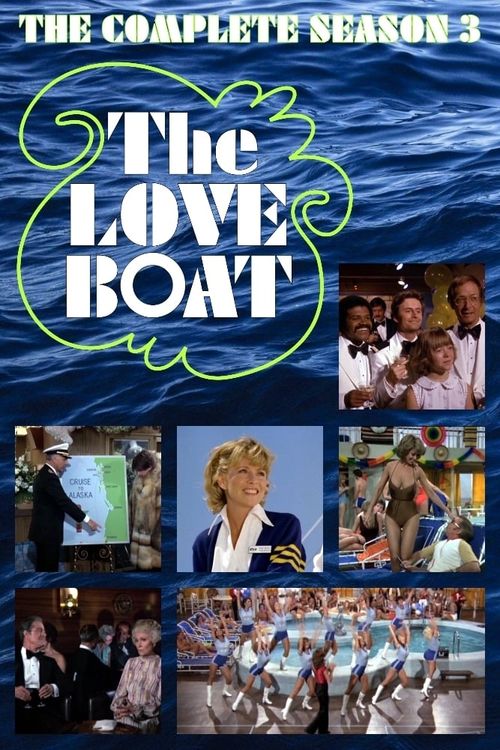
Retro Television Reviews: The Love Boat 3.25 “Celebration/Captain Papa/Honeymoon Pressure”


Welcome to Retro Television Reviews, a feature where we review some of our favorite and least favorite shows of the past!  On Wednesdays, I will be reviewing the original Love Boat, which aired on ABC from 1977 to 1986!  The series can be streamed on Paramount Plus!

This week, an important question is finally answered!

Episode 3.25 “Celebration/Captain Papa/Honeymoon Pressure”

(Dir by Richard Kinon, originally aired on March 29th, 1980)

Ever since Vicki first came aboard the ship, I have been wondering how exactly a 12 year-old can live (and apparently work) on an ocean liner.  One of my main questions has concerned how she is getting an education while sailing back and forth to Mexico.

With this episode, I finally got my answer.  When social worker Susan Stoddard (Lois Nettleton) boards the ship to decide whether or not to recommend that the Captain be given custody of Vicki, one of the first question that she asks is about school.

“Chief Petty Officer Dooley has a master’s in education,” Stubing replies, before saying that this never-before-mentioned character served as Vicki’s tutor.

Well, I’m glad that’s been cleared up.  Still, it is interesting that we’ve never before seen or even heard of this Dooley character.  We don’t even see Dooley in this episode.  You would think the social worker would want to talk to the person who is in charge of Vicki’s education.  Instead, Susan sees the rest of the crew, all of whom try to be on their best behavior in order to convince her that the Love Boat is not the floating HR nightmare that we all know it is.

(Still, at least the crew tried.  I’m surprised Doctor Bricker didn’t just try to sleep with her or something….)

This would be a really depressing episode of the Captain wasn’t awarded custody.  Luckily, Susan is so impressed by the crew that she says she will definitely file a positive report.  As she put it, Vicki not only has one wonderful parent.  She has “Five wonderful parents!”  Let’s see — Stubing, Julie, Gopher, Isaac, Doc …. yep, that’s five.  I’m sure Chief Petty Officer Dooley appreciates being left out of the group.

Isaac has more to worry about than just Captain Stubing’s situation.  Isaac is convinced that an old man named Gordon (Noah Beery, Jr.) is bank robber!  Gordon, who works as a bank guard at the port, is sailing on the Love Boat with his wife of 30 years, Betty (Alice Faye).  Gordon is spending a lot of money.  Isaac worries that Gordon stole the money but actually, it turns out that Gordon is just spending his life savings because his wife is in poor health and he wants to make sure that she has a wonderful vacation.  Unfortunately, Gordon spends too much on a diamond ring.  His wife, realizing what Gordon has done, secretly exchanges the ring for a cheaper one and tells her husband that she doesn’t need a life of luxury.  She just needs him.  Awwwwwww!  What a sweet old couple.

Finally, there are two real criminals on the boat.  Ralph (Norman Alden) and Ben (Richard Bakalyan) are two mob enforces who have been sent to accompany the boss’s daughter (Eve Plumb) on her honeymoon with her un-connected husband, Mark (Sal Viscuso).  Ralph and Ben’s presence makes Mark so uncomfortable that he can’t even consummate his marriage.  Ralph and Ben try to make things romantic for the couple.  Eventually, Doc Bricker tells the gangsters that Mark has a fictional disease, which causes Ralph and Ben to back off.  The married couple finally gets to celebrate their honeymoon.  But Mark still married into a mafia family so he’ll probably be machine-gunned as soon as he steps off the boat.

With the exception of the stupid Mafia story, this was a sweet episode.  I’m glad things worked out for the old couple and for Vicki and the Captain.  The Love Boat is not really a show that you watch for the acting but Gavin MacLeod’s natural sincerity always served him well whenever the show focused on his role as Vicki’s father.  Plus, I no longer have to worry about whether or not Vicki is going to have more than a sixth grade education.  So that’s a good thing.

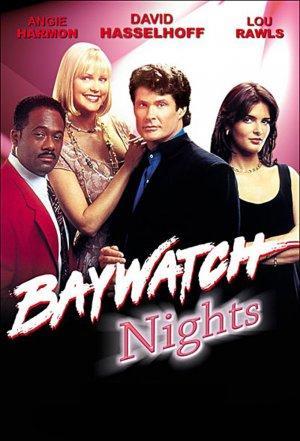
Late Night Retro Television Reviews: Baywatch Nights 1.9 “Blues Boys”


Welcome to Late Night Retro Television Reviews, a feature where we review some of our favorite and least favorite shows of the past!  On Tuesdays, I will be reviewing Baywatch Nights, an detective show that ran in Syndication from 1995 to 1997.  The entire show is currently streaming on Youtube!

This week, Mitch considers the blues!

Episode 1.9 “Blues Boy”

(Dir by Reza Badiyi, originally aired on November 25th, 1995)

Lyle Logan (Michael Preston) is a 13 year-old musical prodigy who plays a guitar on the Malibu Pier with his guardian, Ned Simon (Greg Wrangler).  Seven years earlier, Lyle witnessed the murder of his father by his Uncle Willie (Nathan Cavaleri).  Now, Uncle Willie has just been released from prison and he’s searching for Lyle because he believes that Lyle knows where his father stashed the money from a robbery.

Uncle Willie has his men abduct Ned, planning on using him for leverage to get to his nephew.  Lyle approaches Mitch and hires the detective agency to track Ned down.  However, Mitch, Ryan and Garner are more interested in learning the truth about Lyle’s background.  Though Lyle at first refuses to open up and even tries to run away when Mitch asks him about his background, Lyle eventually comes to trust the group.  Together, they save Lyle from Uncle Willie.  As for the stash of money, it’s in a first aid kit that breaks apart when it’s tossed into the ocean.  The money watches up on the beach, where everyone goes crazy trying to grab some for themselves.

This was a pretty simple episode.  In fact, it was a struggle to come up with 200 words to say about the plot.  There’s not a lot going on, beyond Lyle running up and down the pier and Uncle Willie-looking evil.  The only thing that kept this from being an episode of Baywatch was the presence of Angie Harmon and the lack of red bathing suits.  In many ways, this episode highlights one of the biggest problems for Baywatch Nights.  Far too often, the show just feels like a detective-themed episode of Baywatch (a show that actually did feature several detective-themed episodes both before and after the Baywatch Nights experiment).  This episode, for instance, barely features any scenes that take place at night.  Mitch does most of his investigating during the day, which is when he really should be working as a lifeguard.

The episode’s inability to escape the shadow of its parent show is exemplified by a scene that occurs about halfway through the episode.  We get an extended sequence in which Ryan, Garner, and Mitch listen to Lyle play his guitar and they all have flashbacks to their past.  Ryan’s memories deal with being the daughter of a navy officer.  Garner remembers tossing a football back and forth with his father.  And Mitch …. well, Mitch just has Baywatch flashbacks.  It’s one of those silly, overly earnest scenes that one expects to find any production starring David Hasselhoff.  (And the montage is, of course, scored by the Hoff singing a song.)  Still, it’s hard not to notice that, while Ryan and Garner both have a past, Mitch just has another television show.

The episode ends with Lyle meeting and playing with B.B. King.  Hopefully, B.B. adopted the kid.  Seriously, he had been through a lot.

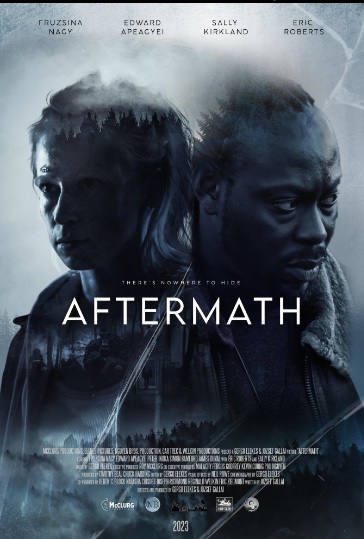
Film Review: Aftermath (dir by Jozsef Gallai and Gergö Elekes)


A woman named Kate (Fruzsina Nagy) drives down a road.  We don’t know where she is driving to but we can tell that she’s driving quickly and she’s not in the mood for any delays.  It’s the way that someone drives when they’re trying to escape but they’re not sure where they want to go.  It’s way you drive when you just want to convince yourself that you can somehow leave everything behind.

We hear what sounds like an accident and suddenly, Kate is waking up in a forest.  Her car is nowhere to be seen and Kate has no idea how she came to be in the forest.  In fact, she’s not even sure who she was before she woke up.  She has no memories of her past life, beyond fleeting visions that don’t always seem to fit together.  Eventually, she meets another apparent amnesiac, Bubba (Edward Apeagyei).  Bubba wears a locket around his neck and there’s a picture of a woman in the locket but he doesn’t seem to be quite sure who she was.

Bubba and Kate are not alone in the forest.  There are other wanderers and then there’s a group of men who appear to be soldiers, wearing crude uniforms and gas masks and carrying machine guns.  (The sight of the soldiers, with their crude uniforms, bring to mind the horrific militias that often spring up in the aftermath of a war and attempt to seize power out of the chaos.)  Receiving cryptic orders from their leader (Eric Roberts), the soldiers patrol the forest and execute anyone that they come across.  Their leader repeatedly tells them that they have to track down and execute everyone because the future of the world depends upon it.  Failure is not an option.

Aftermath deals with a very real fear.  The idea of suddenly waking up and discovering that you have not only lost your identity but also control over your own fate is at the heart of many horror stories and it’s also a reflection of the way many people feel about living in today’s world.  One wrong word, thought, or move and you can find yourself exiled into both a real and metaphorical wilderness.  When Kate wakes up with little memory of what the world was like before she ended up in that forest, she’s feeling what a lot of people have felt when they try to remember the world and their lives before the lockdowns of 2020 and all of the political and societal events that followed.  We live in a world that seems to change from day to day and, as result, everyone has had that moment when, like Kate, they’ve struggled to understand what’s happening.  From the minute that Kate wakes up with the feeling that she has no control over what’s happening to her, she becomes an instantly relatable character.  The audience not only wants to know what’s happening to her but they also want her to regain control of her fate.  If Kate can regain control, then those watching in the audience can also regain control.

The film’s cinematography emphasizes both the grandeur and the ominous atmosphere of the forest, making it a place that manages to be beautiful and threatening at the same time and the deliberate pace builds up suspense as Kate tries to discover why she is in the forest.  Fruzsina Nagy and Edward Apeagyei both give sympathetic and relatable performances as Kate and Bubba and the audience does care what happens to them.  Aftermath is both an intriguing thriller and a meditation on life and love.

Aftermath will be released on digital and blu-ray by Bayview Entertainment on January 30th.


Catching Up With The Films of 2023: Golda (dir by Guy Nattiv)


In Golda, Helen Mirren stars as Golda Meir, the 4th Prime Minister of Israel and the first woman to lead a government in the Middle East.

The film opens in 1974, with a visibly unwell Golda Meir braving a line of protestors as she testified before a commission that is investigating the events that led to the 19-day Yom Kippur War.  Sitting before the members of the commission, Meir lights a cigarette and, as the smoke forms around her, she speaks with a confidence that belies her physical frailness.  It’s the first of many cigarettes that we will see Golda Meir smoke throughout this film.  While Golda Meir was known for being a chain-smoker in real life, her smoking also plays an important thematic role in the film.  Golda Meir is terminally ill throughout the film, secretly undergoing chemotherapy and continually being told that her high-stress job, her cigarettes, and her coffee are not helping her health.  Golda, however, knows what she has to do to keep herself focuses and to handle the stress of being the leader of a small country that is surrounded by enemies and for her, that means drinking a lot of coffee and smoking a lot of cigarettes.  Much like Israel, she is not going to be told what to do by people who do not understand what she has to deal with on a daily basis.  Throughout the film, Golda willingly sacrifices her physical health for Israel, telling her more trusted aide (Camille Cattin) that the only thing that worries her is developing dementia in her old age.  A leader who cannot think cannot lead.

The majority of the film takes place in 1973, during the 19-day Yom Kippur War.  Israel is caught off-guard by a surprise attack led by Egypt and Syria.  Vastly outnumbered, the IDF struggles to repel the invaders.  While dealing with not only her own bad health but also the personal and ideological conflicts within her government, Meir also reaches out to the U.S. Secretary of State, Henry Kissinger (Liev Schreiber) for help.   Unfortunately, Washington D.C. is more concerned with Watergate than with the latest war in the Middle East and, as Meir quickly deduces, there is also worry that Saudi Arabia will cut off its supply of oil to any country that supports Israel.  Though Meir uses a combination of charm and shrewd political gamesmanship to convince Kissinger to put pressure on the Nixon administration, Meir still finds herself being pressured to accept an internationally-brokered ceasefire rather than pursue a strategy of forcing Egypt into negotiations….

Does this sound familiar?  A vicious surprise attack is launched on Israel during a holy day.  The Israeli Prime Minister, who is loved by some and vilified by others, is accused of not being sufficiently prepared for the attack.  Israel is initially isolated from the world, just to be pressured to accept a ceasefire as soon as it starts to prove its resiliency and humiliate its enemies.  Golda completed production before the October 7th attacks but the film feels like a direct response to them, a reminder that Israel has always had to fight for its existence and that it has always proven itself to be stronger than its enemies realize.

Much like Darkest Hour, another film about a leader who was underestimated, Golda plays out like a dream of history, with the emphasis being on Golda Meir moving from one meeting to another, somehow managing to hold everything together while the world sometimes seem to be falling apart around her.  A good deal of the film’s tension comes from the moments when Golda and her advisors wait to hear whether or not their latest move has been a success.  One of the film’s most harrowing scenes features Golda listening over a radio as a group of Israeli volunteers are wiped out by the invading Egyptians.  It’s a scene that reiterates the human cost of war, regardless of which side wins.  (The film makes good use of historical footage of the war, mixing it with scenes of Golda and her cabinet planning their strategy.  Again, it serves to remind the audience that there are real consequences to every decision.)  Held together by Mirren’s intelligent and authoritative performance, Golda is a film full of details that stick with you.  I’ll always remember the scenes of Golda being led through an underground morgue so that she can secretly be treated for the cancer that is slowly killing her.  With each trip, the morgue become more and more filled with bodies.

Though Mirren’s performance was acclaimed, Golda itself opened to mixed reviews.  I suppose in today’s political atmosphere, that’s to be expected.  After all, Golda is not only a pro-Israel film but it’s also a film that portrays Henry Kissinger as being something other than a one-dimensional Bond villain.  For many of today’s very online film reviewers, all of that is heresy.  At a time when some so-called educated people are driven to a rage at just the sight of posters of abducted Israeli children, Golda‘s reception is not a surprise.  At a time when people are making excuses for terrorists who would attack farmers and concert-goers, a films as otherwise different as You Are So Not Invited To My Bat Mitzvah and Golda can feel like acts of beautiful cultural defiance.

History repeats itself, Golda tells us.  Golda may largely take place in 1973 but, ultimately, it’s a film about 2023 and 2024.

Retro Television Reviews: Fantasy Island 4.8 “Crescendo/Three Feathers”


Welcome to Retro Television Reviews, a feature where we review some of our favorite and least favorite shows of the past!  On Tuesdays, I will be reviewing the original Fantasy Island, which ran on ABC from 1977 to 1986.  Almost the entire show is currently streaming is on Youtube, Daily Motion, and a few other sites.

This week, we get one good fantasy and one bad fantasy and a reminder that anything can happen on Fantasy Island!

Episode 4.8 “Crescendo/Three Feathers”

(Dir by Michael Preece, originally aired on December 20th, 1980)

This episode confirms that Fantasy Island is the strangest place on Earth.

Our first fantasy features Toni Tennille as a world-famous singer named Susan Lohmann.  Susan has been invited meet her favorite composer and songwriter, Edmund Dumont (Monte Markham).  Dumont lives in seclusion on Fantasy Island, in an estate that is surrounded by wild animals and where he is tended by a blind butler (James Hong).

Susan is excited to meet Edmund, until she walks in on him playing his piano and discovers that he’s a …. BEAST!  Though he has the body of a human, he has the face of a wolf.  It turns out that Edmund lives in seclusion because he feels that the world would never accept his appearance.  And Susan promptly proves him correct by screaming and demanding to leave.  Susan flees the estate.

Susan’s manager is glad that Susan is free because now she can appear in concert in London.  However, Mr. Roarke informs Susan that Edmund suffers from a curse and the only thing that could have cured him would have been the love of Susan.  Edmund is now determined to die, surrounded by the animals on his estate, the only creatures who accepted him.  Susan, realizing that she was a little bit hard on a guy who couldn’t help his appearance, returns to the estate, gives Edmund a kiss, and Edmund turns into a handsome guy.  Yay!

So, there’s a huge problem here.  Susan Lohmann is incredibly unlikable.  Yes, Edmund may look different.  But all Edmund did was invited her to his estate so that he could express his appreciation for the way the she sings his songs.  Susan claims that Edmund should have told her, in advance, about the way he looked.  Yes, Susan, God forbid someone unattractive appreciate your talent or have any talent of his own.  Seriously, Susan was the worst.

Slightly more likable is Alan Colshaw (Hugh O’Brian), a pilot who has spent a year feeling like a coward.  He was piloting a plane that crashed in the jungle.  Alan went for help and, according to the three other passengers (played by Diane Baker, James Wainwright, and Peter Lawford), he never returned and, instead, he ran off with a stash of diamonds that was on the plane.  Alan says that he is sure he didn’t intentionally desert them but he can’t remember for sure because he’s been suffering from memory loss.

Mr. Roarke gives Alan a medallion, one that will allow him and the others to see what happened when the plane crashed.  As for Alan, he brings along three white feathers, which he plans to give to each of the survivors as a way to symbolize that he’s not the coward that they think he is.  (Yes, it doesn’t make much sense to me, either.)

Lena (Diane Baker) is the first to forgive Alan.  Alan realizes that he’s in love with Lena and he tells Mr. Roarke that he wants to change his fantasy.  He just wants to spend the rest of his life with Lena.  Roarke informs Alan that he can’t do that because …. ALAN IS DEAD!  He died while trying to get help after the crash.  Alan has come back to life for the weekend so that his spirit can find peace.

That’s a pretty neat twist and, to its credit, the show sticks with it.  Alan eventually proves that he wasn’t a coward and that another one of the passengers stole the diamonds and then he vanishes into the afterlife.

“Boss,” Tattoo says, “you mean he was a …. g-g-ghost!?”

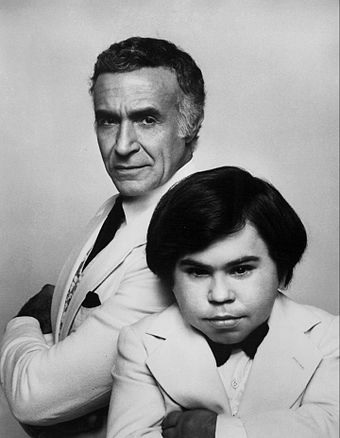
“Oh, Tattoo!” Roarke snaps, “Please do not tell me that you are prejudiced!”

Fantasy Island may be a strange place but some things — like Roarke passive aggressively attacking Tattoo — never change.