Today’s song of the day is The Harder They Come, taken from the soundtrack of the 1972 Jamaican film of the same name. This film and Jimmy Cliff’s performance and the soundtrack are all often credited with introducing reggae to the rest of the world.
Well they tell me im a pie up in the sky Waiting for me when i die But between the day your been and when you die They never seem to hear or even cry
So as sure as the sun will shine im going to get my share now of whats mine And then the harder they come the harder they’ll fall One and all Ooh the harder they come the harder they’ll fall One and all
Well the oppressors are trying to keep me down Trying to drive my underground And they think that they have got the battle won I say forgive them lord, they know not what they done
Cause as sure as the sun will shine Im gonna get my share now of whats mine And the harder they come the harder they fall One and all Ooh the harder they come the harder they fall One and all
And i keep on fighting for the things i want Though i know when your dead you cant But id rather be a free man in my grave Than living as a puppet or a slave
So as sure as the sun will shine Im going to get my share now whats mine And then the harder they come the harder they fall One and all Ooh the harder they come the harder they fall One and all
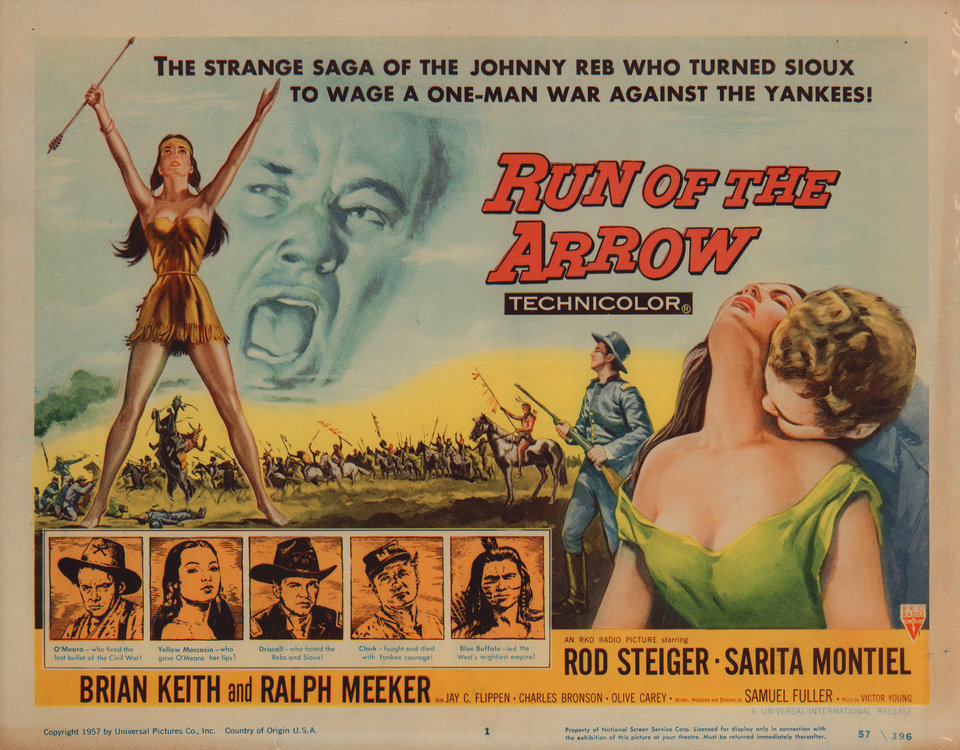
RUN OF THE ARROW opens up on April 9th, 1963, with confederate sharpshooter O’Meara (Rod Steiger) shooting a Union lieutenant named Driscoll (Ralph Meeker). This turns out to be the final shot fired in the Civil War as General Lee is in the process of surrendering to General Grant. It also turns out to be Driscoll’s lucky day, as a slight warping of the bullet causes O’Meara’s aim to be off just enough for him to survive. With no more war to fight and with a heart full of hate for the Yankees, O’Meara declares himself to be a man without a country and decides to head out west towards the land of the Indians. As part of his travels he happens across Walking Coyote (Jay C. Flippen), an aging, renegade Sioux scout who’s headed back home to die. Walking Coyote takes O’Meara under his wing and teaches him the Sioux language, as well as many of their customs. When they’re captured by a band of Sioux warriors led by Crazy Wolf (H.M. Wynant), and are being prepared to be killed, Walking Coyote invokes the “run of the arrow”, a ritualistic game that could save their lives. Unfortunately, no one has ever survived the run of the arrow. But today, it seems there’s a first time for everything, as O’Meara survives just long enough to be found, hidden, and saved by the beautiful Indian squaw Yellow Moccasin (Sarita Montiel). Yellow Moccasin nurses him back to health and presents him to her tribal chief, Blue Buffalo (Charles Bronson), who spares his life since he survived the run. Blue Buffalo also welcomes O’Meara into their tribe and allows O’Meara and Yellow Moccasin, who have fallen in love, to get married and adopt the mute orphan boy, Silent Tongue, as their own son. Things seem to be going well until Sioux Leader Red Cloud (Frank DeKova) and Army General Allen (Tim McCoy) reach an agreement that allows for an Army Fort to be built in a narrowly defined area. While the construction of the fort is entrusted to an honest man of integrity named Captain Clark (Brian Keith), the agreement is ultimately sabotaged by the murderous Crazy Wolf, and then further by the Indian hating Captain Driscoll… yes, that same Union soldier that O’Meara shot on the last day of the war! When the fighting starts again, will O’Meara prove himself to truly be a Sioux warrior willing to kill American army soldiers, or is a part of his heart still with his country?
Director Samuel Fuller’s RUN OF THE ARROW is a movie about the damage that occurs when human beings allow their hearts to be so filled with bitterness and hate that they quit caring about other people. It’s also about what happens when those same people run into rational people of good will, and we find out if they’re still capable of even considering the possibility that their own hate has blinded them from the truth. In other words, it’s a film that’s possibly more relevant today than it was when it was made in 1957. Bitterness and hate is represented by the characters of O’Meara (Steiger), Crazy Wolf (Wynant), and Lieutenant Driscoll (Meeker). O’Meara hates Yankees, Crazy Wolf hates the white man, and Driscoll hates the Indians. The rational people of good will are the characters of Yellow Moccasin (Montiel), Blue Buffalo (Bronson), and Captain Clark (Keith). Yellow Moccasin saves O’Meara, when everyone else would have just let him die. Blue Buffalo engages in honest conversation with O’Meara and even welcomes him into their tribe. Captain Clark shows O’Meara an empathetic ear and kindness when so many others have told him to just get over himself. The actions and fates of the characters play out against this dynamic of hatred versus humanity, with the results underscoring just how tragic it is when people focus on the things that separate us rather than the things that unite us. It’s all so unnecessary, but it’s also a realistic vision of the world we live in. The film also struck me as particularly violent for a 50’s western, which also underscores that reality.
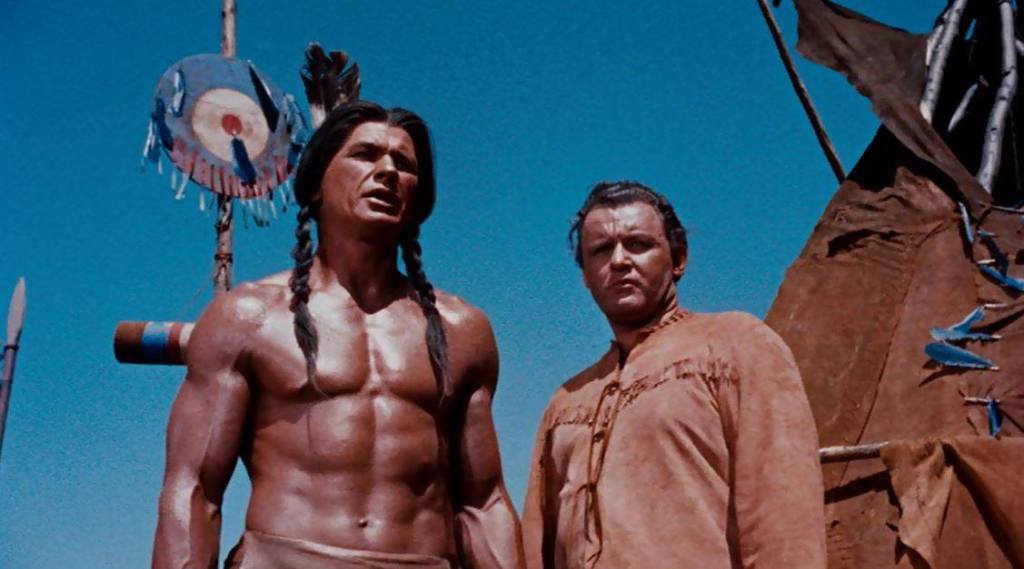
Some of the performances are very effective in the film. Rod Steiger’s Irish, confederate Sioux is an interesting character and the actor gives it his all as you’d expect. I’m a big fan of Steiger and his performance here only solidifies my respect for him. Brian Keith’s Captain Clark arrives fairly late in the proceedings and comes across as a tough, but honest man of integrity at a point when the movie really needs him. He has an excellent scene with Steiger where he debates the old confederate’s reasons for renouncing his citizenship with both sound logic, empathy, kindness and a hint of likable sarcasm all at the same time. It’s one of the best scenes in the film. And likewise, Charles Bronson, the most buff Hollywood Indian to ever strip down to a loincloth, comes across as a reasonable and kind tribal chief in his dealings. Bronson had played Indians before, but he was usually more of the renegade, warpath variety, so it was nice seeing him as a good guy here. H.M. Wynant took the renegade Indian role here which you might have expected for Bronson at the time. He’s suitably fierce but one-dimensional. The same can be said for Ralph Meeker as Lieutenant Driscoll. He’s pretty much just a stereotypical jerk. He’s good at being a jerk though! And Sarita Montiel, voiced by Angie Dickinson, is quite the beauty as Yellow Moccasin. We discussed H.M. Wynant and RUN OF THE ARROW with author Steven Peros on the “This Week in Charles Bronson Podcast.” Check out that interview below:
I’ve recently heard RUN OF THE ARROW compared to Kevin Costner’s DANCES WITH WOLVES, and there are definitely many similarities. I won’t go into all of those here, but one of the things I appreciated the most about RUN OF THE ARROW is the fact that the movie makes its feelings known about politics. In a movie filled with characters who have had their lives upended by the various decisions of political leaders, director Samuel Fuller has crafted a story that focuses most sharply on defining the quality of men based on what’s in their “hearts.” When it’s all said and done, oftentimes the only control we have is the way we respond to the events in our lives, and that’s not politics, it’s personal. To drive this home, in one of their conversations, Walking Coyote tells O’Meara that he could have been a chief if he had wanted to be. When O’Meara pushes the old scout on why he didn’t want the position, Walking Coyote responds with, “Because I hate politics!” On that point, I couldn’t agree more.
It’s a hard knock life for Michelle (Shari Shattuck). One moment she’s a hardworking teller at the local bank who loves her horse, Misty. The next moment she’s sentenced to three years in the women’s penitentiary for a crime she didn’t commit. And life is damn tough in prison. There’s the prison warden Diane (Angel Tompkins) who, when she’s not participating in lesbian dalliances with inmates, is offering Michelle protection, but only if she agrees to act as a spy for her. When Michelle says no, Diane sets her up to be brutalized by the sadistic Rita (Christina Whitaker), the bitch who’s responsible for her being in the pen in the first place! Now having to dodge the threat of rape from prison guard Smiley (Nick Benedict), as well as the constant threat of shiv-induced death at the hands of Rita, it seems Michelle may have finally received a lifeline with the arrival of a new prison guard named Rhonda (Lucinda Crosby). Rhonda seems to show some extra interest and empathy in Michelle’s plight, and she just may be in a position to help her with the wrongful conviction. That is, if Michelle can survive one more night in THE NAKED CAGE!!
Recently, I’ve been trying to watch movies I’ve never seen before that star actors or actresses who worked with Charles Bronson. Tonight, I decided to look for a film starring Angel Tompkins, a Facebook friend, who worked with Bronson in the 1986 cop film from Cannon Films called MURPHY’S LAW. In that film she plays Jack Murphy’s ill-fated ex-wife, where she gives an uninhibited and committed performance in what would have been a throwaway role for many actresses. Not Angel… she took the role very seriously and is actually quite memorable in her couple of scenes. Paul Talbot’s book BRONSON’S LOOSE AGAIN has a chapter on the film, and he was able to interview Tompkins who told of just how much effort went into to her preparation. I recommend the book to anyone interested in Bronson or those numerous actors and actresses who worked with him in the 70’s, 80’s, and 90’s. Filmed the same year as MURPHY’S LAW, I thought it might be fun to see how committed she is in the role of the corrupt warden in Cannon’s THE NAKED CAGE.
I’ll admit that I am not an expert on the “women in prison” genre of film. I did go through my Pam Grier phase that started with movies like COFFY (1972) and FOXY BROWN (1974), but did extend as deep as the Jack Hill “women in cages” films THE BIG DOLL HOUSE (1971) and THE BIG BIRD CAGE (1972). But those movies had Pam Grier in the cast which provided a couple of ample reasons for me to watch. THE NAKED CAGE does have some interesting things going for it. Like most of Charles Bronson’s 1980’s output, the movie was produced by Cannon Films, the international symbol of quality moviemaking from the 1980’s. And then there’s Angel Tompkins herself. She’s quite the sexy lady, having appeared in films like PRIME CUT (1972) and THE TEACHER (1974). Cannon Films and Angel Tompkins drew me in, but what about the film itself? Is it worth a watch?
I’ll go ahead and say that for me, THE NAKED CAGE was worth the watch. This kind of movie only works for me if I like the cast. Shari Shattuck is appealing in the lead role of Michelle, a good woman, who’s wrongly convicted, but who soon finds levels of toughness she never knew she had in order to survive. I remember Shattuck starring in films like POINT OF SEDUCTION: BODY CHEMISTRY 3 (1994) with Andrew Stevens. My wife and I also watched the entire DALLAS TV series a few years ago where Shari had an extended role in season 13. She starts out here as a sweet and innocent lady, and by the end she’s wielding guns and knives like a lifelong delinquent, and I liked it! Angel Tompkins does not disappoint as the corrupt warden who seduces the inmates in order to meet her own sexual needs, as well as manipulating them into playing her larger games of control over the rest of the prison. Overall, she plays the role pretty straight, but is once again quite uninhibited when it comes to the more mature content. To me though, the most enjoyable performance comes from Christina Whitaker as the psychotic Rita. Not content with just ruining Michelle’s life, she’s determined to murder her behind the prison walls as well. From the beginning of the film where the fugitive Rita had Michelle’s estranged husband snorting cocaine off her boobs, all the way to the final frames, Whitaker chews every piece of scenery that comes into view. She’s the character I’ll remember whenever I think of THE NAKED CAGE.
There are some things I didn’t like very much about the film. Prison guard Smiley’s sadistic rapist isn’t fun at all to watch, but his character’s fate is well deserved and somewhat satisfying when it finally occurs. Also, I didn’t care for the manipulation of the character of the drug addict Amy, played by Stacey Shaffer. She had worked very hard to beat her addiction, and in a world where many of us know people who have been lost to addiction, it’s not easy to watch her tragic fall.
Overall, if you enjoy “women in prison” films, I think you’ll probably like this one. It’s certainly not perfect, but being a fan of Cannon Films and Angel Tompkins, I thought it was an enjoyable way to spend a Friday night while I was waiting for my wife to get home from work!
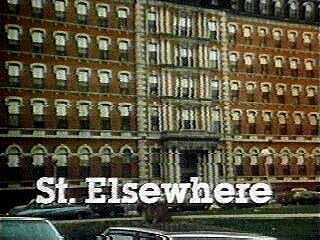
Welcome to Retro Television Reviews, a feature where we review some of our favorite and least favorite shows of the past! On Fridays, I will be reviewing St. Elsewhere, a medical show which ran on NBC from 1982 to 1988. The show can be found on Daily Motion.
Today, we start the third season of St. Elsewhere with some new opening credits!
Episode 3.1 “Playing God, Part One”
(Dir by Bruce Paltrow, originally aired on September 19th, 1984)
The opening of the third season finds that St. Eligius is just as depressing as it’s ever been.
Fiscus leads a group of new residents, including Dr. Elliott Axelrod (played by new series regular Stephen Furst), through the hospital. Fiscus comes across as being an arrogant jackass. I guess that’s the appeal of being a second-year resident. You get to look down on all of the first-years.
Jack is still dating Clancy (young Helen Hunt). When Clancy tells Jack that she’s pregnant, he’s shocked when she says she’s planning on getting an abortion. Jack proposes to her. Clancy says she’s not ready to get married and she’s not ready to have a baby.
Dr. Craig is still yelling at Dr. Ehrlich. Dr. Ehrlich is still annoying the nurses.
Speaking of the nurses, they’re going on strike!
Three firefighters (one of whom is played by Erin Hudson) are injured while on the job and are rushed to St. Eligius with severe burns. Luckily, plastic surgeon Bobby Caldwell (Mark Harmon, without that terrible mustache he wore during season two) is on call.
Dr. Peter White is working in a shady clinic and is still suing for his right to be a resident.
A traffic accident leaves one nun in a coma and apparently brain-dead. Sister Doemnica (Michael Learned) wants to take her off life-support. Westphall (Ed Flanders), who seems even more depressed than usual, disagrees. It looks like there’s going to be some conflict about this. For once, I’m on Westphall’s side. I’m believer in hope.
Auschlander is still battling his cancer.
In other words, it’s another day at St. Eligius. The third season premiere did a good job of re-introducing viewers to the hospital. The snarkiness of Fiscus’s tour nicely balanced all of the more dramatic moments in the episode. If anything has me worried, it’s the possible return of the loathsome Peter White. How is the hospital going to deal with the return of a man who they all know is a rapist, even if he was somehow acquitted? I guess we’ll find out.
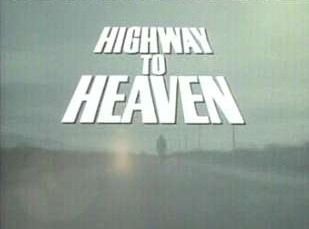
Welcome to Late Night Retro Television Reviews, a feature where we review some of our favorite and least favorite shows of the past! On Thursdays, I will be reviewing Highway to Heaven, which aired on NBC from 1984 to 1989. The entire show is currently streaming on Tubi and several other services!
This week, Lee dies.
Episode 4.22 “A Dolphin Song For Lee Part 2”
(Dir by Michael Landon, originally aired on March 23rd, 1988)
Remember how, last week, Lee (Bess Meyer) was told that her cancer had gone into remission and she was going to live? Well, this week, the cancer comes back and Lee dies after a month.
What a depressing episode!
Lee gets to do a lot in that month. She goes out on a boat and saves a group of dolphins from some hunters. She testified before Congress and, through emotional blackmail, gets them to pass a bill protecting the dolphins. She swims with a dolphin! And then she dies and its suggested that she’s been reborn as a dolphin.
Normally, I would complain about how shamelessly manipulative this all is but you know what? I like dolphins. I’ll forgive a lot when it comes to dolphins.
And, also, I am going to give some credit where is credit is due. Not every story has a happy ending. Sometimes, people die. It’s not fair but it happens. Highway to Heaven admitted that in this episode and I was in tears by the end of it.
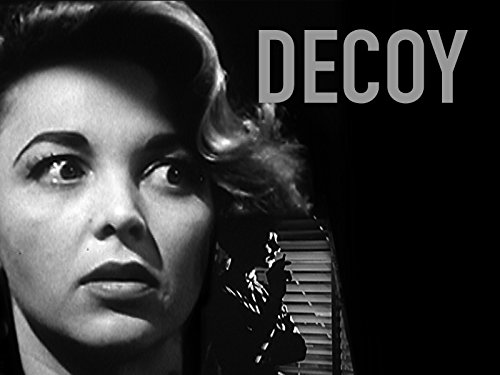
Welcome to Retro Television Reviews, a feature where we review some of our favorite and least favorite shows of the past! On Thursdays, I will be reviewing Decoy, which aired in Syndication in 1957 and 1958. The show can be viewed on Tubi!
Casey goes undercover at nightclub.
Episode 1.12 “Queen of Diamonds”
(Dir by Teddy Sills, originally aired on December 30th, 1957)
Casey is working undercover, pretending to be a photographer named Judy. She’s been working at a run-down nightclub for two months, trying to find evidence that the club’s owner, Frank (James Mitchell), was responsible for a payroll theft. Frank has an alibi but Casey is able to get her man when she convinces Frank’s second-in-command, Chi Chi (Al Lewis), to turn on him. Chi Chi is in love with Frank’s girlfriend, Georgia (Kay Medford).
This was not a bad episode. Casey got to wear a pretty dress and Beverly Garland got to show off her acting skills as she flirted with Frank and worked to turn Chi Chi against him. Interestingly enough, this episode ended on something of a melancholy note. Casey managed to send Frank to jail and Chi Chi and Georgia left for France together but the night club closed and blind pianist Alex (Richard Ward), the only truly decent person in this episode, ended up out of a job. In the end, Casey looked almost as if she was about to cry. It’s not easy, working undercover.
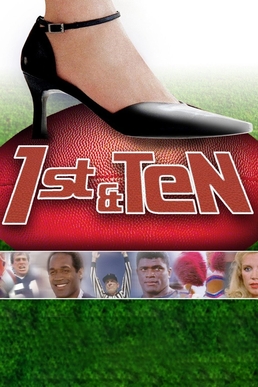
Welcome to Late Night Retro Television Reviews, a feature where we review some of our favorite and least favorite shows of the past! On Wednesdays, I will be reviewing 1st and Ten, which aired in syndication from 1984 to 1991. The entire series is streaming on Tubi.
Victory’s yours …. for that taking….
Ugh, let’s do this.
Episode 2.5 “California Freeze Out”
(Dir by Bruce Seth Green, originally aired on September 22nd, 1986)
Training camp continues!
Oh, Good Lord, does it continue.
And look, I get it. This was a low-budget show that relied on stock footage for the majority of its game footage. There was probably only so much footage available. Not every episode could feature a game. And training camp is an important part of football and I’m sure that, back in 1986, HBO was proud of that set they built for the ugly bar where all the players hang out. It’s not a bad set. You look at it and you can literally smell the rancid combination of sweat and urine that seems to follow most male athletes.
But seriously …. I’M TIRED OF TRAINING CAMP! Its time to move on!
As for this episode …. hey, Waldren is already back from rehab and he’s clean! That was quick. However, shady quarterback Johnny Valentine continues to hang out with drug dealers and Waldren gives into temptation. He ends up at a raucous drug party that’s busted by the cops. Waldren jumps out of a window. His date is accidentally shot. You might think that Johnny Valentine would be in trouble considering how anti-drug the league has become but it turns out that Johnny is a star and busting him would effect ad revenue. So, Johnny gets off scot-free.
Meanwhile, O.J. Simpson — whoops, sorry, I meant to say T.D. Parker, don’t hurt me, Vengeful Spirit of O.J. — recruits a young player named Rick Lambert (Marcus Allen) to be the team’s new running back. Marcus Allen gave such a stiff performance that I immediately realized that he had to have been an actual player and it turns out that I was right. You can always tell the actual players because they’re the ones who can never summon up any emotion when they stumble through their lines. O.J. was the epitome of a player who became a bad actor but he came across as being …. well, not quite Olivier but maybe David Niven, while acting opposite Marcus Allen. Maybe that’s why Allen was added to the cast, to make O.J. look good.
Anyway, here’s hoping that O.J. and the rest of the Bulls slash their way out of training camp soon!
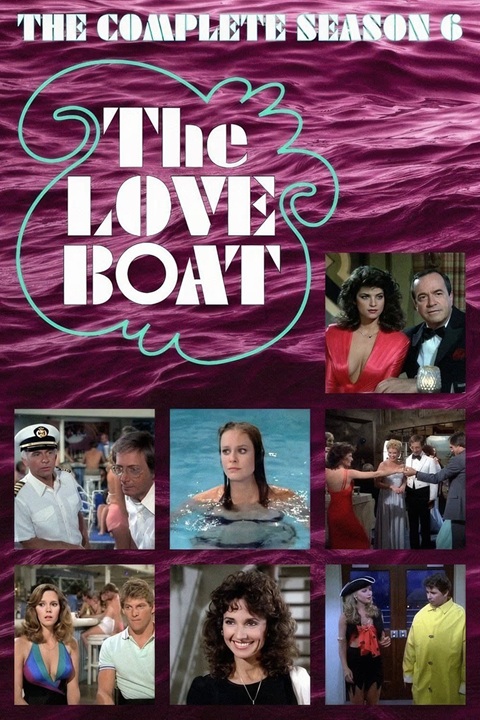
Welcome to Retro Television Reviews, a feature where we review some of our favorite and least favorite shows of the past! On Wednesdays, I will be reviewing the original Love Boat, which aired on ABC from 1977 to 1986! The series can be streamed on Paramount Plus!
The Love Boat promises something for everyone!
Episode 6.26 “The Professor Has Class/When The Magic Disappears/We, The Jury”
(Dir by Richard Kinon, originally aired on April 2nd, 1983)
I sent a message to my friend Jason, letting him know about this week’s episode of The Love Boat.
“This week’s episode featured a Van Patten and a Van Dyke!” I wrote.
He wrote back, “Two Dicks?”
“No, one Dick and a Barry.”
Dick Van Patten plays The Great Stellini. He’s upset that his daughter (Mary-Margaret Humes) wants to marry Joey Gardiner (Barry Van Dyke), a novice magician. The Great Stellini thinks that Joey wants to steal all of his tricks. His daughter teaches Stellini a lesson by actually disappearing during their stage show. Stellini is humiliated but he learns an important lesson about letting go and also supporting younger magicians.
Meanwhile, Anne Meara played Jerry Stiller’s former landlady. Anne was using Jerry for damaging her property. Gopher decided that a jury made up of the crew should decide the case. Huh? Why? That makes no sense. But you know what? Anne Meara and Jerry Stiller were so cute together that it didn’t really matter.
Finally, a 91 year-old professor (Sam Jaffe) was upset to discover that one of his former students (Bettye Ackerman) was going to replace him. Luckily, everyone fell in love. Sam Jaffe was one of the great character actors and it was kind of nice to see him on this show, acting opposite his wife, Bettye Ackerman. This was Jaffe’s final performance and he had a twinkle in his eye. He seemed to be having fun.
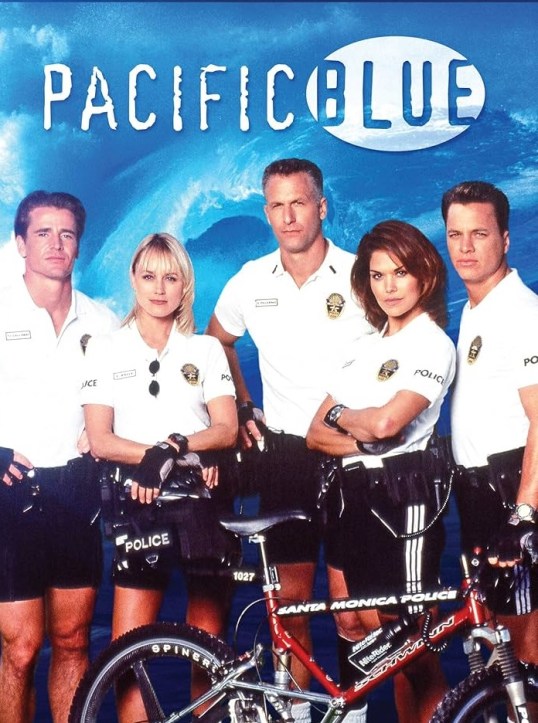
Welcome to Late Night Retro Television Reviews, a feature where we review some of our favorite and least favorite shows of the past! On Tuesdays, I will be reviewing Pacific Blue, a cop show that aired from 1996 to 2000 on the USA Network! It’s currently streaming everywhere, though I’m watching it on Tubi.
This week, the bicyclists continue to get in everyone’s way.
Episode 3.6 “Sandman”
(Dir by Terrence H. Winkless, originally aired on Sept. 21st, 1997)
A hitman named Robert “Sandman” Enright (John Michael Bolger) has been released from prison. Because Enright was previously arrested by TC, TC decides to start harassing him as soon as he gets out of jail. For a bunch of dorks on bikes, the Pacific Blue folks sure do enjoy abusing their power.
Anyway, Sandman is out for revenge against the three men who framed him. And, since TC is tailing him everywhere, Sandman is able to manipulate TC into basically becoming his bodyguard. The main theme of this episode is that TC is an idiot.
Speaking of idiots, Cory’s boyfriend, FBI Agent Tim Stone (David Lee Smith), confessed that he was thinking of getting back together with his ex. With Chris’s support, Cory fought for her man. Myself, I just struggled with the fact that Stone, TC, Palermo — and their actors, Smith, Jim Davidson, and Rick Rossovich — all basically looked like the same guy at different stages of his life.
Finally, Palermo, TC, and Victor played volleyball! That was at the end of the episode and it went on for a while. The whole scene felt like the show’s way of saying, “Hey, remember when Rick Rossovich was in Top Gun? That was cool.”
As usual, this episode featured a lot of tough talk and intense looks, all of which were negated by the presence of grown-ups on bicycles. Even when TC was spying on the Sandman, he did while sitting on his bicycle. It just looked dumb.

 Through the Shattered Lens