Icarus File No. 18: Brewster McCloud (dir by Robert Altman)


First released in 1970, Brewster McCloud takes place in Houston.

A series of murders have occurred in the city.  The victims have all been older authority figures, like decrepit landlord Abraham Wright (Stacy Keach, under a ton of old age makeup) or demanding society matron Daphne Heap (Margaret Hamilton, who decades earlier had played The Wicked Witch in The Wizard Of Oz).  The victims all appear to have been killed by strangulation and all of them are covered in bird droppings.  Perplexed, the Houston authorities call in Detective Frank Shaft (Michael Murphy) from San Francisco.  Shaft only wears turtlenecks and he has piercing blue eyes.  He looks like the type of guy you would call to solve a mystery like this one.  It’s only later in the film that we discover his blue eyes are due to the contact lenses that he’s wearing.  Frank Shaft is someone who very much understands the importance of appearance.  As one detective puts it, when it comes to Shaft’s reputation, “The Santa Barbara Strangler turned himself in to him.  He must have really trusted him.”

Perhaps the murders are connected to Brewster McCloud (Bud Cort), who lives in a bunker underneath the Astrodome and who seems to be fascinated with birds.  Brewster dreams of being able to fly just like a bird and he’s spent quite some time building himself a set of artificial wings.  A mysterious woman (Sally Kellerman) who wears only a trenchcoat and who has scars on her shoulder blades that would seem to indicate that she once had wings continually visits Brewster and encourages him to pursue his dream.  However, she warns him that he will only be able to fly as long as he remains a virgin.  If he ever has sex, he will crash to the ground.

Brewster thinks that he can handle that.  Then he meets a tour guide named Suzanne Davis (Shelley Duvall, in her film debut) and things start to change….

Brewster McCloud is a curious film.  The story is regularly interrupted by a disheveled lecturer (Rene Auberjonois) who is very much into birds and who, over the course of the film, starts to more and more resemble a bird himself.  The film is full of bird-related puns and there are moments when the characters seem to understand that they’re in a movie.  Frank Shaft dresses like Steve McQueen in Bullitt and his blue contact lenses feel like his attempt to conform to the typical image of a movie hero.  (A lengthy car chase also feels like a parody of Bullitt’s famous chase scene.)  When the old woman played by Margaret Hamilton dies, the camera reveals that she’s wearing ruby slippers and a snippet of Somewhere Over The Rainbow is heard.  As played by Bud Cort, Brewster is the perfect stand-in for the lost youth of middle class America.  He knows that he’s rebelling against something but he doesn’t seem to be quite sure what.  Brewster, like many idealists, is eventually distracted by his own desires and his once earnest plans come cashing down.  Brewster becomes an Icarus figure in perhaps the most literal way possible, even if he doesn’t come anywhere close to reaching the sun.  As with many of Altman’s films, Brewster McCloud is occasionally a bit too esoteric for its own good but it’s always watchable and it always engages with the mind of the viewer.  One gets the feeling that many of the film’s mysteries are not necessarily meant to be solved.  (Altman often said his best films were based on dreams and, as such, used dream logic.)  With its mix of plain-spoken establishmentarians and quirky misfits, Brewster McCloud is not only a classic counterculture film but it’s also a portrait of Texas on the crossroads between the cultures of the past and the future.

Though it baffled critics when it was released, Brewster McCloud has gone on to become a cult film.  It’s a bit of a like-it-or-hate-it type of film.  I like it, even if I find it to be a bit too self-indulgent to truly love.  Quentin Tarantino, for his part, hates it.  Brewster McCloud was released in 1970, the same year as Altman’s Oscar-nominated M*A*S*H.  (Both films have quite a few cast members in common.)  Needless to say, the cheerfully and almost defiantly odd Brewster McCloud was pretty much ignored by the Academy.

Previous Icarus Files:
  1. Cloud Atlas
  2. Maximum Overdrive
  3. Glass
  4. Captive State
  5. Mother!
  6. The Man Who Killed Don Quixote
  7. Last Days
  8. Plan 9 From Outer Space
  9. The Last Movie
  10. 88
  11. The Bonfire of the Vanities
  12. Birdemic
  13. Birdemic 2: The Resurrection 
  14. Last Exit To Brooklyn
  15. Glen or Glenda
  16. The Assassination of Trotsky
  17. Che!

Made-for-TV Movie Review: Nightmare in Chicago (dir by Robert Altman)


Taking place over the course of one very long day and night in December, this 1964 made-for-television movie opens with the discovery of a murdered woman in Indiana.  She is the latest victim of a killer that the press has nicknamed “Georgie Porgie.”

Georgie Porgie, who has killed five blondes in the Midwest, is actually a nondescript man named Myron Ellis (Philip Abbott).  Myron is middle-aged, short, and fairly normal-looking.  That, along with the fact that he’s always moving, is one reason why he has yet to be captured.  The only thing that really stands out about Myron is that, due to a medical condition, he is extremely sensitive to light and always wears dark glasses, even at night.  When Myron isn’t murdering someone or stealing a car, he’s haunted by the voice of his dead sister.

Because he is a nomadic killer, the authorities in Chicago are worried that Myron is coming to their town next and it turns out that they’re correct.  Myron is already in Chicago and he’s looking for his next victim.  In a rather disturbing scene, he strangles a woman that he meets at a strip club, managing to do so without any of the many people around them even noticing.  Myron wanders up and down the streets of Chicago, looking for his next victim.  With his polite manners and his bland appearance, no one suspects that the polite man on the street corner is actually a murderer.

Police Commissioner Lombardo (Ted Knight) and Detectives McVea (Robert Ridgley) and Brockman (Charles McGraw) decide that the best way to catch the killer would be to set up a dragnet on the highway, stopping cars and shining flashlights at the drivers to see who has the weakest eyes.  The only problem is that there is also a nuclear missile convoy scheduled to move through the city at the same time.  With the highways congested and the killer not above wrecking his own car to throw the police off his trail, Lombardo tries to both capture the killer and make sure nothing happens to the convoy.

Nightmare In Chicago is a short and efficient thriller.  It’s well-acted and rather serious in its approach.  Especially when compared to more recent films with similar plots, Nightmare In Chicago deserves some credit for not trying to turn its serial killer into some sort of diabolical mad genius.  Myron, like all serial killers in real life, is a maladjusted and rather stupid person who has only gotten away with his crimes due to pure luck.  He’s not a Hannibal Lecter-style supergenius.  Instead, he’s just a creep who has many, many issues.  The film also does a good job of capturing the manic energy and eventual exhaustion of pulling an all-nighter.  It’s an effective little film with a memorably sordid story.

For modern audiences, probably the most interesting thing about Nightmare in Chicago is that it was directed by Robert Altman and was, in fact, his second non-documentary film after The Delinquents.  At the time he made this film, Altman was largely working in television.  Nightmare In Chicago was one of the first made-for-TV movies and it was a ratings and critical success.  Seen today, it’s easy to spot Altman’s trademark attention to detail in the film.  While it’s far more straight-forward than the majority of his feature films, Nightmare in Chicago still displays the talent that eventually led to Robert Altman become one of Americas most important filmmakers.

Song of the Day: 200 Years by Henry Gibson


Today’s song of the day comes from the soundtrack of Robert Altman’s 1975 masterpiece, Nashville.

Written and performed by Henry Gibson (who played the role of Haven Hamilton in Altman’s film), 200 Years was meant to be a satire of patriotic country music.  But apparently, Gibson did such a good job capturing the feel of those songs that several patriotic singing groups actually added 200 Years to their repertoire.

Myself, I find the song to be just as heavy-handed in its satire as the song itself is meant to be heavy-handed in its patriotism.  But, perhaps that’s the point.  It’s definitely effective in its way and it certainly fits in with Altman’s stylized portrayal of American culture.  I guess this song is a real Rorschach test.  Some will see it as a commentary on jingoism.  Others will hear it and say, “He’s right, we must be doing something right.”

My mother’s people came by ship
And fought at Bunker Hill
My daddy lost a leg in France
I have his medal still
My brother served with Patton
I saw action in Algiers
Oh we must be doin’ somethin’ right
To last 200 years.‎

I pray my sons won’t go to war
But if they must, they must
I share our country’s motto
And in God I place my trust
We may have had our ups and downs
Our times of trials and fears
But we must be doin’ somethin’ right
To last 200 years.‎

I’ve lived through two depressions
And seven Dust Bowl droughts
Floods, locusts and tornadoes
But I don’t have any doubts
We’re all a part of history
Why Old Glory waves to show
How far along we’ve come ’til now
How far we’ve got to go.‎

It’s been hard work but every time
We get into a fix
Let’s think of what our children faced
In two – ought – seven – six
It’s up to us, to pave the way
With our blood and sweat and tears
For we must be doin’ somethin’ right
To last 200 years.‎

Lyrics: Henry Gibson

Film Review: The Delinquents (dir by Robert Altman)


First released in 1957 and filmed on a $63,000 budget in Kansas City, The Delinquents tells the story of Scotty White (Tom Laughlin).

Scotty is eighteen.  He’s not a bad kid.  He’s just a bit directionless and he’s got a slight rebellious streak.  Today, Scotty would not be considered to be that wild of a teenager but, by the standards of 1957, he’s dangerous.  He’s a criminal.  He’s a rebel.  He’s an outsider.  He’s a degenerate.  He’s a delinquent and it doesn’t matter how in love he and 16 year-old Janice (Rosemary Howard) may be, Janice’s parents don’t want Scotty anywhere near their daughter.  She’s too young to date, they say.  Scott’s got a bed reputation, they say.  Scotty is set to soon leave for college and he’s got his entire future ahead of him.  But it doesn’t seem like much of a future without Janice as a part of it.

Poor guy!  Is it any surprise that he ends up hanging out with two legitimate delinquents, Cholly (Peter Miller) and Eddy (Richard Bakalyan)?  At first, Cholly and Eddy seem like great friends to have.  They even come up with a scheme to allow Scotty to spend some time with Janice.  (The plan doesn’t work, of course.  But it’s the thought that counts.)  However, when the police show up to bust a wild delinquent party, Cholly and Eddy suspect that Scotty might be a rat!  When their attempts to get Scotty drunk enough to confess fail, they end up driving a passed out Scotty into the country so they can dump him on the side of the road.  However, they decide to stop to rob a gas station first.  Believe it or not, this leads to even more trouble.

It also leads to the question of why they couldn’t have waited to rob the gas station until after they got Scotty out of the car.  Watching The Delinquents, I came to suspect that many of the characters just weren’t that smart.  Seriously, how difficult is it to be a delinquent in Kansas City?  But as dumb as Cholly and Eddy were, Scotty was even dumber because he continually got outsmarted by the both of them.  Maybe Janice’s parents had a point about him….

The Delinquents is pretty much a standard youth-in-trouble exploitation film, one that owes more than a little bit of debt to Rebel Without A Cause.  The main reason why anyone would watch the film is because it was not only the directorial debut of Robert Altman but also the acting debut of Tom “Billy Jack” Laughlin.  And let’s give credit where credit is due.  Though I doubt either one of them would have claimed this film as an example of their best work, there is some obvious talent to found in The Delinquents.  Laughlin gives an appealing performance, even though Scotty’s an idiot.  And Altman keeps the action moving and even manages to come up with some visually striking sequences, like the opening jazz performance and the “wild” delinquent party.  Viewed today, The Delinquents is an interesting preview of what was to come for both Altman and Laughlin.  Though the plot is nothing special and it’s hard not to laugh at the portentous narration (which was apparently added by the studio and without Altman’s knowledge), The Delinquents is an energetic exploitation film and a reminder that even Kansas City had its mean streets.

14 Days of Paranoia #5: Bloodknot (dir by Jorge Montesi)


In 1995’s Bloodknot, we are introduced to a grieving family.

Evelyn (Margot Kidder) and Arthur (Allan Royal) are mourning the death of their oldest son, who was in the military and who died during a military operation in the Middle East.  Their other son, Tom (Patrick Dempsey), spends his time working on cars and helping out local racecar driver Mike (Craig Sheffer).  Youngest daughter Gail (Ashleigh Ann Wood) doesn’t really have much of a personality but she’s definitely worried about her mother.

Suddenly, Connie (Kate Vernon) shows up in town.  Wearing a uniform that is slightly too large for her, Connie claims that she served with Evelyn’s dead son and that they eventually became more than just friends.  That’s strange, Evelyn says, he never mentioned you.  Connie replies that she encouraged him to write more but, for whatever reason, he didn’t.  Everyone agrees that what’s important now is that Connie has introduced herself to the family.  Soon, Connie is living at the mansion and making flirtatious eye contact with both Arthur and Tom.  One might expect Evelyn to be concerned about this but instead, Evelyn is too busy walking around in a depressed daze and blaming her “sinful” past for all the recent tragedy.

You probably already guessed that Connie is not who she says she is.  Indeed, Connie has come to the family with an agenda of her own.  She’s looking for vengeance and I won’t spoil it by revealing what she’s upset about but I will say that it’s fairly dumb and makes less sense the more that you think about it.  Tom’s girlfriend, Julie (Krista Bridges), suspects that Connie is a liar but can she prove it?  Julie even talks to the officer from whom Connie stole her uniform after Connie met and seduced her at a bar.  Why would Connie, who seems to be willing to kill anyone, leave that one person alive?  Obviously, it’s so Julie can learn the truth but still, it’s an oversight on Connie’s part that makes little sense.

(Julie isn’t a very interesting character but she does get to wear a really nice pair of boots so at least she’s got that going for her.)

Looking at the members of this film’s cast — Patrick Dempsey, Craig Sheffer, Kate Vernon — and you have to wonder if someone specifically said, “Let’s make an paranoia-themed, erotic thriller with the least interesting actors of the 90s.”  (Yes, Dempsey got better but, in this film, he was still doing the goofy awkward thing.)  This film goes through all the usual steps.  Connie starts out as being friendly and then progressively reveals herself to be more and more unhinged.  The men are reduced to stuttering incoherence by the sight of Connie smiling at them.  For this type of film to work, the actors have to be fully willing to embrace the melodrama but instead, both Kate Vernon and Patrick Dempsey give oddly lowkey performances, with Vernon’s attempt at a seductive smile instead coming across like a smirk that should have clued everyone in to the fact that she was not to be trusted.  If you’re appearing in a film like this, you should at least have a little fun.  As for Craig Sheffer, he’s as mind-numbingly dull as ever.

The film does improve a bit towards the end, largely because Connie’s secret reason for harassing the family is so implausible that it can’t help but be a bit entertaining to listen to the characters discuss it.  Overall, though, this was pretty boring.  Let this film be a lesson to all — embrace the melodrama!

Previous entries in 2025’s 14 Days Of Paranoia:

  1. The Fourth Wall (1969)
  2. Extreme Justice (1993)
  3. The Lincoln Conspiracy (1977)
  4. Conspiracy (2007)

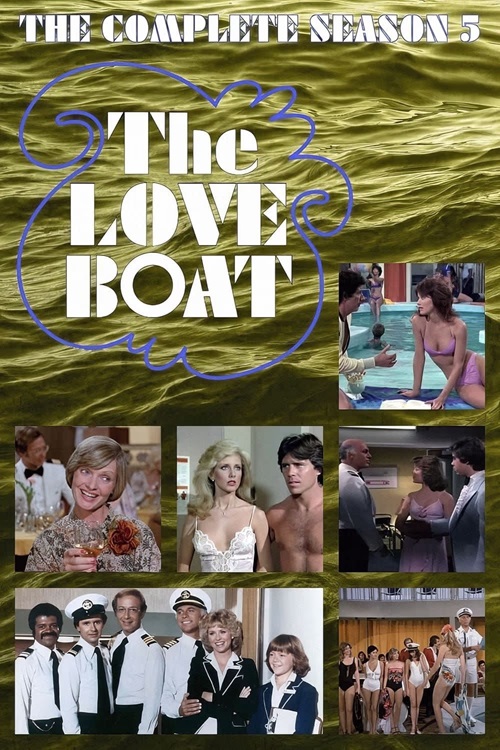
Retro Television Review: The Love Boat 5.18 “His Girls Friday/A Wife for Wilfred/The Girl Who Stood Still”


Welcome to Retro Television Reviews, a feature where we review some of our favorite and least favorite shows of the past!  On Wednesdays, I will be reviewing the original Love Boat, which aired on ABC from 1977 to 1986!  The series can be streamed on Paramount Plus!

Love, exciting and new …. come aboard, they’re expecting you….

Episode 5.18 “His Girls Friday/A Wife for Wilfred/The Girl Who Stood Still”

(Dir by Robert Scheerer, originally aired on February 13th, 1982)

Wilfred (Tom Smothers) is a single guy who tells the crew that he’ll pay $10,000 to whoever helps him find a wife on the cruise.  The members of the crew each introduce Wilfred to a different woman and soon, Wilfred has five women following him all over the boat.  However, when Isaac hears Wilfred bragging about how he conned the crew into doing all the work for him and how he was lying about the $10,000, the crew hires Marilyn (Connie Stevens), who runs the ship’s flower shop, to pretend to Wilfred’s wife.

Ha!  Joke’s on Wilfred!  No wait, the joke’s on the crew.  Marilyn and Wilfred fall in love.  Meanwhile, Julie remains single.

Meanwhile, Howard Ethan (Dick Van Patten) boards the ship with his loyal and superefficient secretary, Doris (Rue McClanahan).  Doris is a great secretary but when Howard finds out that Cindy Nevins (Judy Landers) is looking for a secretarial job, he tries to figure out how to get Doris to quit so that he can hire Cindy.  Maybe he and Doris could just fall in love.  Myself, I wonder why people were always doing work while on The Love Boat.  Isn’t a cruise supposed to be a vacation?  And yet, every episode seemed to feature someone determined to spend the cruise in their cabin and getting some work done.  I appreciate the spirit, I guess.  I mean, I write film reviews while I’m on vacation so I guess I can relate.  But still, if you’re going to pay for a luxury cruise, wouldn’t you at least want to use it as an excuse to forget about your responsibilities on the mainland?

Finally, Bess Hensinger (Vera Miles) boards the boat with her daughter, Abigail (Denise Miller).  Abigail is stunned to learn that Bess invited a boy that Abigail likes to join them on the cruise.  How will Jim (James Osmond) react if he discovers that Abigail has …. scoliosis!?  This storyline was actually the best of the episode, if just because it was the only one where the male half of the romantic pairing didn’t come across as being totally sleazy.  Jim was a genuinely nice guy and, needless to say, he didn’t care that Abigail has scoliosis.  Denise Miller give an excellent performance as the insecure Abigail.  As an asthmatic teenager, I always dreaded the thought of using my inhaler in front of other people so I could relate to what Abigail was going through.  I may not have cared about the other two stories but I was happy things worked out for Jim and Abigail.

One good story out of three is usually not something brag about but Abigail and Jim were such a winning couple that they really did make this episode worth the trouble.  Despite Wilfred and Howard, this was a good cruise.

Song Of The Day: Let It Snow! Let It Snow! Let It Snow! by Dean Martin


We woke up to glorious snow this morning.  It’s pretty, even if it’s not quite the blizzard that we were promised by the weather service.  That said, it’s 11 degrees outside and I’m looking forward to spending the next few days cuddled up inside.

In others words, let it snow!

Here’s Dean Martin expressing the thought perfectly in today’s song of the day.

Oh, the weather outside is frightful
But the fire is so delightful
And since we’ve no place to go
Let it snow! Let it snow! Let it snow!

Man it doesn’t show signs of stopping
And I brought me some corn for popping
The lights are turned way down low
Let it snow! Let it snow!

When we finally kiss goodnight
How I’ll hate going out in the storm
But if you’ll really hold me tight
All the way home I’ll be warm

And the fire is slowly dying
And, my dear, we’re still goodbying
But as long as you’d love me so
Let it snow! Let it snow and snow!

When we finally kiss goodnight
How I’ll hate going out in the storm
But if you really grab me tight
All the way home I’ll be warm

Oh, the fire is slowly dying
And, my dear, we’re still goodbying
But as long as you’d love me so
Let it snow, let it snow, let it snow!

Songwriters: Jule Styne / Sammy Cahn

SHANE (The TV Series) – Episode 8: The Other Image (originally aired October 29th, 1966)


Episode 8 begins with Sam Grafton (Sam Gilman) riding up to the Starett cabin as Shane (David Carradine), Tom (Tom Tully). Marian (Jill Ireland), and Joey (Christopher Shea) are chopping and stacking wood. He has a new plow for the family, and he also has a letter that has arrived for Marian from Boston. The letter is from Mr. Warren Eliot (Robert Brown), a handsome former boyfriend who is now a state Senator in Massachusetts. His letter explicitly states the fact, and also reminds Marian, that she was once “the most beautiful girl in Boston.” Tired of working like a mule for little or no appreciation and only discussing things like plow handles and wood for the winter, Marian is excited when Warren’s letter announces that he is coming for a visit. This throws the household, and Shane, into quite a tizzy. And it gets even worse when Warren arrives, for everyone but Marian and Rufe Ryker (Bert Freed) that is. Marian feels like she’s 18 again, and Ryker sees this as an unexpected opportunity to get the Starett’s and Shane out of the valley. Spending their days riding horses and talking about the old times, the new times, and everything in between, Warren eventually asks Marian to marry him and go back to Boston. Marian is unable to say yes or no immediately and asks for a little time to think about it, especially since it would be such a big change for Joey. Of course, all of this puts Shane in a pissy mood, but he still won’t tell Marian exactly how he feels, even though she presses him about it a couple of times. Will Marian agree to marry the dashing Warren Eliot? Will Ryker finally get his hands on the Starett land? Will Joey and his turtle have to travel across the country? Will Shane have to pull up stakes and move on down the trail? I think you probably know the answers, but the fun is always in watching it unfold! 

Near the end of my review of episode 7, I made the following comment, “I don’t think they (Shane and Marian) look at each other longingly a single time, which did make me a little sad. Here’s hoping they’ll double that up in Episode 8!” All I can say is be careful what you wish for. In this episode, Marian and her old boyfriend, now Senator Eliot, take center stage. And Shane is off to the side sulking most of the time while Marian is basking in all the compliments and attention. I was kind of hoping that Warren would turn out not to be quite as perfect as he first appears, you know, one of those deals where he has duplicitous motives or something. But no, he really is just about perfect. And Shane, poor Shane… you would think that he might finally tell Marian how he really feels about her. But not our Shane. When she point blank asks him what he thinks she should do, with a little hope in her voice that he might try to talk her out of it, his response is “you’d be crazy not to say yes.” And then he goes off to sulk some more. At the end of the day, I can’t help but wonder if Shane doesn’t have a hell of a point! But the heart wants what the heart wants, and it doesn’t always make sense. 

As for the moments where Shane and Marian look longingly at each other, this episode does indeed double up with a couple of doozies. The first time is when Shane tells her that he introduced himself to Warren earlier that day at Grafton’s as her “hired man.”  She tells Shane that “you know you’re family. You know that don’t you Shane? Don’t you?” As Shane is hitching up his horse to leave, she runs out the door and stares at him, then he stares at her and then does a double take, and then she stares at him some more. Even I started to get a little uncomfortable! And there was another scene late in the episode where they chop wood together late in the evening that has be serving as a metaphor for making love or something. They are working that wood together and looking at each other and sweating. The scene ends with her saying “it’s good to be needed,” to which he replies, “yeah” while somewhat out of breath. From that point forward, we know poor Warren doesn’t stand a chance. I’ve never watched any of these episodes before starting this series of reviews, so I had no idea this was coming when I finished up last week’s review. Needless to say, Episode 8 fulfilled my quota of sexual tension between the two for at least the next few episodes combined! 

Overall, while I did enjoy episode 8, I must admit that it’s not one of my favorite episodes so far, especially with Shane coming off more like lovelorn teenager than a tough gunslinger for most of the episode. The resolution is a little silly as well, with Shane and Warren actually teaming up in a bar fight with Ryker’s men. But with that said, the writers must be credited for providing me exactly what I asked for in my last review, in spades. So, thank you Jack Schaefer and Ellen Violett! As we’re reaching the midway point of the complete series, I’m looking forward to what episode 9 has to offer. 

Music Video of the Day: Down by Victoria Justice (2024, dir by Luis De Pena)


Today, we wish a happy birthday to the one and only Victoria Justice!  I’m currently up at our lakehouse so I can relate to this video in spirit, even though it’s currently 18 degrees up here.  It’s the thought that counts.

Enjoy!