Lisa Marie Reviews An Oscar Nominee: Apocalypse Now (dir by Francis Ford Coppola)


1979’s Apocalypse Now reimagines the Vietnam War as pop art.

Jim Morrison sings The End in the background as slow-motion helicopters pass in front of a lush jungle.  The jungle erupts into flame while in a dingy hotel room, Captain Benjamin Willard (Martin Sheen) gets drunks, practices his karate moves, and smashes a mirror before collapsing to the floor in tears.  The next morning, the hung-over and bandaged Willard ends up at a U.S. military base where he has a nice lunch with Lt. General Corman (G.D. Spradlin) and Col. Lucas (Harrison Ford) and a nearly silent man wearing an undone tie.  Willard is asked if it’s true that he assassinated an enemy colonel.  Willard replies that he did not and that the operation was classified, proving that he can both lie and follow military protocol.  Willard is told that a Col. Walter Kurtz (Marlon Brando) has gone rogue and his mission is to go into Cambodia and terminate his command with “extreme” prejudice.  It’s a famous scene that features G.D. Spradlin delivering a brilliant monologue about good and evil and yet it’s often missed that Willard is getting his orders from Roger Corman and George Lucas.

(Roger Corman was the mentor of director Francis Ford Coppola while the pre-Star Wars George Lucas was Coppola’s business partner.  Indeed, Apocalypse Now was originally somewhat improbably planned to be a George Lucas film.)

Up the river, Willard heads on a patrol boat that is populated with characters who could have come out of an old World War II service drama.  Chief (Albert Hall) is tough and no-nonsense.  Lance (Sam Bottoms) is the goofy comic relief who likes to surf.  Clean (Laurence Fishburne) is the kid who is obviously doomed from the minute we first see him.  Chef (Fredric Forrest) is the overage, tightly-wound soldier who just wants to find mangoes in the jungle and who worries that, if he dies in a bad place, his soul won’t be able to find Heaven.  The Rolling Stones are heard on the boat’s radio.  Soldiers on the other patrol boats moon the boat and toss incendiary devices on the roof.  It’s like a frat prank war in the middle of a war.

Colonel Bill Kilgore (Robert Duvall) is a badass calvary officer whose helicopter raids are legendary amongst the enemy and a dedicated surfer who tries to turn every night into the equivalent of an AIP Beach Party film.  He’s a brilliant warrior who speaks with Malibu accent (“Charlie don’t surf!”) and who doesn’t flinch when a bomb goes off near him.  “I love the smell a napalm in the morning,” he says and, for a few moments, you really wish the film would just abandon Willard so we could spend more time with Kilgore.  “Some day this war is going to end,” he says with a reassuring nod, showing a non-neurotic attitude that is the opposite of Kurtz’s.  Willard says that he could tell Kilgore was going to get through the war without even a scratch and it’s true.  Kilgore doesn’t try to rationalize or understand things.  He just accepts the reality and adjusts.  He’s a true surfer.

The film grows progressively more surreal the closer the boat heads up the river and gets closer to Cambodia.  A USO show turns violent as soldiers go crazy at the sight of the Playboy Bunnies, dressed in denim outfits and cowboy hats and twirling cap guns like the love interest in a John Wayne western.  A visit to a bridge that is built every day and blown up every night is a neon-lit, beautiful nightmare.  Who’s the commanding officer?  No one knows and no one cares.

The closer Willard gets to Kurtz, the stranger the world gets.  Fog covers the jungles.  A tiger leaps out of nowhere.  Dennis Hopper shows up as a photojournalist who rambles as if Billy from Easy Rider headed over to Vietnam instead of going to Mardi Gras.  Scott Glenn stands silently in front of a temple, surrounded by dead bodies that feel as if they could have been brought over from an Italian cannibal film.  Kurtz, when he shows up, is an overweight, bald behemoth who talks in riddles and who hardly seem to be the fearsome warrior that he’s been described as being.  “The horror, the horror,” he says at one point in one of the few moments that links Apocalypse Now to its inspiration, Joseph Conrad’s Heart of Darkness.

Directed by near-communist Francis Ford Coppola and written by the unapologetically right-wing John Milius, Apocalypse Now is actually less about the reality of Vietnam and more about how the images of the war shaped pop culture the world over.  It’s a reminder that Vietnam was known for being the first television war and that counterculture was not just made up of dropouts but also of writers, actors, and directors.  Kurtz may say that Willard’s been sent by grocery store clerks but actually, he’s been sent by the B-movie producers who first employed and mentored the directors and the actors who would eventually become the mainstays of the New Hollywood.  The film subverts many classic war film cliches but, at the same time, it stays true to others.  Clean dying while listening to a tape recording of his mother telling him not to get shot and to come home safe is the type of manipulative, heart-tugging moment that could have appeared in any number of World War II-era films.  And while Coppola has always said the film was meant to be anti-war, Col. Kilgore remains the most compelling character.  Most viewers would probably happily ride along with Kilgore while he flies over Vietnam and plays Wagner.  The striking images of Vietnam — the jungle, the explosions, the helicopters flying through the air — stay in the mind far more than the piles of dead bodies that appear in the background.

It’s a big, messy, and ultimately overwhelming film and, while watching it, it’s hard not to get the feeling that Coppola wasn’t totally sure what he was really trying to say.  It’s a glorious mess, full of stunning visuals, haunting music, and perhaps the best performance of Robert Duvall’s legendary career.  The film is too touched with genius to not be watchable but how one reacts overall to the film will probably depend on which version you see.

The original version, which was released in 1979 and was nominated for Best Picture, is relentless with its emphasis on getting up the river and finding Kurtz.  Willard obsesses on Kurtz and really doesn’t have much to do with the other people on the boat.  It gives the story some much-needed narrative momentum but it also makes Kurtz into such a legendary badass that it’s hard not to be disappointed when Willard actually meets him.  You’re left to wonder how, if Kurtz has been living in the jungle and fighting a brutal and never-ending guerilla war against the communists, he’s managed to gain so much weight.  Brando, who reportedly showed up on set unprepared and spent days improvising dialogue, gives a bizarre performance and it’s hard to view the Kurtz we meet as being the Kurtz we’ve heard about.  As strong as the film is, it’s hard not to be let down by who Kurtz ultimately turns out to be.

In 2001 and 2019, Coppola released two more versions of the film, Redux and The Final Cut.  These versions re-inserted a good deal of footage that was edited out of the original cut.  Most of that footage deals with Willard dealing with the crew on the boat and it’s easy to see why it was cut.  The scenes of Willard bonding with the crew feel out of character for both Willard and the rest of the crew.  A scene where Willard arranges for Clean, Lance, and Chef to spend time with the Playboy bunnies seems to go on forever and features some truly unfortunate acting.  Worst of all, Redux totally ruins Kilgore’s “I love the smell of napalm in the morning” monologue by having Willard suddenly steal his surf board.  Again, it’s out of character for Willard and it actually feels a bit disrespectful to Duvall’s performance to suddenly turn Kilgore into a buffoon.

But then there are moments that do work.  I actually like the lengthy French Plantation scene.  By the time Willard, Lance, and Chef stumble into the plantation,  the journey upriver has gotten so surreal that it makes a strange sort of sense that they would run into a large French family arguing politics while a clown tries to keep everyone distracted.  The new versions of the film are undeniably disjointed but they also shift the focus off of finding Kurtz and place it more on Willard discovering how weird things are getting in Vietnam.  As such, it’s less of a disappointment when Kurtz actually shows up.  Much as with the French Plantation scene, the journey has become so weird that Kurtz being overweight and pretentious feels somehow appropriate.

What all the versions of the film have in common is that they’re all essentially a neon-lit dream of pop cultural horror.  Is Apocalypse Now a horror film?  Critic Kim Newman argued that it owed a lot to the genre.  Certainly, that’s the case when Willard reaches the temple and finds himself surrounded by corpses and and detached heads.  Even before that, though, there are elements of horror.  The enemy is always unseen in the jungle and, when they attack, they do so quickly and without mercy.  In a scene that could almost have come from a Herzog film, the boat is attacked with toy arrows until suddenly, out of nowhere, someone throws a very real spear.  Until he’s revealed, Kurtz is a ghostly figure and Willard is the witch hunter, sent to root him out of his lair and set his followers on fire.  If the post-60s American horror genre was shaped by the images coming out of Vietnam then Apocalypse Now definitely deserves to be considered, at the very least, horror-adjacent.

Apocalypse Now was controversial when it was released.  (It’s troubled production had been the talk of Hollywood for years before Coppola finally finished his film.)  It was nominated for Best Picture but lost to the far more conventional Kramer vs Kramer.  Robert Duvall was the film’s sole acting nominee but he lost the award to Melvyn Douglas’s turn in Being There.  Douglas was very good in Being There and I imagine giving him the Oscar was also seen as a way of honoring his entire career.  That said, Duvall’s performance was amazing.  In his relatively brief screen time, Duvall somehow managed to take over and ground one of the most unruly films ever made.  The Oscar definitely should have gone to him.

As for the film itself, all three versions, flaws and all, are classics.  It’s a film that proves that genius can be found in even the messiest of productions.

Retro Television Review: Miami Vice 4.9 “The Rising Sun of Death”


Welcome to Retro Television Reviews, a feature where we review some of our favorite and least favorite shows of the past!  On Mondays, I will be reviewing Miami Vice, which ran on NBC from 1984 to 1989.  The entire show can be purchased on Prime!

This week, the Yakuza invades Miami.

Episode 4.9 “The Rising Sun of Death”

(Dir by Leon Ichaso, originally aired on May 27th, 1988)

Castillo is concerned.  The murder of an American businessman leads him to suspect that the Yakuza has come to Miami and it turns out that he’s right.  Riochi Tanaka (James Hong), a World War II war criminal-turned-mobster, is trying to take over the Miami underworld.  While corrupt Homicide Detective Haskell (R. Lee Ermey) tries to convince everyone that the Yakuza is just a myth, Castillo teams up with Japanese detective Kenji Fujitsu (Cary-Hiroyuki Tagawa) to takes down Tanaka and his right-hand man, Agawa (Danny Kamekoa).  Needless to say, this leads to a fight with samurai swords, a lot of talk of honor, and a seppuku to close the case.

This episode hit every Yakuza cliche and the plot itself felt as if it had been put together at the last minute.  (This is one of those episodes where every plot hole is dismissed as being a cultural difference.)  We’re expected to believe that Tanaka could outsmart the Allies during World War II but he couldn’t outsmart the Miami Vice Squad.  As well, of the major Japanese characters, only one was played by Japanese actor.  Danny Kamekoa is a Hawaiian while James Hong is of Chinese descent.

That said, this episode was shot and filmed with a lot of style and it found an excuse to play Billy Idol’s Flesh For Fantasy during one of the early scenes.  There’s something to be said for that.  Neither Crockett nor Tubbs really did much in this episode but we did get to see Crockett house hunting with Cailtin.  It’s mentioned that everyone thinks that Caitlin’s new husband is named Sonny Burnett instead of Sonny Cockett.  That’s fine …. except for the fact that Sonny Crockett has previously been established as a bit of a minor celebrity, a college football star who would have gone on to the NFL if he hadn’t injured his knee.  Every time this show tries to convince me that Crockett has fooled everyone into thinking he’s Sonny Burnett, it just further convinces me that there’s no way Crockett and Tubbs should still be doing undercover assignments.

This episode was stylish but empty but, considering some of the other episodes that have aired during this season, at least it was entertaining.

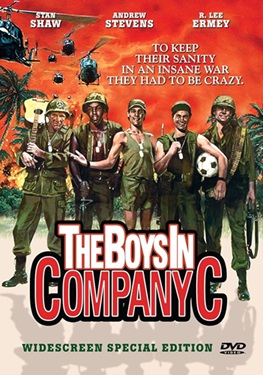
The Boys In Company C (1978, directed by Sidney J. Furie)


In 1967, a group of young men arrive at the Marie Corp. Recruit Depot in San Diego.  Tyrone Washington (Stan Shaw) is a drug dealer from Chicago who tells everyone not to mess with him and who soon emerges as a natural born leader.  Dave Brisbee (Craig Wasson) is a long-haired hippie who tried to feel to Canada and who shows up for induction in handcuffs.  Vinny Fazio (Michael Lembeck) is a cocky and streetwise kid from Brooklyn.  Billy Ray Pike (Andrew Stevens) is a country boy from Texas.  Alvin Foster (James Canning) is an aspiring writer who keeps a journal of his experiences.  Sgt. Loyce (R. Lee Ermey, making his film debut) molds them into a combat unit before they leave for Vietnam, where they discover that all of their training hasn’t prepared them for the reality of Vietnam.

The Boys In Company C has the same basic structure as Stanley Kubrick’s Full Metal Jacket, right down to R. Lee Ermey playing the tough drill sergeant.  The sharp discipline of basic training is compared to the chaos of Vietnam.  Ermey always said that he was playing a bad drill sergeant in Full Metal Jacket because he tore down the recruits but never bothered to build them back up.  In The Boys In Company C, Ermey plays a good drill sergeant, one who is tough but fair and who helps Washington reach his potential.  It doesn’t make any difference once the company arrives in Vietnam, though.  Both The Boys In Company C and Full Metal Jacket present the war in Vietnam as being run by a collection of incompetent officer who have no idea what it’s like for the soldiers who are expected to carry out their orders.

Of course, The Boys In Company C is nowhere near as good as Full Metal Jacket.  Full Metal Jacket was directed by Stanley Kubrick and it’s a chilling and relentless look at the horrors of combat.  The Boys In Company C was directed by Sidney J. Furie, a journeyman director who made a lot of movies without ever developing a signature style.  The basic training scenes are when the film is at its strongest.  When the company arrives in Vietnam, Furie struggles with the story’s episodic structure and it can sometimes be difficult to keep track of the large ensemble cast.  The Vietnam sequences are at their best when the emphasis is on the soldiers grumbling and bitching as their officers send them on one pointless mission after another.  The soccer game finale tries to duplicate the satire of the football game that ended Robert Altman’s M*A*S*H but it does so with middling results.  The Boys in Company C is a collection of strong moments that never manage to come together as a cohesive whole.

The movie is still important as one of the first major films to be made about the war in Vietnam.  However, it’s since been overshadowed by The Deer Hunter, Apocalypse Now, Platoon, and, of course, Full Metal Jacket.


#SundayShorts with THE FRIGHTENERS (1996)!


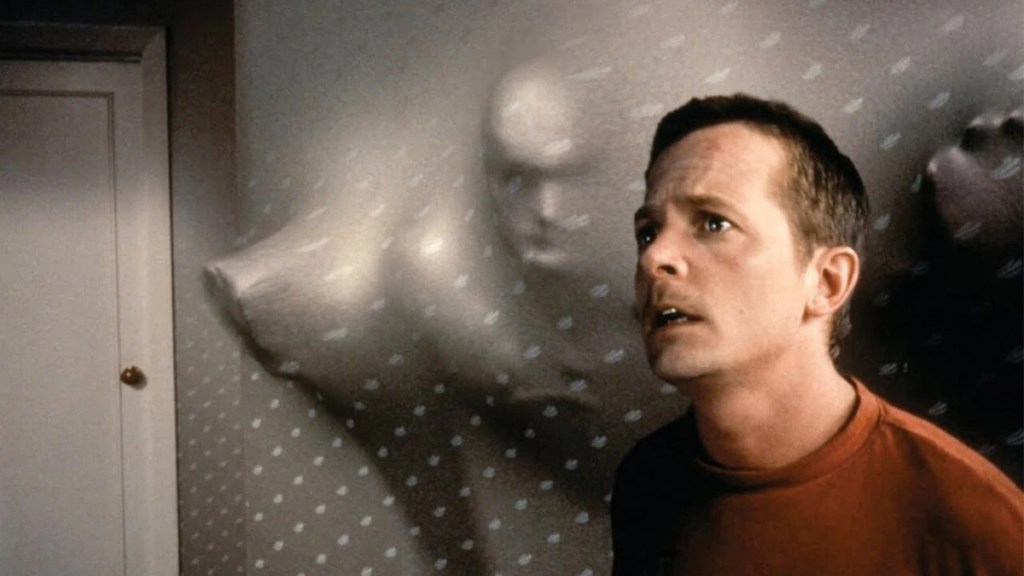
In the 1980’s I was a huge fan of Michael J. Fox. Alex P. Keaton was my hero, and BACK TO THE FUTURE and TEEN WOLF are two of my favorite 80’s movies. In the early 2000’s I became a huge fan of Director Peter Jackson due to his LORD OF THE RINGS trilogy. Made in 1996, THE FRIGHTENERS is the only Peter Jackson film I had seen prior to the LORD OF THE RINGS trilogy. I saw THE FRIGHTENERS at the movie theater in 1996, and I loved it. It was different than I was expecting going in, but it has one hell of cast. I had not seen any of Jeffrey Combs’ work prior to this movie, and he totally cracked me up. Throw in a ghostly Chi McBride whose character even references Charles Bronson* at one point, and I’m hooked. Peter Jackson directing Michael J. Fox. Now that’s a match made in heaven!

*BONUS – Chi McBride as Cyrus
:

“All right, man, this is it. We gotta be hard. No mercy. We’re going in like professionals, like Charles Bronson. We don’t stop till the screaming starts, you dig?”

Lisa Marie Reviews An Oscar Nominee: Mississippi Burning (dir by Alan Parker)


1988’s Mississippi Burning opens on a lonely Mississippi backroad in 1964.  A car is pulled over by the police.  Inside the car are three young men, one black and two white.  Judging from their nervous expressions and the sound of the people who stopped them and the fact that they’re in Mississippi during the 60s, we can guess what is about to happen to the people in the car.

With the three men, who were civil rights activists who were involved in voter registration efforts, officially considered to be missing, the FBI sends down two agents to find out what happened.  The two agents are Alan Ward (Willem DaFoe) and Rupert Anderson (Gene Hackman).  Ward is a Northerner who does things by the book and who resents having to deal with lax Southern law enforcement.  He is serious-minded and, just in case we need a reminder of how serious he is, he wears bar-rimmed glasses that make him look like the world’s most fearsome IRS agent.  Anderson is from Mississippi.  He’s a talkative good ol’ boy who was a sheriff before he joined the FBI.  “You know what has four eyes but can’t see?” Anderson asks, “Mississippi.”  It’s a tense partnership, as Ward sometimes disapproves of Anderson’s methods and Anderson thinks that Ward doesn’t understand how things work in Mississippi.

From the first minute we meet local law enforcement, we know that they’re the killers.  Just the fact that one of them are played by Brad Dourif is evidence enough.  However, no one in town is willing to say a word against the police or their cronies.  The white citizens are either too intimidated or they agree with what happened to the three civil rights workers.  (The three men are often referred to as being “outside agitators.”)  The black townspeople live in fear of the Klan and have no reason to trust the word of white FBI agents like Ward and Anderson.

Ward and Anderson investigate the case, hoping that they can find some bit of evidence that will prove the guilt of Sheriff Stuckey (Gailard Sartain), Deputy Pell (Brad Dourif), KKK leader Clayton Townley (Stephen Tobolowsky), and maybe even the town’s mayor (R. Lee Ermey).  One advantage that the FBI has is that the murderers are incredibly stupid.  Another is that Deputy Pell’s abused wife (Frances McDormand, giving the film’s best performance) might be persuaded to testify against her husband.

Mississippi Burning is an example of both powerful filmmaking and problematic history.  Like Ridley Scott, director Alan Parker got his start making commercials and he brought the same sensibility to his movies.  He knew what audiences wanted to see and he made sure to give it to them.  Mississippi Burning looks fantastic and is full of memorable performances.  (Both McDormand and Hackman received Oscar nominations).  The action moves quickly and the villains are so hateful that watching them end up getting humiliated really does bring about a sort of emotional release.

At the same time, this is a film about the Civil Rights era that presents the FBI as being the heroes.  And while it’s true that the FBI did investigate the real-life murders that inspired this film, Mississippi Burning leaves out the fact that the FBI was just a rigorous in harassing and wire tapping Martin Luther King as they were in keeping an eye on the leaders of the Klan.  It’s a film about racism in which the heroes are as white as the villains.  Gene Hackman gives a good performance as Rupert Anderson but the film never really delves all that deeply into Anderson’s feelings about racism in the South.  We’re told that he was a sheriff in Mississippi but we never learn much about what type of sheriff Anderson was.  He’s opposed to the Klan but, historically, the same can be said of many segregationists in the 60s, many of whom felt the Klan’s activities brought unwanted federal attention to what was happening in their home states.  By not delving into Anderson’s own history as a member of Mississippi law enforcement or the FBI’s own more problematic history when it comes to the civil rights movement, the film provides viewers with the escape of viewing the bad guys as being aberrations as opposed to being the norm in 1964.  In the end, Mississippi Burning is an effective thriller with strong heroes and hateful villains.  Just don’t watch it for historical accuracy.

Mississippi Burning was nominated for Best Picture but it lost to Rain Man.

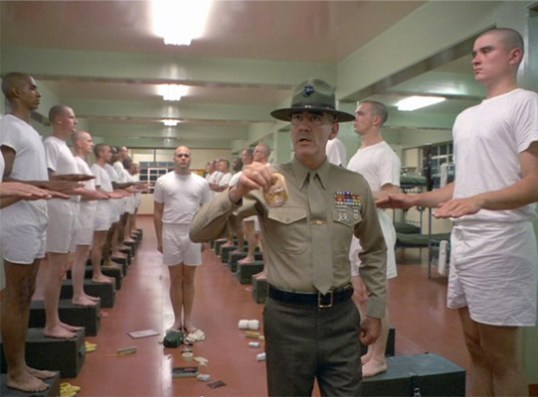
Scenes That I Love: Hartman Welcomes The Recruits In Full Metal Jacket


Today, on what would have been Stanley Kubrick’s birthday, our scene comes from 1987’s Full Metal Jacket.  

By most account, Kubrick was a director who did not regularly encourage improvisation but he apparently made an exception while filming Full Metal Jacket, allowing R. Lee Ermey to come up with his own dialogue for the majority of his scenes as Sgt. Hartman.  At one point, Kubrick apparently even asked Ermey to clarify what some of his more colorful lines were referring to.

In this scene, Hartman meets his latest batch of recruits and lets them know that they are the lowest of the low.  One thing that is often missed about this scene is that Ermey specifically played Hartman as being a drill instructor who was bad at his job, as someone who broke down his recruits but failed to build them back up.  (Being a former drill instructor, Ermey knew what he was talking about.)  It’s a bit ironic that, to many, Ermey’s Hartman is the first character they think of when they think of a drill instructor.

10 Oscar Snubs From the 1980s


Ah, the 80s! Ronald Reagan was president. America was strong. Russia was weak. The economy was booming. The music was wonderful. Many great movies were released, though most of them were not nominated for any Oscars. This is the decade that tends to drive most Oscar fanatics batty. So many good films that went unnominated. So many good performers that were overlooked.  Let’s dive on in!

1980: The Shining Is Totally Ignored

Admittedly, The Shining was not immediately embraced by critics when it was first released.  Stephen King is still whining about the movie and once he went as far as to joke about being happy that he outlived Stanley Kubrick.  (Not cool, Steve.)  Well, none of that matters.  The Shining should have been nominated across the board.  “Come and play with us, Danny …. AT THE OSCARS!”

1981: Harrison Ford Is Not Nominated For Best Actor For Raiders of the Lost Ark

Raiders received a lot of nominations.  Steven Spielberg was nominated for Best Director.  The film itself was nominated for Best Picture.  (It lost to Chariots of Fire.)  But the man who helped to hold the film together, Harrison Ford, was not nominated for his performance as Indiana Jones.  Despite totally changing the way that people looked at archeologists and also making glasses sexy, Harrison Ford was overlooked.  I think this was yet another case of the Academy taking a reliable actor for granted.

1982: Brian Dennehy Is Not Nominated For Best Supporting Actor For First Blood

First Blood didn’t receive any Oscar nominations, not even in the technical categories.  Personally, I think you could argue that the film, which was much more than just an action film, deserved to be considered for everything from Best Actor to Best Director to Best Picture.  But, in the end, if anyone was truly snubbed, it was Brian Dennehy.  Dennehy turned Will Teasle into a classic villain.  Wisely, neither the film nor Dennehy made the mistake of portraying Sheriff Teasle as being evil.  Instead, he was just a very stubborn man who couldn’t admit that he made a mistake in the way he treated John Rambo.  Dennehy gave an excellent performance that elevated the entire film.

1984: Once Upon A Time In America Is Totally Ignored

It’s not a huge shock that Once Upon A Time In America didn’t receive any Oscar nominations.  Warner Bros. took Sergio Leone’s gangster epic and recut it before giving it a wide release in America.  Among other things, scenes were rearranged so that they played out in chronological order, the studio took 90 minutes off of the run time, and the film’s surrealistic and challenging ending was altered.  Leone disowned the Warner Bros. edit of the film.  Unfortunately, in 1984, most people only saw the edited version of Once Upon A Time In America and Leone was so disillusioned by the experience that he would never direct another film.  (That said, even the edited version featured Ennio Morricone’s haunting score, which certainly deserved not just a nomination but also the Oscar.)  The original cut of Once Upon A Time In America is one of the greatest gangster films ever made, though one gets the feeling that it might have still been too violent, thematically dark, and narratively complex for the tastes of the Academy in 1984.  At a time when the Academy was going out of its way to honor good-for-you films like Gandhi, it’s probable that a film featuring Robert De Niro floating through time in an Opium-induced haze might have been a bridge too far.

1985: The Breakfast Club Is Totally Ignored

Not even a nomination for Best Screenplay!  It’s a shame.  I’m going to guess that the Academy assumed that The Breakfast Club was just another teen flick.  Personally, if nothing else, I would have given the film the Oscar for Best Original Song.  Seriously, don’t you forget about me.

1986: Alan Ruck Is Not Nominated For Best Supporting Actor For Ferris Bueller’s Day Off

Poor Cameron!

1986: Blue Velvet Is Not Nominated For Best Picture

Considering the type of films that the Academy typically nominated in the 80s, it’s something of a shock that David Lynch even managed to get a Best Director nomination for a film as surreal and subversive as Blue Velvet.  Unfortunately, that was the only recognition that the Academy was willing to give to the film.  It can also be argued that Kyle MacLachlan, Laura Dern, Isabella Rossellini, and Dean Stockwell were overlooked by the Academy.  Dennis Hopper did receive a Supporting Actor nomination in 1986, though it was for Hoosiers and not Blue Velvet.

1987: R. Lee Ermey Is Not Nominated For Best Supporting Actor For Full Metal Jacket

One of the biggest misconceptions about Full Metal Jacket is that R. Lee Ermey was just playing himself.  While Ermey was a former drill instructor and he did improvise the majority of his lines (which made him unique among actors who have appeared in Kubrick films), Ermey specifically set out to play Sgt. Hartmann as being a bad drill instructor, one who pushed his recruits too hard, forgot the importance of building them back up, and was so busy being a bully that he failed to notice that Pvt. Pyle had gone off the deep end.  Because Ermey was, by most accounts, a good drill instructor, he knew how to portray a bad one and the end result was an award-worthy performance.

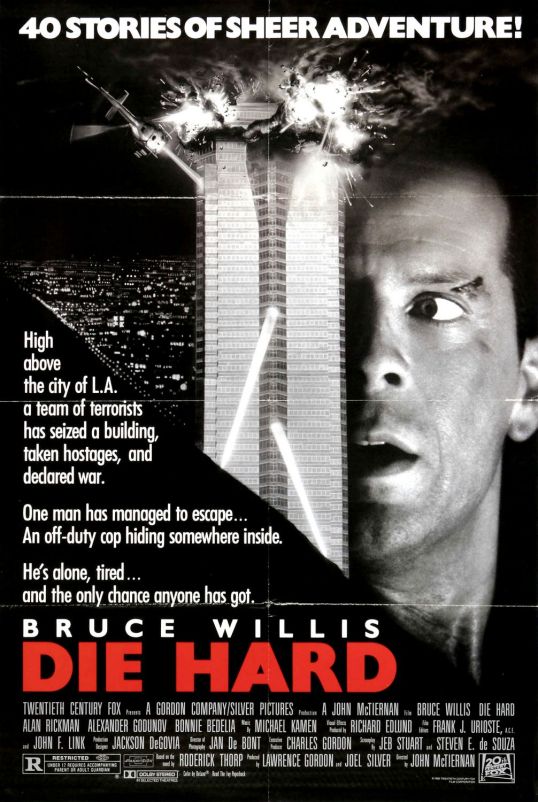
1988: Die Hard Is Not Nominated For Best Picture, Actor, Supporting Actor, or Director

Die Hard did receive some technical nominations but, when you consider how influential the film would go on to be, it’s hard not to feel that it deserved more.  Almost every action movie villain owes a debt to Alan Rickman’s performance as Hans Gruber.  And Bruce Willis …. well, all I can say is that people really took Bruce for granted.

1989: Do The Right Thing Is Not Nominated For Best Picture

Indeed, it would take another 30 years for a film directed by Spike Lee to finally be nominated for Best Picture.

Agree?  Disagree?  Do you have an Oscar snub that you think is even worse than the 10 listed here?  Let us know in the comments!

Up next: It’s the 90s!

The Terror Within II (1991, directed by Andrew Stevens)


Two years after ripping off Alien with The Terror Within, producer Roger Corman decided to rip it off a second time with The Terror Within II.  This time, star Andrew Stevens hopped into the director’s chair and, along with the sex-crazed monsters, a religious cult was also added.  A year after The Terror Within II was released, Alien 3 was released and it also featured a religious cult.  Was it a coincidence or was Roger Corman predicting the future?

Speaking of the future, The Terror Within II returns us to the crappy future that was predicted by the first film.  As the previous film’s only survivor, scientist Andrew Stevens is walking across Colorado to take a position at yet another lab.  Along the way, he meets a young woman named Ariel (Clare Hoak).  No sooner have they met than they’re doing their bit to repopulate the human race.  Meanwhile, a cult wants to kidnap Ariel and offer her up to the mutants.  (The mutants were called Gargoyles in the first film.  Now, they’re called Lusus.)

Meanwhile, at the other lab, the scientists, including Stella Stevens and R. Lee Ermey, are studying a mutated finger, which appears to be spontaneously regenerating into a Gargoyle or a Lusus or whatever its called now.  Does it occur to anyone at the lab that growing their own monster is a stupid idea?  No.  Humanity is doomed.

The Terror Within II was shot for even less money than the first film but it’s also a marked improvement.  That’s mostly due to Andrew Stevens being a far more competent filmmaker than the director who did the first film.  Stevens know how to shoot an action scene and, when the monsters inevitable do end up storming the lab, it’s more exciting in the second film than it was in the first.  Plus, whereas The Terror Within only had George Kennedy to lend it some class, The Terror Within II has both R. Lee Ermey and Stella Stevens!  It’s an improvement, all around.

Unfortunately, there was never a third film.  The Lusus probably would have won anyways.  There’s only so many underground labs that humanity can hide out in.

Gunshy (1998, directed by Jeff Celentano)


Burned-out writer Jake Bridges (William L. Petersen, a year or two before CSI) comes home one day to discover his wife in bed with another man.  Jake, who is already suffering from an epic case of writer’s block, goes to Atlantic City and tries to drink his troubles away.  When the bitter Jake gets into a bar fight, he’s saved by Frankie (Michael Wincott).  Frankie takes Jake back to his house, where Jake meets Frankie’s girlfriend, Melissa (Diane Lane).  Jake also discovers that Frankie works as a debt collector for a local mob boss, Lange (Michael Byrne).

Frankie and Jake strike up an unexpected friendship.  Jake wants to experience what it’s like to be a real tough guy.  Frankie wants to improve his vocabulary.  Frankie agrees to take Jake with him when he makes his collections on the condition that Jake recommend a book to him.  Soon, Jake is pretending to be a gangster and Frankie is reading Moby Dick.  Frankie shows Jake how to be intimidating.  Jake explains the symbolism of Ahab’s quest to Frankie.  They become good friends, with the only possible complication being that Jake is falling in love with Melissa.

For a low-budget neonoir that, as far as I know, never even got a theatrical release before being released to video, Gunshy is surprisingly good.  The plot may sometimes be predictable but Petersen and especially Wincott give good performances and they both play off of each other well.  Diane Lane is undeniably sexy but also bring a fierce intelligence and a sense of wounded dignity to the role of Melissa.  This is a love triangle where you want things to work out for all three of the people involved.  The rest of the cast is full of familiar faces.  Keep an eye out for everyone from R. Lee Ermey to Meat Loaf.  Director Jeff Celantano keeps the story moving and proves himself to be adept at balancing scenes of violence with scenes where Frankie and Jake simply discuss their differing views of the world.

An unjustly obscure film, Gunshy is a 90s film that deserves to be rediscovered.


How R. Lee Ermey Made AP History Fun


Years ago, during my senior year of high school, my AP History teacher taught us about Vietnam by bringing in a movie.  He explained that the movie featured some “adult language” and was not always easy to watch.  He also said that it was the most realistic portrayal of basic training ever put on film.  Seeing as how he was a former Marine himself, we took his word for it.

That movie, of course, was Full Metal Jacket.  The class loved the movie, though not in the way that our teacher was hoping.  He was hoping that we would pick up on the film’s anti-war theme but instead we were all obsessed with Gunnery Sergeant Hartmann, the tough-as-nails drill sergeant played by R. Lee Ermey.  It didn’t matter that Hartmann probably wouldn’t have welcome any of us into his beloved corp.  (The majority of the class may have had Private Joker’s wit but they also had Private Pyle’s physisque.)  From the minute that Hartmann started yelling at the recruits, the class thought he was the coolest and toughest sonuvabitch of all time.  We were supposed to be learning that war was Hell and dehumanizing but we just wanted to listen to Hatmann yell about Mary Jane Rottencrotch and her pink panties.

Looking back, I feel bad for my teacher.  He wanted to show us the horrors of Vietnam and instead, he ended up with a bunch of students who wouldn’t stop chanting, “I don’t know but I’ve been told/Eskimo pussy is mighty cold!”  Every class debate, there was always a chance that someone would respond to an opposing argument by saying, “You wouldn’t even have the common courtesy to give him a reach around!”

I won’t even get into the number of times that, for the rest of the year, the term “skull fuck” was used in class discussions.

http://www.youtube.com/watch?v=3j3_iPskjxk

Full Metal Jacket is an anti-war film.  The first half may be dominated by Sgt. Hartmann turning the recruits into “perfect” killing machines but the second half features those machines being picked off, one-by-one, by an unseen sniper in a bombed-out building.  All of Hartmann’s words about the brotherhood of duty are meant to ring hollow as we watch one teenage girl gun down Marine after Marine.  Perhaps they would have if Hartmann had been played by anyone other than R. Lee Ermey.

One reason why Ermey was so believable as Hartmann was because he actually had been a drill instructor.  In 1961, R. Lee Ermey was 17 years old and had two arrests for criminal mischief on his record when a judge told him that he could either go to jail or he could join the military.  Ermey chose to enlist.  He served in the Marines for 11 years, getting a medical discharge in 1972.

He began his film career as a technical advisor to Francis Ford Coppola during the shooting of Apocalypse Now.  This led to him playing Sgt. Loyce, a drill instructor in The Boys of Company C.

http://www.youtube.com/watch?v=XAi25BQozK4

(The shooting of Apocalypse Now was so drawn out that The Boys of Company C actually ended up getting released a year before Coppola’s epic.)

Originally, Ermey was only hired to serve as a technical advisor on Full Metal Jacket.  It wasn’t until Ermey put together an instructional video for Tom Colceri, the actor who had previously been cast as Sgt. Hartmann.  When Full Metal Jacket‘s director, Stanley Kubrick, saw the tape, he replaced Colceri with Ermey.  (Colceri still appears in the film.  He plays the helicopter door gunner who brags about shooting 50 water buffalo.)

Kubrick not only gave Ermey his most famous role but he also allowed Ermey to improvise much of his dialogue, something that was practically unheard of on a Kubrick set.  Kubrick also said that it usually only took 2 or 3 takes for Ermey to give him what he was looking for.  That was a high compliment from Stanley Kubrick, the man who, during the filming of The Shining, made Scatman Crothers do over a hundred takes of one scene.

Ermey’s performance as Hartmann was so iconic and so quotable that it has become the standard by which all other film drill instructors are judged.  It also made Ermey a much-in-demand character actor.  Many of the roles that Ermey played were designed to capitalize on his fame as Hartmann.  He played the a ghost of a drill instructor in The Frighteners.  He was the voice of Sarge in three Toy Story films.

In a few films, R. Lee Ermey got a chance to show that he was capable of more than just playing variations on Sgt. Hartmann.  In Prefontaine, he played the legendary coach and Nike co-founder Bill Bowerman.  He was a police captain in Se7en and the father of a murdered girl in Dead Man Walking.  In the two remakes of The Texas Chainsaw Massacre, he was Leatherface’s equally depraved uncle.

R. Lee Ermey died yesterday at the age of 74 but his performances will live on forever.

RIP, Sarge.  Thank you for making AP History fun.