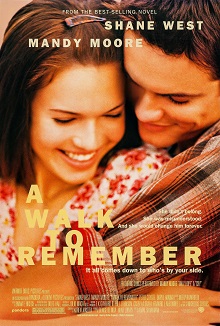
After popular high school student Landon Carter (Shane West) gets busted for drinking on school property and pulling a prank that nearly killed another student, he’s given a choice. He can either be expelled or he can tutor other students and take part in the school play. At both tutoring and play rehearsals, he gets to know Jamie Sullivan (Mandy Moore), the daughter of the local reverend (Peter Coyote). Even though Jamie doesn’t wear makeup and only owns one sweater, Landon falls in love with her. Too bad she’s dying.
A Walk To Remember is a movie that I can remember walking down to the movie theater to see with my friends. Shane West was so handsome. Mandy Moore was so beautiful, even if she did only own one sweater. The film taught us all that there’s nothing more romantic than falling in love when you only have a year to live. (At least, that’s what it taught us girls. The boys just learned that they could nearly kill someone and their only punishment would be having to appear in a school play.) I loved it when I first saw it and I still enjoyed it when I rewatched it yesterday, even if I now realize that it never made sense that Mandy Moore would only own one sweater. There’s a lot about the movie that doesn’t make any sense but Shane West and Mandy Moore had that irresistible chemistry. Early on, when Jamie warns Landon not to fall in love with her and Landon says it will never happen, that’s when everyone knows that they’re destined to be together.
The movie still made me cry, even though I now know that someone has to die in every Nicholas Sparks story. Getting married right out of high school makes sense when one of you is going to be dead before college reopens for the fall. Did Landon ever remarry? He better not have. I will never forget A Walk To Remember.
Though the Academy of Motion Picture Arts and Sciences claim that the Oscars honor the best of the year, we all know that there are always worthy films and performances that end up getting overlooked. Sometimes, it’s because the competition too fierce. Sometimes, it’s because the film itself was too controversial. Often, it’s just a case of a film’s quality not being fully recognized until years after its initial released. This series of reviews takes a look at the films and performances that should have been nominated but were, for whatever reason, overlooked. These are the Unnominated.
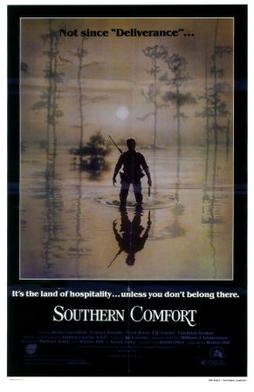
1981’s SouthernComfort takes place in 1973. While America tries to wind down its presence in Vietnam, a squad of nine National Guardsmen take part in war games in the Louisiana bayous. The squad is led by the ineffectual Sgt. Crawford Poole (Peter Coyote) while other members include the trigger-happy Lonnie Reece (Fred Ward), the weed-smoking Tyrone Cribbs (T.K. Carter), the cowardly Private Simms (Franklyn Seales), and the tightly-wound Coach Bowden (Alan Autry). Poole may be in charge but most of the members of the squad seem to look up to the laid-back and friendly Private Spencer (Keith Carradine). The newest member of the squad is Charles Hardin (Powers Boothe), a sober-minded transfer from Texas who doesn’t seem to get along with anyone but Spencer.
With the exception of Poole and Hardin, no one takes the weekend maneuvers seriously until they find themselves lost in the bayou and it becomes obvious that Poole has no idea what he’s doing. When they come across some canoes that belong to some Cajun trappers, they decide to “borrow” them. When the trappers protest, Reece fires his weapon at them. Reece’s gun is loaded with blanks but the trappers don’t know that. They fire back, killing Poole.
The national guardsmen now find themselves lost and being stalked by the trappers, a largely unseen force that always seems to attack out of nowhere. The men have no idea where they are. The trappers, on the other hand, have lived in the swamps their entire lives. The guardsmen bicker and argue over the best way to respond. Some want to fight back and some just want to get back to civilization. One-by-one, the men are picked off until only two remain.
Though the film is a somewhat heavy-handed metaphor for the Vietnam War, SouthernComfort is still a deeply affecting and suspenseful mix of horror and action. Director Walter Hill keeps the action moving at a quick pace and the film, which was shot on location and featured scenes shot during an actual Cajun celebration, perfectly captures the languid yet ominous atmosphere of the bayous. As soon as the men see those canoes unattended, we know that they’re going to steal them and that they are making the biggest mistake of their lives. Keith Carradine and Powers Boothe both give powerful performances in the lead roles and the members of the supporting cast — especially Alan Autry and Fred Ward — make a strong impression as well. I especially liked the performance of Brion James, who has a small role as a one-armed Cajun who is more crafty than he looks.
Being a mix of horror and action, it’s probably not a shock that SouthernComfort was ignored by the Academy. At the very least, I would have found room for Ry Cooder’s original score and Andrew Laszlo’s haunting cinematography.
Subverting the Zombie Canon: Satire, Genre-Bending, and Decay in the Return of the Living Dead Series
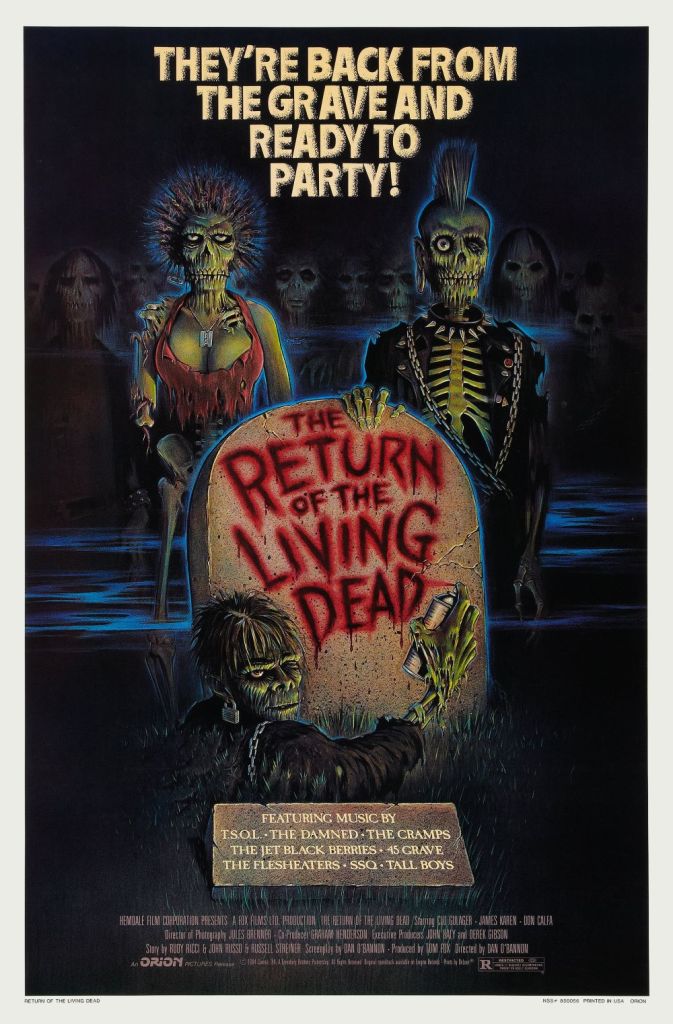
When talking about cult horror films, the Return of the Living Dead series holds a special place—not only as a spin-off from George A. Romero’s seminal Night of the Living Dead, but as a unique creative force in its own right. Thanks to a legal split between Romero and co-writer John Russo over rights to the “Living Dead” name, Russo and director Dan O’Bannon got to imagine a parallel zombie universe. This franchise quickly carved out its own identity, mixing horror, black comedy, and punk spirit in a way that both paid tribute to and upended zombie tropes.
Reinventing Zombie Lore with a Wink
The original Return of the Living Dead (1985) starts with a clever “what if” twist: what if Romero’s Night wasn’t just a movie, but a dramatized cover-up of a real government disaster? This meta idea instantly frames the film as self-referential and playful, setting a tone unlike anything out at the time.
Central to the film’s identity is the invention of 2-4-5 Trioxin, a fictional military chemical designed to clear marijuana crops which instead raises the dead—zombies with surprising new abilities. Unlike the slow, drooling zombies Romero popularized, these ghouls sprint, talk, and set traps. Their hunger is peculiar as well: they crave brains exclusively, as it eases the pain of being undead. And the old rules of zombie combat? Forget shooting them in the head. These zombies resist it, raising the stakes and scare factor.
This refreshing rewrite of zombie rules allowed the movie to be both frightening and fun. The zombies were smart but still monstrous, turning classic horror expectations on their head in a way that invited both laughter and fear—a tricky balance that few horror comedies manage.
Playing with Comedy, Panic, and Punk Rock
One of the greatest strengths of the original film is how it embraces horror-comedy so naturally. It doesn’t shy away from being funny while still delivering tension. James Karen and Thom Mathews excel as the main pair—Karen’s frantic, over-the-top panicked man paired with Mathews’ straight, slowly succumbing counterpart create a perfect comedic rhythm. Their slow transformation into zombies adds a tragic dimension to what could have been simple slapstick. Meanwhile, Don Calfa’s mortician character and Clu Gulager’s warehouse owner provide a grounded center amidst chaos.
The punk subculture flavor adds another unique texture. Linnea Quigley’s famous graveyard striptease encapsulates the 1980s’ blend of irreverence, sexuality, and horror obsession. The scene is shocking, hilarious, and iconic—one of those moments that encapsulates everything this film is about: having fun with taboos while not losing the darker undercurrents of mortality and decay.
Beyond laughs, there’s biting satire here. The film skewers the government and military’s hubris—scientists create a superweapon they can’t control, leading to chaos and destruction. This reflects 1980s American anxieties about bioweapons, government cover-ups, and nuclear fears. Horror and comedy collide to reflect cultural distrust and paranoia.
The Problem of the Sequel: Part II’s Familiar Ground
When Return of the Living Dead Part II came out in 1988, it felt like the franchise was stuck in a loop. With much of the original cast returning in near-identical roles, and lines and situations seemingly recycled, the film circles back to the same story. This self-copying invites a mix of amusement and disappointment: it seems the filmmakers didn’t believe they could improve on the original and decided to replicate it instead.
While it has its moments—good practical effects and a rollicking tone reminiscent of the first film—it leans harder into comedy, sometimes at the expense of the horror. The suburban setting and clearer military lockdown raise the action stakes, but the humor feels broader and less sharp, which can make the movie seem a bit cartoonish.
In a way, Part II comments on the pitfalls of horror franchises: once you’ve struck gold with an unexpected idea, sequels often struggle to regain that freshness. This installment is entertaining, but signals the beginning of the franchise’s creative plateau.
Much Darker Territory: Part III’s Horror and Romance
With Return of the Living Dead 3 in 1993, things take a major tonal shift. Brian Yuzna’s direction removes much of the comedy and replaces it with body horror, gore, and a genuinely tragic romance. The story centers on Curt and Julie, two teenagers tragically pulled into the military’s secret zombie experiments. After Julie is accidentally killed and resurrected, she becomes a zombie who feeds on brains but manages her hunger through extreme self-inflicted pain.
This grim take pushes the franchise into more serious, intense horror territory, with heavy themes of love, loss, and bodily autonomy threaded throughout. Julie’s tortured transformation is both tragic and unsettling, symbolizing not only the loss of life but also the torment of trying to hold onto humanity while losing it from within.
Yuzna’s effects are grisly in the finest tradition of ‘90s practical SFX. The film revives the franchise’s sense of danger and stakes by mixing romance with horror, delivering something emotionally resonant and viscerally impactful. While it diverges sharply from the earlier comedic tone, Part III proves the series’ flexibility and capacity for reinvention.
Creative Collapse: Parts IV and V’s Direct-to-Cable Downfall
Sadly, the wheels come off with Return of the Living Dead 4: Necropolis and 5: Rave to the Grave, both made in 2005 and directed by Ellory Elkayem. Shot back-to-back and released direct-to-cable, these films are pale shadows of the earlier entries.
They ditch the original’s clever mix of horror and humor entirely. Instead, we get generic corporate conspiracies, confusing Eastern European settings, weak scripts, and inconsistent zombie characterizations. The zombies lose their unique “brains only” horror and instead act like run-of-the-mill undead. Even the acting is amateurish, with only Peter Coyote standing out briefly as a sinister scientist.
Part 5 further muddies continuity by introducing Trioxin as a rave drug, leading to a chaotic rave/zombie apocalypse scenario that is both baffling and poorly paced. The low-budget effects and uneven pacing betray the exhaustion and lack of passion behind these entries.
These final two films underscore a common fate for franchises that outlive their creative spark—once inventive mythology becomes shallow cliché, and attempts to cash in feel uninspired. Instead of honoring their roots, they become muddled and forgettable.
Why the Series Matters
Despite its uneven legacy, Return of the Living Dead remains important for what it dared to do in horror cinema. The first film’s originality influenced countless horror comedies and redefined how zombies could be portrayed. Its self-awareness and invention paved the way for postmodern horror, where genre is as much about commentary as it is fear.
The third film’s daring shift to tragic body horror further demonstrated the potential for zombie films to explore complex emotional and societal themes beyond gore or giggles.
While the later sequels falter, their failure serves as a cautionary tale about the dangers of diluting distinct voices and creative risks in franchise filmmaking.
Ultimately, Return of the Living Dead survives in cultural memory as a zombie series that captured the spirit of its time—punk rebellion, Cold War paranoia, and genre self-mockery—with flashes of brilliance that continue to entertain and inspire.
Ray Mercer (Peter Weller) has just gotten out of prison and already, he and his wife Rebecca (Tia Carrere) are heading to Nevada for a quicky divorce. However, a stopover in Las Vegas leads to Ray having a run of luck in a casino owned by Charles Atlas (Dennis Hopper). Ray and Rebecca start to reconsider their divorce but their reconciliation is temporarily put on hold when the casino is robbed by a bunch of thieves led by Martin Kove. Because of Ray’s criminal history, the police (led by David Alan Grier) consider Ray to be the number one suspect. Ray and Rebecca try to escape from the casino and clear Ray’s name, leading to a night on nonstop action and an explosive climax at the Hoover dam.
One thing that you can say about Top of the World is that it certainly isn’t boring. The action starts earlier and lasts nonstop until the end of the movie. No sooner has Ray escaped from one scrape than he finds himself in another. Despite the low-budget, the action scenes are often spectacularly staged and exciting to watch. Another thing that you can say about Top of the World is that, for a B-movie, it certainly has a packed cast. Along with Weller, Carrere, Hopper, Grier, and Kove, the movie also finds room for Peter Coyote, Joe Pantoliano, Ed Lauter, Gavan O’Herlihy, Eddie Mekka, Cary-Hiroyuki Tagawa, and even Larry Manetti of Magnum P.I. fame. This movie paid off a lot of mortgages and probably funded more than a few vacations.
One thing you can’t say about Top of the World is that it makes any sense. It doesn’t. There are so many holes in the plot that you could fly a helicopter through them and that’s exactly what this film does. But with the nonstop action and the entertaining cast, most people won’t mind. I certainly didn’t!
Welcome to Retro Television Reviews, a feature where we review some of our favorite and least favorite shows of the past! On Sundays, I will be reviewing the made-for-television movies that used to be a primetime mainstay. Today’s film is 1967’s The Hippie Temptation! It can be viewed on YouTube.
“This is a hippie,” a sober and serious voice says over the image of a rather clean-cut young man sitting in a park.
So starts the 1967 CBS news documentary, The Hippie Temptation. Hosted by a white-haired and distinguished voiced journalist named Harry Reasoner, The Hippie Temptation takes a look at the subculture that, in 1967, was taking the youth of America by storm. Reasoner walks through the Haight Ashbury neighborhood of San Francisco, followed by a group of hippies who hang on every word.
Hippies, Harry explains, their very name suggests that they are hip!
Harry Reasoner talks about how the hippies are predominantly liberal and say that they are dropping out of a society that they consider to be hypocritical. They have no interest in what their straight parents are concerned with. Harry’s tone goes from being gently condescending to rather alarmed as he explains that hippies use a new illegal drug called LSD to try to open up their minds. The bad trip, Harry says, is always a possibility and suddenly, the screen is full of Dutch angle images of San Francisco.
The majority of this documentary focuses on the dangers of LSD. A pipe-smoking scientist shows a diagram of a chromosome of a repeated LSD user. The repeated use of LSD is compared to having epilepsy. Harry says that LSD is illegal in California but it’s still easy to find in San Francisco. No mention is made of marijuana or heroin or any of the other drugs that may have been a part of the Haight Ashbury scene.
Harry is a bit surprised that the hippies are not particularly concerned about what the scientists think about LSD. The Hippie Temptation is to not care about consequences and to instead do whatever you want. Harry discusses how the hippies claim not to care about money or material things but, as he points out, some people are getting rich in Haight Ashbury. He drops in to visit a local band called the Grateful Dead “who appear to be living in affluence.” The members of the band admit that they also use LSD and other drugs. Harry shows us a performance of the Grateful Dead performing and comments on how the light show is designed to imitate a psychedelic experience.
(Along with the Grateful Dead, future actor Peter Coyote also appears briefly, giving out free food as a member of a collective called The Diggers.)
Hippies can make money, Harry says, if they can find an employer who doesn’t mind long hair and strange clothing. It’s hard not to smile at this comment because, by today’s standards, the hippies in this documentary look remarkably preppy and almost conservative. Turtlenecks, colorful shirts, and neck length hair no longer come across as being the height of rebellion. The majority of the hippies that Harry talks to look like they could be accountants.
This is one of those documentaries where the older generation tries to figure out why their kids are so weird. It’s hard not to smile at the sight of a clearly uncomfortable Harry Reasoner being surrounded by a bunch of future accountants and middle managers. That said, this documentary was an interesting time capsule. It was a chance to see a firsthand account of what people were worried about in 1967.
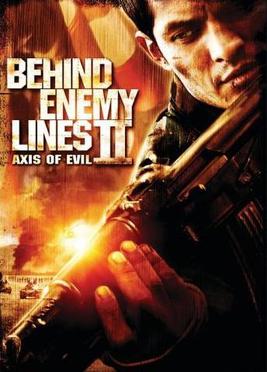
After an intelligence satellite reveals that the North Koreans have built a nuclear missile that can hit anywhere in the world and that they’re currently pointing the missile right at the United States, the President (Peter Coyote) orders a team of Navy SEALs to parachute into North Korea and take out the missile site. At the last minute, the mission is canceled but two SEALs have already jumped out of the airplane and two more follow because a SEAL leaves no man behind.
While the world sits on the brink of war, the stranded SEALs attempt to reach the missile site and knock it out of commission. Unfortunately, two of the SEALs get killed by the North Koreans and the two survivors end up getting captured and are forced to undergo extreme torture. With time running out, the president authorizes a military strike on the missile site, a move that could plunge the world into a nuclear war. It’s now up to Lt. James (Nicholas Gonzalez) and Master Chief Callaghan (Matt Bushell) to escape from the North Koreans and complete their mission before the stealth bombers show up and do their thing.
Behind Enemy Lines II: Axis of Evil has nothing to do with the previous Behind Enemy Lines film, beyond featuring a Naval officer stranded in enemy territory. Behind Enemy Lines II: Axis of Evil is one of those films that should be simple and easy to follow but it’s so frantically directed and edited that it’s actually difficult to understand what’s going on from scene to scene. This isn’t a case where, as in Black Hawk Down, the film is deliberately confusing in order to show what it would be like to be under enemy fire. Instead, Behind Enemy Lines II feels as if it was edited by someone who was getting paid per jump cut. It becomes difficult to keep track of who is shooting at who and the overuse of the shaky handheld camera effect didn’t help. Also, for some reason, there are some fantasy sequences that feel as if they belong in a different movie.
The scenes in Washington D.C., where the President and his advisers debate whether or not to plunge the world into war, are marginally better. Peter Coyote has the right amount of moral authority to play the president and the great Glenn Morshower (you may remember him as Aaron of the Secret Service on 24) plays the admiral who suggests that maybe it would be a good idea not to hastily destroy the world. Because this movie was made in 2006, the actress playing the Secretary of State is a dead ringer for Condoleezza Rice.
Behind Enemy Lines II is not a good movie but it made enough money to get a sequel, which I’ll review tomorrow.
You have to give the makers of the 1996 film, Unforgettable, some credit. It takes a certain amount of courage to give your movie a title like Unforgettable. You’re practically asking some snarky critic to comment on the fact that she can’t remember your movie.
Well, I’ll resist the temptation because I can remember enough about this movie to review it. I saw it a few days ago on This TV and, at first, I was excited because it was a Ray Liotta movie. Ray Liotta is an entertaining and likable actor who, nowadays, only seems to get cast in small, tough guy roles. Nowadays, a typical Liotta role seems to be something like the character he played in Killing Me Softly. He showed up. He was tough. He got killed for no good reason. So, whenever you come across a film in which Liotta gets to do something more than just get shot, you kind of have an obligation to watch.
In Unforgettable, Liotta plays Dr. David Krane, who is haunted by the unsolved murder of his wife. Fortunately (or perhaps, unfortunately), Dr. Martha Briggs (Linda Fiorentino) has developed a formula that can be used to transfer memories from one person to another. All you have to do is extract some spinal fluid! Or something like that. It doesn’t make any sense to me and I have to admit that I kinda suspect that the science might not actually check out.
Anyway, Dr. Krane is all like, “I want to inject myself with my dead wife’s spinal fluid so I can experience her final moments!”
And Dr. Briggs is all like, “But this could kill you because there’s all these vaguely defined side effects!”
But Dr. Krane does it anyway and he discovers that his wife was murdered by a lowlife criminal named Eddie Dutton (Kim Coates)! So, Dr. Krane chases Eddie all ocer the city and it’s interesting to see that a doctor can apparently keep up with a career criminal. I mean, you would think that Eddie’s experience with being chased and Krane’s inexperience with chasing would give Eddie an advantage. Anyway, regardless, it doesn’t matter because Eddie is eventually gunned down by the police and Dr. Krane is fired from his job.
Hmmm … well, that was quick. I guess the movie’s over…
No, not quite! It turns out that someone hired Eddie to kill Dr. Krane’s wife! And it turns out that person was a cop! But which cop!? Well, there’s only two cops in the film who actually have any lines so it has to be one of them. And one of the cops is so unlikable that it’s obvious from the start that he’s a red herring. So, I guess that means the actual murderer is the one that you’ll suspect from the first moment he shows up.
(For the record, the two cops are played by Christopher McDonald and Peter Coyote. I won’t reveal which one is unlikable and which one is a murderer but seriously, you’ve already guessed, haven’t you?)
Anyway, it’s all pretty stupid and a waste of everyone involved. Ray Liotta is likable and sympathetic but the film gets bogged down with trying to convince us that crimes can be solved through spinal fluid. It’s a dumb premise that the movie takes way too seriously and it never quite works.
Still, I hope that someone will give Ray Liotta another good role at some point in the future. He deserves better than supporting roles and Chantix commercials.
Two weeks ago, while I was sick in bed, I watched The Legend of Billie Jean, a deeply silly movie from 1985.
Okay, get this. Billie Jean (Helen Slater) and her younger brother, Binx (an incredibly young Christian Slater), live in Corpus Christi, Texas. Binx has always wanted to go to Vermont. That right there should tell you just how silly this movie is. Not only does it feature a character named Binx but it also features Texans wanting to go to Vermont. I’m a native Texan who loves to travel but I can tell you right now that the last place I would ever want to go would be Vermont. In fact, down here, we tend to assume that Vermont’s just a place that was made up by the media. Bernie Sanders? He’s just an actor. Seriously, there’s no way that Vermont actually exists.
Anyway, after Binx throws a milkshake in the face of local bully, Hubie Pyatt (Barry Tubb), Hubie steals Binx’s scooter. (If you’re stuck with a name like Hubie Pyatt, it seems kinda predestined that you’re going to grow up to be a bully.) After getting nowhere with the police, Billie Jean returns home to discover that Binx has been beaten up and his scooter has been dismantled. Billie Jean goes to Hubie’s father (Richard Bradford) to demand some money to get the scooter fixed. Mr. Pyatt responds by attempting to assault Billie Jean, which leads to Binx shooting Mr. Pyatt in the shoulder.
So now, Billie Jean and Binx are on the run.
Joining them in their flight are two idiot friends (Martha Gehman and Yeardley Smith) and Lloyd (Keith Gordon), the son of the local district attorney. Because this is a movie, Billie Jean quickly becomes a media superstar. Everyone wants to meet Billie Jean. Everyone wants to help Billie Jean. A sympathetic police detective (Peter Coyote) is determined to capture Billie Jean without violence but that might be difficult with the media constantly getting in the way.
While hiding out in a motel, Billie Jean turns on the TV and watches the classic 1928 silent film, The Passion of Joan of Arc. (I have to say that I’ve stayed in a few motels around Corpus Christi and never once did I turn on the TV and just happen to come across a classic silent movie.) Moved by Renee Falconetti’s performance in the lead role, Billie Jean decides to cut her hair really, really short (though not as short as Falconetti’s). I guess Billie Jean is supposed to be a 1980s version of Joan of Arc, which really doesn’t make any sense. I mean, Joan of Arc heard the voice of God and led the French to victory over the British. Billie Jean is just trying to get some money to get her brother’s scooter fixed and pay for a trip to the imaginary state of Vermont.
Meanwhile, Mr. Pyatt has recovered from his wounds and is now selling Billie Jean merchandise in his store. The detective mentions how weird that is but Mr. Pyatt is just out to make some money. Can you blame him? The entire country is obsessed with Billie Jean!
As you might have guessed, The Legend of Billie Jean is incredibly silly but likable. Despite having an inconsistent Texas accent, Helen Slater does a good job in the lead role of Billie Jean and it’s interesting to actually see Christian Slater before he developed the sarcastic style that, for better or worse, has come to define pretty much all of his performances. Never for a second do you believe that Billie Jean would actually become a media superstar. (Nor do you ever believe that she’s the type who would have the patience to watch a silent movie.) I mean, when you get right down to it, it’s a pretty dumb movie. But, when you’re sick in bed, The Legend of Billie Jean is a perfectly acceptable way to pass the time.
“The family is like a drug and we’re all junkies.” So says Charley Warner (Vincent D’Onofrio), one of the many pissed off people at the center of Crooked Hearts.
Crooked Hearts is narrated by Charley’s younger brother, Tom (Peter Berg). When Tom drops out of college, he returns home and discovers that Charley is still living with their parents, Edward (Peter Coyote) and Jill (Cindy Pickett). Charley feels that he can only leave the family if Edward officially kicks him out but Edward refuses to give him the satisfaction of escape. Instead, Edward throws parties to celebrate his children’s failures, all of which he can recite from memory. Also caught up in this mess are the two youngest children, Ask (Noah Wyle) and Cassie (Juliette Lewis). Cassie is narcoleptic and Ask has a list of very important rules that everyone must follow to be happy, including always making sure that your socks match your shirt. By the end of the movie, one brother has set his own house on fire and another one is mercifully dead.
Tolstoy once said, “Happy families are all alike; every unhappy family is unhappy in its own way,” but he never got to see Crooked Hearts, a movie where everyone is unhappy in the most predictable way possible. Aside from an overbaked script and underbaked director, Crooked Hearts does feature good performances from Peter Coyote and Vincent D’Onofrio but Peter Berg is boring as the monotonous narrator and Noah Wyle tries too hard to be eccentric. I watched Crooked Hearts because Jennifer Jason Leigh was in it but Leigh’s role was small and could have just as easily been played by Mary Stuart Masterson, Penelope Ann Miller, Mary-Louise Parker or any of the other three-name actresses of the early 90s. Family may be addictive but this movie is not.
For tonight’s trip into the world of televised horror, we have an episode from a 1986 attempt to revive The Twilight Zone.
This episode is a remake of one of my favorite episodes of the original series, Shadow Play. That’s the one where the guy is on death row but he says he’s not worried about being executed because he knows he’s just having a reoccuring nightmare. Of course, this kind of freaks out some of the people around him because, if he’s just having a dream, what happens to them when the dream ends?
While the remake is nowhere near as good as the original, it’s still fairly well done. Plus, it’s on YouTube and the original isn’t.
This episode was directed by Paul Lynch, the Canadian director who also directed the original Prom Night.




 “The family is like a drug and we’re all junkies.” So says Charley Warner (Vincent D’Onofrio), one of the many pissed off people at the center of Crooked Hearts.
 Through the Shattered Lens