Here Are The Satellite Nominations!


la-la-land

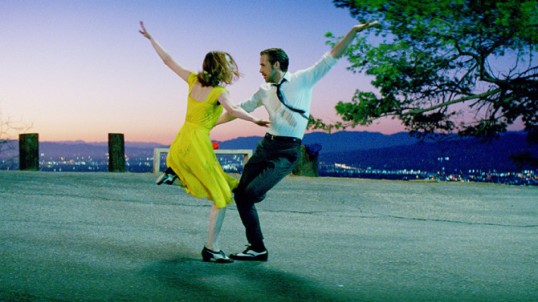
The International Press Academy — a.k.a. the Oscar precursor that nobody cares about — announced their nominees for the best of 2016 earlier today and it was a very good day for a film that I cannot wait to see, La La Land!

Here are the Satellite nominations!

Special Achievement Award Recipients

Mary Pickford Award- Edward James Olmos
Tesla Award- John Toll
Auteur Award- Tom Ford
Humanitarian Award- Patrick Stewart
Best First Feature- Russudan Glurjidze “House of Others”
Best Ensemble: Motion Picture- “Hidden Figures”
Best Ensemble: Television- “Outlander”

Actress in a Motion Picture

Annette Bening, “20th Century Woman”
Emma Stone, “La La Land”
Natalie Portman, “Jackie”
Ruth Negga, “Loving”
Taraji P. Henson, “Hidden Figures”
Meryl Streep, “Florence Foster Jenkins”
Isabelle Huppert, “Elle”
Amy Adams, “Nocturnal Animals”

Actor in a Motion Picture

Casey Affleck, “Manchester by the Sea”
Ryan Gosling, “La La Land”
Joseph Gordon-Levitt, “Snowden”
Viggo Mortensen, “Captain Fantastic”
Joel Edgerton, “Loving”
Andrew Garfield, “Hacksaw Ridge”
Tom Hanks, “Sully
Denzel Washington, “Fences”

Actress in a Supporting Role

Helen Mirren, “Eye in the Sky”
Michelle Williams, “Manchester by the Sea”
Nicole Kidman, “Lion”
Octavia Spencer, “Hidden Figures”
Naomi Harris, “Moonlight”
Viola Davis, “Fences”
 Actor in a Supporting Role

Jeff Bridges, “Hell or High Water”
Mahershala Ali, “Moonlight”
Dev Patel, “Lion”
Lucas Hedges, “Manchester by the Sea”
Eddie Murphy, “Mr. Church”
Hugh Grant, “Florence Foster Jenkins”

Motion Picture

“La La Land”
“Moonlight”
“Manchester by the Sea”
“Lion”
“Jackie”
“Hacksaw Ridge”
“Loving”
“Hell or High Water”
“Nocturnal Animals”
“Captain Fantastic”
“Hidden Figures”
“Fences”

 Motion Picture, International Film

“The Happiest Day in the Life of Olli Maki”- Finland
“Toni Erdmann”- Germany
“Julieta”- Spain
“A Man Called Ove”- Sweden
“The Salesman”- Iran
“The Ardennes”- Belgium
“Ma’ Rosa”- Philippines
“The Handmaiden”- South Korea
“Elle”- France
“Paradise”- Russia

Motion Picture, Animated or Mixed Media 
Title of Film
“Zootopia”
“Kubo and the Two Strings”
“Moana”
Finding Dory”
“My Life As a Zucchini”
“The Jungle Book”
“The Red Turtle”
“Miss Hokusai”
“Trolls”
“Your Name”

Motion Picture, Documentary

“Gleason”
“Life Animated”
“O.J.: Made in America”
“13th”
“The Ivory Game”
“The Eagle Huntress”
“Tower”
“Fire at Sea”
“Zero Days”
“The Beatles: Eight Days a Week”

Director

Barry Jenkins, “Moonlight”
Kenneth Lonergan, “Manchester by the Sea”
Mel Gibson, “Hacksaw Ridge”
Damien Chazelle, “La La Land”
Tom Ford, “Nocturnal Animals”
Pablo Larrain, “Jackie”
Denzel Washington, “Fences”

Screenplay, Original

Barry Jenkins, “Moonlight”
Damien Chazelle, “La La Land”
Kenneth Lonergan, “Manchester by the Sea”
Taylor Sheridan, “Hell or High Water”
Matt Ross, “Captain Fantastic”
Yorgos Lanthimos/Efthymis Filippou, “The Lobster”

Screenplay, Adapted

Andrew Knight/Robert Schenkkan, “Hacksaw Ridge”
Luke Davis, “Lion”
Kieran Fitzgerald/Oliver Stone, “Snowden”
Justin Marks, “The Jungle Book”
Allison Schroeder, “Hidden Figures”
Todd Komarnicki, “Sully”

Original Score

Rupert Gregson Williams, “Hacksaw Ridge”
Justin Hurwitz, “La La Land”
Lesley Barber, “Manchester by the Sea”
John Williams, “The BFG”
John Debney, “The Jungle Book”
Hans Zimmer, “Hidden Figures”

Original Song

“Audition”- ‘La La Land’
“City of Stars”- ‘La La Land’
“Dancing with Your Shadow”- ‘Po’
“Can’t Stop the Feeling”- ‘Trolls’
“I’m Still Here”- ‘Miss Sharon Jones’
“Running”- ‘Hidden Figures’

Cinematography

John Toll, “Billy Lynn’s Long Halftime Walk”
Linus Sandgren, “La La Land
James Laxton, “Moonlight”
Simon Duggan, “Hacksaw Ridge”
Jani-Petteri Passi, “The Happiest Day in the Life of Olli Maki”
Bill Pope, “The Jungle Book”

Visual Effects

“The Jungle Book”
“Billy Lynn’s Long Halftime Walk”
“Doctor Strange”
“The BFG”
“Sully”
“Deadpool”

Film Editing

Tom Cross, “La La Land
Joi McMillon/Nat Sanders, “Moonlight”
Tim Squyres, “Billy Lynn’s Long Halftime Walk”
Alexandre de Francheschi, “Lion”
John Gilbert, “Hacksaw Ridge”
Steven Rosenblum, “The Birth of a Nation”

Sound (Editing and Mixing)

La La Land
“Billy Lynn’s Long Halftime Walk”
“Hacksaw Ridge”
“The Jungle Book”
“Allied”
“13 Hours: The Secret Soldiers of Benghazi”

Art Direction and Production Design

David Wasco, “La La Land
Barry Robinson, “Hacksaw Ridge”
Jean Rabasse, “Jackie”
Christophe Glass, “The Jungle Book”
Gary Freeman, “Allied”
Dan Hennah, “Alice Through the Looking Glass”

Costume Design

Colleen Atwood, “Alice Through the Looking Glass”
Eimer Ní Mhaoldomhnaigh, “Love & Friendship”
Courtney Hoffman, “Captain Fantastic”
Madeline Fontaine, “Jackie”
Mary Zophres, “La La Land
Alexandra Byrne, “Doctor Strange”
The TSL’s Daily Horror Grindhouse: Green Room (dir by Jeremy Saulnier)


greenroom5

Jeremy Saulnier’s Green Room is one of the best films of the year but I don’t know if I’m ever going to be able to bring myself to watch it a second time.

Why?

There’s two reasons:

Number one, Green Room is one of the most intense films that I’ve ever seen.  Much like Saulnier’s previous film, Blue Ruin, this is a violent movie that never makes violence look fun.  The violence here is all too real and the pain that the characters feel is all too real as well.  I watched a good deal of Green Room through my fingers, hiding my face behind my hands.  Seriously, I’ve seen some pretty gory movies.  (I’m an unapologetic fan of Italian horror, after all.)  But Green Room still left me shaken.  Occasionally, it even left me gasping for breath.  It’s just that intense.  It’s a film about four people battling for survival and I’m surprised (and a little proud) that I survived all the way to the end.

The other reason is that the film stars Anton Yelchin.  It was one of the final films that he made before his death and he gives such a likable and committed performance that it’s impossible for me to think about the film without getting a little emotional.  Far more than his supporting work in the Star Trek films, Green Room showcased what a good actor Anton Yelchin truly was.  It’s impossible for me to think about Green Room without mourning a talent taken from us far too soon.  And though it might be difficult to watch the film a second time, everyone should watch Green Room at least once.  If you ever wonder why some of us still get emotional when we talk about Anton Yelchin, it’s all there in the movie.

In Green Room, Yelchin plays Pat.  Pat is the bass player for a punk band called the Ain’t Rights.  The Ain’t Rights have been touring the northern part of the country.  It’s a low-budget tour, one that perfectly reflects that anti-corporate politics of the Ain’t Rights.  For them, the tour means crashing with friends, siphoning gasoline, and doing interviews with underground radio stations.  In fact, one interviewer — the rather dorky Tad (David W. Thompson) — arranges for them to do a show at an isolated bar in Oregon.  Tad tells them that the bar attracts a rough crowd but that they’ll be okay because his cousin Daniel (Blue Ruin‘s Macon Blair) works there.

The Ain’t Rights arrive and discover that the club appears to have a clientele that is exclusively made up of Neo-Nazi skinheads.  After some hesitation, the Ain’t Rights take the stage and, for a few brief moments, Saulnier shows them performing in slow motion and those of us in the film’s audience — even someone like me, who would probably otherwise never listen to a band like the Ain’t Rights — are briefly caught up in the joy and excitement of their performance.

Unfortunately, while the band is performing, the Nazis are busy murdering a woman in the green room.  And, after the band walks in on the aftermath of the murder, they soon find themselves marked for death as well.  The band is smart enough to lock themselves in the green room and to take one of the Nazis as a hostage.  However, they know that they can’t stay in that room forever.  At some point, they’re going to have to figure out how to escape from the bar…

Green Room is a harrowing and violent film, one that maintains an almost feverish intensity from start to end.  Making it all the more difficult to watch is that Saulnier keeps the horror rooted in reality.  The Neo-Nazis never turn into cardboard movie slashers.  Instead, they are a very real and disturbing threat.  (It’s interesting to note that occasionally, a Neo-Nazis will express some doubt about killing the band but none of them have the courage to actually refuse any of the orders that they receive.  We often hear that people need to respect authority.  Well, Green Room shows what happens when people blindly respect authority to the extent that they can no longer think for themselves.)  Though the film may be violent, it never celebrates that violence and when one character does get a chunk of arm chopped off, it’s literally one of the most painful images to ever be captured on film.  You like every member of the band so, when they get hurt, you feel their pain as well.  Though Yelchin may be the main character, the other members of the Ain’t Rights — played by Alia Shawkat, Joe Cole, and Callum Turner — all make a good impression as well.  You want them all to escape and dread the realization that not all of them will.

As for the owner of the club, his name is Darcy and he’s played by Patrick Stewart.  At first, it may sound like stunt casting.  Patrick Stewart as a Neo-Nazi?  But interestingly enough, Darcy doesn’t really seem to care about ideology.  Instead, you get the feeling that he realized that there was money to be made by catering to racists so that’s what he decided to do.  When he barks out orders and demands that the members of the band be killed, his main motivation seems to be pure greed.  If the band escapes and reports the murder, he’ll lose his club.  Stewart gives a chilling performance.  When he first appears, you do think, “Hey, it’s Patrick Stewart!”  But, within minutes, you forget who is playing him.  He becomes Darcy and you’re scared to death of him and his followers.

Green Room is an incredibly intense and scary film.  It also features perhaps the best performance of Anton Yelchin’s career.  Green Room stands as a testament to a talent taken too early.

(On a purely personal note: I’m glad that Green Room took place in Oregon.  Too often, movies tend to portray racism as being an exclusively Southern issue, one that somehow magically disappears once you head up north.  It often feels as if people spend so much time talking about racism in other states that they fail to actually look at what’s happening in their own backyard.  It’s easier to laugh at a state like Alabama than to ask why someone like Eric Garner died on the streets of New York City.  Racism is an American issue, and that includes the states both below and above the Mason-Dixon line.)

patrick-stewart

Prepare To Cringe Your Way Through The Red Band Trailer For Green Room!


OH MY GOD!

So, here’s the thing: there is an intense moment towards the end of the just released red band trailer for Green Room that is literally bone snapping.  I saw it, I heard it, and I literally threw my hands over my eyes and went, “Agck!”

Green Room is about a punk band who finds themselves fighting for their lives against Patrick Stewart and a bunch of Neo-Nazis.  The red band trailer (which you can watch below) is seriously intense!  Now I have to admit that I’ve reached a point of exhaustion when it comes to film violence but I’m still going to see Green Room because it was directed by Jeremy Saulnier, who previously directed the brilliant (and unapologetically violent) Blue Ruin.  Saulnier’s involvement promises that, at the very least, Green Room will be a hundred times better than Kevin Smith’s Red State.

Anyway, here’s the trailer!


Ted 2 Sucks!


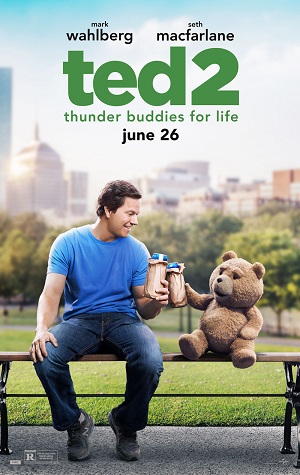
Ted_2_posterWell, I think the title of this review pretty succinctly sums up my reaction to Seth McFarlane’s latest film, Ted 2.  Thanks for reading and have a good…

Oh, really?

Okay, I’ve been told that I have to try to think up at least 300 words to say about Ted 2.  Otherwise, in the eyes of Rotten Tomatoes, we’re not a legitimate film blog.

*sigh*

Okay.

Anyway, Ted 2 is the story of a talking teddy bear (voice by Seth McFarlane) who likes to smoke weed and … well, that’s about it.  He’s just gotten married to Tami-Lynn (Jessica Barth) and they’re having trouble because Tami-Lynn wants a baby but Ted, being a teddy bear, doesn’t have any reproductive organs.  So, he and his friend John (Mark Wahlberg) decide to give Tom Brady a handjob so they can still his sperm.  But, it turns out, none of that was important because the state of Massachusetts claims that Ted is not even a person.  Instead, he’s just “property.”  So, now, John and Ted and their lawyer, Sam (Amanda Seyfried), are fighting the courts to win Ted his civil rights.  And then Giovanni Ribisi wants to kidnap Ted and Morgan Freeman shows up and says a few words.  And the film is narrated by Patrick Stewart because it’s funny to hear Patrick Stewart curse and…

Oh!  And Liam Neeson shows up.  He’s a customer at the store where Ted works as a cashier.  Liam wants to know if Trix are only for kids.  The joke here is that it’s Liam Neeson and he’s asking about cereal.  Ha ha.

Oh!  And there’s two guys who shows up at New York Comic Con so that they can beat up “nerds.”  During every scene set at Comic Con, they’re in the background beating people up and insulting them.  And the two guys are gay!  See, they’re bullies and they’re gay!  And they’re beating up random people at Comic Con, just because they can!  Hilarious, right?

Ted 2 spends a lot of time trying to convince us that Ted’s struggle to be recognized as a person is actually meant to be a metaphor for the American civil rights movement.  But, honestly, I get the feeling that McFarlane relates more to the bullies than he does to any oppressed minority.  As he previously proved with his TV shows and A Million Ways To Die In The West, McFarlane is only interested in going after easy targets.  He’s your typical white male hipster who thinks that, because he voted for Obama, he can get away with telling racist jokes.

And, before anyone misunderstands, I wouldn’t mind McFarlane’s humor if it was at least funny or original.  But instead, it’s the same stupid jokes that he always tells.  Seth McFarlane’s comedic technique is to basically drag things out until viewers laugh from pure exhaustion.  Is it effective?  Well, there are people who continue to praise and defend him and Seth certainly has made a lot of money off of his act.  So, obviously, there are people who respond to this.  But to me, Seth McFarlane’s humor just feels lazy.

Ted 2 lasts 128 minutes.  That’s over two hours devoted to a concept that feels more appropriate for a five-minute skit.  Interesting enough, the first Ted was tolerable because it focused on Mark Wahlberg’s Johnny.  Ted was just a supporting character and he worked as a metaphor for Johnny’s struggle to choose between growing up or being a happy slacker.  (The first Ted was all about Johnny falling in love with Mila Kunis, whose character is rather cruelly dismissed at the start of Ted 2.)  In Ted 2, Ted is the central character and once you get over the fact that he’s a teddy bear who drops multiple F bombs, there’s really not much to the character.  It helps, of course, that we only have to listen to McFarlane.  We don’t have to look at his imminently punchable, oddly lineless face.  But, to be honest, even McFarlane’s voice has become grating.  It’s just so self-satisfied and smug.

I saw Ted 2 with the blogger also known as Jedadiah Leland.  Over the course of 128 hours minutes (it just felt like hours), we each laughed once.  Not surprisingly, both laughs were inspired by Wahlberg’s dumb-but-sweet performance.  Now, I will admit that the rest of the audience laughed a bit more than we did.  But still, there was a definite atmosphere of resignation in the theater.  You could literally hear the people thinking, “Oh, Ted just made a joke about black people.  Better laugh now so everyone knows that I get whatever the Hell this is supposed to be.  After all, those tickets weren’t free…”

What’s the word count now?

758?

Cool.

That’s enough words for me to say, “Ted 2 sucks!”


Trash Film Guru Vs. The Summer Blockbusters : “X-Men : Days Of Future Past”


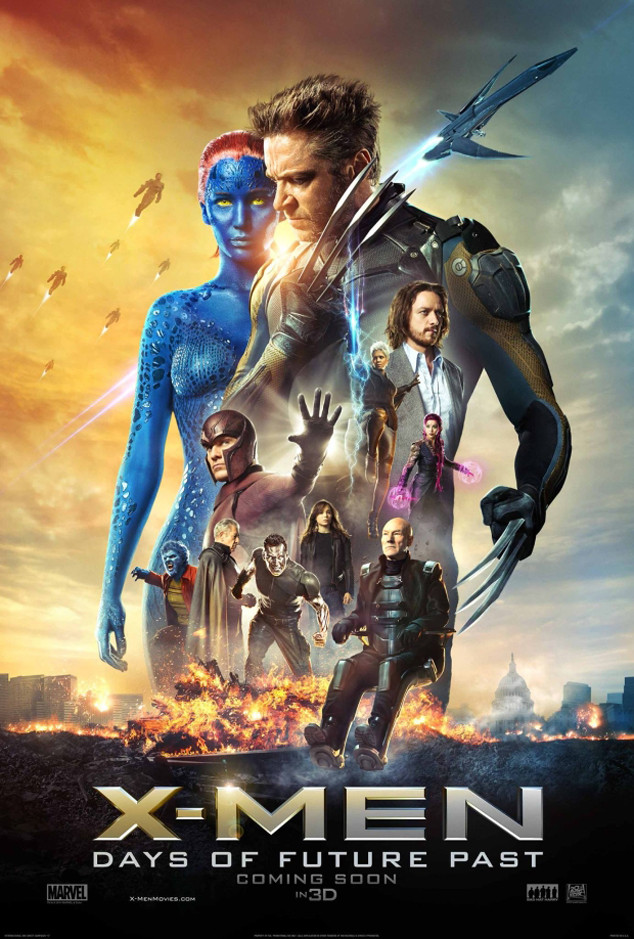
rs_634x939-140324091106-634.jennifer-lawrence-x-men.ls.32414

At this point, I freely admit to being a little bit confused : X-Men : Days Of Future Past opens to a somewhat lower box office take than The Amazing Spider-Man 2 did, which was only slightly behind the opening-frame receipts generated for Captain America : The Winter Soldier, and yet Cap and the X-Men are both considered “successes,” while Spidey’s considered a “disappointment” — even though, last I checked, its’ total gross ticket sales were only about $50 million behind Cap’s despite the fact that it opened a full month later?    Chances are probably good  that it will even end up closing the gap here at some point, but no matter — the die appears to have  already been cast. The stench of that rat I mentioned smelling in my Spider-Man review a couple weeks back? It’s getting a lot stronger now.

Needless to say, I’ve got a theory as to what’s going on here, and it builds upon my theory already expounded upon in that just-mentioned prior review : Disney/Marvel actively wants the Spider-Man franchise back, but the X-Men? Not so much. At least not yet.

How else to explain this clearly-orchestrated PR campaign? Look, internet movie critics are an easy bunch to buy off : for a free ticket, or even the promise of some kind of other free swag in the future, you can get thousands of people to say whatever you want them to. And from there, you can get thousands of others to mimic the already-established meme of whether a given flick is “successful” or not, because gosh, who would dare contradict the well-established critics and box-office analysts who have already passed judgment on the merits of a particular work? For the price of probably less than $10,000 in either payments or promises, DisMar has the movie-going public right where they want us, echoing their nonsensical party line and unsupported-by-the-facts pronouncements.

Needless to say, I don’t feel like playing along — for the most part. But there’s one area where I do agree with the general consensus, even if the fix is in : X-Men : Days Of Future Past is a really good superhero flick. And that might just throw a wrench in Marvel’s “this one’s dying on the vine, let’s just wait it out and see what happens” game plan.

hugh-jackman-stars-in-final-trailer-for-x-men-days-of-future-past-watch-now-161013-a-1397628564


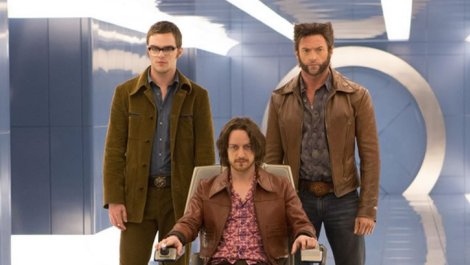
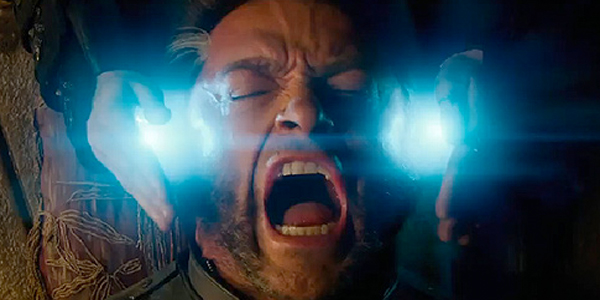
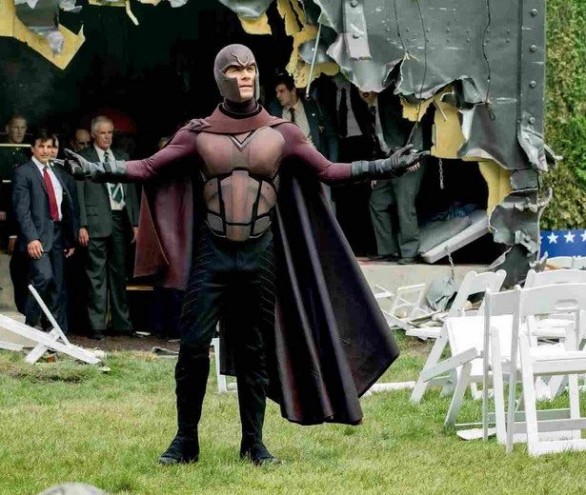
Seriously, friends, this one has everything and the kitchen sink going on, but somehow returning director Bryan Singer (more on him in a minute) juggles every ball thrown in the air and makes it work : the “divergent timelines” conceit that forms the core of the plot never gets confusing even though it easily could; the action sequences are brisk and spectacular; the characters are uniformly believable and compelling; and the performances, from perhaps the most star-studded cast ever assembled for a comic-book film, are all first rate. When you’ve got Hugh Jackman, James McAvoy, Patrick Stewart, Ian McKellen, Ellen Page, Jennifer Lawrence, Michael Fassbender, Nicholas Hoult, Peter Dinklage, Shawn Ashmore, Halle Berry, Michael Lerner, Booboo Stewart, Omar Sy, Kelsey Grammer, Anna Paquin, James Marsden and Famke Janssen all punching the same time clock, it goes without saying that  some are going to have more to do than others, but nobody seems intent on stealing the show for themselves, which is no mean feat considering the sheer number of sizable egos that must be involved here. Sure, the script puts most of the onus of Wolverine, the young Professor Xavier, the young Magneto, the young Beast, the young Mystique,  and the villainous Dr. Bolivar Trask, but that doesn’t mean everybody else doesn’t give their admittedly smaller parts at least a reasonable effort. Shit, I’m not sure how you even get stars of the stature of Page, Berry and Paquin to even accept what are essentially tertiary-at-best roles (does Paquin even have a line of dialogue?), but somehow they keep showing up for X-Men flicks, and in this case the place doesn’t even seem that crowded. Shit, Singer even manages to sneak in quick cameo for Wolverine co-creator Len Wein.

X-Men-Days-Of-Future-Past-Magneto3-586x495

In many ways what makes  Days Of Future Past so successful is that fact that it’s actually more a direct sequel to First Class (which I also thoroughly enjoyed) than it is the initial X-trilogy, and some of the continuity changes that the end results of this film apparently seal into place even seem to undo how those first three films “wound up,” but whatever — the end result here is a franchise that feels like it’s been given a new lease on life after treading water for a good half-decade or so. I mentioned just a moment ago that I really dug First Class, but you can’t get by on prequels forever. At some point a movie needed to come along that propelled the X-Men franchise forward, and this does so with plenty of style and flair.

Plus, the whole thing’s a lot of fun — sure, some of the dialogue is overly- verbose and clunky and painfully expository, but those instances are rare, and actually stand out in contrast to the general ease and flow of the rest of the film. And while the premise itself requires a heavy dose of suspension of disbelief, let’s be honest here — what super-hero movie doesn’t? At least this one rewards your willingness to go with the flow in ways that even highly-touted fare like Joss Whedon’s The Avengers (a favorite target of my ire, I admit, but only because it really does suck, no matter what anyone else thinks) could never hope to manage. Plus, audiences get a chance so see Dinklage prove that he can” bring it”  in each and every role he takes on, not just on Game Of Thrones — something those of us who have been fans of his work ever since The Station Agent have long maintained.

x-men-days-of-future-past-trailer

In case it weren’t painfully obvious already, I thoroughly enjoyed X-Men : Days Of Future Past, and after appearing to flounder in the wake of the risible Valkyrie, my faith in Bryan Singer as a director has probably never been higher — unfortunately (here’s where that “more on him in a minute” comes in), I can’t say the same in regards to my faith in Bryan Singer as a human being. I won’t kid you — the sexual abuse allegations that have been leveled against him really bother the shit out of me. And no, it has nothing to do with Singer’s sexual orientation : I don’t care if a person is straight, gay, or somewhere in between, any and all relationships — whether serious, casual, or less than casual — between consenting adults are fine by me. Everybody likes to get laid, have at it. But age of consent laws are there for a reason, and kids and teens are, and should be, off limits to grown adults. The fact that  the “fan” community seems so eager to point out that Singer’s accuser has filed civil rather than criminal charges and that he’s apparently done so in the past is both irrelevant to the reality of what may or may not have occurred,  and represents a clear case of reprehensible victim-shaming of the highest order. Sure, everyone’s innocent until proven guilty, but assuming, or even implying, that somebody who’s been brave enough to come forward with claims this serious just has to be a liar because they’re choosing to address this issue in ways that others either don’t understand or approve of is beneath contempt. Maybe we’ll never know the whole truth of this matter, but if Singer did what’s he’s been accused of, then he’s got some serious issues and needs some serious help and sure,  I feel some amount if sympathy for whatever turmoil is boiling away inside his mind — but not half as much as I do for the teen boy (s) that he’s victimized (if he has). I don’t want to see him condemned in the court of public opinion if he’s completely innocent, but I don’t want to see his accuser condemned, either, and that’s what’s been happening. Sex between adults and those not legally deemed to be adults (in most states that’s 18, in some 16) is against the law, period, and if Singer did, in fact, engage in the sort of behavior that’s been alleged,   then I’m done with him from here on out. End of rant.

Regardless of what’s he’s done in his off-hours, though, the perhaps-tragic fact (depending on how legal proceedings play out) remains that what he’s done while on company time just can’t be denied in this case. I wish I could love X-Men : Days Of Future Past with a totally clean conscience, sure, but I can’t deny that I loved it just because it may have been directed by a guy whose personal behavior is both sleazy and illegal. It’s a complex set of circumstances to weigh in one’s mind, to be sure, but so goes life. I wish its murky waters were easier to navigate, but they never have been, and they’re never going to be.

As for the future of all things X-Men, I’ll make one easy prediction right now : when this thing hits home viewing “platforms” in a few months’ time, look for a bevy of reviews along the lines of “ya know, maybe this this isn’t quite as good as we thought at first” and “on second viewing, the flaws in this one are obvious” — not because such sentiments will be true, but because Days Of Future Past is so well-done, and opens up so many possible avenues for the franchise going forward, that Marvel’s gonna want to start one of their infamous “whisper campaigns” to try to undermine the public’s confidence in having it in “other hands” and get it back in their own  grubby, greedy paws.

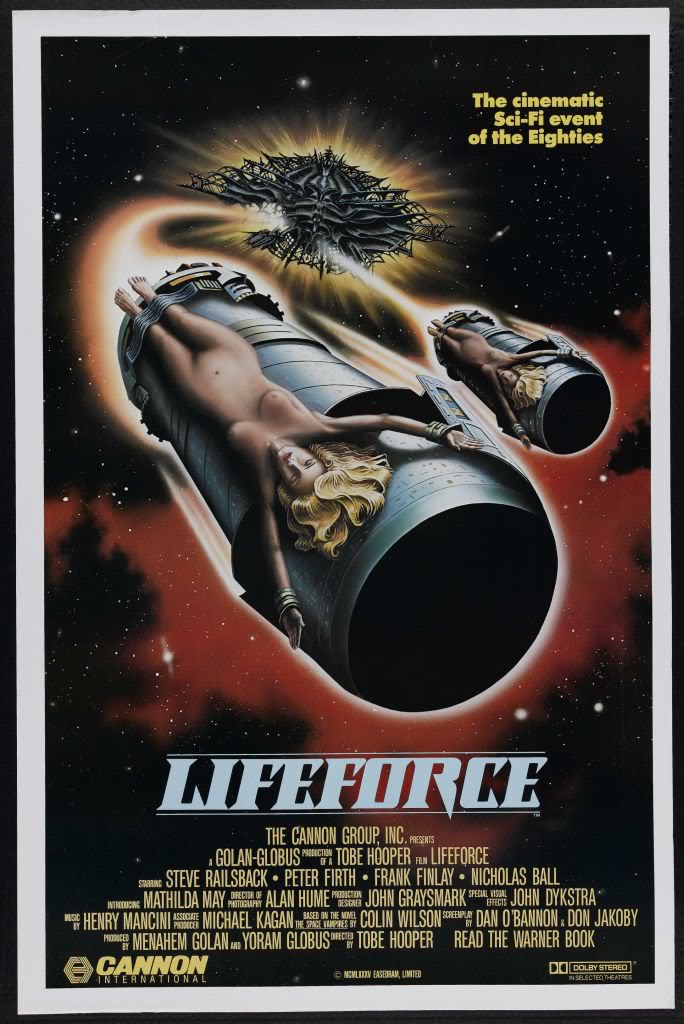
Review: Lifeforce (dir. by Tobe Hooper)


“I mean, in a sense we’re all vampires. We drain energy from other life forms. The difference is one of degree. That girl was no girl. She’s totally alien to this planet and our life form… and totally dangerous.” — Dr. Hans Fallada

1985’s Lifeforce, directed by Tobe Hooper, was critically panned and barely registered at the box office. Yet in the decades since its release, something curious has happened: the film has gathered a loyal cult following among fans of science fiction and horror. Hooper’s film fuses so many genre conventions that it resists classification—too strange for pure sci-fi, too grandiose for standard horror. The result is a striking and eccentric reinvention of the vampire myth, a lavish but uncanny blockbuster that feels imported from an alternate cinematic timeline.

The film begins squarely in the realm of science fiction. Conceived during the public fascination with Halley’s Comet ahead of its 1986 return, Lifeforce rode the wave of comet-themed media flooding the decade. Most were cheap cash-ins. Hooper’s film stood out for its ambition and its visual scale.

Coming off Poltergeist, Hooper received an unusually large budget—a far cry from the lean, feral energy of The Texas Chainsaw Massacre. The story follows the crew of the shuttle Churchill as they discover a massive alien spacecraft hidden in the comet’s tail. Inside, frozen in suspended animation, are three humanoid figures. The ship’s dignified name feels ironic, even doomed; considering what’s to come, Demeter might have been more fitting. Like the sailors of Stoker’s novel, these astronauts inadvertently ferry an ancient predatory force home—yet this time, the threat arrives from the stars.

The horror unfolds once the crew retrieves its mysterious “specimens.” Members die in gruesome succession until only one survivor, Colonel Tom Carlsen (Steve Railsback), escapes in a pod back to Earth. Railsback’s performance is an intriguing mix of unhinged emotion and grim conviction. His intensity suits a film that constantly walks the line between pulp spectacle and cosmic tragedy.

When the story shifts to London, Lifeforce transforms into a supernatural thriller with procedural undertones. Peter Firth’s Colonel Colin Caine becomes the viewer’s compass: calm, authoritative, and determined to impose order on mounting chaos. As London succumbs to panic and outbreak, his steady professionalism anchors the outlandish events. His partnership with Railsback’s haunted, psychic Carlsen gives the middle act its volatile energy.

Among the supporting cast, Frank Finlay leaves one of the strongest impressions as Dr. Hans Fallada, a scientist fascinated by death and metaphysical energy. He serves as both philosopher and investigator, treating the vampiric invasion as a riddle of life itself. His restrained curiosity lends weight to scenes that might otherwise descend into absurdity. While the city collapses, Fallada studies the phenomenon with eerie calm, treating catastrophe as an experiment in cosmic entropy.

Patrick Stewart also makes a memorable, if brief, appearance as Dr. Armstrong, the head of a psychiatric hospital linked to the Space Girl’s psychic presence. His role builds to the film’s most grotesque and bizarre sequence: an exchange of minds, sudden possession, and an unnervingly intimate kiss with Railsback. The moment condenses everything Lifeforce represents—erotic, macabre, and unconcerned with boundaries. Stewart brings a gravitas that makes the absurd strangely compelling, a counterweight to Railsback’s volatility and Mathilda May’s silent allure.

May, as the unnamed Space Girl, says little but dominates the film through presence alone. She embodies an alien ideal of beauty and destruction, gliding through scenes with a composure that’s both sensual and predatory. Her nudity, much debated at the time, plays less as exploitation and more as elemental symbolism—the human body as an expression of both creation and death, desire and annihilation.

Supporting figures from the British military and government round out the ensemble, emphasizing the film’s descent into bureaucratic chaos. Michael Gothard’s Kane, a Ministry of Defence officer struggling to reconcile logic with the inexplicable, captures the helplessness of institutional order collapsing under cosmic threat. His pragmatic exchanges with Firth highlight competing instincts between reason and survival.

As the infection spreads, Lifeforce expands into a vision of urban apocalypse that fuses British science fiction and American spectacle. London becomes a nightmare tableau—crowds of shriveled corpses feed on energy while arcs of blue plasma swirl through the sky. The city’s fall evokes both George A. Romero’s zombie apocalypse and the metaphysical unease of Nigel Kneale’s Quatermass stories. Amid the insanity, Finlay and Firth remain the emotional touchstones, keeping the audience oriented as narrative logic begins to dissolve.

For all its ambition, however, Lifeforce suffers from erratic pacing and tonal whiplash. The first act unfolds with deliberate, moody wonder, then abruptly veers into frenzied exposition and psychic melodrama once the story reaches Earth. The balance between unsettling mystery and outright spectacle often collapses under its own weight. Scenes that should evoke cosmic terror sometimes tip into unintended camp, particularly in the dialogue-heavy middle stretch. Hooper’s direction, though visually imaginative, occasionally struggles to maintain coherence amid the script’s shifting identities—part creature feature, part disaster epic, part metaphysical drama. The editing, especially in the theatrical cut, undercuts tension with rushed transitions that leave emotional beats hanging. Railsback’s manic performance, while strangely compelling, can also verge on excess, blurring the line between conviction and chaos.

Tonally, the film wavers between awe and amusement. For some viewers, its earnest delivery will read as self-parody; for others, its collision of erotic horror and science fiction grandeur gives it a singular vitality. Lifeforce’s flaws are inseparable from its daring. It dares to fail boldly, and in that failure finds a kind of messy transcendence—larger than reason, too strange to fade.

In the end, Lifeforce lingers as one of the strangest hybrids of its era: part gothic fable, part erotic horror, part apocalyptic science fiction. It was too eccentric to find mainstream success, yet its sincerity and scope give it lasting resonance. The ensemble performances and tonal daring hold the film together, transforming potential chaos into something mythic—a story about possession, contagion, and humanity’s fatal pull toward the unknown.

Beneath its spectacle, the film engages in a deeper dialogue between gothic and cosmic horror traditions. Its characters represent a spectrum of responses to the incomprehensible: Fallada’s intellectual curiosity, Firth’s stoic resolve, Railsback’s frenzy, and May’s serene seduction. Together they form a portrait of human fragility in confrontation with the infinite. Where gothic horror finds fear in the collapse of reason, cosmic horror finds it in the vast indifference of the universe.

By fusing these lineages, Lifeforce becomes a mythic apocalypse that feels both intimate and vast—an encounter between flesh and void, terror and temptation. Its fusion of genres, ideas, and performances ensures its peculiar power endures, a reminder that some of the strangest failures of 1980s cinema are also its most visionary.