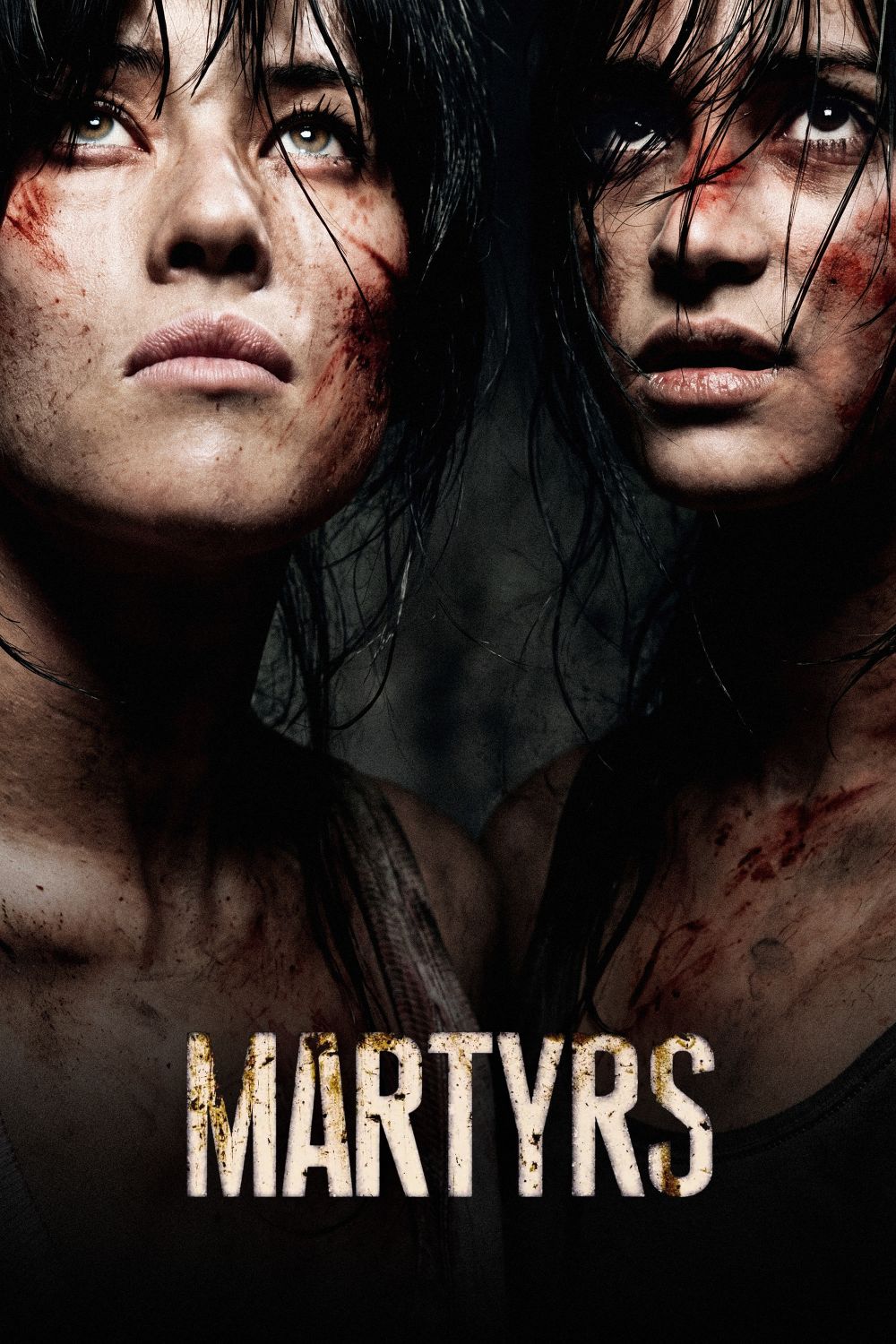
“It’s so easy to create a victim, young lady, so easy.” — Mademoiselle
The scariest thing in Martyrs isn’t how much pain people can inflict, but how calmly they can explain why they’re doing it. Pascal Laugier’s 2008 French horror film begins with violence that feels desperate and chaotic, then gradually reveals something colder behind it. Anger gives way to procedure, and cruelty acquires the language of a higher purpose. That progression makes the film more disturbing than its reputation as an endurance test might suggest. The graphic brutality is impossible to ignore, but what lingers is the ease with which human suffering becomes somebody else’s project.
That makes Martyrs a particularly bleak entry in the New French Extremity, even though Laugier resisted the association. Emerging around the turn of the century, this loosely connected wave of filmmaking challenged audiences through confrontational violence, sexuality, and bodily vulnerability. Films like Trouble Every Day, Irréversible, High Tension, and Inside helped establish a cinema in which physical safety could disappear without warning. Martyrs shares that willingness to push past comfortable boundaries, but its most unsettling quality isn’t simply excess. It’s the suggestion that the people crossing those boundaries might regard themselves as thoughtful, disciplined, and entirely justified.
The tradition is still going strong today, although its influence is easier to trace than any fixed membership. Julia Ducournau’s Titane and Coralie Fargeat’s The Substance demonstrate the continuing appetite for French filmmaking that uses bodily destruction and transformation to explore larger anxieties. Neither is doing exactly what Laugier does, and their differences matter. Where those films find room for provocative humor or unexpected tenderness, Martyrs offers very little breathing space. Its approach is brutally direct: before asking what suffering might mean, it makes you confront the person who has to endure it.
The story initially centers on Lucie, who escapes horrific captivity as a child and grows into an adult still trapped by what happened to her. Played by Mylène Jampanoï, she believes she has located the people responsible, now living an apparently ordinary family life. Her friend Anna, played by Morjana Alaoui, becomes involved in the aftermath of Lucie’s attempt to confront them. At first, the setup suggests a revenge thriller, with the possibility that identifying and punishing the guilty might bring some kind of closure. Laugier quickly makes that expectation feel inadequate. The past isn’t something Lucie can simply shoot her way out of.
Jampanoï gives Lucie a frightening volatility without reducing her to a spectacle of instability. Her anger feels inseparable from terror, and every apparent assertion of control seems dangerously temporary. There’s nothing slick or triumphant about her. Even when she acts decisively, she looks like someone fighting an emergency that nobody else can fully see. That performance keeps the early violence from becoming satisfying payback. Lucie’s actions may have a target, but her suffering doesn’t have a clear endpoint. The film understands the difference between stopping an abuser and undoing what the abuse has already done.
Anna provides the emotional connection that keeps all this from becoming an abstract exercise in misery. Alaoui makes her loyalty feel affectionate, frightened, and occasionally overwhelmed rather than conveniently heroic. She wants to help Lucie, even when she can’t fully understand her or accept what she’s done. Their relationship gives the film something worth caring about before its larger machinery reveals itself. Anna’s instinct is to stay with someone in pain, not turn that pain into an explanation. That distinction becomes increasingly important as the film introduces people whose interest in suffering has nothing to do with compassion.
Laugier’s control of the changing narrative is one of the film’s biggest strengths. Each discovery reshapes what came before, moving the story from personal retaliation toward organized cruelty. These shifts could have felt like disconnected attempts to top the previous shock, but they follow a disturbing emotional logic. The further we move from Lucie’s frantic perspective, the more controlled the surrounding world becomes. Unfortunately, control doesn’t mean safety. The ordinary house becomes especially unsettling because its domestic spaces and hidden horrors belong to the same functioning environment. Nothing about comfort or respectability guarantees innocence.
The violence changes along with that perspective. Early attacks are abrupt and messy, shaped by panic, confusion, and immediate danger. Later, brutality becomes repetitive and procedural, stripped of anything resembling excitement. That’s where Martyrs becomes hardest to watch. Laugier doesn’t always offer the relief of a new development or a plausible escape route; sometimes he forces the audience to sit with the awful predictability of what comes next. The horror lies as much in routine as in injury. Someone’s worst imaginable experience can be another person’s ordinary assignment, carried out without any visible emotional investment.
Catherine Bégin’s Mademoiselle embodies that detachment. Her composure is more upsetting than a theatrical display of sadism would have been, because she treats the film’s atrocities as reasonable steps toward an important goal. Still, this is also where Martyrs becomes open to criticism. Its philosophical explanation can feel like an attempt to lend profundity to prolonged images of women being brutalized. Whether that framework deepens the experience or merely rationalizes it is a fair question. For me, the film works best when Mademoiselle’s reasoning exposes her moral emptiness, not when it seems to invite admiration for the supposed grandeur of her inquiry.
The ending leaves that inquiry unresolved, refusing to turn everything we’ve witnessed into a clear answer. Its ambiguity is effective because certainty has become such a destructive obsession throughout the film. Some viewers may find that withholding frustrating, especially after such an exhausting ordeal, but a tidy revelation would risk validating the people who engineered it. Martyrs remains an exceptional horror film precisely because its ideas don’t make its violence comfortable. Beneath the blood and philosophical speculation is a much simpler moral horror: people can become so convinced of the importance of their questions that they stop seeing the humanity of whoever they force to answer them.

