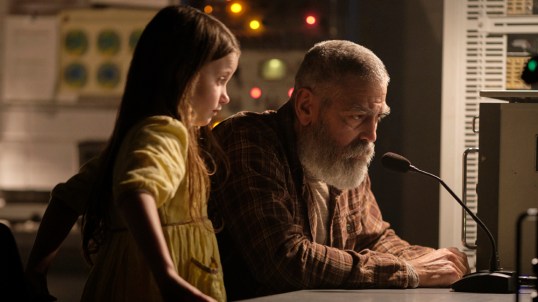
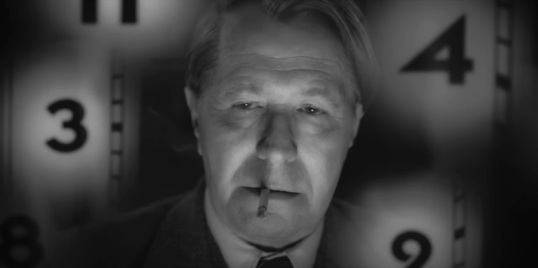
4 Shots From 4 Films: Special Richard Linklater Edition


4 Shots From 4 Films is just what it says it is, 4 shots from 4 of our favorite films. As opposed to the reviews and recaps that we usually post, 4 Shots From 4 Films lets the visuals do the talking!

Today, we wish a happy 60th birthday to Texas’s greatest filmmaker, Richard Linklater!

That means that it’s time for….

4 Shots From 4 Films

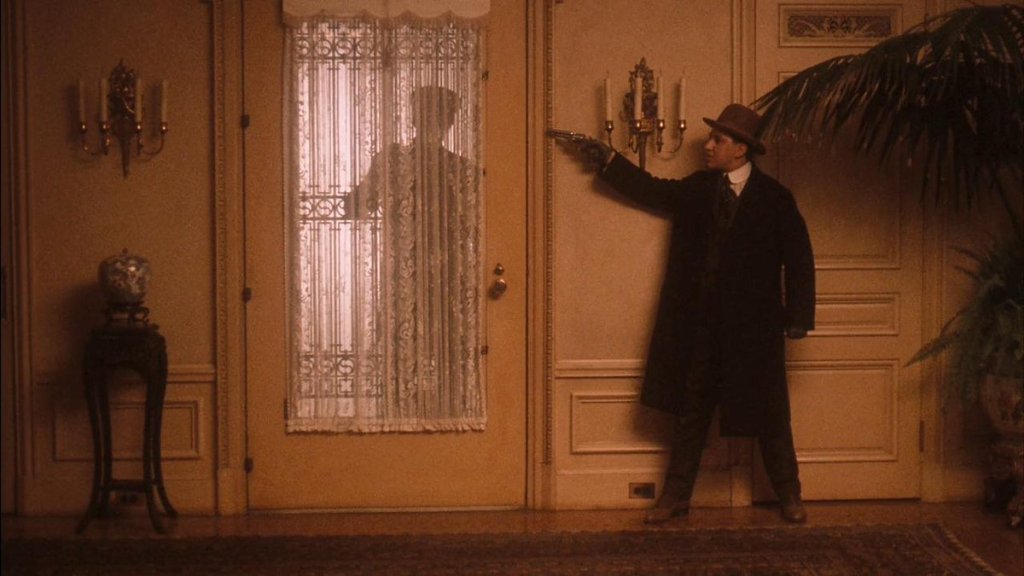
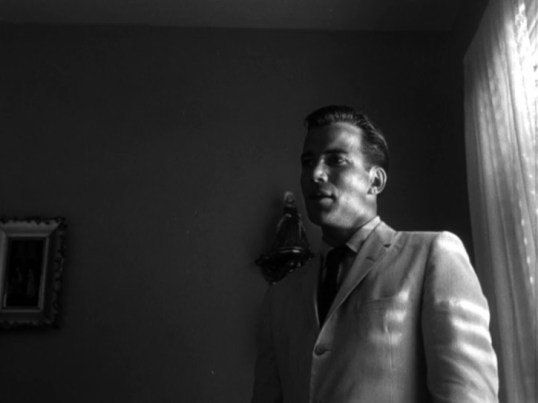
Slacker (1991, dir by Richard Linklater)

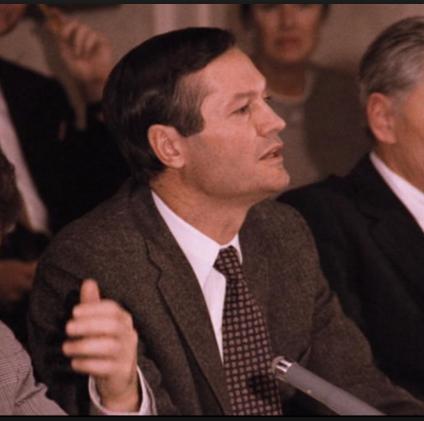
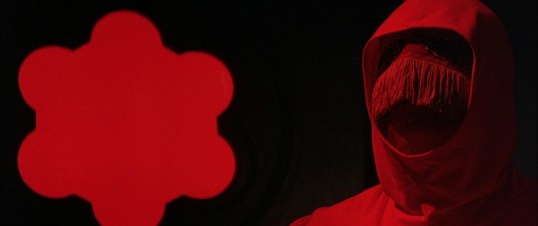
Dazed and Confused (1993, dir by Richard Linklater)

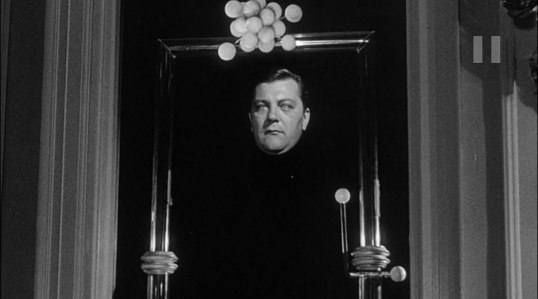
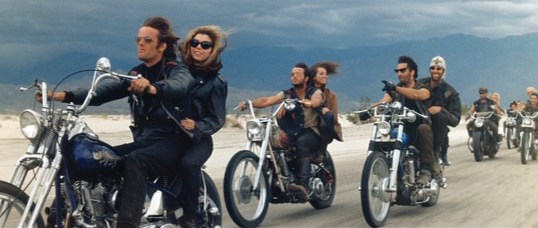
Before Sunset (2004, dir by Richard Linklater)

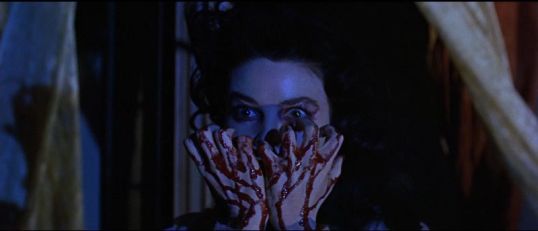
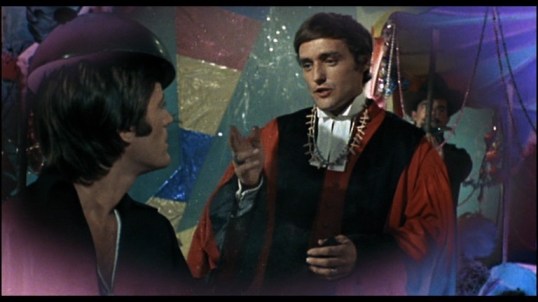
Boyhood (2014, dir by Richard Linklater)

An Offer You Can’t Refuse #23: Gotti (dir by Kevin Connolly)


Few recent films have been as misunderstood as Gotti.

When this film was first released in 2018, it was slammed by critics and it flopped at the box office.  On Rotten Tomatoes, it managed a score of 0% from the critics.  At the same time, the opening day audience score was 80%.  (Over subsequent days, the audience score would drop to 46%.)  This disparity was blamed on studio employees inflating the audience score, though I think it’s more likely that, after months of negative press about the film’s troubled productions, critics were already looking forward to slamming the film before they even had a chance to see it.  At the same time, the buzz on Gotti was so bad that the opening day audience was made up of a combination of John Travolta die-hards (whoever they may be) and people who were expecting such a trainwreck that all Gotti had to do to surpass their expectations was to occasionally be in focus.

Then again, it could be that some members of the audience understood what I instinctively understood when I first watched GottiGotti is not really a film about John Gotti, the flamboyant New York mob boss who ruled the streets with an iron fist and who eventually ended up dying of cancer in prison.  Instead, whether it was the filmmaker’s actual intention or not, Gotti is a film about the audience’s fascination with not only gangsters but also the movies that have been made about them.

It’s true that John Travolta may be playing someone namned John Gotti but the film goes out of its way to remind you that he’s not the real John Gotti.  The film is full of archival news footage of the real John Gotti, either laughing it up with reporters or smirking while sitting in a courtroom.  Every time that we’re shown footage of the real John Gotti, we’re reminded of the fact that, at not point during the film, does Travolta look anything like John Gotti.  Add to that, the real Gotti is always smirking whereas Travolta always looks somewhat grim.  At the time this film came out, many claimed that this was evidence of lazy filmmaking but I viewed it as being a Brechtian distancing device.  Whenever the real Gotti makes an appearance, we’re reminded that we’re just watching a movie and then we’re encouraged to ask ourselves why we would want to watch a movie about such a disreputable figure.

The movie opens with John Travolta standing next to the Brooklyn Bridge and speaking directly to the camera.  Though Travolta is meant to be speaking to us as John Gotti, the sight of him standing near a bridge in New York will automatically remind some viewers of a previous Travolta film, Saturday Night Fever.  The character that Travolta played in Saturday Night Fever, Tony Manero, has come to epitomize New York in the 70s.  The film suggests that, in much the same way, Gotti epitomized New York in the 80s and 90s.  Gotti, the film is saying, is as much of an icon of the popular imagination as Tony Manero dancing in a white suit.

Why is Gotti speaking directly to us in that scene?  It may seem like a framing device until, a few minutes later, we see a bald and sickly Gotti in a prison meeting room, telling his life story to his son, John, Jr. (Spencer LoFranco).  Gotti talking in prison is then established as the narrative’s other framing device.  So, why was Gotti speaking to us on the bridge and why did he look so healthy and have a full of head of hair when the film has made it clear that the newly bald Gotti is going to die in prison?  When I first saw the film, my initial thought was that the Gotti who speaks directly to the audience was meant to be a ghost.  But then it occurred to me that he’s actually not meant to be John Gotti at all.  Instead, the Gotti who talks to us on the bridge is meant to be our popular conception of what gangsters like John Gotti as like.  He’s what we imagine gangsters to be — i.e., tough-talking, well-dressed, and played by an iconic actor.  As such, the film’s narration is not being provided by John Gotti.  Instead, it’s being provided by the person that we imagine someone like Gotti to have been.

Is the imprisoned Gotti meant to be the real Gotti?  Perhaps.  However, it’s hard not to notice that, over the course of the film, Gotti’s son never ages.  Though several decades pass, Gotti’s son always looks like he’s in his mid-twenties.  When he visits his father in prison and talks about having teenage children of his own, it feels odd because he barely looks old enough to be out of high school.  That may seem like lazy filmmaking but again, I would argue that this is a distancing device.  It’s a reminder that we’re not watching reality.  Instead, we’re choosing to watch actors pretending to be gangsters.

Once you accept that Gotti is a film not about John Gotti but instead about those of us in the audience who are watching, the film makes a lot more sense.  The film’s cliches about life in the Mafia are revealed to be not so much the result of an uninspired script as they’re an homage to American folklore.  Of course, there’s going to be a scene where Gotti tells his children never to rat on their friends.  Of course, there’s going to be random shootings and burly men demanding respect.  This is a gangster movie, after all.  By populating the cast with people who you normally wouldn’t expect to see playing members of the Mafia — Stacy Keach, Chris Mulkey, Pruitt Taylor Vince — Gotti continually reminds you that you’re watching a movie.  The real mafia isn’t like this, Gotti is saying, but the mafia of the popular imagination is.  Why are we horrified by real-life crime and yet we flock to movies that claim to recreate it for our entertainment?  This is the issue at the heart of Gotti.

Gotti’s flaws are there to remind us that we’re just watching a movie.  They’re also there to make us wonder why we’re watching that particular movie.  Gotti asks us why audience idolize killers like John Gotti.  Why do we turn them into folk heroes?  Is it because we imagine them to be characters in films as opposed to actual human beings?  Whether or not one feels that the film succeeded in its goal, this is an offer that you cannot refuse.

Previous Offers You Can’t (or Can) Refuse:

  1. The Public Enemy
  2. Scarface (1932)
  3. The Purple Gang
  4. The Gang That Could’t Shoot Straight
  5. The Happening
  6. King of the Roaring Twenties: The Story of Arnold Rothstein 
  7. The Roaring Twenties
  8. Force of Evil
  9. Rob the Mob
  10. Gambling House
  11. Race Street
  12. Racket Girls
  13. Hoffa
  14. Contraband
  15. Bugsy Malone
  16. Love Me or Leave Me
  17. Murder, Inc.
  18. The St. Valentine’s Day Massacre
  19. Scarface (1983)
  20. The Untouchables
  21. Carlito’s Way
  22. Carlito’s Way: Rise To Power

Song of the Day: Red Sonja’s Main Title Theme by Ennio Morricone


Today’s song of the day comes from a film that may not be good but which is kind of fun, 1985’s Red Sonja.  Ennio Morricone’s score for this film was enjoyably silly, much like the film itself.  The main theme finds Morricone in a playful mood so listen and enjoy!

Previous Entries In Our Tribute To Morricone:

  1. Deborah’s Theme (Once Upon A Time In America)
  2. Violaznioe Violenza (Hitch-Hike)
  3. Come Un Madrigale (Four Flies on Grey Velvet)
  4. Il Grande Silenzio (The Great Silence)
  5. The Strength of the Righteous (The Untouchables)
  6. So Alone (What Have You Done To Solange?)
  7. The Main Theme From The Mission (The Mission)
  8. The Return (Days of Heaven)
  9. Man With A Harmonic (Once Upon A Time In The West)
  10. The Ecstasy of Gold (The Good, The Bad, and the Ugly)
  11. The Main Theme From The Good, The Bad, and the Ugly (The Good, The Bad, and the Ugly)
  12. Regan’s Theme (The Exorcist II: The Heretic)
  13. Desolation (The Thing)
  14. The Legend of the Pianist (The Legend of 1900)
  15. Theme From Frantic (Frantic)
  16. La Lucertola (Lizard In A Woman’s Skin)
  17. Spasmodicamente (Spasmo)
  18. The Theme From The Stendhal Syndrome (The Stendhal Syndrome)
  19. My Name Is Nobody (My Name Is Nobody)
  20. Piume di Cristallo (The Bird With The Crystal Plumage)
  21. For Love One Can Die (D’amore si muore)
  22. Chi Mai (various)
  23. La Resa (The Big Gundown)

Song of the Day: La Resa by Ennio Morricone


Today’s selection in our on-going tribute to the memory of Ennio Morricone comes to us from the score for Sergio Sollima’s 1966 film, The Big Gundown.

Even though Morricone may be best known for his work with Sergo Leone, he provided scores for several different Spaghetti western directors.  The epic grandeur of the Italian westerns has as much to do with Morricone’s music as it does with any individual director or even any individual star.  For many, Morricone was the composer of the mythological old west.

Here is La Resa:

Previous Entries In Our Tribute To Morricone:

  1. Deborah’s Theme (Once Upon A Time In America)
  2. Violaznioe Violenza (Hitch-Hike)
  3. Come Un Madrigale (Four Flies on Grey Velvet)
  4. Il Grande Silenzio (The Great Silence)
  5. The Strength of the Righteous (The Untouchables)
  6. So Alone (What Have You Done To Solange?)
  7. The Main Theme From The Mission (The Mission)
  8. The Return (Days of Heaven)
  9. Man With A Harmonic (Once Upon A Time In The West)
  10. The Ecstasy of Gold (The Good, The Bad, and the Ugly)
  11. The Main Theme From The Good, The Bad, and the Ugly (The Good, The Bad, and the Ugly)
  12. Regan’s Theme (The Exorcist II: The Heretic)
  13. Desolation (The Thing)
  14. The Legend of the Pianist (The Legend of 1900)
  15. Theme From Frantic (Frantic)
  16. La Lucertola (Lizard In A Woman’s Skin)
  17. Spasmodicamente (Spasmo)
  18. The Theme From The Stendhal Syndrome (The Stendhal Syndrome)
  19. My Name Is Nobody (My Name Is Nobody)
  20. Piume di Cristallo (The Bird With The Crystal Plumage)
  21. For Love One Can Die (D’amore si muore)
  22. Chi Mai (various)

Lifetime Film Review: Deadly Daughter Switch (dir by Ben Meyerson)


Does it never occur to anyone in a Lifetime movie to not let a stranger move into their house?

That was my main thought as, earlier today, I watched Deadly Daughter Switch.  Deadly Daughter Switch, which I DVR’d off of the Lifetime Movie Network back in April, tells the story of two families.  One family is rich and lives in a really nice house and sends their daughter to a really nice school.  The other family is not rich, which means that they live in a slightly smaller house and the mother has to work at a coffee shop.

When Brooke (Lindsay Hartley) and Carter Jenkins (Matthew Pohlkamp) discover that their teenage daughter, Hailey (Tu Morrow), is not actually their daughter, they take their story to the media.  They ask that anyone who was born on the same night and at the same hospital as Hailey take a DNA test.  It turns out that Hailey is actually the daughter of Alexis (Hannah Barefoot) and that Alexis has been raising Brooke’s biological daughter, Breanne (Jane Widdop)!

If that’s not complicated enough, a counselor at the hospital comes up with the bright idea that Hailey should spend time with Alexis while Breanne should spend time with Brooke and then the girls can decide by whom they ultimately want to be raised.  Alexis points out, quite reasonably in my honest opinion, that Brooke obviously has more money than her and that she probably lives in a better school district and that the end result of this experiment will probably be Brooke having two daughters and Alexis having no one.  Still, they all agree to take the counselor’s advice because I guess the counselor is the voice of God or something and you have to do what she says even if it doesn’t make any sense.

Anyway, it turns out that Alexis was right about Breanne wanting to get away from her.  However, it’s not just that Alexis has less money than Brooke and Carter.  It’s also that Alexis is a little bit insane.  Alexis loses her job at the coffee shop after she kills her boss.  Then Alexis kills the volleyball coach who she claims is Breanne’s biological father.  Then Alexis kills her alcoholic, white trash boyfriend.  Alexis, of course, manages to make all of these deaths look like accidents because Alexis may be poor-ish and she may be dangerously unstable but she’s not stupid.

Anyway, seeing as how everyone in her life is dead, the Carters invite Alexis to come stay with them.  “Do you think we trust Alexis too much?” Brooke asks Carter.  Gee, Brooke, why would you ask that?  Is it because Alexis is obviously plotting to murder you?

Anyway, if it sounds like I’m being critical of Deadly Daughter Switch, I’m not.  I actually rather enjoyed it.  A part of loving Lifetime films is that you come to accept all of the strange premises and the melodramatic plot twists.  You don’t ask why.  You don’t question logic.  You just accept it and follow it to its conclusion.  These films are meant to be the cinematic equivalent of a paperback novel that read over the course of an afternoon.  Hence, the more melodramatic the better.  Hannah Barefoot was an energetic killer and the Carter house was really big and nice and it looked like it would be a fun place to live.  And really, isn’t that all you need?

Seriously, though, don’t invite just anyone to come live with you.  You never know what they might be secretly plotting.

Song of the Day: Chi Mai by Ennio Morricone


Today’s song of the day is one of Ennio Morricone’s most popular compositions, Chi Mai.  Chi Mai has actually appeared in several different productions, including 1971’s Maddelana, 1981’s The Professional, 1978’s An Englishman’s Castle, and 1981’s The Life and Times of David Lloyd George.

From Ennio Morricone, here is Chi Mai:

Previous Entries In Our Tribute To Morricone:

  1. Deborah’s Theme (Once Upon A Time In America)
  2. Violaznioe Violenza (Hitch-Hike)
  3. Come Un Madrigale (Four Flies on Grey Velvet)
  4. Il Grande Silenzio (The Great Silence)
  5. The Strength of the Righteous (The Untouchables)
  6. So Alone (What Have You Done To Solange?)
  7. The Main Theme From The Mission (The Mission)
  8. The Return (Days of Heaven)
  9. Man With A Harmonic (Once Upon A Time In The West)
  10. The Ecstasy of Gold (The Good, The Bad, and the Ugly)
  11. The Main Theme From The Good, The Bad, and the Ugly (The Good, The Bad, and the Ugly)
  12. Regan’s Theme (The Exorcist II: The Heretic)
  13. Desolation (The Thing)
  14. The Legend of the Pianist (The Legend of 1900)
  15. Theme From Frantic (Frantic)
  16. La Lucertola (Lizard In A Woman’s Skin)
  17. Spasmodicamente (Spasmo)
  18. The Theme From The Stendhal Syndrome (The Stendhal Syndrome)
  19. My Name Is Nobody (My Name Is Nobody)
  20. Piume di Cristallo (The Bird With The Crystal Plumage)
  21. For Love One Can Die (D’amore si muore)

What Lisa Watched Last Night #212: Her Deadly Groom (dir by Jared Cohn)


Last night, I turned over to Lifetime and I watched Her Deadly Groom!

Why Was I Watching It?

How couldn’t I watch it?  It was on Lifetime.

Last night, I realized that it had bee forever since I last watched and live tweeted a Lifetime film.  Some of that was due to some changes in my schedule.  On Saturday night, I now co-host the Scary Social live tweet, which means that I usually have to DVR and watch Saturday’s Lifetime movie at a later date.  And, admittedly, some of my absence from the Lifetime front just had to do with just pure exhaustion at the state of the world.  When you spend 7 days straight hearing about how the world is going to end, you often just want to spend Sunday meditating or sleeping or, at the very least, dancing.

But, regardless of what else may be happening, I love Lifetime movies and I always have.  Last night, I was determined to watch Her Deadly Groom and I’m glad that I did.

What Was It About?

Allison (Kate Watson) is divorced from George (Eric Roberts), an alcoholic and a serial philanderer.  She now lives with her daughter Nicky (Elyse Cantor) and Nicky’s boyfriend, Jake (Jacob Michael) and she has a nice specialty peanut butter business going with her friend Brenna (Kelly Erin Decker).  One thing that Allison says she doesn’t need in her life right now is another man.  Brenna, however, disagrees and creates an account for Allison on a dating site.

Soon, Allison has met Vincent Black (Michael DeVorzon), who is handsome, charming, and psychotic.  Fear not, that’s not a spoiler.  You know that Vincent is dangerous from the minute you first see him because 1) he pushes his previous girlfriend off a cliff and 2) this is a Lifetime movie.  Anyway, Vincent is soon dating Allison and it looks like they’ll soon be married.  What Allison doesn’t know is that Vincent has taken out a huge life insurance policy on her….

What Worked?

Eric Roberts was in this film!  Admittedly, he had a small role but still, he’s Eric Roberts and he’s always a lot of fun to watch.  Plus, in this film, there was a neat little twist involving his character and Roberts did a great job playing it.

One thing I liked about this film is that Vincent may have been charming and lucky but he wasn’t always the most clever con artist around.  He wasn’t one of those super villains who you occasionally come across in a film like this.  Instead, he was just a con man who knew how to manipulate people but who also understood that he would only be able to successfully fool people for a limited amount of time.  As a result, he didn’t waste any time when it came to putting his plans into action and that created some suspense.  We knew he wasn’t going to wait forever to make his move.  Vincent was a wonderfully hissable villain.

The mother-daughter relationship between Nicky and Allison felt real and both Kate Watson and Elyse Cantor did a good job of bringing their characters to life.  I appreciated the fact that, even though Allison may have been naive when it came to Vincent, she wasn’t stupid.  She was just someone who got legitimately conned by a sociopath.

Finally, this was a Lifetime film so all of the house were to die for.  Seriously, never underestimate the importance of a big house in a Lifetime film.

What Did Not Work?

It all worked.  This was a fun Lifetime movie.

“Oh my God! Just Like Me” Moments

I related to Brenna, mostly because we’ve both fallen down a flight of stairs.  Of course, nobody had to push me.  I’m just a klutz when it comes to stairs.

Lessons Learned

If something seems too good to be true, it probably is.  Oh!  And always check to see if your man has taken out a life insurance policy on you.

Song of the Day: For Love One Can Die by Ennio Morricone


Today’s song of the day comes from a 1972 Italian film called D’amore si muore.  I haven’t seen this film and I really don’t know much about it.  As far as I can tell, it appears that it might not even be available here in the U.S.  If anything, the film appears to be best-known for Ennio Morricone’s theme music.

From Morricone, here is a beautiful composition called For Love One Can Die:

Previous Entries In Our Tribute To Morricone:

  1. Deborah’s Theme (Once Upon A Time In America)
  2. Violaznioe Violenza (Hitch-Hike)
  3. Come Un Madrigale (Four Flies on Grey Velvet)
  4. Il Grande Silenzio (The Great Silence)
  5. The Strength of the Righteous (The Untouchables)
  6. So Alone (What Have You Done To Solange?)
  7. The Main Theme From The Mission (The Mission)
  8. The Return (Days of Heaven)
  9. Man With A Harmonic (Once Upon A Time In The West)
  10. The Ecstasy of Gold (The Good, The Bad, and the Ugly)
  11. The Main Theme From The Good, The Bad, and the Ugly (The Good, The Bad, and the Ugly)
  12. Regan’s Theme (The Exorcist II: The Heretic)
  13. Desolation (The Thing)
  14. The Legend of the Pianist (The Legend of 1900)
  15. Theme From Frantic (Frantic)
  16. La Lucertola (Lizard In A Woman’s Skin)
  17. Spasmodicamente (Spasmo)
  18. The Theme From The Stendhal Syndrome (The Stendhal Syndrome)
  19. My Name Is Nobody (My Name Is Nobody)
  20. Piume di Cristallo (The Bird With The Crystal Plumage)

Scene That I Love: Tom Cruise Crashes The Party in Eyes Wide Shut


Eye Wide Shut (1999, directed by Stanley Kubrick)

Stanley Kubrick would have been 92 years old today!

In honor of this visionary and his career, here is a wonderfully creepy scene from his final film, 1999’s Eyes Wide Shut.  Like so many of Kubrick’s films, it took a while for people to really appreciate Eyes Wide Shut.  It’s an odd and, at times, frustrating film but still a film touched by genius.

In this scene, Tom Cruise discovers that it’s not quite as easy to crash a super secret party as he thought it would be.

Rest In Peace, Olivia De Havilland


I woke up today to the news that Olivia De Havilland, the last of the great Golden Age stars, had died.  She was 104 years old and she spent all of those years as the epitome of a type of grace and class that we really don’t see much nowadays.  Her famous feud with her sister Joan Fontaine aside, it’s impossible to imagine an actress like Olivia de Havilland getting caught up in a silly twitter fight.

Here she is with one of her most frequent co-stars, Errol Flynn.  This short but sweet scene is from The Adventures of Robin Hood.

Olivia de Havilland, R.I.P.