As some of our regular readers undoubtedly know, I am involved in a few weekly live tweets on Twitter and Mastodon. I host #FridayNightFlix every Friday, I co-host #ScarySocial on Saturday, and I am one of the five hosts of #MondayActionMovie! Every week, we get together. We watch a movie. We tweet our way through it.
Tonight, at 10 pm et, #FridayNightFlix has got 1979’s A Force of One, starring the one and only Chuck Norris!
If you want to join us this Friday, just hop onto twitter, start the movie at 10 pm et, and use the #FridayNightFlix hashtag! It’s a friendly group and welcoming of newcomers so don’t be shy.
A Force of One is available on Prime! See you there!
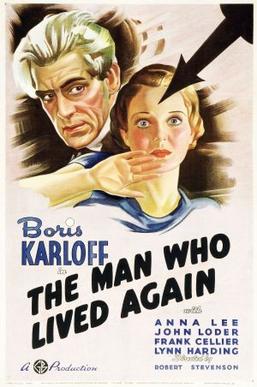
In this film from 1936, Anna Lee plays Dr. Clare Wyatt, who leaves behind her reporter boyfriend (John Loder) so that she can accept a job working with the eccentric scientist, Dr. Laurience (Boris Karloff). Dr. Laurience lives in a spooky mansion with a sarcastic, wheelchair-bound assistant (Donald Calthorp). It turns out that Dr. Laurience believes that he has discovered how people can switch minds and bodies. The scientific community ridicules Dr. Laurience but soon, Laurience is putting his theories to the test. Dr. Laurience finds himself falling in love with Clare but he knows that she’s in love with her suspicious boyfriend. What if Dr. Laurience changed his mind?
This is an entertaining British production, featuring almost the entire cast playing more than one role as various minds are moved into different bodies. That said, the film is dominated by the great Boris Karloff, who gives one of his most enjoyable performances as the mad Dr. Laurience. Though Karloff became a star playing the Monster, he always seemed happier whenever he got to play the mad scientist.
The 2013 film, Finding Faith, opens with a skeezy-looking man attempting to abduct a teenage girl. Of course, what the man doesn’t know is that the girl is not a teenager at all. Instead, she’s an undercover cop who has spent the last few days engaging in online conversations with the man who tried to kidnap her. The man is arrested and, as he’s taken away, she comments that she’s glad she won’t have to spend anymore time chatting with him.
Indeed, it’s dangerous world out there. We tend to laugh about Nigerian prince emails and painfully obvious phishing scams but there’s a lot of unsavory people lurking around online. Faith Garrett (Stephanie Owens) is an intelligent and popular high school cheerleader who thinks that she’s met a cute boy online. However, as she soon learns, she wasn’t actually talking to Eddie Blue. Instead, she was talking to a methhead redneck who was talking to her so that he could figure out the best way to track her down and abduct her. In New Jersey, there’s a warehouse that is full of abducted teenage girls who are scheduled to be sold to the highest bidder and Faith’s abductor feels that he’ll be able to make a lot of money off of her.
If this sounds familiar, you’ve probably seen Takenor one of the many movies that was inspired by that film. Or maybe you’ve seen one of the countless Lifetime films in which a mother is forced to grab a gun and rescue her daughters from the people who have kidnapped them. Finding Faith does feature some gunplay. Erik Estrada plays Sheriff Mike Brown, who is in charge of the investigation into Faith’s abduction. Sheriff Brown carries a gun and so do the people working for him. That said, Finding Faith puts much more emphasis on the power of prayer than the power of firearms. Faith prays. Faith’s father prays. Sheriff Brown prays. You know who doesn’t pray? The kidnapper.
Finding Faith is based on a true story. Indeed, the film was executive produced by the real Sheriff Mike Brown and, judging from some of the performances, it wouldn’t surprise me if some of the film’s cops were played by actual cops. Because the film is based on a true story and because the threat of being abducted by someone who has been stalking you online actually is something that most people should be aware of, it’s a bit disappointing that Finding Faith isn’t a better movie. Unfortunately, it’s a bit overlong and it’s plagued with slow spots. On the plus side, Stephanie Owens gives a good performance in the lead role of Faith. Erik Estrada tersely delivers his heavy-handed narration and delivers most of his other lines through clenched teeth. Estrada is one of those actors who never lets you forget that he’s acting. As a result, he can be entertaining to watch but, at the same time, watching him tends to take the viewer out of the reality of the film. As an actor, Estrada is better-served by films like Gunsthan films like Finding Faith.
That said, the film’s final message is to be careful out there and that’s definitely a good idea!
1987’s Doom Asylum opens with a tragic auto accident. Attorney Mitch Hansen (Michael Rogen) is out for a drive with his girlfriend, Judy (Patty Mullen). When Mitch crashes his car, Kiki loses a hand and dies on the spot. Mitch lives but he’s so horribly disfigured that everyone assumes that he’s dead and he’s sent to the morgue. When two coroners attempts to slice him open, an angry Mitch responds by killing the coroners. Personally, I imagine that Mitch could have just sued them for malpractice because he was, supposedly, an attorney. Oh well, whatever. Mitch looks like crap now and he has a bunch of surgical tools. Now, he just needs a deserted asylum and a bunch of dumbass teenagers.
Ten years later, a bunch of dumbass teenagers show up at a deserted asylum. They want to have a picnic. Unfortunately, a local riot grrrrl band is already using the asylum for band practice. The two groups try to co-exist but it proves to be difficult. The band sees the teenagers as being sell-outs. The teens view the band as just being noisy and obnoxious. Water-filled condoms are tossed at the teens. Meanwhile, one of the teens shuts off the power so the band can no longer practice. One of the teens is played by Kristin Davis, years before she would find fame as Charlotte on Sex and the City. Another one of the teens is Kiki (Patty Mullen), the daughter of Judy.
Anyway, Mitch is also living in the asylum and he gets annoyed with both the band and the teens so soon, he’s following everyone around and using his stolen surgical tools to kill anyone that he manages to catch alone. Making Mitch’s job easy is the fact that everyone keeps wandering off by themselves, even though the asylum is obviously a dangerous place and it often doesn’t make any sense to wander off. It also helps Mitch that both the teens and the members of the band never seem to actually try to run or anything whenever Mitch shows up with a surgical drill or with a bone saw. Instead, they just kind of stand there while Mitch drills out their brains. Poor Kristin Davis actually sits down in a chair while Mitch is approaching her, as if she figured that she might as well be comfortable for whatever was about to happen. This being a late 80s slasher film, Mitch has a series of one-liner, the majority of which appear to be related to his former profession as an attorney. Unfortunately, the sound quality is so bad that I had a hard time understanding the majority of his quips.
Give credit where credit is due, the deserted asylum is a wonderfully creepy location and, just judging from all of the graffiti on the walls, I assume it was also an authentic location as well. The scenes were the camera prowls through the deserted hallways were genuinely effective. But, otherwise, the film can’t overcome the combination of bad acting, a seriously lame script, and some risible attempts at comedy. There’s a lot of blood but it ultimately doesn’t add up to anything more than another generic slasher.
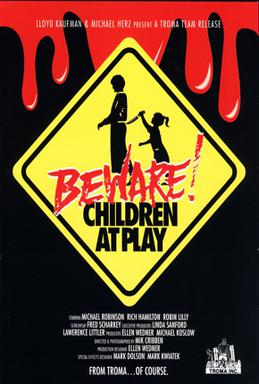
1989’s Beware! Children At Play opens with a son and his father on a camping trip. They’re having a great time, up until the minute the father steps on a bear trap and ends up trapped on the ground. His son fails to open up the bear trap and, over the course of three days, his father slowly dies. With his dying breath, the father tells his son to cannibalize his body after he passes.
Ten years later, a small town in New Jersey has a problem. People, most of whom are children, are mysteriously vanishing. Sheriff Carr (Rich Hamilton) has no idea what’s happening, which is especially frustrating as his daughter Amy is among the missing. Sherriff Carr’s old friend, novelist John DeWolfe (Michael Robertson), comes to town for a visit and he discovers that the townspeople are being killed by their own children. The children have been brainwashed by a feral teenager who lives in the woods, a teenager who calls himself Grendel.
Even as John tries to track down Grendel’s compound, the townspeople prepare to go to war against the children who are living in the woods. Early on, an ill-destined traveling bible salesman refers to the town as being a part of the “New Jersey Bible Belt,” and it turns out that, just as the children are following Grendel, the adults are obsessed with their own idea of divine retribution. Can John save the children from both Grendel and the townspeople?
No, he cannot.
Beware! Children At Play opens with the Troma title card, which should be enough to frighten even the most resilient of audiences. Like most Troma films, it’s violent and, at times, surprisingly mean-spirited. The budget is low but the gore is grotesquely memorable, with characters getting chopped in half and used as scarecrows and every other horrible thing that you might expect to happen to someone on a farm. As for the performances, it’s a typical Troma film, with everyone either overacting or underacting. The townspeople shake with rage as they prepare to enter the woods in search of the children. Michael Robertson attempts to change their minds by shouting random insults at them. There’s a moment, at the start of the film, where John and his wife (Lori Romero) debates the merits of John’s books and the pedantic dialogue was so stiffly delivered that I nearly yelled at the screen.
That said, I don’t think anyone who sees this film will remember much about anything that happens before the film’s final ten minutes. At the end of the film, the adults finally find their children and set out to get their revenge. Those final ten minuets are considered to be some of the most controversial in the history of Troma, with Lloyd Kaufman claiming that they caused a mass walkout when the trailer for the film played at Cannes. One could argue that the finale is meant to suggest that the children learned their evil from their parents but, more realistically, this is a Troma film and Troma has always understood the power of controversy to sell tickets. The final ten minutes would be incredibly disturbing, if the actors were more convincing and if the special effects weren’t so cheap looking, particularly when compared to the gore effects seen earlier in the film.
Killer kids will always been creepy and they are certainly creepy in this film. In the end, though, this is still a Troma film and never as disturbing as a film about a cult of killer children should be. In the end, I could only ask myself, “Why does this stuff always happen in New Jersey?”
First released in 2010, Birdemic: Shock and Terror is a film that has a very specific reputation.
Chances are that, even if you haven’t watched the entire film, you’ve come across clips from Birdemic online. It’s the film where the birds attack humanity because of global warming. When the birds attack, they dive bomb the buildings below, exploding when they make contact. Whenever a bird attacks, it sounds like an airplane. Though the majority of the birds are described as being Eagles, they all sound like sea gulls. The birds themselves are all the result of cartoonish CGI, which leads to several scenes of the birds hovering in the air while the actors vainly shoot at them or try to wave them away with a clothes hanger.
Birdemic is famous for its bad acting. It’s famous for the conference room scene where a bunch of engineers and salespeople are told that they’ve all earned their stock options and they proceed to spend the next ten minutes or so applauding. Birdemic is famous for the scene where Damien Carter performs “Hanging With My Family” while the film’s stars dance in such a way that indicates that they couldn’t hear the song while they were filming. Birdemic is famous for director James Nguyen’s attempts to pay homage to Alfred Hitchcock, from the birds to the Vertigo-inspired scenes of people in San Francisco. Tippi Hedren is listed in the end credits, even though she only appears on television at one point.
Whenever I watch Birdemic, I’m struck by just how boring it is. Seriously, it takes forever to get to all of the stuff that the film is famous for. The birds don’t start attacking until nearly an hour into the film. Instead, the first part of the film is made up of awkward scenes of salesman Rod (Alan Bagh) dating aspiring model, Nathalie (Whitney Moore, giving the only adequate performance in the film). (In a typical example of their sparkling dialogue, Nathalie informs Rod that she’s just been hired by Victoria’s Secret. “I’m sure you’ll look great in their lingerie,” Rod replies.) We watch as Rod meets Nathalie’s mother and takes her to the movies and goes out to eat with her and eventually, they perform their infamous dance to Hanging With My Family. They also go to see An Inconvenient Truth, which really inspires Rod to think about what humanity is doing to the planet. Rod announces that he’s getting a hybrid.
The main thing that distinguishes Birdemic from other bad movies is just how seriously it takes itself. With all of its talk about the environment and how the birds are angry over what humans are doing to their planet, it becomes very obvious the Birdemic is a film with a message and James Nguyen sincerely believed that the solution to climate change was to get people to watch his movie. Birdemic was a film made to make people think, in much the same way that An Inconvenient Truth inspired Rod to think about getting a hybrid someday. Al Gore may have used a power point presentation to win an Oscar for himself. James Nguyen used some bad CGI birds and he didn’t win anything, other than the hearts of viewers.
It’s true that Birdemic is a film that caused people to think. Of course, few of those thoughts had to do with protecting the environment. Birdemic may have been too ambitious for its own good but it has still established a place for itself in our culture. Birdemic will never be forgotten.
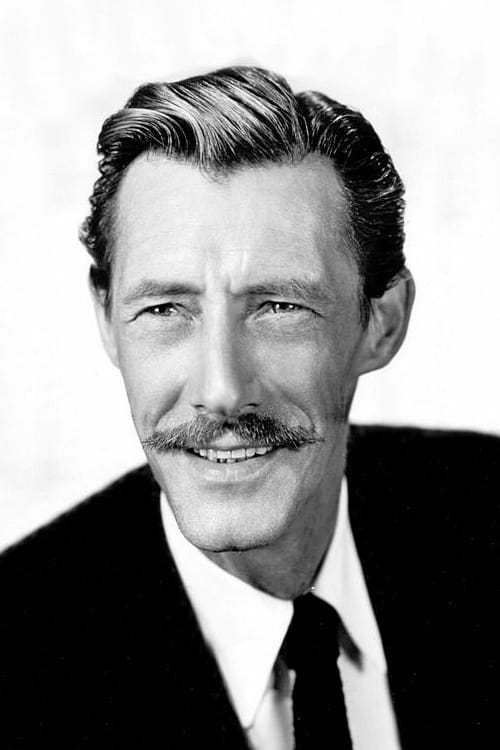
It’s been said that John Carradine didn’t really like movies that much.
This, despite the fact that Carradine appeared in over 300 movies over the course of a career that spanned nearly a century. Born in 1906, Carradine made his film debut in 1930 and worked steadily until his death in 1988. He was so prolific that films featuring him were still being released for years after his passing. Carradine was a favorite of directors like Cecil B. DeMille and John Ford. He played key roles in such Ford films as Stagecoach, The Grapes of Wrath and The Man Who Shot Liberty Valance.
And yet, for many people, John Carradine’s career has been defined by the astounding number of low-budget horror and sci-fi films in which he appeared. Sometimes, he was the star. More often, he would just make a quick cameo appearance. But whatever the size of the role, he always made an impression. Carradine, however, always said that his true loves were Shakespeare and the theater and that the films were just something he did so he could afford to work on stage.
1978’s Vampire Hookers features Carradine in a role that was typical of some of his later horror roles. In this scene, he plays a courtly vampire who wonders if anyone understands poetry anymore.
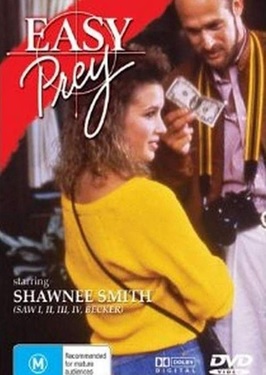
The 1986 film, Easy Prey, tells the story of Tina Marie Riscio (Shawnee Smith), a 16 year-old who was approached in a mall by man (Gerald McRaney) who claimed to be a photographer looking for models. The man told the insecure Tina that he wanted to take her picture but that he needed her to come out to his car and sign a release. At first, Tina was reluctant to follow the man out to his car but when he acted embarassed and apologized for making her feel uncomfortable, Tina decided to sign the release. Later, she would say that the man reminded her of her father.
The man, however, was Christopher Wilder. At the time that he approached Tina, Wilder was already a suspect in several murders and had been placed on the FBI’s Most Wanted List. In many ways, Wilder did not seem to fit the typical profile of a serial killer. Born in Australia, he was a naturalized American citizen who had started his own business and lived what seemed to be a glamorous lifestyle. He was a millionaire. He owned a Porsche. He was a race car driver who competed in races across the country. Even with his receding hairline, he was considered to be charming and handsome. It was only under a close examination that cracks started to appear on his perfect surface. He had a criminal record in Australia. His girlfriends described him as being paranoid, insecure, and abusive. His business partners said that, despite his apparent wealth, Wilder was always one step away from financial ruin.
Because Wilder was killed by the police while resisting arrest, it’s not known how many women he murdered over the course of his six-week crime spree in 1984. It is believed that he definitely murdered eight but the actual number is thought to be much higher. (He’s a suspect in the disappearance of actress Tammy Lynn Lepert, who appeared in Scarfaceas the woman who distracted Steven Bauer while the latter should have been keeping track on what was happening with Tony’s meeting with the Colombians.) However, he did not kill Tina Marie Riscio. Instead, after kidnapping and assaulting her, he drove across the country with her. After using her to lure victims in both Indiana and New York, Wilder eventually drove Tina to Boston and bought her an airplane ticket home. While Tina was flying back to Los Angeles, Wilder was heading for Canada. (He would be shot and killed by police near the border, in New Hampshire.)
Easy Prey follows Wilder and Tina as they drive from location-to-location. Along the way, Tina is shown to develop a case of Stockholm Syndrome. As much as she hates Wilder, she still fails to take advantage of many chances to escape from him. Unfortunately, the film’s script itself doesn’t provide much insight into how this happened, beyond the fact that Wilder reminded Tina of the father who earlier abandoned her. The film does feature two strong performances, from Shawnee Smith and Gerald McRaney. Smith gets a a powerful monologue, in which she talks about how easy it was for Wilder to take advantage of her insecurity. Meanwhile, McRaney plays Wilder as being a pathetic man who is desperate to convince the world that he is actually a dynamic businessman and adventurer. If he were alive today, there’s little doubt Christopher Wilder would be on twitter, siding into people’s DMs and posting a bunch of “alpha male” nonsense. Wilder was a monster who still feels very familiar.
The 1976 Spanish film, Who Can Kill A Child?, opens with a series of documentary clips, all detailing the world’s inhumanity to children. We hear about how children were experimented upon in Auschwitz. We see displaced refugees from the Korean War. We saw the famous footage of a naked Vietnamese child running down a road after her village has been napalmed by American forces. We see footage of Nigerian children being forced to serve as soldiers. The footage is disturbing but it’s also a necessary reminder that, as much as everyone claims to love children, they are often those most harmed by the wars that are waged by adults.
The film then segues into the story of Tom (Lewis Fiander) and Evelyn (Prunella Ransome), an English couple who are vacationing in Spain. Evelyn is pregnant with their third child and this vacation is their last getaway before they have to focus on raising a child. (It is mentioned that this is their third child. Presumably, they left their other two children behind in the UK while they jetted off to Spain.) Finding the beaches to be too crowded and loud, Tom and Evelyn head off to a nearby island in hopes of having some time to themselves. When they arrive at the island’s main village, they find it to be populated almost entirely by children. At first glance, there doesn’t appear to be any adults around.
As Tom and Evelyn explore the village, they discover that almost all of the buildings appear to be abandoned. They also can’t help but notice that the children seem to be watching their every move. Eventually, Tom does spot one adult but that adult is quickly attacked by a group of children who beat him to death. Tom realizes that the children have killed the adults in the village and now, they’re planning on killing him and his pregnant wife.
There have been many films made about killer kids but it’s hard to think of any of them that are as grim and downbeat as Who Can Kill A Child? There’s really not a moment of humor to be found in the film and even the movie’s most infamous scene, in which an unborn child rebels against his mother, is played with total seriousness. The children are frightening not just because they’re adorable kids but because they’re relentless in their violence and their determination to kill every adult in their path. In many ways, they’re like the fast zombies from Umberto Lenzi’s Nightmare City. The main difference is that, because their children, they’re given a benefit of the doubt that would not be given to older homicidal maniacs. Even as the children attempt to use a battering ram to burst into the room in which they’ve locked themselves, Tom and Evelyn are still hesitant to fight back because their attackers are just children. When Tom does fight back, it backfires on him because, to the rest of the world, he’s not a man fighting for his life but instead a man attacking innocent children. Even when a four year-old aims a gun at Evelyn’s head, his playful smile leaves the viewers wondering if he truly understands that guns kill or if he just thinks he’s playing a game.
Who Can Kill A Child? plays out at its own deliberate pace. It’s nearly two hours long and there’s a lot of footage of Tom and Evelyn walking around the deserted village but director Narciso Ibáñez Serrador does such a good job of creating and maintaining an atmosphere of impending doom, the film itself never feels slow. The deserted village is a wonderfully creepy location and Serrador makes sure that the viewers realize just how many spaces there are where the killer children could be hiding and waiting for someone to walk by. When the children suddenly show up in a group, coldly watching as Tom and Evelyn explore the island, it’s a truly chilling scene. The film also benefits from the performances of Lewis Fiander and Prunella Ransome, who are well-cast as Tom and Evelyn. At first, both characters seem to be a bit too complacent to be sympathetic but, as the film progresses, both Fiander and Ransome win the viewers over. Ransome, in particular, will break your heart.
The film’s conclusion is appropriately downbeat but one can’t help but feel that the children are merely doing what they’ve seen adults do for years. The children may be dangerous, violent, and ruthless but the film suggests that they learned from the best.
4 (or more) Shots From 4 (or more) Films is just what it says it is, 4 (or more) shots from 4 (or more) of our favorite films. As opposed to the reviews and recaps that we usually post, 4 (or more) Shots From 4 (or more) Films lets the visuals do the talking.
Today, we wish a happy 71st birthday to writer and occasional director Clive Barker! Barker’s stories have provided the basis for several films and Barker himself attempted to build a career of his own as a filmmaker. Though he pretty much retired from directing after the box office failure of Lord of Illusions, he still has a better directorial track record than Stephen King and his films (along with his stories and his novels) continue to influence new horror storytellers.
Today, we honor both the birthday and the cinematic career of Clive Barker with….
6 Shots From 6 Clive Barker Films
Salome (1973, dir by Clive Barker)
The Forbidden (1978, dir by Clive Barker)
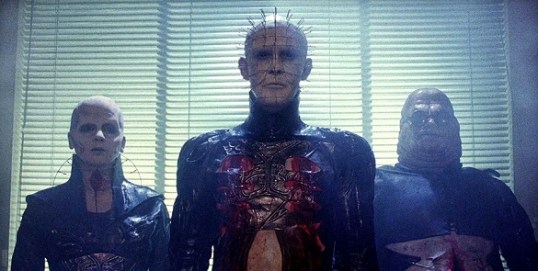
Hellraiser (1987, dir by Clive Barker, DP: Robin Vidgeon)
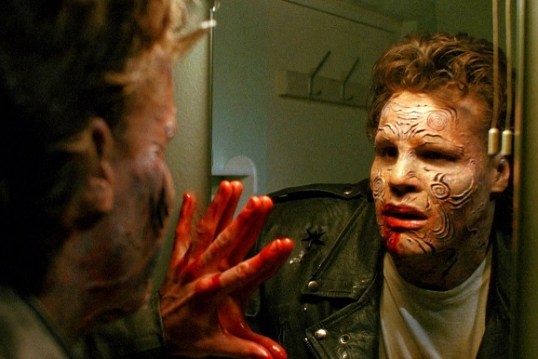
Nightbreed (1990, dir by Clive Barker, DP: Robin Vidgeon)
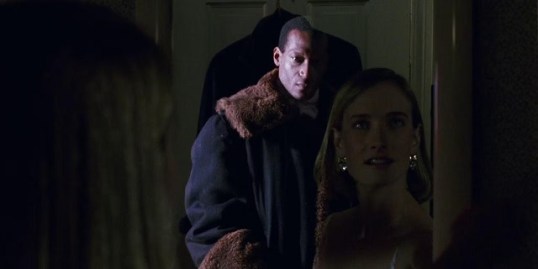
Candyman (1992, dir by Bernard Rose, DP: Anthony B. Richmond, based on a short story by Clive Barker)
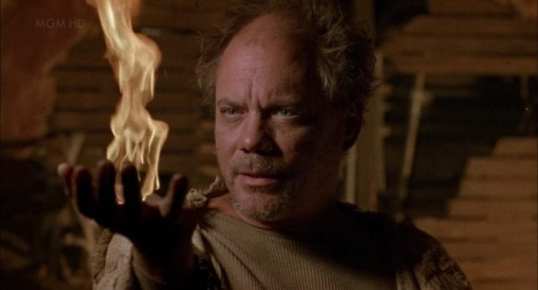
Lord of Illusions (1995, dir by Clive Barker, DP: Ronn Schmidt)