Film Review: Circle of Friends (dir by Pat O’Connor)


1995’s Circle of Friends tells the story of three friends who come of age in 1950s Ireland.

Bernadette Hogan (Minnie Driver), better known as Benny, is our narrator, the daughter of a local tailor whose shyness and insecurity disguises a quick mind and a sarcastic wit.  After years of jokes about her weight (which feel particularly cruel since Benny doesn’t appear to be particularly overweight), Benny has resigned herself to being alone.  Her parents may want her to marry their accountant, Sean Walsh (Alan Cumming), but Sean is obviously a creep.  He’s one of those guys who drinks his tea with his pinky extended.  Everyone knows better than to trust him.

Eve (Geraldine O’Rawe) is an orphan and was largely raised in a convent.  Now that she’s 18, the Westawards — the protestant heretics who once employed her father — are grudgingly keeping their promise and paying for her education.  She gets 60 pounds per term.  (I know my uncle, who paid my college tuition, would have loved it if my college tuition had been whatever the American equivalent of 60 pounds may be.)  Eve has inherited a cottage, a nice and isolated little building that becomes quite important later on in the film.

And finally, there’s Nan (Saffron Burrows).  Nan grew up with Bernadette and Eve, though her family eventually moved to Dublin.  Benny says that Nan is destined to be known for being pretty.

Nan is reunited with Benny and Eve when they all enroll at University College Dublin.  The film follows their friendship at the college, examining how they grow and change over the course of the term.  Benny develops a crush on and eventually starts dating Jack Foley (Chris O’Donnell), a medical student who enjoys playing rugby.  (I’ve never quite understood rugby, to be honest.  It seems weird to me that everyone always starts all huddled up and then apparently, they all try to grab a muddy ball until someone ends up with a compound fracture.  I’m not sure why someone would want to risk losing a limb over a game.)  Eve dates Jack’s friend, Aidan (played by a young Aiden Gillen).  And Nan …. at first glance, Nan would seem to be living every film lover’s dream!  Not does she lose her virginity to a character played by Colin Firth (in this case, Firth is playing Simon Westward) but they also regularly have sex in Eve’s lovely little cabin.  Of course, they don’t bother to let Eve know what they’re doing.  That’s part of the forbidden appeal of it all!  Unfortunately, despite being played by Colin Firth, Simon turns out to be a bit of cad.

Indeed, all of the men turn out to be a bit of a disappointment, though some do manage to redeem themselves.  The film is less about Benny finding love and more about Benny discovering that it’s even more important to love and respect herself.  As so often happens when it comes to lifelong friends, there are some struggles.  Not all of the friendships survive.  Unfortunately, that’s just a part of growing up.  Still, Benny, Eve, and Nan are all wonderfully written and acted characters and the film does a great job of portraying their difficult but very true-to-life relationship.

Circle of Friends is a lovely film and a personal favorite of mine.  Unfortunately, it’s not always an easy film to watch.  It’s not streaming on any of the usual services.   However, the film has been uploaded to YouTube so be sure to watch it while you can.
Film Review: Michael Collins (dir by Neil Jordan)


Released in 1996, Michael Collins tells the story of the early 20th century struggle of Ireland to gain independence from Britain.

Liam Neeson stars as Michael “Mick” Collins, the revolutionary leader who perfected the use of guerilla warfare against the British and then, in the greatest of ironies, found himself fighting some of his former allies during the Irish Civil War.  Aidan Quinn plays Mick’s friend and fellow revolutionary, Harry Boland.  Both Harry and Mick fall in love with Kitty Kiernan (Julia Roberts).  Stephen Rea shows up as Ned Broy, a member of the Dublin police department who is inspired by Mick’s words to become a double agent.  Charles Dance has a cameo as the fearsome Soames, a British intelligence agent who is sent to Ireland to violently put down the Irish insurgency.  Finally, Alan Rickman plays Eamon de Valera, who goes from being one of Mick’s strongest allies to being one of his fiercest rivals.  The film follows Collins from the Easter Rising of 1916 to his eventual assassination in 1922, providing a look at the history of Ireland that is as much directed towards those outside of Ireland as those on the inside.

When watching Michael Collins, it helps to have a working knowledge of Irish history.  Otherwise, it can occasionally be a bit difficult to keep track of who is angry with who at any particular point in time.  Of course, it should be noted that the movie itself is not exactly historically accurate.  In the film, the gentle and likable Ned Broy becomes a victim of British bloodlust.  In real life, Ned Broy outlived Michael Collins by several decades and died peacefully at the age of 84.  For that matter, the film presents Eamon de Valera as being coldly Machiavellian and it suggests that de Valera was jealous of Mick’s popularity.  Though both Rickman and director Neil Jordan later said it wasn’t intentional, the film also seems to suggest that de Valera played a role in Collins’s assassination.  While Eamon de Valera remains a controversial figure for many reasons (including his neutrality during World War II), Jordan has said that he feels de Valera was not necessarily treated fairly in Michael Collins and indeed, de Valera — who plays as big a role in the founding of the Irish republic as anyone — is portrayed as often being ineffectual and unwilling to truly put himself at risk to fight the British.  De Valera’s relationship with Collins was undoubtedly more complex than portrayed in this film but, when one makes a movie for an international audience, nuance is often the first thing that’s abandoned.

Seen today, 29 years after it was released, Michael Collins is an impressively made film that has a few inescapable flaws.  It’s gorgeous to look at, full of moody shots of dark Dublin streets.  The violence is often shocking and Jordan doesn’t shy away from considering the moral implications of Collins’s guerilla warfare.  Michael Collins doesn’t make the mistake of blindly celebrating violence, which would be a valuable lesson for the world’s current crop of self-styled revolutionaries if they were only willing to hear it.  Having gotten used to seeing Liam Neeson cast in one generic action film after another, it was interesting to watch Michael Collins and see what a good actor he truly could be.  Even in 1996, He was perhaps a few years too old to playing a man who was only 31 when he died but Neeson still plays the role with a ferocious charisma that makes him believable as a leader.  His scenes with Aidan Quinn have a joie de vivre that brings out the both in best actors.  Alan Rickman is memorably sinister as Eamon de Valera and Stephen Rea’s gentle style makes Ned Broy into a truly tragic figure.  That said, the very American Julia Roberts feels miscast as Kitty Kiernan.  One gets the feeling that she was cast solely for her box office appeal.  Every film, the feeling goes, needs  a love story and those love stories need to be between people with familiar faces and Roberts is such a familiar face that her every appearance in the film feels like a distraction from the story being told.  That said, the film captures the excitement and danger of being in the middle of history-making events.  It’s a historical epic that’s never boring and manages to hold the viewer’s interest.

Michael Collins is ultimately a flawed but entertaining look at the early days of the Irish republic.

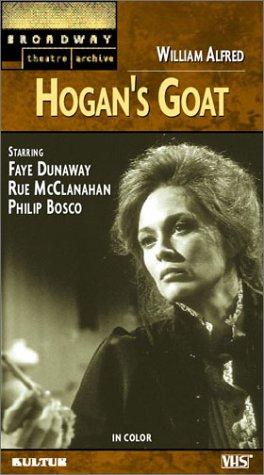
Made-For-Television Film Review: Hogan’s Goat (dir by Glenn Jordan)


1971’s Hogan’s Goat opens in Brooklyn in the 1890s.  This was when Brooklyn itself was still a separate city, before it become a borough of the unified New York City.  If you’ve watched the video that I include with most of my Welcome Back Kotter reviews, you’ll notice the boast: “Fourth largest city” on the Welcome to Brooklyn sign.  And indeed, if Brookyln had remained independent, it would now be the fourth most populated city in America, behind New York, Los Angeles, and Chicago.  Sorry, Brooklyn.

(However, Houston thanks you.)

Local ward boss Matt Stanton (Robert Foxworth) heads home with what he thinks is exciting news.  He tells his wife, Kathleen (Faye Dunaway), that he is finally going to be mayor of Brooklyn.  The current mayor, a man named Quinn (George Rose), has been caught up in some sort of corruption and the Democratic political machine is ready to abandon him.  Matt Stanton is about to become one of the most powerful men in New York.  That’s not bad for a relatively young man who came to America from Ireland in search of a better life.  Adding to Stanton’s happiness is the fact that he’ll be defeating Quinn, a canny politician towards whom Stanton holds a grudge.  Kathleen, however, is worried.  An immigrant herself, Kathleen met Stanton while the latter was in London.  They were married in a civil ceremony and, ever since Stanton brought her back to Brooklyn, she has been lying and telling everyone that they were married in a church.  Kathleen feels that she and Stanton have been living in sin and she wants to have a convalidation ceremony.  Stanton refuses because doing so would mean admitting the lie in the first place and he can’t afford to lose the support of the Irish Catholic voters of Brooklyn.

However, it turns out that there are even more secrets in Stanton’s past, ones that Kathleen doesn’t know about but Quinn does.  When those secrets start to come out, Kathleen comes to realize that there’s much that she doesn’t know about her husband.  Stanton, with political power in his grasp, desperately tries to hold on to the image that he’s created of himself and Kathleen, leading to tragedy.

Hogan’s Goat was an Off-Broadway hit when it premiered in the mid-60s and its success led to Faye Dunaway getting her first film offers.  The made-for-television version of Hogan’s Goat, which premiered on PBS and featured Dunaway recreating her stage role, is essentially a filmed play.  Little effort was made to “open up” the story and, as a result, the film is undeniably stagy.  It’s clear from the start the film was mostly shot to record Faye Dunaway’s acclaimed performance for posterity.  Indeed, she’s the only member of the theatrical cast to appear in the film version.  Dunaway does give a strong performance, easily dominating the film with her mix of nervous intensity and cool intelligence.  The rest of the cast is a mixed bag.  Robert Foxworth is appropriately driven and ambitious as Stanton but his Irish accent comes and goes.  Philip Bosco does well as a sympathetic priest and George Rose is appropriately manipulative as Quinn.

In the end, the story of Hogan’s Goat is probably of the greatest interest to Irish-American history nerds like me, who have read and studied how Irish immigrants, especially in the 19th century, faced tremendous prejudice when coming to the United States and how they reacted by building their own political machines and dispensing their own patronage.  In Hogan’s Goat, the conflict is less between more Stanton and Quinn and more between Kathleen’s traditional views and her devout Catholicism and Stanton’s own very American ambition.  Whereas Kathleen still fights to retain her faith, pride, and her commitment to who she was before she married Stanton, Stanton fights for power and to conquer the man who Stanton feels has everything that he desires.  In the end, Stanton’s hubris is not only his downfall but Kathleen’s as well.

4 Shots From 4 Films: Special Bernardo Bertolucci Edition


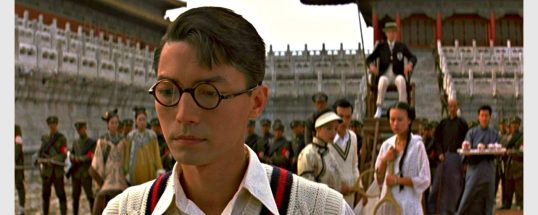
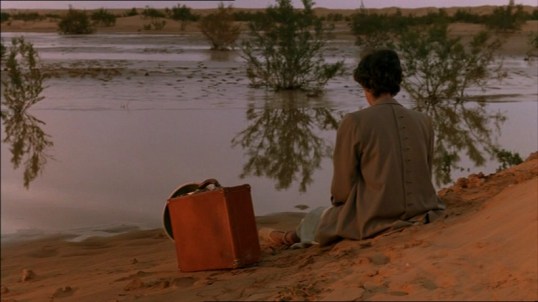
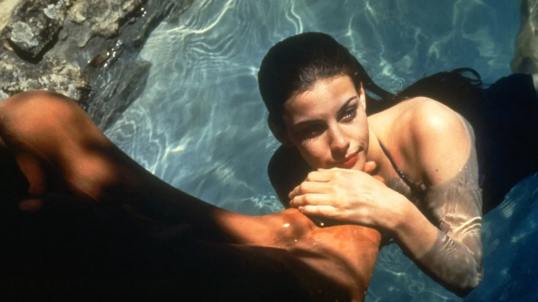
4 Shots From 4 Films is just what it says it is, 4 shots from 4 of our favorite films. As opposed to the reviews and recaps that we usually post, 4 Shots From 4 Films lets the visuals do the talking!

Today, the Shattered Lens celebrates Italian director Bernardo Bertolucci!  It’s time for….

4 Shots From 4 Bernardo Bertolucci Films

The Conformist (1970, dir by Bernardo Betrolucci, DP: Vittorio Storaro)

The Last Emperor (1987, dir by Bernardo Bertolucci, DP: Vittorio Storaro)

The Sheltering Sky (1990, dir by Bernardo Betrolucci, DP: Vittorio Storaro)

Stealing Beauty (1996, dir by Bernardo Bertolucci, DP: Darius Khondji)

Scenes that I Love: Marlon Brando as Mark Antony in Julius Caesar


Beware the Ides of March!

The scene below is from the 1953 film, Julius Caesar.  This Oscar-nominated Shakespearean adaptation had a cast that was full of distinguished actors.  James Mason played Brutus.  The great John Gielgud played Cassius.  Louis Calhern was Caesar while other roles were filled by Deborah Kerr, Greer Garson, Edmond O’Brien, George Macready, John Hoyt, Edmund Purdom. and a host of other distinguished thespians.  And yet, the best performance in the film came from an actor who, at the time, no one considered to be a Shakespearean.  Marlon Brando brought his method intensity to the role of Mark Antony and the result was a performance that is still electrifying today.

On YouTube, someone referred to this as being “the world’s greatest speech delivered by the world’s greatest actor.”  Sounds good to me!

Here is Marlon Brando in Julius Caesar:

Live Tweet Alert: Join #ScarySocial for Food of the Gods!


As some of our regular readers undoubtedly know, I am involved in a few weekly live tweets on twitter.  I host #FridayNightFlix every Friday, I co-host #ScarySocial on Saturday, and I am one of the five hosts of #MondayActionMovie!  Every week, we get together.  We watch a movie.  We tweet our way through it.

Tonight, at 9 pm et, Deanna Dawn will be hosting #ScarySocial!  The movie?  Food the Gods, from director Bert I. Gordon!

If you want to join us this Friday, just hop onto twitter, start the movie at 9 pm et, and use the #ScarySocial hashtag!  I’ll be there tweeting and I imagine some other members of the TSL Crew will be there as well.  It’s a friendly group and welcoming of newcomers so don’t be shy.

Food of the Gods is available on Prime!

See you there!

The underrated RED SUN (1971) – Charles Bronson & Toshiro Mifune in an East meets Western! 


Every so often I’m going to throw out a movie that I don’t think gets enough love, and that just doesn’t set right with me. Today’s movie is RED SUN. 

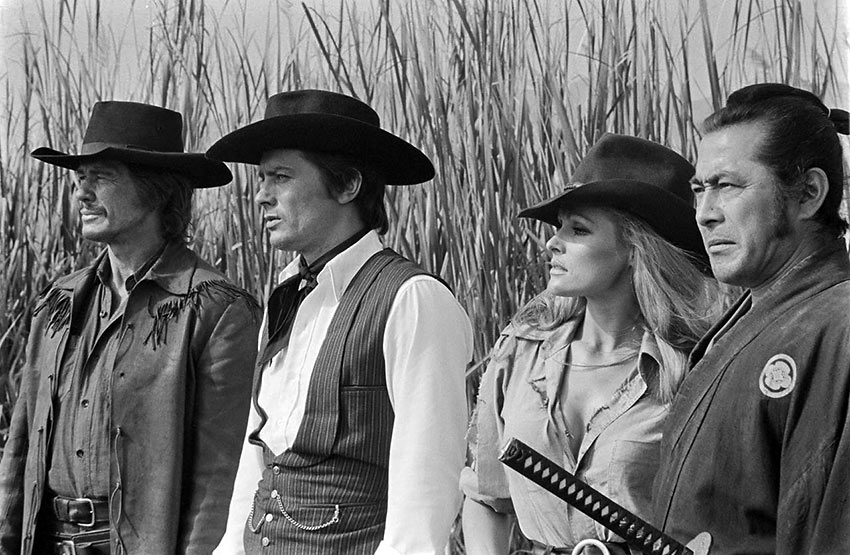
In RED SUN, two of the most macho actors in the history of world cinema team up in a western where train robber Link (Bronson) is forced to lead the honorable samurai Kuroda (Mifune) on a cross country trek to reclaim a stolen sword that was intended to be a gift from the Empire of Japan to the US President. If the two men can’t get the sword back in a week’s time, honor demands that the two men will lose their lives out of shame. Link isn’t really down with this plan, but he doesn’t have much of a choice in the matter due to the power and skill of Kuroda. Charles Bronson & Toshiro Mifune command the screen, with Charlie showing a likable sense of humor in his role as the bad / good cowboy. The two must find the evil Gauche (French superstar Alain Delon). Gauche is Bronson’s old train robbing partner who stole the sword and killed a samurai in the process, providing even more motivation for Kuroda. Add in Ursula Andress as a sexy woman who has a history with both Link and Gauche, and it doesn’t get much better than this!

RED SUN is not a perfect movie, but I couldn’t imagine anyone being disappointed by this enjoyable East meets Western that features true international superstars. In my book, it’s highly recommended!

Enjoy the trailer below:

Scenes That I Love: Michael Caine says, “I Won’t Bury You” in The Dark Knight Rises


Today, the Shattered Lens wishes a happy 92nd birthday to Sir Michael Caine.

With 177 acting credits listed on the imdb, Michael Caine started his regular acting career in 1956 and only recently retired. (He actually made his acting debut, at the age of 10, in a made-for-TV movie in 1946.)  There are many great Michael Caine performances and scenes to choose from but, for today, I decided to go for a scene from 2012’s The Dark Knight Rises.

Caine was 79 when he played Alfred in this film and he showed that, after decades of work, he hadn’t lost a step as a performer.  As well, he also showed his ability to take a character who could have been ridiculous — the loyal butler of a superhero — and instead make him surprisingly poignant.  With this scene, Caine proved himself to be the heart of Christopher Nolan’s Dark Knight trilogy.

Happy birthday to one of the greatest actors of our age or any age for that matter.

4 Shots From 4 Films: Special Wolfgang Petersen Collection


4 Shots From 4 Films is just what it says it is, 4 shots from 4 of our favorite films. As opposed to the reviews and recaps that we usually post, 4 Shots From 4 Films lets the visuals do the talking!

Today, the Shattered Lens celebrates German director Wolfgang Petersen.  It’s time for….

4 Shots From 4 Wolfgang Petersen Films

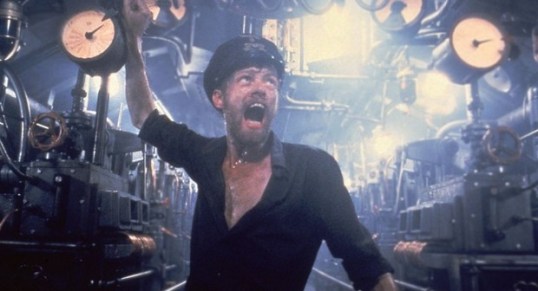
Das Boot (1981, dir by Wolfgang Petersen, DP: Jost Vocano)

The NeverEnding Story (1984, dir by Wolfgang Petersen, DP: Jost Vocano)

In The Line of Fire (1993, dir by Wolfgang Petersen, DP: John Bailey)

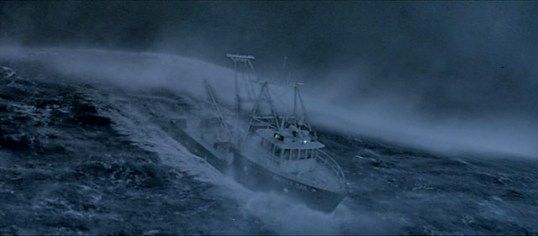
The Perfect Storm (2000, dir by Wolfgang Petersen, DP: John Seale)