G.D. Spradlin, R.I.P.


Earlier today, I was looking through the list of recent death on Wikipedia (I do this several times a day.  It’s one of my morbid habits.) and I came across the name of G.D. Spradlin. 
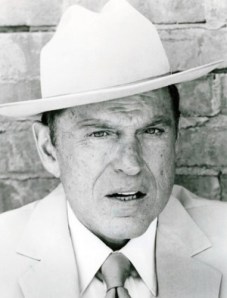
G.D. Spradlin died on June 24th, at the age of 90.  While G.D. Spradlin is a great name, it’s hardly a household name.  However, if you’re in any way interested film, you’ve probably seen G.D. Spradlin at least once.  G. D. Spradlin was a character actor who played small but key roles in some of the best films of the 1970s.

Spradlin’s most famous role was probably as the corrupt Senator Pat Geary in The Godfather, Part II.  We see Sen. Geary a handful of times over the course of the film.  At first, he’s just another folksy politician who, behind close doors, proves himself to be coldly corrupt.  A bit later, we meet Geary again.  This time, Geary is sitting naked in a brothel, shaking as he tries not to look at the dead prostitute lying on the bed behind him.  Though it’s never explicitly stated, the suggestion is that the Corleone — the film’s “heroes” — murdered the prostitute and framed Geary for the crime.  To me, this is the pivotal scene in the film because it’s the scene that reveals just how much Al Pacino’s Michael Corleone has changed in between the two Godfathers.  The Michael from the first film might have ordered Geary killed but he never would have deliberately ordered the murder of an otherwise innocent bystander, regardless of her profession.  It’s lucky for Geary that Michael changed his ways because it gives Geary a chance to later accompany him and Hyman Roth to Cuba.  Finally, Geary shows up towards the end of the film, passionately defending Michael Corleone before a Senate committee on organized crime.
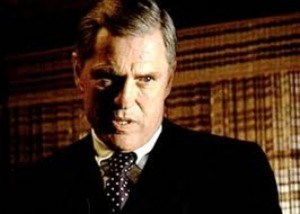
If you don’t remember Spradlin from The Godfather, Part II then maybe you remember him as the friendly yet sinister Gen. Corman from Apocalypse Now.  When Martin Sheen is briefed on the man he’s been assigned to kill, it’s Spradlin who does the briefing. 

Before going into acting, Spradlin was active in Oklahoma politics and he had the bearing of a man who was used to being in charge.  If he had gone into acting a little bit earlier, he probably would have played countless ranchers and bank presidents in various Westerns.  However, since he came to prominence as a character actor in the cynical cinema of the 1970s, it was his fate to play roles in which he epitomized the corruption of the American establishment.    Though his roles were rarely big, he brought an unexpected depth to all of them and, as a result, played a key role in some of the greatest movies ever made.

Not too bad for a man who was never a household name.
 

Lisa Marie Considers A Better Life (dir. by Chris Weitz)


I recently had a chance to see A Better Life, the new film from director Chris Weitz that a lot of critics have already predicted will be a major contender for all sorts of awards at the end of the year.

A few critics have said that A Better Life is similar to the classic Italian neorealist film Bicycle Thieves.  Look, let’s be honest.  A Better Life is Bicycle Thieves except Rome has been replaced by Los Angeles and the Italian father-and-son are now an Illegal immigrant and his son (played by Demian Birchir and Jose Julian, both of whom give award-worthy performances).  While Julian struggles to resist the temptation to get involved with gangs, Birchir struggles to pay the bills as a gardener.  Eventually, Birchir manages to purchase a truck even though he knows that just by driving, he’s increasing the risk of being caught and deported back to Mexico.  However, after only one day, the truck is stolen.  Unable (because of their own status as illegal aliens) to turn to the police, Birchir and Julian embark on an increasingly dangerous quest through the shadows of Los Angeles, searching for their truck and everything that it represents (i.e., the better life of the title).

As a director, Chris Weitz takes a low-key, rather subdued approach to the material.  While the cinematography emphasizes the idea of Los Angeles being both seductive and remote at the same time, Weitz focuses our attention on Birchir’s worn, world-weary face.  Each line and wrinkle on that face tells us a different story of struggle and, ultimately, hope for a better life and a better future.  Weitz slips up a little during the film’s final act.  Some of the dialogue gets a bit too heavy-handed, despite the skill with which Bircher and Julian deliver it.  It’s in these scenes that we suddenly start to see the hand of the filmmakers and suddenly, we’re no longer watching the story of a proud man sacrificing so his son can have a better life.  Instead, we’re suddenly reminded that we’re watching a movie. 

I have to admit that, as time has passed, I’ve become a bit less enthusiastic about A Better Life.  It’s one of those films that carries a lot of power when you first see it but then, once you’ve had some time to think about it, it becomes obvious that you’re not so much reacting to what the film is as much as what you wish the film was.  When I first saw A Better Life, much like a lot of critics, I thought I was seeing one of the best films of 2011.  In retrospect, A Better Life is one of the better films (so far) of 2011 but hardly the best.  What it is ultimately is a well-made film that struggles under the weight of its own good intentions.

Still, as I watched A Better Life, I couldn’t help but remember a crowd-pleasing scene from last year’s The Kids Are All Right.  If you’ll remember, that’s the film where Julianne Moore is a professional landscaper who deals with the guilt of having an affair with Mark Ruffalo by yelling at, abusing, and eventually firing Luis, the Mexican who works for her.  You may remember Moore snapping, “What are you looking at!?” and Luis replying with, “I am not looking at anything, that is just my face.”  The line, of course, is delivered in a thick accent and the scene where Moore actually does fire him is largely played for laughs.  We don’t see Luis again for the rest of the movie though Moore does get a throw-away line about how she wishes she hadn’t fired him (probably because she now has to do all dangerous physical labor herself). 

Now. I have to admit that scene bothered me when I saw it and it has bothered me since.  I doubt that the liberal audiences that flocked to see The Kids Are All Right would have found it as hilarious if Julianne Moore had unfairly fired an African-American character who spoke in exaggerated ebonics.  It was as if the audience members were so exhausted from patting themselves on the back for watching a movie that pretended to be about lesbians that they were relieved to have an ethnic stereotype to laugh at. 

To me, it’s because of scenes like that one that we will always need films like A Better Life.

Lisa Marie Goes To Rio (dir. by Carlos Saldahna)


Rio is one of those films that I missed when it had it’s initial run at the theaters.  However, last week, I finally got a chance to see it at the “dollar” theater.  Now, I have to admit that I consider the dollar theater to be something like the sixth ring of Hell and, before the movie started, I posted the following to twitter: “Wow, there’s a lot of ugly and obese children in this theater.”  And indeed, that was the case.  What I forgot to mention is that a lot of them were there with equally ugly and obese parents, the types who talked loudly through the film in accents that carried the dual twang of ignorance and stagnation.  Despite the surroundings though, I found Rio to be a perfectly pleasant little animated film.

Rio is the story of Blu (voice by Jesse Eisenberg), a blue macaw who, though originally from Brazil, has grown up in Minnesota and, as a result, has never learned how to fly.  Blu returns to Brazil with his owner (Lesley Mann) so that he can mate with another macaw, Jewel (Ann Hathaway) and keep the species from dying out.  However, things don’t go exactly as planned as 1) Jewel is more interested in escaping captivity than in mating and 2) both Rio and Jewel are abducted by a psychotic Cockatoo named Nigel (Jermaine Clement).  Nigel works for a bunch of poachers and soon Jewel and the flightless Blu find themselves on the run, looking for their owner while the Rio Carnaval goes on all around them. 

As one of my old theater teachers one said about me, Rio “is not without a certain fun charm.”  The film’s storyline of neurotic animals getting lost in an exotic locale and eventually finding the strength to believe in themselves is pretty much standard animation fare but the action moves along quickly and the movie takes full advantage of the whole Rio mystique.  The film’s animators create the Rio de Janeiro that everyone hopes they’ll discover if they ever make it down to Brazil.  Perhaps most importantly, Rio is child-appropraite without ever being so childish as to inspire adults to start drinking while the little ones laugh.

The voice actors all do a pretty good job distinguishing their individual characters.  Jesse Eisenberg is perfectly neurotic as Blu while Anne Hathway’s vocals are properly headstrong as Jewel.   The real stand-out here is Jermaine Clement of Flight of the Conchords. Clement, with his deep, wonderfully dramatic voice, brings a lot of flair to the villainous Nigel and, despite being a psycho Cockatoo, quickly became an audience favorite.  Though the human bird owners don’t get much to do, Leslie Mann and Rodrigo Santoro are so endearing that you actually wish they had more screen time.  On the other hand, if, like me, you found George Lopez to be grating before seeing Rio, this film isn’t going to do much to change your mind.  (Lopez, not surprisingly, plays the know-it-all bird who helps Blu and Jewel make their way through Rio.)

As I watched Rio, I realized just how spoiled we all got last year as far as animated films were concerned.  Last year, I got a chance to see Toy Story 3, How To Train Your Dragon, Shrek Forever After, A Town Called Panic, The Illusionist, Megamind, and Despicable Me.  It was, in many ways, a banner year for cinematic animation.  With the exception of Rango, there haven’t been any animated films so far that can really compare with what we were given last year.  As a result, it’s easy to be dismissive of a straight-forward, relatively simple family film like Rio.  That’s unfortunate because, taken on its own terms, Rio is a perfectly enjoyable way to spend 90 minutes.  Just don’t go into it expecting to see Toy Story 3 and you’ll be fine.

Spike Lee To Direct Oldboy Remake


If Spike Lee wasn’t controversial enough on his own, he’s now going to be directing a remake of one of the more rabidly beloved films to come out of South Korea in the 21st Century, Park Chan-wook’s Oldboy.

I have to admit that this is the type of news that always inspires, within this movie lover, mixed feelings.  On the one hand, Spike Lee is a far better director that a lot of people want to admit and he has shown the ability to make films within several different genres.  On the other hand, you have to wonder why Oldboy needs to be remade in the first place.  One need only read Arleigh’s review of the original to see just how highly most viewers thought of the original.

For me, the real question is this — will Spike Lee be truly reimagining the material or will he just be making the same film again, just this time without subtitles?

(I can see the tag line now: “Just as good as the original, now requiring less reading!”)

Will Spike Lee’s remake be a Departed-style remake or a Girl With The Dragon Tattoo-style remake?

Hopefully, if nothing else, this news will at least encourage people (like me) to seek out and watch the original and make up their mind for themselves.

The Evil That 6 Trailers Do


Hi.  I may be on the road at the moment but I wouldn’t ever let that stop me from providing everyone with the latest edition of Lisa Marie’s favorite grindhouse and exploitation trailers.

1) The Evil That Men Do (1984)

I haven’t seen this film but I love Shakespeare.

2) Satan’s Bed (1965)

Speaking of the evil that men do, this sexploitation film from Michael and Roberta Findlay is pretty rough even by today’s standards.  Don’t watch this if you’re easily offended.  If you are easily offended, just remember that ten years after making this film, Michael Findlay was decapitated by a rotating helicopter blade.

3) Moving Violation (1976)

On a slightly less disturbing note, here’s the trailer for Moving Violation.  The film is actually a bit more odd than you might guess from just the trailer.

4) The House By The Cemetery (1981)

From the great Lucio Fulci comes this film, the third part of The Beyond trilogy.  This film gave me nightmares the first few times I saw it.

5) Macon County Line (1974)

This is one of the most financially succesful films of all time and apparently, it extended the life of the Southern drive-in by a good decade or so.  It’s actually a pretty good movie.

6) Telefon (1977)

Finally, let’s end things how we started — with Charles Bronson killing people.

A Quickie With Lisa Marie: Kill The Irishman (dir. by Jonathan Hensleigh)


Jonathan Hensleigh’s fact-based gangster film Kill The Irishman had a brief (and limited) theatrical run earlier this year and received generally mixed reviews.  I myself didn’t see it in the theaters but instead, caught it OnDemand a few weeks ago and I was genuinely surprised to discover that this film, while far from being perfect, is also hardly the simple Goodfellas rip-off that I had originally been led to suspect.  Instead, Kill The Irishman is a somewhat flawed but ultimately quite rewarding David-and-Goliath story about a real-life David who was known as “the Irishman.”

Kill The Irishman tells the true story of Danny Greene (played by Ray Stevenson), an Irish-American gangster who went from being a corrupt union boss to challenging the Sicilian mafia’s dominance of the criminal underworld of Cleveland, Ohio.  In 1977, Greene became, for a brief period of time, a media celebrity when he survived several assassination attempts while fighting a war for control of the Cleveland rackets.  As the film both informs and shows us, this violent, underground war led to a total of 35 bombings, all designed to kill either Greene or one of his allies.  By surviving these attacks, Greene briefly appeared to be indestructible and seemed to be on the verge of reviving the long-dormant Irish mafia. 

As a film, it takes a while for Kill The Irishman to really click.  From the start director Hensleigh shows a real feel for capturing the feel of a once great city slowly dying but the 1st half of the movie still threatens to get bogged down in all the clichés of the modern gangster film — there’s a bit too much clunky narration from Val Kilmer (who sleepwalks through his role as a fictional police detective who grew up with Greene) and a few too many montages set to old rock tunes.  It’s all watchable enough and there’s a few memorable sequences (my favorite being the early scenes of Greene on the job, slaving away under an oppressive sun) but on the whole, it just feels like the 100th low-budget remake of Goodfellas.  The highlight of this part of the film is Christopher Walken’s typically eccentric yet genuinely sinister performance as an early Greene mentor-turned-enemy.

However, once Greene goes on his own and starts to blow up every inch of Cleveland, the film comes into its own and establishes its own rough identity.  Hensleigh proves to be very adept at orchestrating chaos and, with the entire Mafia out to kill him, Greene goes from just being a thug to being a true underdog.  It’s impossible not to root for him and, much like the film, it’s here where Ray Stevenson comes into his own.  For the 1st half of the film, Stevenson seems like an adequate but uninspired choice for the role of Danny Greene.  However, once Cleveland starts exploding around him, Stevenson comes into his own.  He not only captures Greene’s cocky defiance but, as the film reaches its inetivable conclusion, he also captures Greene’s own growing paranoia and fear.  By the end of the film, Stevenson has given a performance that has masterfully juggled pride and regret, defiance and fear.  Regardless of whether it’s an accurate statement about the real Danny Greene, Ray Stevenson makes his version into a true tragic hero.

Along with Stevenson’s anchor of a performance and Walken’s scene-stealing characterization, Kill the Irishman is filled with familiar mob movie character actors, most of whom contribute some nicely realized turns as the various members of the Cleveland underworld.  Tony Lo Bianco, Mike Starr, and Paul Sorvino are all convincingly brutish as the leaders of the local Mafia and Vincent D’Onofrio is wonderfully flamboyant as Greene’s one Italian ally.  My personal favorite supporting performance came from character actor Robert Davi who was almost a little bit too believable as a cold-blooded murderer.  Not to get too specific here but if I ever happen to hire a professional assassin, I hope he looks like Robert Davi.

I have to admit that one reason why I ultimately enjoyed this flawed but worthwhile film is because I’ve always wished that I could have been a member of the Irish mafia.  (I wanted to be like Maggie from Gangs of New York and use my fingernails to rip open throats.)  For many of us Irish-Americans, there’s just this romance to the whole idea of the Irish Mafia and we’re always looking for evidence that the organization wasn’t, more or less, wiped out by the Italians.  (Fortunately, I happen to be a fourth Italian along with being a fourth Irish so the St. Valentine’s Day Massacre is a smidgen less traumatic for me).  If nothing else, the Irish mafia epitomizes two things that every true Irish-American knows to be true: 1) the Irish will never stop fighting no matter how intimidating the odds and 2) we’re all ultimately doomed regardless.  Kill the Irishman may not be a perfect film but it’s a fitting tribute to a better kind of criminal.

Scenes I Love: The Shining (dir. by Stanley Kubrick)


Today’s scene I love is from Stanley Kubrick’s 1980 horror masterpiece The Shining.  No matter how many times I see that film, it still scares me and, for whatever the reason, the two little girls standing in that hallway scare me the most.  Here they are.

Scenes I Love: Blue Velvet (dir. by David Lynch)


From David Lynch’s 1986 “mystery” Blue Velvet comes this scene.  Frank Booth (Dennis Hopper) visits Ben (Dean Stockwell), who, we’ve been told previously, is “one suave fucker.”  Ben proceeds to prove it by “performing” In Dreams.  On just the basis of sheer perversity, this is one of the greatest scenes in film history.  Also appearing in this scene — the daughter of Ingrid Bergman (Isabella Rossellini), an actor who would play bad husbands on not only Sex and the City but Desperate Housewives as well (Kyle MacLachlan), an actor who had previously appeared in One Flew Over the Cuckoo’s Nest and would later show up in The Two Towers (Brad Dourif), and my very distant cousin, the late, great Jack Nance.

(Jack is the little man with the mustache and the hat.  He had the title role in Lynch’s first film, Eraserhead.)

Scenes I Love: Touch of Evil (dir. by Orson Welles)


Yesterday, I posted a tracking shot from Jean-Luc Godard’s Weekend.  Today, I want to offer up another great tracking shot, this one from a much better director and a much better movie: Orson Welles’ Touch of Evil.  This 3 and a half-minute, unedited tracking shot begins in the United States and ends in Mexico.  It also starts off one of the greatest films of all time.