It took me a while to really appreciated Jackie Brown.
I was nineteen and in college when I first watched the movie. A friend rented it and we watched it with the expectation that it would be another Tarantino film that would be full of violence, fast music, and stylish characterizations. And, of course, Jackie Brown did have all three of those. But it was also a far more melancholy film than what we were expecting and compared to something like Kill Bill, Jackie Brown definitely moved at its own deliberate pace. That’s a polite way of saying that, at times, the film seemed slow. It seemed like it took forever for the story to get going and, even once it became clear that Jackie Brown (Pam Grier) and Max Cherry (Robert Forster) were going to steal from Ordell Robbie (Samuel L. Jackson), it still felt like an oddly laid back heist. Robert de Niro, the film’s biggest star, played a guy who seemed to be brain dead. Bridget Fonda brought an interesting chaotic energy to the film but her character was disposed of in an almost off-hand manner. The whole thing just felt off. I appreciated the performances. I appreciated the music on the soundtrack. But I felt like it was one of Tarantino’s weaker films.
As I’ve gotten older, I’ve come to better appreciate Jackie Brown. First released in 1997 and adapted from a novel by Elmore Leonard, Jackie Brown finds Quentin Tarantino at his most contemplative. Indeed, Tarantino wouldn’t direct anything quite as humanistic until he did Once Upon A Time In Hollywood. If the heist seemed rather laid back, that’s because Jackie Brown really isn’t a heist film. It’s a film about aging, starring two icons of 70s exploitation. Robert Forster was 56 when he played bail bondman Max Cherry while Pam Grier was 48 when she was cast as Jackie Brown, the flight attendant turned smuggler. Jackie and Max two middle-aged people faced with a world that doesn’t really make much sense to them anymore. (Obviously, it’s easier for me to understand them now than it was when I was nineteen and I felt like the future was unlimited.) Max bails people out of jail and it’s obvious that he still has a shred of idealism within him. He actually does care about the people he gets out of jail and he’s disgusted by Ordell’s callous attitude towards the people who work for him. Jackie is a flight attendant who, when we first see her, looks like she could have just stepped out of a 1970s airline commercial. Ripping off Ordell isn’t just something that she’s doing for revenge or to protect herself, though there’s certainly an element of both those motivations in her actions. This is also her chance to finally have something for her. Jackie and Max are two lost souls who find each other and wonder where the time is gone. All of those critics who have wondered, over the years, when Quentin Tarantino would make a mature movie about real people with real problems need to rewatch Jackie Brown.
Of course, it’s still a Quentin Tarantino film. And that means we get a lot of scenes of Samuel L. Jackson talking. This is one of Jackson’s best performances. Ordell is definitely a bad guy and most viewers will be eager to see him get his comeuppance but, as played by Jackson, he’s also frequently very funny and definitely charismatic. One can understand how Ordell lures people into his trap. Jackson loves to watch video tapes of women shooting guns. He allows De Niro’s Louis to crash at his place and the scene where Ordell realizes that Louis is thoroughly incompetent is brilliantly acted by both men. And then you have Bridget Fonda, as a force of pure sunny chaos. Jackson, De Niro, and Fonda are definitely a watchable trio, even if the film rightly belongs to Pam Grier and Robert Forster.
The older I get, the more I appreciate Jackie Brown. This is the film where Tarantino revealed that there was more to his artistic vision than just movie references and comic book jokes. This film takes Tarantino’s style and puts it in the real world. It’s Tarantino at his most human.
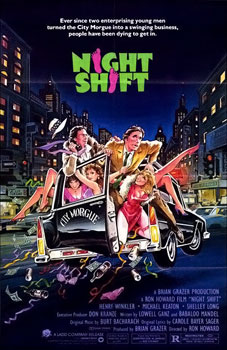
Chuck Lumley (Henry Winkler) was a Wall Street wizard until the stress of the job started to give him ulcers. He dropped out of the rat race, got a less stressful job as an attendant at a New York City morgue, and eventually met and became engaged to Charlotte (Gina Hecht). When Chuck’s supervisor decides to give Chuck’s day shift to his new guy, Chuck is promoted to the night shift. “He has the same last name as you,” Chuck says when he learns the about the new employee. “Yeah, I think he’s my nephew or something,” his supervisor replies.
Chuck finds himself working nights with “Billy Blaze” Blazejowski (Michael Keaton), a hyperactive “idea man,” who has so many brilliant plans that he has to carry around a tape recorder so he doesn’t forget them. A typical Billy Blaze idea is to battle litter by creating edible paper. Another one is to rent out the hearse as a limo and give rides to teenagers. Chuck may not be happy about his new shift or coworker but he is happy that he shares his new work schedule with his upstairs neighbor, Belinda Keaton (Shelley Long). Belinda is a high-class prostitute who first meets Chuck when she comes by the morgue to identify the body of her pimp. When Chuck discovers that Belinda needs a new pimp, he and Billy take on the job themselves, which brings them into conflict with not only the vice cops but also with Pig (Richard Belzer) and Mustafa (Grand L. Bush).
Raunchy but good-hearted, Night Shift has always been one of my favorite comedies. Along with being Ron Howard’s first movie for grown-ups, it also featured Michael Keaton in his first lead role. Keaton is both funny and surprisingly poignant as Billy. He’s hyperactive and impulsive and doesn’t think things through but his friendship with Chuck is real and later on in the movie, he reveals himself to have more depth than he lets on. Also giving good performances are Henry Winkler and Shelley Long, two performers better-known for their television work than their film roles. With his role here, Winkler proved that he was capable of playing more than just the Fonz. Shelley Long has probably never been better (or sexier) than she was in this film. The scene where she makes breakfast for Chuck is unforgettable. Even though she’s playing a stock character, the prostitute with a heart of gold, Shelley Long brings her own unique charm to the role and makes Belinda seem like a real person.
Night Shift starts out strong but falters slightly during its second hour, when Chuck and Billy seem to magically go from being nerdy morgue attendants to successful pimps overnight. Some of the violence feels out-of-place in what is essentially a buddy comedy with a dash of romance. It’s still a funny movie that is full of memorable one liners and good performances. As you might expect from Ron Howard, Night Shift is a surprisingly good-hearted look at the business of sex. Ron Howard has directed a lot of films since but few of them are as much fun as Night Shift.
Yesterday, the nominations for the 28th Annual Satellite Awards were announced.
The Satellites began as an off-shoot of the Golden Globes and they’ve never really escaped the shadow of the Globes (and the Globes themselves have never really escaped the shadow of the Oscars.) That said, the Sattelites are usually interesting, if just because they usually have a few nominees that haven’t previously been considered to be contenders. That’s certainly the case this year, with nominations for Cabrini, The Order, and LaRoy, Texas.
The winners will be announced on January 26th.
Motion Picture, Drama
Cabrini – Angel Studios
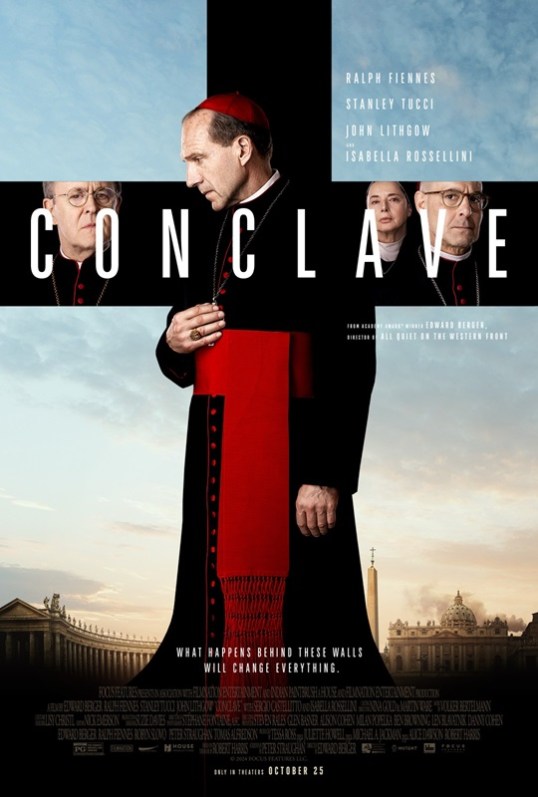
Conclave – Focus Features
Dune: Part Two – Warner Bros.
Nickel Boys – Amazon MGM Studios
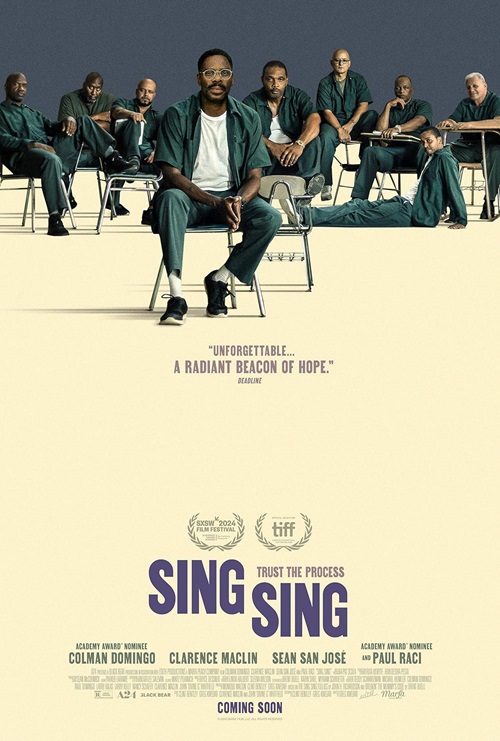
Sing Sing – A24
The Brutalist – A24
The Order – Vertical Entertainment
Young Woman and the Sea – Walt Disney Studios Motion Pictures
Motion Picture, Comedy or Musical
Anora – Neon
A Real Pain – Searchlight Pictures
Ghostlight – IFC Films
Hit Man – Netflix
LaRoy, Texas – Brainstorm Media
The Substance – MUBI
Thelma – Magnolia Pictures
Wicked – Universal Pictures
Motion Picture, International
I’m Still Here – Brazil
Queens – Swizerland / Peru
The Girl with the Needle – Denmark
The Seed Of The Sacred Fig – Germany
The Wait – Spain
Waves – Czech Republic
Motion Picture, Animated or Mixed Media
Flow – Janus Films
Inside Out 2 – Walt Disney Studios Motion Pictures
Memoir of a Snail – IFC Films
Mobile Suit Gundam SEED Freedom – Fathom Events
The Wild Robot – Universal Pictures/Dreamworks Animation
Wallace & Gromit: Vengeance Most Fowl – Netflix
Motion Picture, Documentary
Dahomey – MUBI
Elizabeth Taylor: The Lost Tapes – HBO Documentary Films
I Am: Celine Dion – Amazon MGM Studios
No Other Land – Self Distributed
Porcelain War – Picturehouse
Sugarcane – National Geographic Documentary Films
Super/Man: The Christopher Reeve Story – Fathom Events
The Bloody Hundredth – Apple TV+
Director
Brady Corbet – The Brutalist
Denis Villeneuve – Dune: Part Two
Edward Berger – Conclave
Greg Kwedar – Sing Sing
RaMell Ross – Nickel Boys
Sean Baker – Anora
Actress in a Motion Picture Drama
Angelina Jolie – Maria
Fernanda Torres – I’m Still Here
Lily-Rose Depp – Nosferatu
Nicole Kidman – Babygirl
Saoirse Ronan – The Outrun
Tilda Swinton – The Room Next Door
Actor in a Motion Picture Drama
Adrien Brody – The Brutalist
Colman Domingo – Sing Sing
Daniel Craig – Queer
Hugh Grant – Heretic
Ralph Fiennes – Conclave
Timothée Chalamet – A Complete Unknown
Actress in Motion Picture, Comedy or Musical
Cynthia Erivo – Wicked
Demi Moore – The Substance
June Squibb – Thelma
Karla Sofía Gascón – Emilia Pérez
Mikey Madison – Anora
Winona Ryder – Beetlejuice Beetlejuice
Actor in Motion Picture, Comedy or Musical
Glen Powell – Hit Man
Jesse Eisenberg – A Real Pain
John Magaro – LaRoy, Texas
Keith Kupferer – Ghostlight
Michael Keaton – Beetlejuice Beetlejuice
Ryan Gosling – The Fall Guy
Actress in a Supporting Role
Ariana Grande – Wicked
Danielle Deadwyler – The Piano Lesson
Felicity Jones – The Brutalist
Isabella Rossellini – Conclave
Margaret Qualley – The Substance
Zoe Saldana – Emilia Pérez
Actor in a Supporting Role
Clarence Maclin – Sing Sing
Denzel Washington – Gladiator II
Edward Norton – A Complete Unknown
Guy Pearce – The Brutalist
Kieran Culkin – A Real Pain
Yura Borisov – Anora
Screenplay, Original
Brady Corbet, Mona Fastvold – The Brutalist
Coralie Fargeat – The Substance
Jesse Eisenberg – A Real Pain
Mike Leigh – Hard Truths
Mohammad Rasoulof – The Seed Of The Sacred Fig
Sean Baker – Anora
Screenplay, Adapted
Clint Bentley, Greg Kwedar, Clarence Maclin, John “Divine G” Whitfield (based on “The Sing Sing Follies” by John H. Richardson and “Breakin’ the Mummy’s Code” by Brent Buell) – Sing Sing
Jacques Audiard (based on “Listen” by Boris Razon) – Emilia Pérez
Pedro Almodóvar (written by), Sigrid Nunez (novel “What Are You Going Through”) – The Room Next Door
Peter Straughan (screenplay by), Robert Harris (book) – Conclave
RaMell Ross, Joslyn Barnes (based on “The Nickel Boys” by Colson Whitehead) – Nickel Boys
Vuk Draskovic, Miroslav Lekic (written by), Vuk Draskovic (novel) – Russian Consul
Cinematography
Edward Lachman – Maria
Greig Fraser – Dune: Part Two
Jarin Blaschke – Nosferatu
Jomo Fray – Nickel Boys
John Mathieson – Gladiator II
Lol Crawley – The Brutalist
Costume Design
Janty Yates – Gladiator II
Jacqueline Durran – Blitz
Jacqueline West – Dune: Part Two
Linda Muir – Nosferatu
Massimo Cantini Parrini – Maria
Paul Tazewell – Wicked
Film Editing
Dávid Jancsó – The Brutalist
Joe Walker – Dune: Part Two
Juliette Welfling – Emilia Pérez
Nick Emerson – Conclave
Sam Restivo, Claire Simpson – Gladiator II
Sean Baker – Anora
Production Design
Arthur Max (Production Designer), Jille Azis and Elli Griff (Set Decorators) – Gladiator II
Craig Lathrop (Production Designer), Beatrice Brentnerova (Set Decorator) – Nosferatu
Judy Becker (Production Designer), Patricia Cuccia and Mercédesz Nagyváradi (Set Decorators) – The Brutalist
Nathan Crowley (Production Designer), Lee Sandales (Set Decorator) – Wicked
Patrice Vermette (Production Designer), Shane Vieau (Set Decorator) – Dune: Part Two
Suzie Davies (Production Designer), Cynthia Sleiter (Set Decorator) – Conclave
Original Score
Alberto Iglesias – The Room Next Door
Clément Ducol, Camille – Emilia Pérez
Daniel Blumberg – The Brutalist
Hans Zimmer – Dune: Part Two
Kris Bowers – The Wild Robot
Volker Bertelmann – Conclave
Original Song
“El Mal” by Clement Ducol, Camille and Jacques Audiard – Emilia Pérez
“The Journey” by Diane Warren – The Six Triple Eight
“Kiss the Sky” by Delacey, Jordan Johnson, Stefan Johnson, Maren Morris, Michael Pollack & Ali Tamposi – The Wild Robot
“Mi Camino” by Clement Ducol and Camille – Emilia Pérez
“Never Too Late” by Elton John & Brandi Carlile – Elton John: Never Too Late
“Winter Coat” by Nicholas Britell, Steve McQueen, and Taura Stinson – Blitz
Sound (Editing and Mixing)
A Complete Unknown
Dune: Part Two
Emilia Pérez
Gladiator II
Twisters
Wicked
Visual Effects
Dune: Part Two
Gladiator II
Kingdom Of The Planet Of The Apes
Mufasa: The Lion King
Twilight of the Warriors: Walled In
Wicked
Ensemble Motion Picture
Nosferatu – Focus Features
Yesterday, the San Diego Film Critics Society named Sing Sing the best film of 2024! All of the winners and nominees can be found below!
Best Picture ANORA (1st RUNNER UP)
CHALLENGERS CONCLAVE (2nd RUNNER UP)
DUNE: PART TWO SING SING (WINNER)
Best Director
Brady Corbet – THE BRUTALIST
Coralie Fargeat – THE SUBSTANCE Denis Villeneuve – DUNE: PART TWO (WINNER)
Edward Berger – CONCLAVE Greg Kwedar – SING SING (RUNNER UP)
Best Actor Adrien Brody – THE BRUTALIST (1st RUNNER UP) Colman Domingo – SING SING (WINNER) Daniel Craig – QUEER (2nd RUNNER UP)
Ralph Fiennes – CONCLAVE
Timothée Chalamet – A COMPLETE UNKNOWN
Best Actress Amy Adams – NIGHTBITCH (RUNNER UP)
Cynthia Erivo – WICKED
Demi Moore – THE SUBSTANCE Marianne Jean-Baptiste – HARD TRUTHS (WINNER)
Mikey Madison – ANORA
Best Supporting Actor
Clarence Maclin – SING SING Denzel Washington – GLADIATOR II (RUNNER UP)
Guy Pearce – THE BRUTALIST Kieran Culkin – A REAL PAIN (WINNER)
Stanley Tucci – CONCLAVE
Best Supporting Actress Ariana Grande-Butera – WICKED (WINNER)
Danielle Deadwyler – THE PIANO LESSON
Jessie Buckley – WICKED LITTLE LETTERS Joan Chen – DÌDI (RUNNER UP)
Natasha Lyonne – HIS THREE DAUGHTERS
Best Comedic Performance
Aubrey Plaza – MY OLD ASS
Channing Tatum – DEADPOOL & WOLVERINE June Squibb – THELMA (WINNER) Michael Keaton – BEETLEJUICE BEETLEJUICE (RUNNER UP)
Ryan Gosling – THE FALL GUY
Best Youth Performance (For a performer under the age of 18) Alisha Weir – ABIGAIL Alix West Lefler – SPEAK NO EVIL (RUNNER UP)
Elliott Heffernan – BLITZ Izaac Wang – DÌDI (WINNER)
Katherine Mallen Kupferer – GHOSTLIGHT
Best Original Screenplay
Coralie Fargeat – THE SUBSTANCE
Jesse Eisenberg – A REAL PAIN Justin Kuritzkes – CHALLENGERS (RUNNER UP)
Rose Glass and Weronika Tofilska – LOVE LIES BLEEDING Sean Baker – ANORA (WINNER)
Best Adapted Screenplay
Chris Sanders – THE WILD ROBOT Clint Bentley, Greg Kwedar – SING SING (WINNER) Denis Villeneuve, Jon Spaihts – DUNE: PART TWO (RUNNER UP)
Malcolm Washington, Virgil Williams – THE PIANO LESSON
Peter Straughan – CONCLAVE
Best First Feature (Director)
Anna Kendrick – WOMAN OF THE HOUR
Dev Patel – MONKEY MAN
Rachel Morrison – THE FIRE INSIDE Sean Wang – DÌDI (RUNNER UP) Zoë Kravitz – BLINK TWICE (WINNER)
Best Documentary DAUGHTERS (RUNNER UP)
MUSIC BY JOHN WILLIAMS
SUGARCANE SUPER/MAN: THE CHRISTOPHER REEVE STORY (WINNER)
WILL & HARPER
Best Animated Film FLOW (WINNER)
MEMOIR OF A SNAIL
TRANSFORMERS ONE
WALLACE & GROMIT: VENGEANCE MOST FOWL THE WILD ROBOT (RUNNER UP)
Best Foreign Language Film ALL WE IMAGINE AS LIGHT (WINNER)
THE GIRL WITH THE NEEDLE
NO OTHER LAND
THE SEED OF THE SACRED FIG
VERMIGLIO
Best Editing Hansjörg Weißbrich – SEPTEMBER 5 (WINNER)
Joe Walker – DUNE: PART TWO
Kathryn J. Schubert – BLINK TWICE Marco Costa – CHALLENGERS (RUNNER UP)
Sean Baker – ANORA
Best Cinematography
Alice Brooks – WICKED
Greig Fraser – DUNE: PART TWO Jarin Blaschke – NOSFERATU (WINNER)
Pat Scola – SING SING Stéphane Fontaine – CONCLAVE (RUNNER UP)
Best Production Design Craig Lathrop, Beatrice Brentnerova – NOSFERATU (1st RUNNER UP)
Judy Becker – THE BRUTALIST Nathan Crowley – WICKED (WINNER) Patrice Vermette – DUNE: PART TWO (2nd RUNNER UP)
Suzie Davies – CONCLAVE
Best Visual Effects
ALIEN: ROMULUS DUNE: PART TWO (1st RUNNER UP) KINGDOM OF THE PLANET OF THE APES (2nd RUNNER UP)
NOSFERATU THE SUBSTANCE (WINNER)
Best Costume Design
Colleen Atwood – BEETLEJUICE BEETLEJUICE Jacqueline Getty, Rainy Jacobs – THE LAST SHOWGIRL (RUNNER UP)
Jacqueline West – DUNE: PART TWO
Lisy Christl – CONCLAVE Paul Tazewell – WICKED (WINNER)
Best Sound Design
A QUIET PLACE: DAY ONE
ALIEN: ROMULUS CIVIL WAR (RUNNER UP) DUNE: PART TWO (WINNER)
WICKED
Best Use of Music A COMPLETE UNKNOWN (WINNER) CHALLENGERS (RUNNER UP)
DUNE: PART TWO
SING SING
WICKED
Best Stunt Choreography
ALIEN: ROMULUS
DUNE: PART TWO THE FALL GUY (WINNER)
GLADIATOR II MONKEY MAN (RUNNER UP)
Best Ensemble CONCLAVE (RUNNER UP)
DUNE: PART TWO SEPTEMBER 5 (WINNER)
SING SING
WICKED
Breakthrough Performance Mikey Madison – ANORA (WINNER) Nell Tiger Free – THE FIRST OMEN (RUNNER UP)
Special Award for Body of Work
Nicholas Hoult – JUROR #2, NOSFERATU, THE ORDER, THE GARFIELD MOVIE
Yesterday, the San Diego Film Critics Society announced their nominations for the best of 2024! The winners will be announced on December 9th …. hey, that’s right around the corner!
Here are the nominees:
Best Picture
ANORA
CHALLENGERS
CONCLAVE
DUNE: PART TWO
SING SING
Best Director
Brady Corbet – THE BRUTALIST
Coralie Fargeat – THE SUBSTANCE
Denis Villeneuve – DUNE: PART TWO
Edward Berger – CONCLAVE
Greg Kwedar – SING SING
Best Actor
Adrien Brody – THE BRUTALIST
Colman Domingo – SING SING
Daniel Craig – QUEER
Ralph Fiennes – CONCLAVE
Timothée Chalamet – A COMPLETE UNKNOWN
Best Actress
Amy Adams – NIGHTBITCH
Cynthia Erivo – WICKED
Demi Moore – THE SUBSTANCE
Marianne Jean-Baptiste – HARD TRUTHS
Mikey Madison – ANORA
Best Supporting Actor
Clarence Maclin – SING SING
Denzel Washington – GLADIATOR II
Guy Pearce – THE BRUTALIST
Kieran Culkin – A REAL PAIN
Stanley Tucci – CONCLAVE
Best Supporting Actress
Ariana Grande-Butera – WICKED
Danielle Deadwyler – THE PIANO LESSON
Jessie Buckley – WICKED LITTLE LETTERS
Joan Chen – DÌDI
Natasha Lyonne – HIS THREE DAUGHTERS
Best Comedic Performance
Aubrey Plaza – MY OLD ASS
Channing Tatum – DEADPOOL & WOLVERINE
June Squibb – THELMA
Michael Keaton – BEETLEJUICE BEETLEJUICE
Ryan Gosling – THE FALL GUY
Best Youth Performance (For a performer under the age of 18) Alisha Weir – ABIGAIL
Alix West Lefler – SPEAK NO EVIL
Elliott Heffernan – BLITZ
Izaac Wang – DÌDI
Katherine Mallen Kupferer – GHOSTLIGHT
Best Original Screenplay
Coralie Fargeat – THE SUBSTANCE
Jesse Eisenberg – A REAL PAIN
Justin Kuritzkes – CHALLENGERS
Rose Glass and Weronika Tofilska – LOVE LIES BLEEDING
Sean Baker – ANORA
Best Adapted Screenplay
Chris Sanders – THE WILD ROBOT
Craig Bentley, Greg Kwedar – SING SING
Denis Villeneuve, Jon Spaihts – DUNE: PART TWO
Malcolm Washington, Virgil Williams – THE PIANO LESSON
Peter Straughan – CONCLAVE
Best First Feature (Director)
Anna Kendrick – WOMAN OF THE HOUR
Dev Patel – MONKEY MAN
Rachel Morrison – THE FIRE INSIDE
Sean Wang – DÌDI
Zoë Kravitz – BLINK TWICE
Best Documentary
DAUGHTERS
MUSIC BY JOHN WILLIAMS
SUGARCANE
SUPER/MAN: THE CHRISTOPHER REEVE STORY
WILL & HARPER
Best Animated Film
FLOW
MEMOIR OF A SNAIL
TRANSFORMERS ONE
WALLACE & GROMIT: VENGEANCE MOST FOWL
THE WILD ROBOT
Best Foreign Language Film
ALL WE IMAGINE AS LIGHT
THE GIRL WITH THE NEEDLE
NO OTHER LAND
THE SEED OF THE SACRED FIG
VERMIGLIO
Best Editing
Hansjörg Weißbrich – SEPTEMBER 5
Joe Walker – DUNE: PART TWO
Kathryn J. Schubert – BLINK TWICE
Marco Costa – CHALLENGERS
Sean Baker – ANORA
Best Cinematography
Alice Brooks – WICKED
Greig Fraser – DUNE: PART TWO
Jarin Blaschke – NOSFERATU
Pat Scola – SING SING
Stéphane Fontaine – CONCLAVE
Best Production Design
Craig Lathrop, Beatrice Brentnerova – NOSFERATU
Judy Becker – THE BRUTALIST
Nathan Crowley – WICKED
Patrice Vermette – DUNE: PART TWO
Suzie Davies – CONCLAVE
Best Visual Effects
ALIEN: ROMULUS
DUNE: PART TWO
KINGDOM OF THE PLANET OF THE APES
NOSFERATU
THE SUBSTANCE
Best Costume Design
Colleen Atwood – BEETLEJUICE BEETLEJUICE
Jacqueline Getty, Rainy Jacobs – THE LAST SHOWGIRL
Jacqueline West – DUNE: PART TWO
Lisy Christl – CONCLAVE
Paul Tazewell – WICKED
Best Sound Design
A QUIET PLACE: DAY ONE
ALIEN: ROMULUS
CIVIL WAR
DUNE: PART TWO
WICKED
Best Use of Music
A COMPLETE UNKNOWN
CHALLENGERS
DUNE: PART TWO
SING SING
WICKED
Best Stunt Choreography
ALIEN: ROMULUS
DUNE: PART TWO
THE FALL GUY
GLADIATOR II
MONKEY MAN
Best Ensemble
CONCLAVE
DUNE: PART TWO
SEPTEMBER 5
SING SING
WICKED
My wife and I have been watching a Christmas movie every night for the last week or so. We’ve already watched DIE HARD 1 and 2, LETHAL WEAPON, HOME ALONE 1 and 2, CHRISTMAS VACATION, YES VIRGINIA THERE IS A SANTA CLAUS, FOUR CHRISTMASES and a Hallmark movie called THE MOST WONDERFUL TIME OF THE YEAR with Fonzi. She’s been wanting me to watch JACK FROST with her for a while now. I’ve been somewhat hesitant because a movie about a talking snowman not named Frosty doesn’t seem that appealing to me. I was explaining this reluctance to a couple of my co-workers at the accounting office, and they both assured me that it’s a good movie. With this newfound confidence that I would enjoy the film, my wife and I settled in to watch JACK FROST a couple of nights ago…
JACK FROST is about a guy named Jack Frost who is having a difficult time with his work life / home life balance. He loves his wife Gabby (Kelly Preston) and his son Charlie (Joseph Cross) very much, but his musical group, The Jack Frost Band, is taking up a lot of his time. He’s one of those dads who says he’ll “for sure” be at his son’s hockey game but then misses it because the band’s recording session runs late. It’s always something like that with Jack Frost. Tragically, before Jack can get this stuff figured out, he dies in a car accident on Christmas Eve. Jump forward a year later where a depressed Charlie decides to build a snowman like he and his dad always did together for Christmas. Just go with me here… through the magic notes of Jack’s old harmonica as played by his son Charlie, Jack’s spirit is transferred to the snowman, and the two have another chance to bond like they always wanted to. Will Jack be the father he should have been now that he’s a magical snowman dad? How long will he be around this time? Will an abnormally warm Colorado winter melt him? Will he get to watch Charlie play one more hockey game? These are just a few questions to be answered over the course of the film’s 100-minute running time.
I have always been drawn to movies that focus on the relationships between fathers and their sons. For example, FIELD OF DREAMS and FREQUENCY are two of my very favorite films. The reason I love both films is that dads and their boys are able to reconnect and experience each other in a way that resolves pain or regret from the past. The movies may not be realistic in how that happens, but I think each of the films tap into a universal truth about the connections between kids and their parents. If you want to see me cry, just watch either of those movies with me. JACK FROST seems to have this noble intention of magically re-connecting a father and his son for a second chance, and I give it credit for that. Only the most cold-hearted cynic would blow off the scene where Jack’s wife and son get to see him in his human form just one last time. It was touching. I also enjoy some of the songs on the soundtrack. I was able to take my wife to see Stevie Nicks in concert here in Little Rock earlier this year. I enjoyed when her “Landslide” played as Charlie made a snowman for the first time after his dad passed away. I thought that was a strong scene. With that said though, for me, JACK FROST doesn’t come together in a way that packs much of an emotional punch even though it’s clearly going for the heart. Part of that could be the fact that Michael Keaton turns into a snowman, and statements like “snow-dad is better than no-dad” are made. When I think of the other films, sure there are supernatural elements at play, but they’re still set in the real world, even if that place is in Iowa! In the case of JACK FROST, neither the comedy nor the drama worked well enough for me to get emotionally invested. The filmmakers overestimated the comedic nature of a snowman in general, and they seemed to dwell on that one note way too long, and to the film’s detriment. I did think a scene where Charlie’s hockey coach, played by Henry Rollins, refuses to allow the word “snowman” to be spoken in his presence was funny, but that was the exception and not the norm.
After watching JACK FROST, I do understand why Frosty has retained his place as the world’s favorite talking snowman even after this film’s 1998 release. I think the idea of a talking snowman works much better in Frosty’s context. As a matter of fact, I think I’ll go ahead and watch Frosty the Snowman again when I’m done here. But you never know, JACK FROST just may grow on me. Since my wife loves it, I know we’ll be watching it this same time next year!
As some of our regular readers undoubtedly know, I am involved in hosting a few weekly live tweets on twitter and occasion ally Mastodon. I host #FridayNightFlix every Friday, I co-host #ScarySocial on Saturday, and I am one of the five hosts of Mastodon’s #MondayActionMovie! Every week, we get together. We watch a movie. We snark our way through it.
Tonight, for #MondayActionMovie, the film will be 1987’s The Return of the Six Million Dollar Man and Bionic Woman!
Following #MondayActionMovie, Brad and Sierra will be hosting the #MondayMuggers live tweet! We will be watching 1997’s Jackie Brown, starring Pam Grier, Robert Forster, Samuel L. Jackson, Robert De Niro, Bridget Fonda, Michael Keaton, and Diana Uribe! The film is on Prime!
It should make for a night of fun viewing and I invite all of you to join in. If you want to join the live tweets, just hop onto Mastodon, pull up Return of the Six Million Dollar Man and Bionic Woman on YouTube, start the movie at 8 pm et, and use the #MondayActionMovie hashtag! Then, at 10 pm et, switch over to Twitter and Prime, start Jackie Brown, and use the #MondayMuggers hashtag! The live tweet community is a friendly group and welcoming of newcomers so don’t be shy.
Marvel isn’t the only studio with Super Bowl ads this year. Here’s the Super Bowl trailer for The Flash, starring upstanding citizen Ezra Miller and Michael Keaton as Batman!
That’s the question that is asked in a film that’s appropriately titled Worth.
Based on a true story, Worth centers around Kenneth D. Feinberg. Played by Michael Keaton, Fienberg was the Washington lawyer who, in the days after 9/11, was appointed the Special Master of the September 11th Victims Compensation Fund. In that role, Feinberg was in charge of determining how much money should be given to the families who lost someone in the 9/11 attacks. At first, Feinberg tries to reduce his job to just numbers. He resists the efforts of his law partner, Camille Biros (Amy Ryan), to convince him to meet with any of the families one-on-one. Instead, he tries to make it all about how much the victims would have earned if they had lived. When Camille tries to get him to listen to a recording of the final phone call of a man trapped in the Pentagon, Feinberg refuses to do it.
Not surprisingly, Feinberg gets a reputation for being insensitive and many of the families signal that, rather than accepting the government’s compensation, they would rather sue the airlines and the city of New York, a move that we’re told could crash the U.S. economy or bankrupt the families or both. It’s only after the workaholic Feinberg makes the mistake of staying in the office after everyone else has left that he actually meets one of the families. With the help of activist Charles Wolf (Stanley Tucci), Feinberg finally starts to care about the people behind the numbers.
Worth is a bit of an old-fashioned film, a throw-back to the type of well-meaning, competently produced films that used to come out every December so that they could compete for the Academy Awards. Even the film’s rather stolid, middle-of-the road liberalism feels like an artifact of another age. (I had to laugh a little when the film assured us that, despite sometimes coming across like a jackass, Feinberg was a good guy because he had been a senior aide to Ted Kennedy, the senator who left a woman to drown in a car while he went back to his hotel and got some sleep.) At a time when Adam McKay is being treated as a serious thought leader and Aaron Sorkin has somehow been recast as a sensible moderate, Worth’s fairly even-handed and nonjudgmental approach feels like almost an act of rebellion. That said, Worth’s approach works for the story that it’s telling. 9/11 was such a huge tragedy that it doesn’t need to be talked to death, as it would be in a Sorkin film. Nor do we need the heavy hand of Adam McKay to tell us that there’s something inherently disturbing about reducing the value of someone’s life to a mere number. Unlike the films of McKay, Sorkin, or Jay Roach (Hell, why not throw him in there, too?), Worth trusts the audience to be able to figure out certain truths on its own. After a decade of heavy-handed political agitprop, Worth’s nonshowy approach is actually a bit refreshing.
As a character, Kenneth Feinberg is not always easy to like. That’s especially true during the first half of the film, when Feinberg seems to be more interested in the challenge of running the compensation fund as opposed to the people that he’s supposed to be helping. When the film begins, Feinberg is the epitome of the technocrat who can figure out the numbers but who has no idea how to actually deal with human beings. Fortunately, Feinberg is also played by Michael Keaton, who is one of the few actors to be capable of projecting the natural authority necessary to make Feinberg compelling without also resorting to begging us to like the character. Keaton does a good job portraying both Feinberg’s quick mind but also his social awkwardness. When we first meet him, he’s someone who has been an insider for so long that he can’t even imagine that an outside exists. Keaton plays him as a man who does not mean to be callous but who is so work-obsessed that he doesn’t understand how his job comes across to other people. Even more importantly, though, Keaton does a good job of portraying Feinberg’s transformation from being a detached bureaucrat to being someone who actually cares about the people who will effected by his decisions. A lesser actor would have overplayed these scenes and the film would have felt mawkish. Keaton underplays and it saves the film.
As I said before, Worth is an old-fashioned film. Visually, it sometimes resembles the type of movie that HBO used to win Emmys with in the mid-aughts. Keaton so dominates the film that, only afterwards, do you realize that the talented supporting cast was often underused. Worth is not a perfect film but it is a good film and a thought-provoking one. It’s currently showing on Netflix.
Here on the Shattered Lens, the love for Batman is very strong. There are too many Batman related articles to fully list, but for a good start, go with Ryan’s Which Way Forward for the Batman Franchise.
This isn’t so much a review for Batman as it’s just me looking back on the film.
I spent the Saturday Morning of June 24th, 1989 standing on a line that snaked around the white walls of the Sunrise Multiplex Cinema in Valley Stream. Thankfully, by the time I arrived, there were only a few people there. Most of them were my friends, so we were close to the door. The following year, the Sunrise would go down in history as being the only movie theatre I’ve ever known with metal detectors after a shooting around the release of The Godfather Part III prompted tighter security. Before then, anyone going into the theatre had a free run of the place. From that incident to the theatre’s shutdown in 2015, you always had to pass the metal detectors.
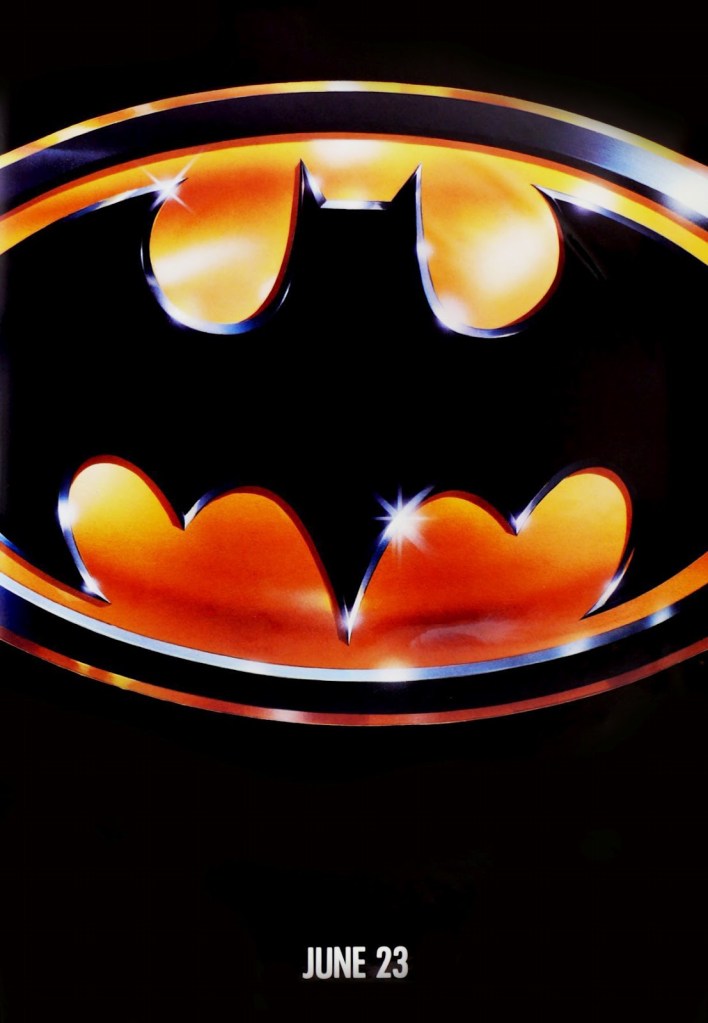
You knew Tim Burton’s Batman was going to be something grand when they first put up the posters in bus stations. The character was so well known that the poster was simply a black and gold Batsymbol with a date – June 23. In my neighborhood, the poster lasted a week before the bus stop’s glass was broken and it was stolen. This was how mad people were for the film. Although merchandise was already available, it moved at an incredible pace. For a film made before pre-Internet, the buzz was just amazing.
“Okay, Everyone, we know you’re looking forward to seeing the movie.”, came the announcement over the theatre’s loudspeaker, which caused a few murmurs from everyone. It was a smooth, business like voice, probably from someone who had never even heard of The Caped Crusader. “We’re going to open up the doors and we want everyone to proceed to the ticket booths in a nice, orderly fashion.”
I was 14 at the time. Batman was the first movie I ever saw without my family. My parents, a cop and a bartender, saw so much of the worst of NYC that they figured the best place for me was home. Still, since I was among friends they knew, I gave me a pass. It was a big deal. My friend Pierre and I had a plan, along with the 4 others that came with us. We’d head in, make for the ticket booth and go right in for our seats near the back right side.. No refreshments were necessary, since we could all go eat at the mall later on after the move was done. To make sure I didn’t miss anything, I had already read the novel for the story beforehand.
Anyone close to the door could see the theatre workers as they approached, keys in hand. The layout of the Sunrise was such that after stepping through the front door, you could cut to your immediate left or right down a open path to separate ticket booth. As the door unlocked, was pushed open and secured, someone from near the middle of the line decided it was time, declaring in a loud scream.
“Batman!!!!!”
It was madness. Utter madness. Bodies piled into the theatre in a mad scramble for the ticket booth. On the way there, I was shoulder blocked and fell to the floor. I instantly curled into a ball to keep from getting trampled, wondering if my parents were right about not letting me out. ‘Here lies Lenny…”, my epitaph would read. “…he died at the movies after being let outside on his own just once.”
Thankfully, I was scooped up to my feet a few seconds later by one of my friends.
“Go on! We’ve got your tickets! Head for the ticket guy, we’ll meet you there!” he yelled over the crowd passing us on sides.
“Okay!!” I’d been to the Sunrise tons of times, so I knew it well. I moved through the crowd, bypassing the concession stand, which was already developing a line of its own. I thought they were going to go in without me and leave me there. I don’t know they did it, but within a few minutes of reaching the ticket taker. most of my group caught up, tickets in hand for all of us.
The actual experience of Batman was a packed crowd with almost non-stop talking throughout. After all, the audience was made up of teens and DC fans that that were ravenous for anything Batman related. Superman had about four films by the time Batman premiered. I think the only real time the entire audience hushed was near the beginning when we first see Batman grab the one robber and they ask him what he is. After that, the crowd pretty much erupted in applause.
Of course, that line would become famous and reused over the years, such as it was with the WB’s Supernatural.
Even before the film was released, the buzz for Batman was immense.
Batman focuses on Gotham City, a grand town with a great deal of crime. Reports are coming in of a mysterious vigilante figure resembling a giant bat that’s taking down random criminals. Crime in Gotham is run by Boss Carl Grissom (Jack Palance, City Slickers), with his right hand man, Jack Napier (Jack Nicholson, The Departed). After discovering that Napier’s spent some quality time with his girl, Alicia (Jerry Hall, Urban Cowboy), Grissom sets him up so that he’ll be caught by the cops. Things don’t go as planned, and after falling into a vat of chemicals, Napier is reborn as The Joker. Can the Dark Knight defeat this new menace?
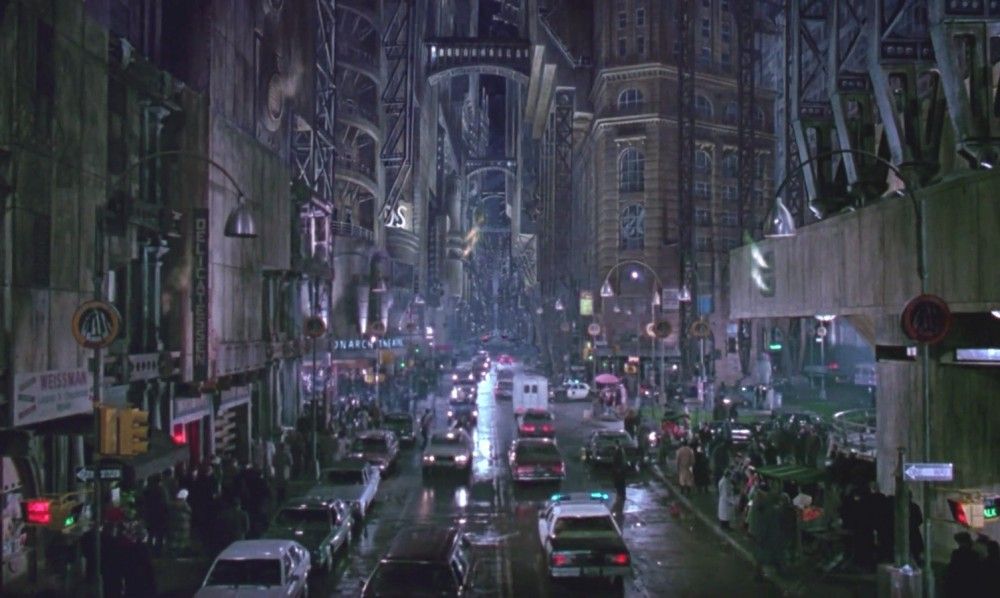
One of Anton Furst’s designs for Batman.
For me, one of the most interesting elements of Tim Burton’s Batman is how Jack Nicholson was the main draw for the film. Nicholson stands front and center in this film. If any real eyebrows were raised, it was over casting Michael Keaton as the Dark Knight. Keaton and Burton worked together on Beetlejuice, so there was some chemistry. However, when the announcement for Keaton being cast in Batman, most people were pretty skeptical. Keaton was known for playing more comedic roles, and playing the Batman required a more serious attitude. However, I’ve always felt that comedians are the most shocking when they take on a serious role. Some examples of this are Patton Oswalt in Big Fan, Robin Williams’ Academy Award winning performance in Good Will Hunting and most recently, Adam Sandler in Uncut Gems. I feel that worked for Keaton, and most viewers underestimated what he could bring to both Bruce Wayne and Batman. As Wayne, Keaton seems a bit subdued. As Batman, he’s a little scary simply because he doesn’t quite look like the kind of individual who would roam the streets at night dressed as a bat. My parents would later argue over Batman’s drop of Jack Napier at Axis Chemicals. I thought it was a situation where he just couldn’t hold on to him. My parents’ viewpoint was that Batman deliberately did it. We never really know for sure, but it did seem a little convenient that Batman couldn’t hold on to Napier. Overall, Keaton’s Batman plays second fiddle to Nicholson’s Joker, who also had a some sway in the design of the nemesis for the film.
Batman’s cast also includes Kim Basinger (L.A. Confidential) as Vicki Vale, Robert Wuhl (Bull Durham), Billy Dee Williams (Nighthawks) and Pat Hingle (Sudden Impact) as Commissioner Gordon, The cast is pretty perfect here, without anyone really falling out of step. Batman stories would grow more serious by the time Nolan would step in, but for the 1980s, it was just fine.
Anton Furst would win an Oscar for Best Art Direction for his design of Gotham City, which was for its time, quite dazzling. On par with some of the designs from Blade Runner and The Crow, Furst’s rendition of Gotham was dark and brooding, compared to the more modern backdrop of Batman Begins. In addition to Gotham’s look, Furst also helped design the Batmobile, which was based off the Chevy Impala (another Supernatural connection). When the film was released on home video, my family caught sight of the Batmobile up close on the street as it delivered VHS Copies to a video store in Manhattan. Although he died some years later, Furst’s work on Batman remains an influence on both the comics and future installments of the movies.
1989 was also a big year for Danny Elfman. His score for Batman would earn him a Grammy, and the main theme would become a definitive one for the Caped Crusader throughout the early 1990. Shirley Walker would build on the theme with her music from Batman: The Animated Series. It was also something of a surprise for Prince. With songs like Trust, Electric Chair and Vicki’s Waiting, Prince’s Batman Soundtrack is full of great hits that you really wouldn’t think would fit in a story like Batman. Still, they manage to do just fine, and even elevate scenes like the Joker’s entry in the Gotham Museum and the Balloon Parade.
Batman is not without a few problems. It gets a little long in the tooth in the film’s second half, particularly in the scenes leading up to the Monarch and Bruce losing his parents. It’s not a terrible slowdown, since it has to set the tone for some of the more spectacular fights later on. It could have been edited just a little tighter. Additionally, when compared to some of the modern versions, 1989’s Batman can feel a little bit dated (to me, anyway). That’s more of a nitpick, or where you stand on the Batman universe as a whole. Everyone has their favorite adaptation on the Caped Crusader.
Burton and Keaton would later reunite in 1992’s Batman Returns, and the franchise on a whole would take a different turn with Joel Schumacher’s takes in 1995’s Batman Forever and 1997 Batman & Robin.




 Through the Shattered Lens
