So, I Watched Paint Your Wagon (1969, Dir. by Joshua Logan)


Lisa Marie asked me to review Paint Your Wagon for Clint Eastwood’s birthday and, being a good sister, I agreed.  I have to learn to stop doing that.

Paint Your Wagon is a musical western starring a bunch of people who have done a lot of westerns but who still have no business singing, at least not in a movie.  If they want to sing in private, that’s fine.  Ben Rumson (Lee Marvin) and “Pardner” (Clint Eastwood) discover gold in a muddy creek and soon, the incredibly ugly town of No Name City springs up.  Because everyone in the town is a dude, everyone’s really lonely.  Then a Mormon shows up with two wives and the miners convince him to sell his youngest wife, Elizabeth (Jean Seberg) to the highest bidder.  Ben is always drunk but he still manages to buy Elizabeth.  Elizabeth says that she’s not going to marry Ben unless he builds her a cabin and also lets her marry Pardner as well.   Hello, polyamory. Eventually, a bull gets loose in the mines underneath No Name City and the entire town collapses but that’s okay because it was an ugly town and no one’s going to miss it.  Ben sings about how he was born under a wandering star so that means he can’t stay very long in once place, even if he does have a polyamorous marriage to look forward to.  Pardner sings that he likes to talk to the trees so he doesn’t need a town to live in.

My first thought on Paint Your Wagon is that it was really, really long.  It had a two and a half hour running time but it felt more like five or six.  My second thought is that movie looked really bad, like it was filmed through a mud filter.  It wasn’t just the buildings in the town that looked bad.  The entire movie looked dirty, oppressive, and depressing.  I like my musicals to have more color to them.  This movie looked like it needed an antibiotic.  My third thought was that, for a musical, none of the songs made much of an impression.  After the movie was over, I didn’t find myself humming any of them.  I can’t even remember what most of them were about.  Even if they had been better, Lee Marvin and Clint Eastwood shouldn’t have been singing them.  Lee Marvin’s singing voice sounded like whiskey being poured out over cement.  Clint Eastwood’s voice was thin and he got stuck with all the sappy songs.  I’ll take old and grumpy Clint Eastwood over singing and sappy Clint Eastwood any day.  This was like watching a community theater production where you’re not supposed to care about how bad the performance is because you know everyone in the cast.  Finally, I thought that there wasn’t enough wagon painting.  The entire town was unpainted.  It wasn’t just the wagon that was being neglected.

The funniest thing about this movie is that was advertised as being “the comedy goldmine of 69.”  Nice.

I didn’t like Paint Your Wagon but don’t worry.  I’ll be watching Trouble With The Curve later today.  Now that one, I do like!


Join #MondayMuggers For THE DELTA FORCE!


Hi, everyone!  Guess is who is guest hosting the #MondayMuggers live tweet tonight?  That’s right …. me!

Tonight’s movie will be The Delta Force (1986), starring Chuck Norris, Lee Marvin, Robert Forster, George Kennedy, Robert Vaughn, Steven James, Hanna Schygulla, Shelley Winters, Martin Balsam, Bo Svenson, Joey Bishop, Susan Strasberg, Kim Delaney …. well, you get the idea.  There’s a lot of people in this movie!  Jedadiah Leland swears that this is the greatest film ever made.  We’ll find out tonight!

You can find the movie on Prime and then you can join us on twitter at 9 pm central time!  (That’s 10 pm for you folks on the East Coast.)  See you then!

Scenes I Love: Toshiro Mifune Meets Lee Marvin In Hell In The Pacific


In today’s scene that I love, two icons of cinematic cool meet in 1968’s Hell In The Pacific.

In this scene, Lee Marvin comes across Toshiro Mifune on the island on which they have both crashed.  There’s not much dialogue in this scene but, when you’ve got two actors like Marvin and Mifune, there doesn’t need to be much dialogue.

Scenes That I Love: Angie Dickinson Hits Lee Marvin In Point Blank


Point Blank (1967, directed by John Boorman)

Today is the anniversary of the birth of one of the greatest of the screen tough guys, Mr. Lee Marvin!  Today’s scene that I love comes from the 1967 film, Point Blank.  In this short but emotionally exhausting scene, Angie Dickinson hits Lee Marvin’s career criminal, over and over again.  Marvin, for his part, barely reacts.  This scene is the epitome of Lee Marvin’s mystique.  He played men who only showed emotion when it was necessary.  Dickinson hits Marvin to try to make him feel something but Marvin’s career criminal in beyond such concerns.

From Point Blank, here is today’s scene that I love:

Song of the Day: The Man Who Shot Liberty Valance, performed by Gene Pitney


Since I already shared a scene from my favorite John Ford film, it seems only right that today’s song of the day should pay some respect to Mr. Ford as well.  Here is the theme song from 1962’s The Man Who Shot Liberty Valance, performed by Gene Pitney.

When Liberty Valance rode to town
The womenfolk would hide, they’d hide
When Liberty Valance walked around
The men would step aside

‘Cause the point of a gun was the only law
That Liberty understood
When it came to shooting straight and fast
He was mighty good

From out of the East a stranger came
A law book in his hand, a man
The kind of a man the West would need
To tame a troubled land

‘Cause the point of a gun was the only law
That Liberty understood
When it came to shooting straight and fast
He was mighty good

Many a man would face his gun
And many a man would fall
The man who shot Liberty Valance
He shot Liberty Valance
He was the bravest of them all

The love of a girl can make a man stay on
When he should go, stay on
Just trying to build a peaceful life
Where love is free to grow

But the point of a gun was the only law
That Liberty understood
When the final showdown came at last
A law book was no good

Alone and afraid, she prayed that he’d
Return that fateful night, oh that night
When nothing she said could keep her man
From going out to fight

From the moment a girl gets to be full grown
The very first thing she learns
When two men go out to face each other
Only one returns

Everyone heard two shots ring out
One shot made Liberty fall
The man who shot Liberty Valence
He shot Liberty Valance
He was the bravest of them all

The man who shot Liberty Valance
He shot Liberty Valance
He was the bravest of them all

Songwriters: Burt F. Bacharach / Hal David

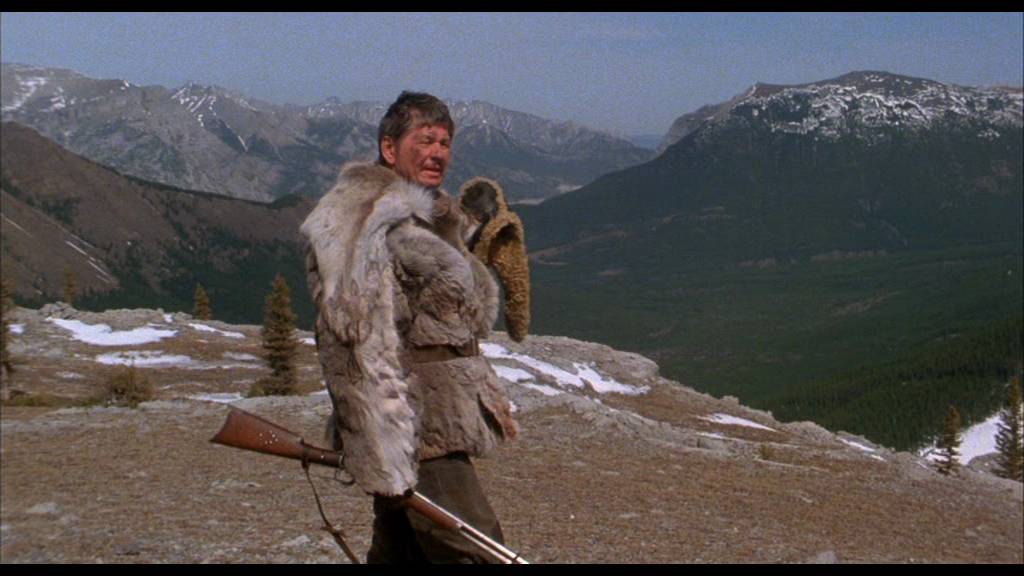
Charles Bronson in DEATH HUNT (1981) – Keep warm my friends!


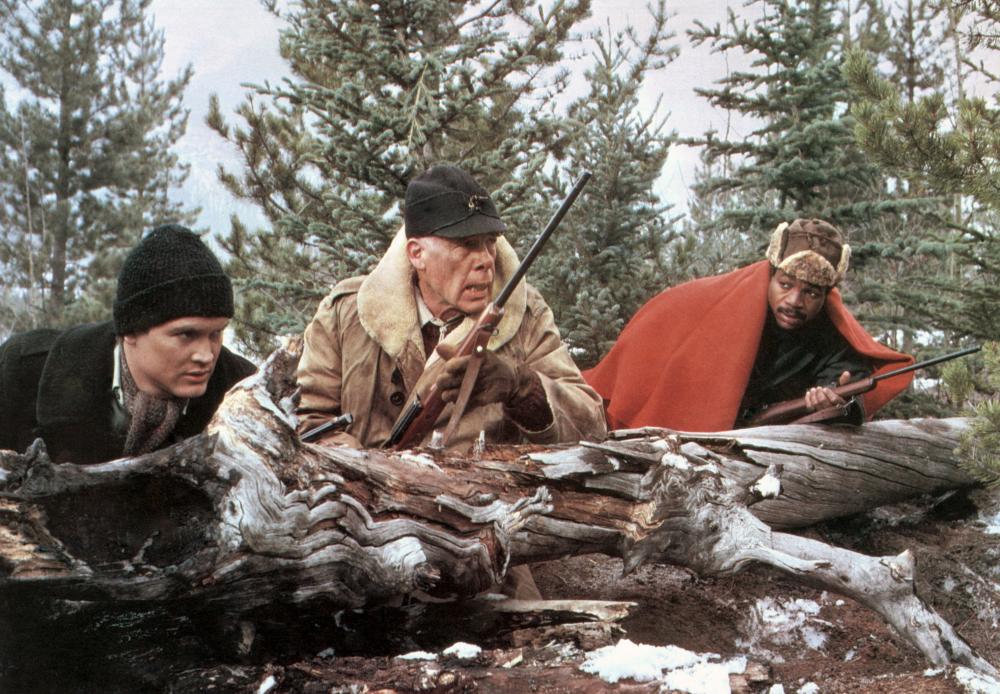
If you’re in Texas or Arkansas today, I hope you’re keeping as bundled up as Charles Bronson in DEATH HUNT. It’s cold out there people! Keep safe and stay home if at all possible! We don’t know how to drive in this weather!

Enjoy DEATH HUNT’s trailer below! Charles Bronson and Lee Marvin are as tough as it gets!

Song of the Day: Wand’rin Star, sung by Lee Marvin


Continuing our tribute to Lee Marvin on what would have been his 100th birthday, our song of the day is a reminder that Lee Marvin was not just a tough guy actor.

He was also a singer who had a number one single in the UK and Ireland with this song from 1969’s Paint Your Wagon!  The same two weeks that Lee Marvin had the number one spot, The Beatles had the number two spot with Let It Be.

Scenes That I Love: Lee Marvin on Point Blank


100 years ago today, Lee Marvin was born in New York City.  One of the great screen tough guys, Lee Marvin played stoic and determined men who you didn’t want to upset.

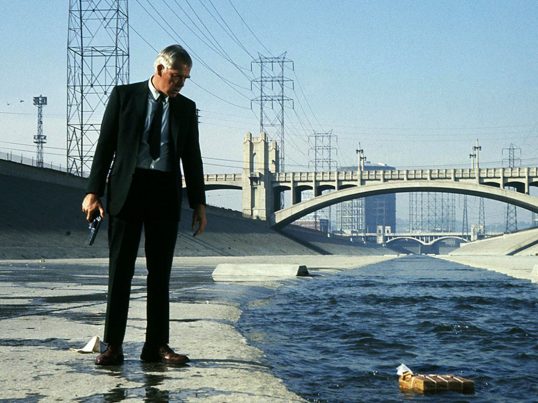
That was certainly true of his role as Walker in 1967’s Point Blank.  A thief who was double crossed by his partner and the organization to which his partner was in debt, Walker is determined to get back the money that he stole from someone else.  Relentlessly, Walker moves from one mob boss to another and repeatedly, those bosses make the mistake of thinking that they can double cross him again.

Point Blank (1967, directed by John Boorman)

In this scene, which was reportedly considered to be shockingly violent by 1967 standards, Carter (Lloyd Bochner) attempts to fool Walker, just to discover that Walker is smarter and far more ruthless than anyone realizes.

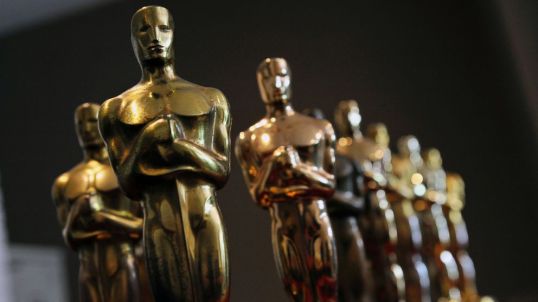
10 Oscar Snubs From The 1960s


Ah, the 60s. Both the studio system and the production code collapsed as Hollywood struggled to remain relevant during a time of great social upheaval. The Academy alternated between nominating films that took chances and nominating films that cost a lot of money. It led to some odd best picture lineups and some notable snubs!

1960: Psycho Is Not Nominated For Best Picture and Anthony Perkins Is Not Nominated For Best Actor

To be honest, considering that the Academy has never really embraced horror as a genre and spent most of the 60s nominating big budget prestige pictures, it’s a bit surprising that Psycho was actually nominated for four Oscars.  Along with being nominated for its production design and its cinematography, Psycho also won nominations for Alfred Hitchcock and Janet Leigh.  However, Anthony Perkins was not nominated for Best Actor, despite giving one of the most memorable performances of all time.  The film literally would not work without Perkins’s performance and, considering that Perkins pretty much spent the rest of his career in the shadow of Norman Bates, it’s a shame that he didn’t at least get a nomination for his trouble.  Psycho was also not nominated for Best Picture, despite being better remembered and certainly more influential than most of the films that were.

1962: The Man Who Shot Liberty Valance Is Almost Totally Snubbed

The Man Who Shot Liberty Valance was not totally snubbed by the Academy.  It received a nomination for Best Costume Design.  But still, it deserved so much more!  John Ford, James Stewart, John Wayne, Lee Marvin, Vera Miles, and the picture itself were all worthy of nominations.  Admittedly, 1962 was a year full of great American films and there was a lot of competition when it came to the Oscars.  Still, The Man Who Shot Liberty Valance definitely deserved a best picture nomination over the bloated remake of Mutiny on the Bounty.  Today, if the first Mutiny on the Bounty remake is known for anything, it’s for Marlon Brando being difficult on the set.  But The Man Who Shot Liberty Valance is still remembered for telling us to always print the legend.

1964: From Russia With Love Is Totally Snubbed

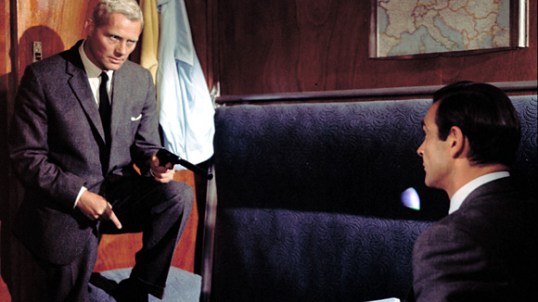
The same year that the Academy honored George Cukor’s creaky adaptation of My Fair Lady, it totally ignored my favorite James Bond film.  From Russia With Love is a Bond film that works wonderfully as both a love story and a thriller.  Sean Connery, Lotte Lenya, Robert Shaw, and Terence Young all deserved some award consideration.  From Russia With Love was released in the UK in 1963.  In a perfect world, it would have also been released concurrently in the U.S., allowing From Russia With Love to be the film that gave the the Academy the chance to recognize the British invasion.  Instead, Tom Jones was named the Best Picture of 1963 and From Russia With Love had to wait until 1964 to premiere in the U.S.  It was snubbed in favor of one of old Hollywood’s last grasps at relevance.

1964: Slim Pickens Is Not Nominated For Best Supporting Actor

Playing three separate roles, Peter Sellers dominates Dr. Strangelove: Or How I Learned To Stop Worrying And Love The Bomb.  But, as good as Sellers is, the film’s most memorable image is definitely Slim Pickens whooping it up as he rides the bomb down to Earth.  George C. Scott and Sterling Hyaden also undoubtedly deserved some award consideration but, in the end, Pickens is the one who brings the film to life even as he helps to bring society to an end.

1967: In Cold Blood Is Not Nominated For Best Picture

In Cold Blood, though not a perfect film, certainly deserved a nomination over Dr. Doolittle.  In Cold Blood is a film that still has the power to disturb and haunt viewers today.  Dr. Doolittle was a box office debacle that was nominated in an attempt to help 20th Century Fox make back some of their money.

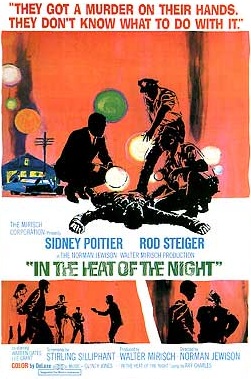
1967: Sidney Poitier Is Not Nominated For Best Actor For In The Heat Of The Night

In 1967, Sidney Poitier starred in two of the films that were nominated for Best Picture but somehow, he did not pick up a nomination himself.  His restrained but fiercely intelligent performance in In The Heat Of The Night provided a powerful contrast to Rod Steiger’s more blustery turn.  That Poitier was not nominated for his performance as Virgil Tibbs truly is one of the stranger snubs in Academy history.  (If I had to guess, I’d say that the Actors Branch was split on whether to honor him for In The Heat of the Night or Guess Who’s Coming To Dinner or even for To Sir With Love and, as a result, he ended up getting nominated for none of them.)

1968: 2001: A Space Odyssey and Planet of the Apes Are Not Nominated For Best Picture

Neither one of these classic science fiction films were nominated for Best Picture, despite the fact that both of them are far superior and far more influential than Oliver!, the film that won that year.

1968: The Good, The Bad, and the Ugly Is Totally Ignored

Not even Ennio Morricone’s score received a nomination!

1968: Petulia Is Totally Snubbed

Seriously, I don’t know what was going on with the Academy in 1968 but it seems they went out of their way to ignore the best films of the year.  Richard Lester’s Petulia is usually cited as one of the definitive films of the 60s but it received not a single Oscar nomination.  Not only did the film fail to receive a nomination for Best Picture but Richard Lester, George C. Scott, Julie Christie, Shirley Knight, Richard Chamberlain, and the film’s screenwriters were snubbed as well.

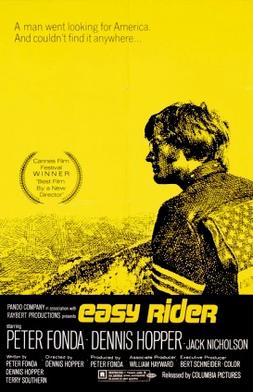
1969: Easy Rider Is Not Nominated For Best Picture

Yes, I know.  Easy Rider is a flawed film and there are certain moments that are just incredibly pretentious.  That said, Easy Rider defined an era and it also presented a portrait of everything that was and is good, bad, and timeless about America.  The film may have been produced, directed, and acted in a drug-razed haze but it’s also an important historical document and it was also a film whose success permanently changed Hollywood.  Certainly, Easy Rider’s legacy is superior to that of Hello, Dolly!

Agree? Disagree? Do you have an Oscar snub that you think is even worse than the 10 listed here? Let us know in the comments!

Up next: It’s the 70s!

Scenes That I Love: The Steak Scene From The Man Who Shot Liberty Valance


Since today is the 113th anniversary of the birth of John Wayne, I decided to watch the 1962 classic, The Man Who Shot Liberty Valance!  And then I decided to share a scene that I love from the film.

The famous steak scene features three of the greatest screen icons of Hollywood’s golden age: James Stewart, John Wayne, and Lee Marvin.  Lee Marvin is the bully who is terrorizing the entire town.  James Stewart is the idealist who thinks that the law, and not violence, is the answer.  And John Wayne is …. well, he’s John Wayne.  He’s the only man in town who can stand up to Lee Marvin but, at the same time, he’s also aware that his time is coming to a close.  In the scene below, all three of the characters display their different approaches to life and a disagreement with steak nearly leads to violence.

This scene — and really, the entire film — features these three actors at their best.  John Wayne is an actor who is often described as having “just played himself” but that’s really not quite fair.  While Wayne’s outsized persona definitely does influence how the audience reacts to any character that he plays, he was a better actor than he’s often given credit for being.  That’s especially evident in The Man Who Shot Liberty Valance, in which Wayne plays a confident man’s man who knows that fate is closing in on him.  The coming of civilization (represented by James Stewart) will be great for the town of Shinbone but it will also leave men like Wayne’s Ton Doniphon with nowhere to go.  The coming of civilization means that the heroes of the past are destined to become obsolete.

Enjoy this scene from The Man Who Shot Liberty Valance: