How many westerns do you know that open with a graduation ceremony at Harvard? I can only think of Michael Cimino’s Heaven’s Gate.
Today’s scene that I love comes from the controversial 1981 epic western. Some people feel that Heaven’s Gate is a secret masterpiece. I’m not quite one of those people but I do think the Harvard graduation scene was a great way to launch Cimino’s idiosyncratic vision of the Old West.
“We are not so very different, you and I.” — George Smiley
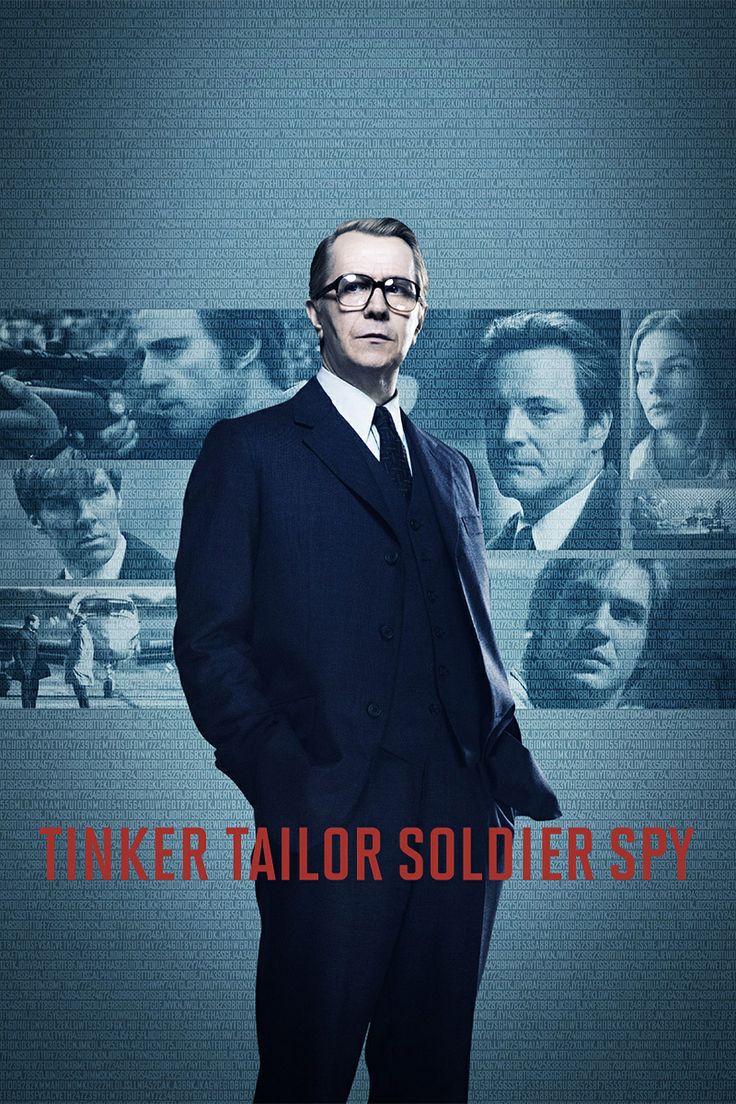
Tomas Alfredson’s Tinker Tailor Soldier Spy (2011) is a cold, coiled, and relentless march into the gray, rain-lashed corridors of British espionage—a film that exchanges Bond’s swagger for bureaucratic unease, where information is traded like poison and every conversation feels weaponized. The film is sheer confidence: so sure of itself, it expects you to keep up, get lost, and piece the puzzle together from the hushed fragments left in close-up reactions and glances across smoke-filled rooms. This is spy cinema not as spectacle, but as slow-burning existential puzzle.
A key element of the film’s mood is its distinctive brutalist aesthetic, which powerfully evokes the Cold War mentality not only behind the Iron Curtain but also in the West. Alfredson and cinematographer Hoyte van Hoytema immerse viewers in a London setting defined by greying, tired walls, bleak drizzle, and decaying interiors that feel as cold and institutional as the very espionage world they depict. This use of brutalism—with its bare concrete textures, utilitarian spaces, and sense of institutional decay—does more than create atmosphere; it visually projects the emotional and material exhaustion of a Britain entrenched in paranoia and internal rot. The characters seem physically and emotionally hemmed in by these spaces, reinforcing the film’s themes of secrecy, alienation, and moral corrosion.
There are no car chases or shootouts to speak of—just a masterclass in stillness where tension arises from precisely what remains unspoken. The film is closer to an autopsy than a thriller, dissecting the social and emotional costs of lives devoted to deception. It begins with a botched operation in Budapest—Jim Prideaux (Mark Strong), one of “the Circus’s” best agents, is captured in a tense, almost wordless scene that sets a tone of brooding unease. The fallout leads to a purge of the leadership, with Control (John Hurt) forced out and George Smiley (Gary Oldman), his quietly watchful confidant, retired—though soon to return for an unofficial mole hunt.
From there, the narrative unfolds elliptically, like a mosaic of recollections and betrayals, requiring viewers to assemble the truth from fractured glimpses. Gary Oldman’s Smiley is the film’s anchor—his performance a masterclass in minimalism and subtext. He’s the ultimate observer, haunted by decades of institutional compromises and personal betrayals.
The supporting cast is nothing short of exceptional, elevating the film through richly textured performances that bring vibrant life to an otherwise reserved script. Colin Firth as Bill Haydon delivers a quietly magnetic portrayal, his charm barely concealing the complexity beneath. Tom Hardy’s Ricki Tarr injects raw energy and restlessness, perfectly contrasting the film’s restrained atmosphere. Benedict Cumberbatch’s Peter Guillam is adept at conveying subtle shifts in allegiance and tension, his nuanced portrayal deepening the intrigue. John Hurt’s brief but potent presence as Control exudes weary gravitas, setting the tone for the murky world of espionage. Mark Strong as Jim Prideaux balances stoicism with vulnerable humanity, particularly in moments laden with pain and regret. Other supporting actors such as Ciarán Hinds, Toby Jones, and Kathy Burke contribute layered, compelling portrayals of individuals trapped within the machinery of the Circus. What binds these performances is a reliance on subtlety—expressing volumes through nuanced gestures and lingering silences, the cast anchors the complex narrative in a palpable human reality.
At its core, Tinker Tailor Soldier Spy is less a whodunnit than an exploration of institutional decay and emotional repression. The brutalist aesthetic mirrors this decline: just as the concrete and ochre walls close in on the agents, so too does the film reveal a Britain worn down by secrets and internal contradiction. Love and loyalty are liabilities in this world where everyone is alienated. The story’s emotional heart revolves around the search for a deeply embedded mole within the Circus—an elusive betrayal that shakes the organization to its core. The film carefully avoids easy reveals, maintaining a deliberate tension and exemplifying the emotional cost that the espionage game of the era had on everyone involved.
The film also explores themes of repressed queerness, class stratification, and misogyny, linking these to the numbing demands of espionage. The gloomy visuals and tightly controlled dialogue echo the emotional constraints on these men, underscoring that beneath the seemingly impenetrable exterior lies a fragile, fragile human cost.
This film is not an easy watch. Its elliptical storytelling, coded conversations, and subtle body language demand patience and multiple viewings. Yet that opacity is part of its power—uncertainty and not-knowing become central to the experience, enhanced by Alberto Iglesias’s restrained score and the claustrophobic mise-en-scène. Unlike many spy films, Tinker Tailor Soldier Spy is about process and detection, not action or glamour. Its cold, meticulous pacing trades on the cerebral seduction of uncovering hidden truths rather than adrenaline-fueled confrontations.
Ultimately, the film refuses easy resolutions. Though Smiley uncovers the mole and the Circus is superficially restored, there’s no real victory—only the acknowledgment of profound damage, both personal and institutional. The brutalist setting, with its unyielding, somber lines, stands as a perfect metaphor for this unresolved tension. Tinker Tailor Soldier Spy is a masterclass in unease and ambiguity, a film that stays with you because it reveals what you’ll never fully know about loyalty, betrayal, and the cost of secrets in a world where the line between friend and enemy is always blurred.
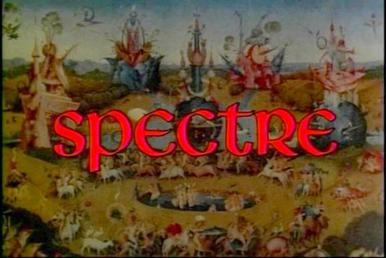
Produced by Gene Roddenberry and directed by Clive Donner, 1977’s Spectre was a pilot film for a television series about an occult detective (Robert Culp) who solved supernatural mysteries while dealing with a curse that had been put on him by the demon, Asmodeus.
In this film, Culp’s William Sebastian and his associate, Dr. Ham Hamilton (Gig Young) travel to the UK to investigate a supernatural case involving an old family. Despite the efforts of a succubus and a cursed airplane, Sebastian and Ham are determined to solve the mystery. John Hurt appears as a member of the cursed family.
This pilot was not picked up and developed into a series but it was popular enough that it was released as a theatrical film in Europe.
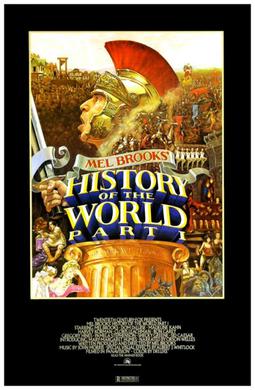
Overlong, wildly uneven, gimmicky too a fault, and often laugh out loud funny with a mix of jokes that range from the crude to the sublimely clever to the surprisingly sentimental, The History of the World, Part I is the ultimate Mel Brooks films.
Narrated by Orson Welles and featuring five historical stories and a collection of coming attractions, The History of the World Part I follows man from his caveman origins to the French Revolution and the thread that ties it all together is that humanity always screws up but still finds a way to survive. Moses (Mel Brooks) might drop and break one of the three tablets listing the 15 Commandments but he’s still able to present the other ten. Stand-up philosopher Comicus (Mel Brooks) might make the mistake of poking fun at the weight of Emperor Nero (Dom DeLuise) but he still makes his escape with Josephus (Gregory Hines), Swiftus (Ron Carey), and Miriam the Vestal Virgin (Mary-Margaret Humes) and ends up serving as the waiter at the Last Supper. (“Jesus!”) The Spanish Inquisition may have been a catastrophe but it also gave Torquemada (Mel Brooks) a chance to show off his performance skills. The French Revolution may have been a bloodbath but the future still held promise. Ask for a miracle and he’ll show up as a white horse named Miracle, no matter what era of history you’re living in.
The humor is very Mel Brooks. During the Roman Empire sequence, Madeline Kahn plays Empress Nympho. Jackie Mason, Harvey Korman, Cloris Leachman, Spike Milligan, Jan Murray, Sammy Shores, Shecky Greene, Sid Caesar, Henny Youngman, and Hugh Hefner all make cameo appearances. Carl Reiner is the voice of God. John Hurt plays Jesus. The film ends with the promise of a sequel that will feature “Jews in Space.” Not every joke lands. The entire caveman sequence feels forced. But when the film works — like during The Inquisition production number — it’s hard not get caught up in its anything-goes style. The entire Roman Empire sequence is probably more historically accurate than the typical Hollywood Roman epic. That’s especially true of Dom DeLuise’s naughty performance as Emperor Nero.
Mel Brooks is 99 years old today and he says that he has at least one more film to give us, a sequel to Spaceballs. I’m looking forward to it! I’m also looking forward to rewatching and enjoying all of the films that he’s already given us. The History of the World, Part I may not have initially enjoyed the critical acclaim of his earlier films but, in all of its anarchistic glory, it’s still pure Mel Brooks.
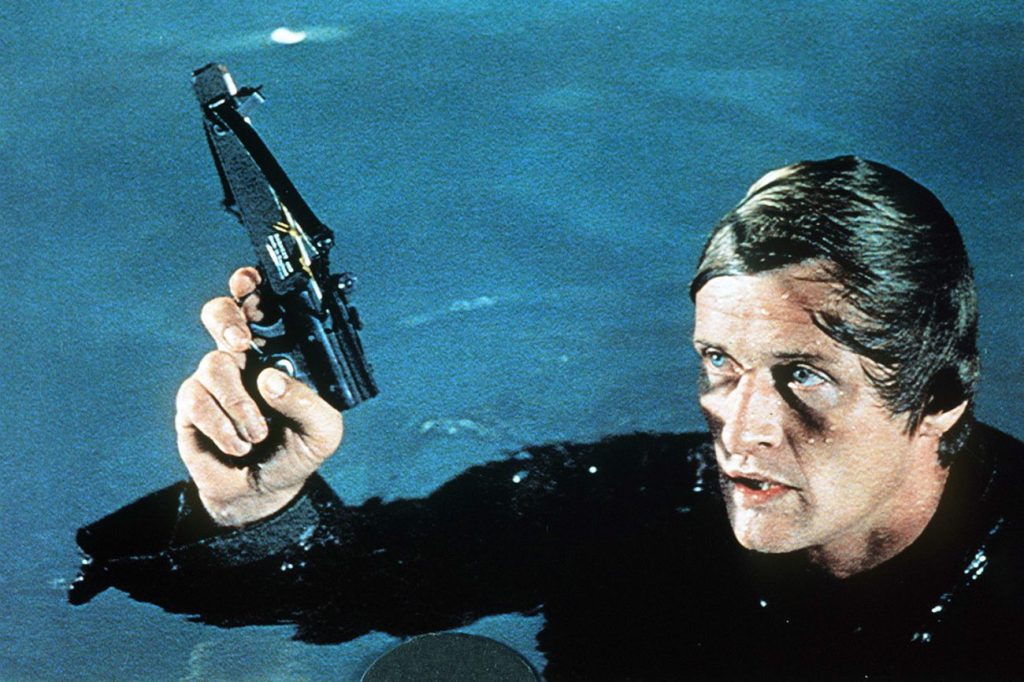
I’ve been having the best time reviewing Rutger Hauer films every Sunday. Today, I revisit THE OSTERMAN WEEKEND from 1983. Hauer made this film the year after BLADE RUNNER, so he was in the prime of his career. It also teams him up with an all-star supporting cast and master director Sam Peckinpah.
THE OSTERMAN WEEKEND opens with CIA Director Maxwell Danforth (Burt Lancaster) watching a recording of agent Laurence Fassett (John Hurt) making love to his wife. When Fassett hits the shower, two KGB assassins come in and kill her. Consumed by grief, Fassett hunts down the assassins and uncovers a Soviet spy network known as Omega. Fassett has identified three American men as top Omega agents… television producer Bernard Osterman (Craig T. Nelson with an awful, glued-on mustache), plastic surgeon Richard Tremayne (Dennis Hopper) and stock trader Joseph Cardone (Chris Sarandon). Rather than arrest the men and risk alarming the KGB, Fassett proposes to director Danforth that they try to turn one of the three men to the side of the West in hopes that this person will provide the information needed to bring down the Omega network.
Enter controversial television journalist John Tanner (Rutger Hauer). Fassett knows that Tanner has been close friends with Osterman, Tremayne, and Cardone since all four attended Berkeley together, and he believes that Tanner can successfully turn one of them. Although initially highly skeptical, the super patriotic Tanner begins to change his mind when Fassett shows him videotaped evidence of his old friends talking with a Russian agent in various capacities. Tanner reluctantly agrees to try turn one of his friends at their annual “Osterman Weekend” reunion which is coming up that week at Tanner’s house. He does have one condition… that Danforth, the CIA director will appear as a guest on his show. Danforth agrees to this condition. So that weekend, Tanner and his wife Ali (Meg Foster) welcome their old friends and their wives into their home, while Fassett has video camera equipment installed and hangs out in a van spying on the festivities. There’s no doubt it will turn out to be an awkward weekend, and you can’t help but wonder if Fassett may have more sinister motives than he’s letting on.
I’ll go ahead and say that I had a great time watching THE OSTERMAN WEEKEND for the first time in thirty-plus years. I’ve often read a criticism that the plot of this film is “incomprehensible.” Based on a book by Robert Ludlum, the story is purposely designed to keep you guessing up until its big reveal, but I didn’t have any trouble following it all. I’d say the biggest issue is that it doesn’t really stand up under close scrutiny. Some of the actions of the various characters don’t always make a lot of sense in light of the movie’s big twist near the end, but that didn’t take away from my personal enjoyment of the film. I just went along with the plot wherever it took me, and that was easy for me to do based on the cast that we have assembled. Any movie that includes Rutger Hauer, Burt Lancaster, John Hurt, Craig T. Nelson, Dennis Hopper, Chris Sarandon, Meg Foster, Helen Shaver, and Candy Yates will get a watch from me. Heck, Tim Thomerson even shows up as a motorcycle cop at one point. It’s a who’s who of excellent actors who always make their films watchable. In my opinion, it’s Hauer, Hurt, Foster and Nelson who do the most with their characters and take home the acting honors for their work here. Burt Lancaster is one of the all-time greats, and he does a good job, but it’s a one note character so there isn’t much he can do. Hopper and Sarandon are also fine, but their characters don’t really stand out. Their screen wives, Shaver and Yates, seem to be here mostly for eye candy because their tops are off for an abnormally large amount of their screen time! Speaking of eyes, the Hauer / Foster team up has to be on the list of the most striking combo pair of eyes in the history of cinema. Foster has the most noticeable eyes of any actress I’ve ever seen.
This is the great Sam Peckinpah’s final film, and I don’t agree with the people who complain that his career ended with a whimper. THE OSTERMAN WEEKEND is not in the same league as THE WILD BUNCH, RIDE THE HIGH COUNTRY, THE STRAW DOGS, or THE GETAWAY, but not many films are, including most of his own. And this movie is certainly visionary in one area, and that is found in its main theme about the damage that can be done with the manipulation of the media, including physical media, like videotape and audiotape. The primary driver of the film from the very beginning to the very end is the danger of false information that looks and sounds true. I can promise you that as I type this, and as you read it, there are people all over this world trying to make lies sound or appear true so they can share them on the news and on social media. I invite you to question everything you read, watch or hear on any outlet where you receive your news. Peckinpah’s final film beats this into our heads, just 40 years earlier.
Sam Peckinpah was known for his stylish and violent action sequences. THE OSTERMAN WEEKEND is more of a paranoid thriller, but it does feature some good action. There’s a chase sequence early in the film where Hauer’s wife and son are kidnapped, and he’s forced to commandeer the truck of honeymooners John Bryson (a Peckinpah regular) and Anne Haney (Greta from LIAR LIAR) to take off in hot pursuit. The scene features Peckinpah’s signature stunts, slow motion, and a myriad of cool tracking shots. There’s another fun scene where Hauer is using a baseball bat to defend himself against his pal Craig T. Nelson, who’s been shown to be a martial arts expert. It’s an exciting scene even if Hauer does get his ass kicked, in slow motion no less. And I always appreciate a movie with some good crossbow action, especially when it’s being wielded by a lady. The poster of the film prominently features a lady with a crossbow and we get to see Meg Foster step into that role in the actual film. She gets one especially gruesome, blood gurgling kill.
Overall, I think THE OSTERMAN WEEKEND is a good film. It is not nearly as bad as the critics of the time labeled it, and it’s not as good as Peckinpah’s best work, but you can certainly do a lot worse. It has a great cast, a timely message, a lot more sex and nudity than I remembered, and some cool action sequences. It’s definitely worth a watch!
The Elephant Man (1980, dir by David Lynch, DP: Freddie Francis)
David Lynch never won a competitive Oscar.
He received an honorary award from the Academy in 2019. He generated some minor but hopeful buzz as a possible nominee for Best Supporting Actor for his role in Steven Spielberg’s The Fabelmans. He was nominated for Best Director three times and once for Best Adapted Screenplay. But he never won an Oscar and indeed, even his nominations felt like they were given almost begrudgingly on the part of the Academy. In an industry that celebrated conformity and put the box office before all other concerns, David Lynch was an iconoclastic contrarian and the Academy often didn’t do know what to make of him. Of the many worthy films that he directed, only one David Lynch film was nominated for Best Picture and, in my opinion, it should have won.
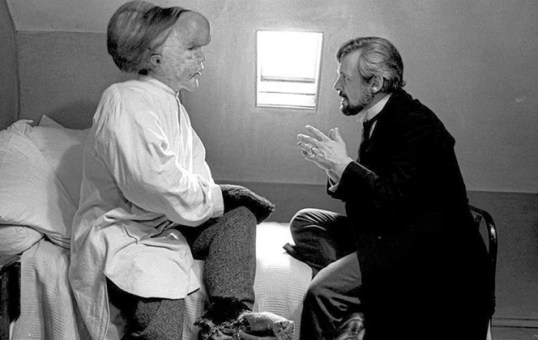
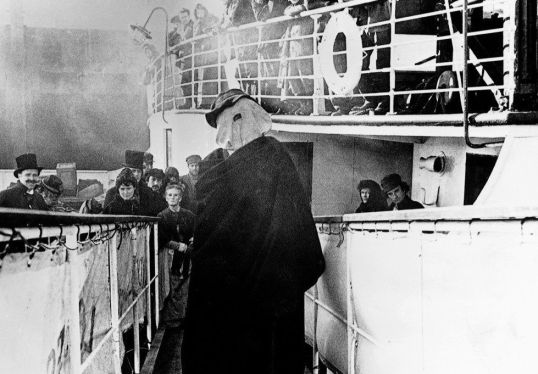
1980’s The Elephant Man is based on the true story of Joseph Merrick (renamed John for the film), a man who was horribly deformed and terribly abused until he was saved from a freak show by a surgeon named Dr. Frederick Treves. The sensitive and intelligent Merrick went on to become a celebrity in Victorian London, visited by members of high society and allowed to live at London Hospital. (Even members of the royal family dropped in to visit the man who had once been forced to live in a cage.) Merrick lived to be 27 years old, ultimately dying of asphyxiation when he attempted to lie down and, in Treves’s opinion, sleep like a “normal person” despite his oversized and heavy head. In the film, Merrick is played by John Hurt (who gives a wonderful performance that, despite Hurt acting under a ton on makeup, still perfectly communicates Merrick’s humanity) while Treves is played by Anthony Hopkins, who is equally as good as Hurt. (Hurt was nominated for Best Actor but Hopkins was not. Personally, I prefer Hopkins’s performance as the genuinely kind Dr. Treves to any of his more-rewarded work as Dr. Lecter.) The rest of the cast is made up of veteran British stars, including John Gielgud, Wendy Hiller, Freddie Jones, and Kenny Baker.
Lynch’s version of The Elephant Man is only loosely based on the facts of Merrick’s life. It opens with a disturbing fantasy sequence (one which I assume is meant to be from Merrick’s point of view) in which a herd of elephants strike down Merrick’s mother and then appear to assault her. Shot in stark black-and-white and often featuring the sounds of droning machinery in the background (in many ways, The Elephant Man feels like it takes place in the same world as Eraserhead), the first half of The Elephant Man feels like a particularly surreal Hammer film. (Veteran Hammer director Freddie Francis served as The Elephant Man‘s cinematographer.) Merrick is kept off-camera and, when we finally do see his face, it’s in a split-second scene in which Merrick is as terrified as the person who sees him. Before we really meet Merrick, we’ve already heard Treves and the hospital administrator (John Gielgud) discuss all of the clinical details of his condition. We know why he’s deformed. After we see him, we know how he’s deformed. After all of that, the audience is finally ready to know Merrick the human being. Without engaging in too much obvious sentimentality, Lynch shows us that Merrick is a kind soul, one who has been tragically mistreated by the world. Just as with the real Merrick, almost everyone who meets the film’s John Merrick is ultimately charmed by him. In the film, Merrick is kidnapped by his former owner, the alcoholic Bytes (Freddie Jones), who wants again puts Merrick on display in a cage. In the end, it’s Merrick’s fellow so-called “freaks” who set him free and allow him to return to the hospital, where he has one final vision of his mother. This vision is a much less disturbing than the one that opened the film. The film celebrates the humanity of John Merrick but is also reveals the genius of David Lynch. There’s so many moments when the film could have gone off the rails or become too obvious for its own good. But Lynch’s unique style so draws you into the film’s world that even the mysterious visions of his mother somehow feel completely necessary and natural. The Elephant Man is the David Lynch film that makes me cry. Lynch was a surrealist with a heart.
The Elephant Man was only David Lynch’s second film. He was hired to direct by none other than Mel Brooks, who produced the film but went uncredited to prevent people from thinking it would be a comedy. (Lynch, however, did cast Brooks’s wife, Anne Bancroft, as an actress who visits Merrick.) Brooks hired Lynch after seeing Eraserhead and recognizing a talent that many in Hollywood would never have had the guts to take a chance on. (Despite the success of Eraserhead on the midnight circuit, David Lynch was working as a roofer when he was offered The Elephant Man and had nearly given up on the idea of ever making another film.) Reportedly, Brooks stayed out of Lynch’s way and protected him from other executives who fears Lynch’s version of the story would be too strange to be a success. Lynch and Brooks proved those doubters wrong. Acclaimed by critics and popular with audiences, The Elephant Man was nominated for Best Picture and David Lynch was nominated for Best Director. I like Ordinary People. I like Raging Bull. But The Elephant Man was the film that should have won in 1980.
The Elephant Man remains a powerful movie and an example of how an independent artist can make a mainstream movie without compromising his vision. (Of course, I imagine it helps to have a producer who has the intelligence and faith necessary to stay out of your way.) David Lynch may be gone but his art will live forever. The Elephant Man will continue to make me cry for the rest of my life and for that, I’m thankful.
The Elephant Man (1980, dir by David Lynch, DP: Freddie Francis)
First released in 1981 and then re-released in several different versions since then, Heaven’s Gate begins at Harvard University.
The year is 1870 and the graduates of Harvard have got their entire future ahead of them. At the graduation ceremony, Joseph Cotten gives a speech about how, as men of cultivation, they have an obligation to help the uncultivated. Student orator Billy Irvine (John Hurt) then gives a speech in which he jokingly says the exact opposite. Amongst the graduates, Billy’s friend, Jim Averill (Kris Kristofferson), laughs at Billy’s speech. It’s a bit of a strange scene, if just because all of the graduates appear to be teenagers except for Hurt and Kristofferson, who are both clearly in their 30s. The graduates of Harvard sing to their girlfriends and dance under a tree and, for a fleeting moment, all seems to be right with the world.
Twenty years later, all seems to be wrong with the world. Averill is now the rugged and world-weary marshal of Johnson Country, Wyoming. Cattle barons are trying to force immigrant settlers to give up their land. Gunmen, like Nate Champion (Christopher Walken) and Nick Ray (Mickey Rourke), are accepting contracts to execute immigrants who are suspected of stealing cattle. When Averill stands up for the people of Johnson Country, the head of the Wyoming Stock Grower Association, Frank Canton (Sam Waterston), hires a group of mercenaries to ride into Johnson County and execute 125 settlers. Billy Irvine, who now is dissolute alcoholic who works with Canton, warns his old friend Averill. Averill, who has fallen in love with Ella (Isabelle Huppert), the local madam, announces that he will defend the immigrants. Nate, who is also in love with Ella, considers changing sides.
Heaven’s Gate is loosely based on an actual event. I actually have three distant ancestors who traveled to Wyoming to take part in the Johnson County War. All three of them survived, though one of them was shot and killed in an unrelated manner shortly after returning to Ft. Smith, Arkansas. That said, director Michael Cimino is clearly not that interested in the historical reality of the Johnson County War or the issues that it raised. Just as he did with Vietnam in The Deer Hunter, Cimino uses the Johnson County War as a way to signify a loss of national innocence. Averill and Irvine start the film as hopeful “young” men with the future ahead of them. By the end of the film, one is dead and the other is living on a yacht and dealing with what appears to be crippling ennui.
Heaven’s Gate is a bit of an infamous film. Though the film was pretty much a standard western, Cimino still went far over-budget and turned in a first cut that was over six hours long. A four hour version was briefly released in 1980 but withdrawn after a week, due to terrible reviews and audience indifference. A studio-edited version that ran for two hours and 35 minutes got the widest release in 1981. Since then, there have been several other versions released. Cimino’s director’s cut, which was released as a part of the Criterion Collection in 2012, runs for 212-minutes and is considered to now be the “official” version of Heaven’s Gate.
For years, Heaven’s Gate had a terrible reputation. It’s failure at the box office was blamed for bankrupting United Artists. After the excesses of the Heaven’s Gate production, studios were far more reluctant to just give a director a bunch of money and let him run off to make his movie. (They should have learned their lesson with Dennis Hopper and The Last Movie.) Described by studio execs as being self-indulgent and even mentally unstable, Michael Cimino’s career never recovered and the director of The Deer Hunter went from being an Oscar-winner to being an industry pariah. (Some who disliked The Deer Hunter’s perceived jingoistic subtext claimed that Heaven’s Gate proved The Deer Hunter was just an overrated fluke.) However, the reputation of Heaven’s Gate has improved, especially with the release of Cimino’s director’s cut. Many critics have praised Heaven’s Gate for its epic portrayal of the west and, ironically given the controversy over The Deer Hunter, its political subtext. It’s anti-immigrant villains made the film popular amongst the Resistance-leaning film historians during the first Trump term.
So, is Heaven’s Gate a masterpiece or a disaster? To be honest, it’s somewhere in between. Whereas it was once over-criticized, it’s now over-praised. Visually, it’s a beautiful film but those who complained that the film was too slow had a point. As with The Deer Hunter, Cimino takes the time to introduce us to and immerse us in a tight-knit immigrant community. Personally, I like the much-criticized scenes of the fiddler on skates and Averill and Ella dancing in the roller rink. Overall though, as opposed to The Deer Hunter, the members of the film’s victimized community still feel less like individual characters and more like symbols. As for the political subtext, I think that any subtext of that sort is accidental. (I feel the same way about The Deer Hunter, which I like quite a bit more than Heaven’s Gate.) Cimino is more interested in the loss of innocence than whether or not the Johnson County War can be fit into some sort of nonsense Marxist framework.
The main problem with the film is that there is no center to keep everything grounded. Kris Kristofferson had a definite screen presence but, as an actor who was incapable of showing a great deal of emotion, he lacks the gravitas necessary to keep from being swallowed up by Cimino’s epic pretensions. Isabelle Huppert, an otherwise great actress, also feels lost in the role of Ella and Sam Waterston is not necessarily the most-intimidating villain to ever show up in a western. Christopher Walken, as the enigmatic and intriguing Nate Champion, gives the best performance in the film but his character still feels largely wasted.
There are some brilliant visual moments to be found in Heaven’s Gate. I even like the Harvard prologue and the ending on the boat, both of which are not technically necessary to the narrative but still add an extra-dimension to both Averill and Irvine. But, in the end, Heaven’s Gate is big when it should have been small and epic when its should have been intimate. It’s a misfire but not a disaster. Even great directors occasionally have a film that just doesn’t work. Speilberg had his 1941. Scorsese has had a handful. Coppola’s career has been a mess but no one can take his successes away from him. Michael Cimino, who passed away in 2016, deserved another chance.
President Skroob (Mel Brooks), the evil and incompetent leader of Planet Spaceball, has squandered all of the air on his planet and is planning on stealing the atmosphere of the planet Druida. To pull this off, he arranges for the idiotic Prince Valium (Jim J. Bullock) to marry Vespa (Daphne Zuniga), the princess of Druida. (All together now: “She doesn’t look Druish.”) Vespa and her droid, Dot Matrix (voice by Joan Rivers), flee Druida with Lord Dark Helmet (Rick Moranis) and Colonel Sandurz (George Wyner) in pursuit.
In debt to the intergalactic gangster, Pizza the Hut (voiced by Dom DeLuise), a mercenary named Lone Star (Bill Pullman) and his associate, the man-dog hypbrid Barf (John Candy), accept a contract from Vespa’s father (Dick Van Patten) to track down his daughter. They take off in their space Winnebago to bring Vespa home. Though they start only interested in money, Lone Star and Barf come to learn about love, freedom, and a mystical power known as the Schwartz. (“No, the Schwartz!”)
Back when I was growing up and just being able to have HBO made you the coolest guy on the block, Spaceballs was one of my favorite movies. I watched it every time that it came on cable. As usual with Mel Brooks, there were a lot of double entendres that went over my young head but there was also enough goofy humor that I could laugh at what was going on. I could quote all the lines. I laughed whenever Rick Moranis showed up in his Darth Vader-costume. I laughed at John Candy’s facial expressions. I laughed when Mel Brooks showed up as Yogurt, the Spaceballs version of Yoda. Pizza the Hut? That’s hilarious when you’re a kid!
I recently rewatched the film. Revisiting it was a lesson in how your memory can trick you. I could still quote most of the lines with reasonable accuracy but nothing was quite the way I remembered it. Rick Moranis and John Candy were still hilarious and, being older, I could better appreciated the frustration felt by George Wyner’s Colonel Sandurz. I also realized what a good performance Bill Pullman gave as Lone Star. While everyone else mugged for the camera, Pullman played his role straight.
I also discovered that a lot of the scenes that I remembered as being hilarious were actually just mildly amusing. Mel Brooks was always hit-and-miss as a director, the type who would toss everything and the kitchen sink into his films. Spaceballs has a lot of hilarious scenes but it’s obvious that Brooks didn’t have the same affection for the source material as he did with Young Frankenstein or Blazing Saddles or even High Anxiety. Brooks is poking fun at Star Wars because it’s popular but he doesn’t seem to have any strong feelings, one way or the other, about George Lucas’s space epic.
I still laughed, though. Even if Spaceballs wasn’t the masterpiece that I remembered it being, I still enjoyed rewatching it. The jokes that hit were funny enough to make up for the ones that missed. Even with his weaker films, Mel Brooks is a national treasure.
Produced by Gene Roddenberry and directed by Clive Donner, 1977’s Spectre was a pilot film for a television series about an occult detective (Robert Culp) who solved supernatural mysteries while dealing with a curse that had been put on him by the demon, Asmodeus.
In this film, Culp’s William Sebastian and his associate, Dr. Ham Hamilton (Gig Young) travel to the UK to investigate a supernatural case involving an old family. Despite the efforts of a succubus and a cursed airplane, Sebastian and Ham are determined to solve the mystery. John Hurt appears as a member of the cursed family.
This pilot was not picked up and developed into a series but it was popular enough that it was released as a theatrical film in Europe.
Since it’s currently Spring Break, I figured that I would spend the next two weeks reviewing films about people on vacation. Some of the films will be about good vacations. Some of the films will be about bad vacations. But, in the end, they’ll all be about celebrating those moments that make us yearn for the chance to get away from it all.
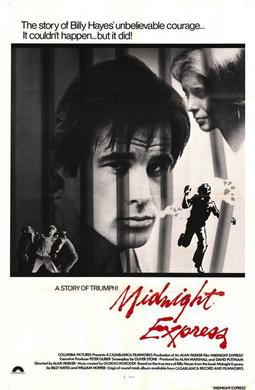
Take Midnight Express, for instance. This 1978 film (which was nominated for six Oscars and won two) tells the story of what happens when a carefree college student named Billy Hayes decides to spend his holiday in Turkey.
When the film begins, Billy Hayes (played by Brad Davis), is at an airport in Turkey. He’s preparing to return home to the United States. His girlfriend, Susan (Irene Miracle), informs him that Janis Joplin has just died. When Billy responds by making a joke, Susan accuses him of not taking anything seriously. What Susan doesn’t realize is that Billy actually has a lot on his mind. For one thing, he’s got several bricks of hashish taped around his waist. He purchased it from a cab driver and he’s planning on selling it to his friends back in the United States. Unfortunately, Billy’s not quite as clever as he thinks he is. Because of recent terrorist bombings, the Turkish police are searching everyone before they board their plane. Billy finds himself standing out in the middle of the runway with his hands up in the air, surrounded by gun-wielding Turkish policemen.
Billy finds himself stranded in a country that he doesn’t understand, being interrogated by men whose language he cannot speak. An enigmatic American (Bo Hopkins) shows up and assures Billy that he’ll be safe, as long as he identifies the taxi driver who sold him to the drugs. Billy does so but then makes the mistake of trying to flee from the police. In the end, it’s the American who captures him and, holding a gun to Billy’s head, tells him not to make another move.
Soon, Billy is an inmate at Sağmalcılar Prison. He’s beaten when he first arrives and it’s only days later that he’s able to walk and think clearly. He befriends some of the other prisoners, including a heroin addict named Max (John Hurt) and an idiot named Jimmy (Randy Quaid). Billy watches as the prisoners are tortured by the fearsome head guard (Paul L. Smith) and listens to the screams of inmates being raped behind closed doors. After being told that his original four-year sentence has been lengthened to a 30-year sentence, Billy starts to degenerate. When Susan visits, Billy end up pathetically masturbating in front of her. When another prisoner taunts Billy, Billy bites out the man’s tongue, an act that we see in both close up and slow motion. If Billy has any hope of regaining his humanity, he has to escape. He has to catch what Jimmy calls the “midnight express…..”
Midnight Express is a brutal and rather crude film. Though it may have been directed by a mainstream director (Alan Parker) and written by a future Oscar-winner (Oliver Stone), Midnight Express is a pure grindhouse film at heart. There’s not a subtle moment to be found in the film. The camera lingers over every act of sadism while Giorgio Moroder’s synth-based score pulsates in the background. When Billy grows more and more feral and brutal in his behavior, it’s hard not to be reminded of Lon Chaney, Jr. turning into The Wolf Man. The film may be incredibly heavy-handed but it’s nightmarishly effective, playing out with the intensity of a fever dream.
As for the cast, Brad Davis wasn’t particularly likable or sympathetic as Billy. On the one hand, he’s a victim of an unjust system, betrayed by his own country and tortured by another. On the other hand, Billy was an idiot who apparently thought no one would notice all that hash wrapped around his chest. That said, Davis’s unlikable screen presence actually worked to the film’s advantage. If you actually liked Billy, the film would be unbearable to watch. Before Davis was cast, Dennis Quaid and Mark Hamill were both considered for the role. If either of those actors has been cast, Midnight Express would be too intense and disturbing to watch. For instance, it would be depressing to watch Dennis Quaid rip a man’s tongue out of his mouth. You would be like, “No, Mr. Quaid, you’ll never recover your humanity!” But when Brad Davis does it, you’re just like, “Eh. It was bound to happen sometime.”
For more effective are John Hurt and Bo Hopkins. Hurt and Hopkins both have small roles but they both make a big impression, if just because they’re the only two characters in the film who aren’t either yelling or crying all of the time. While everyone else is constantly cursing their imprisonment, Hurt is quietly sardonic. As for Hopkins, we’re supposed to dislike him because he’s with the CIA and he sold out Billy. But honestly, no one made Billy tape all that hash to his chest. Finally, you’ve got Randy Quaid and Paul L. Smith, who both glower their way through the film. Smith is wonderfully evil while Randy Quaid is …. well, he’s Randy Quaid, the loudest American in Turkey.
Midnight Express was such a success at the box office that it caused an international incident. There’s not a single positive Turkish character to be found in the entire film and it’s impossible not to feel that the film is not only condemning Turkey’s drug policies but that it’s also condemning the entire country as well. The Turkish prisoners are portrayed as being just as bad as the guards and even Billy’s defense attorney comes across as being greedy and untrustworthy. Watching the film today can be an awkward experience. It’s undeniably effective but it’s impossible not to cringe at the way anyone who isn’t from the west is portrayed. In recent years, everyone from director Alan Parker to screenwriter Oliver Stone to the real-life Billy Hayes has apologized for the way that the Turkish people were portrayed in the film.
Despite the controversy, Midnight Express was a huge box office success and it was nominated for best picture. It lost to another controversial film about people imprisoned in Asia, The Deer Hunter.


 Through the Shattered Lens