In the 1992 film, My Cousin Vinny, two college students from New York City, Bill Gambini (Ralph Macchio) and Stan Rothstein (Mitchell Whitfield), make the mistake of driving through Alabama. The two students stop off at a convenience store. When the clerk is subsequently shot dead during a robbery, Bill and Stan are arrested for the crime. The viewers know they’re innocent. Bill and Stan know they’re innocent. But the entire state of Alabama seems to be determined to send Bill and Stan to prison for life.
Fortunately, Bill’s cousin, Vinny (Joe Pesci, star of Half Nelson), is a lawyer. Unfortunately, he just recently passed the bar exam and he has yet to actually try a case. Still, Vinny and his fiancée, Mona Lisa Vito (Marisa Tomei), come down to Alabama. Vinny takes the case, lying to the judge (Fred Gwynne) about his qualification as a trial attorney. Vinny is momentarily impressed when the prosecutor (Lane Smith) shares with him all of the files about the case. “It’s called disclosure, dickhead!” Lisa snaps at him, revealing that she actually has more common sense than Vinny. That becomes increasingly important as Vinny tries to keep Bill and Stan from spending the rest of their lives in prison.
To be honest, considering how much I complain about stereotypical portrayals of the South, I really shouldn’t like My CousinVinny as much as I do. Almost every character in the film is a stereotype to some extent or another, from the farmers and rednecks who take the witness stand to Fred Gwynne’s no-nonsense judge who rules that Vinny is in contempt of court because he’s wearing a leather jacket. Fortunately, though, the Southern stereotypes don’t bother me because both Vinny and Lisa are New York stereotypes. Just as the judge and the townspeople seem to confirm every prejudice that someone like Vinny would have against the South, Vinny seems to be the epitome of everything that people in the South dislike about the North. When Vinny first shows up on the scene, he’s loud and brash and obnoxious. But, as the film progresses, Vinny reveals himself to not only be a better attorney than anyone was expecting but he also calms down and adjusts to the more relaxed pace of life in the country. Just as Vinny reveals himself to be not as bad as everyone originally assumed, both the Judge and the prosecutor are also allowed to reveal some hidden depths. Neither one is the cardboard authority figure that viewers might expect. The Judge does sincerely want justice to be done and the prosecutor sincerely wants to keep the county safe, even if he is prosecuting two innocent men. Just as Vinny learns not to be too quick to judge them, they learn not to be too quick to judge Vinny. The end message is that everyone is innocent until proven guilty and deserves a fair hearing, whether in a court of law or just in the courts of public and private opinion. It’s not a bad message. In fact, it’s one that more than a few people could still stand to learn today.
Of course, the best thing about the film is Marisa Tomei, who not brings a lot of energy to the film but whose hair is amazing and whose clothes are to die for. Tomei won an Oscar for her performance in My Cousin Vinny, a victory that was so controversial that there were unfounded rumors that presenter Jack Palance had read the wrong name by mistake. (As we all learned a few years ago when Warren Beatty and Faye Dunaway actually did read the wrong winner, the accountants aren’t going to let anyone get away with that.) Watching the film last night, it was obvious to me that Tomei deserved that Oscar because Lisa is the heart of the film. Pesci, Gwynne, and Lane Smith are all give good performances but, without Marisa Tomei’s performance, My Cousin Vinny would ultimately just be another culture clash comedy. A lesser actress would have just played Lisa as being a stereotype. But Tomei turned Lisa into the most believable and sincere character in the film. While Lisa won the case, Tomei saved the movie.
(And needless to say, I’m a fan of any movie that features a Lisa saving the day.)
My Cousin Vinny holds up as an enjoyable film. Watch it the next time you’re losing faith in humanity.
As some of our regular readers undoubtedly know, I am involved in hosting a few weekly live tweets on twitter and occasion ally Mastodon. I host #FridayNightFlix every Friday, I co-host #ScarySocial on Saturday, and I am one of the five hosts of Mastodon’s #MondayActionMovie! Every week, we get together. We watch a movie. We snark our way through it.
Tonight, for #MondayActionMovie, the film will be 1999’s The Silencer! Selected and hosted by Rev. Magdalen, this movie features Michael Dudikoff! So, you know it has to be good!
Following #MondayActionMovie, Brad and Sierra will be hosting the #MondayMuggers live tweet. We will be watching 1992’s MyCousin Vinny, starring Joe Pesci and Marisa Tomei! The film is on Prime!
It should make for a night of fun viewing and I invite all of you to join in. If you want to join the live tweets, just hop onto Mastodon, pull up The Silencer on YouTube, start the movie at 8 pm et, and use the #MondayActionMovie hashtag! Then, at 10 pm et, switch over to Twitter and Prime, start My Cousin Vinny, and use the #MondayMuggers hashtag! The live tweet community is a friendly group and welcoming of newcomers so don’t be shy.
Welcome to Retro Television Reviews, a new feature where we review some of our favorite and least favorite shows of the past! On Fridays, I will be reviewing Half Nelson, which ran on NBC from March to May of 1985. Almost all nine of the show’s episodes can be found on YouTube!
The adventures of Rocky Nelson continue!
Episode 1.4 “Uppers and Downers”
(Dir by James Sheldon, originally aired on April 5th, 1985)
When a burglar alarm goes off in Beverly Hills, it’s Rocky Nelson (Joe Pesci) of Beverly Hills Patrol to the rescue! Reaching the mansion of a local businessman (played by Cliff Gorman), Rocky discovers that the alarm was set off by a racoon.
(“A racoon is Beverly Hills!?” Gorman’s wife says, in a tone that suggests that racoons are unknown creatures in California.)
Rocky also happens to spot the next door neighbor (Nancy Stafford) leading her personal trainer into her house, whispering that she’s going to show him her bedroom. At first, Rocky is amused but, later that day, Rocky hears that the personal trainer has been found, floating in Stafford’s swimming pool. Stafford claims that the trainer had a heart attack while swimming but, upon arriving at the scene, Rocky immediately figures out that the trainer died in the house and was then dragged out to the pool. Stafford swears that she didn’t kill him and Rocky believes her. However, when the autopsy report reveals that the trainer was dead before he was put in the pool, Stafford is arrested and charged with murdering him by hitting him over the head.
Despite being told by his boss (Fred Williamson) to stay away from the case, Rocky feels that he has to prove Stafford’s innocence. Rocky’s first plan is to have his associates, Kurt (Bubba Smith) and Beau (Dick Butkus), disguise themselves as mortuary attendants and steal the trainer’s body from the crematorium. Rocky then takes the body to a coroner who does a second autopsy and discovers that not only did the trainer have a heart attack but that he was also poisoned! Someone slipped the trainer a pill that was specifically designed to cause a heart attack. Now, it’s up to Rocky to discover who that person was and clear Stafford’s name before Stafford’s husband (Brett Halsey, a veteran of Italian horror and spaghetti westerns) files for divorce.
Rocky deduces that the trainer was probably targeted by a jealous husband. Rocky decides to disguise himself as a physical trainer so that he can get close to all of the dead man’s former clients. How does Rocky prepare for this role? He does calisthenics with his landlord, Dean Martin. When Rocky mentions that he needs someone to determine whether or not his clients are lying to him, Dean Martin suggests that he steal a lie detector from the set of “Burt’s new film.” (I’m guessing that Burt was a reference to Burt Reynolds, Dean’s co-star in two CannonballRun films.) Rocky promptly goes down to the studio backlot and steals a bunch of Burt Reynolds’s property.
(The backlot was a prominent and amusing part of the show’s pilot but it was ignored during last week’s episode. I was glad to see it back for this episode because Dean Martin instructing Joe Pesci to steal Burt Reynolds’s lie detector will never not be amusing.)
Rocky meets with all of the dead trainer’s clients and tricks them into hooking themselves up to the lie detector by telling them that it’s a instrument that will check their heart rate. Rocky discovers that any number of people could have wanted the trainer dead. However, those of us in the audience already knows that Cliff Gorman is the murderer because we witnessed Gorman gloating about it earlier in the episode. Rocky eventually figures it out as well and tricks Gorman into confessing by pretending to take one of the heart attack pills while driving Gorman around Beverly Hills.
Thanks to the visit to the studio lot and Dean Martin’s eccentric performance, this episode was an improvement on last week’s. That said, it still suffered from the fact that the murder itself wasn’t that interesting (with Gorman’s ruthless businessman not getting much characterization beyond being evil). Despite being second and third-billed in the opening credits, neither Victoria Jackson nor Fred Williamson got to do much in this episode and considering that both of those performers had their own unique and eccentric style, it feels like a bit of waste to just have them sitting in the office and uttering just a handful of lines per episode. The main appeal of the show continues to be Joe Pesci, who brings a lot of streetwise charm to Rocky. In the episodes that I’ve watched so far, Pesci is likable and engaging as Rocky and I think his performance would surprise a lot of people who are used to Pesci playing killers with hair-trigger tempers. Rocky is smart and tough but ultimately rather friendly. In his performance in HalfNelson, one can see hints of his later performance in The Irishman, I just wish the rest of this show was as consistently good.
Next week: Joe Pesci faces off against John Saxon! That sounds promising! We’ll see how it goes.
Welcome to Retro Television Reviews, a new feature where we review some of our favorite and least favorite shows of the past! On Fridays, I will be reviewing Half Nelson, which ran on NBC from March to May of 1985. Almost all nine of the show’s episodes can be found on YouTube!
(Directed by Alan Cooke, originally aired on March 29th, 1985)
I cannot escape Robert Reed.
Seriously! Robert Reed is one of those actors who seems to show up every week in my retro television reviews. If he wasn’t starring in The Brady Bunch Hour, he was guesting on The Love Boator Fantasy Island. And now, he’s the guest villain in this week’s episode of Half Nelson!
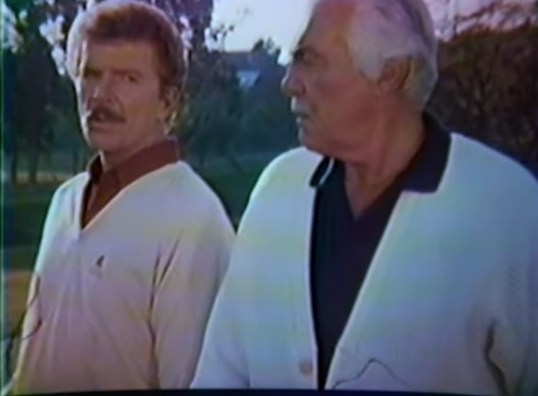
Reed, with his graying perm and his aging porn star mustache, plays Seymour Griffith. Griffith is a fabulously wealthy Beverly Hills attorney who is planning on becoming even more wealthy by stealing a valuable vase and selling it to a crooked antiques dealer named Morgan (Cesar Romero). Unfortunately, while stealing the vase, Griffith kills the owner. (Griffith is also having an affair with the dead man’s wife.) Somewhat inconveniently, for Griffith, the dead man was a client of the Beverly Hills Patrol! Rocky Nelson is on the case, both because he’s romantically pursuing the dead man’s daughter (Michelle Johnson) and also because Rocky believes in justice.
This week’s villains
The tone of The Vase is notably different from the pilot that preceded it. The Pilot had its comedic elements (such as Rocky continually borrowing famous cars from the studio) but it was ultimately fairly serious and it even ended on something of a down note, with Police Chief Parsons (George Kennedy) committing suicide rather than face justice for the murders that he committed. In the pilot, Rocky was definitely out-of-place as a New Yorker in Los Angeles but, at the same time, he was finding his way around his new town and learning how to fit in.
TheDeadlyVase, on the other hand, reimagines Rocky as a short, Italian version of Eddie Murphy’s Axel Foley from Beverly Hills Cop. Chester (Fred Williamson), who was a supportive boss in the pilot, is suddenly a bit uptight about Rocky investigating a crime in Beverly Hills. He even sends his newest recruits, Kurt and Beau (played by Bubba Smith and Hang Time‘s Dick Butkus), to follow Rocky around Beverly Hills and make sure that Rocky doesn’t offend any rich people with his New York attitude. This episode pretty much just duplicates the plot of Beverly Hills Cop. During one car chase, The Heat Is On plays on the soundtrack and it’s hard not to notice that the other musical cues are almost identical to the ones heard in Beverly Hills Cop.
Smith and Butkus aren’t the only new members of the cast. Dependable character actor Gary Grubbs joins the show as Detective Hamill, who is far less a fan of Rocky’s than Parsons was. Hamill shows up long enough to order Rocky to stay off the case and to get growled at by Rocky’s pit bull. Hamill also gets to have a conversation with Dean Martin about whether or not Frank and Sammy and Shirley MacClaine would be willing to do a benefit for the Beverly Hills police department. Dean is only onscreen for a few minutes but it’s still nice to see him there.
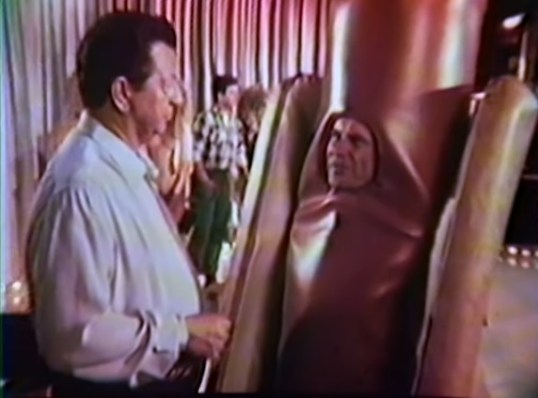
Joe Pesci, who was so strong in the pilot, spends most of this episode looking more than a little annoyed so I’m going to guess that he may not have been happy with the show’s new direction. About the only time Pesci seems to be having fun is when Rocky is hired to play a hot dog in a commercial. The director of the commercial is played by Donald O’Connor and yes, Pesci does wear a hot dog costume.
Joe Pesci getting dressed up like a hot dog pretty much saved this episode as the mystery itself was fairly bland and Robert Reed never really felt like a worthy opponent to Rocky. Hopefully, next week’s episode will be a bit of an improvement …. or, at least, let’s hope the show finds another excuse to put Joe Pesci in a hot dog costume.
Welcome to Retro Television Reviews, a new feature where we review some of our favorite and least favorite shows of the past! On Fridays, I will be reviewing Half Nelson, which ran on NBC from March to May of 1985. Almost all nine of the show’s episodes can be found on YouTube!
The year was 1985 and actor/singer Joe Pesci was at an interesting place in his film career.
In 1980, Joe Pesci was nominated for Best Supporting Actor for his performance as Robert De Niro’s brother in Raging Bull. Raging Bull was Pesci’s second film and he earned critical acclaim for his performance as the second most angry member of the LaMotta family. In the years immediately following his first Oscar nomination, Pesci went on to play character roles in a handful of other films, including Dear Mr. Wonderful, Easy Money,Once Upon A Time In America, and Eureka. While no one could deny Pesci’s talent or his unique screen presence, it was also obvious that Hollywood wasn’t quite sure what to do with him. While Pesci was apparently high on everyone’s list when it came to playing gangsters with hair-trigger tempers, no one was willing to give Pesci a starring role.
Fortunately, television always has room for an Oscar nominee and, in 1985, Half Nelson came calling. Created by veteran television producers Glen A. Larson and Lou Shaw, Half Nelson was a detective show. Joe Pesci starred as Rocky Nelson, a tough New York cop who relocated to Los Angeles to pursue his acting career. While waiting for his big break, Rocky worked for Beverly Hills Security and lived in Dean Martin’s guest room. And when I say that Rocky was living in Dean Martin’s guest house, what I mean is that Dean Martin actually appeared on the show, playing himself.
NBC liked the idea enough to air the pilot film and then schedule the show as a mid-season replacement. Audiences were a bit less interested in the show and Half Nelson was canceled after only 8 weeks. Pesci went on to win an Oscar for Goodfellas and he never starred in another television show. Half Nelson would probably be forgotten if not for the fact that someone recently came across the opening credits on YouTube. When shared on Twitter, this video went viral as “the most 80s thing” ever created.
After I watched that video, I knew I simply had to review Half Nelson as soon as I finished up The Brady Bunch Hour. Fortunately, almost all of the episodes have been uploaded to YouTube so, for the next few weeks, I’ll be taking a look at HalfNelson, starring Joe Pesci!
Episodes 1 & 2 “The Pilot”
(Dir by Bruce Bilson, originally aired on March 24th, 1985)
Half Nelson begins in New York City, with NYPD’s finest, Detective Rocky Nelson (Joe Pesci), disguising himself as a waiter and sneaking into a mafia-owned restaurant. After punching out two guards, Rocky enters a backroom and discovers a group of guys with a lot of heroin. Rocky arrests them and becomes a hero. As Rocky explains in a voice-over, it’s the biggest drug bust in history. When Hollywood asks for the rights to the story, Rocky insists that he be allowed to audition for the lead role. Rocky quits the NYPD and heads out to Los Angeles. Rocky’s going to be a star!
And, at first, it seems like Rocky’s dream might actually come true. The film’s director (played by the veteran TV character actor, George Wyner) watches Rocky’s audition and announces that Rocky has the screen presence and talent of Al Pacino. Unfortunately, Rocky is also only 5’3. “You’re too short to play Rocky Nelson,” the director explains.
“But I am Rocky Nelson!” Rocky exclaims.
Despite the fact that Rocky’s telling the truth, it doesn’t matter. A tall British actor is cast in the film. As a dejected Rocky leaves the audition, he’s approached by a security guard who offers Rocky a job with Beverly Hills Patrol, a private security firm. Rocky’s skeptical until the security guard mentions that Rocky will get to live in Dean Martin’s guest house.
We jump forward six months. Rocky is now a trusted employee of Beverly Hills Patrol. When he’s not working as a bodyguard, he’s auditioning for roles. At the office, his boss is Chester (Fred Williamson) and the office manager is Annie O’Hara (Victoria Jackson). Chester is cool and all-business. Annie is flighty and has an obvious crush on Rocky. She also gives Rocky a pit bull named Hunk. Hunk is very loyal but also very quick to attack anyone who isn’t Rocky. I don’t know if a show could get away with a comic relief pit bull today but whatever. Hunk is a cute dog with a ferocious bark.
In just six months, Rocky has become surprisingly well-known in L.A. Some of that might be because he lives with Dean Martin. Martin appears in three scenes of the pilot and, to be honest, he definitely looks and sounds a bit worse for wear. Half Nelson was Dean’s final acting role. (He died ten years after the show was canceled.) But even though Dean was clearly not in the best shape when he appeared in the pilot, his natural charisma still shines through and there’s a lot of pleasure to be found in his scenes with Joe Pesci. For one thing, Pesci himself seems to be genuinely excited about acting opposite Martin.
Along with becoming friends with Dean Martin, Rocky has also befriended Parsons (George Kennedy), a Los Angeles police chief who is eager for Rocky to quit the Beverly Hills Patrol and to join the LAPD. Rocky turns down the offer, however. Rocky is done with police work. He’s going to be a star!
Of course, he’ll also find time to solve some crimes along the way.
For instance, in the pilot, Rocky investigates the death of his best friend and co-worker, Jerry (Nicholas Surovy). Parsons insists that all the evidence shows that Jerry murdered his girlfriend, Monika (Morgan Brittany), and then shot himself. However, Rocky doesn’t think Jerry would do something like that. When Jerry’s father (veteran screen actor Rory Calhoun) asks Rocky to find the people who killed his son, Rocky doesn’t have to be asked twice.
It turns out that Jerry and Monika were taking money from a tabloid magazine publisher (Terry Kiser). They had a video tape that would have been very embarrassing to some prominent Angelinos, including a businessman (Rod Taylor), a restauranter (Tony Curtis), a general (Mills Watson), an astronaut (Gary Lockwood), and a television executive (Bernie Kopell). Rocky assumes that the people on the tape ordered the murders but then he learns that, while the general did send two government agents to find the tape, he also made clear that no one was supposed to be killed. Instead, someone else who wanted the tapes committed the murders on his own.
Searching for the killer means that Rocky will have to assume many disguises and show off his acting skills. As an actor, he’s able to wander into the local movie studio and not only raid their wardrobe department but also borrow their cars. Over the course of the film, Rocky disguses himself as both a cowboy and a traffic cop. He also drives a Ferrari, a Cadillac, a jeep, a motorcycle, and KITT, the talking car from Knight Rider. (KITT, unfortunately, does not talk in Half Nelson.) On the one hand, the use of disguises is a little bit silly because Joe Pesci is always going to be Joe Pesci regardless of what costume he is wearing. The pilot’s silliest scene involves Rocky dressed up like a cop to confront two men who have been following him. Somehow, they fail to pick up on the fact that the 5’3 cop with the New York accent is the same 5’3 New Yorker who they’ve been tailing for the last few days. And yet, it’s one of those things that’s so ludicrous that you can’t help but think that the show was showing a bit of self-awareness and commenting on just how ludicrous most television shows tend to be.
Eventually, Rocky figures out that the killer is …. SPOILER ALERT …. Parsons! That’s right. The same police chief who kept offering Rocky a job with the LAPD turned out to be the murderer for whom Rocky was looking. What’s interesting is that, after realizing that Parsons is the killers, Rocky doesn’t arrest Parsons or attack him or do any of the other things that a typical TV detective might. And Parsons doesn’t try to flee or fight. Instead, the two men take a leisurely drive and talk about life, morality, and regret. Parsons talks about how he was once an honest cop but Los Angeles corrupted him. Rocky expresses some sympathy and says that he hates that he discovered that Parsons was the murderer. It’s a well-acted and surprisingly well-written scene. When Rocky asks Parsons about the murders, Parsons replies, “I had to empty my gun, just to drown out their screams.” (Yikes!) Parsons lets Rocky out of the car and tells him, “Don’t let them get to you, kid.” Parsons then drives the car over a cliff as Roberta and Chester (who have been tailing Parsons) run up to Rocky.
“Hard to believe that a man like that would kill himself!” Roberta says.
“That’s just the funeral,” Rocky replies as Parsons car explodes, “He died a long time ago.”
Wow, that’s dark! Fortunately, the mood is lightened during the show’s final scene, in which Rocky’s pit bull attacks boxer Larry Holmes.
The pilot for Half Nelson was nicely done. It set up the series and it gave us an introduction to the characters, which is exactly what a pilot is supposed to do. The cast showed off their chemistry and the final scene between Parsons and Rocky indicated that the show had the potential to be something more than just another mid-80s detective show. The pilot’s greatest strength, not surprisingly, was Joe Pesci. Pesci has played so many mobsters and crooked lawyers that it’s easy to forget what a likable actor he can be. The pilot featured Pesci at his most amiable and it also gave him a chance to show off his comedic timing. All-in-all, the pilot was a success and I could understand why NBC would have ordered more episodes after watching it.
But what about the series? Would the series live up to the promise of the pilot or would it just become another generic detective show? We’ll find out over the next 8 weeks!
In this episode of HBO’s horror anthology, Tales From The Crypt, Joe Pesci plays a con artist who tries to swindle twin sisters, just to discover that the sisters have a secret of their own. Pesci is at his best here, poking fun at his own screen persona while playing a character who discovers that he’s not quite as clever as he thought he was.
The episode originally aired on August 26th, 1992.
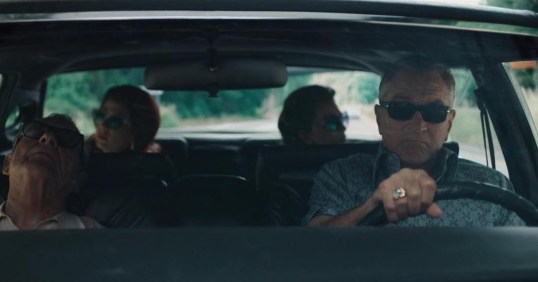
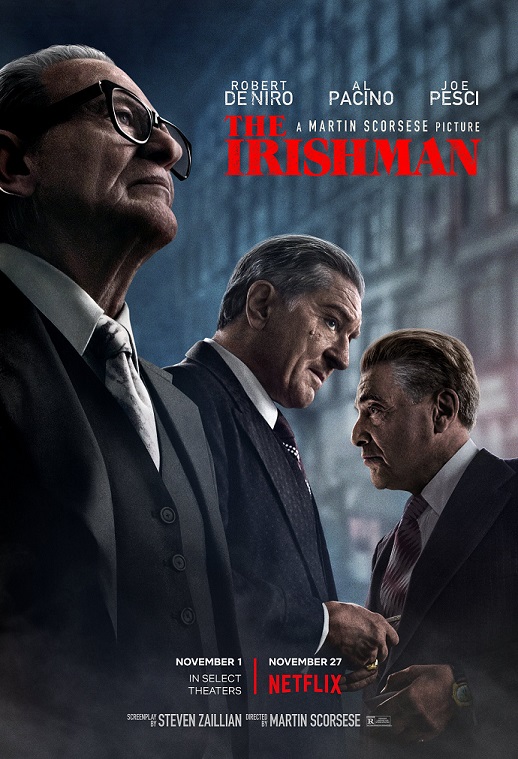
Released by Netflix in 2019 and clocking in at close to 4 hours, the Martin Scorsese-directed Best Picture nominee, The Irishman, is a film about many different things.
At its simplest, it’s a film about a very old man named Frank Shearan (played by Robert De Niro). Frank is an Irish-American from Philadelphia. Frank is a veteran of World War II and a former truck driver who was briefly a fairly important figure in the Teamsters union. He did a few years in prison. At the start of the film, though, he’s just another elderly man living in a retirement community. All of his friends are dead. His wife passed away years ago. His children never comes to visit. In fact, the only people interested in talking to Frank are the FBI but Frank doesn’t have much to say to them. That’s not to say that Frank isn’t talkative. For the first time in his life, he wants to talk to people but there’s no one left to talk to. The only people who listen are those who are required to do so. A nurse politely nods along as as he tells her about his old friend Jimmy Hoffa. (She’s never heard of him.) A priest listens to the story of Frank’s life and offers him absolution. At times, Frank looks straight at Scorsese’s camera and appears to be talking straight to the audience. Frank has a lot of interesting stories but who knows how truthful he’s being or if his memory can be trusted.
The Irishman, though, is not just the story of Frank. It is also a secret history of America during the latter half of the 20th Century. Frank may look old and harmless in that nursing home but, to hear him tell it, he was once acquainted with some of the most powerful men in America. He went from executing Italian POWs during World War II to executing hits for the Mafia in post-war America. Along the way, he became close to crime bosses like Skinny Razor (Bobby Cannavale), Angelo Bruno (Harvey Keitel) and Russell Bufalino (Joe Pesci), men who may not have been household names but who still wielded a lot of power. These are men who, Frank flatly states, fixed the presidential election of 1960 and who later quite possibly killed the man they had elected president. Frank also became a close associate of Jimmy Hoffa (Al Pacino), the labor leader who was reputed to have mob connections and who disappeared in 1975.
The Irishman is also a tribute to the modern gangster film, featuring role for nearly every living actor associated with the genre. De Niro, Pacino, Pesci, Keitel, Bobby Cannavale, Domenick Lombardozzi, Gary Basaraba, they’ve all played their share of gangsters in films and television show that were both good and bad. Having them all appear in one film together serves to remind the viewer of just how much of America’s popular entertainment has revolved around stories of organized crime. Even as the old school Mafia has declined as a real-world power, it’s become a permanent part of pop culture. Everyone loves a gangster, except for the people who actually have to deal with them on a daily basis.
Not surprisingly, considering the stars and the director, it’s a film full of smart, detailed performances. When the film was originally released, Pacino and Pesci got the lion’s share of the praise and they certainly deserved it. Pacino gets the best lines and brings some unexpected wit to his performance as Jimmy Hoffa. Pesci, meanwhile, finally gets to play a gangster who is not psychotic and shows that he can be just as compelling when he’s not raising his voice as when he is. Still, some of my favorite performances came from actors who one wouldn’t necessarily associate with a Scorsese gangster film. I liked the nervous humor that Ray Romano brought to the role of a corrupt union lawyer. I liked the seething resentment that Stephen Graham brought to the role of Jimmy Hoffa’s main rival in the union. (The scene where Graham and Pacino argue over who is more owed an apology for all of their past disagreements is both funny and, due to the people involved, somewhat frightening.) Jesse Plemons is poignantly dumb in his brief role as Hoffa’s stepson. Louis Cancelmi doesn’t get a lot of screen time but he steals every scene in which he appears as a paranoid hitman. (Cancelmi plays a character named Sally Bugs, proving that not everyone in the Mafia gets a cool nickname.)
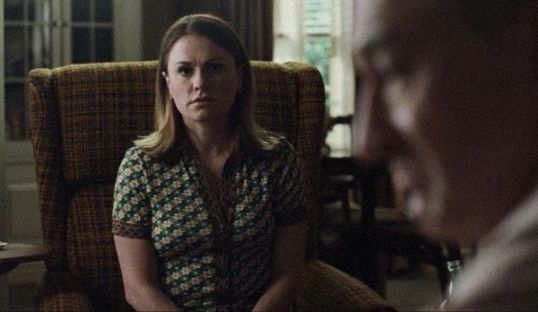
And then there’s Anna Paquin, who provides the film with its moral center. When the film was first released, many Twitter critics complained that Paquin, who played Frank’s daughter Peggy, only a had a handful of lines. It was one of the stupidest controversies of 2019, which is saying something when you consider how much time Film Twitter devotes to generating stupid controversies. Peggy doesn’t say much because she’s decided that she doesn’t want to be a part of her father’s life. From the moment that she first sees Frank beating up a store owner, Peggy knows that her father and his associates are violent men. She not only fears them but she resents the damage that Frank does to not only her family but to the families as other as well. The only one of her father’s associates who she likes is Jimmy Hoffa, because Hoffa cares about helping others. When Hoffa disappears, Peggy makes a decision to disappear from Frank’s life and Paquin’s withering stare says more than any lengthy monologue could. Peggy doesn’t say much because she knows that her words would be wasted on a man who she knows is a liar. The scene where she silently walks away from her now elderly father tells us everything we need to know about the emotional consequences of the life that Frank has chosen to live. Regardless of how many lines she did or didn’t have, Paquin gave one of the best performances of 2019.
Famously (or, depending on which critics you read, infamously), de-aging technology was used so that De Niro, Pacino, Pesci, and Keitel could play both the younger and the older version of their characters. At first, it can be a bit jarring. The de-aging works fine with Pesci and Keitel, both of whom are already supposed to be middle-aged when they first meet Frank. (Admittedly, Keitel only has a few minutes of screen time.) With De Niro and Pacino, it’s a bit less successful. Even when they’re playing younger versions of themselves, De Niro and Pacino still move and stand like old men. Fortunately, in the case of Pacino, his natural movie star charisma wins out over his obvious age. In the end, we believe that he’s Hoffa because we want to believe that all of our important historical figures were as interesting and entertaining as Al Pacino is in The Irishman.
And yet, ultimately, even the awkward de-aging works to the film’s advantage because it reminds us that we’re not necessarily seeing what happened. Instead, we’re seeing what Frank says happened. We’re seeing his memories, or at least what he claims to remember. It makes sense that, when Frank thinks about himself as a young truck driver in 1956, he would picture himself not as he was but instead as just a slightly less weathered version of who he would eventually become. Throughout the film, there are hints that Frank’s memory should not be trusted. Some of his stories are incredibly detailed while others — like when he transports weapons for the failed invasion of the Bay of Pigs — are a bit more vaguely presented. Is Frank lying or is he misremembering or are we just expecting too much detail from a man who is now essentially waiting to die? The film leaves that up for us to determine.
The Irishman is Scorsese at his most reflective. Compared to Goodfellas and Casino, The Irishman is certainly one of Scorsese’s less “flashy” films. But, on repeat viewings, it becomes cleat that The Irishman is the perfect conclusion to the gangster trilogy that began with Goodfellas and continued with Casino. All three of these films deal with someone who rises up the ranks in the mob while remaining, as a result of their ethnicity, an outsider. (Henry Hill and Frank Shearan are both Irish. Ace Rothstein was Jewish.) All three of them are briefly on top of the world and all three of them are left wondering how they’re going to continue their lives after their days at the top are over. In Goodfellas, Henry Hill makes no secret of his disgust at having to live in the bland anonymity of the suburbs. In Casino, Ace Rothstein ends the film with a mournful acceptance the fact that he will never return to his beloved Vegas. (“And that’s that.”) In The Irishman, Frank finally realizes that he has comes to the end of it all, alone and with nothing but death in his future. All three of them made their decisions and, in the end, all three of them are left to deal with the consequences. The trilogy goes from Henry’s anger to Ace’s depression to Frank’s acceptance.
It may seem strange to describe a film like The Irishman as being underrated, seeing as how it was nominated for 10 Oscars and got a Criterion release in record time. And yet, when the film first came out, there was a vague sense of disappointment to found in even some of the positive reviews. It was a Scorsese film that was so eagerly awaited and arrived with so much hype that there was no way it could live up to some of the expectations that had been set for it. (And, of course, there’s also a whole set of people who were predestined to dislike the film precisely because it was a Scorsese film and it was so anticipated.) It’s a long film and, while Netflix should be praised for allowing Scorsese the freedom to make his epic, it’s also not a film that should be viewed in bits and pieces on a tiny screen. The Irishman is a film that should be watched in one sitting and it’s definitely a film that most viewers should watch more than once. It takes more than one viewing to truly grasp the the world that Scorsese has recreated.
The Irishman was nominated for Best Picture. It lost to a worthy competitor, Parasite. Still, regardless of who took him the Oscars, The Irishman is a film that will live forever.
Years ago, I wrote a post called What Could Have Been: The Godfather, in which I discussed all of the actors and the directors who were considered for The Godfather.
It remains one of the most widely viewed posts that we’ve ever had on this site. I guess that shouldn’t be a surprise. People love The Godfather and they love playing What If? Would The Godfather still have been a classic if it had been directed by Otto Preminger with George C. Scott, Michael Parks, Burt Reynolds, and Robert Vaughn in the lead roles? Hmmm …. probably not. But, in theory, it could have happened. All of them were considered at one point or another.
However, in the end, it was Francis Ford Coppola who directed The Godfather and it was Marlon Brando, Al Pacino, James Cann, and Robert Duvall who brought the Corleone family to life. The Godfather, as everyone knows, was a huge hit and it went on to win the Oscar for Best Picture of the year. As the film ended with the future of the Corleone family still up in the air, there was obviously room for a sequel.
When Paramount Pictures first approached Coppola about writing and directing a sequel, he turned them down. He said he was done with The Godfather and didn’t see any way that he could improve on the story. It’s debatable whether or not Coppola truly felt like this or if he was just holding out for more money. It is known that Coppola did suggest to Paramount a possible director for Part II and that director’s name was Martin Scorsese.
What would Martin Scorsese’s The Godfather Part II have looked like? It’s an intriguing thought. At the time, Scorsese was best-known for Mean Streets and it’s probable that Scorsese’s film would have been a bit messier and grittier than Coppola’s version. If Coppola made films about the upper echelons of the Mafia, Scorsese’s interest would probably have been with the soldiers carrying out Michael’s orders. While Scorsese has certainly proven that he can handle a huge productions today, he was considerably younger and much more inexperienced in the early 70s. To be honest, it’s easy to imagine Scorsese’s Godfather Part II being critically and commercially rejected because it would have been so different from Coppola’s. A failure of that magnitude would have set back Scorsese’s career and perhaps even led to him returning to Roger Corman’s production company. As such, it’s for probably for the best that Coppola did eventually agree to shoot the sequel, on the condition that Coppola be given creative control and Paramount exec Robert Evans not be allowed on the set. While Coppola was busy with Godfather Part II, Scorsese was proving his versatility with Alice Doesn’t Live Her Anymore.
After Coppola was signed to direct, the next best question was whether or not Marlon Brando would return to play the role of Vito Corleone. The film’s flashback structure would ensure that Vito would remain an important character, despite his death in the first film. Coppola reportedly considered offering Brando the chance to play the younger version of Vito but he changed his mind after he saw Robert De Niro in Scorsese’s Mean Streets. Still, it was felt that Brando might be willing to show up in a cameo during the film’s final flashback, in which Michael tells his family that he’s enlisted in the army. Frustrated by Brando’s refusal to commit to doing the cameo, Coppola told him to show up on the day of shooting if he wanted to do the film. When Brando didn’t show, the Don’s lines were instead rewritten and given to Tom Hagen. It’s hard not to feel that this worked to the film’s advantage. A last-minute appearance by Brando would have thrown off the film’s delicate balance and probably would have devalued De Niro’s own performance as the younger version of the character.
Brando wasn’t the only member of the original cast who was hesitant about returning. Al Pacino held out for more money, which makes sense since he was literally the only cast member who could not, in some way, be replaced. Richard Castellano, who played Clemenza in the first film, however learned that he that hard way that he was not quite as indispensable as Al Pacino. In Part II, Clemenza was originally meant to have a large role in both the flashbacks and the present-day scenes. However, when Castellano demanded more money and the right to rewrite his own lines, the older Clemenza was written out the film and replaced by the character of Frankie Petangeli (played by Michael V. Gazzo).
It’s impossible to find fault with Gazzo’s performance but it’s still hard not to regret that Castellano didn’t return. Imagine how even more poignant the film’s final moments would have been if it had been the previously loyal Clemenza who nearly betrayed Michael as opposed to Frankie? Indeed, even after the part was rewritten, many of Frankie’s lines deliberately harken back to things that Clemenza said and did during the first film. Because Clemenza is a very prominent character during the film’s flashbacks, his absence in the “modern” scenes is all the more obvious.
When the role of Young Clemenza was cast, it was still believed that Richard Castellano would be appearing in that film. One of the main reasons that Bruno Kirby was selected for the role of Young Clemenza was because Kirby had previously played Castellano’s son in a television show. Also considered for the role was Joe Pesci, who was working as a singer and a comedian at the time. (His partner in his comedy act was Frank Vincnet.) If Pesci had been cast, he would not only have made his film debut in The Godfather Part II but the film also would have been his first pairing with Robert De Niro. (Interestingly enough, Frank Sivero — who played Pesci and De Niro’s henchman, Frankie Carbone, in Goodfellas, also had a small role in Godfather Part II, playing Vito’s friend, Genco.)
As for the film’s other new major character, there were several interesting names mentioned for the role of gangster Hyman Roth. Director Sam Fuller read for the role and Coppola also considered Elia Kazan. Perhaps the most intriguing name mentioned as a possible Roth was that of James Cagney. (Cagney, however, made it clear that he was content to remain retired.) In the end, the role was offered to Al Pacino’s former acting teacher, Lee Strasberg. Like Gazzo, Strasberg made his film debut in The Godfather Part II and, like Gazzo, he received his only Oscar nomination as a result.
The legendary character actor Timothy Carey (who was courted to play Luca Brasi in the first film) met with Coppola to discuss playing Don Fanucci, the gangster who is assassinated by Vito. A favorite of Stanley Kubrick’s, Carey reportedly lost the role when he pulled out a gun in the middle of the meeting.
Originally, the film was supposed to end in the mid-60s, with a now teenage Anthony Corleone telling Michael that he wanted nothing to do with him because he knew that Michael had Fredo murdered. (That famous scene of Michael bowing his head was originally supposed to be in response to Anthony walking out on him as opposed to the sound of Fredo being shot.) Cast in the role of teenage Anthony was actor Robby Benson so perhaps it’s for the best that the scene was ultimately not included in the film.
Some of the smaller roles in Part II were played by actors who were considered for larger roles in the first film. The young Tessio was played by John Aprea, who was also considered for the role of Michael. Peter Donat, who played the lead Senate counsel in Part II, was considered for the role of Tom Hagen. The rather tall Carmine Caridi, who played Camine Rosato in Part II, was originally cast as Sonny until it was discovered that he towered over everyone else in the cast. And, of course, Robert De Niro famously read for the role of Sonny and was cast in the small role of Paule Gatto before he left The Godfather to replace Al Pacino in The Gang Who Couldn’t Shoot Straight. (Of course, the whole reason that Pacino left The Gang Who Couldn’t Shoot Straight was so he could play the role of Michael in The Godfather. In the end, it all worked out for the best.)
Finally, former teen idol Troy Donahue played Connie Corleone’s second husband, Merle Johnson. Merle Johnson was Troy Donahue’s real name.
Personally, I think The Godfather Part II is one of the few films that can be described as perfect. Still, it’s always fun to play what if.
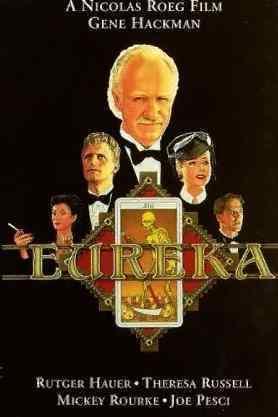
In this 1983 film, Gene Hackman plays Jack McCann, a prospector who is determined to either get rich or freeze to death as he wanders around Alaska in the 1920s. When he’s not having sex and philosophical discussions with the local witch, Freida (Helena Kallianiotes), Jack desperately searches for gold. Jack is convinced that gold is all that he needs to be happy, though Freida counsels him that it’s also important to pursue more Earthly delights. Everywhere Jack looks, he sees people dying in the snow. In fact, Jack nearly dies himself until he stumbles across a mountain full of gold. As gold dust pours down on him, he celebrates while having flashbacks to Freida writhing in ecstasy. It’s just that type of film. When Jack tells Freida about his claim, he asks what’s going to happen next. Freida tells him that it’s both the end and the beginning. Once again, it’s just that type of film.
At this point, Eureka jumps ahead 20 years. The year is 1945. World War II is coming to an end. Jack is no longer freezing and starving to death in Alaska. Now, he is one of the world’s richest men. He even owns his own island in the Caribbean. Jack has a huge house, a beautiful view of the ocean, and all the money in the world. One could even say that his life has become an exclusive beach vacation, an eternal Spring Break, if you will. And yet, even with all of his money, Jack has fallen victim to ennui. He was happier when he was poor and starving and seeking warmth from Freida. Now, he’s got an alcoholic wife (Jane LaPotaire) and his daughter, Tracy (Theresa Russell), is in love with a dissolute aristocrat named Claude (Rutger Hauer), to whom Jack takes an instant dislike. Claude claims that Jack has stolen his wealth from the Earth. Claude is the type who eats gold and then promises to return it to Jack as soon as he can. That’s something that actually happens. It’s kind of silly but Rutger Hauer is such a charmer that he nearly pulls it off.
Claude and Tracy aren’t the only thing that Jack has to worry about. An American gangster named Mayakofsky (Joe Pesci) wants to take over Jack’s island so that he can build a casino on it. However, despite the best efforts of Mayakofsky’s attorney (Mickey Rourke), Jack is still not willing to sell. When hitman Joe Spinell shows up outside the estate, are Jack’s days of ennui numbered?
Of course, they are! That’s not really a spoiler. Eureka is (loosely) based on the real-life murder of Sir Harry Oakes, an American-born prospector who was thought to be one of the world’s richest men when he was brutally murdered in the 40s. Jack is, of course, a stand-in for Oakes while Mayakofsky is based on Meyer Lansky, the mobster who many people suspect ordered Oakes’s murder. Lansky was never charged with the crime. Instead, Oakes’s son-in-law, Count Alfred de Marigny, was arrested and charged with the crime. After a trial that made international news and was described as being “the trial of the century,” de Marigny was acquitted and the murder of Harry Oakes remains officially unsolved.
It’s an interesting story and it seems like one that should perfectly translate to film. Surprisingly though, Eureka doesn’t really do it justice. The film was directed by one of the masters of cinematic surrealism, Nicolas Roeg. Roeg, of course, is probably best remembered for films like Performance, Don’t Look Now, Walkabout, and The Man Who Fell To Earth. As one might expect from a Roeg film, Eureka is visually stunning but, as a director, Roeg can’t seem to decide whether he’s more interested in Jack’s ennui or in all the soapy melodrama surrounding Jack’s murder. As such, neither element of the film gets explored with any particular depth and the resulting film, while always watchable, still feels rather shallow and disjointed. (After taking forever to reach the end of Jack’s story, Eureka then turns into a rather conventional courtroom drama. Theresa Russell does get to utter the immortal line, “Did you cut off my father’s head?” but otherwise, it’s kind of dry.) The film is at its strongest when Jack is just a prospector in Alaska. The harsh landscape and the crazed dialogue is perfect for Roeg’s dream-like style. Once the film moves to the Caribbean, it suffers the same fate that befell Jack when he become rich. It loses its spark.
That said, Eureka has its moments. Any film that features Gene Hackman, Mickey Rourke, Joe Pesci, Rutger Hauer, and Joe Spinell all acting opposite of each other is going to have at least a few scenes worth watching. I particularly liked Pesci’s surprisingly subdued performance as Mayakofsky. With everyone else in the film chewing every piece of scenery on the island, Pesci wisely underplays and is all the more menacing for it. While Eureka ultimately doesn’t add up too much, it’s worth watching at least once for the cast.
Finally, my personal theory is that Harry Oakes’s murder had more to do with the Duke and Duchess of Windsor (formerly King Edward VIII and Wallis Simpson) than it did with Meyer Lansky. (The Duke was the governor of the Bahamas at the time of Oakes’s murder.) But that’s just my opinion.
Below is a different list. This is what I wish would win tonight. These are the nominees that I would vote for if I was a member of the Academy. Now, to be honest, there were a lot of films and performances that I liked that were not nominated. My favorite film of 2019 was The Souvenir. It received zero Oscar nominations. But, for the purposes of this list, I’ve limited my choice to the actual nominees.
So, here we go:
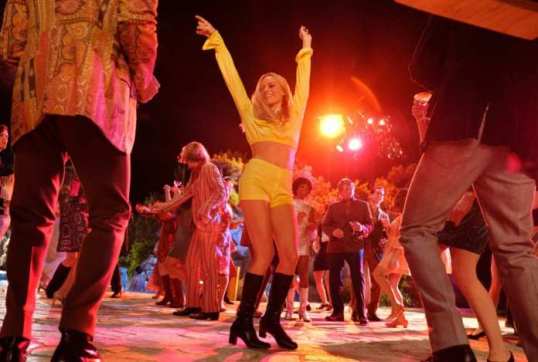
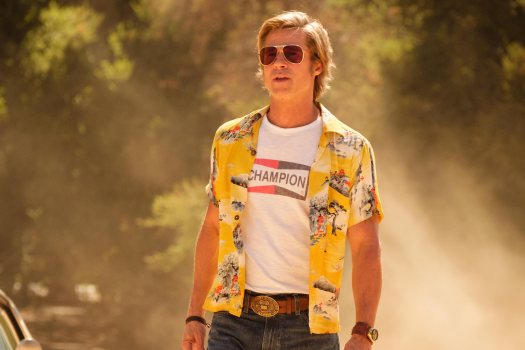
Best Picture — 1) Once Upon A Time In Hollywood 2) The Irishman 3) Parasite 4) 1917 5) Joker 6) JoJo Rabbit 7) Little Women 8) Ford v Ferrari 9) Marriage Story
Best Director — Quentin Tarantino, Once Upon A Time In Hollywood
Best Actor — Joaquin Phoenix, Joker
Best Actress — Scarlett Johansson, Marriage Story
Best Supporting Actor — Joe Pesci, The Irishman
Best Supporting Actress — Laura Dern, Marriage Story
Best Original Screenplay — Parasite
Best Adapted Screenplay — The Irishman
Best Animated Feature Film — I Lost My Body
Best International Feature Film — Parasite
Best Documentary Feature Film — The Edge of Democracy (which I didn’t even really like, it’s just the only nominee that I’ve seen)
Best Documentary Short Subject — Learning to Skateboard in a War Zone (If you’re a girl)
Best Live Action Short Subject — Nefta Football Club (that’s for you, Jason)
Best Animated Short Film — Sister
Best Original Score — 1917
Best Original Song — I Can’t Let You Throw Yourself Away from Toy Story 4
Best Sound Editing — 1917
Best Sound Mixing — 1917
Best Production Design — Parasite
Best Cinematography — The Lighthouse
Best Makeup and Hairstyling — Judy
Best Costume Design — Once Upon A Time In Hollywood





 Through the Shattered Lens