The Puerto Rico Critics Association has announced its picks for the best of 2025. The winners are listed in bold.
Best Picture
Frankenstein
It Was Just an Accident (RUNNER UP TIE)
One Battle After Another (RUNNER UP TIE)
The Secret Agent
Sentimental Value
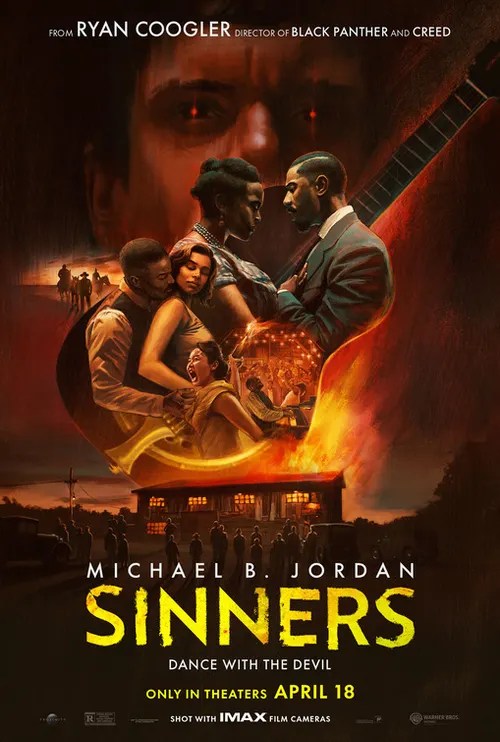
Sinners (WINNER)
Sirāt
The Testament of Ann Lee
Best Puerto Rican Film
@-Amor
Esta Isla (WINNER)
Parto (RUNNER UP)
Best Director
Ryan Coogler – Sinners (WINNER)
Mona Fastvold – The Testament of Ann Lee
Oliver Laxe – Sirāt (RUNNER UP TIE)
Jafar Panahi – It Was Just an Accident (RUNNER UP TIE)
Paul Thomas Anderson – One Battle After Another
Chloé Zhao – Hamnet
Best Actor
Timothée Chalamet – Marty Supreme (WINNER)
Leonardo DiCaprio – One Battle After Another
Joel Edgerton – Train Dreams
Ethan Hawke – Blue Moon
Michael B. Jordan – Sinners
Wagner Moura – The Secret Agent (RUNNER UP)
Best Actress
Jessie Buckley – Hamnet
Rose Byrne – If I Had Legs I’d Kick You (RUNNER UP)
Chase Infiniti – One Battle After Another
Jennifer Lawrence – Die, My Love
Renate Reinsve – Sentimental Value
Amanda Seyfried – The Testament of Ann Lee (WINNER)
Best Supporting Actor
Jacob Elordi – Frankenstein (RUNNER UP)
Delroy Lindo – Sinners
Paul Mescal – Hamnet
Josh O’Connor – Wake Up Dead Man: A Knives Out Mystery
Stellan Skarsgård – Sentimental Value
Benicio del Toro – One Battle After Another (WINNER)
Best Supporting Actress
Jodie Comer – 28 Years Later (RUNNER UP)
Mia Goth – Frankenstein
Inga Ibsdotter Lilleaas – Sentimental Value
Amy Madigan – Weapons (WINNER)
Wunmi Mosaku – Sinners
Teyana Taylor – One Battle After Another
Best Adapted Screenplay
28 Years Later
Frankenstein
Hamnet
No Other Choice
One Battle After Another (WINNER)
Wake Up Dead Man: A Knives Out Mystery (RUNNER UP)
Best Original Screenplay
It Was Just an Accident
The Secret Agent
Sentimental Value (RUNNER UP)
Sinners (WINNER)
Sorry, Baby
Weapons
Best Animated Feature
Arco (RUNNER UP)
Chainsaw Man – The Movie: Reze Arc
Elio
KPop Demon Hunters (WINNER)
Little Amélie or the Character of Rain
Zootopia 2
Best Documentary
2000 Meters to Andriivka
Cover-Up
Megadoc
My Undesirable Friends: Part I – Last Air in Moscow
The Perfect Neighbor (WINNER)
Put Your Soul on Your Hand and Walk (RUNNER UP)
Best International Feature
It Was Just an Accident (RUNNER UP TIE)
No Other Choice
Resurrection
The Secret Agent (RUNNER UP TIE)
Sentimental Value (WINNER)
Sirāt
Best Action Film
From the World of John Wick: Ballerina
F1 (RUNNER UP)
Mission: Impossible – The Final Reckoning
One Battle After Another (WINNER)
Predator: Badlands
Superman
Best Horror Film
28 Years Later
Final Destination: Bloodlines
Frankenstein
Sinners (WINNER)
The Ugly Stepsister
Weapons (RUNNER UP)
Best Comedy/Musical
If I Had Legs I’d Kick You
The Naked Gun (RUNNER UP)
No Other Choice
One Battle After Another
The Testament of Ann Lee
Wake Up Dead Man: A Knives Out Mystery (WINNER)
Best First Film
The Chronology of Water (RUNNER UP TIE)
Eephus
Lurker
Sorry, Baby (WINNER)
The Ugly Stepsister (RUNNER UP TIE)
Urchin
Best Cinematography
28 Years Later
Frankenstein
One Battle After Another
Sinners (WINNER)
Sirāt
Train Dreams (RUNNER UP)
Best Costume Design
Frankenstein (WINNER)
Hamnet
The Phoenician Scheme
Sinners
The Testament of Ann Lee
Wicked: For Good (RUNNER UP)
Best Film Editing
It Was Just an Accident
No Other Choice (RUNNER UP)
One Battle After Another (WINNER)
The Secret Agent
Sinners
Sirāt
Best Hair & Makeup
28 Years Later (RUNNER UP)
Frankenstein (WINNER)
Sinners
The Testament of Ann Lee
The Ugly Stepsister
Wicked: For Good
Best Production Design
Frankenstein (WINNER)
Hamnet
Sentimental Value (RUNNER UP TIE)
Sinners
The Testament of Ann Lee
Wicked: For Good (RUNNER UP TIE)
Best Original Score
Frankenstein
Hamnet
One Battle After Another
Sinners (WINNER)
Sirāt (RUNNER UP)
The Testament of Ann Lee
Best Original Song
Lowly – 28 Years Later
The Risk – A Big Bold Beautiful Journey
Golden – KPop Demon Hunters (WINNER)
I Lied to You – Sinners (RUNNER UP)
Clothed by the Sun – The Testament of Ann Lee
Train Dreams – Train Dreams
Best Sound
Avatar: Fire and Ash
F1 (WINNER)
Frankenstein
One Battle After Another
Sinners
Sirāt (RUNNER UP)
Best Visual Effects
28 Years Later
Avatar: Fire and Ash (WINNER)
F1
Frankenstein (RUNNER UP)
Sinners
Tron: Ares
The Raúl Juliá Award
This honorary award recognizes Puerto Rican actors whose work has elevated our culture in the film industry. This year’s recipient is Benicio del Toro for her outstanding performance in One Battle After Another and The Phoenician Scheme.
Rising Star Award
Honoring emerging talent with remarkable potential, the 2024 award goes to Chase Infiniti for her stellar performances in One Battle After Another.
Cinematographic Resistance Award
This award celebrates filmmakers who use cinema to challenge power structures and highlight urgent social issues. The 2024 honorees are Jafar Panahi for their impactful film It Was Just an Accident.


 Through the Shattered Lens