The Unnominated #12: Tombstone (dir by George Pan Cosmatos)


Though the Academy of Motion Picture Arts and Sciences claim that the Oscars honor the best of the year, we all know that there are always worthy films and performances that end up getting overlooked.  Sometimes, it’s because the competition too fierce.  Sometimes, it’s because the film itself was too controversial.  Often, it’s just a case of a film’s quality not being fully recognized until years after its initial released.  This series of reviews takes a look at the films and performances that should have been nominated but were, for whatever reason, overlooked.  These are the Unnominated.

I have come around on Tombstone.

The first time I watched this 1993 film, I was a bit confused as to why so many of my friends (especially my male friends) worshipped the film.  To me, it was a bit too messy for its own good, an overlong film that told a familiar story and which featured so many characters that it was difficult for me to keep track of them all.  Perhaps because everyone I knew loved the film so much, I felt the need to play contrarian and pick out every flaw I could find.

And I still think those flaws are there.  The film had a troubled production, with original director Kevin Jarre falling behind in shooting and getting replaced by George Pan Cosmatos, a director who didn’t have any real interest in the material and whose all-business approach rubbed many members of the cast the wrong way.  Kurt Russell took over production of the film, directing the actors and reportedly paring down the sprawling script to emphasize the relationship between Russell’s Wyatt Earp and Val Kilmer’s Doc Holliday.  On the one hand, this led to a lot of characters who really didn’t seem to have much to do in the finished film.  Jason Priestley’s bookish deputy comes to mind.  On the other hand, Russell was right.

The film’s heart really is found in the friendship between Wyatt and Doc.  It doesn’t matter that, in real life, Wyatt Earp was hardly as upstanding as portrayed by Kurt Russell.  It also doesn’t matter that the real-life Doc Holliday was perhaps not as poetic as portrayed by Val Kilmer.  Today, if you ask someone to picture Wyatt Earp, they’re probably going to picture Kurt Russell with a mustache, a cowboy hat, and a rifle.  And if you ask them to picture Doc Holliday, they’re going to picture Val Kilmer, sweating due to tuberculosis but still managing to enjoy life.  Did Doc Holliday every say, “I’ll be your huckleberry,” before gunning someone down?  He might as well have.  That’s how he’s remembered in the popular imagination.  And it’s due to the performances of Russell and Kilmer that I’ve come around to eventually liking this big and flawed western. With each subsequent viewing, I’ve come to appreciate how Russell and Kilmer managed to create fully realized characters while still remaining true to the Western genre.  If Wyatt Earp initially fought for the law, Doc Holliday fought for friendship.  Kilmer is not only believable as a confident gunslinger who has no fear of walking into a dangerous situation.  He’s also believable as someone who puts his personal loyalty above all else.  He’s the type of friend that everyone would want to have.

That said, I do have to mention that there are a lot of talented people in the cast, many of whom are no longer with us but who will live forever as a result their appearance here.  When Powers Boothe delivered the line, “Well …. bye,” he had no way of knowing that he would eventually become a meme.  Boothe is no longer with us, I’m sad to say.  But he’ll live forever as long as people need a pithy way to respond to someone announcing that they’re leaving social media forever.  Charlton Heston appears briefly as a rancher and he links this 90s western with the westerns of the past.  Robert Mitchum provides the narration and it just feels right.  The large ensemble cast can be difficult to keep track of and even a little distracting but there’s no way I can’t appreciate a film that manages to bring together not just Russell, Kilmer, Boothe, Heston, and Mitchum but also Sam Elliott, Bill Paxton, Michael Biehn, Michael Rooker, Billy Bob Thornton, Frank Stallone, Terry O’Quinn, and even Billy Zane!  The female roles are a bit underwritten.  Dana Delaney is miscast but Joanna Pacula feels exactly right as Doc Holliday’s lover.

But ultimately, this film really does belong to Val Kilmer.  When I heard the sad news that he had passed away last night, I thought of two films.  I thought of Top Gun and then I thought of Tombstone.  Iceman probably wouldn’t have had much use for Doc Holliday.  And Doc Holliday would have resented Iceman’s attitude.  But Val Kilmer — that brilliant actor who was so underappreciated until he fell ill — brought both of them to brilliant life.  In the documentary Val, Kilmer attends a showing of Tombstone and you can say he much he loves the sound of audience cheering whenever Doc Holliday showed up onscreen.

Tombstone was a flawed film and 1993 was a strong year.  But it’s a shame that Val Kilmer was never once nominated for an Oscar.  Tombstone may not have been a Best Picture contender but, in a year when Tommy Lee Jones won the Oscar for Best Supporting Actor for his role in the similarly flawed The Fugitive, it seems a shame that Kilmer’s Doc Holliday was overlooked.
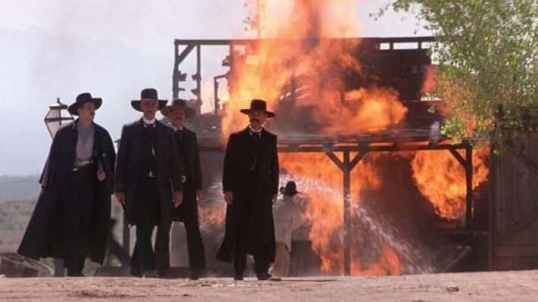
Tombstone (1993, dir by George Pan Cosmatos (and Kurt Russell), DP: William Fraker)

Previous entries in The Unnominated:

  1. Auto Focus 
  2. Star 80
  3. Monty Python and The Holy Grail
  4. Johnny Got His Gun
  5. Saint Jack
  6. Office Space
  7. Play Misty For Me
  8. The Long Riders
  9. Mean Streets
  10. The Long Goodbye
  11. The General

Music Video of the Day: Boys by Britney Spears (2002, dir by Dave Meyers)


Today’s music video of the day is here to help you to get in the mood to party on New Year’s Eve.  If you don’t have plans to visit a castle and dance with Austin Powers and Taye Diggs, why don’t you?

Enjoy and here’s hoping for happiness (for Britney and all of us) in 2024!

Homicide: The Movie (2001, directed by Jean de Segoznac)


Before The Wire, there was Homicide: Life On The Streets.

Based on a non-fiction book by the Baltimore Sun’s David Simon, Homicide: Life on the Streets aired for seven seasons on NBC, from 1993 to 1999. For five of those seasons, Homicide was the best show on television. Produced and occasionally directed by Barry Levinson, Homicide was filmed on location in Baltimore and it followed a group of Homicide detectives as they went about their job. From the start, the show had a strong and diverse ensemble, made up of actors like Andre Braugher, Ned Beatty, Jon Polito, Melissa Leo, Kyle Secor, Clark Johnson, Richard Belzer, Daniel Baldwin, and Yaphet Kotto. When Polito’s character committed suicide at the start of the third season (in a storyline that few other shows would have had the courage to try), he was replaced in the squad by Reed Diamond.

Homicide was a show that was willing to challenge the assumptions of its audiences. The murders were not always solved. The detectives didn’t always get along.  Some of them, like Clark Johnson’s Meldrick Lewis, had such bad luck at their job that it was cause for alarm whenever they picked up the ringing phone. As played by Andre Braugher, Frank Pembleton may have been the most brilliant detective in Baltimore but his brilliance came with a price and his non-stop intensity even led to him having a stroke while interrogating a prisoner. Kyle Secor played Pembleton’s partner, Tim Bayliss.  Bayliss went from being an idealistic rookie to a mentally unstable veteran murder cop in record time, spending seven seasons obsessing on his first unsolved case. Homicide dealt with big issues and, much like its spiritual successor The Wire, it refused to offer up easy solutions.

Despite the critical acclaim and a much hyped second season appearance by Robin Williams (playing a father who was outraged to hear the detectives joking about the murder of his family), Homicide was never a ratings success. After five seasons of perennially being on the verge of cancellation, the producers of Homicide finally caved into NBC’s demands.  The storylines became more soapy and the cases went form being random and tragic to being what the detectives had previously dismissively called “stone cold whodunits.”   New detectives joined the squad and the focus shifted away from the more complex veterans. Not only did this not improve ratings but also those who had been watching the show from the start were not happy to see Pembleton and Bayliss being pushed to the side for new characters like Paul Falsone (Jon Seda) and Laura Ballard (Callie Thorne). Falsone, in particular, was so disliked that there was even an “I Hate Falsone” website. At the end of the sixth season, Andre Braugher left the show and that was the end. The seventh season limped along, with Bayliss growing increasingly unstable.  The show ended with the implication of Bayliss turning into a vigilante and resigning from the Baltimore PD. It was not a satisfying ending. Richard Belzer’s John Munch moved to New York and became a regular on Law & Order: SVU but the rest of the detectives and their fates were left in limbo.

Fortunately, on February 13th, 2000, NBC gave Homicide another chance to have a proper conclusion with Homicide: The Movie.

Homicide: The Movie opens with a montage of Baltimore at its best and its worst, a reminder that Homicide never abandoned the city that had supported it for seven years.  While other shows recreated New York or Chicago on a soundstage, Homicide was always an authentic product of Baltimore. Lt. Al Giardello (Yaphet Kotto) is now running for mayor on a platform calling for drug legalization. When Giardello is shot at a campaign stop, all of the current and former members of the Homicide Unit come together to investigate the case.   While Giardello fights for his life, Pembleton and Bayliss partner up for one final time.

Homicide: The Movie fixes the main mistake that was made by the final two seasons of the show. Though all of the detectives get their moment in the spotlight (and all true Homicide fans will be happy to see Richard Belzer and Ned Beatty acting opposite each other for one final time), the focus is firmly on Pembleton and Bayliss. It doesn’t take long for these two former detectives, both of whom left the unit for their own different reasons, to start picking up on each other’s rhythms. Soon, they’re talking, arguing, and sometimes joking as if absolutely no time has passed since they were last partnered up together. But, one thing has changed. Bayliss now has a secret and if anyone can figure it out, it will be Frank Pembleton. What will Pembleton, the moral crusader, do when he finds out that Bayliss is now a killer himself?

The movie follows the detectives as they search for clues, interview suspects, and complain about the state of the world.  However, in the best Homicide tradition, the investigation is just a launching point to investigate what it means to be right or wrong in a city as troubled as Baltimore.  In the movie’s final half, it becomes more than just a reunion movie of a show that had a small but fervent group of fans. It becomes an extended debate about guilt, morality, and what it means to take responsibility for one’s actions. The final few scenes even take on the supernatural, allowing Jon Polito and Daniel Baldwin a chance to appear in the reunion despite the previous deaths of their characters.

Despite being one the best shows in the history of television, Homicide: Life on the Streets is not currently streaming anywhere, not even on Peacock.   (Considering how many Homicide people later went on to work on both Oz and The Wire, it would seem like it should be a natural fit for HBOMax.) From what I understand, this is because of the show’s signature use of popular music would make it prohibitively expensive to pay for the streaming rights. Fortunately, every season has been released on home video.   Homicide: The Movie is on YouTube, with the music removed.  The movie’s final montage is actually more effective when viewed in complete silence.

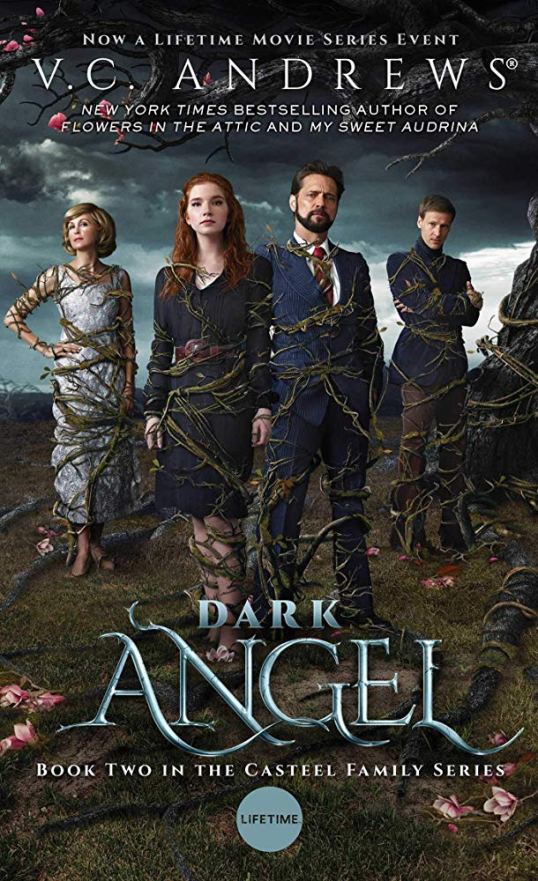
Lifetime Film Review: V.C. Andrews’ Dark Angel (dir by Paul Shapiro)


When we last saw Heaven Casteel (Annalise Basso), she was boarding a bus so that she could leave the backwoods of West Virginia and hopefully live with her mother’s wealthy family in Boston, Massachusetts.

Dark Angel picks up where Heaven left off, with Heaven arriving at stately and creepy Farthinggale Manor and discovering that the rich are just as fucked up as the poor.  She’s greeted by her stepgrandfather, Tony Tatterton (Jason Priestly), who tries to come across as being friendly but quickly reveals himself to be cold and manipulative.  She also meets her grandmother, Jillian (Kelly Rutherford).  Jillian always has a drink in her hand and worries that Heaven will leave “hill grime” around the house.  Jillian doesn’t want Heaven to stay at the house for too long but Tony manages to change her mind.  Tony tells Heaven that, in order to thank him for his generosity, she’ll basically have to do everything that he says.

For instance, Tony tells Heaven that she is, under no circumstances, to enter the estate’s hedge maze.  (Rich people always have a hedge maze.)  So, of course, Heaven does just that.  She gets lost but eventually, she comes across a small house sitting in the middle of the maze.  Inside the house, a handsome man (played by Jason Cermak) carefully crafts a doll’s face.’

“Excuse me, sir,” Heaven says, “I got lost in your hedge maze!”

“You must be Heaven,” the man replies.

The man it turns out is Troy Tatterton, Tony’s younger brother.  Troy suffers from depression and he’s been exiled to the maze because Jillian can’t stand the sound of dolls be made.  Troy and Heaven soon find themselves falling in love, despite Tony’s demand that Heaven stay out of the maze.

Tony also demands that Heaven stop writing to her family but, of course, Heaven continues to try to reach out to them.  Her siblings aren’t doing quite as well as Heaven.  For instance, one sister is living in a trailer.  Her brother is working at a circus.  And her two youngest siblings are living in Washington, D.C, where they’re undoubtedly surrounded by politicians and interns.  AGCK!  It’s a fate worse than spending the rest of your life brewing moonshine in the hills.

And, while dealing with all of this, Heaven is also trying to graduate from high school and hopefully get into an Ivy League college!  She wants to study literature.  At one point, she explains that her favorite writer is Shakespeare but that she also really loves Fitzgerald.  She says that Fitzgerland “saved the best for last,” with Tender Is The Night.  It was at this point that I yelled, “HIS LAST NOVEL WAS THE LAST TYCOON!” and threw a shoe at the TV. 

Complicating matters even further is the fact that her old backwoods boyfriend, Logan (James Rittinger), is attending college in Boston.  Logan says that he doesn’t want anything to do with Heaven because he’s still angry over everything that happened during the previous movie but it’s pretty obvious that he’s still in love with her.

And then….

Well, listen — a lot happens in Dark Angel.  As opposed to Heaven, Dark Angel is full of twists and turns.  Everyone’s got a deep, dark secret and, at time, it gets a bit overwhelming trying to keep track of it all.  Then again, that’s what makes a film like this fun.  It’s just so over-the-top and implausible that you really can’t help but enjoy watching it all play out.  Every few minutes, someone else is popping up and either taunting Heaven for being from the hills or revealing that they’re actually one of her relatives.  Seriously, this is one messed up family.  The good thing is that Dark Angel seems to be aware of how silly all of the melodrama occasionally is.  The other good thing about Dark Angel is that it mostly involves rich people instead of poor people, which means that, as opposed to the first film, everyone gets to wear nice clothes.

Annalise Basso again makes all of us redheads proud in the role of Heaven but the film is really stolen by Jason Priestley, who appears to be having the time of his life playing the ambiguously evil Tony.  Kelly Rutherford is a bit underused as Jillian but she does get one good scene towards the end of the film and she makes for a stylish drunk.

The sequel to Dark Angel, Fallen Hearts, will air on Lifetime later tonight and hopefully, I’ll have a review of it up on Sunday.  And if I don’t, I guess you’ll just have to spank me like a character in a V.C. Andrews novel….

Val’s Movie Roundup #12: Hallmark Edition


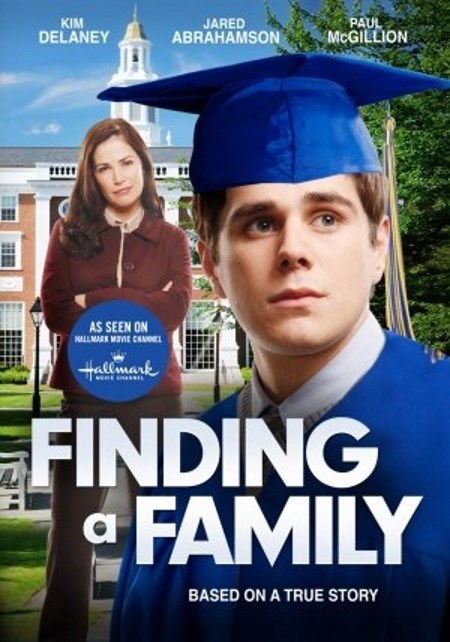
finding-a-family.7565

Finding A Family (2011) – This movie is about a kid named Alex (Jared Abrahamson) whose mother has serious mental problems. She has a great degree, but her mental problems absolutely cripple her. As you can guess, they create major issues for her son who has to live with her day after day. Ultimately, Alex has himself emancipated. He wants to go to Harvard and works hard in school to make this work while not forgetting his mother. Then he decides that he really does want a family and starts writing to people asking them to take him in. It’s a nice story that really only had one issue and a minor personal complaint.

The issue is that I have some experience in this area and the depth to which his mother’s mental problems should affect him, don’t. Don’t get me wrong, it’s not like The Blind Side (2009) where they gutted and flattened two amazing people, but it’s noticeable. The other thing is a minor complaint. In the old days you did receive a letter from colleges you applied to telling you whether you were accepted or not. However, I applied in 2006 and we was never sent a letter. You checked their website to find out whether you were accepted or not. This film was made in 2011. I know it’s more dramatic and familiar to go with the letter thing, but it’s time to move on.

You’ve seen it all before, but if you want to see again, then check this one out.

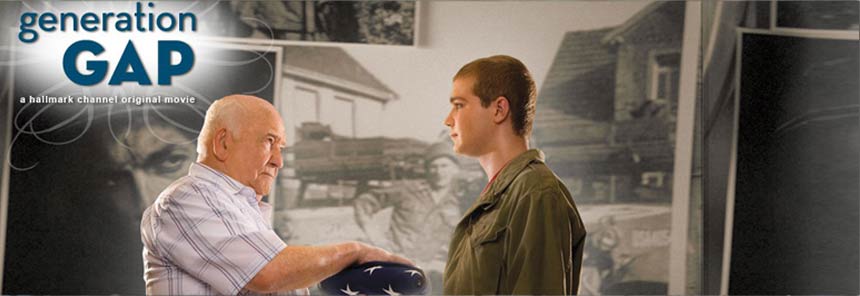
banner_gengap

Generation Gap (2008) – There really isn’t much to talk about here. You’ve seen this plot a million times before. We meet Dylan (Alex Black) who is just too much for his mother because of a few scenes of rebellion. His Mom, played by Catherine Mary Stewart, calls up her father played by Ed Asner and dumps Dylan on him. After a few scenes of Asner acting like a dick, which he seems to think he is entitled to do because he’s old, both him and the kid calm down. The film does three things: 1. Asner and the kid come to realize that despite being different ages, they both occupy the same time and place on Earth, 2. Asner hooks up with Rue McClanahan who sounds weird without her Southern accent, 3. The kid also gains a romantic interest.

The only other noteworthy things are that they age Asner by about 10 years to have his character able to have been in WWII. The other is that the kid walks in on Asner and three other guys playing Halo. Pretty funny. Remember that scene in The Wizard (1989) where Beau Bridges is supposedly playing Teenage Mutant Ninja Turtles, but we now know thanks to AVGN that he was probably playing Winter Games for the NES? Well, they actually show that Halo is what is being played and I wouldn’t be surprised if Asner and the others were actually playing.

This one is cliched, but okay.

MV5BMTgyODAzNjUzOV5BMl5BanBnXkFtZTcwMDY3MzgxMw@@._V1_SY317_CR3,0,214,317_AL_

Expecting A Miracle (2009) – This is a weird movie. It seems to be nice and have it’s heart in the right place, but there are some odd bits. It introduces us to a couple played by Jason Priestley and Teri Polo who have been trying to get pregnant. It seems that the couple has tried IVF several times, but there doesn’t seem to be any mention of sex whatsoever. Did they try that?

To try and calm down, they take a vacation and wind up in a small Mexican town that seems to consist only of a courtyard. Cheech Marin is here along with some other characters who conveniently speak English. There is a kid who has something wrong with his leg and is convinced that a special ceremony is going to fix it. This is the kind of place populated with people who are like the magic negro/eccentric characters that turn your life around simply by coming into contact with them.

Polo is told a line that basically says God decides whether you will have kids or not. Okay, but does that mean God also controls the adoption process which is brought up numerous times during this film. Maybe it’s the film’s way of saying that God sometimes is trying to tell you that it’s not necessary to pass on your genetic material, but instead to save a poor kid who needs a family and people who will love them.

The rest is harmless and kind of nice, but then comes the ending. The kid in the village is miraculously cured of a condition with his leg during a ceremony. The couple talk about adopting him. At the very end, they are at home working through the adoption process, talking about how much paperwork there is to adopt a kid. The wife goes to the bathroom and takes a pregnancy test. She’s pregnant! Then there are the credits. Did they have sex? Was it IVF again? Did they still follow through and adopt the kid? No answers.

It’s nice and everything, but I can’t honestly recommend it. Just a little too weird and relies on people’s assumptions about the nobility and happiness about simple rural communities.

Murder101_IfWishesWereHorses_0001.jpg

Murder 101: If Wishes Were Horses (2007) – Another Hallmark murder mystery, but just like Murder 101, this was good. As always, I’m terrible about following the plots of these movies. It all begins when a horse is kidnapped. Once again, Dick Van Dyke is brought in to help with the case. Barry Van Dyke is back again as well, but this time Shane Van Dyke joins in on the fun. This is your standard murder mystery movie in the vein of Diagnosis Murder, Murder, She Wrote, and Mystery Woman as opposed to recent movies like Wedding Planner Mystery and Garage Sale Mystery. This one’s fine.