Lisa Marie Reviews An Oscar Nominee: Apocalypse Now (dir by Francis Ford Coppola)


1979’s Apocalypse Now reimagines the Vietnam War as pop art.

Jim Morrison sings The End in the background as slow-motion helicopters pass in front of a lush jungle.  The jungle erupts into flame while in a dingy hotel room, Captain Benjamin Willard (Martin Sheen) gets drunks, practices his karate moves, and smashes a mirror before collapsing to the floor in tears.  The next morning, the hung-over and bandaged Willard ends up at a U.S. military base where he has a nice lunch with Lt. General Corman (G.D. Spradlin) and Col. Lucas (Harrison Ford) and a nearly silent man wearing an undone tie.  Willard is asked if it’s true that he assassinated an enemy colonel.  Willard replies that he did not and that the operation was classified, proving that he can both lie and follow military protocol.  Willard is told that a Col. Walter Kurtz (Marlon Brando) has gone rogue and his mission is to go into Cambodia and terminate his command with “extreme” prejudice.  It’s a famous scene that features G.D. Spradlin delivering a brilliant monologue about good and evil and yet it’s often missed that Willard is getting his orders from Roger Corman and George Lucas.

(Roger Corman was the mentor of director Francis Ford Coppola while the pre-Star Wars George Lucas was Coppola’s business partner.  Indeed, Apocalypse Now was originally somewhat improbably planned to be a George Lucas film.)

Up the river, Willard heads on a patrol boat that is populated with characters who could have come out of an old World War II service drama.  Chief (Albert Hall) is tough and no-nonsense.  Lance (Sam Bottoms) is the goofy comic relief who likes to surf.  Clean (Laurence Fishburne) is the kid who is obviously doomed from the minute we first see him.  Chef (Fredric Forrest) is the overage, tightly-wound soldier who just wants to find mangoes in the jungle and who worries that, if he dies in a bad place, his soul won’t be able to find Heaven.  The Rolling Stones are heard on the boat’s radio.  Soldiers on the other patrol boats moon the boat and toss incendiary devices on the roof.  It’s like a frat prank war in the middle of a war.

Colonel Bill Kilgore (Robert Duvall) is a badass calvary officer whose helicopter raids are legendary amongst the enemy and a dedicated surfer who tries to turn every night into the equivalent of an AIP Beach Party film.  He’s a brilliant warrior who speaks with Malibu accent (“Charlie don’t surf!”) and who doesn’t flinch when a bomb goes off near him.  “I love the smell a napalm in the morning,” he says and, for a few moments, you really wish the film would just abandon Willard so we could spend more time with Kilgore.  “Some day this war is going to end,” he says with a reassuring nod, showing a non-neurotic attitude that is the opposite of Kurtz’s.  Willard says that he could tell Kilgore was going to get through the war without even a scratch and it’s true.  Kilgore doesn’t try to rationalize or understand things.  He just accepts the reality and adjusts.  He’s a true surfer.

The film grows progressively more surreal the closer the boat heads up the river and gets closer to Cambodia.  A USO show turns violent as soldiers go crazy at the sight of the Playboy Bunnies, dressed in denim outfits and cowboy hats and twirling cap guns like the love interest in a John Wayne western.  A visit to a bridge that is built every day and blown up every night is a neon-lit, beautiful nightmare.  Who’s the commanding officer?  No one knows and no one cares.

The closer Willard gets to Kurtz, the stranger the world gets.  Fog covers the jungles.  A tiger leaps out of nowhere.  Dennis Hopper shows up as a photojournalist who rambles as if Billy from Easy Rider headed over to Vietnam instead of going to Mardi Gras.  Scott Glenn stands silently in front of a temple, surrounded by dead bodies that feel as if they could have been brought over from an Italian cannibal film.  Kurtz, when he shows up, is an overweight, bald behemoth who talks in riddles and who hardly seem to be the fearsome warrior that he’s been described as being.  “The horror, the horror,” he says at one point in one of the few moments that links Apocalypse Now to its inspiration, Joseph Conrad’s Heart of Darkness.

Directed by near-communist Francis Ford Coppola and written by the unapologetically right-wing John Milius, Apocalypse Now is actually less about the reality of Vietnam and more about how the images of the war shaped pop culture the world over.  It’s a reminder that Vietnam was known for being the first television war and that counterculture was not just made up of dropouts but also of writers, actors, and directors.  Kurtz may say that Willard’s been sent by grocery store clerks but actually, he’s been sent by the B-movie producers who first employed and mentored the directors and the actors who would eventually become the mainstays of the New Hollywood.  The film subverts many classic war film cliches but, at the same time, it stays true to others.  Clean dying while listening to a tape recording of his mother telling him not to get shot and to come home safe is the type of manipulative, heart-tugging moment that could have appeared in any number of World War II-era films.  And while Coppola has always said the film was meant to be anti-war, Col. Kilgore remains the most compelling character.  Most viewers would probably happily ride along with Kilgore while he flies over Vietnam and plays Wagner.  The striking images of Vietnam — the jungle, the explosions, the helicopters flying through the air — stay in the mind far more than the piles of dead bodies that appear in the background.

It’s a big, messy, and ultimately overwhelming film and, while watching it, it’s hard not to get the feeling that Coppola wasn’t totally sure what he was really trying to say.  It’s a glorious mess, full of stunning visuals, haunting music, and perhaps the best performance of Robert Duvall’s legendary career.  The film is too touched with genius to not be watchable but how one reacts overall to the film will probably depend on which version you see.

The original version, which was released in 1979 and was nominated for Best Picture, is relentless with its emphasis on getting up the river and finding Kurtz.  Willard obsesses on Kurtz and really doesn’t have much to do with the other people on the boat.  It gives the story some much-needed narrative momentum but it also makes Kurtz into such a legendary badass that it’s hard not to be disappointed when Willard actually meets him.  You’re left to wonder how, if Kurtz has been living in the jungle and fighting a brutal and never-ending guerilla war against the communists, he’s managed to gain so much weight.  Brando, who reportedly showed up on set unprepared and spent days improvising dialogue, gives a bizarre performance and it’s hard to view the Kurtz we meet as being the Kurtz we’ve heard about.  As strong as the film is, it’s hard not to be let down by who Kurtz ultimately turns out to be.

In 2001 and 2019, Coppola released two more versions of the film, Redux and The Final Cut.  These versions re-inserted a good deal of footage that was edited out of the original cut.  Most of that footage deals with Willard dealing with the crew on the boat and it’s easy to see why it was cut.  The scenes of Willard bonding with the crew feel out of character for both Willard and the rest of the crew.  A scene where Willard arranges for Clean, Lance, and Chef to spend time with the Playboy bunnies seems to go on forever and features some truly unfortunate acting.  Worst of all, Redux totally ruins Kilgore’s “I love the smell of napalm in the morning” monologue by having Willard suddenly steal his surf board.  Again, it’s out of character for Willard and it actually feels a bit disrespectful to Duvall’s performance to suddenly turn Kilgore into a buffoon.

But then there are moments that do work.  I actually like the lengthy French Plantation scene.  By the time Willard, Lance, and Chef stumble into the plantation,  the journey upriver has gotten so surreal that it makes a strange sort of sense that they would run into a large French family arguing politics while a clown tries to keep everyone distracted.  The new versions of the film are undeniably disjointed but they also shift the focus off of finding Kurtz and place it more on Willard discovering how weird things are getting in Vietnam.  As such, it’s less of a disappointment when Kurtz actually shows up.  Much as with the French Plantation scene, the journey has become so weird that Kurtz being overweight and pretentious feels somehow appropriate.

What all the versions of the film have in common is that they’re all essentially a neon-lit dream of pop cultural horror.  Is Apocalypse Now a horror film?  Critic Kim Newman argued that it owed a lot to the genre.  Certainly, that’s the case when Willard reaches the temple and finds himself surrounded by corpses and and detached heads.  Even before that, though, there are elements of horror.  The enemy is always unseen in the jungle and, when they attack, they do so quickly and without mercy.  In a scene that could almost have come from a Herzog film, the boat is attacked with toy arrows until suddenly, out of nowhere, someone throws a very real spear.  Until he’s revealed, Kurtz is a ghostly figure and Willard is the witch hunter, sent to root him out of his lair and set his followers on fire.  If the post-60s American horror genre was shaped by the images coming out of Vietnam then Apocalypse Now definitely deserves to be considered, at the very least, horror-adjacent.

Apocalypse Now was controversial when it was released.  (It’s troubled production had been the talk of Hollywood for years before Coppola finally finished his film.)  It was nominated for Best Picture but lost to the far more conventional Kramer vs Kramer.  Robert Duvall was the film’s sole acting nominee but he lost the award to Melvyn Douglas’s turn in Being There.  Douglas was very good in Being There and I imagine giving him the Oscar was also seen as a way of honoring his entire career.  That said, Duvall’s performance was amazing.  In his relatively brief screen time, Duvall somehow managed to take over and ground one of the most unruly films ever made.  The Oscar definitely should have gone to him.

As for the film itself, all three versions, flaws and all, are classics.  It’s a film that proves that genius can be found in even the messiest of productions.

Brad reviews 10 TO MIDNIGHT (1983), starring Charles Bronson!


Charles Bronson is Leo Kessler, a veteran detective who’s seen it all and has grown sick of a system of justice that he thinks favors criminals over their victims. When girls start getting murdered, he immediately suspects the arrogant Warren Stacy, played by Gene Davis in the best role of his career. When Kessler and his partner Paul McCann (Andrew Stevens) start putting the pressure on Stacy, the killer responds by going after Kessler’s daughter Laurie (Lisa Eilbacher). Needless to say, our hero will do anything to stop the madman, ANYTHING!

10 TO MIDNIGHT is a special movie in my house because it’s my wife’s favorite Charles Bronson film, even when she didn’t have any overall appreciation for Bronson as an actor. Luckily for her, she had me to introduce her to the rest of the iconic actor’s voluminous catalog of movies. I saw 10 TO MIDNIGHT myself when I was pretty young, probably 13 or so. I remember being scared that first night after I watched the movie when I was trying to go to sleep. My wife and I watched it today on my old VHS tape that I’ve owned going back to the late 1980’s. 

There are several elements that elevate 10 TO MIDNIGHT above the average cop / slasher thrillers of the 1980’s. First, it’s Charles Bronson in the lead role. Bronson has such a strong presence on screen that his presence alone elevates almost any material. He looks great in the film, and the role gives him some good opportunities, as both a mentor to the young cop, and even more importantly, as a dad who wants to do better for his daughter. It’s a solid role that seems to fit Bronson like a glove. Second, we know from the very beginning of the movie that Warren Stacy is in fact the killer. We also know that the law seems to be working in his favor. And because of that, we’re on Kessler’s side as he goes to extreme lengths to stop his reign of terror. Finally, the script and director J. Lee Thompson go all in on the sex and violence. Examples include Stacy killing his often naked victims while he himself is in the nude. There is much talk in the film about items of a sexual nature and Stacy even has a sexual release device that almost has to be seen to be believed. It definitely adds a decadent and voyeuristic feel to the proceedings. And I haven’t even mentioned yet that it has one of the very best endings of any Bronson film, second only to THE MECHANIC, in my humble opinion.

I highly recommend 10 TO MIDNIGHT!

For a more detailed review of 10 TO MIDNIGHT, check out Lisa’s review from a couple of years back below:

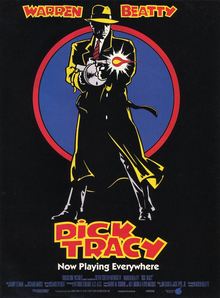
Dick Tracy (1990, directed by Warren Beatty)


The year is 1937 and “Big Boy” Caprice (Al Pacino) and his gang of flamboyant and often disfigured criminals are trying to take over the rackets.  Standing in their way is ace detective Dick Tracy (Warren Beatty), the yellow trench-wearing defender of the law.  Tracy is not only looking to take down Caprice but he and Tess Trueheart (Glenne Headly) are currently the guardians of The Kid (Charlie Korsmo), a young street kid who witnessed one of Caprice’s worst crimes.  Tracy’s investigation leads him through a rogue’s gallery of criminals and also involves Breathless Mahoney (Madonna), who has witnessed many of Caprice’s crimes but who also wants to steal Tracy’s heart from Tess.

Based on the long-running comic strip, Dick Tracy was a labor of love on the part of Warren Beatty.  Not only starring but also directing, Tracy made a film that stayed true to the look and the feel of the original comic strip (the film’s visual palette was limited to just seven colors) while also including an all-star cast the featured Madonna is an attempt to appeal to a younger audience who had probably never even heard of Dick Tracy.  When Dick Tracy was released, the majority of the publicity centered around Madonna’s participation in the film and the fact that she was dating Beatty at the time.  Madonna is actually probably the weakest element of the film.  More of a personality than an actress, Madonna is always Madonna no matter who she is playing and, in a film full of famous actors managing to be convincing as the members of Dick Tracy’s rogue gallery, Madonna feels out of place.  Michelle Pfeiffer would have been the ideal Breathless Mahoney.

It doesn’t matter, though, because the rest of the film is great.  It’s one of the few comic book films of the 90s to really hold up, mostly due to Beatty’s obvious enthusiasm for the material and the performances of everyone in the supporting cast who was not named Madonna.  Al Pacino received an Oscar nomination for playing Big Boy Caprice but equally good are Dustin Hoffman as Mumbles, William Forsythe as Flaptop, R.G. Armstong as Pruneface, and Henry Silva as Influence.  These actors all create memorable characters, even while acting under a ton of very convincing makeup.  I also liked Dick Van Dyke as the corrupt District Attorney.  Beatty knew audience would be shocked to see Van Dyke not playing a hero and both he and Van Dyke play it up for all its worth.  Beatty embraces the comic strip’s campiness while still remaining respectful to its style and the combination of Danny Elfman’s music and Stephen Sondheim’s songs provide just the right score for Dick Tracy’s adventures.  The film can be surprisingly violent at times but the same was often said about the Dick Tracy comic strip.  It wasn’t two-way wrist radios and trips to the Moon.  Dick Tracy also dealt with the most ruthless and bloodthirsty gangsters his city had to offer.

Dick Tracy was considered to be a box office disappointment when it was originally released.  (Again, you have to wonder if Beatty overestimated how many fans Dick Tracy had in 1990.)  But it holds up well and is still more entertaining than several of the more recent comic book movies that have been released.

48 Hrs (1982, directed by Walter Hill)


48 Hrs. begins with a violent and bloody jailbreak.  The fearsome Billy Bear (Sonny Landham) helps his criminal associate, Albert Ganz (James Remar), escape from a chain gang and kills several guards in the process.  Billy and Ganz then head to San Francisco, where they start killing their former associates while searching for Luther (David Patrick Kelly).  Another bloody shootout leaves several detectives dead and SFPD Detective Jack Cates (Nick Nolte) looking for revenge.

That’s not the way you might expect one of the most famous comedies of the 80s to begin.  It’s not until Jack arranges for another associate of of Ganz’s to be released from prison for 48 hours that anything humorous happens in the film.  However, because Reggie Hammond is played by Eddie Murphy, 48 Hrs. quickly becomes very funny.

Murphy was appearing on Saturday Night Live when he was cast in 48 Hrs, in a role that was written with Richard Pryor in mind.  One of the first things that Murphy requested was that the character’s name be changed from Willie Biggs to Reggie Hammond.  Murphy made the role his own and watching him, it’s hard to believe that he was only 21 and also that 48 Hrs was his first film.  Murphy performs with the confidence of a natural movie star.  He’s good in the film’s most famous scene, where he pretends to be a cop and talks down an entire bar full of rednecks.  (I can’t repeat his most famous line but everyone knows it.)  But Murphy is even better in the scenes where he’s just reacting to Nolte’s slovenly cop.

The comedy in 48 Hrs comes from the mismatched partnership and initially hostile chemistry of Jack Cates and Reggie Hammond.  Cates has a job to do while Reggie, understandably, wants to enjoy as much freedom as he can before he gets sent back to prison.  The humor is so effective because it’s almost entirely character-based.  There are no gags but there are two well-written characters with differing ways of looking at the world who have to learn how to work with each other.  The two of them start out disliking and distrusting each other but ultimately become best friends, even if Jack does punch Reggie and Reggie does keep trying to steal Jack’s lighter.  Because this is a Walter Hill movie, there’s still a lot of action.  Nolte and Murphy may make you laugh but there’s nothing funny about full-on psycho performances of James Remar and Sonny Landham.  48 Hrs. not only allows Murphy and Nolte to show off their comedic ability but it also allows them to be true action heroes.

Popular with critics and audiences, 48 Hrs. was the most commercially successful film of 1982.  It set the standard for most buddy-cop movies to this day and it introduced the world to Eddie Murphy.

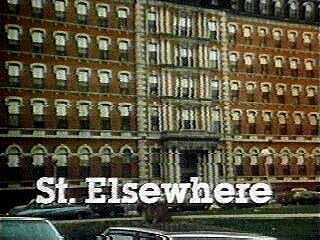
Retro Television Review: St. Elsewhere 1.6 “Legionnaires: Part One”


Welcome to Retro Television Reviews, a feature where we review some of our favorite and least favorite shows of the past! On Fridays, I will be reviewing St. Elsewhere, a medical show which ran on NBC from 1982 to 1988.  The show can be found on Hulu!

This week, Peter White continues to disappoint everyone.

Episode 1.6 “Legionnaires: Part One”

(Dir by Thomas Carter, originally aired on December 7th, 1982)

Dr. Peter White (Terence Knox) is perhaps the most incompetent doctor at St. Eligius.  Over the course of the first few episodes, we have watched as he’s taken advantage of his fellow residents, been rude to patients, misdiagnosed obvious medical conditions, and complained nonstop about how difficult his life is.  Dr. White is struggling to balance the punishing schedule of being a resident with also being a husband and the father to a young girl and a newborn.  He’s in over his head.

What’s interesting is that, despite all of his problems, he’s not a particularly sympathetic character and I don’t think he’s meant to be.  He’s never going to be a good doctor and he doesn’t have the courage to admit it.  Instead of finding a career for which he’s suited, he insists on being a doctor and risking the life of anyone unlucky enough to be his patient.  What makes Dr. White an especially disturbing character is that there are probably a lot of doctors in the real world who are just like him.  They’re overwhelmed and they make stupid mistakes.  I get overwhelmed sometimes too, as does everyone.  And, like everyone, I occasionally make mistakes.  However, my mistakes usually amount to something like missing a cringey typo that causes me to feel embarrassment until I get a chance to fix it.  A doctor’s mistake can lead to people dying.

This week, Dr. White attempts to give penicillin to a patient who is allergic.  Fortunately, Dr. Westphall is able to stop White from putting his patient into a coma.  Dr. White also manages to lose his hospital-issued pager and, when he’s told that it will cost him $300 to get a new one, he freaks out.  A chance meeting with a lawyer in the hospital cafeteria leads White to offer to sell out the hospital by recommending the lawyer to anyone willing to sue because they ended up with a doctor like Peter White.  White finally raises the money by donating his sperm.  The nurse at the sperm bank says that it’s really generous for a doctor to donate.  Not this doctor!

While Peter is screwing up his life, Dr. Westphall is dealing with what appears to be an outbreak of Legionnaire’s Disease in one of the wards.  Westphall wants to immediately shut down the ward.  Dr. Auschlander and board member H.J. Cummings (Christopher Guest — yes, that Christopher Guest) disagree.  However, after another young woman dies of what appears to be Legionnaire’s, Westphall orders the ward to be closed and the patients to be relocated.

Meanwhile, Kathy Martin broke up with Fiscus because she felt their fling was turning into a relationship and Dr. Cavanero dealt with a nurse who disliked her.  Neither one of those subplots did much for me, though Kathy is emerging as one of my favorite characters on this show.  Before breaking up with Fiscus, she goes to a funeral of a stranger just so he won’t be buried without someone there to mourn him.  She wears white to the funeral.  One doctor comments that she’s never seen Kathy wear white before.  Kathy’s a great character and deserves better than just being Fiscus’s girlfriend.

This episode was an improvement over the last episode I watched.  According to the title, it’s also only “Part One” so I imagine there will be some fallout over closing that ward next week.  We’ll see what happens.