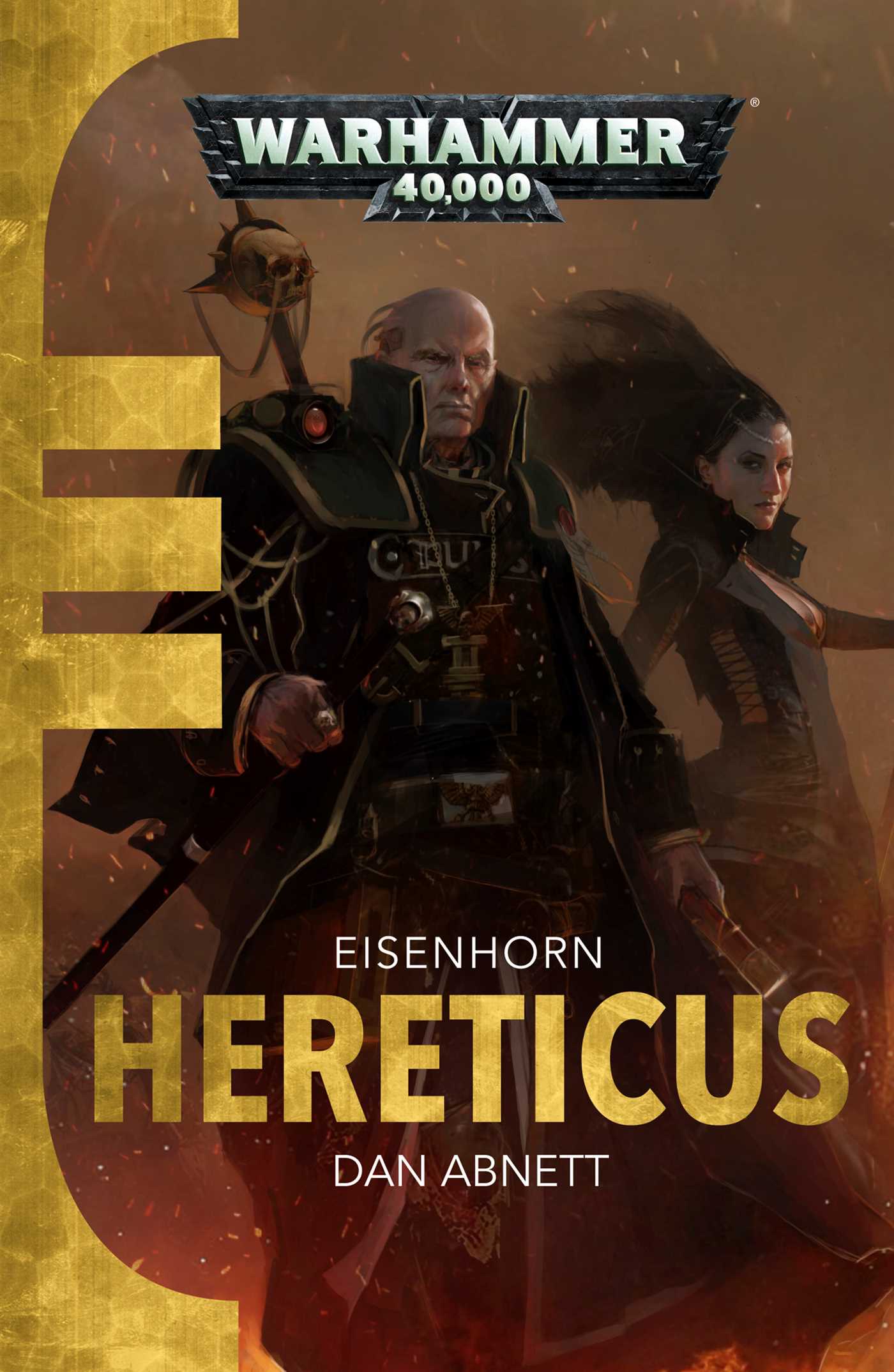
“Trust me, Eisenhorn, if I ever thought you were, I’d shoot you myself.” — Godwyn Fischig
Hereticus is a strong, satisfying, and frequently brutal conclusion to Dan Abnett’s Eisenhorn trilogy, turning the moral compromises that have been building since Xenos and Malleus into consequences that Gregor Eisenhorn can no longer evade. It is part detective story, part occult-horror thriller, part tragic character study, and it shows why the Eisenhorn books remain such a good way to begin one’s journey into the massive fictional universe that is Warhammer 40,000.
Following the more investigative structure of Xenos and the increasingly supernatural, morally uncomfortable territory of Malleus, Hereticus feels like the point where every bad decision, personal loss, old rivalry, and forbidden shortcut finally comes due. The novel does not merely ask whether Eisenhorn can stop a dangerous conspiracy. It asks whether he has already become the kind of man he once set out to hunt. That is the real engine behind the book, and Abnett handles it with the right mixture of action, melancholy, and grim inevitability.
As discussed in my review of Xenos, the first Eisenhorn novel worked so well because it introduced Warhammer 40,000 through a mystery rather than simply tossing readers into a battlefield full of Space Marines, bolters, skulls, and incomprehensible proper nouns. It let the setting reveal itself through an Inquisitor’s work: secret cults, criminal underworlds, alien dangers, Imperial bureaucracy, psychic threats, and the everyday oppression of life under the Imperium. Malleus expanded that formula into darker territory, showing Eisenhorn’s growing willingness to consider Radical methods and the dangerous temptation of using Chaos-tainted tools against Chaos itself. Hereticus brings that arc to its most painful and compelling form. The question is no longer whether Eisenhorn might someday cross a line. He has crossed several, and now the Inquisition is beginning to notice.
That setup gives the novel an unusually personal stake from the beginning. Eisenhorn has always been a complicated protagonist, but earlier books allowed him enough authority, competence, and narrative control that readers could often accept his arguments for taking extreme measures. He was an Inquisitor confronting threats most ordinary people could not understand, much less defeat. In a galaxy where daemons can possess human beings, forbidden books can destroy souls, and alien relics can doom entire worlds, it is not hard to understand why someone might conclude that conventional rules are inadequate. Hereticus does not pretend that Eisenhorn’s choices were foolish or made without cause. In fact, one of Abnett’s great strengths is making those choices feel disturbingly rational.
The trouble is that rationality can be a dangerous thing in Warhammer 40,000. Chaos does not always arrive as a screaming monster bursting through a warp gate. Sometimes it arrives as an argument: this one terrible act will save thousands of lives; this forbidden weapon can be controlled; this sacrifice is necessary; this rule is too rigid for the reality of the situation. Eisenhorn has spent years convincing himself that he is strong enough, disciplined enough, and committed enough to use dangerous methods without being consumed by them. Hereticus forces him to confront the possibility that good intentions do not erase consequences, especially in a setting where corruption is not just a moral metaphor but a literal, predatory force.
The title itself carries a lot of weight. In the wider Warhammer 40,000 setting, “Hereticus” evokes the Inquisition’s struggle against internal human heresy, and the book makes that idea painfully relevant to Eisenhorn. He is not dealing only with an external enemy, an alien menace, or a distant daemonic conspiracy. He is being judged by the institution he has served for most of his life. The Inquisition’s authority has always been one of the most fascinating parts of the Eisenhorn series. It is an organization empowered to investigate almost anyone, demand resources from almost any Imperial authority, and commit horrifying acts in the name of humanity’s survival. But even an Inquisitor has limits, at least in theory. Eisenhorn has spent much of the trilogy acting as judge, jury, and executioner. In Hereticus, he begins to understand what it feels like to be on the other side of that power.
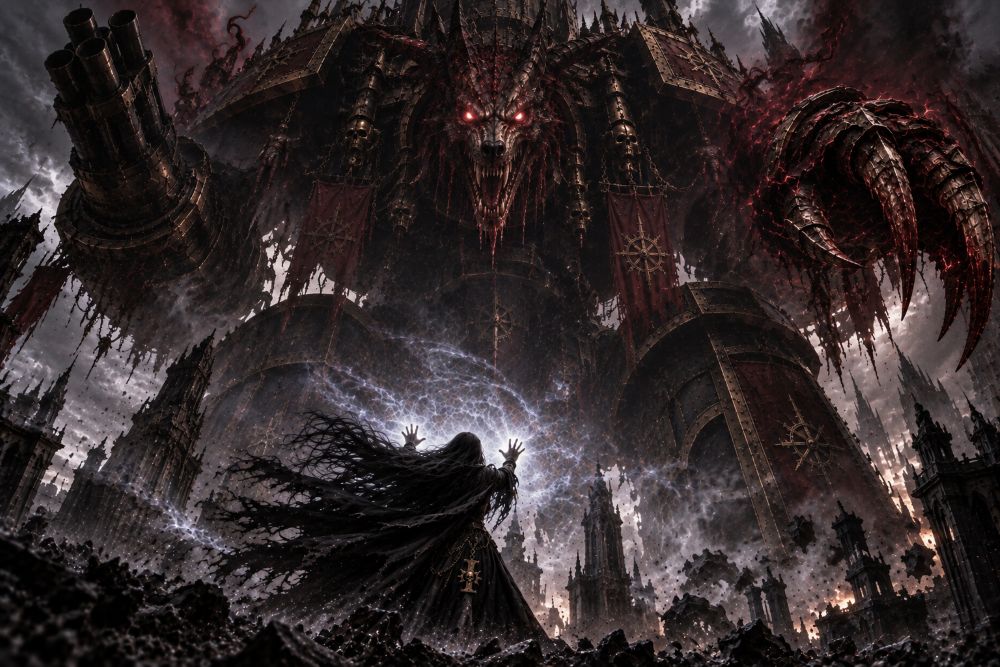
That reversal adds real tension to the story. Eisenhorn is still intelligent, resourceful, and capable of operating several moves ahead of many opponents, but he is no longer the untouchable figure who can simply arrive, announce his authority, and take control of a situation. He has enemies within the Inquisition, people who have watched his methods with growing alarm and who have every reason to believe that his use of forbidden powers is proof of Radical corruption. The Puritan-Radical conflict that was such an important undercurrent in Malleus now becomes intensely personal. Eisenhorn may still see himself as a loyal servant of humanity, but others see a man who has bound a daemonhost, embraced outlawed knowledge, and repeatedly decided that his own judgment matters more than Imperial doctrine.
The uncomfortable part is that the Puritans are not entirely wrong. This is what makes Hereticus more interesting than a simplistic “rigid establishment persecutes heroic rebel” story. Eisenhorn’s enemies can be self-righteous, politically motivated, and inflexible, but their fear of him is not baseless. He has genuinely moved beyond the boundaries that most Inquisitors would consider acceptable. He may not worship Chaos, seek personal power for its own sake, or want to destroy the Imperium, yet he has still convinced himself that he can master things that destroy other people. Abnett understands that this is how moral collapse often works: not through a single grand betrayal, but through an accumulation of exceptions.
Cherubael remains central to that idea. The daemonhost is one of the most memorable creations in the trilogy because he embodies the exact temptation Eisenhorn cannot fully reject. Cherubael is monstrous, dangerous, manipulative, and fundamentally opposed to everything the Imperium claims to defend. Yet he is also useful. He possesses knowledge and power that conventional Imperial resources simply cannot match. Every time Eisenhorn turns to him, the decision can be explained. Sometimes it may even be the only practical way to survive. But that usefulness is exactly the trap. The more valuable Cherubael becomes, the more Eisenhorn has to tell himself that he remains in control.
Abnett wisely avoids making this dynamic feel repetitive. Cherubael is not just a magical superweapon that appears whenever the plot needs a burst of daemonic violence. His presence changes the moral temperature of every scene around him. He is a reminder that Eisenhorn has become willing to use what he once would have condemned without hesitation. Even if Eisenhorn’s goals remain noble, the means he employs have become harder and harder to separate from the evil he fights. In a less effective novel, this might come across as obvious or heavy-handed. Here, it works because Abnett has spent two previous books earning the reader’s investment in Eisenhorn’s perspective. Readers understand why he thinks he needs Cherubael. That makes it much more troubling when he reaches for him again.
The novel also benefits from the emotional history Abnett has built around Eisenhorn’s inner circle. Aemos, Bequin, and the other figures who have survived Eisenhorn’s investigations are not merely backup characters brought in for action scenes or exposition. They represent the human cost of Eisenhorn’s life and work. He may be one of the most powerful individuals in the Imperium, but power has not spared him loneliness, grief, or guilt. If anything, it has magnified them. His authority means that people depend on him, follow him into danger, and sometimes die because of choices he makes from behind the badge of the Inquisition.
Bequin remains particularly important because she has always complicated Eisenhorn’s tendency to turn everything into duty, strategy, and necessity. Her relationship with him is not treated like an easy romantic subplot, and that is one of the trilogy’s better decisions. In the grim, paranoid, endlessly violent setting of Warhammer 40,000, affection cannot simply be separated from danger. Eisenhorn’s work stains everything around him. He cannot protect people without exposing them to threats, and he cannot build a normal life because his role requires secrecy, ruthlessness, and a constant readiness to sacrifice personal happiness for the mission. Hereticus understands that this is not just unfortunate background material. It is part of the tragedy of who Eisenhorn has become.
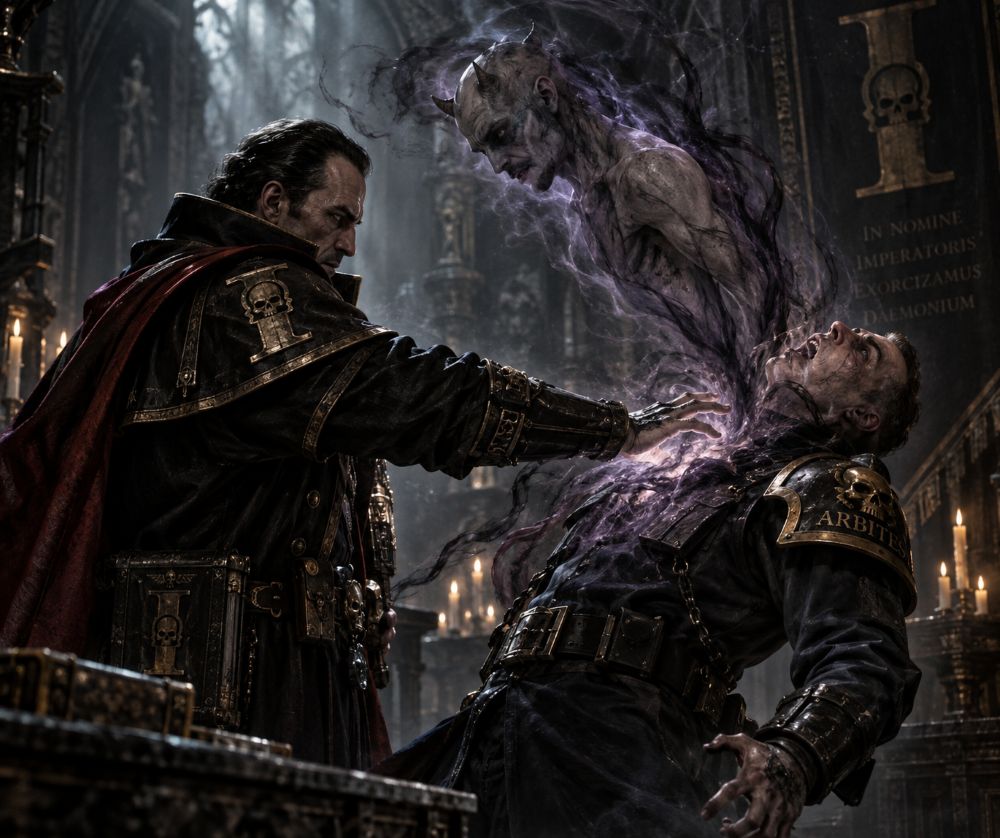
The plot itself is suitably large in scale, but Abnett keeps it grounded in the characters rather than losing the story in lore. There are conspiracies, dark rituals, dangerous enemies, political maneuvering, high-stakes action, and more of the strange Gothic science-fiction imagery that defines the setting. The Imperium remains a fascinatingly ugly backdrop: a galaxy-spanning empire built on religious fanaticism, vast bureaucracy, fear, poverty, military force, and a permanent sense that disaster is always one hidden cult away. Yet Abnett’s real gift is making this enormous universe feel inhabited. The places Eisenhorn visits have social structures, histories, class divisions, institutions, and ordinary people trying to survive in a civilization so large that most of its citizens will never understand the horrors being fought in secret above their heads.
That perspective continues to make the Eisenhorn trilogy unusually accessible. A newcomer does not need to have memorized every Space Marine Chapter, every alien faction, or every detail of the Horus Heresy to enjoy Hereticus. The novel assumes that the reader can follow a story rather than requiring them to pass a lore exam. Terms and concepts appear naturally through the characters’ experiences, and the emotional stakes remain clear even when the setting becomes strange. That is why the series is still one of the best entry points into Warhammer 40,000. It offers the darkness, religion, cosmic horror, military violence, and massive scale that fans expect from the franchise, but it filters all of it through a compelling human story.
If Xenos introduced Eisenhorn as a determined investigator and Malleus showed him becoming increasingly willing to compromise, Hereticus is the book that asks the unavoidable question: what does all of that make him? The answer is not neat. Eisenhorn is not secretly a villain in the simplistic sense, nor is he a spotless hero unfairly accused by lesser men. He is a capable, brave, damaged, and increasingly isolated man who has spent so long fighting monsters that he has begun to accept monstrous tools. That does not erase his courage or his desire to save lives. It simply means that the line between salvation and damnation has become far more difficult to see.
Abnett’s prose remains a major asset throughout. He writes action with momentum and clarity, but he is at his best when building dread. A tense conversation, an accusation from a former ally, the discovery of forbidden evidence, or the appearance of something that should not exist can be more unsettling than the book’s gunfights and confrontations. The Gothic quality of Warhammer 40,000 is present, but Abnett does not bury the story under purple prose. His writing is vivid without becoming exhausting, and that readability is a big reason these books have endured beyond the audience that initially came to them from the tabletop game.
There are moments when Hereticus feels crowded, especially because it has to bring together plot threads, characters, rivalries, and consequences from across the trilogy. Readers who prefer the tighter, pure mystery structure of Xenos may find this finale more sprawling. But that messiness also feels appropriate. Eisenhorn’s world has grown too complicated for a clean solution. His enemies are no longer isolated cultists or external threats that can be purged and forgotten. They are connected to his past, his choices, his friends, and his own self-image. The story has to feel larger and more tangled because Eisenhorn himself has created a life that cannot be easily sorted into right and wrong.
Ultimately, Hereticus is a powerful conclusion because it does not treat moral ambiguity as an empty excuse for darkness. It makes Eisenhorn’s compromises matter. It makes his losses hurt. It recognizes that in a universe as cruel as Warhammer 40,000, purity can become fatal rigidity, but pragmatism can become corruption just as easily. The novel’s real achievement is that it lets readers sympathize with Eisenhorn even while making them increasingly nervous about the person he is becoming.
For longtime fans, Hereticus delivers the kind of grim Inquisitorial intrigue, occult horror, action, and Imperial paranoia that the setting does exceptionally well. For newer readers, it confirms why the Eisenhorn trilogy is such a smart place to start. Beginning with Xenos, continuing through Malleus, and ending with Hereticus, the series offers a full and approachable tour through the vast fictional universe of Warhammer 40,000 without ever losing sight of its central character. Hereticus is not just an entertaining finale. It is the book that turns Gregor Eisenhorn’s story into a genuine tragedy—and makes the reader wonder whether the man trying to protect humanity has become one more thing humanity needs protection from.
Eisenhorn Saga

