12 Oscar Snubs From the 1950s


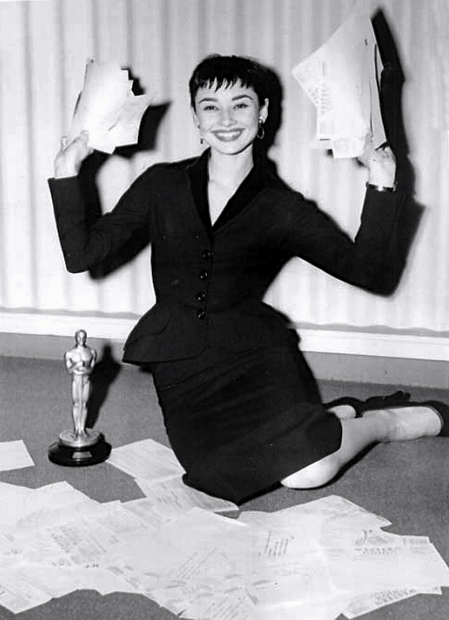
Audrey Hepburn and her Oscar.  At least the Academy didn’t snub her!

Continuing our look at the Oscar snubs of the past, it’s now time to enter the 50s!

World War II was over. Eisenhower was President. Everyone was worried about communist spies. And the Hollywood studios still reigned supreme, even while actors like Marlon Brando and James Dean challenged the establishment.  There were a lot great film released in the 50s.  There were also some glaring snubs on the part of the Academy.  Here’s twelve of them.
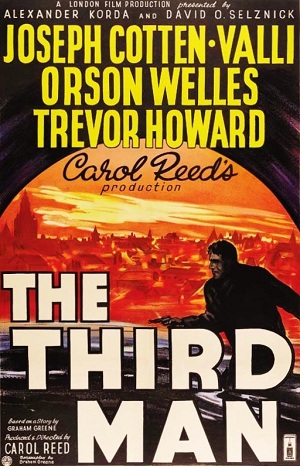
1950: The Third Man Is Not Nominated For Best Picture

….and Orson Welles was not nominated for Best Supporting Actor!  The Third Man received three Oscar nominations, for Director, Cinematography, and Editing.  The fact that Welles, Joseph Cotten, Alida Valli, and the film’s score were not nominated (and that King Solomon’s Mines was nominated for Best Picture instead of The Third Man) remains one of the more surprising snubs in Oscar history.

1952: Singin’ In The Rain Is Not Nominated For Best Picture

What the Heck, Academy!?  This was the year that The Greatest Show On Earth won the Best Picture Oscar.  Personally, I don’t think The Greatest Show On Earth is as bad as its reputation but still, Singin’ In The Rain is a hundred times better.

1953: Alan Ladd Is Not Nominated For Best Actor For Shane

How could Shane score a nomination for Best Picture without Shane himself receiving a nomination?

1954: Rear Window Is Not Nominated For Best Picture

Rear Window was not totally ignored by the Academy.  Alfred Hitchcock received a nomination for directing.  It also received nominations for Best Adapted Screenplay, Cinematography, and Sound.  However, Rear Window was not nominated for Best Picture and James Stewart, Grace Kelly, Raymond Burr, and Thelma Ritter all went unnominated as well.  Today, Rear Window is definitely better-remembered than the majority of 1954’s Best Picture nominees.  Certainly, it deserved a nomination more than Seven Brides For Seven Brothers and Three Coins in The Fountain.

1955: Ralph Meeker Is Not Nominated For Best Actor For Kiss Me Deadly

I guess I shouldn’t be surprised.  If the Academy wasn’t going to nominate Rear Window for Best Picture, there was no way that they would have nominated Ralph Meeker for playing a sociopathic private detective who, even if inadvetedly, helps to bring about the end of the world.

1955: Rebel Without A Cause Is Not Nominated For Best Picture or Best Actor

The 1955 Best Picture lineup was a remarkably weak one.  The eventual winner was Marty, a likeable film that never quite escapes its TV roots.  Picnic has that great dance scene but is otherwise flawed.  Mister Roberts was overlong.  Love Is A Many-Splendored Thing and The Rose Tattoo are really only remembered by those of us who have occasionally come across them on TCM.  Perhaps the best-remembered film of 1955, Rebel Without A Cause, received quite a few nominations but it was not nominated for Best Picture.  And while the Rebel himself, James Dean, was nominated for Best Actor, it was for his performance in East of Eden.  1955 was a strange year.

1955: Robert Mitchum Is Not Nominated For Best Actor For The Night of the Hunter

Robert Mitchum only received one Oscar nomination over the course of his entire career, for 1945’s The Story of G.I. Joe.  He deserved several more.  His performance as the villainous preacher in The Night of Hunter made Reverend Harry Powell into one of the most iconic film characters of all time.
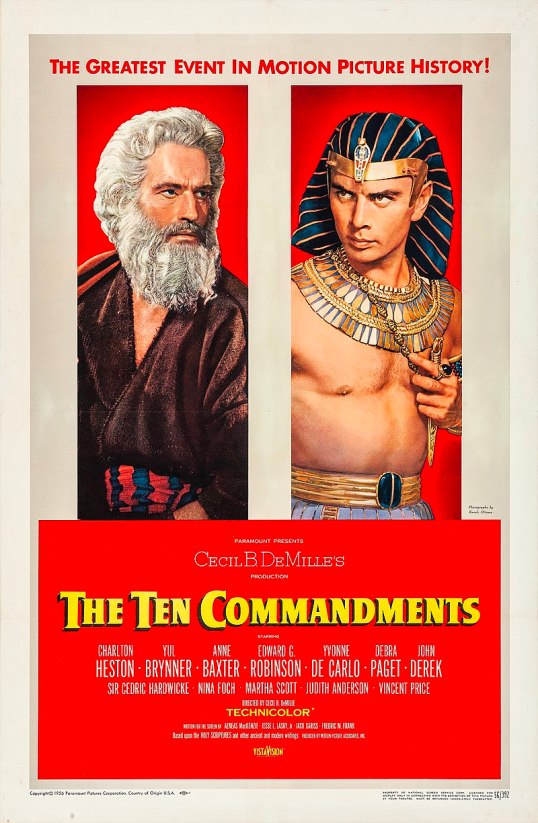
1956: Cecil B. DeMille Is Not Nominated For Best Director For The Ten Commandments

Cecil B. DeMille was only nominated once for Best Director, for 1952’s The Greatest Show On Earth.  DeMille, however, deserved to be nominated for The Ten Commandments.  As campy as DeMille’s films can seem today, he was an expert storyteller and that’s certainly evident when one watches The Ten Commandments, a film that holds the viewer’s attention for nearly four hours.  DeMille deserved a nomination for the Angel of Death scene alone.  The screams in the night are haunting.

1957: Henry Fonda Is Not Nominated For Best Actor For 12 Angry Men

With 12 Angry Men, Fonda did something that very few actors can.  He made human decency compelling.  One gets the feeling that, much like Tom Hanks in Captain Phillips, Fonda made it look so easy that the Academy took him for granted.

1958: Touch Of Evil Is Totally Ignored

Anyone who had researched the history of the Academy knows that there was no way that the 1950s membership would have ever honored Orson Welles’s pulp masterpiece, Touch of Evil.  That said, it still would have been nice if they had.  Touch of Evil has certainly go on to have a greater legacy than Gigi, the film that won Best Picture that year.

1958: Vertigo Is Almost Totally Ignored

Vertigo did receive nominations for Art Direction and Sound but Alfred Hitchcock, James Stewart, and the film itself were snubbed.

1959: Some Like It Hot Is Not Nominated For Best Picture or Best Actress

Some Like It Hot received 6 Oscar nominations, including nominations for Best Director, Best Actor, and Best Adapted Screenplay.  It did not receive a nomination for Best Picture and, sadly, Marilyn Monroe did not receive a nomination for Best Actress.  Much as with Henry Fonda in 12 Angry Men, one gets the feeling that the Academy took Monroe for granted.  It’s sad to realize that, while two actresses have been nominated for playing Marilyn Monroe, Monroe herself would never be nominated.

Agree?  Disagree?  Do you have an Oscar snub that you think is even worse than the 12 listed here?  Let us know in the comments!

Up next: Things get wild with the 6os!
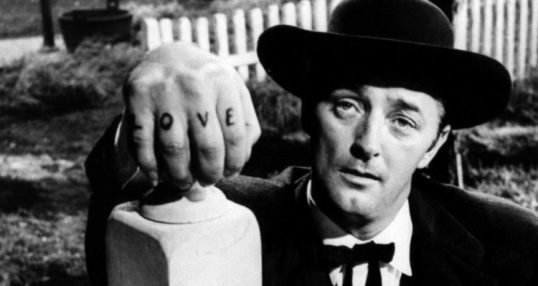
Night of the Hunter (United Artists 1955; D: Charles Laughton)
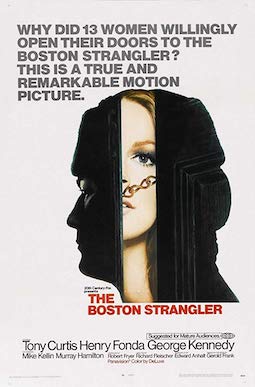
Film Review: The Boston Strangler (dir by Richard Fleischer)


Between June 14, 1962 and January 4, 1964, 13 women between the ages of 19 and 85 were murdered in the Boston area.  It was felt that they had all been killed by the same man, a monster known as The Boston Strangler.  Though the police investigated many suspects, they never made an arrest.  (One should remember that this was before the time of DNA testing or criminal profiling.  The term “serial killer” had not even been coined.  Today, sad to say, we take the existence of serial killers for granted.  In the 60s, it was still an exotic concept.)

In October of 1964, a man named Albert DeSalvo was arrested and charged with being “the Green Man,” a serial rapist who pretended to be a maintenance man in order to gain access to single women’s apartments.  After he was charged with rape, detectives were surprised when DeSalvo confessed to being the Boston Strangler.  When confessing to the murders, DeSalvo got a few minor details wrong but he also consistently included other details that the police hadn’t released to the general public.  Even when put under hypnosis, DeSalvo’s recalled those previously unreleased details.  Because DeSalvo was already going to get a life sentence on the rape charges and because there wasn’t any physical evidence that, in those pre-DNA, could have conclusively linked DeSalvo to the crimes, he was never actually charged with any of the murders.  Still, with his confessions, the cases were considered to be closed.

In 1966, before DeSalvo was even sentenced for the Green Man rapes, Gerold Frank wrote The Boston Strangler, a book about the murders, the investigations, and DeSalvo’s confessions.  It was one of the first true crime books and, in 1968, it was adapted into one of the first true crime films.

Directed by Richard Fleischer (whose filmography somehow includes not only this film but also Dr. Dolittle, Fantastic Voyage, 20,000 Leagues Under the Sea, Conan The Destroyer, and Red Sonja), The Boston Strangler is really two films in one.  The first half deals with the crimes and the police (represented by Henry Fonda, George Kennedy, Murray Hamilton, and James Brolin) investigation.  This half of the film is pulpy and crudely effective, full of scenes of the cops rounding up every sex offender who they can find.  There’s a scene where Henry Fonda talks to a prominent man in a gay bar that’s handled with about as much sensitivity as you could expect from a 1960s studio film.  (On the one hand, the man is portrayed with respect and dignity and he’s even allowed to call out the patron saint of 1960s mainstream liberal piety, Henry Fonda, for being close-minded.  On the other hand, everyone else in the bar is a stereotype and we’re meant to laugh at the idea that anyone could think that Henry Fonda could be gay.)  Director Richard Fleischer makes good use of split screens, creating an effective atmosphere of paranoia.  The scene where a woman tries to keep an obscene caller on the phone long enough for the police to trace his location made my skin crawl and served as a reminder that perverts predate social media.  Another scene where a flamboyant psychic tries to help the police goes on for a bit too long but, at the same time, you’re happy for a little relief from crime scenes and terrified, elderly women discovering that their neighbors have been murdered.

The second half of the film features Tony Curtis as Albert DeSalvo.  Curtis is effective as DeSalvo, playing him as being a self-loathing brute who is incapable of controlling his impulses.  (Before committing one of his crimes, DeSalvo watches the funeral of John Kennedy, his face wracked with pain.  Is the film suggesting that DeSalvo murdered to deal with the stress of life in America or is it suggesting that the hate that killed Kennedy was a symptom of the same sickness that drove DeSalvo?  Or is the film just tossing in a then-recent event to get an easy emotional reaction from the audience?)  As one might expect from a mainstream film made in 1968, The Boston Strangler takes something of a wishy washy approach to the question of whether DeSalvo’s crimes were due to sickness or evil.  Yes, the film says, DeSalvo was bad but it’s still society’s fault for not realizing that he was bad.  It’s the type of approach designed to keep both the law-and-order types and the criminal justice reformers happy but it ultimately feels a bit like a cop out.  Still, the shots of DeSalvo isolated in his padding cell have an undeniable power and Curtis is both pathetic and frightening in the role.  In its more effective moments, the second half of the film works as a profile of a man imprisoned both physically and mentally.

Watching the film today, it’s hard not to consider how different The Boston Strangler is from the serial killer films that would follow it.  DeSalvo is not portrayed as being some sort of charming or interesting Hannibal Lecter or Dexter-type of killer.  Instead, he’s a loser, a barely literate idiot who struggled to articulate even the simplest of thoughts.  The cops aren’t rule-breakers or renegades.  Instead, they’re doing their jobs the best that they can.  Though the film ends with a title card saying that it’s important for society to make more of an effort to spot people like DeSalvo before they kill, The Boston Strangler has a surprising amount of faith in both the police and the law and it assumes that you feel the same way.  It’s a film that takes it for granted the audience respects and trusts authority.  It’s portrayal of the police is quite a contrast to the rebel cops who dominate pop culture today.

After the film came out, DeSalvo recanted his confessions and said that he had never killed anyone.  He was subsequently murdered in prison in 1971, not due to his crimes but instead because he was independently selling drugs for prices cheaper than what had been agreed upon by the prison’s syndicate.  After his death, many books were written proclaiming that DeSalvo was innocent and that the real Boston Strangler was still on the streets.  Others theorized that the actual Strangler was DeSalvo’s cellmate and DeSalvo, knowing he was going to prison for life regardless, confessed in return for money being sent to his family.  That said, in 2013, DNA evidence did appear to conclusively link DeSalvo to the murder of 19 year-old Mary Sullivan.  Of course, that doesn’t mean that DeSalvo necessarily committed the other 12 murders.  In fact, from what we’ve since learned about the pathology of serial killers, it would actually make more sense for the murders to have been committed by multiple killers as opposed to just one man.

Regardless of whether DeSalvo was guilty or not, The Boston Strangler is an uneven but ultimately effective journey into the heart of darkness.

4 Shots From 4 Films: Special Henry Fonda Edition


4 Shots From 4 Films is just what it says it is, 4 shots from 4 of our favorite films. As opposed to the reviews and recaps that we usually post, 4 Shots From 4 Films lets the visuals do the talking!

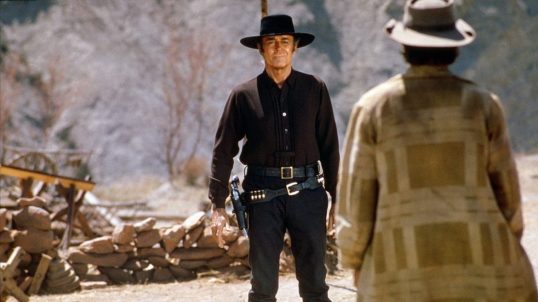
Today, we celebrate the birthday of Henry Fonda!  Fonda was born 115 years ago today and, over the course of his long career, he was often cast in role the epitomized everything great about America.  It’s rare to find a Henry Fonda film in which he played an out-and-out villain, though he did just that in Sergio Leone’s Once Upon A Time In The West.  (Leone, in fact, cast Fonda as the evil Frank because he knew audiences would be shocked to see Fonda coldly gunning down settlers and their families.)

In honor Henry Fonda’s legacy, here are….

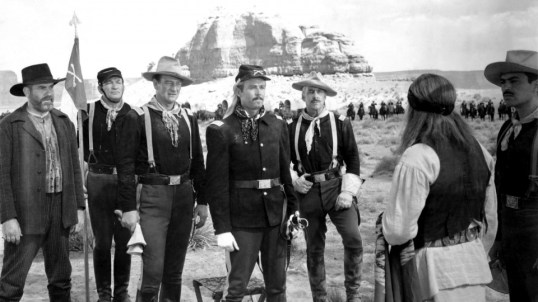
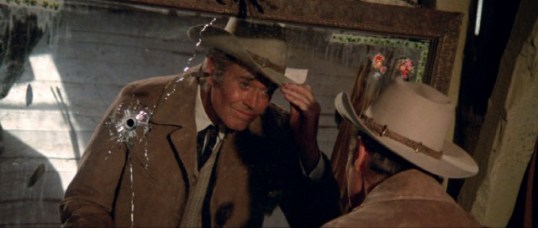
4 Shots From 4 Films

My Darling Clementine (1946, dir by John Ford)

Fort Apache (1948, dir by John Ford)

Once Upon A Time In The West (1968, dir by Sergio Leone)

My Name Is Nobody (1973, dir by Tonino Valerii)

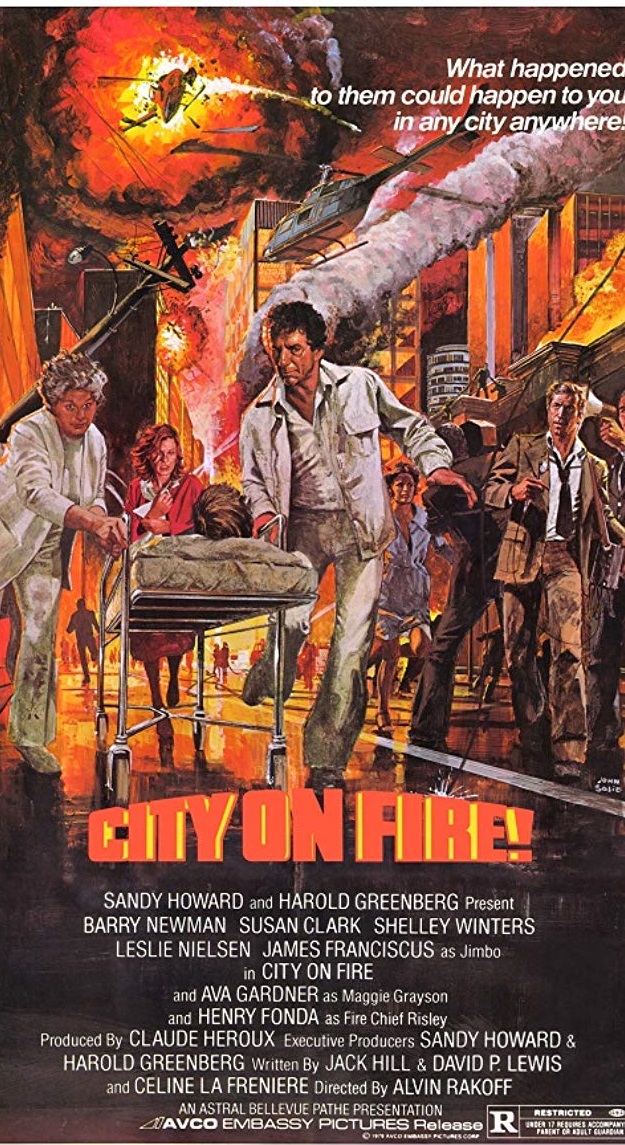
City on Fire (1979, directed by Alvin Rakoff)


In an unnamed city somewhere in the midwest, Herman Stover (Jonathan Welsh) is fired from his job at an oil refinery.  Herman does what any disgruntled former employee would do.  He runs around the refinery and opens up all the valves and soon, the entire location is covered in a combustible mix of oil and chemicals.  One spark is all it takes for the refinery to explode and the entire city to turn into a raging inferno.

While Fire Chief Risley (Henry Fonda, getting a special “And starring” credit for doing what probably amounted to a few hours of work) sits in his office and gives orders to his subordinates, Dr. Frank Whitman (Barry Newman) cares for the injured at the city’s new hospital.  Also at the hospital is Mayor William Dudley (Leslie Nielsen) and local celebrity Diana Brockhurst-Lautrec (Susan Clark), who is having an affair with the mayor.  Diana also went to high school with Herman and he still has a crush on her.  When he shows up at the hospital to try to hit on her, he’s roped into working as a paramedic.  Also helping out at the hospital is Nurse Shelley Winters.  (The character may be named Andrea Harper but she’s played by Shelley Winters and therefore, she is Shelley Winters.)  At the local television station, news producer Jimbo (James Franciscus) tries to keep his anchorwoman, Maggie Grayson (Ava Gardner), sober enough to keep everyone up to date on how much longer the city is going to be on fire.

Mostly because it was featured on an early pre-Comedy Central episode of Mystery Science Theater 3000, City on Fire has a reputation for being a terrible movie but, as far as 70s disaster films are concerned, it’s not that bad.  The special effects are actually pretty impressive, especially during the first half of the film and there’s really not a weak link to be found in the cast.  It’s always strange to see Leslie Nielsen playing a serious role but, before Airplane! gave him a chance to display his skill for deadpan comedy, he specialized in playing stuffy and boring authority figures.  He actually does a good job as Mayor Dudley and it’s not the film’s fault that, for modern audiences, it’s impossible to look at Leslie Nielsen without instinctively laughing.  Of course, there is a scene towards the end where Leslie Nielsen picks up a fire hose and starts spraying people as they come out of the hospital and it was hard not to laugh at that because it felt like a scene straight from The Naked Gun.

What the film does suffer from is an overabundance of cliches and bad dialogue.  From the minute the movie starts, you know who is going to live and who isn’t and sometimes, City on Fire tries too hard to give everyone a connection.  It’s believable that Herman would be stupid enough to start a fire because we all know that happens in the real world.  What’s less believable is that, having started the fire, Herman would then go to the hospital and keep asking Diana if she remembers him from high school.  It’s not asking too much to believe that Diana, as wealthy local celebrity, would be invited to the opening of a new hospital.  It’s stretching things, though, to then have her deliver a baby while the hospital is in flames around her.

Coming out at the tail end of the disaster boom, City on Fire didn’t do much at the box office and would probably be forgotten if not for the MST 3K connection.  A year after City on Fire was released, Airplane! came out and, through the power of ridicule, put a temporary end to the entire disaster genre.

Cleaning Out The DVR: Let Us Live! (dir by John Brahm)


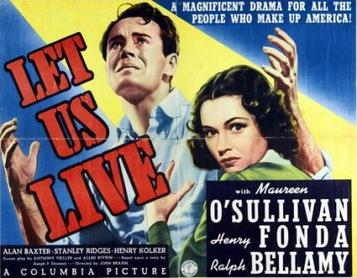
In the 1939 film, Let Us Live!, Henry Fonda plays Brick Tennant.  Brick is a poor but honest taxi driver who has always lived a law-abiding life and who is looking forward to marrying waitress named Mary Roberts (Maureen O’Sullivan).  However, when a taxi is used as a getaway car in a violent robbery that leaves a policeman dead, Brick finds that he’s a suspect.

At first, Brick isn’t too worried.  It turns out that every taxi driver in Boston is apparently being considered a suspect.  Brick is just 1 out of 120.  However, when the police bring Brick in to take part in a lineup, one of the witnesses insists that Brick and his friend, Joe Linden (Alan Baxter), were involved in the robbery.  Despite the fact that Brick and Mary were at a church, planning their wedding, during the robbery, Brick and Joe are arrested and put on trial for murder.  Despite Brick’s initial faith in the system, he and Joe are convicted and sentenced to die.

On death row, Brick faces the inhumane reality of American justice.  He watches as other prisoners slowly lose their mind as a result of neglect and abuse.  He watches as another prisoner drops dead in front of him, to the indifference of the guards.  Even when Mary tells him that she’s still looking for evidence that will exonerate him, Brick says that he no longer cares.  The state of Massachusetts is determined to kill him and he doesn’t believe that there’s any way stop them.  As Mary puts it, Brick is now dead inside.

Still, Mary continued to investigate.  Helping her is a police detective named Everett (Ralph Bellamy).  Everett comes to realize that two innocent men are sitting on Death Row but will he and Mary be able to find the real culprits before the state executes Brick and Joe?

While watching Let Us Live, I found it impossible not to compare the film to The Wrong Man, another film in which Henry Fonda played an innocent man being railroaded by the system.  Both The Wrong Man and Let Us Live were based on a true stories, though Let Us Live takes considerably more liberty with its source material than The Wong Man does.  Whereas The Wrong Man is a docudrama that’s full of moody atmosphere courtesy of director Alfred Hitchcock, Let Us Live is much more of a fast-paced, melodramatic B-move.

That said, Let Us Live! is still a definitely effective look at how an innocent man can be railroaded by a system that’s often more concerned with getting a quick conviction than actually searching for the truth.  Sadly, the issues that Let Us Live deals with are just as relevant today as they were in 1939.  The film’s power comes from Henry Fonda’s performance as Brick.  It’s truly heart-breaking to watch Brick go from being a cheerful optimist to a man who has been so broken down by American justice that he can’t even bring himself to celebrate the news that he might be released.  The film ends on a grim note, a reminder that some damage cannot be undone.

Let Us Live! is another good but obscure film that I discovered through TCM.  Keep an eye out for it!

Italian Horror Showcase: Tentacles (dir by Ovidio G. Assonitis)


Okay, tell me if this sounds familiar.

There’s a beachside resort town, one whose survival is pretty much dependent upon tourists and big business.  If you give the tourists a reason to not show up, the town dies.  If you give big business a reason to build their factories and their underground tunnels somewhere else, the town dies.

Unfortunately, something bad is happening in this little town.  People are going in the water and they’re never returning.  It appears that they’re being killed by some sort of giant sea monster, even though the authorities swear that it’s simply impossible.  The town’s leaders are putting pressure on the sheriff to cover up the crimes.  A scientist shows up and thinks that everyone he meets is an idiot.

It’s not safe to go in the water but people keep doing it!

Now, you may be thinking that it sounds like I’m describing the plot of Jaws but actually, I’m talking about an Italian film called Tentacles.  Released in 1977, Tentacles was one of the many films that was directly inspired by the success of Spielberg’s film.  Jaws was such a phenomenal success that it was ripped off by filmmakers across the world.  That said, of all the people ripping off Spielberg’s film, the Italians brought an undeniable and frequently shameless flair to the Jaws knockoffs.

Tentacles is a bit different from other Italian Jaws films in that, this time, the threat does not come from a shark.  Instead, it comes from a giant octopus!  That’s actually a pretty good twist because, in real life, an octopus is actually more dangerous than a shark.  Not only are they bigger and considerably smarter than most sharks but if they get enough of their eight arms around you, they can literally squeeze you to death!  I mean …. agck!  Say what you will about sharks, I imagine getting eaten by one would suck but at least it wouldn’t take long to die.  Whereas if an octopus gets you, you would actually be aware of it squeezing you to death and oh my God, I’m never getting in the water.

Anyway, in Tentacles, the octopus is snatching babies off of piers and sailors off of boats and it’s using its octopus powers to rip their skin from their bones.  It also attack scuba divers by firing ink at them.  The sheriff (Claude Akins) says that it’s nothing to worry about but Ned Turner (John Huston), a hard-boiled reporter, thinks that there’s a story here.  Ned’s in town visiting his sister (Shelley Winters).  She has a ten year-old son who enjoys sailing.  Uh-oh….

Henry Fonda shows up for a few very brief scenes, playing the head of a company that built the underwater tunnel that somehow mutated the octopus.  Fonda looks incredibly frail in his scenes (and apparently, he filmed his part while recovering from heart surgery) but his performance in Tentacles still isn’t as cringe-inducing as his performance in The Swarm.

Also showing up is a marine biologist named Will Gleason (Bo Hokpkins).  Fortunately, Gleason owns two killer whales so, after the octopus kills his wife, Gleason sends out the orcas to track it down.  Before doing so, he gives them a pep talk.  Apparently, killer whales respond to positive reinforcement.

Tentacles is unique in that it’s an Italian production that managed to rope in a few well-known American actors.  It’s an odd film to watch because, on the one hand, the film is full of risible dialogue and it’s painfully slow whenever the octopus isn’t attacking anyone and no one really seems to be that invested in any of their characters.  (When the octopus kills a baby, the actress playing the baby’s mother underacts to such an extent that the scene becomes almost surreal.)  This isn’t like Jaws, where you actually care about Brody, Quint, Hooper, and the Kintner boy.  On the other hand, the octopus itself is actually kind of frightening so, on that very basic level, the film works.

In the end, Tentacles is one of the lesser Jaws rip-offs but you’ll never forget that octopus.


Nothin’ Dirty Goin’ On: THE CHEYENNE SOCIAL CLUB (National General 1970)


gary loggins's avatarcracked rear viewer

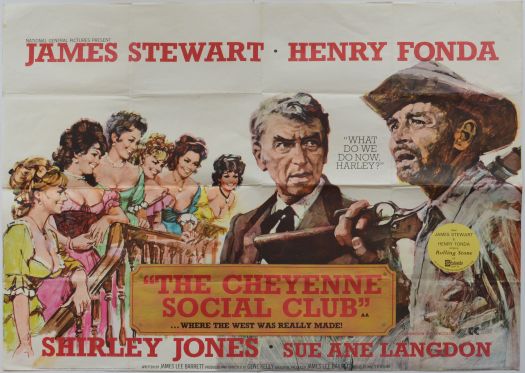
THE CHEYENNE SOCIAL CLUB isn’t a great movie, but it’s not a bad one, either. It couldn’t be; not with all that talent in front of and behind the cameras. You’ve got two legendary leads, James Stewart and Henry Fonda , Oscar winner Shirley Jones, Gene Kelly in the director’s chair, and John Wayne’s favorite cinematographer William Clothier . Still, the film, while amusing, should’ve been so much better.

The story’s fairy simple: two old Texas cowhands, John O’Hanlon (Stewart) and Harley Sullivan (Fonda) are plying their trade when John receives a letter. Seems John’s brother has died and left him an inheritance – The Cheyenne Social Club in Cheyenne, Wyoming. John and his old pal head north, and it turns out The Cheyenne Social Club is a cathouse, run by Madame Jenny (Jones), and she and the girls warmly greet the perplexed duo. Uptight John, who’s always wanted to…

View original post 699 more words

Navy Blue & Gold: MISTER ROBERTS (Warner Brothers 1955)


gary loggins's avatarcracked rear viewer

I grew up a “Navy brat”, often accompanying my dad to bases in Newport, RI. and Bethesda, MD. I’d hang out at the Enlisted Men’s Club he ran, watching Bugs Bunny and Road Runner cartoons with the sailors while dad did the books. I remember going aboard ship plenty of times, and saw one of my first movies with the crew on Family Night (the Cary Grant/Doris Day flick THAT TOUCH OF MINK). So naturally, I have a soft spot for nautical tales, and one of my favorites has always been MISTER ROBERTS.

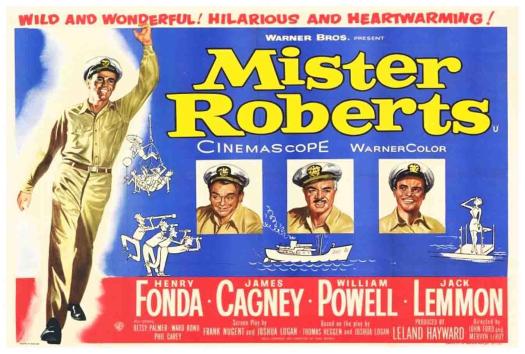
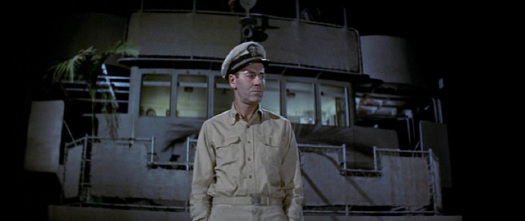
The film marked Henry Fonda’s return to the screen after an eight year absence. Fonda had starred in the original Broadway production to great acclaim, and his performance is imbued with his own experiences during WWII. Douglas Roberts is a lieutenant (j.g.) assigned to the cargo ship Reluctant in the South Pacific, run by the vain…

View original post 733 more words

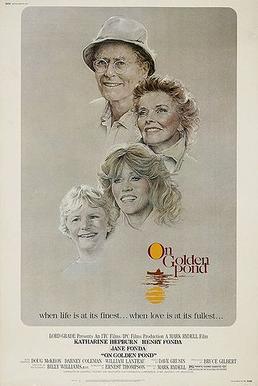
Lisa Reviews An Oscar Nominee: On Golden Pond (dir by Mark Rydell)


(With the Oscars scheduled to be awarded on March 4th, I have decided to review at least one Oscar-nominated film a day.  These films could be nominees or they could be winners.  They could be from this year’s Oscars or they could be a previous year’s nominee!  We’ll see how things play out.  Today, I take a look at the 1981 best picture nominee, On Golden Pond!)

On Golden Pond takes place in a cottage that’s located on a lake called Golden Pond.  Hence, the title.  As far as title’s go, it’s not a bad one.  It’s a film about an elderly couple who spends every summer in that cottage.  They’re in their golden years so I guess it makes sense that they would feel an affinity for Golden Pond.

That said, I think that an even better title for the film would be Everything Annoys Norman.

Norman Thayer, Jr. (Henry Fonda) is a cantankerous old man.  He’s 79 and not particularly looking forward to celebrating his 80th birthday.  He’s a retired college professor.  His wife claims that the last time Norma was really happy was when Franklin Roosevelt was elected president.  Norman likes to fish and still brags about the time he caught a legendary trout named Walter.

What Norman doesn’t like is having to deal with the world.  When he stops to get gas, he loudly complains that, “in his day,” gas only cost eighty-five cents.  When he’s told that there’s another “middle-aged” couple on the lake, he says that, unless he’s going to live to be 150, he’s not middle-aged.  He gets frustrated because his memory isn’t as good as it used to be.  When he goes out for a walk in the woods, he forgets where the path is and he has to return to the house.  Sometimes, he calls people by the wrong name.  At one point, he struggles to use a landline phone.  (I can only imagine how annoyed Norman would be if he was alive today.)  Norman doesn’t like to deal with anyone other than his wife.

Ethel (Katharine Hepburn) is Norman’s wife.  She loves him.  When she hears Norman referred to as being “a son of a bitch,” she replies, “That son of a bitch is my husband.”  Ethel is used to Norman and his ways.  As she puts it, she understands that he’s like a “lion” who has to roar just to remind himself that he still can.  Ethel is … well, basically, she’s Katharine Hepburn.

Ethel has invited their daughter, Chelsea (Jane Fonda), to celebrate Norman’s birthday with them.  Norman and Chelsea have a strained relationship.  It’s implied that Norman was an emotionally distant and overly critical father and that Chelsea has never been able to forgive him.  When she shows up with her new boyfriend, Bill Ray (Dabney Coleman) and his 13 year-old son, Billy Ray (Doug McKeon), Norman barely bothers to acknowledge her.  With Bill and Chelsea planning on vacation in Europe, they ask if Billy can stay at the cottage with Norman and Ethel.  Ethel agrees.  Norman acquiesces.

On Golden Pond is a film that I wanted to like more than I actually did.  After all, the film features two classic actors, Henry Fonda and Katharine Hepburn, appearing in their only film together.  (Both Henry Fonda and Hepburn won Oscars for their work here.)  Henry Fonda gives a good performance as a strong-willed man who is struggling to deal with his own mortality.  As for Hepburn, it’s not a great performance, largely because Ethel is a thinly written role, but she’s Katharine Hepburn so it doesn’t matter.  But almost everything about the film — from the tasteful music to the pretty but not overwhelming cinematography — feels more like something you’d expect to find in a television production instead of a feature film.  On Golden Pond was based on a play and, with almost all of the action set in that cottage, it really doesn’t escape its theatrical origins.  That said, it’s a sweet movie.  The love between Norman and Ethel feels real.  If nothing else, the film gave the great Henry Fonda his only Oscar.

On Golden Pond was nominated for Best Picture but lost to Chariots of Fire.

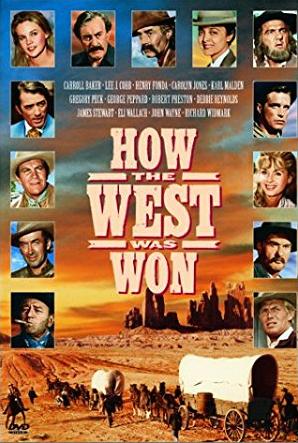
Lisa Reviews An Oscar Nominee: How The West Was Won (dir by Henry Hathaway, George Marshall, John Ford, and Richard Thorpe)


(With the Oscars scheduled to be awarded on March 4th, I have decided to review at least one Oscar-nominated film a day.  These films could be nominees or they could be winners.  They could be from this year’s Oscars or they could be a previous year’s nominee!  We’ll see how things play out.  Today, I take a look at the 1963 best picture nominee, How The West Was Won!)

How was the west won?

According to this film, the west was won by the brave men and women who set out in search of a better life.  Some of them were mountain men.  Some of them worked for the railroads.  Some of them rode in wagons.  Some of them gambled.  Some of them sang songs.  Some shot guns.  Some died in the Civil War.  The thing they all had in common was that they won the west and everyone had a familiar face.  How The West Was Won is the history of the west, told through the eyes of a collection of character actors and aging stars from Hollywood’s Golden Age.

In many ways, How The West Was Won was the Avatar of the early 60s.  It was a big, long, epic film that was designed to make viewers feel as if they were in the middle of the action.  Avatar used 3D while How The West Was Won used Cinerama.  Each scene was shot with three synchronized cameras and, when the film was projected onto a curved Cinerama screen, it was meant to create a truly immersive experience.  The film is full of tracking shots and, while watching it on TCM last night, I tried to imagine what it must have been like to see it in 1963 and to feel as if I was plunging straight into the world of the old west.  The film’s visuals were undoubtedly diminished by being viewed on a flat screen and yet, there were still a few breath-taking shots of the western landscape.

The other thing that How The West Was Won had in common with Avatar was a predictable storyline and some truly unfortunate dialogue.  I can understand why How The West Was Won was awarded two technical Oscars (for editing and sound) but, somehow, it also picked up the award for Best Writing, Screenplay or Story.  How The West Was Won is made up of five different parts, each one of which feels like a condensed version of a typical western B-movie.  There’s the mountain man helping the settlers get down the river story.  There’s the Civil War story.  There’s the railroad story and the outlaw story and, of course, the gold rush story.  None of it’s particularly original and the film is so poorly paced that some sections of the film feel rushed while others seem to go on forever.

Some of the film’s uneven consistency was undoubtedly due to the fact that it was directed by four different directors.  Henry Hathaway handled three sections while John Ford took care of the Civil War, George Marshall deal with the coming of the railroad, and an uncredited Richard Thorpe apparently shot a bunch of minor connecting scenes.

And yet, it’s hard not to like How The West Was Won.  Like a lot of the epic Hollywood films of the late 50s and early 60s, it has its own goofy charm.  The film is just so eager to please and remind the audience that they’re watching a story that could only be told on the big screen.  Every minute of the film feels like a raised middle finger to the threat of television.  “You’re not going to see this on your little idiot box!” the film seems to shout at every moment.  “Think you’re going to get Cinerama on NBC!?  THINK AGAIN!”

Then there’s the huge cast.  As opposed to Avatar, the cast of How The West Was Won is actually fun to watch.   Admittedly, a lot of them are either miscast or appear to simply be taking advantage of a quick payday but still, it’s interesting to see just how many iconic actors wander through this film.

For instance, the film starts and, within minutes, you’re like, “Hey!  That’s Jimmy Stewart playing a mountain man who is only supposed to be in his 20s!”

There’s Debbie Reynolds as a showgirl who inherits a gold claim!

Is that Gregory Peck as a cynical gambler?  And there’s Henry Fonda as a world-weary buffalo hunter!  And Richard Widmark as a tyrannical railroad employee and Lee J. Cobb as a town marshal and Eli Wallach as an outlaw!

See that stern-faced settler over there?  It’s Karl Malden!

What’s that?  The Civil War’s broken out?  Don’t worry, General John Wayne is here to save the day.  And there’s George Peppard fighting for the Union and Russ Tamblyn fighting for the Confederacy!  And there’s Agnes Moorehead and Thelma Ritter and Robert Preston and … wait a minute?  Is that Spencer Tracy providing narration?

When Eli Wallach’s gang shows up, keep an eye out for a 36 year-old Harry Dean Stanton.  And, earlier, when Walter Brennan’s family of river pirates menaces Karl Malden, be sure to look for an evil-looking pirate who, for about twenty seconds, stares straight at the camera.  When you see him, be sure to say, “Hey, it’s Lee Van Cleef!”

How The West Was Won is a big, long, thoroughly silly movie but, if you’re a fan of classic film stars, it’s worth watching.  It was a huge box office success and picked up 8 Oscar nominations.  It lost best picture to Tom Jones.

(By the way, in my ideal fantasy world, From Russia With Love secured a 1963 U.S. release, as opposed to having to wait until 1964, and became the first spy thriller to win the Oscar for Best Picture.)