Film Review: Rango (dir. by Gore Verbinski)


Rango is something of an anomaly.

It’s an animated feature that isn’t in 3D. It caters as much to adults as it does to kids, and doesn’t seem to try toMovie Poster for the Film "Rango" lower itself to be “shiny” in that way. There are a number of scary images that I think would frighten younger kids, but overall, the film is very well done. It’s a fantastic homage to the Wild West, though it does get a little weird at times. I’ll admit that I walked in expecting something like Tangled. It reminds me more of George Miller’s Happy Feet, in how serious at times the story gets. And it does all this under the Nickelodeon banner. Wow, this is a big jump from Spongebob and Rugrats.

It ironic and feels right that Gore Verbinski – who gave us the Budweiser Frogs commercial so long ago and The Mexican – takes on an animated tale. He teams up with his Pirates of the Caribbean stars Johnny Depp and Bill Nighy again, and the results are worth it. Depp brings a spark of funny weirdness to the character of Rango, and the film has a number of pop culture references (including one for Fear and Loathing in Las Vegas). The supporting cast is okay, Isla Fisher (Confessions of a Shopaholic) makes for a quirky female lead trying to hold on to her land and Abigail Breslin (Zombieland) didn’t seem like she was used enough. Ned Beatty and Nighy in particular are the other vocal standouts here, along with Harry Dean Stanton (Big Love) as the the head of a mole family of outlaws. Timothy Olyphant (Justified) has a great cameo as well.

Rango is a chameleon who wishes to be the star of his own story. After an accident leaves him stranded in the desert, he finds is way through the blistering sun to the tiny town of Dirt. The townspeople of Dirt are a diverse lot, and it all has a real Mos Eisley in Star Wars to it. The currency of the town is water, which is pretty hard to come by these days. When he’s asked who he is, Rango takes the moment to be the character he envisioned. After he amazes the town with a display that adds fuel to the fire, the townsfolk end up making him the Sheriff of Dirt and charge him with finding a solution to their money/water issues.

Visually, Rango is a feast for the eyes despite how ugly the main character is. Fur moves, whiskers twitch and the open desert looks wonderful (especially when riding). Sunsets are colorful and Industrial Light and Magic really did some interesting work here. Honestly, I wouldn’t mind seeing this in 3D, but it’s actually nice that it isn’t in that format. Musically speaking, Hans Zimmer’s score adds a nice touch to the film, especially during one key scene involving a chase. I ended up getting the score shortly after seeing the movie.

If Rango suffers from any problems, it would be that it slows down a little in the middle, as if it’s not entirely sure of where it wants to go at one point. It quickly picks up, but the lull may be a little much for younger viewers looking for cartoon action throughout the film. I don’t believe adults will mind this, though.

But what about the Kid Factor?

It’s a Nickelodeon film. It’s designed for kids, and my audience (made up of parents and kids) appeared to really love it. The lessons to learn are that you truly are the center of your own story and growth comes through dealing with struggles. You can’t have a Protagonist without an Antagonist, and a story has to have conflict for it to go anywhere. You can take your kids to see Rango, but Parental Guidance is suggested. There’s a nude top half of a Barbie doll, no biggie there. Nighy’s Rattlesnake Jack brought up a lot of murmurs and gasps from the kids in my audience, so that might be something to be concerned about. There’s also shooting – it is the Wild West, after all – so there are characters that will die. If that doesn’t bother you, then you’ll have tons of fun with Rango. It’s definitely worth seeing.

Lisa And The Academy Agree To Disagree


The Oscar nominations were announced today and, for the most part, it’s pretty much what you would expect.  Below is the list of nominees.  If a nominee listed in bold print, that means they also appeared on my own personal list of nominations.

Best motion picture of the year

Black Swan
The Fighter
Inception
The Kids Are All Right
The King’s Speech
127 Hours
The Social Network
Toy Story 3
True Grit
Winter’s Bone

(The Academy and I agree on five of the ten nominees.  That’s actually more than I was expecting.)

Performance by an actor in a leading role

Javier Bardem (Biutiful)
Jeff Bridges (True Grit)
Jesse Eisenberg (The Social Network)
Colin Firth (The King’s Speech)
James Franco (127 Hours)

(The only real surprise here is Bardem.  I haven’t seen Biutiful but I’ve heard amazing things about it.)

Performance by an actor in a supporting role

Christian Bale (The Fighter)
John Hawkes (Winter’s Bone)
Jeremy Renner (The Town)
Mark Ruffalo (The Kids Are All Right)
Geoffrey Rush (The King’s Speech)

(Yay for John Hawkes!  Some people are surprised that Andrew Garfield wasn’t nominated for The Social Network.  I’m disappointed he wasn’t nominated for Never Let Me Go.)

Performance by an actress in a leading role

Annette Bening (The Kids Are All Right)
Nicole Kidman (Rabbit Hole)
Jennifer Lawrence (Winter’s Bone)
Natalie Portman (Black Swan)
Michelle Williams (Blue Valentine)

(I’m happy to see Lawrence and Portman recognized but I still so wish that the Academy had recongized Noomi Rapace and Katie Jarvis as well.  I knew it wouldn’t happen but still…)

Performance by an actress in a supporting role

Amy Adams (The Fighter)
Helena Bonham Carter (The King’s Speech)
Melissa Leo (The Fighter)
Hailee Steinfeld (True Grit)
Jacki Weaver (Animal Kingdom)

(Weaver — Yay!) 

Achievement in directing

Darren Aronofsky (Black Swan)
David O Russell (The Fighter)
Tom Hooper (The King’s Speech)
David Fincher (The Social Network)
Joel Coen and Ethan Coen (True Grit)

(The snubbing of Christopher Nolan for Inception is probably the closest thing to an outrage that the Oscars will produce this year.)

Adapted screenplay

127 Hours – Danny Boyle & Simon Beaufoy
The Social Network – Aaron Sorkin
Toy Story 3 – Michael Arndt (screenplay); John Lasseter, Andrew Stanton and Lee Unkrich (story)
True Grit – Joel Coen and Ethan Coen
Winter’s Bone – Debra Granik & Anne Rosellini

Original screenplay

Another Year – Mike Leigh
The Fighter – Scott Silver, Paul Tamasy and Eric Johnson (screenplay); Keith Dorrington, Paul Tamasy and Eric Johnson (story)
Inception – Christopher Nolan
The Kids Are All Right – Lisa Cholodenko and Stuart Blumberg
The King’s Speech – David Seidler

Best animated feature film of the year

How to Train Your Dragon
The Illusionist
Toy Story 3

 (I haven’t seen The Illusionist yet but I’m looking forward to it because the previews look great, it’s based on a script by Jacques Tati, and I love all things French.  Still, I kinda wish that Despicable Me had been nominated just so Arleigh could see the minions at the Academy Awards.)

Best foreign language film of the year

Biutiful (Mexico)
Dogtooth (Greece)
In a Better World (Denmark)
Incendies (Canada)
Outside the Law (Hors-la-loi) (Algeria)

Art direction

Alice in Wonderland – Robert Stromberg (production design), Karen O’Hara (set decoration)
Harry Potter and the Deathly Hallows Part 1 – Stuart Craig (production design), Stephenie McMillan (set decoration)
Inception – Guy Hendrix Dyas (production design), Larry Dias and Doug Mowat (set decoration)
The King’s Speech – Eve Stewart (production design), Judy Farr (set decoration)
True Grit – Jess Gonchor (production design), Nancy Haigh (set decoration) 

Achievement in cinematography

Matthew Libatique (Black Swan)
Wally Pfister (Inception)
Danny Cohen (The King’s Speech)
Jeff Cronenweth (The Social Network)
Roger Deakins (True Grit) 

Achievement in costume design

Colleen Atwood (Alice in Wonderland)
Antonella Cannarozzi (I Am Love)
Jenny Beavan (The King’s Speech)
Sandy Powell (The Tempest)
Mary Zophres (True Grit)

(That’s right, I ended up going 0 for 5 as far as Costume Design is concerned.  Which I guess goes to prove that I have better taste than the Academy.)

Best documentary feature

Exit Through the Gift Shop (Banksy and Jaimie D’Cruz)
Gasland (Josh Fox and Trish Adlesic)
Inside Job (Charles Ferguson and Audrey Marrs)
Restrepo (Tim Hetherington and Sebastian Junger)
Waste Land (Lucy Walker and Angus Aynsley)

 (If Banksy wins, I’ll be happy.  I have a feeling the award will go to Inside Job, however.  As a documentary, Inside Job reminded me a lot of Capt. Hindsight from the South Park Coon Vs. Coon And Friends trilogy.  Also, I’m a little bit surprised that Waiting for Superman wasn’t nominated.  I’m even more surprised that I actually saw enough feature documentaries last year to even have an opinion.  Also, interesting to note that Restrepo — a very nonpolitical look at military in the mid-east — was nominated while The Tillman Story, a much more heavy-handed and stridently political documentary was not.)

Best documentary short subject

Killing in the Name (Nominees to be determined)
Poster Girl (Nominees to be determined)
Strangers No More (Karen Goodman and Kirk Simon)
Sun Come Up (Jennifer Redfearn and Tim Metzger)
The Warriors of Qiugang (Ruby Yang and Thomas Lennon)

(It’s always interesting that nobody knows what these movies are about yet their producers always end up giving the longest speeches at the Oscars.  I’m hoping that Poster Girl wins because the actual producers have yet to be determined.  I imagine that means there might be some sort of legal action going on which means that, if it wins on Oscar night, there might be a big fight at the podium.  Plus, I like the title.  It makes me want to walk up to people I barely know, lean forward, and go, “Can I be your poster girl?”)

Achievement in film editing

Andrew Weisblum (Black Swan)
Pamela Martin (The Fighter)
Tariq Anwar (The King’s Speech)
Jon Harris (127 Hours)
Angus Wall and Kirk Baxter (The Social Network) 

Achievement in makeup

Adrien Morot (Barney’s Version)
Edouard F Henriques, Gregory Funk and Yolanda Toussieng (The Way Back)
Rick Baker and Dave Elsey (The Wolfman)

Achievement in music written for motion pictures (original score)

John Powell (How to Train Your Dragon)
Hans Zimmer (Inception)
Alexandre Desplat (The King’s Speech)
AR Rahman (127 Hours)
Trent Reznor and Atticus Ross (The Social Network)

Achievement in music written for motion pictures (original song)

Coming Home (from Country Strong, music and lyrics by Tom Douglas, Troy Verges and Hillary Lindsey)
I See the Light (from Tangled, music by Alan Menken, lyrics by Glenn Slater)
If I Rise (from 127 Hours, music by AR Rahman, lyrics by Dido and Rollo Armstrong)
We Belong Together (from Toy Story 3, music and lyrics by Randy Newman)

(I’ll just say it now — 4 nominations and I didn’t agree with a single one of them.  Seriously, they could have nominated up to 5 songs but instead of giving at least one nomination to Burlesque, they just nominated 4 songs.  What a load of crap.)

Best animated short film

Day & Night (Teddy Newton)
The Gruffalo (Jakob Schuh and Max Lang)
Let’s Pollute (Geefwee Boedoe)
The Lost Thing (Nick Batzias, Shaun Tan and Andrew Ruhemann)
Madagascar, carnet de voyage (Madagascar, a Journey Diary) (Bastien Dubois)

(I’ve actually seen Day & Night since it was shown before Toy Story 3.  I thought it went on a little bit too long, to be honest.)

Best live action short film

The Confession (Tanel Toom)
The Crush (Michael Creagh)
God of Love (Luke Matheny)
Na Wewe (Ivan Goldschmidt)
Wish 143 (Ian Barnes and Samantha Waite) 

Achievement in sound editing

Inception (Richard King)
Toy Story 3 (Tom Myers and Michael Silvers)
Tron: Legacy (Gwendolyn Yates Whittle and Addison Teague)
True Grit (Skip Lievsay and Craig Berkey)
Unstoppable (Mark P Stoeckinger)

Achievement in sound mixing

Inception (Lora Hirschberg, Gary A Rizzo and Ed Novick)
The King’s Speech (Paul Hamblin, Martin Jensen and John Midgley)
Salt (Jeffrey J Haboush, Greg P Russell, Scott Millan and William Sarokin)
The Social Network (Ren Klyce, David Parker, Michael Semanick and Mark Weingarten)
True Grit (Skip Lievsay, Craig Berkey, Greg Orloff and Peter F Kurland)

 (I would have probably had more matches in the sound category if I actually knew the difference between sound editing and sound mixing.)

Achievement in visual effects

Alice in Wonderland (Ken Ralston, David Schaub, Carey Villegas and Sean Phillips)
Harry Potter and the Deathly Hallows Part 1 (Tim Burke, John Richardson, Christian Manz and Nicolas Aithadi)
Hereafter (Michael Owens, Bryan Grill, Stephan Trojanski and Joe Farrell)
Inception (Paul Franklin, Chris Corbould, Andrew Lockley and Peter Bebb)
Iron Man 2 (Janek Sirrs, Ben Snow, Ged Wright and Daniel Sudick)

So there you go.  I went 50/50 on the Best Picture nominations and — well, it all pretty much went downhill from there, didn’t it?  Oh well.
Review: The Pacific Mini-Series (HBO)


“I may have dropped into Normandy on D-Day, but I still had Liberty in Paris or London. You Gyrenes had jungle rot and malaria.”

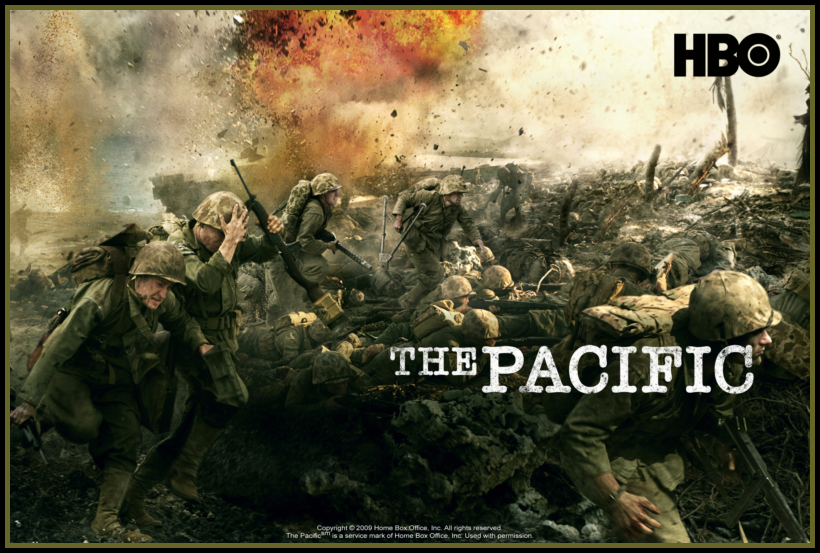
In 2001, HBO came out with a mini-series that detailed the experiences of the men of Easy Company, 506th Parachute Regiment of the 101st Airborne. This series was produced with loving care by Tom Hanks and Steven Spielberg. Two men who were instrumental in the success of an earlier World War 2 project called Saving Private Ryan. This series was called Band of Brothers and became one of the most critically-acclaimed mini-series of its time and has become part of the staple of military-themed shows and films that gets shown on Memorial and Veterans Day in the United States.

Even as this series was only a year old there was talk from some of its admirers about whether HBO and the team of Hanks and Spielberg would re-visit this era Tom Brokaw called “The Greatest Generation”. To re-visit and tell the stories of the men who fought on the other side of the European Theater in what was an even more hellish battlezone in the Pacific. It took almost 9 years, but the ending result is the mini-series called simply The Pacific.

The Pacific tells the story of three Marines of the 1st Marine Corps Division from their time before their unit ships out to the Pacific Theater of Operations and through some of the bloodiest and most savage battlefields of World War 2. There’s Gunnery Sgt. John Basilone (played by Jon Seda) who would show the sort of stoic heroism people nowadays would dismiss as a figment of Hollywood writers, but who actually did all the things only seen in action films. Bookending Basilone would be two newcomers to the art of war in PFC Robert Leckie (James Badge Dale of AMC’s recently cancelled series, Rubicon) and Cpl. Eugene “Sledgehammer” Sledge (Joseph Mazzelo from Jurassic Park). These two Marines are our guide through the unending hell that were the battles in Gen. MacArthur’s island-hopping campaign to beat back the Army and Naval forces of Imperial Japan.

It’s also these two men and their memoirs which detail their experiences during the war in the Pacific which make up the bulk of the narrative for the series. One would be Sledge’s With the Old Breed: At Peleliu and Okinawa which many consider as one of the best first-hand accounts of combat in the Pacific. The other one is Helmet for My Pillow by Leckie which was a more personal account of his time from Marine boot camp and experiencing a type of warfare in the Pacific which was new to a young man from the States. A type of warfare where the enemy didn’t surrender and would sacrifice his life in the service of one’s Emperor.

Basilone, Sledge and Leckie’s stories never come together but were told in concurrent fashion to show the audience the differing views of each. All three would go through the same meat-grinder that were the battles in immortalized places named Guadalcanal, Cape Gloucester, Peleliu, Iwo Jima and Okinawa.

We see Basilone’s heroism on Guadalcanal make him into a Stateside hero and taken away from those he fought beside to help push war bonds for the government. This change in environment for him doesn’t sit well with Basilone as we see the survivor’s guilt in him. Why does he get all the celebrity attentions when others like him were still fighting and dying the same battles he was just in months before. His story is the most poignant of the three as he finds happiness while training new Marines for the war only for his need to get back into the fight win out. The fact that all this happened for real makes his story even more memorable. Hollywood writers have tried to capture such moments and often-times fail. It was great to see Basilone’s story told for everyone to see that the world past, present and future has real-life heroes that Hollywood could never replicate but only imitate.

Jon Seda’s performance was in-line with what one thinks a gung-ho Marine should be but he brought a sense of realism to the role. He didn’t try to make Basilone more a hero than he already was. I like to compare his performance to that of Tom Hanks’ Capt. Miller in Saving Private Ryan and Damian Lewis’ Maj. Dick Winters in Band of Brothers. He was a man who did acts of bravery as seen by others on the battlefield and one which made him a celebrity to the civilians Stateside. But in the end he just saw it as him doing his job as he was trained and trying to keep his men alive. He didn’t see himself as a hero and while his Stateside role of war hero pushing war bonds did bring some perks he never fit in. Seda’s work in Part Eight where he meets his future wife was some of the best work in this series.

In Leckie’s story we see a man swept up in the great enlistment drive which happened right after the Japanese attack on Pearl Harbor. His story sees a cocky and smart young man wanting to do his part for the war effort yet not knowing the sort of sacrifices he’ll have to make or the horrors he will witness and inflict to survive day-to-day. We see Leckie quick to make friends in his unit during their training and then through their baptism of fire in the Battle of Tenaru before seeing the real horror of the war in the Pacific as his unit and the rest of the 1st Marine Division land of the island of Guadalcanal.

His time on Guadalcanal would soon erase any romanticized notion of honor and glory in battle Leckie may have had when he decided to enlist. As a writer in his civilian life prior to the war’s start he would continue to write his experiences in-between battles and skirmishes with the Japanese. Even when friends in his unit would die each and every day it seems Leckie seemed to want to keep that savagery at bay with his writing which would become a basis for his wartime memoirs. His story ends midway through the series and we won’t see him again until the final denouement as we see Leckie’s life as a civilian once again after the war. His final time in the warzone would be on the Battle of Peleliu (one of the bloodiest battles in USMC history and one that would be steeped in tragedy afterwards) where a severe concussive blast would render him unable to fight. It’s scenes on one of the hospital ships off the coast of Peleliu where Leckie’s own survivor’s guilt is temepered by the realization that any more time out in the battlefield would surely strip him of his humanity and turn him into the growing examples of battle-scarred and psychologically damaged Marines who have seen and done too many horrible things to ever return back to their civilian life intact.

The final episode shows Leckie (with James Badge Dale in a confident and cocky turn) the one who seem to adjust to the life back to civilian life with a modicum of ease. While he still carries the scars of battle in his psyche its that time in the Pacific which has also given Leckie the confidence to get his old job back at the local paper he used to work for and woo the pretty girl next door he had been shy and awkward with in the very first episode. While his performance wasn’t as good as Seda it was still a noteworthy one which brought the person of PFC Robert Leckie to the masses watching this series.

Lastly, we come to the third of the three whose story the series revolves around. The story of one Cpl. Eugene Sledge who, like Leckie, wanted to do his part for the war effort. While his young age at the start of the war prohibited him from enlisting without his parents’ consent he finally gets a chance a year later when he is of age and just in time for him to join the Corps, train and see his first taste of combat in the Pacific on the killing grounds of Peleliu then the hellish nightmare battlefields of Okinawa.

Sledge’s story is the most complex and runs the gamut of dark emotions a young man should never have to take. His young idealism in helping his country in its time of need will get some tempering even before he ships out to become a Marine. His father tells him of having to treat young men from an earlier era from another major war which had engulfed the world. His father spoke about how some of these young men who came back whole physically didn’t do so psychologically. He spoke about how the horrors of war seemed to have “ripped the souls” from these returning young men and how he didn’t want his son to go through the same thing. But as young, headstrong men who think they’re invincible are wont to do he enlists anyway.

The performance by Joseph Mazzello (hard to believe this young man is the same young boy who ran and escaped from CGI raptors and T-Rex on Spielberg’s Jurassic Park) tops all other performances in this cast full of noteworthy and great acting work. We don’t just see his Sledge go through each horrific scene after scene of battle and its aftermath with is emotional and psyche gradually sliding down into the abyss, but we could actually see Mazzello’s body, mannerisms and the look in his eyes make the same changes. I fully bought into his performance as the young idealistic young man from Mobile, Alabama slowly turned into the same uncaring, savage Marine one had to become to survive the war in the Pacific. He had seen enough bodies of Marines and enemy Japanese torn apart and strewn about everywhere one looked that one became inured to them.

One of the most powerful scenes in the series has Sledge confronted by the aftermath of what he and his mortar-team might have been responsible for. It was deep into the campaign to take the island of Okinawa and Sledge and his fellow Marines have been brought to the edge of insanity by all the fighting. A fight which has some of them questioning why the enemy just doesn’t surrender. An enemy willing to suicide charge into heavily armed Marines and also willing to herd Okinawan civilians into the line of fire. It’s this brutality by the enemy and mirrored by his fellow Marines which brings Sledge to a darker side of his nature which we as an audience don’t see a way out for him. But in the scene close to the very end of Part Nine brings Sledge back from the abyss and reminds him that there’s still humanity in him and the very Marines he has been with since the beginning. His reaction afterwards to a group of new Marines killing a young Japanese soldier for sport sickens him. We see Sledge realizing how just days and months before he was spouting the very same savage hate for the enemy as these newly arrived Marines looking for their first kill.

Of the three it’s Sledge who will carry the deepest scars of the Pacific for the rest of his life. We see the extreme difficulty he has in adjusting back to civilian life. Nightmares haunt his nights and flashbacks of the battlefields hound his steps in the daytime. His mental and emotional breakdown as he tries to go back to hunting with his father encapsulates this series at its most basic core. This series doesn’t have the camaraderie and brotherhood established between fellow soldiers that its predecessor had. While Band of Brothers also showed the horrors of war in Europe it was balanced by the hope that everyone in Easy Company had their brothers in arms to back them up when the bullets flew and shells exploded. This wasn’t the case in the Pacific.

Sure the were the same camaraderie and brotherhood, but the type of enemy fought in abject conditions which made downtime from battle almost as bad as the battle themselves didn’t bring hope. It only brought misery and a fatalistic view of the world Sledge and his fellow Marines existed right there and then. His breakdown in the final episode shows how those who fought in the Pacific definitely bore deeper scars and returned more damaged than their European brothers. Scars not just inflicted by the enemy but those they’ve inflicted on themselves by fighting savagery with their own form of savagery. It was a kill or be killed world and returning back from that brink didn’t happen to everyone and those who were able to return did so not whole.

I understand that some were disappointed by how The Pacific turned out. How it didn’t live up to the standards created by Band of Brothers. Some have said that there was no main focus to the narrative the way its predecessor strictly followed the men of Easy Company through the battles in Europe. They’ve pointed out how some episodes took too much time to get to the battle scenes. I think trying to compare The Pacific to Band of Brothers is foolish and a doesn’t give this follow-up mini-series the proper due it deserves.

The Pacific wasn’t trying to tell Band of Brother in the Pacific. While the two series do take place in the same world war the circumstances surrounding the storylines in both series diverge to take different paths. The first series almost seem like men fighting for a common cause and the good fight against tyranny. The Pacific is all about revenge. Revenge and payback for Pearl Harbor at first then as the series moves forward it becomes revenge and brutality for seeing their buddies die. This series showed nothing noble about the fighting in the Pacific. It was just a struggle to survive from one day to the next.

So, while this series may not be the second coming of Band of Brothers it does stand on its own merits and I think was the more powerful of the two. It didn’t flinch away or dismiss the darker side of the “good guys” and showed that war truly is hell and that those who fight and live through it were truly never the same. I say watch The Pacific and stop trying to compare it to Band of Brothers or any of the several shows dealing with the current wars. The Pacific should be watched as seen as the bookend to Band of Brothers. A darker journey to seeing the war of the “Greatest Generation” from the eyes of those who fought and died on the islands and jungles of the Pacific.


For Your Oscar Consideration


It’s November and that means that we have now officially entered Oscar season.  For the next two months, movies specifically designed to win awards will be released in theaters across America.  Movies like Fair Game, The King’s Speech, True Grit, For Colored Girls, Another Year, and 127 Hours will be presented for “your consideration,” as they always put it in the Oscar ads.  Don’t get me wrong, I’m looking forward to seeing quite a few of those films.  Fair Game looks like its going to be a bit of a pain (seriously, Sean Penn, it’s great you were right about Iraq and all but get over yourself)  and For Colored Girls seems like it’ll be one of those films that people are scared to admit disliking.  However, The King’s Speech looks like it might be a funny and sweet little movie and  127 Hours looks like it might be the film that proves that James Franco is a major hottie who could use and abuse me in any way he…uhmm, sorry, where was I?  Oh yeah — Oscar season!

The unfortunate thing about Oscar season is that often it seems that movies that were released before the end of the year are either totally forgotten or only given a few sympathy nods.  So, here’s my personal list of a few contenders that, though released pre-Oscar season, I think are just as deserving of consideration as Fair Game.

1) Best Picture — Exit Through The Gift Shop

People either love this film or they hate it.  I love it.  I think it’s a great mindfuck and, as of now, it’s my favorite film of 2010.  In a perfect world, it would not only be the first documentary to be nominated for best picture but the first one to win as well.  Unfortunately, the Mainstream hates having its mind fucked.  Which is why I say — Grindhouse Victory for Exit Through The Gift Shop!

2) Best Picture — Animal Kingdom

This grim yet compelling Australian crime thriller plays like an unromanticized version of The Town, which is probably why it will be no where to be seen once the nominations are announced.  Animal Kingdom also features award worthy work from actors Jacki Weaver, Ben Mendelsohn, Guy Pearce, and director David Michod.

3) Best Picture — Scott Pilgrim Vs. The World

Yes, it crashed and burned at the box office and it’s been the victim of an anti-Michael Cera backlash but Scott Pilgrim Vs. The World was one of the best and most original films of the summer.  If the best movies succeed by creating their own unique worlds, then Scott Pilgrim Vs. The World deserves to be recognized as one of the best.

4) Best Picture — Never Let Me Go

Mark Romanek’s low-key but affecting adaption of Kazou Ishiguro’s award-winning novel takes a familiar Sci-Fi plot — clones are raised in seclusion so that their organs can eventually be harvested — and turns it into a haunting meditation on life, death, love, and fate.  Carey Mulligan, who deserved the Oscar last year for An Education, holds the film together with quiet strength while Kiera Knightley and Andrew Garfield make the most of the more showy supporting roles.

5) Best Actor — Patrick Fabian, The Last Exorcism

Yes, Fabian will never be nominated because The Last Exorcism was a box office flop, a horror film, and it had an ending that generated a lot of negative word of mouth.  However, I believe that Fabian gave the best performance of the year (so far) in this film.  One reason why that over-the-top ending upset so many viewers was because Fabian had kept the film so grounded in reality that the sudden appearance of the supernatural almost felt like a betrayal.  Incidentally, I think that Fabian’s performance was meant to be an homage to former child evangelist Marjoe Gortner.  (And yes, I realize that’s like the 100th time I’ve casually mentioned Marjoe Gortner on this site.  It doesn’t mean anything.  Or does it?)

6) Best Actress — Noomi Rapace, The Girl With The Dragon Tattoo

The Mainstream has pretty much already declared Annette Bening to be the winner for her work in The Kids Are All Right but the Grindhouse knows that 2010 was the year of The Girl With The Dragon Tattoo.

7) Best Actress — Katie Jarvis, Fish Tank

Fish Tank probably played too early in the year to be properly remembered by the Academy but that doesn’t change the fact that it’s one of the best films of the year.  Playing an angry but naive British teen, Katie Jarvis gives a fearlessly vulnerable performance.  Just consider the harrowing scene where, after kidnapping her older lover’s daughter, she realizes what a mistake she’s made.

8 ) Best Supporting Actor — John Hawkes, Winter’s Bone

While I hope Winter’s Bone, at the very least, receives nominations for best picture, best actress for Jennifer Lawrence, and a best director nod for Debra Granik, I fear that John Hawkes will be forgotten.  That’s a shame because Hawkes, arguably, gives the strongest performance in the film.  As Lawrence’s drug addicted uncle, Hawkes is both scary and heroic.  If Lawrence represents hope for the future, Hawkes epitomizes the doom of the present.

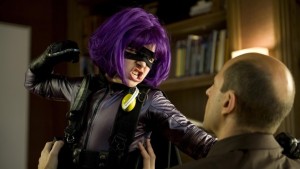
9) Best Supporting Actress — Chloe Grace Moretz, Kick-Ass

If Moretz is nominated, it’ll probably be for her performance in Let Me In.  However, good as she was in that film, I think her performance in Kick-Ass is even better.  Playing the controversial character of Hit-Girl, Moretz was the film’s foul-mouthed, borderline-psychotic heart.

10) Best Cinematography — Twelve

Yes, Twelve is a dire film that manages to turn a good book into a silly melodrama but the movie is gorgeous to look at.

11) Best Original Score — Machete

As performed by the band Chingon (which features the film’s director, Robert Rodriguez, on guitar), Machete’s score was much like the film itself: over-the-top, shameless, and a lot of fun.   In much the same way that Hans Zimmer’s score made you believe in the world of Inception, Machete’s score literally forces the viewer into the proper Grindhouse mindset.

12) Best Original Song — “Pimps Don’t Cry” from The Other Guys

Oh, why not?

13) Best Feature-Length Documentary — Best Worst Movie

A charming documentary about the making of that infamous film, Troll 2, Best Worst Movie is also a look at how a movie can be so amazingly bad that it eventually becomes a beloved classic.

14) Best Animated Feature — A Town Called Panic 

This surreal, French, stop-motion film only played for a week down here in Dallas and I nearly didn’t get to see it.  I’m glad I did because, seriously, this movie — oh my God.  The best description I’ve heard of it comes from Empire Magazine where it was referred to as being “Toy Story on absinthe.”  Of course, since apparently California can’t even handle legalized weed, it’s probably hoping too much that they’ll be willing to drink the absinthe.

As just a sidenote, isn’t the poster for A Town Called Panic just adorable?  I swear, just looking at it makes me feel happy.

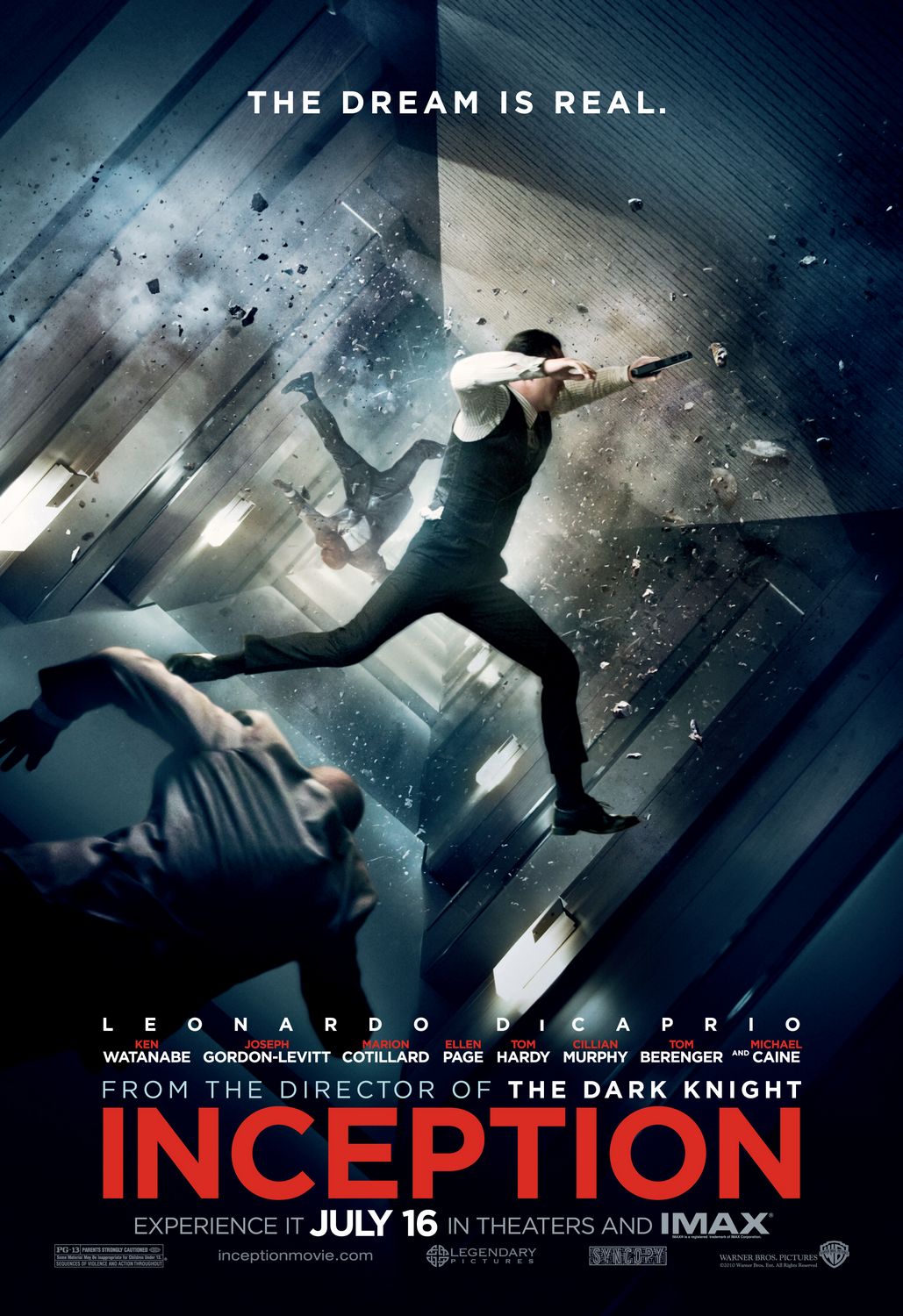
Review: Inception (dir. by Christopher Nolan)


The summer of 2010 has been quite a disappointment. While the films released during this major blockbuster season has been good most have not been able to be that one stand-out which defines a summer season. We’ve had the typical tentpole sequels like Iron Man 2 (good but not great) and Toy Story 3 (also good but not great) to remakes like The Karate Kid to The A-Team. To say that the 2010 summer blockbuster season has been lackluster would be an understatement. Even original films like Splice hasn’t taken in the audience. It now falls to one of the biggest titles for the summer to try and save the season. Whether it will do so financially is still in doubt, but critically the latest from Christopher Nolan may just become the event film of the summer to actually deliver on its hype and the promise of an audience seeing something new, fresh and daring in a sea of mediocrity. Inception comes into the 2010 summer season and delivers on its promises and more than lives up to the hype heaped upon it by critics and fans alike.

A film almost a decade in the making, Christopher Nolan’s epic and sweeping tale of dreams and reality wrapped around a heist film brings the filmmaker one-step closer to becoming the genius filmmaker some of his most ardent followers have dubbed him to be. Nolan as a filmmaker and, more importantly, as a storyteller has always had a fascination with shattered reality and how the subconcious directly affect his protagonists’ sense of the real. We’ve seen this in his film-style of using a disjointed and non-linear structure to his films which goes to creating a sense of confusion in the inattentive viewer. Some have called this style of his as being a gimmick to make a simple story more complex than it really is. I disagree with these individuals and say that Nolan has never done anything to trick an audience with his storytelling style and choices. His films have all the facts laid out before the audience, but in a way that asks the audience to participate in putting the jumbled pieces together. I’ve never seen a red herring used by Nolan in his more personal projects and even in the populist titles he’s done under the rebooted Batman franchise.

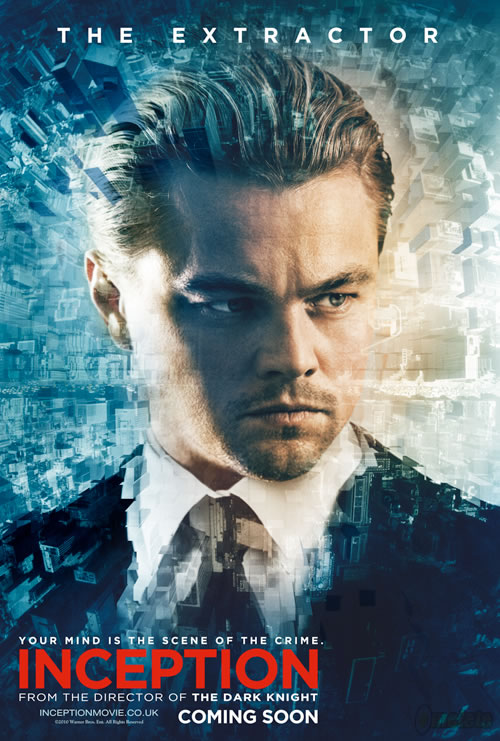
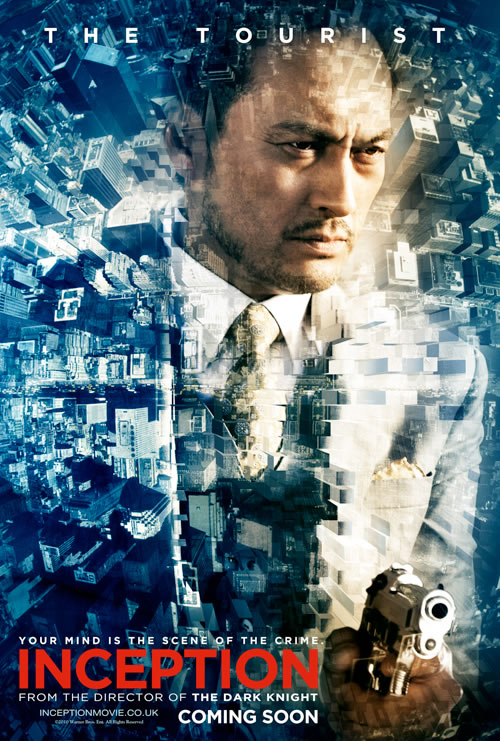
In his latest film, Nolan has refined his non-linear style and used it to successfully create the main setting of the film. Inception is set mostly in the dream world shared by the characters and those they’ve targeted. It is in this shared dream state that the audience learn the rules governing the world of Inception. It is in this dream state that we’re introduced to the first people who would make up an incredible ensemble cast put together by Christopher Nolan and his casting crew. We first meet dream extractor Dom Cobb (played by Leonardo DiCaprio) and his pointman Arthur (Joseph Gordon-Levitt) as they attempt to steal something valuable and important from within the dream of their Japanese-industrialist mark in Saito (Ken Watanabe). We see hints of the rules that will become important for the audience to help them follow the film’s main story as it unfolds. We learn that Saito has already known in advance that he’s in a dream constructed and being shared by Dom and Arthur in their contracted heist by parties unknown. As good as Dom and Arthur are at their job os stealing ideas from a mark through their dreams they have no chance when someone from Dom’s past inserts herself in their plans to sabotage what they’ve worked to accomplish.

It’s in this introductory sequence that we learn of the backstory of Dom and why his latest heist-job didn’t work out too well and has now endangered not just himself but those he has been working with. Saito gives Dom and Arthur a way out of their problems after failing in this job to steal from him by doing a job for him. But unlike previous dream heists Dom and Arthur have done in the past this time Saito doesn’t want something stolen from someone’s mind but to have an idea planted so deep within a mark’s subconscious that the mark believes it to be their very own and not one planted by an outsider. The job doesn’t require Dom to be an extractor of ideas. He’s now to find a way to successfully plant an idea. A job known as “inception” which Arthur and others deem near-impossible to pull off and one quite dangerous not just to the mark but to those involved in the process.

To say anymore about the plot of the film would be to spoil it. Inception works best when as little as possible about the film is known going in. The surprise and awe of the story unfolding is half the fun. It’s like an intricate puzzle or game one tries to solve. It’s ok to know ahead of time how to solve things, but not as fun. While for some people the way Nolan uses non-linear storytelling can be confusing all he asks his audience is to pay attention to the details and clues he’s planting in every scene and piece of dialogue. Let’s be honest this film is not for the inattentive. I won’t say stupid since that implies having low intelligence. It doesn’t take intelligence to pay attention and I’ve known that some of the more intelligent people have a tendency to let their attention wander.

Inception is a film about big ideas and grandiose themes. While the story in of itself when broken down to its simplest common denominator is just a heist film done in a new way, the film allows for layers upon layers of ideas to wrap itself around this simplistic premise. Nolan doesn’t just play with disjointing time for audience. He’s gone and went towards manipulating reality within the subconscious thought to ask the audience a simple question.

Are what we seeing a dream or is it reality?

The film doesn’t trick us using red herrings to make us think one way or another. Everything Nolan has put up on the screen is quite literal and remembering the rules he had set-up in the first hour lays the groundwork for each individual audience to answer that question for themselves. There’s no right or wrong answer to the question, but for some who have seen the film their disappointment seem less to do with the quality of the film, the acting and the direction but more on some of the ambiguous nature of the ending which becomes a dealbreaker for some. Again while I respect their take on this film I find their reasoning for negative criticism to be grounded on thin to non-existent ground. I will get to that ending soon.

While some have called Inception as the anti-Avatar I believe the two filmmaker share similar traits not just in how they create their film, but also in their two latest film. Both Nolan and Cameron are quite known to be very controlling of how their films are made to the point they dabble in every aspect of it. In their latest films they’ve also gone a long way into building a world for their story and characters to inhabit and play around in. While Cameron’s latest was an otherworldly kind in the most literal sense the same could be said for Nolan’s latest but instead inhabits the mind and how anything is possible. From the look of things both film will also share the same sort of near-universal acclaim from the film-going audience with a small, albeit very loud, minority calling Nolan’s film unoriginal, boring and, a word I have loathed for its overuse when something becomes very popular, overrated.

Where the two filmmakers diverge is the way they go about their films. Where Cameron leans heavily in pulling at the emotional strings of the audience through narrative and film sequences in his films, Nolan plies the audiences intellect instead. Cameron for all his technical genius both within the filmmaking sphere and outside of it can be quite the sappy filmmaker and all his films have shown this whether it’s The Terminator or Avatar. For Nolan his films have always felt like an intellectual exercise. An exercise everyone was invited to participate in no matter their level of intellect. He’s been able to marry both his indipendent arthouse sensibilities with the blockbuster the masses seem to crave year in and year out. With Inception he has moved one-step closer to achieving a perfect meshing of the two. This film has all the makings of a great heist and sci-fi thriller wrapped around so many pieces of profound and thoughtprovoking ideas that even after several viewings an audience will find something new to think about. Only one other film I can think of in the last decade or so has accomplished this and that was 1999’s The Matrix by The Wachowski Brothers. While that film was a kick-ass sci-fi action film it also dared to mix in a liberal dose of philosophy both Eastern and Western not to mention subjecting it’s audience to rethink how they see reality.

Christopher Nolan has gone beyond just trying to question the nature of reality. His goal with this film is to deconstruct the nature of the subconscious itself and show how such a thin line separates the dream from the real that at first and, even several glances, one cannot tell the difference. It’s a good thing for the audience watching Inception that Nolan has given them the tools and the rules to follow if they dare. And that’s where I think Nolan will disnguish himself apart from other great directors of his generation and put him up on the level of the true masters in film history. He doesn’t just make films that has worldwide appeal but able to do them while still able to engage his audience to open up their minds to the infinite possibilities his stories offer. While this does make his film a tad cold and distant for some that shouldn’t detract from the high-quality of his work, especially with Inception. The film has heart. It just doesn’t pluck on those particular beats to engage the audience.

I think filmblogger Devin Faraci said it best on his Twitter feed while discussing the film with others. While not exactly verbatim what I got out of it was that he thought it was always easy to engage and/or manipulate the audience through emotional factors, but much harder to engage their intellect. While some have accomplished the former to a great extent and vice versa I think with Inception Nolan has stepped closer than anyone to engage both the heart and the mind of the audience.

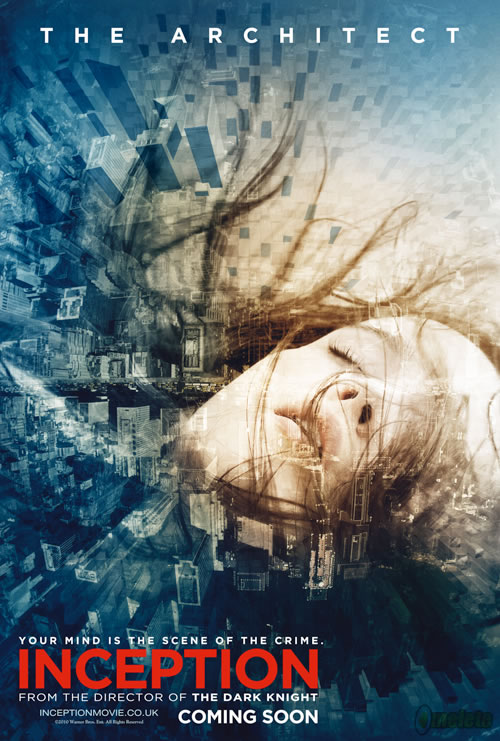
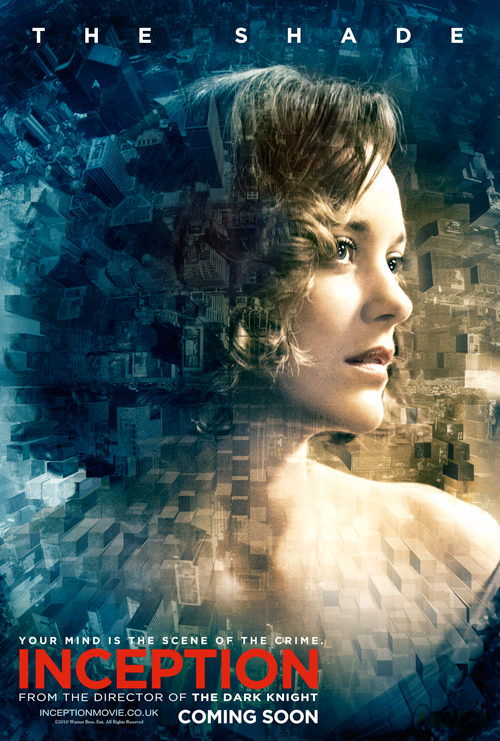
This review cannot be too much of a review if I just spoke about the ideas, themes and the inner workings of Nolan’s mind. The film is actually very good. Good enough to that’s close to being perfect. Pick any aspect of the film and those involved have done some of their best work and grown in their craft. As I stated earlier the film sports one incredible ensemble cast. I’ve already mentioned Leonardo DiCaprio and Joseph Gordon-Levitt who both do very great work in their roles. DiCaprio continues to be the go-to-guy when it comes to playing the tortured individual. Similar to his other role in Scorsese’s Shutter Island, DiCaprio as Cobb was quite believable in his personal-made hell in regards to a past event which involved his wife Mal (played with beautiful elegance and malice by Marion Cotillard). But unlike Scorsese’s film Nolan doesn’t reveal this personal issue through a twist in the plot, but let’s it come out naturally with the help of another cast member providing the impetus for Cobb to come clean. This individual is the team’s new dream architect in the form of Ariadne (Ellen Page in her most mature role to date and one that should go a long way from helping her shed the label of being Juno-esque).

Ariadne becomes the proxy by which the audience learns the in’s and out’s of Cobb’s job as a dream extractor and, very soon, inceptor. Through some inventive use of CGI and practical effects we see throught Ariadne’s eyes how the shared dream-state behaves. How specific rules actually exist within this state no matter how many levels of dreams an individual or group goes down into a mark’s subconscious. Some of these scenes people have seen glimpses of in the trailers and tv spots, but even seeing some of them in advance doesn’t detract from how incredible they look when seen on the bigscreen, especially for those lucky enough to see them on IMAX.

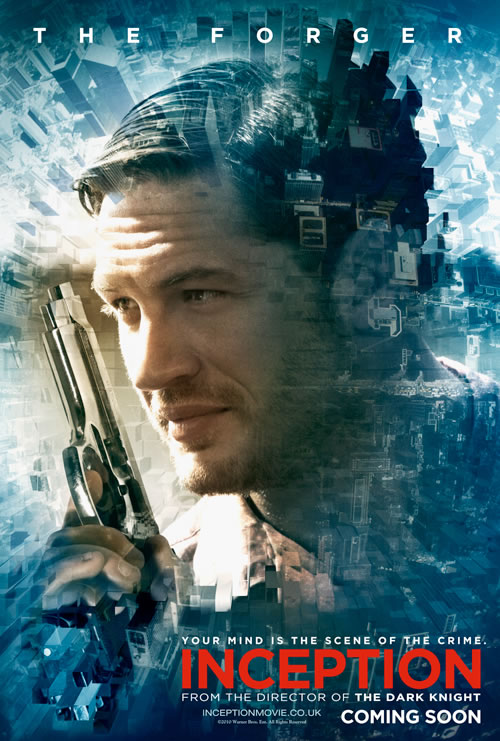
The rest of the cast rounded out by Tom Hardy as Eames the team’s Forger, Dileep Rao as the Chemist in charge of fabricating the compounds needed for the team to enter their mark’s subconscious. Cillian Murphy (starting to become one of Nolan’s regulars) plays Robert Fischer, Jr. their target and mark throughout the film with veteran actors Tom Berenger, Michael Caine and Pete Postlethwaite providing the wise-men roles in the film. It’s Tom Hardy as Eames which stood out in a cast full of extraordinary young and veteran performers. His recent fame as an actor due to his brutal and daring performance in Bronson has made Hardy a hot commodity in Hollywood. His playful character of Eames serves to provide some levity in an otherwise very serious film which allows the audience to come closer to the characters and story instead of remaining distant as Nolan’s detractors like to point out. He nearly pulls off stealing the film from everyone everytime he’s on-screen. It’s a testament to all the actors that he doesn’t as each and everyone have their moments to shine without overshadowing their fellow co-stars.

It would be difficult to review this film without pointing out how beautiful it looks and sounds. The visual part of the film has to go to Walter Pfister who works his magic behind the cameras on this film. Every shot is clear, concise and free of tricks some cinematographers these days have come to rely on too often to make their shots look more dynamic than it really should be. The editing by Lee Smith makes sure that Nolan’s style doesn’t confuse the audience and keeps the non-linear narrative structure easy to comprehend. As for the score one has to look to Hans Zimmer’s growing rapport with Nolan. He’s scored two of Nolan’s film and it looks that Zimmer has tapped into what Nolan wants his film score to sound like. not to dominate or overemphasize particular scenes or beats, but to act as an accompaniment. All three individual do their part as does the actors into making Nolan’s vision of Inception come to life. As great a filmmaker as Nolan is turning out to be these support players have made sure his path towards that goal is done so on smoother ground than not.

Now, there’s going to be some heated and long debates as to the nature of the film because of the final shot. The final shot is of a metal dreidel spinning in the foreground with the camera panning to it. The dreidel is spinning and spinning and looks to keep on doing so. The dreidel is shown earlier in the film as acting as some sort of anchor to tell Cobb whether he is in the real world or in a dream. If it continues to spin and not tip over and fall then he’s still in one. If it spins but ultimately tips over onto its side then he’s out of it. The film ends with the dreidel spinning and for a split second before the film suddenly fades to black we see it wobble.

Many have seen this final shot as being a cop-out by Nolan to play with the audience’s mind. I happen to disagree.  I see it as a part of the story itself. nolan has been asking throughout the film what is real and what is a dream. This last shot just emphasizes this question and leaves it up to the audience to decide whether the dreidel continues to spin or eventually tips over. While I lean to the latter in the end it doesn’t detract from the film. The fact that some people have grabbed hold of this scene to negatively criticized the film as a whole tells me just how well-crafted a film Nolan has made that one little sequence lasting no less than 10 seconds becomes a dealbreaker for some when it should stimulate the mind into thinking what it actually means. I see that as the mark of an excellent storyteller.

In the end, Inception has done something this year which most film have so far been unable to do. It has delivered on its high-minded promises of a film that would challenge the audience and not just entertain them. It’s a film which has been overhyped for the last six month but has more than lived up to it and for some surpassed the hype itself. Inception looks to be one of those films which would forever define a filmmaker and this one will definitely define Nolan moving forward no matter what other projects he has in the future. This is a film that dares to appeal not just to the arthouse cineaste crowd but to the general audience who yearn to watch something exciting and original. I won’t say this is Nolan’s best film since he has years upon years to continue making films. Maybe one of those will be his masterpiece, but Inception definitely could be counted as being a nominee for that honor. If nothing else this film has saved what has been a very ordinary and lackluster 2010 summer film season.

10 Best Film Scores/Soundtracks of the Past Decade


Listed below in no particular order of importance are the film soundtracks I consider as being the best of the 2000’s. All of these soundtracks have the distinction of not just great pieces of music in their own right, but also adding another layer to the film they’re scoring. Most are orchestral soundtracks with a couple a mixture of both orchestral work and licensed songs. For franchises which contain repeating music cues and motifs I’ve decided to combine as one entry.

I’ve added a video link of a favorite track from each soundtrack.

1. O, Brother Where Art Thou?

2. Almost Famous

3. Gladiator

4. Kill Bill Vol 1 & 2

5. Requiem for a Dream

6. 28 Days Later

7. Pan’s Labyrinth

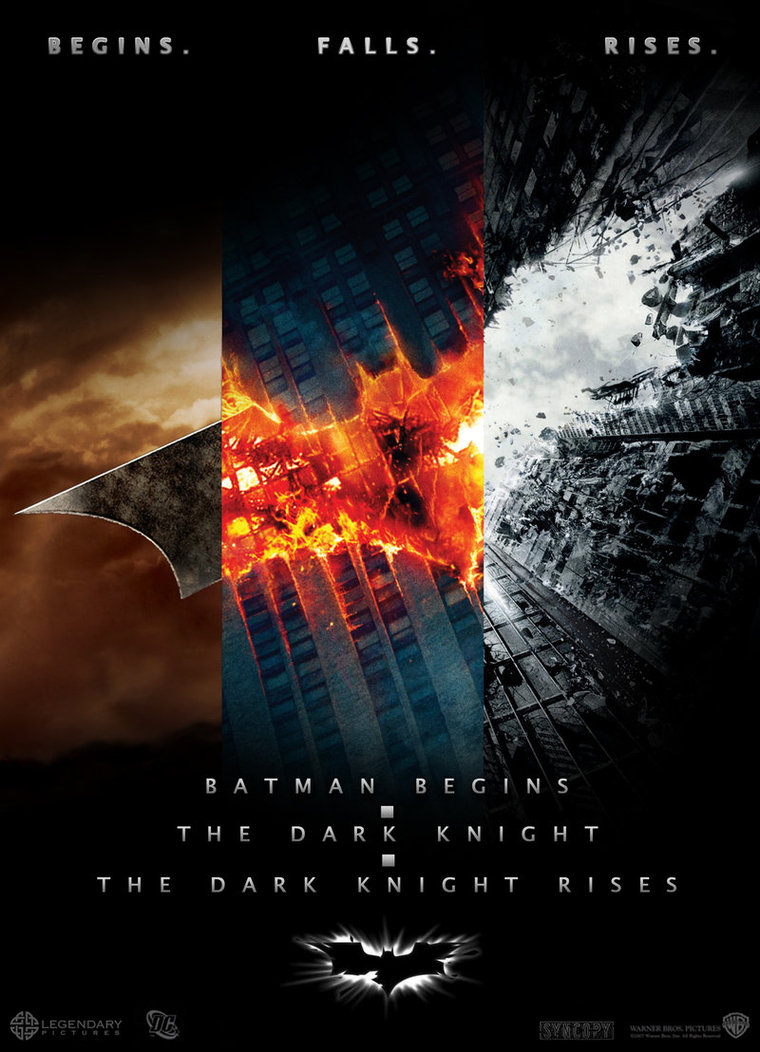
8. Batman Begins/The Dark Knight

9. The Fountain

10. The Lord of the Rings Trilogy