Late Night Retro Television Review: 1st & Ten 2.2 “The Veterans”


Welcome to Late Night Retro Television Reviews, a feature where we review some of our favorite and least favorite shows of the past! On Wednesdays, I will be reviewing 1st and Ten, which aired in syndication from 1984 to 1991. The entire series is streaming on Tubi.
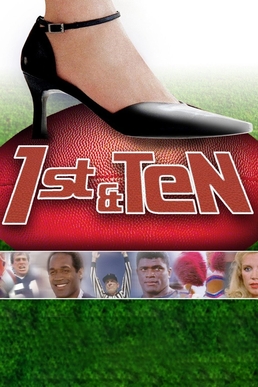
This week, the Bulls face a dilemma.  What to do with O.J. Simpson?

Episode 2.2 “The Veterans”

(Dir by Bruce Seth Green, originally aired on September 1st, 1986)

This week, veteran running back T.D. Parker (O.J. Simpson) shows up for training camp.  All of the players are excited to see him.  At the bar where all of the Bulls hang out, Dr. Death (Donald Gibb) announces that T.D. Parker has had over one hundred injuries over the past twelve years but he’s still the heart and the soul of the Bulls franchise.  He’s the face of the team!  When people think of the Los Angeles Bulls, they think of T.D. Parker slashing through the other team on his way to an acquittal touchdown.

Speaking as a viewer, it seems kind of strange that this is the first that I’m really hearing about the legendary T.D. Parker.  Where was he last season?  The Bulls went all the way to the Championship Game but I never once heard anyone mention T.D. Parker.  I certainly didn’t see him in the locker room.  The Bulls actually had a totally different running back named Carl Witherspoon.  Oddly, Carl seems to have vanished this season….

As for T.D., his injuries are catching up with him.  Denardo and Diana are forced to confront that fact that T.D. can no longer cut it.  Even in practice, he’s spilling a lot of blood on the field.  Denardo cuts T.D. from the team. When T.D. says that football is all that he knows, Denardo announces that T.D. may not be playing but he’ll still be on the field …. AS A COACH!  T.D. looks confused.  He’ll figure it out eventually, I guess.

Meanwhile, Jeff East briefly returns as quarterback Bryce Smith but just long enough to fall out of a window at training camp and bust his knee.  (He was trying to keep the new kicker — a Bosnian played by future voice of the Crypt Keeper John Kassir — from sneaking out to go into town to get drunk.)  Bryce is done for the season.  Veteran quarterback and all-around druggie sleaze Johnny Valentine (Sam J. Jones) becomes the new starter and Tom Yinessa is brought back to be his backup.  That’ll make Yinessa’s roommate (Jeff Kaake) and Yinessa’s potential girlfriend (Katherine Kelly Lang) happy.

Finally, the NFL owners don’t want to give their players a pension or a raise.  They do, however, want to give them mandatory drug tests.  Diana protests but she’s overruled by the other owners, all of whom are male and in their 60s.  There’s a lot of toupees and cigars at the ownership meeting.

This episode was actually kind of entertaining.  That’s doesn’t mean it was good.  1st & Ten isn’t a really a show that’s ever good.  But this episode did feature Sam J. Jones giving a totally over the top performance as creepy quarterback Johnny Valentine.  Speaking of going over the top, the same can be said of Delta Burke’s performance this season.  It would appear that between seasons one and two, Burke realized there was no need to try to be in any way subtle in her line readings.  That was probably the right decision.

Next week …. who knows?  I’m getting a little bored with training camp so hopefully, we’ll move on!
Late Night Retro Television Review: 1st & Ten 2.1 “The Rookies”


Welcome to Late Night Retro Television Reviews, a feature where we review some of our favorite and least favorite shows of the past! On Wednesdays, I will be reviewing 1st and Ten, which aired in syndication from 1984 to 1991. The entire series is streaming on Tubi.

This week, the 2nd season begins!

Episode 2.1 “The Rookies”

(Dir by Bruce Seth Green, originally aired on August 25th, 1986)

It’s time for another season of Bulls football and …. hey, where did everyone go?

As soon as the opening credits for the first episode of the second season started, I noticed that there were quite a few people missing.  Delta Burke, Reid Shelton, Prince Hughes, and Cliff Frazier were all listed.  However, not listed were Geoffrey Scott, Sam Scarber, Clayton Landey, Ruta Lee, Marshall R. Teague, Michael V. Gazzo, and Robert Miranda.  That’s the majority of the cast!

Instead of Geoffrey Scott’s veteran quarterback Bob Dorsey, we now have Jason Beghe as rookie quarterback Tom Yinessa.  We now have Stan Kamber as assistant coach Fred Griner.  We now have Marcus Allen as rookie running back Rick Lambert.  And, as the veteran running back T.D. Parker, we have …. O.J. SIMPSON!

Oh yeah, this isn’t going to be awkward.

O.J, only appears for a few minutes in this episode.  As T.D. Parker, he talks to his wife about how much he loves playing football and how he feels that he has one more season left in him as the Bulls’s starting running back.  Uhmm …. I thought Carl Witherspoon was the Bulls’s running back.  All last season, Carl was the Bulls’s running back.  What the Hell is T.D. Parker talking about?  Is he delusional?  Maybe he’s a crazed fan who just thinks that he was the running back last year.  All of that said, T.D. does come across as being a very nice guy and definitely someone who you can trust to slash his way through all of the ego and hype surrounding professional football.

(Probably not coincidentally, the other Bulls assistant coach is played by A.C. Cowlings, who was a friend of O.J.’s.  Remember A.C?)

Anyway, this episode deals with rookie training camp.  While the veterans get a week off, rookies like Tom Yinessa try out for the Bulls.  Yinessa played football in the Army and the only reason he’s being given a tryout is because “Captain Pete” is a friend of Denardo’s.  Denardo is shocked to discover that Yinessa is a good quarterback but he’s already got two veteran quarterbacks and Diana has signed a deal to bring in a third.  Denardo is forced to cut Yinessa.  Yinessa smashes the mirror in Denardo’s office and says that he’s done Denardo a favor because now Denardo won’t have to face what’s he done.  Okay, weirdo….

Yinessa returns to his job at the auto yard and Bulls football continues!  While hotshot rookie Rick Lambert continues to ask for more money before he’ll even show up at training camp, Diana is informed that the players are threating to strike if the League institutes mandatory drug testing.  Diana says a strike will bankrupt the team.  Why are the Bulls always on the verge of going bankrupt?  Diana needs to hire better people to look after the books.

Here’s my prediction for the rest of the season!  Yinessa will be back because he’s in the opening credits.  And, whatever problems may come up, O.J. Simpson will always cut right to the heart of the matter.

As for this particular episode, it got the job done.  It re-introduced us to the team and, even more importantly, it seemed to signal that all of the nonsense from the first season — the Mafia, Diana’s ex-husband and all the rest of it — was over with.  The show is ready to move on so let’s give it more of a chance than Coach Denardo gave Tom Yinessa.

Days of Paranoia: Serpico (dir by Sidney Lumet)


In 1973’s Serpico, Al Pacino plays a cop who doesn’t look like a cop.

Indeed, that’s kind of the start of Frank Serpico’s problems.  He’s a New York cop who doesn’t fit the stereotype.  When we see him graduating from the Academy, he’s clean-shaven and wearing a standard patrolman uniform and he definitely looks like a new cop, someone who is young and enthusiastic and eager to keep the streets safe.  However, Serpico is an outsider at heart.  The rest of the cops have their homes in the suburbs, where they spend all of their time with their cop buddies and where they go also go out of their way not to actually live among the people that they police.  Serpico has an apartment in Greenwich Village and, as a plainclothes detective, he dresses like a civilian.  He has a beard.  He has long hair.  He has a succession of girlfriends who don’t have much in common with the stereotypical (and there’s that word again) cop’s wife.  Serpico is an outsider and he likes it that way.  In a world and a career that demands a certain amount of conformity, Frank Serpico is determined to do things his own way.

However, the real reason why Serpico is distrusted is because he refuses to take bribes.  While he’s willing to silently accompany his fellow officers while they collect their payoffs from not only the people that they’re supposed to be arresting but also from the storeowners that they’re meant to be protecting, Serpico refuses to take a cut.  Serpico understands that the small, everyday corruption is a way of forcing his silence.  The corruption may help the cops to bond as a unit but it also ensures that no one is going to talk.  Serpico’s refusal to take part makes him untrustworthy in the eyes of his fellow cops.

Serpico and Bob Blair (Tony Roberts), a politically-connected detective, both turn whistleblower but it turns out that getting people to listen to the truth is not as easy as Serpico thought it would be.  The Mayor’s office doesn’t want to deal with the political fallout of a police conspiracy.  Serpico finds himself growing more and more paranoid, perhaps with good reason.  When words gets out that Serpico has attempted to turn into a whistleblower, his fellow cops start to turn on him and, during a drug bust, Serpico finds himself deserted and in danger.

Serpico opens with its title character being rushed to the hospital after having been shot in the face.  This actually happened to the real Serpico as well.  What the film leaves out is that hundreds of New York cops showed up at the hospital, offering to donate blood during Serpico’s surgery.  That’s left out of the film, which at times can be more than a little heavy-handed in its portrayal of Serpico as an honest cop surrounded by nonstop corruption.  Filmed just three years after Serpico testified before New York’s Knapp Commission (which was the five-man panel assigned to investigate police corruption in the city), Serpico the movie can sometimes seem a bit too eager to idealize its title character.  (Vincent J. Cannato’s excellent look at the mayorship of John V. Lindsay, The Ungovernable City, presents far more nuanced look at the NYPD corruption scandals of the early 70s and Serpico’s role as a whistleblower.)  Director Sidney Lumet later expressed some dissatisfaction with the film and even made other films about police corruption — The Prince of the City, Q & A, Night Falls On Manhattan — that attempted to take a less heavy-handed approach to the subject.

That said, as a film, Serpico works as a thriller and as a portrait of a man who, because he refuses to compromise his ideals, finds himself isolated and paranoid.  Al Pacino, fresh from playing the tightly-controlled Michael Corleone in The Godfather, gives an intense, emotional, and charismatic performance as Serpico.  (One can see why the image of a bearded, hippie-ish Pacino was so popular in the 1970s.)  Sidney Lumet brings the streets of New York to vibrant and dangerous life and he surrounds Pacino with an excellent supporting cast, all of whom bring an authentic grit to their roles.  Serpico may not be a totally accurate piece of history but it is a good work of entertainment, one that works as a time capsule of New York in the 70s and as a portrait of bureaucratic corruption.  It’s also the film in which Al Pacino announced that he wasn’t just a good character actor.  He was also a movie star.

Command 5 (1985, directed by E.W. Swackhamer)


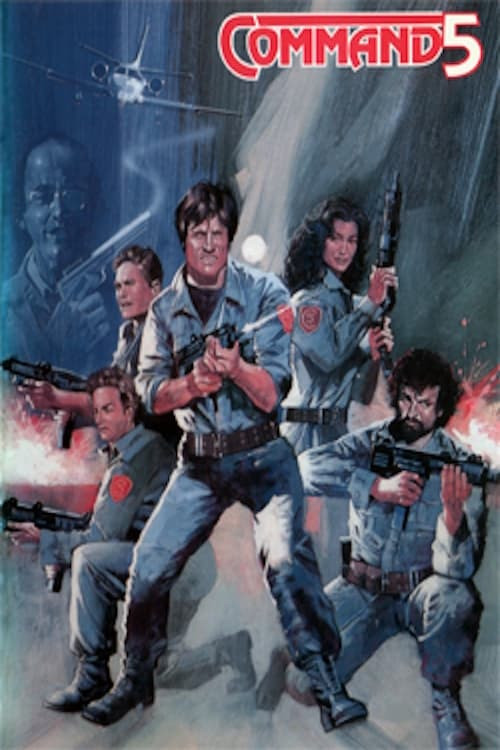
Morgan (Stephen Parr) is a mysterious government operative who puts together a special paramilitary force to take on extreme threats.  He says that only misfits are allowed to join his group because they have the edge he needs.  Smith (William Russ) is a wild Texan who drives like a maniac.  Psychiatrist Winslow (Sonja Smits) can fire an Uzi better than any man.  Kowalski (John Matuszak) is a demolitions expert who listens to Beethoven.  Jack Coburn (Wings Hauser) is a rebellious detective who is good with a throwing knife.

After a montage of their extensive training and a scene where our heroes take a look at the bullet-proof RV that they’ll be traveling the country in, the movie finally gets down to business.  A motorcycle-riding terror cult led by Delgado (Gregory Sierra) has taken an entire town hostage and is threatening to kill everyone unless they’re given a flight out of the country.  Our heroes drive their bulletproof van into town and try to defeat the bad guys.  There’s one good scene where the RV is driving down the town’s main street and getting hit nonstop with bullets.  The scene was obviously ripped off from the end of Clint Eastwood’s The Gauntlet but it’s still exciting to watch.  Otherwise, the action in this one is pretty rudimentary.

I guess Command 5 was supposed to be a pilot for television show that never went into production.  It is very much a television production.  There’s a lot of shooting but no blood.  Wings Hauser is less dangerous than usual.  The whole thing ends with Command 5 looking forward to adventures that were never to come.  Watching the pilot, you can see why it never became a show.  The characters were all thinly-written and never seemed to have much of a connection with each other and Hauser and Russ both seemed to be competing to be the loose cannon of the group.  This one is for Wings Hauser completists only.

DEATH WISH – It’s a wonderful life…at least it has been for me!


Over the next 5 days, I will discuss Charles Bronson’s DEATH WISH series in chronological order. This series has brought me countless hours of entertainment over the last 40 years, so enjoy and let me know your thoughts!

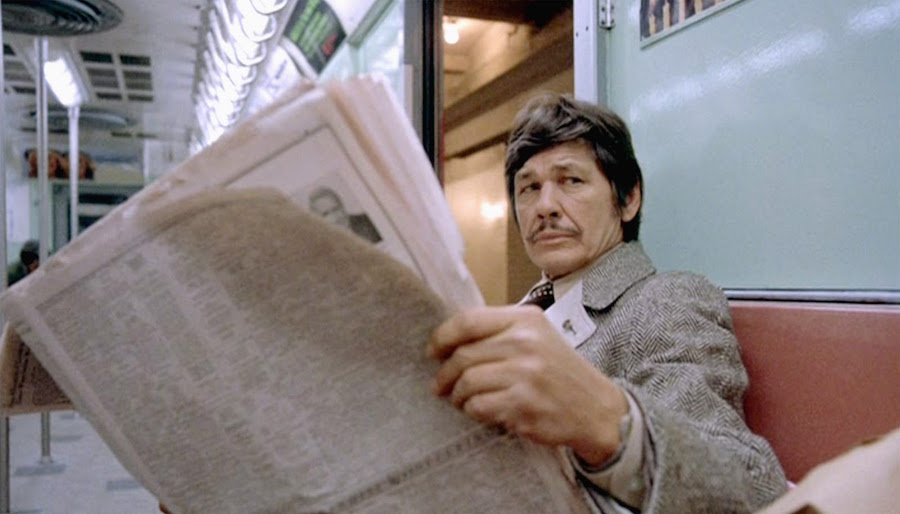
“Don’t ever make a death wish, because a death wish always comes true!” – I’ve always thought this was kind of a corny saying on the original DEATH WISH trailer, but as one of the world’s biggest Charles Bronson fans, I still hold the original DEATH WISH (1974) in extremely high regard. This is the 70’s revenge classic that made Bronson a box office superstar in his home country, while simultaneously influencing the way vengeance was depicted on screen for decades to come. DEATH WISH is one of the most underrated and influential films from a decade that was full of great films.  

If you’re reading this review, I’d be about 99% positive that you know the basic story of the film. Charles Bronson plays Paul Kersey, a conscientious objector whose wife is killed and whose daughter is raped by a group of criminal thugs in New York City. When the police are incapable of providing justice, Kersey turns into a sidewalk vigilante and stalks the streets and subways of New York, luring thugs to mug him so he can shoot them with his 32-caliber Colt Police Positive pistol. Vincent Gardenia plays detective Frank Ochoa, who’s put in charge of finding the vigilante and putting an end to his one-man mission of justice.  

It’s been 50 years since DEATH WISH was released into theaters and it’s hard to fathom just how controversial the film was in its time, especially since I wasn’t even 1 year old when it was released. The graphic rape scene that kicks off the events of the film, combined with the vigilante subject matter, turned off so many big stars, including Jack Lemmon, Henry Fonda and George C. Scott. This opened up the door for Charles Bronson who didn’t have any such misgivings. They just didn’t understand what a nerve the film would touch with the filmgoing public, who were tired of their cities being overrun by violent criminals. The movie became an audience participation movie unlike any others of the time with cheering in the seats every time Kersey offed another criminal. The controversial film became one of the top box office hits of the year and the biggest of Bronson’s career. 

DEATH WISH was the fourth of six films directed by Michael Winner and starring Charles Bronson. In typical Winner fashion, the film has some strange touches, but the director is extremely effective in building the motivation for vigilante justice that was required for the film to thrive. He handles the action sequences well, and his cast is outstanding. Bronson & Gardenia are perfect in the lead roles, and the lovely Hope Lange has the brief, infamous role as Kersey’s brutalized wife. Stuart Margolin is especially memorable as the Arizona businessman who gives Kersey his gun. There are also a number of actors in small roles who were not well known when the movie was made who would go on to successful film careers. The biggest is Jeff Goldblum who has the most memorable role of the three muggers who attack Kersey’s wife and daughter at the beginning of the film. It’s a brief, but no holds barred performance for sure. Oscar winning actress Olympia Dukakis has a small role as a cop who expresses her frustration about the amount of leg work expected of her by Detective Ochoa. And finally, Christopher Guest has one scene as a young cop who finds the wounded vigilante and recovers his gun.  

On a personal note, this film holds a special place in my heart as the first Charles Bronson film I ever saw. It was probably in 1984 or ‘85, and I stayed up with my dad to watch the late movie on our local TV station. The movie happened to be DEATH WISH. As bad things were happening to Kersey’s family at the beginning of the film, my dad told me not to worry, that “Charles would get them.” That intrigued me and let me know that Bronson had a reputation that preceded him. From that point forward, I wanted to rent a Charles Bronson film every time we went to the video store. And the rest, as they say, is history!

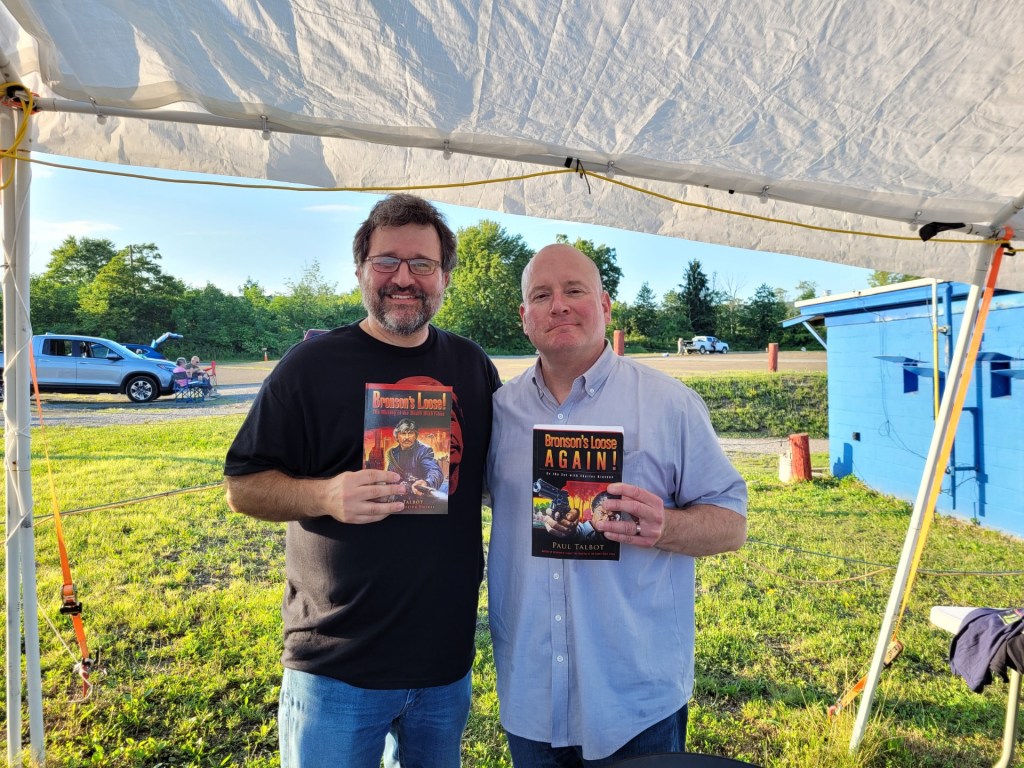
BONUS: The definitive book about the DEATH WISH film series was written by my friend, author and film historian Paul Talbot. The name of the book is BRONSON’S LOOSE: THE MAKING OF THE DEATH WISH FILMS. If you have any interest in Charles Bronson, the DEATH WISH series or Cannon Films, I can’t recommend Paul’s books more highly.

Maniac Cop 2 (1990, directed by William Lustig)


Maniac Cop 2 picks up where the first Maniac Cop ended.

The NYPD thinks that the undead maniac cop Matt Cordell (Robert Z’Dar) has been destroyed but he is actually still alive and killing civilians and cops in New York.  He has even teamed up with a serial killer named Steven Turkell (Leo Rossi, ranting and raving like a pro).  Jack Forrest (Bruce Campbell) and Theresa Malloy (Laurene Landon) both return from the first film but both of them are killed by Cordell before the movie is even halfway over.  Maniac Cop 2 is not playing around.

With Jack and Theresa gone, it falls to Detective Sean McKinney (Robert  Davi) and Officer Susan Riley (Claudia Christian) to discover what the rest of the audience already knows, that Cordell is seeking revenge against the system that abandoned him in prison.  The new police commissioner, Ed Doyle (Michael Lerner), is determined to cover up what happened but Cordell is even more determined to have his vengeance.  Working with Turkell, Cordell heads to the prison where he was unjustly incarcerated and murdered.

Maniac Cop 2 is a marked improvement on the first film.  Cordell is no longer a lumbering and slow monster.  He is now a ruthless, Terminator-style executioner who, in the film’s best-known scene, wipes out an entire police precinct in a matter of minutes.  Cordell is so ruthless that he won’t even stop when he’s on fire.  His partnership with Turkell adds a new twist to the Maniac Cop saga.  Turkell views Cordell as his partner-in-crime but Cordell is only interested in getting his revenge.  (Turkell was originally meant to be Frank Zito, the main character from Lustig’s Maniac.  When Maniac star Joe Spinell died before shooting began, the role was changed to Leo Rossi’s Steven Turkell.)

Stepping into the shoes of the main investigation, Robert Davi gives one of his best performances.  As opposed to the boring heroes of the first film (sorry, Bruce!), Davi’s Sean McKinney is just as obsessive and ruthless as Cordell.  Cordell sets fire and McKinney uses those fires to light his cigarettes.

William Lustig has described Maniac Cop 2 as being his best film and he’s probably right.  It is definitely the best of the Maniac Cop films and the only one to fully take advantage of its premise.

Film Review: Deadly Hero (dir by Ivan Nagy)


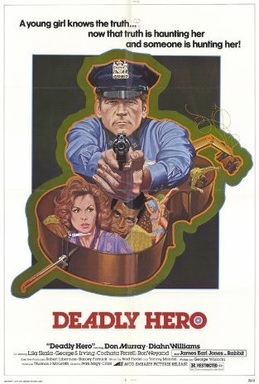
First released in 1975, Deadly Hero tells the story of Edward Lacy (Don Murray).

Lacy is an 18-year veteran of the New York Police Department and a proud family man.  Lacy is clean-cut, handsome in a blandly pleasant way, and he has a wife and several children.  He’s a member of the Knights of Columbus and there are times when he imagines himself pursuing a career in politics.  One of the first things that we see Lacy do is introduce an anti-crime mayoral candidate named Reilly (George S. Irving) at a Knights of Columbus rally.  Lacy goes out of his way to make sure that he and his family make a good impression but Reilly barely seems to notice him.

Lacy is also a racist who enjoys pulling and using his gun.  He was once a detective but a long string of brutality complaints has led to him being demoted back down to being a patrolman.  He and his partner (Treat Williams, making his film debut) spend their time patrolling the streets of New York City, getting dirty looks and verbal abuse from the people who they are supposed to be protecting.  Much like Travis Bickle in the following year’s Taxi Driver, Lacy obsesses on the crime and the decay that he sees all around him.

Sally (Diahn Williams) lives a life that is a hundred times different from Lacy’s.  She’s a cellist and a conductor.  She spends her days teaching and her nights conducting at an avant-garde theater.  Sally and Lacy have little in common but their lives become intertwined when Sally is attacked and briefly held hostage by a mentally disturbed mugger named Rabbit (James Earl Jones).  Responding to a call put in by Sally’s neighbor (Lila Skala), Lacy discovers Rabbit holding a knife to Sally’s throat in the hallway of Sally’s apartment building.  At first, Lacy handles the situation calmly and he manages to talk Rabbit into not only releasing Sally but also dropping his knife.  However, instead of arresting the now unarmed and docile Rabbit, Lacy shoots and kills him.

Knowing that he’s about to be investigated and that he’s made enemies in the department due to his political activities, Lacy convinces the still-shocked Sally to lie and say that she witnessed Rabbit lunging for Lacy’s gun before Lacy fired.  Lacy is proclaimed a hero and soon, Reilly is inviting him to appear at rallies with him.  Lacy’s political dreams seem to be coming true but Sally starts to feel guilty about lying.  Realizing that Sally is planning on revealing the truth about what happened, Lacy goes to extreme measures to try to keep her quiet.

Deadly Hero is an interesting film, one that is certainly flawed but which ultimately works as a portrait of the authoritarian mindset.  Ivan Nagy directs without much visual flair and, especially at the start of the film, he struggles to maintain a consistent pace.  For instance, the scene where Rabbit initially menaces Sally seems to go on forever, long beyond whatever was necessary to convince the audience that Rabbit was a dangerous guy.  (With the amount of time that Nagy lingers over shots of Sally being menaced by Rabbit, I was not surprised to read that Nagy and Dianh Williams apparently did not get along during filming.)  That said, the film’s low budget actually works to its advantage, with the grainy cinematography giving the film a gritty, documentary feel.  The film was shot on location in New York City and it’s interesting to watch the actors interact with real New Yorkers.  While Lacy is never a sympathetic character, seeing the actual streets of New York does go a long way to explaining why he’s so paranoid.  This is one of the many 70s films in which the overriding message seemed to be that New York City was the worst place on the planet.

The film is dominated by Don Murray, who plays Lacy as being a blue-collar fascist who has learned how to hide his anger and his hatred behind a quick smile and an outwardly friendly manner.  Feeling confident that everyone will back him up, he has no hesitation about executing an unarmed black man.  Even when it becomes obvious that Sally is not going to continue to lie about what happened, Lacy is still arrogant enough to assume that he can charm her into changing her mind.  When that doesn’t work, Lacy becomes increasingly unhinged and vindictive.  The film’s final ambiguous image suggests that there really is no way to escape the Edward Lacys of the world.

With its portrayal of a violent cop who is convinced that he will be protected by the system, Deadly Hero feels extremely relevant today.  Of course, Deadly Hero also suggests that the same system that Lacy is exploiting can be used to take him down, with Lacy eventually being investigated by both Internal Affairs and the District Attorney’s office.  The film leaves it ambiguous as to whether or not the rest of the police are as dangerous as Lacy.  Is Lacy a product of the system or is he just someone who has figured out how to exploit the system?  To its detriment, that’s a question that the film doesn’t answer.  Still, much like Harvey Hart’s similarly underappreciated Shoot, Deadly Hero is an always-interesting and occasionally insightful look at the authoritarian mindset.

Horror Film Review: The Sentinel (dir by Michael Winner)


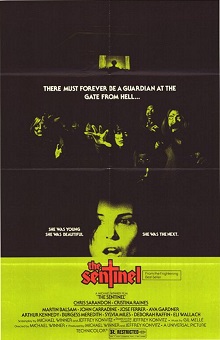
Here’s the main lesson that I’ve learned from watching the 1977 horror film, The Sentinel:

Even in the 1970s, the life of a model was not an easy one.

Take Alison Parker (Cristina Raines) for instance.  She should have everything but instead, she’s a neurotic mess.  Haunted by a traumatic childhood, she has attempted to commit suicide twice and everyone is always worried that she’s on the verge of having a breakdown.  As a model, she’s forced to deal with a bunch of phonies.  One of the phonies is played by Jeff Goldblum.  Because he’s Goldblum, you suspect that he has to have something up his sleeve but then it turns out that he doesn’t.  I get that Jeff Goldblum probably wasn’t a well-known actor when he appeared in The Sentinel but still, it’s incredibly distracting when he suddenly shows up and then doesn’t really do anything.

Alison has a fiancée.  His name is Michael Lerman (Chris Sarandon) and I figured out that he had to be up to no good as soon as he appeared.  For one thing, he has a pornstache.  For another thing, he’s played by Chris Sarandon, an actor who is best known for playing the vampire in the original Fright Night and Prince Humperdink in The Princess Bride.  Not surprisingly, it turns out that Michael’s previous wife died under mysterious circumstances.  NYPD Detective Rizzo (Christopher Walken) suspects that Michael may have killed her.

(That’s right.  Christopher Walken is in this movie but, much like Jeff Goldblum, he doesn’t get to do anything interesting.  How can a movie feature two of the quirkiest actors ever and then refuse to give them a chance to act quirky?)

Maybe Alison’s life will improve now that she has a new apartment.  It’s a really nice place and her real estate agent is played by Ava Gardner.  Alison wants to live on her own for a while.  She loves Michael but she needs to find herself.  Plus, it doesn’t help that Michael has a pornstache and may have killed his wife…

Unfortunately, as soon as Alison moves in, she starts having weird dreams and visions and all the usual stuff that always happens in movies like this.  She also discovers that she has a lot of eccentric neighbors, all of whom are played by semi-familiar character actors.  For instance, eccentric old Charles (Burgess Meredith) is always inviting her to wild parties.  Her other two neighbors (played by Sylvia Miles and Beverly D’Angelo) are lesbians, which the film presents as being the height of shocking decadence.  At first, Alison likes her neighbors but they make so much noise!  Eventually, she complains to Ava Gardner.  Ava replies that Alison only has one neighbor and that neighbor is neither Burgess Meredith nor a lesbian.

Instead, he’s a blind priest who spends all day sitting at a window.  He’s played by John Carradine, who apparently had a few hours to kill in 1977.

But it doesn’t stop there!  This movie is full of actors who will be familiar to anyone who enjoys watching TCM.  Along with those already mentioned, we also get cameos from Martin Balsam, Jose Ferrer, Arthur Kennedy, Eli Wallach, Richard Dreyfuss, and Tom Berenger.  There are 11 Oscar nominees wasted in this stupid film.  (Though, in all fairness, Christopher Walken’s nomination came after The Sentinel.)

Personally, The Sentinel bugged me because it’s yet another horror movie that exploits Catholic iconography while totally misstating church dogma.  However, the main problem with The Sentinel is that it’s just so incredibly boring.  I own it on DVD because I went through a period where I basically bought every horror film that could I find.  I’ve watched The Sentinel a handful of times and somehow, I always manage to forget just how mind-numbingly dull this movie really is.  There’s a few scary images but mostly, it’s just Burgess Meredith acting eccentric and Chris Sarandon looking mildly annoyed.  If you’ve ever seen Rosemary’s Baby, The Exorcist, or The Omen, you’ll figure out immediately what’s going on but The Sentinel still insists on dragging it all out.  Watching this movie is about as exciting as watching an Amish blacksmith shoe a horse.

There’s a lot of good actors in the film but it’s obvious that most of them just needed to pick up a paycheck.  I’ve read a lot of criticism of Cristina Raines’s lead performance but I actually think she does a pretty good job.  It’s not her acting that’s at fault.  It’s the film’s stupid script and lackluster direction.

Horror on TV: The Twilight Zone 1.23 “Shadow Play” (dir by Paul Lynch)


For tonight’s trip into the world of televised horror, we have an episode from a 1986 attempt to revive The Twilight Zone.

This episode is a remake of one of my favorite episodes of the original series, Shadow Play.  That’s the one where the guy is on death row but he says he’s not worried about being executed because he knows he’s just having a reoccuring nightmare.  Of course, this kind of freaks out some of the people around him because, if he’s just having a dream, what happens to them when the dream ends?

While the remake is nowhere near as good as the original, it’s still fairly well done.  Plus, it’s on YouTube and the original isn’t.

This episode was directed by Paul Lynch, the Canadian director who also directed the original Prom Night.

Enjoy!

Back to School Part II #17: The Boys Next Door (dir by Penelope Spheeris)


Boys-next-door

Three years after starring in Grease 2, Maxwell Caulfield starred in another (albeit far different) film about teenage delinquents, 1985’s The Boys Next Door.  Directed by Penelope Spheeris (who also did Suburbia, another film about wayward youth), The Boys Next Door is a frequently harrowing film about a road trip gone very wrong.

The film opens with a series of black-and-white photographs of real-life serial killers, so you know what you’re about to get yourself into before the main action even begins.  Caulfield plays Roy, a not-very-smart teenager who lives in an industrial town in the southwest.  With his generally bad attitude and violent temper, Roy is one of the least popular kids at the local high school.  In fact, his only friend appears to be Bo (Charlie Sheen).  Bo is just as stupid as Roy but he’s not as violent.  Bo’s problem is that he’s a follower, the type who is incapable of making his own decisions.  If Roy says, “Let’s beat the Hell out of someone,” Bo is going to agree because … well, why not?

When Roy and Bo graduate from high school, they don’t have much more to look forward to than a life of working in a factory.  After an angry Roy violently lashes out at a graduation party, he decides that he and Bo should get out of town.  Fortunately, Bo has received $200 as a graduation gift.  Roy and Bo decide to use that money to take a trip to Los Angeles.

On the way to L.A., it quickly becomes obvious that Roy is more than just an angry kid.  When he and Bo rob a gas station, Roy savagely beats the attendant.  When they get to Los Angeles, all Roy can talk about is how much he hates the city and everyone who lives in it.  Roy is especially vocal about how much he hates anyone who he perceives as being gay…

Of course, even as Roy is loudly expressing every homophobic thought that pops into his tiny mind, it’s hard not to notice that he seems to be rather obsessed with Bo.  In fact, he is so obsessed with Bo that he basically kills anyone who shows the least bit of interest in Bo.  Paranoid that Bo is going to abandon him, Roy is willing to do anything to keep that from happening.

The Boys Next Door is one of those films that really took me by surprise.  It may start and look like your typical low-budget thriller but The Boys Next Door ultimately reveals itself to be a disturbingly plausible portrait of a sociopath.  The film suggests that, as individuals, both Roy and Bo are somewhat laughable but, as a team, they’re deadly.  It’s no wonder that Roy is so insistent that Bo always stay with him because, without Bo around, Roy wouldn’t have any motivation to do anything.  Everything that Roy does — from theft to murder — is largely to impress Bo.  Unfortunately, Bo is too stupid to understand what’s going on in his friend’s head.

Especially when compared to some of the other performances that they are known for, both Sheen and Caulfield do surprisingly good work as the two murderers.  Penelope Spheeris wisely directs the film as if it were a documentary and the end result is a harrowing film that deserves to be far better known.