Guilty Pleasure No. 101: The Executioner Series (by Don Pendleton)


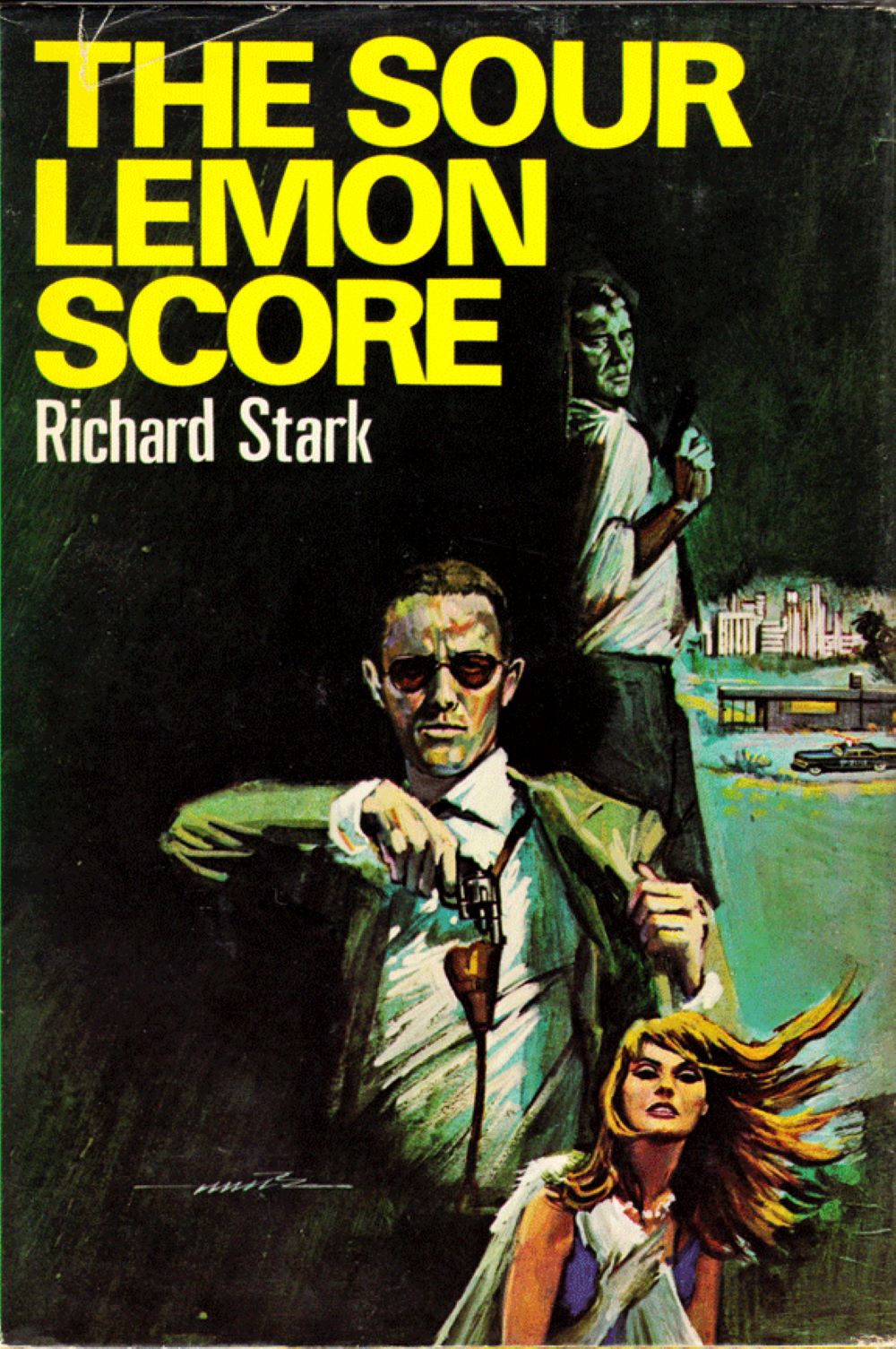
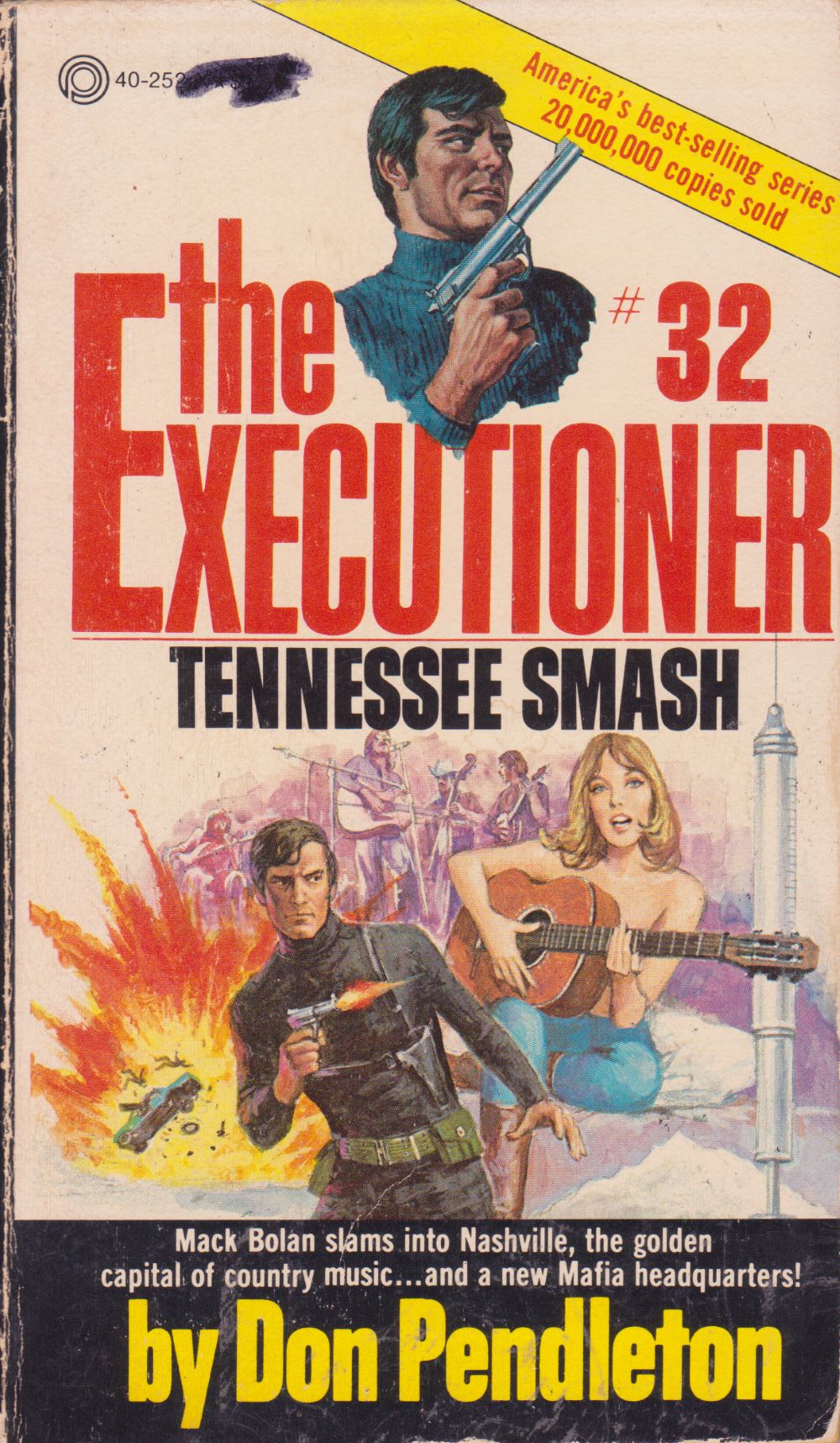
The Executioner series by Don Pendleton is one of those long-running action sagas that practically defines the phrase “guilty pleasure.” Kicking off in 1969 with War Against the Mafia, it introduces Mack Bolan, a Vietnam veteran whose homecoming turns into a nightmare and pushes him into a one-man war against organized crime. With an astonishing total of over 600 books across the main series and its spin-offs, it stands as one of the most prolific runs in pulp fiction history, delivering a steady diet of ambushes, car bombs, and last-stand shootouts, all orbiting a hero who lives somewhere between soldier, avenger, and urban legend. It’s even seeing a resurgence lately, with many original titles now available as e-books through Open Road Media, drawing in a new wave of digital readers hungry for retro action thrills.

The hook is simple and primal. Bolan comes back from Vietnam to discover his family destroyed by Mafia loan sharks, their lives shattered by debt, intimidation, and violence. The man who survived jungle warfare as a sniper becomes a domestic insurgent, redirecting the tactics of war onto American soil. In War Against the Mafia and the early novels, there’s a grim, almost workmanlike edge as he stalks mobsters through streets and back alleys, treating cities like new combat zones. Chapters move quickly, with Pendleton leaning into clear, muscular prose: weapons described with fetishistic precision, tactics laid out like field reports, and action beats that rarely pause for introspection longer than a sentence or two.

Those first runs of books form a surprisingly cohesive arc. Bolan’s war starts local and then scales outward: first the hometown syndicate, then larger crime families, then international networks and political entanglements. Titles like Death SquadBattle Mask, and Miami Massacre escalate the conflict, dropping Bolan into fresh arenas—new cities, new bosses, new layers of corruption—without ever really changing the fundamental formula. Each volume is basically a new operation: recon, infiltration, explosion. There’s comfort in that clockwork repetition, especially if you’re coming to the series for the thrill of seeing how Bolan will dismantle this week’s nest of villains, a pattern that sustains all 600-plus entries.

As pulp entertainment, the series doesn’t pretend to be anything but what it is: ruthlessly efficient action storytelling. Bolan isn’t written as a richly conflicted psychological study; he’s a vector. He thinks tactically, talks sparingly, and acts decisively. When he pauses to reflect, it’s usually to reaffirm his personal code—his obligation to protect innocents, his hatred for predators, his sense that the “jungle” followed him home from the war. That stripped-down approach makes the books read almost like mission logs. You don’t linger with him; you move with him, from weapon cache to kill zone to escape route.

The “guilty pleasure” part comes from how unapologetically the series indulges in its own extremes. Villains are drawn in thick strokes: sadistic enforcers, greedy bosses, corrupt officials, each more deserving of a bullet than the last. Bolan is judge, jury, and firing squad, and the narrative rarely questions whether that’s a good thing. The violence is frequent and often spectacular—blown-up cars, shredded safehouses, street battles that leave staggering body counts. It channels the same energy as grindhouse action cinema and ’70s vigilante films, but in prose form that you can tear through in a single sitting.

Taken purely as escapism, this is the series’ appeal: it offers a fantasy of absolute efficacy. Problems are solved through planning, courage, and overwhelming firepower, not through compromise or negotiation. If you’ve ever been frustrated with red tape and institutional inertia, Mack Bolan is the fantasy of ripping all that away and going straight to the source with a rifle. That’s also where the discomfort starts to creep in if you read the books with a more critical eye.

From a contemporary perspective, the vigilante ethos can feel both dated and unsettling. The books largely treat legal systems as ineffectual and police as either helpless, compromised, or quietly cheering Bolan from the sidelines. There’s little space for nuance when it comes to morality. That black-and-white worldview gives the action its propulsive drive, but it also flattens complexity: systemic issues collapse into a handful of “bad guys” to be eliminated. The series reflects the anxieties of its time—post-Vietnam disillusionment, fear of organized crime, distrust of institutions—but it rarely interrogates them.

Characterization is another weak spot, though it’s almost a feature of the genre. Outside of Bolan, most people function as types rather than fully realized individuals: the honorable cop, the tragic informant, the doomed love interest, the sneering mob lieutenant. Women, in particular, often feel like afterthoughts—romantic interludes, victims in need of saving, or temporary allies who don’t really alter the trajectory of Bolan’s mission. If you’re looking for layered relationships, you won’t find many here; the stories are built on momentum, not emotional intricacy.

As the series goes on and other writers take over, the tone and focus inevitably shift. The core template—lone warrior versus entrenched evil—remains, but the enemies expand from the Mafia to terrorists, cartels, rogue states, and shadowy conspiracies. Depending on your taste, that either keeps the concept fresh or dilutes Pendleton’s original blue-collar vendetta into something more generic and interchangeable with other men’s adventure titles. The early books carry a rough, personal edge; later entries sometimes feel more like franchise installments than deeply felt passion projects, stretched across hundreds of volumes.

All of that said, it’s hard to deny the series’ impact. Mack Bolan is a clear ancestor to a long line of fictional warriors and vigilantes, from paperback commandos to gun-toting comic book anti-heroes. You can see echoes of his DNA in countless characters who blend military skill with personal trauma and a private war against evil. In that sense, The Executioner isn’t just a pulpy distraction; it’s a foundational text for a whole corner of modern action storytelling.

Reading it today, the best way to approach The Executioner is with eyes open and expectations calibrated. It is not subtle, not especially nuanced, and not interested in long philosophical digressions about the nature of justice. It is fast, blunt, and engineered to scratch a very specific itch—now even more accessible thanks to Open Road Media’s e-book editions breathing fresh life into the saga. If you’re comfortable with that—if you want a hard-edged, morally stark, action-first series that feels like flipping through a stack of R-rated VHS tapes—then Mack Bolan’s war is easy to fall into and surprisingly hard to quit, even after 600 books.

If you’re curious, the ideal entry point is still the beginning: War Against the Mafia and the couple of books that follow. Those early volumes give you the raw version of the character and the template everyone else later imitates. If they don’t work for you, the rest of the series almost certainly won’t. But if you find yourself staying up late to squeeze in “just one more chapter,” that’s when you know the guilty pleasure has done its job.

Previous Guilty Pleasures

  1. Half-Baked
  2. Save The Last Dance
  3. Every Rose Has Its Thorns
  4. The Jeremy Kyle Show
  5. Invasion USA
  6. The Golden Child
  7. Final Destination 2
  8. Paparazzi
  9. The Principal
  10. The Substitute
  11. Terror In The Family
  12. Pandorum
  13. Lambada
  14. Fear
  15. Cocktail
  16. Keep Off The Grass
  17. Girls, Girls, Girls
  18. Class
  19. Tart
  20. King Kong vs. Godzilla
  21. Hawk the Slayer
  22. Battle Beyond the Stars
  23. Meridian
  24. Walk of Shame
  25. From Justin To Kelly
  26. Project Greenlight
  27. Sex Decoy: Love Stings
  28. Swimfan
  29. On the Line
  30. Wolfen
  31. Hail Caesar!
  32. It’s So Cold In The D
  33. In the Mix
  34. Healed By Grace
  35. Valley of the Dolls
  36. The Legend of Billie Jean
  37. Death Wish
  38. Shipping Wars
  39. Ghost Whisperer
  40. Parking Wars
  41. The Dead Are After Me
  42. Harper’s Island
  43. The Resurrection of Gavin Stone
  44. Paranormal State
  45. Utopia
  46. Bar Rescue
  47. The Powers of Matthew Star
  48. Spiker
  49. Heavenly Bodies
  50. Maid in Manhattan
  51. Rage and Honor
  52. Saved By The Bell 3. 21 “No Hope With Dope”
  53. Happy Gilmore
  54. Solarbabies
  55. The Dawn of Correction
  56. Once You Understand
  57. The Voyeurs 
  58. Robot Jox
  59. Teen Wolf
  60. The Running Man
  61. Double Dragon
  62. Backtrack
  63. Julie and Jack
  64. Karate Warrior
  65. Invaders From Mars
  66. Cloverfield
  67. Aerobicide 
  68. Blood Harvest
  69. Shocking Dark
  70. Face The Truth
  71. Submerged
  72. The Canyons
  73. Days of Thunder
  74. Van Helsing
  75. The Night Comes for Us
  76. Code of Silence
  77. Captain Ron
  78. Armageddon
  79. Kate’s Secret
  80. Point Break
  81. The Replacements
  82. The Shadow
  83. Meteor
  84. Last Action Hero
  85. Attack of the Killer Tomatoes
  86. The Horror at 37,000 Feet
  87. The ‘Burbs
  88. Lifeforce
  89. Highschool of the Dead
  90. Ice Station Zebra
  91. No One Lives
  92. Brewster’s Millions
  93. Porky’s
  94. Revenge of the Nerds
  95. The Delta Force
  96. The Hidden
  97. Roller Boogie
  98. Raw Deal
  99. Death Merchant Series
  100. Ski Patrol

Guilty Pleasure #100: Ski Patrol (dir by Rich Correll)


First released in 1990, Ski Patrol is the story of a …. well, a ski patrol.

They’re not a very good ski patrol, not really.  Their martinet leader is short and annoying and he’s played by Leslie Jordan.  A young George Lopez is a member of the ski patrol and he keeps trying to do stuff that I assume was from his 1990 stand-up act.  Future director Paul Feig plays Stanley, who is nerdy but can dance and is willing to dress up like Tina Turner when the Ski Patrol needs to raise some fast money.  T.K. Cater is Iceman, who sings at every party and is a part of every prank.  Suicide (Sean Sullivan) wears a crazy mask and an evil mask as he debates which dangerous thing he should do.  And then there’s Jerry Cramer (Roger Rose), who is handsome and a great skier.  He’s technically the hero of the film but he’s kind of smarmy.  He does own a cute bulldog, though.

Eccentric or not, the ski patrol is dedicated to Pops (Ray Waltson), the fair-minded and kind-hearted owner of a mountain ski lodge.  Unfortunately, an evil developed named Maris (Martin Mull) wants Pops’s land so he and Lance (Corbin Timbrook) and Lance’s evil friends conspire to cause the lodge to fail its annual inspection.  Before you know it, mice are running loose, George Lopez is getting thrown in jail, and an avalanche causes a hot dog stands to careen out of control.  Since this movie was made in 1990, the solution to all of these problems is to party, party, and party some more!

This is not exactly a good movie.  It has its share of cringey moments and jokes that have not aged particularly well.  Roger Rose tries to pull off the whole charming smartass routine but he doesn’t really have the screen presence to do it.  One gets the feeling that filmmakers may have noticed that while filming because it’s hard not to notice that, despite being the film’s nominal star, Rose doesn’t really do much.  And yet, there’s enough odd little moments that the film itself is often more likable than it has any right to be.  These scenes might not add up to much but it’s hard not to smile when Paul Feig starts dancing or when Suicide starts arguing with himself.  There’s a lot of lovely scenery (the ski lodge really does look like a nice place to visit) and even the bulldog is genuinely cute.

As for T.K. Carter (whose passing earlier this month really didn’t get the attention that it deserved), this film was typical of the majority of the films in which he appeared and, as was often the case, he’s brings a lot of life to material that probably wouldn’t have worked without his energy.  Of course, it’s always interesting to see Carter in a silly comedy like this and then to consider his performances in The Thing and Southern Comfort, two excellent films that definitely were not comedies.  Indeed, after The Thing, it’s hard not to feel that Carter had earned a chance to appear in a film featuring snow in which everyone survives.

Previous Guilty Pleasures

  1. Half-Baked
  2. Save The Last Dance
  3. Every Rose Has Its Thorns
  4. The Jeremy Kyle Show
  5. Invasion USA
  6. The Golden Child
  7. Final Destination 2
  8. Paparazzi
  9. The Principal
  10. The Substitute
  11. Terror In The Family
  12. Pandorum
  13. Lambada
  14. Fear
  15. Cocktail
  16. Keep Off The Grass
  17. Girls, Girls, Girls
  18. Class
  19. Tart
  20. King Kong vs. Godzilla
  21. Hawk the Slayer
  22. Battle Beyond the Stars
  23. Meridian
  24. Walk of Shame
  25. From Justin To Kelly
  26. Project Greenlight
  27. Sex Decoy: Love Stings
  28. Swimfan
  29. On the Line
  30. Wolfen
  31. Hail Caesar!
  32. It’s So Cold In The D
  33. In the Mix
  34. Healed By Grace
  35. Valley of the Dolls
  36. The Legend of Billie Jean
  37. Death Wish
  38. Shipping Wars
  39. Ghost Whisperer
  40. Parking Wars
  41. The Dead Are After Me
  42. Harper’s Island
  43. The Resurrection of Gavin Stone
  44. Paranormal State
  45. Utopia
  46. Bar Rescue
  47. The Powers of Matthew Star
  48. Spiker
  49. Heavenly Bodies
  50. Maid in Manhattan
  51. Rage and Honor
  52. Saved By The Bell 3. 21 “No Hope With Dope”
  53. Happy Gilmore
  54. Solarbabies
  55. The Dawn of Correction
  56. Once You Understand
  57. The Voyeurs 
  58. Robot Jox
  59. Teen Wolf
  60. The Running Man
  61. Double Dragon
  62. Backtrack
  63. Julie and Jack
  64. Karate Warrior
  65. Invaders From Mars
  66. Cloverfield
  67. Aerobicide 
  68. Blood Harvest
  69. Shocking Dark
  70. Face The Truth
  71. Submerged
  72. The Canyons
  73. Days of Thunder
  74. Van Helsing
  75. The Night Comes for Us
  76. Code of Silence
  77. Captain Ron
  78. Armageddon
  79. Kate’s Secret
  80. Point Break
  81. The Replacements
  82. The Shadow
  83. Meteor
  84. Last Action Hero
  85. Attack of the Killer Tomatoes
  86. The Horror at 37,000 Feet
  87. The ‘Burbs
  88. Lifeforce
  89. Highschool of the Dead
  90. Ice Station Zebra
  91. No One Lives
  92. Brewster’s Millions
  93. Porky’s
  94. Revenge of the Nerds
  95. The Delta Force
  96. The Hidden
  97. Roller Boogie
  98. Raw Deal
  99. Death Merchant Series

Guilty Pleasure No. 98: Raw Deal (dir. by John Irvin)


There is a point in every Arnold Schwarzenegger fan’s journey where they eventually circle back to Raw Deal and go, “Wait, how did this one slip through the cracks?” Set between Commando and Predator, this 1986 action vehicle often feels like the red-headed stepchild of Arnold’s golden era: a half-forgotten mob thriller dressed up as a one-man-army shoot-’em-up, with an undercover plot that keeps tripping over itself. Before Arnold was secret agent Harry Tasker in True Lies, he was already workshopping that whole undercover persona as former FBI man Mark Kaminski in Raw Deal. There is something strangely compelling about watching him play at being slick, whether he is posing as “Joseph Brenner” in mob circles or later reinventing himself as a suburban-family-man-turned-super-spy. Yet for all its clumsiness, tonal whiplash, and baffling choices, Raw Deal settles into that sweet, trashy groove where “this is bad” and “this is kind of awesome” blissfully merge. It is, in the purest sense, a guilty pleasure.​

The setup is straightforward on paper. Arnold plays Mark Kaminski, a former FBI agent pushed out of the bureau for beating a suspect who assaulted and murdered a child, now stuck as a small-town sheriff in North Carolina with an unhappy, alcoholic wife and a life that feels like exile. His shot at redemption comes when his old FBI buddy Harry Shannon (Darren McGavin) recruits him for an off-the-books vendetta: infiltrate the Chicago mafia responsible for Shannon’s son’s death and tear them apart from the inside, in exchange for a possible path back into the bureau. Kaminski fakes his death, rebrands himself as “Joseph Brenner,” and sets out to worm his way into the organization run by boss Luigi Patrovita (Sam Wanamaker), while juggling mob politics, double-crosses, and a steady escalation of gunfire.​

What makes the Kaminski era so weirdly fascinating is how hard the film leans on Arnold as a suave operator when his natural screen charisma is more brute-force than smooth-talking. In Raw Deal, he stalks through nightclubs and mob hangouts as an “undercover” tough guy, and you can almost see the movie trying to stretch him into a more traditional cool-gangster mode even as his sheer physicality keeps breaking the illusion. That tension carries right into True Lies, where the humor finally acknowledges how absurd it is to treat this gigantic Austrian bodybuilder as a low-key spy. The seeds of Harry Tasker’s double life are there in Kaminski: the awkward attempts at suave posturing, the undercover role-play, and the sense that the film is constantly asking the audience to accept him as something more than just the gun-toting tank he so effortlessly embodies. That tonal tug-of-war is kind of a mess, yet it’s also exactly why the movie is weirdly fun to revisit.

As an action piece, Raw Deal is very hit-or-miss, but when it hits, it goes all in on 80s excess. Director John Irvin stages a number of shootouts, but the standout sequence is the gravel pit massacre where Kaminski tears through mob soldiers with Mick Jagger’s “(I Can’t Get No) Satisfaction” blaring on the soundtrack, turning what should be a grim set piece into something closer to a music video about vengeance. The climactic assault on Patrovita’s casino base is another high point, with Kaminski stalking room to room, methodically mowing down henchmen in suits as the film abandons any pretense of undercover subtlety and embraces straight-up carnage. These moments are absurdly over the top, but they’re the reason the film lingers in the memory more than some “better” constructed movies from the same era.​

The problem is that the film around those set pieces often feels oddly slack. For a movie with such a simple premise—ex-cop goes undercover in the mob—Raw Deal somehow manages to tangle itself in muddled plotting and underdeveloped subplots. Roger Ebert complained that the story is so basic it should be impossible to screw up, yet the movie still finds ways to make motivations cloudy and relationships confusing, especially when it comes to FBI leaks and why certain hits are happening. There are scenes, like the cemetery assassination setup, that should be loaded with emotional and narrative clarity but instead play as strangely opaque, leaving viewers wondering less “What will happen next?” and more “What exactly is going on?”​

Despite the narrative wobbling, the cast gives the film more personality than it probably deserves. Schwarzenegger is still in that phase where his acting is limited but his screen presence is undeniable, and Raw Deal leans into that presence by letting him oscillate between stoic enforcer and deadpan comedian. He is not as effortlessly iconic here as he is in The Terminator or Predator, but he has a grounded gruffness in the early scenes as the weary small-town sheriff, and a playful swagger once he shifts into mob-infiltrator mode. The movie’s tonal confusion sometimes works in his favor: when he drops a ridiculous line in the middle of a supposedly serious undercover situation, it breaks the film’s self-seriousness in a way that oddly makes it more enjoyable.​

On the supporting side, Darren McGavin brings a welcome dose of worn-out moral anguish as Harry Shannon, a man consumed by grief and desperate enough to go rogue, while Sam Wanamaker’s Patrovita and Paul Shenar’s lieutenant Max Keller give the mob side just enough theatrical menace to keep things lively. Kathryn Harrold’s Monique—Patrovita’s associate and Kaminski’s sort-of ally—is more underwritten than she should be, but she adds a smoky, world-weary charm to an otherwise thin role, bringing a touch of noir-vibe melancholy to a film that mostly cares about bullets. The dynamic between Kaminski and Monique hints at a more emotionally grounded movie lurking underneath, one that never fully arrives but peeks through in their quieter moments.​

Visually and stylistically, Raw Deal fits comfortably into the mid-80s action aesthetic: slightly grimy urban backdrops, neon-lit nightclubs, smoky gambling dens, and anonymous industrial sites where bad guys go to die. John Irvin, better known for dramas and war films, occasionally tries to inject a more grounded tone, but the movie keeps undercutting that with comic-book logic and stylized violence, making it feel as if two different films are wrestling for control. On one level, that is a flaw; on another, that disjointed energy is part of what gives Raw Deal its “so off it becomes its own thing” quality, especially when watched now with decades of ironic distance.​

Critically, the film was not well-loved on release, and its reputation has never really recovered in a mainstream sense. It holds a low Rotten Tomatoes score and only middling numbers on Metacritic, with reviewers at the time describing it as muddled, clichéd, and cheap compared to other action fare. Yet audience reactions have always skewed a bit warmer, with CinemaScore polling showing a respectable “B” grade and plenty of fans over the years framing it as an uneven but entertaining entry in Schwarzenegger’s catalog. The distance of time has turned Raw Deal into one of those movies where people admit its flaws freely but still find themselves rewatching it, chuckling at its corniness and vibing with its shootouts.​

As a guilty pleasure, Raw Deal works because it is simultaneously too serious and not serious enough. It wants to be a gritty mob infiltration story but keeps indulging in gleefully excessive violence and dumb jokes; it dreams of being a tight cop thriller but never quite musters the narrative discipline. Yet that tension gives it a peculiar charm: it is a film that fails to be the sleek genre picture it might have been, but succeeds as a scrappy time capsule of 80s action sensibilities, carried by Arnold’s charisma and a few standout set pieces.​

Viewed today, Raw Deal is hard to defend as “good” in any conventional sense, especially when measured against Commando’s pure cartoon energy or Predator’s lean genre perfection. But as a late-night watch, beer in hand, half-laughing at the dialogue while leaning forward during the gravel pit and casino shootouts, it absolutely delivers the specific pleasure it promises. The system may have given Mark Kaminski a raw deal, but for Arnold fans willing to embrace something messy, loud, and gloriously dated, this film still feels like a trashy little win

Previous Guilty Pleasures

  1. Half-Baked
  2. Save The Last Dance
  3. Every Rose Has Its Thorns
  4. The Jeremy Kyle Show
  5. Invasion USA
  6. The Golden Child
  7. Final Destination 2
  8. Paparazzi
  9. The Principal
  10. The Substitute
  11. Terror In The Family
  12. Pandorum
  13. Lambada
  14. Fear
  15. Cocktail
  16. Keep Off The Grass
  17. Girls, Girls, Girls
  18. Class
  19. Tart
  20. King Kong vs. Godzilla
  21. Hawk the Slayer
  22. Battle Beyond the Stars
  23. Meridian
  24. Walk of Shame
  25. From Justin To Kelly
  26. Project Greenlight
  27. Sex Decoy: Love Stings
  28. Swimfan
  29. On the Line
  30. Wolfen
  31. Hail Caesar!
  32. It’s So Cold In The D
  33. In the Mix
  34. Healed By Grace
  35. Valley of the Dolls
  36. The Legend of Billie Jean
  37. Death Wish
  38. Shipping Wars
  39. Ghost Whisperer
  40. Parking Wars
  41. The Dead Are After Me
  42. Harper’s Island
  43. The Resurrection of Gavin Stone
  44. Paranormal State
  45. Utopia
  46. Bar Rescue
  47. The Powers of Matthew Star
  48. Spiker
  49. Heavenly Bodies
  50. Maid in Manhattan
  51. Rage and Honor
  52. Saved By The Bell 3. 21 “No Hope With Dope”
  53. Happy Gilmore
  54. Solarbabies
  55. The Dawn of Correction
  56. Once You Understand
  57. The Voyeurs 
  58. Robot Jox
  59. Teen Wolf
  60. The Running Man
  61. Double Dragon
  62. Backtrack
  63. Julie and Jack
  64. Karate Warrior
  65. Invaders From Mars
  66. Cloverfield
  67. Aerobicide 
  68. Blood Harvest
  69. Shocking Dark
  70. Face The Truth
  71. Submerged
  72. The Canyons
  73. Days of Thunder
  74. Van Helsing
  75. The Night Comes for Us
  76. Code of Silence
  77. Captain Ron
  78. Armageddon
  79. Kate’s Secret
  80. Point Break
  81. The Replacements
  82. The Shadow
  83. Meteor
  84. Last Action Hero
  85. Attack of the Killer Tomatoes
  86. The Horror at 37,000 Feet
  87. The ‘Burbs
  88. Lifeforce
  89. Highschool of the Dead
  90. Ice Station Zebra
  91. No One Lives
  92. Brewster’s Millions
  93. Porky’s
  94. Revenge of the Nerds
  95. The Delta Force
  96. The Hidden
  97. Roller Boogie

Guilty Pleasure No. 97: Roller Boogie (dir by Mark L. Lester)


1979’s Roller Boogie opens with an impromptu parade of roller skaters rolling across the Venice Beach boardwalk.  They don’t care about any stuffy people who think that they should be in school or working behind a counter.  They’re young, they’re free!  One of them wears rainbow suspenders and juggles while skating.  (I’ve noticed that every roller skating movie seems to feature at least one juggler in rainbow suspenders.  Strangely, you never see them in real life.)

This is followed by a scene of a teenage rich girl Terry Barkley (Linda Blair) getting ready for her day in her poster decorated bedroom.  The camera zooms in for a close-up as she picks just the right chunky bracelet to wear.

In other words, it doesn’t get much more late 70s/early 80s than Roller Boogie.

The plot is pretty simple.  Terry meets the king of the roller skaters, Bobby James (Jim Bray).  Bobby is a kid from a working class background and he dreams of the day that his roller skating skills will lead to him competing in the Olympics.  Terry is rich and she has a snooty best friend (Kimberly Beck) and parents (Beverly Garland and Roger Perry) who are planning on sending her to Julliard.  Despite everyone saying that they’re from different worlds, Terry and Bobby enter the roller disco contest together!  Cue the montage!

Unfortunately, a crooked businessman (Mark Goddard) is planning on bulldozing the skating rink.  Can Bobby and the other skaters defeat the businessman and his gangster pals?  Even when guns are pulled on them, Bobby and his friends refuse to give up.  Myself, I’d just find another skating rink.  I mean, it’s Venice Beach in 1979.  It’s hard to believe that there’s only one place to go.

The gangster subplot feels out of place, a misguided attempt to bring some action to a perfectly acceptable teen romance.  This was Jim Bray’s only film role and he wasn’t a particularly good actor but he and Linda Blair had enough natural chemistry to bring some charm to the film.  Linda Blair, for her part, skates as if the fate of the world depended upon it and she seems to enjoy playing a relatively happy character for once.  It’s totally predictable, a bit dumb at times but it’s still likable enough.  Ultimately, it’s such a product of its time — look at the clothes, look at the hair, listen to the slang — that it becomes rather fascinating to watch.  This is a movie that you watch and say, “So, that’s what 1979 was like!”

Previous Guilty Pleasures

  1. Half-Baked
  2. Save The Last Dance
  3. Every Rose Has Its Thorns
  4. The Jeremy Kyle Show
  5. Invasion USA
  6. The Golden Child
  7. Final Destination 2
  8. Paparazzi
  9. The Principal
  10. The Substitute
  11. Terror In The Family
  12. Pandorum
  13. Lambada
  14. Fear
  15. Cocktail
  16. Keep Off The Grass
  17. Girls, Girls, Girls
  18. Class
  19. Tart
  20. King Kong vs. Godzilla
  21. Hawk the Slayer
  22. Battle Beyond the Stars
  23. Meridian
  24. Walk of Shame
  25. From Justin To Kelly
  26. Project Greenlight
  27. Sex Decoy: Love Stings
  28. Swimfan
  29. On the Line
  30. Wolfen
  31. Hail Caesar!
  32. It’s So Cold In The D
  33. In the Mix
  34. Healed By Grace
  35. Valley of the Dolls
  36. The Legend of Billie Jean
  37. Death Wish
  38. Shipping Wars
  39. Ghost Whisperer
  40. Parking Wars
  41. The Dead Are After Me
  42. Harper’s Island
  43. The Resurrection of Gavin Stone
  44. Paranormal State
  45. Utopia
  46. Bar Rescue
  47. The Powers of Matthew Star
  48. Spiker
  49. Heavenly Bodies
  50. Maid in Manhattan
  51. Rage and Honor
  52. Saved By The Bell 3. 21 “No Hope With Dope”
  53. Happy Gilmore
  54. Solarbabies
  55. The Dawn of Correction
  56. Once You Understand
  57. The Voyeurs 
  58. Robot Jox
  59. Teen Wolf
  60. The Running Man
  61. Double Dragon
  62. Backtrack
  63. Julie and Jack
  64. Karate Warrior
  65. Invaders From Mars
  66. Cloverfield
  67. Aerobicide 
  68. Blood Harvest
  69. Shocking Dark
  70. Face The Truth
  71. Submerged
  72. The Canyons
  73. Days of Thunder
  74. Van Helsing
  75. The Night Comes for Us
  76. Code of Silence
  77. Captain Ron
  78. Armageddon
  79. Kate’s Secret
  80. Point Break
  81. The Replacements
  82. The Shadow
  83. Meteor
  84. Last Action Hero
  85. Attack of the Killer Tomatoes
  86. The Horror at 37,000 Feet
  87. The ‘Burbs
  88. Lifeforce
  89. Highschool of the Dead
  90. Ice Station Zebra
  91. No One Lives
  92. Brewster’s Millions
  93. Porky’s
  94. Revenge of the Nerds
  95. The Delta Force
  96. The Hidden

Guilty Pleasure No. 96: The Hidden (dir. by Jack Sholder)


The Hidden is a guilty pleasure from 1987, a sci-fi action romp that barrels into B-movie territory with zero brakes and maximum glee. It’s the kind of flick you stash away for those late-night binges when no one’s judging.

Right from the explosive opener, a squeaky-clean bank clerk named Jack DeVries flips the script. He storms a Wells Fargo branch like a one-man apocalypse, gunning down guards and peeling out in a stolen Ferrari for a high-octane chase that leaves LAPD scrambling. Cops riddle him with bullets in a spectacular crash, but as he flatlines in the hospital, out slithers a pulsating alien parasite—a glowing, tentacled slug that prizes luxury cars, blaring rock anthems, and indiscriminate slaughter above all else.

It wastes no time hopping into fresh meat, turning an arms dealer into a walking arsenal, then a sultry stripper who turns deadly seduction into a bloodbath. Cue Detective Tom Beck, Michael Nouri’s world-weary LAPD vet with divorce papers and a pint-sized daughter sharpening his edges. He teams up with the enigmatic FBI agent Lloyd Gallagher, Kyle MacLachlan dialing up the eerie charm like he’s fresh off Blue Velvet. Gallagher’s no standard G-man—he skips the coffee, eyes suspects like prey, and knows way too much about this interstellar joykiller. Beck’s gut screams “weirdo,” but with bodies piling up, he’s along for the parasitic ride. Their mismatched partnership becomes the beating heart of this wild chase.

Diving deeper into why The Hidden earns its guilty pleasure crown, it’s all about that unapologetic mash-up of genres. Think Lethal Weapon‘s buddy-cop fireworks fused with The Thing‘s body-horror paranoia, wrapped in a low-budget package that punches way above its weight.

The alien doesn’t just possess—it corrupts with cartoonish vice. It blasts Metallica’s Master of Puppets while mowing down traffic, guzzles ice cream cones mid-rampage, and even puppeteers a German Shepherd into a jogger-shredding beast. Hosts shrug off shotgun blasts, car wrecks, and point-blank headshots, laughing through the pain like invincible demons. This cranks the tension during chases from neon-lit strip joints to posh art auctions gone haywire.

Picture Brenda Lee, played with fierce allure by Claudia Christian, grinding on a mark before ventilating him and trading bullets with highway patrol—it’s equal parts sexy, scary, and stupid fun. Then there’s the mannequin factory showdown, a claustrophobic bullet ballet with plastic dummies exploding in slow-mo glory. Director Jack Sholder, hot off A Nightmare on Elm Street Part 2, keeps the pedal floored across 98 taut minutes. He blends practical effects that ooze tangible grossness—no lazy CGI, just squelching tentacles and slime trails that still unsettle on modern screens. The creature’s big reveal, bursting from a gut in a hospital bed? Pure visceral nightmare fuel that lingers like bad takeout.

But let’s talk about the real magic: Nouri and MacLachlan’s chemistry, which transforms potential cheese into something oddly heartfelt. Beck is the everyman anchor—tough exterior hiding a soft spot for his ex and kid. She clocks Gallagher’s off vibes immediately, hiding behind Dad during their first meet-cute awkwardness. Gallagher’s the alien hunter in human skin, pursuing his nemesis from the galaxy’s edge to Earth. MacLachlan nails the wide-eyed alien tourist act: fumbling forks at pizza joints, blanking on human etiquette, yet unleashing a phaser-like zapper with cold precision.

Their dialogue zings with natural friction—Beck barking “What the hell are you?” while Gallagher parries with vague cosmic lore. It builds to warehouse confessions amid flying lead. It’s 48 Hrs. with extraterrestrials, punctuated by hilarious side beats: Beck’s partner Cliff Willis (Ed O’Ross) biting the dust early, precinct captain Ed Malvane (Clarence Felder) getting briefly slimed into a foul-mouthed tyrant, even a senator’s rally turning into invasion bait. The supporting roster shines without stealing thunder—Christian’s tragic dancer, Richard Brooks’ scumbag john. They all flesh out LA’s underbelly as the perfect playground for alien anarchy.

Layer on the sly socio-satire, and The Hidden reveals sneaky smarts beneath the schlock. This parasite’s a yuppie id unleashed, embodying Reagan-era ’80s gluttony: crashing Porsches, bankrolling hooker sprees, amassing arsenals. All while plotting to hijack presidential hopeful Senator Holt for an Oval Office coup that’d summon its mothership armada. It’s a gleeful middle finger to excess, with the slug reveling in what humans suppress—pure hedonistic rampage from Malibu beaches to political podiums. Sholder doesn’t belabor the point; he lets the absurdity sell it. Like the arms dealer’s arsenal haul or the dog’s park massacre underscoring unchecked impulses.

Sound design throbs with synth-wave synths and guitar riffs that propel every stunt. Michael Convertino’s score swells dramatically for emotional beats. Dialogue veers from pulpy gold (“Pain? What’s that?”) to poignant, especially Gallagher schooling Beck on alien resilience versus human spirit.

Flaws? Sure—the third act rushes to a flamethrower climax and bittersweet farewell. Some effects betray the budget in brighter scenes, and plot holes gape if you squint (how’d the slug learn English so fast?). Yet it owns every imperfection, turning cheese into charm.

Ultimately, The Hidden endures as peak cult guilty pleasure, outshining flashier ’80s peers by blending brains, brawn, and balls-to-the-wall entertainment. It foreshadows Men in Black‘s fish-out-of-water agents and Venom‘s symbiote chaos. All while delivering practical FX wizardry that CGI eras envy. Nouri’s magnetic lead turn should’ve rocketed him higher; MacLachlan’s proto-Lynchian quirkiness fits like a glove. Stream it on whatever dusty platform hosts it, or snag a VHS for authenticity—pair with beer and zero expectations for two hours of adrenaline-spiked joy.

The finale’s sacrificial gut-punch lands because you’ve bonded with these oddballs, capped by Beck’s wry nod to humanity’s messy soul. It’s dumb when it wants, deep when it surprises, always a rush. Slug-slinging sci-fi doesn’t get guiltier or greater. Dive in, emerge grinning, no regrets.

Previous Guilty Pleasures

  1. Half-Baked
  2. Save The Last Dance
  3. Every Rose Has Its Thorns
  4. The Jeremy Kyle Show
  5. Invasion USA
  6. The Golden Child
  7. Final Destination 2
  8. Paparazzi
  9. The Principal
  10. The Substitute
  11. Terror In The Family
  12. Pandorum
  13. Lambada
  14. Fear
  15. Cocktail
  16. Keep Off The Grass
  17. Girls, Girls, Girls
  18. Class
  19. Tart
  20. King Kong vs. Godzilla
  21. Hawk the Slayer
  22. Battle Beyond the Stars
  23. Meridian
  24. Walk of Shame
  25. From Justin To Kelly
  26. Project Greenlight
  27. Sex Decoy: Love Stings
  28. Swimfan
  29. On the Line
  30. Wolfen
  31. Hail Caesar!
  32. It’s So Cold In The D
  33. In the Mix
  34. Healed By Grace
  35. Valley of the Dolls
  36. The Legend of Billie Jean
  37. Death Wish
  38. Shipping Wars
  39. Ghost Whisperer
  40. Parking Wars
  41. The Dead Are After Me
  42. Harper’s Island
  43. The Resurrection of Gavin Stone
  44. Paranormal State
  45. Utopia
  46. Bar Rescue
  47. The Powers of Matthew Star
  48. Spiker
  49. Heavenly Bodies
  50. Maid in Manhattan
  51. Rage and Honor
  52. Saved By The Bell 3. 21 “No Hope With Dope”
  53. Happy Gilmore
  54. Solarbabies
  55. The Dawn of Correction
  56. Once You Understand
  57. The Voyeurs 
  58. Robot Jox
  59. Teen Wolf
  60. The Running Man
  61. Double Dragon
  62. Backtrack
  63. Julie and Jack
  64. Karate Warrior
  65. Invaders From Mars
  66. Cloverfield
  67. Aerobicide 
  68. Blood Harvest
  69. Shocking Dark
  70. Face The Truth
  71. Submerged
  72. The Canyons
  73. Days of Thunder
  74. Van Helsing
  75. The Night Comes for Us
  76. Code of Silence
  77. Captain Ron
  78. Armageddon
  79. Kate’s Secret
  80. Point Break
  81. The Replacements
  82. The Shadow
  83. Meteor
  84. Last Action Hero
  85. Attack of the Killer Tomatoes
  86. The Horror at 37,000 Feet
  87. The ‘Burbs
  88. Lifeforce
  89. Highschool of the Dead
  90. Ice Station Zebra
  91. No One Lives
  92. Brewster’s Millions
  93. Porky’s
  94. Revenge of the Nerds
  95. The Delta Force

Guilty Pleasure No. 95: The Delta Force (dir. by Menahem Golan)


The Delta Force is the ultimate guilty pleasure from the ’80s, that rocket-bike-riding, Chuck Norris-kicking fantasy you pop on when you need two hours of unapologetic, brain-off escapism. It’s a hijacking thriller crossed with Cannon Films overkill, blending real Middle East tensions with pure action movie wish fulfillment, and yeah, it’s politically charged and dated as hell, but damn if it doesn’t deliver the kind of dumb-fun thrills that make you grin despite yourself.

Right from the jump, the film sets up its hook with a failed Delta Force raid in Iran, nodding to the real-life Eagle Claw disaster that still stung in 1986. Fast-forward, and Lee Marvin’s grizzled Colonel Nick Alexander gets yanked out of retirement when Lebanese militants hijack an Athens-to-New York flight, forcing it to Beirut and beyond. Enter Chuck Norris as Major Scott McCoy, the brooding ex-operator haunted by that botched op, who’s all too ready to strap on his gear when innocents are on the line. The setup drags you through passenger terror and terrorist demands, then explodes into rescue mayhem—it’s like the movie knows you’re here for the payback, and it serves it up hot.

As a plot, it’s pure popcorn simplicity: plane gets taken, hostages split by nationality and faith, planes hopscotch across terror hotspots, and Delta swoops in for the save. Drawing from the TWA 847 ordeal, the onboard stuff feels eerily real at first—sweaty close-ups of scared folks like Shelley Winters’ kvetching grandma or Martin Balsam’s anxious exec, turning the cabin into a pressure cooker. George Kennedy’s priest adds heart, and you almost buy the drama until Norris’ dirt bike starts spitting missiles, flipping the script to glorious absurdity. That’s the guilty pleasure pivot: from newsreel grit to arcade-game heroics, and you can’t help but love the whiplash.

Once the action ramps, The Delta Force leans into its B-movie soul with reckless abandon. McCoy’s team hits beaches, raids compounds, and yeah, that motorcycle sequence where Norris zips through baddies like a one-man apocalypse? Iconic cheese that screams “turn off your brain and enjoy.” It’s less about realism and more about catharsis—after watching hostages suffer, the third act’s bullet ballet feels like the justice porn we all secretly crave in these flicks. No deep strategy, just explosions and one-liners, perfectly tuned for that “hell yeah” rush that keeps you glued.

The cast is a riot of guilty-pleasure gold. Marvin, in his last role, growls through command with that unbeatable world-weary vibe, making every order land like gravitas wrapped in grit. Norris? Stone-faced perfection—says little, does everything, his quiet rage bubbling just enough to humanize the roundhouse legend. The passenger ensemble shines in panic mode: Winters chews scenery, Balsam frets convincingly, Kennedy prays with soul. Villain Robert Forster? Over-the-top terrorist glee, accent thick as plot armor, stealing scenes with gleeful menace that’s so cartoonish, it’s addictive.

Sure, the politics are a time-stamped minefield—terrorists as flat-out monsters, Middle East as villain playground, America as lone savior—but that’s part of the era’s guilty thrill. In a post-9/11 world, the stereotypes jar, yet for ’80s nostalgia buffs, it’s that raw, unfiltered patriotism dialed to eleven, the kind you laugh at now but cheered then. The film doesn’t pretend to balance views; it picks a lane—righteous rage—and floors it, making the righteousness feel perversely fun amid the preachiness.

Technically, it’s rough-around-the-edges charm personified. Menahem Golan directs with propulsive energy, keeping the 126 minutes zipping between dread and dazzle. Action’s shot clean—no shaky cam nonsense—with wide lenses capturing chaos in practical, pre-CGI glory that pops on a big screen. The score? Brass-blasting heroism that’s comically epic, sticking like glue and amping every slow-mo strut. Sets fake Beirut convincingly enough, backlots be damned, all fueling that immersive, low-budget magic.

The Delta Force thrives on its split personality: tense hijack bottle episode crashing into commando wet dream. Plane scenes build real unease, echoing headlines, but then rocket bikes and cheering crowds yank it back to fantasy ad. That clash? Pure guilty pleasure fuel—serious enough to hook you, silly enough to forgive its flaws, never letting tension sag.

Bottom line, embrace The Delta Force as peak time-capsule junk: terrorism tamed by ‘stache and firepower, geopolitics as blockbuster bait. Norris and Cannon diehards will fist-pump through every raid; casual viewers get a hoot from the excess. It’s flawed, fervent, and fantastically rewatchable— the kind of flick where you know it’s ridiculous, but two hours later, you’re humming the theme and plotting your next viewing. Guilty pleasure? Abso-freaking-lutely, and wear that shame badge proud.

Previous Guilty Pleasures

  1. Half-Baked
  2. Save The Last Dance
  3. Every Rose Has Its Thorns
  4. The Jeremy Kyle Show
  5. Invasion USA
  6. The Golden Child
  7. Final Destination 2
  8. Paparazzi
  9. The Principal
  10. The Substitute
  11. Terror In The Family
  12. Pandorum
  13. Lambada
  14. Fear
  15. Cocktail
  16. Keep Off The Grass
  17. Girls, Girls, Girls
  18. Class
  19. Tart
  20. King Kong vs. Godzilla
  21. Hawk the Slayer
  22. Battle Beyond the Stars
  23. Meridian
  24. Walk of Shame
  25. From Justin To Kelly
  26. Project Greenlight
  27. Sex Decoy: Love Stings
  28. Swimfan
  29. On the Line
  30. Wolfen
  31. Hail Caesar!
  32. It’s So Cold In The D
  33. In the Mix
  34. Healed By Grace
  35. Valley of the Dolls
  36. The Legend of Billie Jean
  37. Death Wish
  38. Shipping Wars
  39. Ghost Whisperer
  40. Parking Wars
  41. The Dead Are After Me
  42. Harper’s Island
  43. The Resurrection of Gavin Stone
  44. Paranormal State
  45. Utopia
  46. Bar Rescue
  47. The Powers of Matthew Star
  48. Spiker
  49. Heavenly Bodies
  50. Maid in Manhattan
  51. Rage and Honor
  52. Saved By The Bell 3. 21 “No Hope With Dope”
  53. Happy Gilmore
  54. Solarbabies
  55. The Dawn of Correction
  56. Once You Understand
  57. The Voyeurs 
  58. Robot Jox
  59. Teen Wolf
  60. The Running Man
  61. Double Dragon
  62. Backtrack
  63. Julie and Jack
  64. Karate Warrior
  65. Invaders From Mars
  66. Cloverfield
  67. Aerobicide 
  68. Blood Harvest
  69. Shocking Dark
  70. Face The Truth
  71. Submerged
  72. The Canyons
  73. Days of Thunder
  74. Van Helsing
  75. The Night Comes for Us
  76. Code of Silence
  77. Captain Ron
  78. Armageddon
  79. Kate’s Secret
  80. Point Break
  81. The Replacements
  82. The Shadow
  83. Meteor
  84. Last Action Hero
  85. Attack of the Killer Tomatoes
  86. The Horror at 37,000 Feet
  87. The ‘Burbs
  88. Lifeforce
  89. Highschool of the Dead
  90. Ice Station Zebra
  91. No One Lives
  92. Brewster’s Millions
  93. Porky’s
  94. Revenge of the Nerds

Guilty Pleasure No. 94: Revenge of the Nerds (dir. by Jeff Kanew)


Revenge of the Nerds captures the wild, unfiltered spirit of 1980s college comedies, blending underdog triumph with over-the-top raunchiness that feels both nostalgic and awkwardly dated today. Released in 1984, this Jeff Melman-directed flick stars Robert Carradine and Anthony Edwards as Lewis and Gilbert, two freshmen nerds who face relentless bullying from the jock-dominated Alpha Beta fraternity at Adams College. What starts as a straightforward tale of misfits fighting back evolves into a chaotic mix of pranks, parties, and questionable morals, making it a polarizing watch that still packs a punch for fans of the era’s humor.

The story kicks off with Lewis and Gilbert arriving full of optimism, only to have their dreams torched—literally—when the Alpha Betas accidentally burn down their dorm during a hazing gone wrong. Relocated to a rundown gym with other campus outcasts, the nerds band together under the banner of Tri-Lam, turning their rejection into fuel for clever retaliation. From panty raids to talent show showdowns, the film barrels through a series of escalating antics, peaking at the Greek Games where brains battle brawn in absurd competitions like tricycle races and tug-of-war twists. It’s pure 80s escapism, with a runtime under 100 minutes that keeps the energy high and the laughs coming in rapid-fire succession, even if not every gag is a home run.

The nerd ensemble steals the show, each character a walking stereotype brought to vivid life. Carradine’s Lewis is the slick-talking instigator with a knack for schemes, while Edwards’ Gilbert provides the earnest heart, delivering a pivotal speech about acceptance that gives the movie unexpected emotional depth. Curtis Armstrong as Booger delivers unforgettable gross-out moments, from belching symphonies to shameless flirtations, and Larry B. Scott’s Lamar brings flamboyant athletic flair that subverts expectations. The jocks, led by Ted McGinley’s smug Stan, serve as perfect foils—arrogant, muscle-bound villains who embody the era’s macho excess. Supporting turns, like Julia Montgomery’s Betty navigating boyfriend drama, John Goodman’s boorish Coach Harris, or Bernie Casey’s wise U.N. Jefferson, add layers to the campus power struggle.

Humor-wise, Revenge of the Nerds leans hard into juvenile territory: fart jokes, streaking, and wild panty raid sequences filmed with hidden cameras that push boundaries even for the time. The film’s climax involves Lewis impersonating Stan to woo Betty, a plot point that plays as triumphant revenge but lands as deeply problematic through today’s lens, highlighting consent issues amid the cheers. Similarly, the sorority spying and casual objectification reflect 80s attitudes toward women and minorities that feel crass now, contributing to its mixed modern reception. Yet, these elements are balanced by genuine camaraderie among the nerds, fostering a sense of belonging that resonates as a counter to real-world bullying.​

Technically, the movie holds up as a product of its time. The soundtrack, featuring the iconic title track by The Rubinoos and funky cues during party scenes, amps up the fun, while practical effects like the nerds’ gadget-filled house add quirky charm. Cinematography emphasizes the divide between polished frat row and the nerds’ scrappy turf, with wide shots of campus chaos underscoring the rebellion. Written by Tim Metcalfe, Steve Zacharias, and Jeff Buhai, the script zings with quotable lines—”We are the sons of the sons of bitches”—and smartly flips the slobs-vs-snobs formula by rooting for the geeks.

Culturally, Revenge of the Nerds helped define the “nerd pride” archetype, paving the way for films like PCU and influencing pop culture’s embrace of geek culture from The Big Bang Theory to Marvel dominance. It spawned three sequels, a musical adaptation, and endless references, cementing its place as a time capsule of Reagan-era college life—rowdy, rebellious, and unapologetically politically incorrect. For balance, its strengths lie in infectious energy, memorable characters, and a pro-outsider message, but weaknesses include uneven pacing in setup scenes and humor that too often punches down rather than up.

The film continues the trend of 80s raunchy teen comedies first popularized by Bob Clark’s Porky’s, ramping up the gross-out gags and frat-house antics while shifting the focus to nerd empowerment over sexual hijinks. The nerds’ talent show finale, uniting misfits in a joyous medley, delivers pure catharsis, proving brains and heart can topple bullies. It’s not flawless—some jokes bomb, and the ending rushes a bit—but its scrappy spirit endures for those who grew up quoting Booger’s lines or cheering Tri-Lam’s win. Fans of Animal House or Old School will find familiar thrills, while modern audiences might prefer the cleaner satire of The Good Place. Ultimately, Revenge of the Nerds earns a solid recommendation with caveats: a rowdy good time if you roll with the 80s vibe, but skip if consent gags are deal-breakers.

Previous Guilty Pleasures

  1. Half-Baked
  2. Save The Last Dance
  3. Every Rose Has Its Thorns
  4. The Jeremy Kyle Show
  5. Invasion USA
  6. The Golden Child
  7. Final Destination 2
  8. Paparazzi
  9. The Principal
  10. The Substitute
  11. Terror In The Family
  12. Pandorum
  13. Lambada
  14. Fear
  15. Cocktail
  16. Keep Off The Grass
  17. Girls, Girls, Girls
  18. Class
  19. Tart
  20. King Kong vs. Godzilla
  21. Hawk the Slayer
  22. Battle Beyond the Stars
  23. Meridian
  24. Walk of Shame
  25. From Justin To Kelly
  26. Project Greenlight
  27. Sex Decoy: Love Stings
  28. Swimfan
  29. On the Line
  30. Wolfen
  31. Hail Caesar!
  32. It’s So Cold In The D
  33. In the Mix
  34. Healed By Grace
  35. Valley of the Dolls
  36. The Legend of Billie Jean
  37. Death Wish
  38. Shipping Wars
  39. Ghost Whisperer
  40. Parking Wars
  41. The Dead Are After Me
  42. Harper’s Island
  43. The Resurrection of Gavin Stone
  44. Paranormal State
  45. Utopia
  46. Bar Rescue
  47. The Powers of Matthew Star
  48. Spiker
  49. Heavenly Bodies
  50. Maid in Manhattan
  51. Rage and Honor
  52. Saved By The Bell 3. 21 “No Hope With Dope”
  53. Happy Gilmore
  54. Solarbabies
  55. The Dawn of Correction
  56. Once You Understand
  57. The Voyeurs 
  58. Robot Jox
  59. Teen Wolf
  60. The Running Man
  61. Double Dragon
  62. Backtrack
  63. Julie and Jack
  64. Karate Warrior
  65. Invaders From Mars
  66. Cloverfield
  67. Aerobicide 
  68. Blood Harvest
  69. Shocking Dark
  70. Face The Truth
  71. Submerged
  72. The Canyons
  73. Days of Thunder
  74. Van Helsing
  75. The Night Comes for Us
  76. Code of Silence
  77. Captain Ron
  78. Armageddon
  79. Kate’s Secret
  80. Point Break
  81. The Replacements
  82. The Shadow
  83. Meteor
  84. Last Action Hero
  85. Attack of the Killer Tomatoes
  86. The Horror at 37,000 Feet
  87. The ‘Burbs
  88. Lifeforce
  89. Highschool of the Dead
  90. Ice Station Zebra
  91. No One Lives
  92. Brewster’s Millions
  93. Porky’s

Guilty Pleasure No. 93: Porky’s (dir. by Bob Clark)


Porky’s is one of those movies that plays very differently depending on when you first see it. On the surface, it is a loud, lewd early‑’80s teen sex comedy about a bunch of high‑school boys in 1950s Florida trying to get laid and get even, but underneath the pranks and bare flesh there are streaks of surprisingly serious material about prejudice, masculinity, and power. That mix of dopey laughs and darker undercurrents is exactly what makes the film interesting to talk about, and also what makes it so divisive today.

Set in the 1950s and released in 1981, Porky’s follows a tight‑knit group of teenage boys whose main goals in life are sex, sports, and practical jokes. Their adventures eventually take them to Porky’s, a sleazy backwater strip club run by the hulking, corrupt Porky, who humiliates them and sets up the revenge plot that drives the back half of the film. Around that spine, the story wanders through locker‑room banter, elaborate pranks, and various attempts to sneak into the girls’ showers or otherwise spy on naked bodies. It is very much a “horny boys on the prowl” narrative, and the film never pretends to be anything else.

What keeps it from being just another disposable sex comedy is the way some of those side stories hit harder than expected. One of the kids is brutally abused by his father, and the film doesn’t treat it like a throwaway detail; those scenes have a rawness and anger that clash with the goofy tone elsewhere. There is also a thread about anti‑Semitism and racism in their community, with one character confronting his own bigoted upbringing as he befriends a Jewish classmate and pushes back against the prejudice around him. That material is handled in a pretty straightforward, earnest way, which is jarring given how crude the surrounding humor can be, but it does show that writer‑director Bob Clark had more on his mind than dirty jokes.

The humor, for better or worse, is what most people remember. Porky’s leans heavily on slapstick and sex‑obsessed gag setups: peeping through holes in shower walls, mistaken identities during sex, ridiculous anatomical bragging, prank phone calls, and elaborate schemes that escalate into full‑on chaos. Some of the set pieces are staged with real comic timing, and if you’re on its wavelength, these sequences can still land as big, cathartic laughs. Others feel juvenile in the worst way, stretching one joke way past its breaking point, or punching down at easy targets rather than punching up at the hypocritical adults the boys are constantly butting up against.

Viewed from today’s lens, a big chunk of that humor is undeniably uncomfortable. The movie is saturated with sexist, homophobic, and racist language, and a few of the “pranks” involving the girls are essentially sexual harassment played for laughs. At the time, it was sold as a gleefully politically incorrect romp; now, those same scenes read as mean‑spirited or creepy in a way that undercuts the supposed lighthearted tone. The film occasionally tries to complicate this by giving some of the female characters sharper edges or letting them turn the tables, but it never fully escapes the fact that the camera is mostly aligned with the boys and their fantasies.

That said, Porky’s is not entirely dismissive of its women. There are moments where adult women, in particular, are allowed to call out the boys’ behavior or assert their own sexuality in ways that undercut the usual “conquest” narrative. The movie also makes a point of ridiculing hypocritical authority figures—teachers, coaches, cops, and parents—whose prudish public morals don’t match their private behavior. When Porky’s is skewering bigotry, religious hypocrisy, and small‑town moral panics, it feels sharper and more progressive than its reputation as a dumb “tits‑and‑ass” comedy suggests. Those flashes of insight are part of why some viewers argue that, beneath the sleaze, the film is quietly critical of the very attitudes it seems to indulge.

Performance‑wise, the cast is made up largely of unknowns who sell the illusion that this is a real, scrappy group of friends rather than polished Hollywood teens. The camaraderie feels genuine; their constant ribbing, in‑jokes, and shifting alliances are believable enough that you can see why the movie became a touchstone for a certain generation of viewers. Bob Clark’s direction is surprisingly controlled for such an anarchic script. He keeps the story moving, balances multiple subplots, and stages the bigger comic payoffs in a way that feels almost like a live‑action cartoon. The downside is that this slickness can make the nastier gags pop more, for better and worse.

On a technical level, Porky’s is very much a product of its time, but not a cheap one. The period detail—cars, music, clothing, diners, and dingy roadside bars—helps sell the 1950s setting, giving the film a nostalgic sheen that softens some of its rougher edges. The soundtrack leans on era‑appropriate rock and roll, which adds energy to the locker‑room and party scenes. The film also doesn’t shy away from male nudity, which was less common in comedies of the time and adds to its reputation as equal‑opportunity when it comes to what it exposes, even if the gaze is still clearly tilted toward ogling women.

Where Porky’s can stumble is in tone. The shifts between broad farce and serious drama can be abrupt. One minute you are watching a drawn‑out gag about a teacher trying to identify a student by his anatomy; the next, you are plunged into a grim confrontation with an abusive parent. That whiplash can pull you out of the movie, because the emotional weight of the dramatic scenes doesn’t always get enough breathing room before the script lurches back to naughty antics. As a result, some viewers feel the darker elements trivialize real issues, while others think those same scenes give the film more substance than its imitators.

Even if someone has never seen Porky’s, they have probably felt its influence. The film was a massive box‑office hit relative to its budget and paved the way for a wave of raunchy teen comedies through the ’80s and ’90s, eventually echoing into movies like American Pie and beyond. Its success made it clear that there was a huge audience for R‑rated, adolescent sex comedies that mixed crude jokes with a veneer of coming‑of‑age sentiment. You can see its blueprint in later films: packs of horny friends, elaborate revenge schemes, school authority figures as comic foils, and a big, raucous set piece as the payoff.

Whether Porky’s “holds up” is going to depend a lot on your tolerance for outdated attitudes and offensive language. If you go in expecting a cozy nostalgia trip, you may be surprised by how sour some jokes taste now, and how casually the film treats behavior that would be framed very differently in a modern story. If you approach it as both a time capsule and the prototype of a genre, it becomes easier to see its strengths—the lively ensemble, the willingness to poke at racism and hypocrisy, the low‑budget ingenuity in its set pieces—alongside its very real flaws.

Porky’s is neither the hidden gem some defenders make it out to be nor the irredeemable trash its harshest critics describe. It is a messy, uneven, often funny, often cringeworthy movie that captures a particular moment in pop culture, both in what it laughs at and what it takes for granted. If you are curious about the roots of modern raunchy teen comedies and prepared for the rough, politically incorrect ride, it is still worth a look as a piece of film history and as an example of how comedy ages—for better and for worse.

Previous Guilty Pleasures

  1. Half-Baked
  2. Save The Last Dance
  3. Every Rose Has Its Thorns
  4. The Jeremy Kyle Show
  5. Invasion USA
  6. The Golden Child
  7. Final Destination 2
  8. Paparazzi
  9. The Principal
  10. The Substitute
  11. Terror In The Family
  12. Pandorum
  13. Lambada
  14. Fear
  15. Cocktail
  16. Keep Off The Grass
  17. Girls, Girls, Girls
  18. Class
  19. Tart
  20. King Kong vs. Godzilla
  21. Hawk the Slayer
  22. Battle Beyond the Stars
  23. Meridian
  24. Walk of Shame
  25. From Justin To Kelly
  26. Project Greenlight
  27. Sex Decoy: Love Stings
  28. Swimfan
  29. On the Line
  30. Wolfen
  31. Hail Caesar!
  32. It’s So Cold In The D
  33. In the Mix
  34. Healed By Grace
  35. Valley of the Dolls
  36. The Legend of Billie Jean
  37. Death Wish
  38. Shipping Wars
  39. Ghost Whisperer
  40. Parking Wars
  41. The Dead Are After Me
  42. Harper’s Island
  43. The Resurrection of Gavin Stone
  44. Paranormal State
  45. Utopia
  46. Bar Rescue
  47. The Powers of Matthew Star
  48. Spiker
  49. Heavenly Bodies
  50. Maid in Manhattan
  51. Rage and Honor
  52. Saved By The Bell 3. 21 “No Hope With Dope”
  53. Happy Gilmore
  54. Solarbabies
  55. The Dawn of Correction
  56. Once You Understand
  57. The Voyeurs 
  58. Robot Jox
  59. Teen Wolf
  60. The Running Man
  61. Double Dragon
  62. Backtrack
  63. Julie and Jack
  64. Karate Warrior
  65. Invaders From Mars
  66. Cloverfield
  67. Aerobicide 
  68. Blood Harvest
  69. Shocking Dark
  70. Face The Truth
  71. Submerged
  72. The Canyons
  73. Days of Thunder
  74. Van Helsing
  75. The Night Comes for Us
  76. Code of Silence
  77. Captain Ron
  78. Armageddon
  79. Kate’s Secret
  80. Point Break
  81. The Replacements
  82. The Shadow
  83. Meteor
  84. Last Action Hero
  85. Attack of the Killer Tomatoes
  86. The Horror at 37,000 Feet
  87. The ‘Burbs
  88. Lifeforce
  89. Highschool of the Dead
  90. Ice Station Zebra
  91. No One Lives
  92. Brewster’s Millions

Guilty Pleasure No. 92: Brewster’s Millions (dir. by Walter Hill)


Walter Hill’s Brewster’s Millions (1985) isn’t a perfect movie by any stretch, but it’s the kind of film that sneaks up on you. It may not be sharp enough to qualify as great satire or consistent enough to hit every comedic note, but it has an undeniable charm that pulls you in regardless. It’s loud, uneven, and often ridiculous, yet few comedies from the 1980s are as weirdly entertaining when they’re firing on all cylinders. For many movie fans, it’s that quintessential “guilty pleasure”—a film you know has problems, but that somehow feels impossible to turn off once it starts. And in many ways, that’s exactly where Brewster’s Millions finds its lasting appeal.

The setup alone is too fun to resist. Richard Pryor stars as Montgomery Brewster, a minor league baseball pitcher who unexpectedly inherits the opportunity of a lifetime—to claim a $300 million fortune from a distant relative. The catch? Before he can get it, he has to spend $30 million in 30 days under a bizarre set of conditions that make financial ruin easier said than done. He can’t give the money away, can’t destroy it, can’t buy assets or investments that retain value, and can’t tell anyone why he’s doing it. Fail, and he gets nothing. Succeed, and he becomes one of the richest men alive. It’s the sort of gleefully absurd premise that could only have come from Hollywood in the 1980s, and it’s immediately clear that the film wants audiences to sit back, grab some popcorn, and watch Pryor tear through cash in increasingly funny and desperate ways.

Richard Pryor is, without doubt, the heart and soul of the movie. He imbues Montgomery Brewster with equal parts manic energy and human frustration, giving the character a real emotional arc beneath all the comic spectacle. Pryor’s talent for blending humor with exasperation makes Brewster’s predicament believable, even when it’s insane. Watching him scramble to lose money while the world keeps rewarding him is strangely satisfying. Pryor understood how to play ordinary men caught in extraordinary circumstances, and that quality grounds the film when it could have easily spiraled into total silliness. In scenes where he loses his patience with accountants, schemes wild spending sprees, or watches his good intentions backfire, Pryor’s comic timing keeps the chaos enjoyable.

John Candy adds another layer of charm as Brewster’s best friend and teammate, Spike Nolan. Candy brings warmth, loyalty, and that unmistakable good-heartedness that made him one of the decade’s most beloved comedic actors. The chemistry between Pryor and Candy keeps the film buoyant even through its weaker stretches. Their friendship defines the film’s tone—it’s loose, goofy, and full of bro-ish camaraderie. Without Candy’s infectious energy, the movie’s more hollow comedic beats might have hit the floor with a thud. Together, they create a dynamic that feels real, even inside a premise that’s totally absurd.

As a director, Walter Hill feels like an odd fit for this kind of broad comedy, but that’s part of what makes Brewster’s Millions interesting. Hill, better known for tough, kinetic action films like The Warriors and 48 Hrs., approaches this farce with a surprising amount of structure and visual precision. The film looks slicker and sharper than most comedies of its kind, which gives the excess on-screen an unintentionally epic flair. Hill’s direction keeps the story moving, and though he’s not naturally a comedic filmmaker, his grounded style adds a peculiar edge to all the craziness. It’s chaos with discipline—an aesthetic that somehow works in the movie’s favor.

Still, Brewster’s Millions can’t quite escape its shortcomings. The pacing is uneven, especially in the middle, where the film loses some steam as Brewster cycles through increasingly repetitive spending gimmicks. The story flirts with satire but rarely commits, brushing up against deeper commentary on wealth, politics, and capitalism before retreating to the comfort of broad comedy. The “Vote None of the Above” subplot, where Brewster’s money-wasting political campaign taps into voter cynicism, is one of the smartest parts of the film—but it’s introduced and resolved too quickly to leave a mark. And while the movie is full of lively energy, not every gag lands; a few supporting performances veer into caricature, and some jokes feel very much of their time.

Yet these flaws are partly what make Brewster’s Millions such a delightful guilty pleasure. It’s the cinematic equivalent of junk food—high on calories, low on nutritional value, but deeply enjoyable all the same. Pryor’s constant exasperation, the sheer absurdity of trying to “waste” money legally, and the exaggerated set pieces (like the overblown parties or his failed attempts to lose at gambling) make for irresistible entertainment. Even when the humor dips into predictable territory, the concept keeps pulling you back in. There’s a giddy satisfaction in watching Brewster try—and fail—to lose money, especially because the universe just won’t let him.

The romance subplot with Lonette McKee’s character, Angela Drake, adds just enough heart to balance the absurdity. McKee gives a grounded, intelligent performance that prevents the love story from feeling tacked on, even if it never fully takes center stage. Her presence keeps Brewster tethered to some kind of reality, and the moral through-line—learning that not everything valuable can be bought—lands gently rather than preachily. It’s not profound, but it fits the breezy tone perfectly.

As a comedy of excess, Brewster’s Millions is very much a product of its time. The slick suits, the gaudy parties, the blind faith in wealth, and the Reagan-era optimism about money’s moral neutrality all ooze from every frame. That time-capsule quality is part of its modern appeal. Watching it today, you can’t help but smile at how on-the-nose it feels—a movie from the “greed is good” decade that accidentally ends up mocking the very mindset it sprang from. It’s self-aware only in flashes, but those flashes are enough to make you recognize the movie’s satirical edge hiding beneath its loud surface.

In the end, that’s what makes Brewster’s Millions endure as a lovable guilty pleasure. It has flaws you can’t ignore—uneven pacing, scattershot tone, underdeveloped ideas—but none of them outweigh its charm. Pryor’s comic genius makes even the weakest joke land better than it should. Candy’s warmth keeps the film light. And Hill’s straightforward direction infuses the lunacy with just enough realism to make it believable. The result is a movie that’s too silly to take seriously but too fun to dismiss. You watch it, laugh at its audacity, shake your head at the logic gaps, and yet somehow come away smiling.

Brewster’s Millions may not be a comedy classic, but it’s easy to see why people keep revisiting it. It’s comfort food cinema—lighthearted, clumsy, and endlessly watchable. And like all the best guilty pleasures, it doesn’t need to be perfect to make you happy. Sometimes, seeing Richard Pryor outsmart the meaning of money for two hours is more than enough.

Previous Guilty Pleasures

  1. Half-Baked
  2. Save The Last Dance
  3. Every Rose Has Its Thorns
  4. The Jeremy Kyle Show
  5. Invasion USA
  6. The Golden Child
  7. Final Destination 2
  8. Paparazzi
  9. The Principal
  10. The Substitute
  11. Terror In The Family
  12. Pandorum
  13. Lambada
  14. Fear
  15. Cocktail
  16. Keep Off The Grass
  17. Girls, Girls, Girls
  18. Class
  19. Tart
  20. King Kong vs. Godzilla
  21. Hawk the Slayer
  22. Battle Beyond the Stars
  23. Meridian
  24. Walk of Shame
  25. From Justin To Kelly
  26. Project Greenlight
  27. Sex Decoy: Love Stings
  28. Swimfan
  29. On the Line
  30. Wolfen
  31. Hail Caesar!
  32. It’s So Cold In The D
  33. In the Mix
  34. Healed By Grace
  35. Valley of the Dolls
  36. The Legend of Billie Jean
  37. Death Wish
  38. Shipping Wars
  39. Ghost Whisperer
  40. Parking Wars
  41. The Dead Are After Me
  42. Harper’s Island
  43. The Resurrection of Gavin Stone
  44. Paranormal State
  45. Utopia
  46. Bar Rescue
  47. The Powers of Matthew Star
  48. Spiker
  49. Heavenly Bodies
  50. Maid in Manhattan
  51. Rage and Honor
  52. Saved By The Bell 3. 21 “No Hope With Dope”
  53. Happy Gilmore
  54. Solarbabies
  55. The Dawn of Correction
  56. Once You Understand
  57. The Voyeurs 
  58. Robot Jox
  59. Teen Wolf
  60. The Running Man
  61. Double Dragon
  62. Backtrack
  63. Julie and Jack
  64. Karate Warrior
  65. Invaders From Mars
  66. Cloverfield
  67. Aerobicide 
  68. Blood Harvest
  69. Shocking Dark
  70. Face The Truth
  71. Submerged
  72. The Canyons
  73. Days of Thunder
  74. Van Helsing
  75. The Night Comes for Us
  76. Code of Silence
  77. Captain Ron
  78. Armageddon
  79. Kate’s Secret
  80. Point Break
  81. The Replacements
  82. The Shadow
  83. Meteor
  84. Last Action Hero
  85. Attack of the Killer Tomatoes
  86. The Horror at 37,000 Feet
  87. The ‘Burbs
  88. Lifeforce
  89. Highschool of the Dead
  90. Ice Station Zebra
  91. No One Lives

Guilty Pleasure No. 91: No One Lives (dir. by Ryuhei Kitamura)


Ryuhei Kitamura’s 2012 horror film No One Lives is a gritty, brutal revenge slasher that doesn’t aim for subtlety or depth but delivers a fast-paced, high-gore thrill ride. The story follows a couple traveling cross-country who are kidnapped by a ruthless gang, only for the man to reveal himself as a deadly predator on a violent rampage. Luke Evans, playing the mysterious and merciless Driver, leads the film with a performance that blends cold calculation and terrifying violence, keeping viewers glued to the screen.

What makes No One Lives stand out is how it leans heavily into its grindhouse and exploitation roots, which proves both advantageous and limiting. The film fully embraces the hallmarks of grindhouse cinema—fast pacing, gritty visuals, excessive gore, and an amoral story stripped down to revenge-fueled violence. This raw, unapologetic approach results in an intense, no-holds-barred experience that will satisfy fans of exploitation and grindhouse styles. The practical effects are impressively executed, with creative and shocking kills that maintain impact without descending into the ridiculous. This dedication to grindhouse aesthetics gives the film a charged energy and a cult appeal, making it a pulpy, heart-pounding experience for viewers who appreciate that sleazy, nihilistic flavor.

However, the grindhouse influence also shapes the film’s limitations. The focus on spectacle and shock means character development and thematic depth take a back seat, making the story feel thin and the characters largely unrelatable except as violent archetypes. Dialogue at times drifts toward camp, and some acting choices can feel a bit amateurish, which may pull some viewers out of the otherwise tense atmosphere. The film’s relentless brutality and amoral tone also create a polarizing effect; it’s unapologetically harsh and violent, which fits the exploitation tradition, but it’s not for everyone. Those expecting traditional horror with complex narratives might find the experience shallow and exhausting.

Luke Evans’s Driver is a compelling anti-hero/monster hybrid, a character who dominates the film with his cold efficiency and unpredictable savagery. The other characters—mostly the gang members—serve as fodder for the film’s violent set pieces, with minimal background or sympathy. This suits the film’s grindhouse style, where depth is often sacrificed for thrills and shock value. The script cleverly keeps some mystery around Driver, maintaining suspense about his origins and intentions, which helps to sustain interest amid the unrelenting carnage.

The film’s grindhouse and exploitation roots also explain its tone and style: it revels in zaniness and excess, the gore is gratuitous but skillfully done, and the revenges feel morally ambiguous and raw. The film doesn’t try to justify or soften its violence; it embraces the lawlessness and nihilism typical of exploitation cinema. While this results in a tight, entertaining 86-minute rush of thrills, it also means the film lacks subtlety or emotional resonance. The style is both a badge of authenticity for genre fans and a barrier to wider appeal.

No One Lives offers a high-energy, blood-soaked horror experience that fully embraces its grindhouse and exploitation influences. It is crafted with a strong focus on unapologetic violence, tight pacing, and a captivating anti-hero in Luke Evans’s Driver. This stylized approach gives the film its raw, relentless intensity that fans of exploitation cinema will appreciate. However, this allegiance to grindhouse aesthetics also means the film prioritizes style and spectacle over emotional depth and narrative complexity. While the movie is an engaging and brutal thrill ride for those who enjoy extreme horror, its minimal character development and abrasive tone might feel one-dimensional or grating for viewers seeking more meaningful storytelling. Overall, it succeeds as a wild, gritty exploitation flick but doesn’t aim to be more than that, making it ideal for audiences who like their horror unrefined and full throttle.

Previous Guilty Pleasures

  1. Half-Baked
  2. Save The Last Dance
  3. Every Rose Has Its Thorns
  4. The Jeremy Kyle Show
  5. Invasion USA
  6. The Golden Child
  7. Final Destination 2
  8. Paparazzi
  9. The Principal
  10. The Substitute
  11. Terror In The Family
  12. Pandorum
  13. Lambada
  14. Fear
  15. Cocktail
  16. Keep Off The Grass
  17. Girls, Girls, Girls
  18. Class
  19. Tart
  20. King Kong vs. Godzilla
  21. Hawk the Slayer
  22. Battle Beyond the Stars
  23. Meridian
  24. Walk of Shame
  25. From Justin To Kelly
  26. Project Greenlight
  27. Sex Decoy: Love Stings
  28. Swimfan
  29. On the Line
  30. Wolfen
  31. Hail Caesar!
  32. It’s So Cold In The D
  33. In the Mix
  34. Healed By Grace
  35. Valley of the Dolls
  36. The Legend of Billie Jean
  37. Death Wish
  38. Shipping Wars
  39. Ghost Whisperer
  40. Parking Wars
  41. The Dead Are After Me
  42. Harper’s Island
  43. The Resurrection of Gavin Stone
  44. Paranormal State
  45. Utopia
  46. Bar Rescue
  47. The Powers of Matthew Star
  48. Spiker
  49. Heavenly Bodies
  50. Maid in Manhattan
  51. Rage and Honor
  52. Saved By The Bell 3. 21 “No Hope With Dope”
  53. Happy Gilmore
  54. Solarbabies
  55. The Dawn of Correction
  56. Once You Understand
  57. The Voyeurs 
  58. Robot Jox
  59. Teen Wolf
  60. The Running Man
  61. Double Dragon
  62. Backtrack
  63. Julie and Jack
  64. Karate Warrior
  65. Invaders From Mars
  66. Cloverfield
  67. Aerobicide 
  68. Blood Harvest
  69. Shocking Dark
  70. Face The Truth
  71. Submerged
  72. The Canyons
  73. Days of Thunder
  74. Van Helsing
  75. The Night Comes for Us
  76. Code of Silence
  77. Captain Ron
  78. Armageddon
  79. Kate’s Secret
  80. Point Break
  81. The Replacements
  82. The Shadow
  83. Meteor
  84. Last Action Hero
  85. Attack of the Killer Tomatoes
  86. The Horror at 37,000 Feet
  87. The ‘Burbs
  88. Lifeforce
  89. Highschool of the Dead
  90. Ice Station Zebra