Payday 2


Payday2_logo_white

A little while back, a little studio called Overkill put a game on Steam called Payday: The Heist. The release completely passed me by. In fact, I was totally ignorant even of the existence of the title until a group of my friends all bought it and decided to start robbing banks together. They were so taken with it that they demanded that I join them, and I couldn’t have been happier with the purchase. We passed many nights (and into the early mornings, sometimes!) trying to grind our way through harder difficulties, and try to learn more advanced ways to stealth through the various ‘heists’, which included stuff ranging from your standard-issue bank job through a Left 4 Dead inspired hospital mission called, fittingly, No Mercy, where a shadowy anonymous buy was willing to pay bank in exchange for a sample of infected blood.

The game was marked by a number of good ideas. It includes minor RPG elements in that your account ‘levels up’ as you play more heists, granting access to useful abilities. In the original game, most of these bonuses were tied directly to weapons and armor and your ability to last in combat against the inevitable waves of police and SWAT forces that would attempt to keep you from escaping with your ill-gotten gains. Being stealthy at the start of a heist by using silenced weapons and preventing any civilian hostages in the area from escaping to summon help could pay significant dividends as you waited for your large thermal drill to bore its way into this vault or that one. A variety of weapons and gadgets rounded out your heisting arsenal, modeled off of real-life weapons augmented by just a bit of fancy. The game included multiple difficulty levels for every heist which would affect the number and types of enemies that spawn, and add other random factors that could make heists substantially more challenging. Indeed, that random AI Director feature of the game also helped its replayability dramatically, as heists could play out very differently if things went right – or very much wrong.

Payday 2 improves noticeably upon almost all of this. The heists are now more elaborate, including multi-day criminal enterprises (such as a ‘Watchdog’ mission where you must first secure a shipment of cocaine against an FBI operation, then in ‘day 2’ load the coke onto a drug boat at the docks, all while under police assault), and a wider variety of possible objectives – your crew are no longer strictly robbers, but rather highly skilled specialists for higher, men of limited principles and significant hardware.

The skill trees (Mastermind, Enforcer, Technician and Ghost, respectively) now include a wider variety of abilities, many of which can be directly employed for greater speed or stealth in the missions. Now, being a high level player with access to the best gadgets can make the simpler heists significantly easier, allowing the players to focus on the greater challenges of high difficulty level multi-day jobs. I personally find it very rewarding to try and work through missions in a stealthy way. Not only can some rewards become greater when you don’t have to battle you way through police lines, but the heists can also (often) be done cleaner and more quickly with the application of stealth. Returning is the oft-failing thermal drill which is the centerpiece of a number of missions where you try to gain access to a safe or other place you shouldn’t be, but this can now be circumvented if your technician is skilled enough to deploy shaped charges to blow off hinges, or if your ghost has an ECM Jammer that can bypass electronic security. The Mastermind can talk down inquisitive guards on the other end of the phone, easily intimidate and control civilians, and provide a slew of buffs to the group, and the Enforcer can (among so many other things) bring a powerful rotary saw to slice open less-imposing lockboxes, ATM machines, and encroaching enemies who draw too close.

Also notable in Payday 2 is a more credible electronic opponent. In the original game, the challenge was typically increased by sending more powerful units earlier in the mission, legions of ‘special’ units, and an unending stream of SWAT goons and their guns. To an extent, this is still completely true. However, the enemy now employs lesser raw numbers in favour of better tactics, and more threatening enemy units. Of course, stealth your way through the missions, and you may never have to suffer their wrath…

Payday 2 is not by any means a perfect game, however. The mission select is now done through an interface called Crime.net, which is a black and white overhead map of a city on which missions appear as ‘pings’ (as if the job just became available, complete with a timer before the job eventually disappears). Because of this system, if your crew is in favour of running a particular heist, it quite literally might take as long as half an hour of ‘browsing’ Crime.net for it to appear (or perhaps even longer!). In the most recent update, Overkill added some very basic filters to the Crime.net interface, allowing you to opt out of missions below a certain difficulty level… but this seems woefully inadequate. Though the game contains 10 heists, they re-use a couple of maps between them, and some of them are completely basic – there’s almost nothing to them. These are offset by some very complex heists higher up in pay scale, but some of them start to feel less replayable after a couple of solid nights with the group. This happened in the first game too, of course, but it’s much more annoying now with the obstacle of Crime.net possibly throwing you copy after copy of an undesirable heist that you are totally burned out on… instead of something you’d really like to do. I frankly do not understand the creative choice behind not offering better filters for this system.

While it is true that the police do not attack in such great numbers as before, they do still leave a lot of artifacts around the map, with corpses, piles of ammo, and miscellaneous gear (such as riot shields) strewn about, and I have seen the game start to chug on systems that are powerful enough to run many other contemporary games without issue. By its nature, this is probably something that’s hard for this game to overcome, but it’s a frustrating problem to have when the key resource that you need to enjoy this game to its fullest is friends who can also play it with you.

Yes, Payday 2 has in-game voice chat, and yes, you can jump into public games with strangers anytime you want. Some people might really enjoy doing so, in fact, and I don’t really mind it…. but I would much rather gather a group of 3 friends to roll with and work in tandem to complete heists. The AI team-mate can be valuable in combat because of their accuracy (though sometimes the team AI seems bewildered in a way the police AI rarely is… failing to respond even in a dire emergency) but is also frustratingly useless as they cannot transport filthy lucre, or drugs, or whatever, cannot advance mission objectives, and will occasionally blunder into unwinnable firefights against a legion of police in the middle of the street… where they can’t even be reached for a quick revive. As a result, you really want a full party, regardless of how you have to get it.

One thing to admire entirely about Payday 2 is its price point. At $29.99 on Steam (it’s also available on Xbox 360 and Playstation 3, the physical media involved means your price point will be $39.99 instead), this game has real value, though I can’t necessarily recommend it if you don’t have at least one friend who would be willing to buy the game as well and commit to playing it with you. Your mileage may vary with teaming up with strangers (I’ve had a mixed bag of results, myself) but I wouldn’t have purchased the game without friends I knew for certain would play, so I certainly won’t tell you to do it!

Arcade Review: Skulls of the Shogun


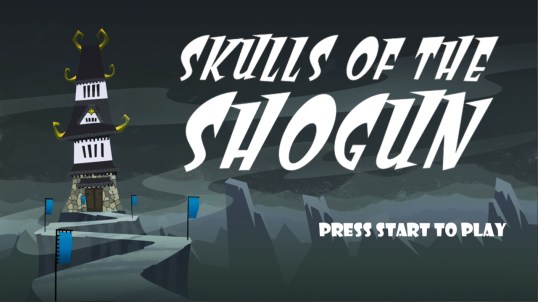
titlescreen

I went diving through the XBox Live Arcade’s new releases the other day. And you all know what that means! Yes, I’ve played Skulls of the Shogun, a new release by new developer 17-BIT (their only release to date, as far as I’ve determined), and available for 1200 Microsoft Points which (I think) is something like $15. The game draws inspiration from the classic GBA title “Advance Wars” in its game play, while its visual style reminds me of the classic XBox Live Arcade release “Castle Crashers”.

In its single player mode, the game follows the story of the tactically brilliant General Akamoto… after his death. He arrives in the afterlife prepared to claim all of the glory that his countless victories in life earned him, and is instead consigned to a bleak shore outside of the afterlife proper with only a few skeletons to keep him company. Obviously unsatisfied, Akamoto (you, the player!) begins gathering undead soldiers for an assault on the gates of the afterlife, to claim what is rightfully his. You soon learn the truth; Akamoto was stabbed in the back in life by his right hand man, Kurokawa, a noted coward. Immediately after stabbing you, Kurokawa fell on a spear, and was able to arrive in the afterlife first. There, he assumed your identity (and one of your daisho swords) and generally left everyone pretty torqued off in his wake.

Each mission (or multiplayer level) begins with each side commanding units drawn from a small pool. At first, you have access to only the slow-moving but defensively powerful Infantry and the faster but more vulnerable Cavalry. Soon after, you gain access to Archers, who are vulnerable in close combat, but very powerful at range. Archers are lethal to Infantry, whom they can outrun, but are outpaced by Cavalry and can’t fire when the enemy has closed in, while Cavalry can’t win a stand-up fight with Infantry, you see? Of course, your units can power-up in battle by consuming the skulls of the fallen. Each skull increases the maximum hitpoints of the unit, heals it somewhat, and if you eat three skulls you enter a Demon form, which gains a second action on each of your turns. The game also adds another twist in the form of Monks, spellcasting allies that you gain through capturing their shrines on the battlefield. Monks gain new spells from eating skulls, and can turn the course of a battle.

Your other main unit of concern is the General, a powerful unit (with an Infantry’s defense, the highest attack of all, and reasonable speed), however, the loss of the General means the loss of the mission. For this reason, it’s often wise to simply let the General hang around (in fact, each turn you go without ‘activating’ your General to give him orders, he heals a hitpoint and gains a maximum hitpoint, this is called ‘Meditating’, and is unique to the General) behind his men and direct the battle. Your units can also group together in tight formation to prevent the enemy from speeding past – an invaluable tactic that can help to protect your Archers, Monks, and General.

Although the unit list is limited and the game’s rules are not difficult to learn, there’s definitely some strategic depth to the game. In addition, the dialogue of the game is tight and fairly humourous, and the game itself is fun to play. You can’t ask for much more than that.

Faster Than Light


Entirely by accident, I discovered a game called Faster Than Light (FTL) while I was making my weekly perusal through the library over at Great Old Games. Because I like spaceships and bright shiny stars, I was instantly intrigued. Without really taking the time to learn a whole lot about the game, I went ahead and made the purchase. At $9, I didn’t feel like I had to get much return on my investment. After having sunk roughly a billion hours into FTL since that purchase, I’ve subsequently learned that FTL was funded by Kickstarter (another rousing success story! Go Kickstarter!), is actually new, despite having been on Great Old Games, and there was some buzz before it came out that I literally can’t believe that I didn’t hear even a single whisper about. I guess I haven’t been reading enough blogs after all.

My embarrassment over this game being news to me is a side issue, however. I have played Faster Than Light. Extensively. Allow me to tell you how it is, so you can decide whether that daunting $9 price point is worth it for you.

It’s great! Go buy it!

Well, alright. Let’s start with the premise. FTL is a Roguelike that stars you as the commander of a lone Federation starship with vital intelligence on the Rebel armada which you need to hustle across seemingly the entire galaxy to return to the last Federation fleet before they’re stomped by the aforementioned Rebels. Going against space type, we’re not rooting for the Rebels this time, as they are brutal, corrupt, jerks. On your journey, your ship will pick up space scrap which is used as currency. You need as much of this currency as possible in order to upgrade your single cruiser’s capabilities (the possibilities for this are extensive, including eight main ship systems, three subsystems, up to four weapon slots and three drone slots, three ‘augmentation’ slots for special systems, and your crew itself which starts small but can be expanded and include powerful alien species. So yeah.) You will need to upgrade your systems if you want to survive the long trek to the Federation fleet, and even more so if you intend to successfully defeat the final boss located there.

Your advance across the galaxy is star by star across multiple ‘sectors’ of space, with the Rebel armada in pursuit all the while, seeking to bring you down before you can bring your vital information to the Federation. Each star contains a random event, which can range from absolutely nothing, to running laser gun battles in asteroid fields, nebulae, or near stars that are experiencing solar flares. Suffice to say, given the random generation and the large range of customization options, no trek across the stars is ever exactly the same. Add in the fact that the game ultimately features about twenty unique ships each with its own unique interior layout and a unique starting loadout (some of which are much stronger than others) and you have a game that you can sink a great deal of time into.

The primary things that you, as a player, will need to do include managing your crew (crew members can be assigned to ‘man’ your ship systems. They can also be moved around to repair damaged systems, fight shipboard fires, repair hull breaches, board enemy craft, or repel boarders against your own), battling enemy ships with your craft’s weapons, drones, and boarding parties, and purchasing new upgrades and equipment to create a load-out that you feel like can go the distance. Finding combinations of weapons and special systems that work well for you is a big part of the game, and the only way that you will ultimately be able to experience any success against the final boss – an extremely difficult encounter, particularly if you are not prepared for it.

The downside for some players will be the difficulty. Faster Than Light is not an easy game. Not by a long shot. For those unfamiliar with Roguelikes, runs of horrific luck leading to catastrophe and death are incorporated by design. It is not a “problem” with the game that you might encounter a series of random events with no way out that lead to your ship exploding in the very first sector, or right before your confrontation with the boss. Death is deadly. There aren’t save points, folks, you’re back to the start if you go down in flames. This is, again, by design. It is not a “problem”, but it could be a reason why you would prefer not to play the game. So if the difficulty thing doesn’t appeal to you – and I didn’t even mention a learning curve that’s somewhat difficult to quantify – Faster Than Light may not be entirely to your liking. Of course, you may end up addicted anyway, and end up on a spiral of increasing frustration. I don’t personally recommend that path, but it’s your mouse to break, as they say.

The graphics “look like a flash game” as I’ve been told, which I suppose is true enough, but the game has spot-on sound effects and an excellent environmental music score that provides exactly the right touch of ambiance while you play. I found the graphics adequate, if nothing to rave about, and there’s something charming about the presentation, which is reminiscent of older video games and tugs at my nostalgia strings in a way that I find appealing. I definitely find myself recommending the game, even freely acknowledging that it may not be for everyone. After all, what game is?

For those who are interested, you can acquire FTL off of its official website or on Steam. You can also purchase the DRM-free version on GOG, but this version is only available for Windows platforms. Regardless, of where you get it, the game will be $9 until the sale price ends, after which it will price out at a whopping $10. So, act now, or whatever.

What I Played Today: Mass Effect 3: Leviathan!


Technically, I played it yesterday.

So, remember how everyone hated the ending to that highly anticipated, trilogy-culminating, pre-order bonanza of a FPS RPG called Mass Effect 3? I do. Later, when Bioware got around to releasing an expanded and updated ending, it seems like only about half of the original ME3 crowd came back to see it. Part of it might have just been exhaustion over the whole ME3 ending saga – it was mostly fatigue that kept me from running to my XBox to plunge into the depths of the new ending. I suspect others are sticking to their guns; they heard that the “new” ending isn’t really new at all, just an expansion on existing events and themes. So they’re not interested. The Indoctrination crowd didn’t find much to love in the new ending, so diehards of that theory or whatever… probably didn’t need to rush back to see things unfold.

Others I suspect are in a third camp. They want an excuse to play the game again, but they don’t really feel like doing Chronos Station and Earth. At least, not as a standalone. It’s not like those missions were some glowing paragon of what ME3 could be. All of the heavy stuff happens earlier, and Earth doesn’t have the fun factor that the final assault on the Collector Base did. It’s kind of a long slog, when you get right down to it. In fact, the whole game is pretty heavy, and I’m not sure it bears back-to-back play-throughs with as much grace as the previous installments did. I, at least, noted Mass Effect lover and apologist, have completed Mass Effect and Mass Effect 2 probably a dozen times each. I have completed Mass Effect 3 once. Just once. I continued to play the multiplayer occasionally, keep that readiness nice and blue, and waited patiently for a time when I would feel the urge to play the game once again.

It turns out that the urge returned when BioWare finally dropped their first single player content DLC: Leviathan.

Leviathan starts with the story of a man named Dr. Bryson, a scientist on the Citadel who is investigating celestial phenomenae. Specifically, he is rooting around through old monster legends and other such seeming nonsense for any kind of clues that might have survived from a previous cycle about the Reapers. In the course of this research he discovered something that is – potentially – even more interesting… an artifact that is linked to a space monster they’ve dubbed ‘Leviathan’. A creature so powerful that it was capable of downing a Reaper in single combat. Something that seems impossible. But, Bryson does have this weird glowy artifact, and he seems pretty sure… and, since we’re completely desperate for even the tiniest possible edges at this point in our seemingly unwinnable battle against extermination… I eventually acceded that it was probably worth tracking down Bryson’s assistant, who went to an asteroid mining facility in order to follow up on a possible second artifact. Needless to say, hilarity ensues, and Shepard embarks on several missions, broken up by return visits to the lab for analysis, before the climactic scene on an eerie ocean planet about which the less I say, the better.

In terms of DLC, Leviathan is no Lair of the Shadow Broker. While it does appreciably expand on some story elements of Mass Effect 3 (specifically, you gain some fun information about the Reapers. This DLC answered one of my most irritatingly nagging questions about the background of the Reapers. Fun!) and it provides a handful of fun missions – the ocean planet, it’s worth stating, is a gorgeous backdrop for the mission that takes place there – it lacks the character driven tension of Lair. I would put it more on par with the “Arrival” DLC for ME2. You don’t have much reason to get invested in the new characters you meet, and so they feel disposable in a way the core cast never would have. That having been said, I don’t know how many of you returned to ME2 to complete Arrival, but I felt it was a well-spent $10, and I feel the same way about Leviathan. It has a good atmosphere, a couple of cool weapons and new modifications for your gun toting pleasure, and a very impactful revelation at the end.

Incidentally, if you have any interest in ME3 single player DLC at all, there’s extra incentive to acquire Leviathan. Fan interest has seemed much less driven for ME3 DLC than in previous titles… presumably because the ending to the game is as final as it is. Shepard’s story can’t continue, it can only expand.

The Magic of Duels of the Planeswalkers


A couple of years back I was bored one afternoon and browsing the XBox Live Marketplace. I didn’t have any real expectation of finding a game that would get me through the afternoon, let alone something that would have real staying power for me, and I would revisit time and again. When I saw that there was a Magic the Gathering game, it was suspicions that became aroused, not interest. Out of a kind of morbid curiosity I selected the game and read a little more into it, saw that a couple of my friends had played it, and that it seemed to be a self-contained engine of a game, and not simply another attempt to sell me Magic the Gathering Online in a repackaged form (don’t get me wrong, I don’t have anything against MTG:O. In fact, it’s a clever idea to reach people who either don’t have an active local Magic scene, or hate their local Magic scene, but if I had money to waste on Magic, I personally would do it at my local comic store).

But, oddly, the complaint that I keep hearing from people about Duels of the Planeswalkers (aside from some more quantitative complaints, which I’ll get into) is that it’s a self-contained thing, not a beautifully rendered amalgamation of all Magic ever.

…Well, duh.

You may bring whatever expectations you wish into your gaming experiences, but I find it’s better to try and keep things a little bit in perspective. For a $10 XBox Live Arcade title – a game that by definition is not a full retail game – you are expecting a full pool of Type II cards, a fully operational deck builder, and carte blanche to build as many decks as you like and play them against other humans? How much money does that privilege cost in real life? If some quickly-researched netdecking can be believed, a couple hundred bucks will buy you a top end deck in the current meta (and someone bought those cards at $4 for each randomized pack or whatever at retail, let’s not forget). Let’s say each ranked DCI event costs another $7 as an entry fee. So for one singular deck, you must expend hundreds of dollars, and much of that income reaches Wizards of the Coast. Then, if you wish to change decks, you’re likely to need more cards. Wizards will release new expansions, and you will need still more cards. All of this generates revenue for the company that is printing the game (and all of the creative people behind its design, etc.) and you honestly approach Duels of the Planeswalkers with the expectation that it’s going to just replace the CCG model forever?

Come on.

So now that that soap box moment is out of the way, let’s talk about the game. 2013 is the latest upgrade to the now-yearly franchise. Much like regular Magic’s Type II environment, DotP can be seen as a sealed ‘block’ of decks of cards, and it evolves year by year. The game-play improvements in 2013, then, are very slight, since the game of Magic hasn’t changed much. The most meaningful one is the long-awaited ability to manually select your own lands to tap for Mana instead of letting the CPU select them for you (the CPU attempts to do this intelligently, but unfortunately, the CPU has no idea what it’s doing). The main difference is, therefore, the entirely new pool of decks that players can customize and compete with. The game launched with 10 available decks which come with a basic pool of 35 cards (plus the necessary land to make the deck function of course) and an additional 30 unlockable cards. The cards are unlocked – unfortunately – one by one, by winning duels, or if you’re lucky enough to be playing the console versions, by the purchase of Deck Keys (those cost about $1 of your real money each) which completely unlock the deck in question. This represents a large increase in possible customization over the selection offered by 2012.

The decks themselves are primarily monochrome, which is a shame. I understand that Wizards probably sees DotP as a tool to draw people into the world of Magic: The Gathering either on or off line, hoping to gain more lifetime players who are eager to experience the full game. However, many players do want to enjoy DotP as a game in its own right, and while monochrome decks are easier to play and make a decent introduction, the truth is that the Magic decks you’re going to see even at a local Friday Night Magic tournament are going to include a lot of paired colours for a simple reason – each colour is deliberately designed with shortcomings. Black has access to many easy fire-and-forget creature destruction spells and no enchantment removal at all. White has only a tiny splash of creature removal (and each of their ‘removal’ cards has a drawback printed on the card!) but many good cards for destroying enchantments or artifacts. If you combine the two, you can have both of those strengths, and cover for the weaknesses, at the expense of a deck that can be less reliable (since you must now possess two different colour resources) and harder to play. The trade-off is almost always worth it.

Hopefully DLC (it’s already in the works, of course!) will expand a little bit on this, and throw in some more two-colour decks (and a few fewer absolutely atrocious 3-colour decks. Please?).

As for the Planechase mode, I haven’t got much to say. I’ve never liked Planechase because it can really take a long time to play a single game of it, so I’ve avoided testing it extensively. I can say that it works just like I remember it working in real life, and it can definitely be fun if you have the patience to stick with it. The unpredictable and powerful effects of the different twisting Planes can really throw a traditional match-up on its head. Combined with the inevitable chaos of FFA multiplayer, and you definitely have a format with legs – no two games of Planechase will ever be exactly the same.

I suggest that you think of Duels as a Magic format much like Captains or, frankly, Type II… and enjoy it for what it is; a closed Magic experience that doesn’t cost you a lot of cash out of pocket to play. The added levels of customization (regrettably, still not the ability to pick how many lands your deck has in it. Grrr!) make the environment more varied than ever (mind you, I did not suggest the environment was balanced. It’s much too early to speak on that) so it’s definitely a game that’s got some depth if you’re willing to take the time to learn the format and delve into its own quirks and strategies.

The game reportedly suffers from numerous bugs. I have not encountered any that are more severe than the ‘mild annoyance’ variety, but I suspect there are uglier ones to be found in those innumerable lines of code somewhere. I wish I could say this was uncommon for releases in 2012, but I try to remain honest when I write these columns.

So there it is. I find Duels to be a fantastic addition to my summer, and I’m more excited than ever to waste countless hours trying to determine the best combination of 60 cards in the fixed pool that makes up my blue deck that will best let me control the decks I’ve seen people playing this week. Oh, and if you pick it up, do try it out with a friend in Two-Headed Giant at least once. It’s riotously fun.

Mass Effect 3


I finished Mass Effect 3! The first video game I’ve ever finished! … Or, at least, for a long time.

Shall we talk about it?

Mass Effect 3 is (ostensibly, we know how sequels work these days) the conclusion to the story of one Commander Shepard, a human of exceptional skill, whose whole history is determined by the player. Shepard has journeyed long and hard to make people aware of the threat posed by the Reapers, synthetics bent on annihilating all organic life. From what I’ve seen, Mass Effect 3 is receiving decidedly mixed reviews. I think most of the negativity is oriented toward the ending, and we’ll talk about that later, but I’m going to start with a list of things that are ‘to like’ about this game. Even though if you have even the slightest interest in the franchise, you’ve already bought it.

Mass Effect 3 improves on the gameplay of Mass Effect 2.

Let that statement hang in the air for a moment. Why? Because I already thought Mass Effect 2’s gameplay was incredible; the game’s best feature, aside from its variety of characters and character interactions.

It still pads its play time by giving you lots of relatively minor quests, and forcing you to scan systems for ‘War Assets’ which involve running from Reaper forces and wasting a bunch of time. This is nothing new. After all, we drove the Mako around identically featureless planets in ME1, and we scanned for resources in ME2. The difference to me is that while we’re running around the Citadel recovering missions in ME3, we’re also subjected to background conversations between the inhabitants of that great space station. Their lives are affected by the war, and overhearing snippets of conversation lets us understand how so. It drew me into the setting of a (seemingly) hopeless war more than any activity aboard the Normandy. After all, Commander Shepard runs a stealth vessel with the most deadly folks around aboard. We don’t have any reason to fear the Reaper forces for the most part, because we’re better than they are. But on the Citadel, the Everyman is on the run. The Everyman fears that they will never see loved ones again.

In a holding area for Refugees, there’s a teenage girl waiting for her parents who has a variety of conversations with a C-Sec officer about her parents, and their transport, and when it’s going to arrive. It’s kind of heartwrenching. But also extremely appropriate.

In the field I suspect players will find much to like. The variety of enemy types is vastly improved over Mass Effect 2, as you combat the forces of the Reapers (now with more than just Husks and minibosses!), the forces of Cerberus (who are varied and deadly, very appropriate) and the traditional Geth opponents as well. I often felt that ME2’s opposition was pretty vanilla, but the unique properties of the enemies in ME3 make them feel much more varied even if (as I suspect) the actual number of “different” enemy types is not much different. The variety of powers IS improved, and now re-implements the use of grenades (an odd omission from ME2!) while keeping the basic gameplay mechanics of the second game intact. The most tangible difference is that you can now see Shepard’s hit points reflected in a bar with five segments. Once a segment is totally depleted, it only replenishes with the use of Medi-Gel. This is a significant feature of the game, especially on the harder difficulties.

Weapon upgrades are back with a vengeance. They operate like they did in the original Mass Effect, only +1. Now, you can acquire more advanced versions of weapons, and install increasingly powerful upgrades, to customize weapons to fit your playstyle. All classes now wield any weapon you like, with the newly devised penalty of heavier weapons slowing the recharge time of your special powers. So, a Biotic Adept is fully free to carry a sniper rifle and assault rifle, but it may mean that their Singularity cools down three times slower. Is that trade-off worth it? The answer is no, but it’s still definitively up to the player.

I was favourably impressed with the character moments and interactions in this game. Your own mileage will vary based on choices in previous games (and yes, while I have heard complaints that your choices don’t have a significant enough impact on the ending, they certainly have a significant impact on the game at large) but I was treated to a number of unexpectedly poignant and emotional character moments from both new and old faces. To me, this is the best work BioWare has done yet in terms of the characters involved… perhaps even exceeding Dragon Age II (although that entire game is so character-based, it’s a tough comparison). Some may be disappointed that many of the discussions no longer involve choosing options on the conversation wheel, but rather just talking it out after the fashion of conversations with companions Zaeed Massani and Kasumi Goto in Mass Effect 2.

I hesitate to say more, because it’s a story game, and I won’t be the one to spoil things for those who haven’t completed it.

Multiplayer!

Yes, there is now a multiplayer mode. It feeds the single player in that you can use any multiplayer character of level 20 as a War Asset, and in that it improves your Galactic Readiness score. For anyone who is wondering why your Galactic Readiness sits at a mediocre 50%, this is why! The multiplayer mode is a horde-styled mode where you fight against any of the three enemy forces (Geth, Cerberus, or Reaper) on one of several small maps, over the course of 10 waves, and then a “bonus” wave in which your squad waits for extraction. Three difficulty levels are available, which mirror normal, hardcore, and insanity level enemies, and thereby force different tactics to be used by the players.

I’d heard rumours that the single player was also supposed to support the multiplyer, but I’ve seen no evidence of that.

If you’re into Horde modes, you’ll almost certainly enjoy the multi-player here. Just be aware that you’ll have to work your way through a lot of matches to earn weapons and characters if you want the full experience, and getting a character to level 20, while not hard per se, can be time consuming. If you’re only looking to supplement your single player experience, your mileage will vary with the multiplayer mode.

And that’s where I’ll stop. I’d be happy to answer any specific questions, but I certainly don’t want to spoil the game for you. Just know that it’s a good game, and I hope you like it.

Halo: CE Anniversary


Some of you may remember, back to a day just over 10 years back, when a little console called the XBox launched. It was, at the time, a seemingly suicidal attempt to challenge the dominance that Sony held over the home console market – albeit without much relevant interference from previous juggernaut Nintendo – and to establish a new console master. The XBox had such innovative features as an onboard hard drive (only standard on PCs since they were conceived) and a more interactive BIOS that let the owner of the console do things that had never really been possible with a home entertainment console before. At its launch, the XBox boasted such titles as Dead or Alive 3… Project Gotham Racing… Jet Set Radio Future (and I don’t think this launched in the US!) annnnnnnnd a very tiny game called Halo: Combat Evolved.

Most game fans, at least those who dabble in first person shooters, have played Halo: CE. Even in 2011, ten years after CE’s launch, with a whole new generation of gamers. At the very least, contemporary gamers are familiar with the Halo franchise, which has now spawned seven games (counting the offshoot Halo Wars), as well as novels, comics, and even an animated feature which tried to delve deeper into the mythology of the Halo universe. All of that – a billion dollar franchise – was spawned by this one little, innovative title.

Before I begin my review of the new game, launched a mere week ago, I think it’s important that we take a peek at the significance of Halo: Combat Evolved, as a franchise. Until CE launched, the gold standard for console FPS games was 007: Goldeneye, on the Nintendo 64. Now, Goldeneye is a fine game, and it actually incorporates many of the same elements that Halo would later exploit to their fullest potential, but there was never any danger of Goldeneye challenging PC titles like Counterstrike. At the time, the keyboard and mouse were irrefutably better for the world of the first person shooter. Goldeneye was really the pioneer that taught us how much fun it could be to play locally with a few friends split screen and try to kill one another. But Halo perfected this art; we learned to love the 16 player LAN, with a game that had faster pacing and a shallower learning curve than any PC-based shooter title, and was dramatically more advanced than Goldeneye.

You can look back and criticize the game now. It had poor multiplayer balance (well, really, the balance was excellent, so long as everyone had only a human pistol or sniper rifle), the single player re-used a lot of set pieces and enemy models, and the lack of true multiplayer – to be fair, XBox Live did not exist at this point! – made it impossible for Halo to truly outshine fully multiplayer active PC titles. But there is simply no denying that Combat Evolved launched a franchise which is now viewed as the flagship title of the XBox and Xbox 360, and one of the most successful shooter games of all time. Even Call of Duty, the chief rival in the field, has adapted a number of features from Combat Evolved over time.

Flash-forward to November, 2011.

I belatedly remembered that Microsoft Studios, in a shameless attempt to milk more revenue out of the franchise, was releasing the 10th Anniversary edition of Combat Evolved. Bungie has released the Halo franchise, and stated over and over that they’ll release no new Halo titles. Microsoft Studios, on the other hand, spun off 343 Studios (343 Guilty Spark, anyone?) specifically to create more Halo games. This remake of the original is just the beginning, as Halo 4 is already slated to be released sometime during 2012. Many fans may be turned off by Bungie’s dissociation with the brand, and I assume most every fan is going to look with some skepticism at this Anniversary Edition release of Halo: CE. To be honest; if I’d had to pay $60 US for a copy of this 10th Anniversary Edition, there’s simply no chance that I would have. Instead, I was able to rent the game, and so guilt-free I offer the following review:

The graphics are good. They are not cutting edge, and certainly do not test the limits of the XBox 360’s hardware. In a very real sense, the graphics of this updated remake were obsolete even before the launch. They don’t compare to the visual spectacle that we see in the level and model design of, say, Modern Warfare 3. So, those expecting some kind of visual masterpiece had best look elsewhere. However, the updated graphics are so far beyond the capabilities of the original XBox (the original graphics, like many XBox Arcade titles, are available with one button press). A couple of swaps between the original graphics and the updated ones should be more than enough to demonstrate how far graphical processors have come in such a short time.

If you’ve ever waxed nostalgic for the single player mode of Halo: CE, the Anniversary edition is for you. It adds nothing. Literally; nothing. But it does take us back to a game that many of us now lack the means to play; a classic title, but with beautiful new set pieces. The control setup feels very ‘classic Halo’, right down to the speed the Master Chief moves, and the way that he jumps. This will be unsettling for players of contemporary titles like Halo: Reach at first, but you’ll settle back in without too much trouble.

As for multiplayer, the Anniversary Edition builds on Halo: Reach. It features a number of remakes of original Halo maps, including Battle Creek, Damnation, Prisoner, Hang ’em High, and the Halo 2 map Headlong. All of these maps are set in the Halo: Reach multiplayer engine, so Halo multiplayer diehards will find nothing new here beyond the maps.

Of course, the Anniversary Edition also includes Online Co-Op, so you can play the story mode with friends across the world. Don’t sell that short; Halo’s storyline has always been more involved than people give it credit for.

Call of Duty: Modern Warfare 3


So. At long last, here it is. The latest installment from the shell that remains of Infinity Ward, bringing back those endlessly popular features like sniper rifles, killstreaks that build on one another, and host migration that keeps the multiplayer modes playable!

The first reaction I’ve heard from people on the fence about this game (and, let’s be honest, there aren’t that many) is that they don’t want to pay the Madden Tax to play yet another Call of Duty that, much like any sports game, just isn’t that different from year to year. If you’re of that mindset, you’ve likely already made up your mind about this title. This review probably isn’t going to change your mind either way about this title, so I’m going to try and keep the review brief and focused upon specific observations I have about this game, the ground it breaks (or doesn’t break, as the case may be), etc.

Before I do some quick hits on the game though, it’s worth visiting the game’s new mode. The outstanding mode in Modern Warfare 3 is Survival Mode, which is an offshoot of the single/multi player Covert Ops mode from Modern Warfare 2. Like that title, Modern Warfare 3 includes a panel of special missions (based on levels that appear in the single player, of course) that you can run through that pose unique challenges. New this incarnation, however, is a wave-based horde mode that is very much in the vein of (nearly) identical modes in the last couple of Halo or Gears of War games. If you found those modes satisfying in Halo or Gears (or another title I’ve forgotten. Please forgive me?) you’ll like Modern Warfare 3’s take on it as well. The only possible downside is that, like the true PvP mode, Modern Warfare 3’s survival demands that its players level up to unlock certain equipment pieces. The problem is that the equipment curve in Survival begins with an even more boring selection of equipment. It’s worth noting that the level curve is so much lower that you should earn the equipment you really want in no-time flat, if you’re dedicated to doing so.

So, assuming you’re one of three human beings sitting on the fence today… you’re asking the question, do I want to buy this game? (Or, perhaps more probably, is this game right for X gift recipient?)

FULL DISCLOSURE: I pre-ordered and received the ‘Hardened’ Edition of Modern Warfare 3. I’ll try not to harp on pre-order features, but I’m not going to guarantee I’ve got it right. In addition, I am playing this title on the XBox 360. Addressing technical aspects of the game is pertinent only to the XBox 360 game system.

The Good!
– Multiplayer mode features more guns than ever. Not all of them seem powerful, but none of them seem un-useable (with the possible exception of the handguns, which I don’t deal in).
– Story isn’t bad, actually. It’s well-conceived, and fun to play. The variety in the level design is a nice change!
– Multiplayer mode rewards you for past service by giving you a head start if you’re achieved prestige mode in a previous title (going back to CoD 4!)
– The Prestige Mode now has its own shop that gives you a choice of rewards. Prestiging players can now keep a piece of equipment (such as a favourite gun) through the Prestige Mode. Players are, of course, free to go with more traditional benefits such as adding a custom class or gaining a bonus title and emblem set. The player is able to choose between options at each Prestige level.
– Netcode is very passable. The game will hand off host in extreme circumstances in order to improve gameplay (this was the single biggest downfall of Call of Duty: Black Ops, and no, it’s not close)
– The gun customization in this game is awesome. Adding the customize menu (including such benefits as reducing gun kick, or equipping two attachments) on top of the attachments available really makes you feel like you can get the gun you want to play with.
– New Strike Package system in multiplayer is endless fun.

The Un-Good

– Frankly, it’s Call of Duty. There’s no real innovation here, just a lot of touch-ups. It’s up to you to decide if that’s worth it!
– This game pushes the hardware limits of the console hard, and fast. I’ve noticed some weird system lag issues as a result of this, and the game frankly just doesn’t run as crisply as earlier entries (particularly, CoD 4).
– Story contains a horrifying twist… although, this can be disabled in the game options, much like the level ‘No Russian’ in Modern Warfare 2.
– Weapon balance is – as ever – questionable. Why bother including some weapons that feel utterly useless at higher difficulty levels and in multiplayer arenas? It’s worth noting that all weapons have some (read: dramatically more) use in the single player modes as opposed to the multiplayer environment, but it still feels like some weapons are universally strong, useful, and sustainable… and most others just simply aren’t. Given how many incarnations of Call of Duty we’ve suffered through now, this is the sort of thing that should have started to be fixed.
– Online players are as annoying as ever. Need proof? Take a look back at this review. I’ll see you on XBox Live. 🙂

Bastion!


A short while back, I got a message from a friend of mine. He urged me to download a game available on the XBox Live Arcade called Bastion. Actually, it was more like he demanded. Well, I acquiesced. And I could not possibly be more pleased that I did. Bastion is going to cost interested parties $14.99 (US currency) and is available for the XBox 360 and for PC gamers as well via the Steam network. I have heard no word about it being available (now or in the future) on the Playstation Network.

So what is Bastion?

Well, it’s an action RPG in the tradition of games such as Diablo. You control a character who is known only as the Kid, who makes his way through a city and world that have been ruined by an apocalyptic event referred to as the Calamity. The Calamity not only destroyed the magnificent city of Caelondia – where the Kid hails from – but also seemingly everything nearby, including the home of the Ura… a superstitious warrior tribe who had often been at odds with the Caelondians. Unfortunately for the Kid, he has no idea how this transpired, or what to do in a world where everything has been smashed to bits. Helping him on his way is a low-voiced narrator who guides the Kid – and, by extension, the player – through the game’s action. The story is told (almost) entirely through the narrator’s quips, which come one line at a time. Rather than having to read through large blocks of text, we instead are treated to a consistent flow of short quips from the narrator. He remarks on almost literally everything… from the progress of the story, to the different perks the Kid equips as he levels up, to the Kid’s choice in weapons… and, of course, on every piece of junk that the Kid finds lying around the burnt-out wreckage of their former home.

As a result of this narration, I would say the story of Bastion is considerably richer than that of many other action-style RPGs – Diablo springs prominently to mind. However, the story is also fairly simple, despite a couple of twists, and there is a dearth of developed characters. It doesn’t play with the same richness as some of the all-time greats in the genre (like some of the Legend of Zelda games). I should, however, note that the casting of newcomer Logan Cunningham as the voice of the narrator does a lot to give this game a style all of its own. Not only does he seek to bring this world alive for us, but he imparts some significant emotion into the games’ heavier moments.

Gameplay takes place over a series of beautifully rendered worlds which are restored a bit at a time (in the form of terrain pieces, both the actual surface of the world and the details accompanying it) recalled from the aether beyond. A variety of enemy types inhabit this world, each with their own quirks. The Kid equips two weapons (and while a melee and ranged weapon are strongly encouraged for ease of use, these weapons can be any pair you desire), a shield which can be used to both block and reflect enemy attacks, as well as a spell chosen from a list of at least 25 such spells (in earnest, I didn’t count. I suspect I missed a few anyway). In addition, the Kid can carry a number of health potions and black potions which restore health and power spells, respectively. Using these implements, the Kid fights his way across a dozen or more chunks of the world, interspersed with ‘Proving Grounds’ for each weapon, where the Kid is called on to complete an extraordinary task with each weapon for big rewards. Between missions, he’ll return to the last safe haven of Caelondia, called the Bastion. In the Bastion, the Kid can purchase upgrades (ten for each of the game’s 11 weapons!), equip spirits (of the 80+ proof kind) that give him significant bonuses, and select his weapon loadout. The player can also make the game more challenging by equipping idols (similar to equipping skulls in the Halo game franchise).

The single player will take perhaps 8 hours to complete (more if you’re extra thorough or big on using idols) and is followed by a New Game+ mode.

I really can’t recommend this one enough. Even at the (seemingly) hefty price tag of $15, it delivers as much content as some newer games which have the gall to charge a full $60~ retail.

Review: Dragon Age II: Legacy


Dragon Age: Legacy is the first post-release DLC available for BioWare’s hit dark fantasy epic. Available for 800 MS Points (or $10), this DLC is launched from your in-game home (whether this is Gamlen’s House or the Hawke Estate, depending on when you launch the DLC) by interacting with a creepy statue that you’ve apparently kept as a memento. Depending on your difficulty settings, level, and party make-up, the DLC will take about 2 hours to complete. It is not noticeably more or less difficult than the primary game, but it does introduce a number of new adversary types that were not present in Dragon Age II (more on that later).

This DLC is visually impressive, using all new set pieces (including a set of desert ruins, a Carta base, and the interior of a Grey Warden fortress) and a location outside of Kirkwall or its immediate vicinity. Hawke and a chosen party of three head into the Vinmark Mountains in pursuit of a group of dwarven Carta members who have made an assassination attempt against Hawke. I have not completed the DLC with all of the different party members available, but I can safely say that there are significant (and pleasant) tie-ins for Varric, Anders, and Bethany (presumably Carver as well) as you proceed through the DLC. Although it is told largely through the prism of combat, as you would expect, there is a fairly hefty dose of story in Legacy. Several smaller stories are told through side quests, and the main plot thread takes us some place unexpected in the climactic scene as you confront the DLC’s final boss. The encounters in this DLC are a little more thought out than many of the ones in the original game, with scenarios such as enemy archers attacking from raised positions, and areas you are herded into that have been deliberately trapped (complete with activation levers! Try turning some of these traps on their owners instead!) New enemies include brontos (the large dwarven pack animals) which make charge attacks that will bowl members of the party over and have tough hides, the re-designed genlocks (who are now quite distinct from the hurlocks; especially their alphas!) and the Alpha darkspawn that were absent from Hawke’s foray into the Deep Roads in the original game. Also returning are the deep stalkers, who are in large-scale battles with spiders at several points during the DLC.

Legacy also features no fewer than three boss encounters that have some unique elements to them. The final boss uses a lot of impressive visual effects and set pieces, but quickly grows repetitive. You’ll see what I mean.

One of the selling points of this DLC will no doubt be the large amount of gold and gear that can be obtained by playing it. You should note before launching the DLC that you will find a goodly number of useful green items scattered throughout it, and the relative power of these items is determined by Hawke’s level when you enter the DLC. None of the new items improve as you level, so if you visit Legacy very early in the game (when you’re still leveling frequently and replacing gear often) you may not get the best bang for your buck. In addition, only Hawke’s new weapon is truly awesome; the other items may not be as useful later in the game when you have access to many powerful items. I personally attempted Legacy a few quests before proceeding into the Deep Roads, and then in a post-game save. Hawke’s new weapon (typed appropriately for you based on your weapon group, i.e. a dagger or a longsword) is pretty dang awesome. It will begin with a high damage for your level and add a little to a key attribute for your class. As you make your way through the Grey Warden fortress, it will gain three upgrades that you’ll select from a total pool of twelve, including an elemental damage upgrade.

Even before the sale of junk items from Legacy, you’ll have easily made 40 gold or more. In addition, your party will gain a large amount of experience in the play-through (for example, I leveled from 11-14 just through playing the DLC); especially if you complete all of the available side quests.

I genuinely enjoyed this one. It’s easily worth the $10 in my estimation, and shows the care that I thought was typical of DLC in the original