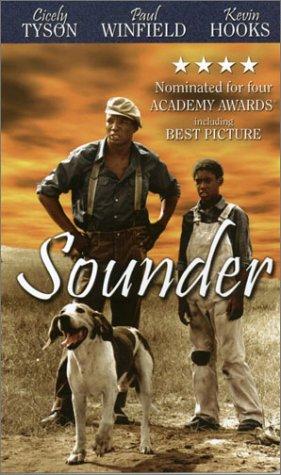
Lisa Reviews An Oscar Nominee: Sounder (dir by Martin Ritt)


The 1972 film Sounder follows the Morgans, a family of black sharecroppers living in 1930s Louisiana.

When we first see Nathan Lee Morgan (Paul Winfield) and his young son, David Lee (Kevin Hooks), they’re hunting.  Accompanying them is their loyal dog, Sounder.  As they hunt, two things become very obvious.  Number one, David Lee is a good father who is doing his best to provide for his family under the most difficult circumstances possible.  Number two, the family is desperately poor.  When Nathan finally gives in to temptation and steals a ham to feed his family, the local Sheriff (James Best) shows up at the farmhouse the next day and arrests him.  Nathan is taken away to prison and one of the deputies even shoots Sounder.

Fortunately, Sounder survives and so do the Morgans.  Under the stern but loving leadership of their mother, Rebecca (Cicely Tyson), the Morgan children manage to bring in the season’s crops.  Unfortunately, having to work out in the fields doesn’t leave much time for David Lee to get an education.  When he does go to school, he and the other students listen as a middle-aged, white teacher reads to them from Huckleberry FInn.

After the wounded Sounder finally returns to the Morgan family and recovers from his wounds, David Lee decides that he wants to go to the prison and see his father.  Unfortunately, the sheriff refuses to even tell the family where Nathan has been incarcerated.  None of the white authority figures in town care that the Morgans are struggling or that they’ve managed to bring in the crops themselves.  None of them cares or seems to even understand that David Lee is missing his father.  The sheriff presents himself as being a reasonable man and is never heard to the use the n-word.  Instead, he and every other white person in town refers to David Lee as being “boy,” diminishing everything that he’s done since his father was arrested.

David Lee finally figures out the location of a prison that might (or might not) currently be housing his father.  It’s several miles away.  Accompanied by Sounder, David Lee sets out to make the long journey to the prison.  Along the way, he discovers another school and a far more empathetic teacher named Camille (Janet MacLachlan).  David Lee is forced to make a decision that will effect not only his future but also the future of his family.

Sounder is a heartfelt film.  It’s a film that’s less interested in telling a story with a traditional beginning and end as opposed to just sharing scenes of everyday life.  In this case, it’s the life of family that manages to survive despite it often seeming as if the entire world is arrayed against them.  The film was based on a book that pretty much centered around the dog.  The movie, on the other hand, is more about the family and, despite the fact that the film is still named after him, the dog is pretty much superfluous to the plot.  That said, Sounder still plays an important role because, just as Sounder survives being shot at and remains loyal to the people that he loves, the Morgans survive whatever adversity is tossed at them.  Watching the film, the viewer is very much aware that life is never going to be easy for the Morgans but, at the same time, it’s impossible not take some comfort in the fact that they have each other.  Paul Winfield and Cicely Tyson both give strong performances as the resilient Nathan Lee and Rebecca and the entire film is the type of movie that’ll inspire tears even as it inspires happiness.

At the Oscars, Sounder was nominated for Best Picture, where it provided a gentle contrast to the other nominees, Cabaret, Deliverance, The Emigrants, and The Godfather.  Paul Winfield and Cicely Tyson were nominated for Best Actor and Best Actress, making 1972 the first year in which black performers were nominated in both of the lead categories.  (It was also the first year in which more than one black actress was nominated for Best Actress as Tyson ended up competing with Lady Sings The Blues‘s Diana Ross.)  In the end, Tyson lost to Cabaret‘s Liza Minnelli while Winfield lost to The Godfather‘s Marlon Brando.  And, of course, The Godfather also went on to deservedly win the award for Best Picture.
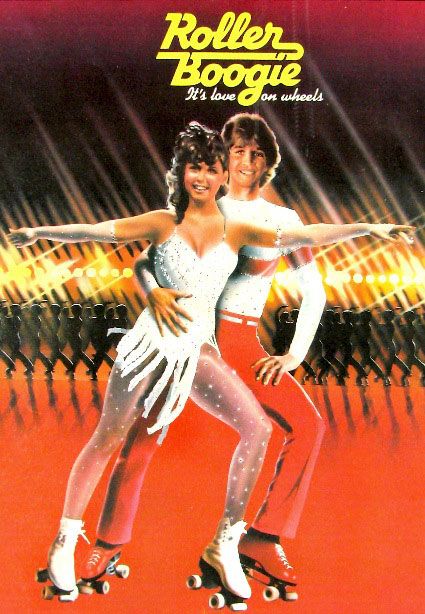
Scene That I Love: Linda Blair and Jim Bray’s Roller Skate Routine From Roller Boogie


Today is not only Jim Jarmusch’s birthday.  It’s also Linda Blair’s!

Now, of course, the first film that probably comes to mind when you hear the name “Linda Blair” is The Exorcist and that makes sense.  After all, it’s probably the best film in which Blair ever appeared.  Blair even received an Oscar nomination for playing the demonically possessed Regan MacNeil and for convincingly vomiting all over Jason Miller and Max von Sydow. If not for the fact that Mercedes McCambridge provided the voice of the demon, Blair probably would have won that Oscar as well.  Instead, the Oscar went to Tatum O’Neal.

Blair’s gone on to have an active career, though none of her subsequent films ever proven to be as popular with critics or audiences as The Exorcist.  In fact, the majority of her films have been received rather dismissively by the critics.  Of course, Blair’s subsequent films haven’t exactly been in the type of genres that are usually embraced by the critics.  Instead, Linda Blair appeared in several women-in-prison films.  She also appeared in several vigilante films, including Savage Streets.  She did several low-budget horror movies, like the classic Hell Night.  Blair also appeared in two bad-but-kind-of-fun sequels, Airport 1975 and Exorcist II: The Heretic.  (Airport 1975 features Linda Blair as the most perky seriously ill person ever.  Exorcist II, of course, featured Blair trying to keep a street face.)

And here’s the thing — the movies may have occasionally been bad but Linda Blair always kicked ass. In fact, she often literally did just that.  At her best, Blair was the type of exploitation heroine who would kick the bad guy in the balls and then taunt him for crying about it afterwards.  And good for her!

Now admittedly, today’s scene of the day does not feature Linda Blair kicking anyone or exacting violent revenge on the patriarchy.  But no matter.  The 1979 film Roller Boogie is a lot of fun, precisely because it’s a mix of disco, roller skating, and the mob.  Linda Blair and Jim Bray have to protect their favorite skating rink from the mafia.  They also have to win the annual Boogie contest.  Needless to say, that’s a lot to deal with but if anyone can handle it, it’s Linda Blair.

“It’s love on wheels!” the posters proclaimed, presumably because Skatetown U.S.A. was already using, “It’s the greatest story that ever rolled.”  Roller Boogie is a thoroughly silly movie and, not surprisingly, it’s also a very 70s movie.  Every single moment of the film screams out, “1979!”  You know how Saturday Night Fever used the disco scene as the backdrop for a rather melancholy story about a young person struggling to grow up and become a better person? Well, Roller Boogie‘s not like that at all but it does feature a lot of disco and a lot of skating and how can you go wrong with that?

Anyway, here is today’s scene that I love.  Here are Linda Blair and Jim Bray competing for the top prize in Roller Boogie!

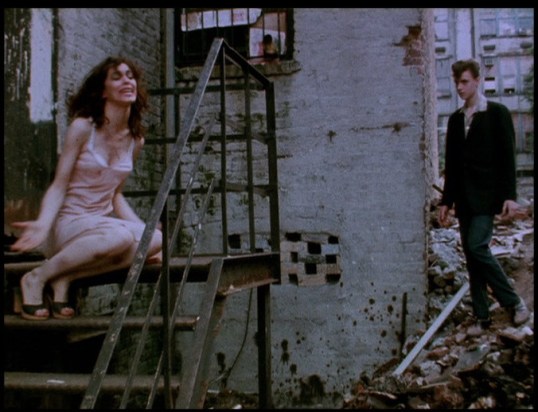
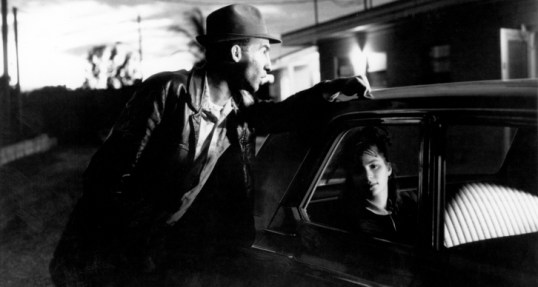
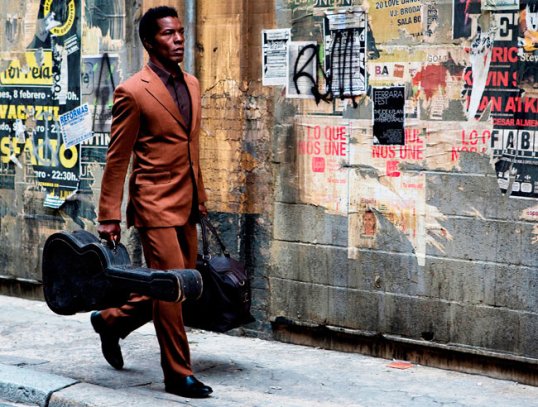
4 Shots From 4 Jim Jarmusch Films: Permanent Vacation, Stranger Than Paradise, The Limits Of Control, Only Lovers Left Alive


4 Shots From 4 Films is just what it says it is, 4 shots from 4 of our favorite films. As opposed to the reviews and recaps that we usually post, 4 Shots From 4 Films lets the visuals do the talking!

Happy birthday, Jim Jarmusch!

4 Shots From 4 Jim Jarmusch Films

Permanent Vacation (1980, dir by Jim Jarmusch)

Stranger Than Paradise (1984, dir by Jim Jarmusch)

The Limits of Control (2009, dir by Jim Jarmusch)

Only Lovers Left Alive (2013, dir by Jim Jarmusch)

Lisa Reviews An Oscar Nominee: Tender Mercies (dir by Bruce Beresford)


The other day, on this very site, I mentioned that the 1983 film Tender Mercies was one of the films that David Lynch turned down.  

In his memoir, Room to Dream, Lynch wrote that he was sent the film’s script while he was looking for a project to serve as his follow-up to The Elephant Man.  Lynch wrote that he liked the script, which was written by Horton Foote (who had previously won an Oscar for adapted To Kill A Mockingbird), but that Lynch also felt that it just wasn’t the right project for him at the time.  Tender Mercies was eventually directed by Bruce Beresford and Lynch mentioned that he felt that Beresford did a “brilliant” job.

After I posted the article, it occurred to me that Tender Mercies is not a film that’s as well-known as it deserves to be.  It received five Oscar nominations, including one for Best Picture.  Robert Duvall won his first (and, to date, only) Oscar for playing the lead role.  It’s an acclaimed film but it also plays it in a rather low-key style, particularly when compared to some of the other films that were released in the early 80s.  (1983 may have been the year of Tender Mercies but it was also the year of Scarface, Flashdance, Return of the Jedi, and Risky Business.)  As such, it’s a film that’s been a bit overshadowed over the years.
Tender Mercies takes place in rural Texas.  Mac Sledge (Robert Duvall) is a former country-western star whose career has collapsed due to his alcoholism and his own self-destructive behavior.  One morning, a hungover Mac wakes up in a roadside motel.  Not having any money on him, Mac asks the motel’s owner — Rosa Lee (Tess Harper), who lost her husband in Vietnam — if he can work at the motel in return for a room.  Rosa Lee agrees, on the condition that Mac not drink while he’s working.

As the days pass, Mac and Rosa Lee grow closer and Mac becomes a surrogate father to Rosa Lee’s young son, Sonny (Allan Hubbard).  Eventually, Mac and Rosa Lee marry and Mac becomes an accepted member of the community.  However, Mac remains troubled.  His ex-wife, Dixie (Betty Buckley), has built a career on singing the songs that he wrote for her but she refuses to consider anything new that he’s written.  His teenage daughter (Ellen Barkin) stops by the motel and announces that she’s running away to get married.  There’s tragedy but there’s also hope and forgiveness.

Tender Mercies is a simple but affecting film about a good man who is struggling to deal with the fact that he was once a very bad man.  What makes Tender Mercies interesting is what doesn’t happen.  The first time I saw it, I spent the entire movie expecting Mac to fall off the wagon and break everyone’s heart.  Instead, Mac manages to keep his promise to his new family but what he discovers is that being sober doesn’t automatically exempt one from pain or guilt.  He still has to deal with sadness and disappointment but now, he has to do it without using alcohol as a crutch.  Instead of getting his strength from booze, he now gets it from love.

It’s a wonderfully sweet movie, featuring naturalistic performances from Harper, Hubbard, and especially Robert Duvall.  It seem appropriate that, after making his film debut as Boo Radley in a film written by Horton Foote, Duvall would win his first Oscar for another film written by Foote.  Duvall plays Mac as a plain-spoken and weary soul who is still just enough of a romantic to find some sort of redemption in the world.  It’s a great performance and it’s a good film and I’d suggest checking it out if you ever need a good cry.

Lisa Marie’s 10 Worst Films of 2019


Well, I guess it’s finally that time!

It’s time for me to finally post my picks for the best (and worst) of 2019.  This is something that I do every year.  Usually, I manage to do it before the third week of January but I’ve been running behind.  I’ll be posting my film, television, book, and music picks throughout today and maybe into tomorrow, depending on how long it takes me to narrow down my choices.

Let’s start with my picks for the 10 worst films of 2019!  Below are my picks for the worst.  Some of you will agree and some will disagree.  In the end, what truly matters is that I’m right.

(Also be sure to check out my picks for 2018, 2017201620152014201320122011, and 2010!)

10. The Upside (dir by Neil Burger)
9. Glass (dir by M. Night Shyamalan)
8. X-Men: Dark Phoenix (dir by Simon Kingberg)
7. The Kitchen (dir by Andrea Berloff)
6. The King (dir by David Michod)
5. Miss Bala (dir by Catherine Hardwicke)
4. The Dirt (dir by Jeff Tremaine)
3. Backdraft 2 (dir by Gonzalo López-Gallego)
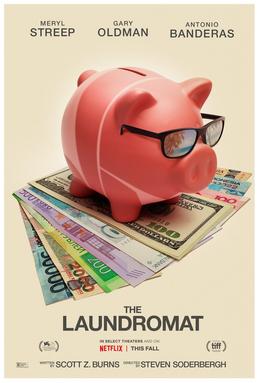
2. The Laundromat (dir by Stephen Soderbergh)
1. After (dir by Jenny Gage)


Lisa Reviews An Oscar Nominee: Alibi (dir by Roland West)


1929 was a transitional year for Hollywood.

On the one hand, more people were going to the movies than ever.  The studio moguls were getting rich and directors, many of whom were influenced by German expressionism, were experimenting with new ways to visually tell their stories.  The days when an motionless camera would just be planted on the floor so that it could record actors moving in and out of the frame were over.

At the same time, Hollywood was also struggling to adjust to the arrival of sound.  Though many assumed that sound would just be a fad, it quickly turned out that audiences preferred sound pictures to the old silent melodramas.  Films that had been originally conceived as being silent were reshot with sound and the results were often mixed as Hollywood technicians struggled to figure out how to get the best and clearest recording possible.  Even harder hit were the actors, who had spent decades giving silent performances but who were now expected to adapt, overnight, to an entirely new style of acting.  Some actors saw their career abruptly end because their voice didn’t match their appearance or because they simply couldn’t memorize the dialogue that they were now required to actually speak.  Even the actors who could handle delivering their dialogue often struggled to find the right balance between acting too much and acting too little.

Take Alibi, for instance.  This crime film was released in 1929 and visually, it’s often a marvel.  But whenever the actors open their mouths and start to recite their dialogue …. yeesh!

Based on a Broadway play, Alibi tells the story of Chick Williams (Chester Morris, whose brooding good looks go a long way towards making up for his awkward screen presence).  Chick is a career criminal who has just been released from prison.  Because he’s a “jailbird,” (as they used to put it in 1929), Sgt. Pete Manning (Purnell Pratt) is convinced that Chick has hooked back up with his old gang and that he’s responsible for a recent robbery that left one policeman dead.  However, Chick has an alibi.  It turns out that, after getting out of prison, one of the first that Chick did was get married.  Chick’s new wife is Pete’s daughter, Joan (Eleanor Griffith)!  And Joan swears that, on the night of the crime, Chick was with her at the theater.

Despite his alibi, Pete is convinced that Chick had something to do with both the robbery and the murder.  Pete decides to send in an undercover cop, Danny McGann (Regis Toomey).  Pretending to be a permanently drunk businessman, Danny works his way into Chick’s mob.  But can Danny find the proof needed to take Chick down?

So, here’s what’s good about Alibi.  First off, it’s a pre-code film, which means that the characters are allowed to occasionally curse and that the gangsters all spend their time at a nightclub, watching the floor show.  It also means that Joan is allowed to openly discuss why she distrusts the police and the film shows the police being brutal in a way that would never be allowed during the production code years.  Secondly, from the very first scene, director Roland West creates an almost dream-like atmosphere, full of looming shadows and art deco sets and close-ups of menacing faces.  West’s camera prowls through the streets and clubs with a restless energy.

But then, as I mentioned earlier, someone will open their mouth and start to speak and the entire film comes to a halt.  The cast — some of whom went on to have long and successful careers — was obviously still struggling to figure out how to act in a sound film and the results are definitely mixed.  Eleanor Griffith delivers all of her lines in the same angry tone while Purnell Pratt stiffly defends the police force.  Regis Toomey, meanwhile, goes so overboard as Danny that you find yourself hoping that he’ll blow his cover and be forced out of the film.  Though he’s occasionally awkward, Chester Morris probably does the best out of the entire cast.  At the very least, he manages to communicate some genuine menace.

Seen today, Alibi is mostly interesting as a historical document.  It represents both the best and the worst of the early sound era.  When it was first released, Alibi was a hit at the box office.  Though no official nominees were announced for the 2nd Academy Awards, notes from the era indicate the Alibi was among the films considered for Best Picture and it’s usually listed as being a nominee.  The award itself was given to Broadway Melody.

7 Films That David Lynch Turned Down


Let us take a moment to consider the career of David Lynch.

As we all know, David Lynch is one of America’s most unique and idiosyncratic directors, an unapologetic surrealist whose films always seem to come from a very dark and very personal place.  He began his career with Eraserhead and was then brought to Hollywood by Mel Brooks so that he could direct The Elephant Man.  Following the huge success of The Elephant Man, Lynch signed a contract with Dino De Laurentiis and directed Dune (a movie that Lynch later said was as close as he ever came to “selling out”) and the far better received Blue Velvet.

After the success of Blue Velvet, Lynch turned to television.  Twin Peaks was, in its way, Blue Velvet adapted for network television.  While people across the world were debating who killed Laura Palmer, Lynch won the 1990 Palme d’Or with Wild At Heart.  Frustrated with ABC’s attempts to interfere with the direction of Twin Peaks, Lynch became less involved with the televisions series and it was canceled after its second season.  Lynch’s cinematic prequel, Twin Peaks: Fire Walk With Me, was released an initially tepid response, though — like much of Lynch’s work — it has since been positively reevaluated.

In 1997, Lynch directed his most surreal film yet, Lost Highway.  He then shocked critics by directing the G-rated The Straight Story and proving that his surreal vision could be heart-warming as well as frightening.  When Lynch couldn’t get a network to commit to his proposed second televisions series, Lynch filmed some more footage and released the pilot as a feature film.  Mulholland Drive has gone on to be recognized as one of the greatest films of all time and it also earned Lynch his third Oscar nomination for Best Director.

Despite the success of Mulholland Drive, Lynch still struggled to find the financial backing for the films that he wanted to make.  In 2006, he directed Inland Empire, a film that’s as surreal as any that he’s ever directed and also, in its way, one of the most emotionally powerful films ever made.  Again, much like Fire Walk With Me and Lost Highway, Inland Empire was initially dismissed by critics but it has since been rediscovered.

Eat My Fer by David Lynch

Following Inland Empire, Lynch focused on painting, music, and promoting meditation and it was feared that he had retired from filmmaking.  In 2017, he brought Twin Peaks: The Return to Showtime and, for a few brief months, we were again enraptured by his genius.

David Lynch has directed ten feature films.  (Eleven, if you count Twin Peaks: The Return.  I do.)  He has one of the greatest filmographies of any living director.  But what about the films that David Lynch didn’t make?  In his memoir, Room to Dream, Lynch wrote about not only the projects for which he couldn’t find backing but also about several films that he was offered but turned down.

Here are a few of the films David Lynch turned down:

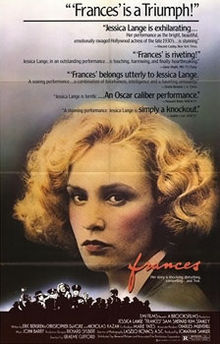
  1. Frances (1982)

Frances Farmer was a Golden Age actress who was famous for her refusal to conform to the demands of 1940s society.  She was outspoken in her political views.  She drank heavily.  She was open about her drug use.  Following the end of her affair with playwright Clifford Odets, Farmer had a nervous breakdown and was sent to a draconian mental hospital where she was horrifically abused, suffered through electroshock treatments, and was eventually lobotomized before being released in 1950.

It’s a pretty disturbing story and one can imagine that Lynch could have made a powerful film out of it, especially as Frances Farmer is the archetype for the troubled women who are often at the center of his films.  Mel Brooks, who also produced The Elephant Man, produced Frances and was hopeful that Lynch would direct it.  However, Lynch had already signed a contract with Dino De Laurentiis and was not available.  Frances was eventually directed by Graeme Clifford, who took a far more straight-forward approach to the material than Lynch would have.

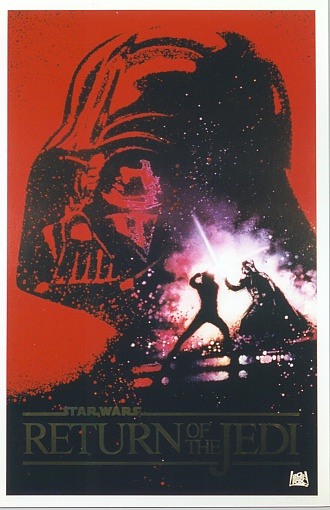
2. Return of the Jedi (1983)

This is probably the most famous of the films that David Lynch turned down.  George Lucas was a fan of Eraserhead and, in the early 80s, Lynch was riding high as a result of having received his first Oscar nomination for The Elephant Man.  Reportedly, Lucas actually did offer the film to Lynch.  Lynch turned him down, saying that he felt that the film would ultimately have been seen as being Lucas’s film and not the film of whoever was hired to direct it.  Instead, Lynch directed another sci-fi epic, Dune.  

Lucas reportedly then offered the film to another maverick director, David Cronenberg.  After Cronenberg turned it down, Lucas settled on Richard Marquand.

3. Tender Mercies (1983)

Robert Duvall won his first Oscar for this film, in which he played an alcoholic country singer who finds redemption with a Texas widow and her son.  This rather gentle film may seem like the furthest thing one would associate with Lynch but I personally think that David Lynch could have done a good job with it.  Tender Mercies is a film that feels like it might be distantly related to The Straight Story and Lynch’s unapologetic love of Americana would have served the story well.

Lenny Von Dohlen, who played a small role in Tender Mercies, later played the shut-in who had Laura Palmer’s diary in Twin Peaks.

4. Manhunter (1986)

Also known as Red Dragon, this film was the first to feature Dr. Hannibal Lecter.  The film was offered to Lynch by Dino De Laurentiis.  Lynch turned it down so he could concentrate on Blue VelvetManhunter was instead directed by Michael Mann, who — it must be said — filled the film with surreal imagery that occasionally felt very Lynchian.  Considering that Lynch’s films are full of flamboyantly evil men, it’s hard not to be curious what Lynch would have done with characters like Hannibal Lecter and Francis Dollarhyde.

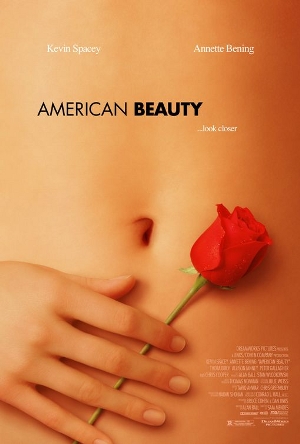
5. American Beauty (1999)

American Beauty was one of the many scripts that was sent to Lynch in the 90s.  Lynch turned the film down and it was instead made by Sam Mendes.  American Beauty went on to win Best Picture.  That said, it’s also one of the most pretentious film ever made and the fact that some people love it will never cease to amaze me.  Interestingly, one of the main problems with the film is that, as a director, Mendes often tries too hard to capture the mood and feeling that Lynch was later able to so effortlessly create in Twin Peaks: The Return.  Lynch probably could have made a decent film out of American Beauty but, fortunately for us, he devoted his attention to Mulholland Drive instead.

6. The Ring (2002)

This film was offered to Lynch but he turned it down. (Interestingly enough, when the film was made, it starred Naomi Watts, who had just appeared in Mulholland Drive and who went on to appear in both Inland Empire and Twin Peaks: The Return.)  I would have been curious to see what Lynch would have done with the killer video.

7. Motherless Brooklyn (2019)

In 1999, Lynch was among the directors who Edward Norton approached about directing a film version of the just-published detective novel, Motherless Brooklyn.  Lynch, who was working on Mulholland Drive, turned Norton down.  20 years later, Motherless Brooklyn was finally made into a film, with Norton starring and directing.

It’s hard to guess what the future holds for David Lynch.  There have been reports that Lynch will no longer make films though Lynch himself says that his disillusionment with cinema has been overstated.  There are also rumors that Lynch might give us another season of Twin Peaks.  Who knows?  Even if David Lynch spends the rest of his days promoting transcendental meditation and never again steps behind a camera, no one can deny that he’s given us some of the most amazing and important films of all time.  Happy birthday, Mr. Lynch!


4 Shots From 4 Films: Special David Lynch Edition


4 Shots From 4 Films is just what it says it is, 4 shots from 4 of our favorite films. As opposed to the reviews and recaps that we usually post, 4 Shots From 4 Films lets the visuals do the talking!

Today is David Lynch’s birthday!  The master of American surrealism and dream-like noir is 74 years old.  One of my fondest memories of the past ten years comes from those glorious few months in 2017 when Leonard, Ryan, Jeff and I watched and analyzed every single episode of Twin Peaks and Twin Peaks: The Return.  It was not only a chance to reacquaint ourselves with a master but it was also a lot of fun as well.  I mean, Lynch may be best known as a surrealist but he’s also a damn good director.

It’s been three years since the final episode of Twin Peaks and we’re still debating that final scream.

In honor of Lynch’s birthday, it time for 4 Shots From 4 Films!  It’s difficult to do one of these for David Lynch, not because it’s hard to find material but instead because it’s so difficult to narrow it down to just four shots.  Lynch has been making films from the 70s and, visually, every single one of them is stunning.  For this post, I’ve limited myself to the work that Lynch has released in the 21st century.

(And yes, Twin Peaks: The Return counts as a movie!)

4 Shots From 4 Films

Mulholland Drive (2000, dir by David Lynch)

Inland Empire (2006, dir by David Lynch)

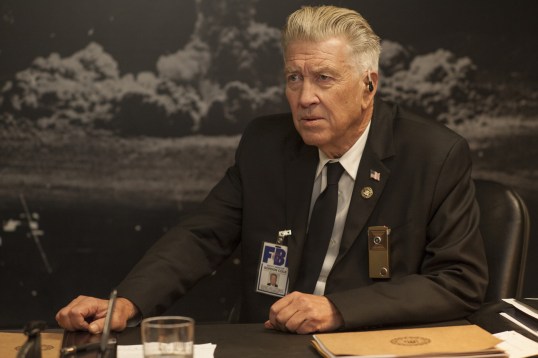
Twin Peaks The Return Part Three (2017, dir by David Lynch)

Twin Peaks: The Return Part 5 (2017, dir by David Lynch)

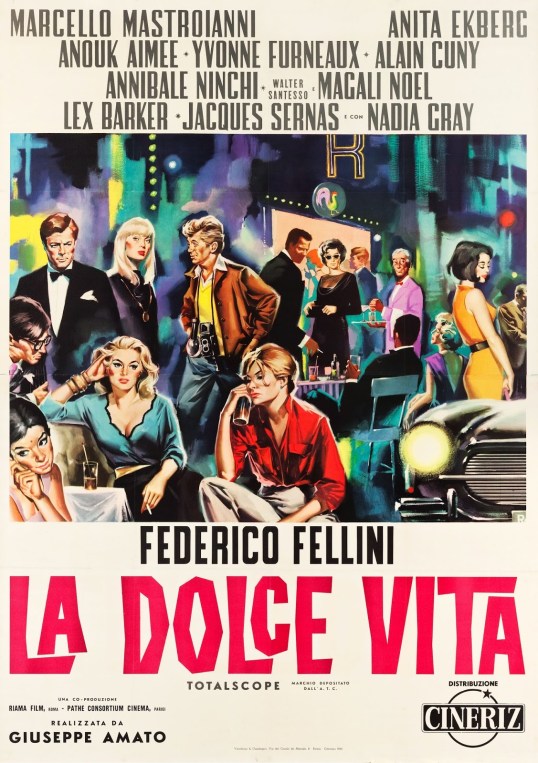
Scenes That I Love: The Final Scene of Federico Fellini’s La Dolce Vita


100 years ago today, the great Federico Fellini was born in Rimini, Italy.  It seems appropriate that today’s scene of the day should come from my favorite Fellini film, 1960’s La Dolce Vita.

In this scene, which occurs at the end of the film, jaded journalist Marcello Rubini (Marcello Mastroianni) finds himself hung over on the beach, watching as a group of people pulls a dead sea serpent out of the ocean.  The serpent appears to be a giant squid of some sort.  Myself, I’ve always felt that it was the equivalent of the Biblical Leviathan and maybe the fish that swallowed Jonah.  Regardless of the fish’s history, it’s now dead but, as Marcello points out, its eyes continue to stare.  The people on the beach are less interested in what the fish is and instead more concerned with what they can do with the carcass.

Marcello looks away from them and sees a young woman named Paola (Valeria Ciangottini) standing at the other end of the beach, calling out and motioning to him.  Marcello attempts to hear what Paola is saying but he cannot hear her words over the sounds of the ocean.  For once, Marcello, the journalist and the high society insider, does not know what is being said.  Finally, Marcello walks away with another woman, leaving Paola’s message a mystery.

What was Paola saying?  Perhaps, in the end, that’s not as important as what we think she may have been saying.  (Sofia Coppola later played a sort of homage to this ending with the final scene of Lost In Translation.)  Marcello missed the message but the good life — La Dolce Vita — continues.

The SAG Honors Parasite and All The Usuals.


The SAG Awards were held tonight.  I did not bother to watch them but apparently, a good time was had by all.  Parasite won the award for Best Ensemble, which is the SAG equivalent for Best Picture.  (1917, which won at the PGA  Awards earlier this week, was not nominated for the Ensemble award.)  This might mean that Parasite is the new front runner for Best Picture or it might not.  Do you remember what won last year?  Black Panther.

(I’m a little bit surprised that SAG didn’t go for Once Upon A Time In Hollywood, which is is a film about actors.  I mean, Birdman won a prize it didn’t deserve by appealing to the ego of actors.  Then again, Once Upon A Time In Hollywood centers on an actor whose career is going downhill so maybe it hits too close to home.)

Joaquin Phoenix, Renee Zellweger, Brad Pitt, and Laura Dern won the acting prizes and I imagine that they’ll repeat at the Oscars.  To be honest, it’s hard for me to remember who else is nominated in any of those categories.

Avengers: Endgame won for Best Stunt Ensemble.  Why isn’t their an Oscar category for Best Stunts?  Seriously, that’s messed up.

Anyway, here’s your list of film winners.  They also gave out some TV awards but, to be honest, who cares about that in January?  The Emmys are over!  If you want to see a full list of winners, click here or do a google search.  Whatever works for you.

Best Ensemble — Parasite

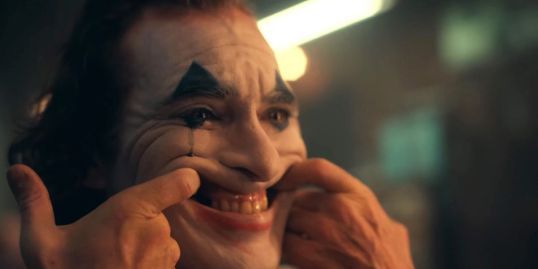
Best Actor — Joaquin Phoenix, Joker

Best Actress — Renee Zellweger, Judy

Best Supporting Actor — Brad Pitt, Once Upon A Time In Hollywood

Best Supporting Actress — Laura Dern, Marriage Story

Best Stunt Ensemble — Avengers: Endgame