Today is Gary Oldman’s 65th birthday and, in honor of the occasion, here’s a scene from one of my favorite Oldman films, 2011’s Tinker Tailor Soldier Spy.
In this scene, British intelligence officer George Smiley (Gary Oldman) confronts his colleague and Russian mole Bill Haydon (Colin Firth). This scene is a masterclass of good acting, put on by both Firth and Oldman. As Haydon tries to justify his behavior, Smiley listens with deceptive calmness. When I first saw this film, Oldman suddenly raising his voice made the entire audience jump.
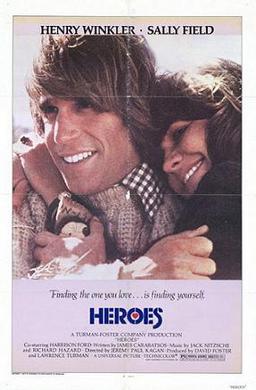
The 1977 film, Heroes, tells the story of Jack Dunne (a young Henry Winkler).
Jack spent four years fighting in Vietnam. Since returning to America, he has struggled to adjust to civilian life. Though he’s mentally blocked out much of what happened in Vietnam, he’s haunted by nightmares, When we first meet him, he’s a patient at a mental health facility in New York City. He has big plans, though. He wants to open up a worm farm in Eureka, California. He’s convinced that he can make a ton of money selling worms to fisherman and he wants all of the old members of his unit to join him in the venture. After Jack escapes from the hospital, he boards a bus heading for California.
He also meets Carol (Sally Field), who is supposed to be getting married in four days but who has decided to board a bus and take an impromptu vacation instead. When Carol is told that the bus is already full and she’ll have to wait for the next one, Jack bribes the ticket agent to get Carol on the bus. Once on the bus, Jack makes himself into a nuisance, continually bothering the driver (Val Avery) and embarrassing Carol. (In the film’s defense, it’s later established that Jack isn’t just being a jerk for fun. The driver’s uniform makes Jack nervous. That said, it’s hard not to feel bad for the driver, who is just doing his stressful job to the best of his ability.) Carol and Jack do eventually strike a tentative friendship. They’re linked by the fact that they’re both trying to escape from something.
At a diner, Jack tells her that he served in Vietnam.
“I protested the war,” Carol says.
“I fought it,” he replies.
Carol eventually joins with Jack in his quest to track down the three people who he expects to go into business with. One of them is missing. One of them never returned home from the war. And the third, Ken (Harrison Ford), is living in a trailer and raising rabbits for a living. Ken is also a stock car racer, though he eventually admits that he rarely wins. In fact, he seems to spend most of his time drinking and shooting off the M16 that he keeps in his car’s trunk. Meeting Ken sends Jack spiraling into depression but, with Carol’s help, Jack is finally starts to come to terms with the reality of what happened to him and his friends in Vietnam.
Heroes was one of the first films to sympathetically portray the plight of Vietnam veterans struggling to adjust to life back in the United States and it certainly deserves a lot of credit for its good intentions. (Indeed, it’s implied that a part of Carol’s concern from Jack comes from her own guilt over how the anti-war movement treated the returning soldiers.) That said, the film itself is an awkward mix of drama and comedy. The first half of the film, in which Henry Winkler comes across like he’s doing a manic Al Pacino impersonation, is especially uneven. Winkler and Field are both naturally likable enough that the film remains watchable but, during the first half of the film, most viewers will never buy their relationship for a second. It’s hard to believe that the driver wouldn’t have kicked Jack off the bus as soon as he started to cause trouble and the other passengers often seem to be unrealistically charmed by Jack’s behavior. If I’m on a crowded bus and some dude insists on walking up and down the aisle and taunting the driver, I’m probably going to get off at the first stop and refuse to get back on. Traveling with a bunch of strangers is already nerve-wracking enough without having to deal with all of that.
Not surprisingly, things improve once Harrison Ford shows up. This was one of Ford’s last character parts before he was cast as Han Solo in Star Wars. (Heroes, however, was released after Star Wars, which explains why Ford is mentioned prominently in the trailer despite having a relatively small role.) Ford gives a strong performance as the amiable but ultimately self-destructive Ken. Ford plays Ken as someone whose quick smile is a cover for the fact that his entire life is a mess. Whereas Jack wears his emotions on his sleeve (and Winkler never stops projecting those emotions), Ken is someone who has repressed his anger and his sadness and Ford gives an internalized and controlled performance. Perhaps not coincidentally, Winkler calms down a bit when he’s acting opposite Ford and, as a result, his own performance starts to improve.
After the meeting with Ken, Jack starts to realize that it’s not going to be as easy to start his business as he thought. Jack starts to come down from his manic high and, even more importantly, Henry Winkler stops overacting and instead, starts to dig into the sadness at the heart of Jack’s life. During its second half, the film finally settles on being a drama and Heroes becomes a much stronger story as a result. Even Jack and Carol’s relationship seems to make more sense during the second half of the film. Things end on a note of cautious optimism, which also acknowledging that life can never go back to what it was before the war.
Today, if anyone watches Heroes, it’s probably going to be for Harrison Ford. (I imagine the presence of Harrison Ford is the reason why it’s currently available on Netflix.) It’s a bit of an uneven film, one that feels as if it should have been stronger than it actually was. Still, it’s a worthwhile time capsule of 1977 and America’s struggle to come to terms with the Vietnam War. Today, we’re still struggling to come to terms with what happened in Iraq and with the botched withdrawal from Afghanistan and, again, it seems like the country is too busy trying to move on to take the time to take care of its veterans. It’s sad that so many people only seem to care about the soldiers who fight in popular wars. Heroes was a plea to America not to forget its veterans. It’s a plea that still needs to be heard.
As some of our regular readers undoubtedly know, I am involved in hosting a few weekly live tweets on twitter. I host #FridayNightFlix every Friday, I co-host #ScarySocial on Saturday, and I am one of the five hosts of #MondayActionMovie! Every week, we get together. We watch a movie. We tweet our way through it.
Tonight, for #MondayActionMovie, the film will be 1983’s Warrior of the Lost World! Selected and hosted by me, this film features car motorcycles, explosions, Donald Pleasence, and a timely message about creeping authoritarianism! The movie starts at 8 pm et! Here’s the playlist!
Following #MondayActionMovie, Brad and Sierra will be hosting the #MondayMuggers live tweet. They will be watching Sigourney Weaver in 1995’s Copycat! Check the hosts’s twitter accounts for a link to the film!
It should make for a night of fun viewing and I invite all of you to join in. If you want to join the live tweets, just hop onto twitter, start the Warrior of the Lost World playlist at 8 pm et, and use the #MondayActionMovie hashtag! Then, at 10 pm et, start Copycat, and use the #MondayMuggers hashtag! The live tweet community is a friendly group and welcoming of newcomers so don’t be shy.
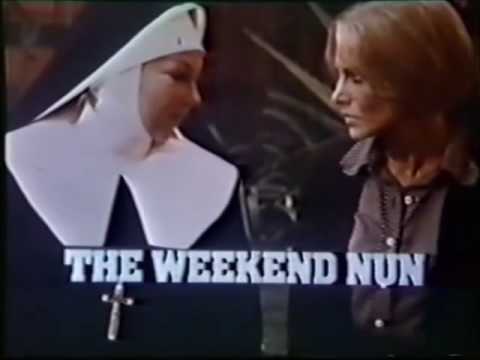
Welcome to Retro Television Reviews, a feature where we review some of our favorite and least favorite shows of the past! On Sundays, I will be reviewing the made-for-television movies that used to be a primetime mainstay. Today’s film is 1972’s The Weekend Nun! It can be viewed on YouTube!
By day, Marjorie Walker (Joanna Pettet) is a probation officer who, some might say, cares just a little too much.
By night and on the weekends, she’s Sister Mary Damian, a nun who has taken the three vows of poverty, chastity, and obedience.
Mother Bonaventure (Ann Sothern) isn’t sure that she’s happy about Sister Damian working as a probation officer. And the tough and cynical Detective Chuck Jardine (Vic Morrow) certainly isn’t happy when he discovers that the reason why Marjorie has never invited him into her home for a drink is because she lives at a convent. But Marjorie is determined to make a difference, especially in the life of a troubled teen runaway named Audree (Kay Lenz).
Now, this may sound like the premise of a socially relevant sitcom and, indeed, The Weekend Nun is one of those titles that might lead some to expect wacky hijinks and an intrusive laugh track. However, The Weekend Nun is not only loosely based on a true story but the film also takes itself very seriously. From the minute that Sister Damian agrees to take part in a program that would allow her to work a real job during the day while returning to the convent at night, she’s exposed to the harsh realities of the world. She goes from being sheltered to dealing with distraught parents, drug addicts, teen prostitutes, and violent criminals. Because Captain Richardson (James Gregory) doesn’t want anyone to feel uncomfortable, he hides the fact that she’s a nun. Of course, this leads to be people like Chuck Jardine wondering why Marjorie is so shocked when she witnesses the thing that he has to deal with a day-to-day basis.
And, indeed, the film’s biggest flaw is that Marjorie is often portrayed as being ridiculously naïve. The film acts as if spending time in a convent is somehow the equivalent of spending a decade hiding out in a bomb shelter or something. (Speaking as a Catholic school survivor, nuns are usually some of the least naïve people around.) Marjorie is portrayed as being such a wide-eyed innocent that it’s hard not to wonder why she was hired to work as a probation officer in the first place. Of course, Marjorie quickly gets an education on just how dangerous and unforgiving life on the streets can be and she soon has to make a choice between being a nun or being a probation officer. Will she give her life to God or will she potentially give it to Vic Morrow?
Joanna Pettet overplays Marjorie’s innocence but that’s more the fault of the script than anything else. James Gregory, Vic Morrow, and Ann Sothern are all believable as the authority figures in Marjorie’s life and Kay Lenz has a few good scenes as the teenage runaway who Marjorie tries to save. Beverly Garland has a small but brief role as Lenz’s horrifically unconcerned mother. It’s a well-acted film, regardless of any other flaws.
The Weekend Nun is not perfect but it’s still preferable to The Flying Nun. It’s a sincerely heartfelt film, one that’s earnest in a way that can seem a bit quaint but which is still likable when watched today. For better or worse, there’s not a hint of snark to be found.
The 2013 film, This Is Our Time, opens with a college graduation and a voice-over from Ethan (Shawn Culin-Young), who explains that everyone goes through four stages when they go to college. The first stage is being excited about getting away from home and being on you own. The second and third stages are about settling down, choosing your major, and maybe meeting the person with whom you want to spend the rest of your life. The fourth stage is all about looking forward to graduation and finally getting to enter the real world.
This Is Our Time follows the story of five friends as they discover what comes after the fourth stage. For two of them, it’s making a living as corporate workers and being pressured to behave unethically. For two others, it’s marriage and a new life working as missionaries in India, ministering to the needs of leprosy sufferers and their children. For Ethan, it means giving up his dream of being a writer and working as a waiter at his father’s bar. But, as Ethan warns us in his narration, one of the five is not going to be alive in a year. The movie follows the friends as they deal with death and try to learn how to live.
Some of the acting is a bit stiff and the attempt to capture the feel of corporate America feels rather comical. (Erik Estrada glowers his way through the role of a dishonest executive.) But, at the same time, the film does end with a message from the founder of Embrace a Village, which actually does provide support for people dealing with Leprosy and the guy is so sincere that it kind of makes you feel guilty for all the snarky thoughts that you had while watching the movie. Whatever else you might want to say about the film, the intentions are good and there’s something to be said for that.
Add to that, Eric Roberts is in the film. Roberts plays Ethan’s father and he brings a lot of genuine emotion to the role. The scene where he breaks down behind the bar in response to having gotten some bad news is well-done. Roberts is kind of famous for accepting almost any role that’s offered to him and he’s said that he hasn’t actually watched the majority of the films in which he’s appeared. Who knows if Roberts actually watched this film but, regardless, his performance was definitely the highlight.
Previous Eric Roberts Films That We Have Reviewed:
Once upon a time, Casey Rhodes (Beau Mirchoff) was a football star. He was a quarterback. Everyone expected great things from him. He was going to be the next Tom Brady. But then a knee injury took him out of the game and a subsequent drug addiction took him out of mainstream society. Now, Casey makes his living pulling off robberies. He may be a criminal but he’s not a bad-hearted one. He may carry a gun but he tries not to shoot anyone who doesn’t shoot at him first. Working with him are a former baseball player named Mike (Trevor Getzky) and Nikki (Keeya King), who is the smartest member of the crew.
Despite Casey’s attempts to do his job with as little violence as possible, a gunfight does break out during one robbery in Los Angeles. When Detectives James Knight (Bruce Willis) and his partner, Eric Fitzgerald (Lochlyn Munro), interrupt the robbery, Fitzgerald ends up getting shot multiple times as Casey and his crew make their escape. With Fitzgerald in the hospital, Knight decides to follow the crew to New York and take out both them and their boss, a former Internal Affairs officer named Winna (Michael Eklund). It turns out that there’s a history between Knight and Winna. Knight wants his revenge on Winna but, at the same time, Winna knows some dark secrets from Knight’s past.
Though it works as a stand-alone film, 2022’s Detective Knight: Rogue is actually the first part of a trilogy that follows the adventures of Detective Knight. (Detective Knight: Redemption was released at the end of 2022 while Detective Knight: Independence came out last month.) The Detective Knight films were among the last of the movies in which Bruce Willis appeared before announcing his retirement. It can be strange to watch Willis’s final films, knowing what we know about what he was going through at the time that he made them. Though he’s definitely the star of the film, Willis is used sparingly in Detective Knight: Rogue and there’s little of the cocky attitude that we tend to associate with Willis’s best roles. Instead, he’s a grim avenger, determined to get justice for both his partner and himself. Willis is convincing in the role, even if the film is edited in such a way that the viewer gets the feeling that a stand-in may have been used for some of the long-shots involving Detective Knight. That said, Willis still looks convincing carrying a badge and a gun and it’s nice to see a Willis film where he’s again playing a hero instead of a villain.
As the football player-turned-thief, Beau Mirchoff gets more screentime than Willis but, fortunately, Casey is an interesting character and Mirchoff gives a strong performance as a criminal who would rather be a family man and who is desperately looking for a way to make up for the mistakes of his past. Towards the end of the film, he does a flawless job delivering a surprisingly well-written monologue about how he went from being a football star to being a common thief. Mirchoff’s strong performance adds a good deal of ambiguity to the film. The criminals aren’t necessarily that bad at heart and, as we learn, the good guys haven’t always been angels in the past. Detective Knight: Rogue becomes more than just another low-budget thriller. It becomes a meditation of regret and redemption.
Detective Knight: Rogue took me by surprise. As directed by Edward Drake (who was also responsible for another effective late Bruce Willis starrer, Gasoline Alley), it’s an intelligent thriller and it’s one that pays tribute to Bruce Willis as an action icon. It’s proof that a good story can sometimes be found where you least expect it.
As some of our regular readers undoubtedly know, I am involved in a few weekly live tweets on twitter. I host #FridayNightFlix every Friday, I co-host #ScarySocial on Saturday, and I am one of the five hosts of #MondayActionMovie! Every week, we get together. We watch a movie. We tweet our way through it.
Tonight, for #ScarySocial, ArtAttackNYC will be hosting 2011’s Absentia!
If you want to join us on Saturday night, just hop onto twitter, start the film at 9 pm et, and use the #ScarySocial hashtag! The film is available on Prime. I’ll be there co-hosting and I imagine some other members of the TSL Crew will be there as well. It’s a friendly group and welcoming of newcomers so don’t be shy.
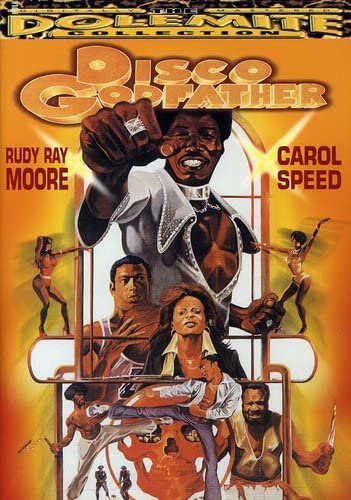
“Put your weight on it!” Tyrone Williams (Rudy Ray Moore) shouts at the start of 1979’s Disco Godfather. It’s a phrase that he regularly employs as he encourages everyone at the local disco to hit the dance floor and show off their moves. All Tyrone has to do to get people to dance is to shout out his catch phrase. He’s such a beloved figure in the community that most people just call him, “Godfather.”
The Godfather is the uncle of Bucky Williams (Julius Carry), a promising young basketball star who seems to have his entire future ahead of him. However, what the Godfather doesn’t know is that Bucky has fallen in with the wrong crowd and they’ve been pushing him to smoke …. ANGEL DUST! Bucky’s girlfriend tries to warn him that he’s been smoking too much of “the whack” but Bucky doesn’t heed her warning. Suddenly, Bucky is in the middle of the dance floor, freaking out as he imagines being attacked by zombie basketball players and a sword-wielding witch. He also sees the Disco Godfather, telling him to calm down, but suddenly the Godfather is transformed into a skeleton!
After Bucky is subdued and taken down to the local PCP recovery center (which is full of users who are all screaming, rolling around on the floor, and generally acting whacked out), the Godfather decides that he can no longer stand by while his community is victimized by the PCP dealers. With the help of Noel (Carol Speed), the Godfather starts a group called Angels Against Dust and starts a campaign to “attack the whack!” While the Godfather tracks down the dealers, Noel holds a rally where, at one point, she announces that everyone is going to have to come together and “whack the attack.”
The fact that this obviously flubbed line was included in the final film tells you much about what makes Disco Godfather such an interesting viewing experience. The film was shot very quickly and with very little money and, as such, second takes were a luxury that the film couldn’t afford. However, there’s also an undeniable charm to the film’s low-budget style. It’s amateurish but it’s amateurish in the most likable way possible. Even in the case of the “whack the attack” line, it’s hard not to appreciate that Carol Speed didn’t let that one flub stop her from giving the rest of her speech. By that same token, it’s also hard not appreciate that, later in the film, a never-before-seen character suddenly helps the Godfather fight off a bunch of pushers. This character was played by Moore’s karate instructor and his appearance is totally random and yet totally appropriate. In the world of DiscoGodfather, the chaotic plotting is the point. The more random the film becomes, the more it suggests a universe ruled by chance and coincidence. The total lack of logic starts to make sense. Werner Herzog would probably love this film if he ever saw it.
Rudy Ray Moore, of course, was a famously raunchy comic who was best-known for playing Dolemite in three films. However, Disco Godfather finds him in a bit more of a dramatic mood, as he tours the local PCP ward and tells everyone he meets that they have to “attack the whack,” Compared to the Dolemite films, there’s considerably less sex and profanity to be found in DiscoGodfather. There are several fight scenes and Rudy Ray Moore gets to show off his karate moves but the violence is never as over the top as it was in Dolemite. The problem, however, is that Rudy Ray Moore was a natural-born comic and, as a result, every line that he utters, regardless of how serious the topic, sounds like its building up to a punchline. Moore gets to do some dramatic acting at the end of the film, when the Godfather is himself force fed the whack and he starts to hallucinate various disturbing images. “That’s not right, mama!” the Godfather says at one point and indeed, the trip sequence is the strongest part of the film, a genuinely surreal trip into the subconscious of a man who just wanted to encourage people to dance.
Disco Godfather is one of those films that you just have to see. When Disco Godfather isn’t learning about PCP, he’s telling everyone to “put your weight on it” and, as a result, this film not only features a lot of anti-drug hysteria but it also features a lot of dancing. This is very much a film of its time. In one the film’s few deliberately funny moments, the album cover for the SaturdayNightFever soundtrack is seen covered in cocaine. Of course, the Disco Godfather doesn’t need cocaine to have a good time and he certainly doesn’t need the whack. He just needs the music and people willing to put their weight on it.
Disco Godfather was not a box office success when it was originally released, with Moore later saying that he made a mistake by toning down his persona for the film. Moore was probably correct but, seen today, Disco Godfather is an enchantingly berserk time capsule. Watch it and then be sure to watch Eddie Murphy play Rudy Ray Moore in the Netflix biopic, Dolemite Is My Name.
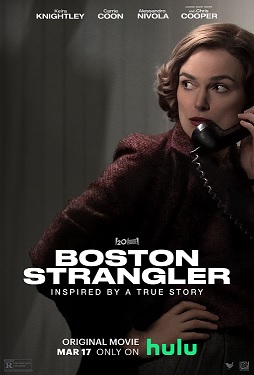
In the Boston of the early 1960s, Loretta McLaughlin (Keira Knightley) is a reporter for the Boston Record American. Loretta is frustrated with a newsroom that is dominated by a boys club of aging, overweight, sexist old timers. When she thinks that she’s discovered that there is a murderer targeting and strangling elderly women in Boston, she goes to her editor, Jack Maclaine (Chris Cooper), and asks to be allowed to write up a story about her suspicions. Jack would prefer that Loretta write a story about the new toaster that’s been released by Sunbeam.
So, Loretta does some investigating on her own and she discovers that the police suspect that all of the recent murders are being committed by one man. The story that she writes ends up on the front page and it even leads to her sharing a sip of whatever alcohol Jack has in his flask. The Boston police initially deny Loretta’s story and it looks like Loretta is going to spend the rest of her career reviewing kitchen appliances. But then the police just as suddenly confirm Loretta’s story and Loretta is back on the Strangler beat. She’s partnered with a veteran reporter named Jean Cole (Carrie Coon).
Together, Loretta and Jean battle sexism while investigating not just the Strangler but also the police department’s incompetence. Their reporting makes them local celebrities, with many people coming to them with the leads that the police couldn’t be bothered to follow up on. Despite Jean’s warnings about getting too involved with the case, Loretta obsesses over the Strangler’s crimes. Could the murderer be Daniel Marsh (Ryan Winkles), the boyfriend of one of the victim’s? Could it be George Nassar (Greg Vrostros), a criminal who reportedly has a genius IQ? Or could it be Albert DeSalvo (David Dastmalchian), the man who confesses to the crimes under the condition that his confession cannot be used in court and the belief that his family will be sent the reward money that would otherwise go to someone who helped the police to catch the Boston Strangler? DeSalvo, who was given a life sentence for a series of rapes that he committed before and after the murders began, is never convicted of any of the murders but, with his confession, the murders are declared to be solved. But are they? Loretta is not so sure.
Boston Strangler is not the first film to be made about the murders but I think that it might be the first to seriously explore the theory that DeSalvo was lying when he confessed to the majority of the murders. (As the film points out, DeSalvo’s cellmate just happened to be the same George Nassar who was also a suspect in the murders.) 1968’s The Boston Strangler, for instance, explained away the inconsistencies in DeSalvo’s confessions by suggesting the DeSalvo suffered from dissociative identity disorder and that DeSalvo himself didn’t understand what he was doing. This latest version of the story, however, presents DeSalvo as being a streetwise, lifelong criminal who confessed because his lawyer, F. Lee Bailey, convinced him that he would get a book deal and that he would be sent to a mental hospital as opposed to a prison. A title card at the end of the film informs us that DNA testing has confirmed that DeSalvo committed one of the 13 murders to which he confessed but that the other 12 murders remain unsolved. While one might wonder why anyone would confess to a murder that they didn’t actually commit, it’s actually something that has happened on more than a few occasions. Typically, the false confession will come from someone who, like DeSalvo, is already looking at a life sentence and who has nothing to lose by helping the police close the book on some unsolved crimes. The confessor gets a little extra notoriety and maybe some special treatment and the cops get to increase their clearance rate. In Boston Strangler, it’s suggested that DeSalvo’s confession was accepted because everyone wanted the crimes and the fear that went with them to just magically go away.
It’s an intriguing theory and one that has more evidence to back it up than the majority of conspiracy theories that one comes across online. Unfortunately, Boston Strangler really doesn’t do the story much justice because it focuses on the least interesting part of it. We don’t learn much about the investigation, DeSalvo, or the lives of the Strangler’s victims. Instead, the film gets bogged down with newsroom politics, as Loretta demands to be taken seriously and Jean offers advice on how to play the political game. Every journalism cliché is present, from the crotchety old editor to the afterwork bar to the publisher who doesn’t want to upset the city’s power brokers. Admittedly, when it comes to journalists, there’s probably a good deal of truth to be found in all of those clichés but the film still leans a bit too heavily into them. Every time we see Chris Cooper looking at the front page and taking a sip from his flask, we’re reminded that we’ve seen the exact same scene in a hundred other movies about newspapers.
As directed by Matt Ruskin, Boston Strangler has the washed-out, shadowy look that David Fincher used to good effect in Zodiac. The difference is that, in Zodiac, the shadows created a feeling of an all-enveloping evil slowly consuming the world. Zodiac’s visual style felt as if it was showing the viewer a true picture of the heart of darkness. In BostonStrangler, the visual style just leads the viewer to suspect that the director watched Zodiac before filming. The film’s visuals are so washed-out that it actually becomes a bit boring to look at. This is the rare film that makes Boston seem bland. Interestingly, when the action briefly moves to Michigan, the visuals suddenly become much more colorful and interesting. Perhaps by design, there’s a vibrancy to the Michigan scenes that is missing from the rest of the film. Unfortunately, those Michigan scenes are very brief.
The cast is full of talent but the majority of the performers are let down by a script that doesn’t allow anyone to have more than one or two personality traits. Keira Knightley speaks with a convincing Boston accent and has a few good scenes in which she shows that Loretta is coming to understand the true horror of the story she’s covering but the script itself doesn’t allow Loretta to have much of a personality beyond being outraged. Carrie Coon, cast as potentially the most interesting character in the film, also feels underused. As for Chris Cooper, he glowers with the best of them but the film can’t figure out much to do with him beyond having him drink from his flask.
There’s an interesting moment in the film in which it is suggested that DeSalvo built a false confession out of the details that he came across in Loretta and Jean’s stories about the crimes. It’s a moment that suggests that the media itself has some culpability when it comes to the crimes of men like Albert DeSalvo and whoever else may or may not have been strangling women in 1960s Boston. It’s perhaps the most honest moment of the film but it’s also a moment that’s not followed up on. That’s a shame because it suggests the movie that Boston Strangler could have been if it hadn’t gotten so bogged down with all the journalism film clichés. (Again, I would mention Zodiac as the prime example of how to do this type of film effectively.) Boston Strangler hints at the bigger story but it never really goes far beneath the surface.
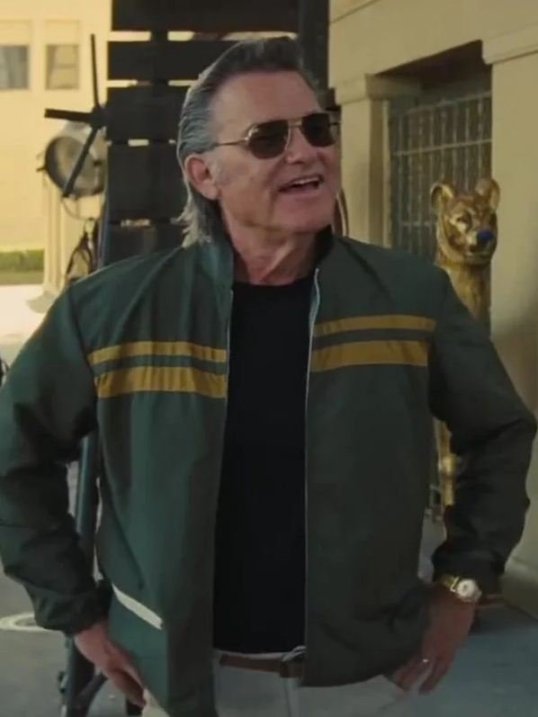
Today, the Shattered Lens wishes a happy birthday to one of our favorite actors, Kurt Russell!
Here’s Kurt, at the age of 11, making his film debut and kicking Elvis Presley in 1963’s It Happened At The World’s Fair! Reportedly, they had to do fifteen takes of this scene so Kurt got to kick Elvis a lot.
Later, of course, Kurt Russell would become one of the first actors to play Elvis when he starred in John Carpenter’s 1979 film of the same name. Carpenter was so impressed with Russell’s performance that he went on to cast Kurt in Escape From New York and The Thing. Kurt would also go on to provide the voice of Elvis in the 1994 Best Picture winner, Forrest Gump.


 Through the Shattered Lens