Horror on the Lens: The Cabinet of Dr. Caligari (dir by Robert Wiene)


We previously shared and reviewed this movie two Halloweens ago but so what?  It’s a horror classic and watching it is a bit of a Halloween tradition and here at the Shattered Lens, we are all about tradition!  Add to that, this is one of the most influential films of all time.  First released in 1922, The Cabinet of Dr. Caligari both introduced the world to German expressionism and it was one of the first films to feature a twist ending.

So, the next time you’re thinking about how much you love M. Night Shyamalan, be sure to say a word of thanks to Robert Wiene for directing The Cabinet of Dr. Caligari!

The Daily Horror Grindhouse: Zombi 2 (dir by Lucio Fulci)


Zombie_Flesh_eaters

(After reading my review, please be sure to check out Arleigh’s thoughts on Zombi 2!)

Two questions:

1) Do you love Zombie movies?

2) Have you seen Lucio Fulci’s 1979 film Zombi 2?

If your answer to the first question was yes, then you should definitely have had the same answer for the second.  Along with launching the long and extremely influential genre of the Italian zombie film and being one of the best zombie films ever made, Zombi 2 is also one of the best horror films ever made.

First off, a few words about that title.  Zombi was the Italian title for George Romero’s Dawn of the Dead.  Zombi was a huge hit on Italy and, in that shameless way that is beloved by all Italian horror fans, producers Fabrizio De Angelis and Ugo Tucci decided to take advantage of Zombi‘s success by naming their upcoming zombie film Zombi 2.  And, while I have always liked to think of Zombi 2 as being a prequel to Romero’s Dead trilogy, Zombi 2 is actually in no way related to Dawn of the Dead.

It has often been assumed that Zombi 2 was directly inspired by Dawn of the Dead.  While Romero’s film certainly provided more of an influence than just providing a title, Zombi 2 was actually in production before Dawn of the Dead opened in Italy.  And, ultimately, Zombi 2 is a far different film from Romero’s film.  Eschewing the social commentary and satire that ran through Dawn of the Dead, Zombi 2 is instead a work of pure horror.  They’re both excellent films but Dawn of the Dead ultimately inspires debate while Zombi 2 inspires nightmares.

Zombie_2_1978

Opening with a previously dead body being shot in the head as it slowly sits up on a stretcher and ending with a haunting vision of apocalypse, Zombi 2 is coated in a palpable atmosphere of doom.  A boat floats into a New York harbor and the two cops who investigate are greeted by a lumbering and hungry corpse.  Tisa Farrow plays the daughter of the boat’s owner.  When she and a reporter (Ian McCulloch, giving a likable and bemused performance that often finds him playing straight man to a bunch of decaying corpses and which provides a nice run up for his openly subversive performance in Zombie Holocaust) team up to find her father, their investigation leads them to an isolated island where the haunted and alcoholic Dr. Menard (Richard Johnson, bringing so much gravity and self-loathing to his role that he literally elevates the entire film) is struggling to deal with an outbreak of zombies.  Along with a boat captain (Al Cliver) and his girlfriend (Auretta Gay), McCulloch and Farrow try to escape the island before they end up joining the ranks of the undead…

As a director, Lucio Fulci was known for bringing his own unique visual flair to the horror genre.  Fulci, perhaps more than any of the other great Italian horror directors working during the Italian horror boom of the 80s and 90s, literally brought nightmares to cinematic life.  As a result, Zombi 2 is probably one of the most visually memorable zombie films ever made.  From the minute that McCulloch, Farrow, Cliver, and Gay arrive on the island, you can literally feel the oppressively hot wind and dusty wind that blows through every scene.  When the dead walk across the desolate landscape, Fulci emphasizes the decayed state of these zombies, forcing the audience to consider just how fragile the human body truly is.  The fact that the undead manage to be so pathetic and so dangerous at the same time only serves to make them all the more frightening.  When a group of conquistadors come back to life, Fulci films it from their point of view and, for a few minutes, we literally are one of the undead, clawing our way out of a grave.  Needless to say, Fulci doesn’t shy away from the gore of a zombie apocalypse either.  His zombies are ravenous and destructive.  The Walking Dead may be bloody but it’s got nothing on Zombi 2.

Along with the conquistador scene, Zombi 2 is especially remembered for two scenes, both of which showcase the best of both Fulci and Italian horror.

zombi-2-04

One is the scene where Dr. Menard’s wife (Olga Karlatos) is menaced by zombies after taking a shower.  Even after she slams the bathroom door, a zombies hand breaks through the door and grabs her by the hair and starts to pull her through the jagged hole in the door.  As she is slowly pulled to her doom, her eyeball is pierced by a splinter of wood.  It’s definitely an over-the-top moment, the type of thing that we expect from an Italian horror film.  But, as over-the-top as it may be, it’s also incredibly effective and terrifying.  It’s a scene that lets us know that there is no escape from our fate.  It’s a scene that reminds us that the zombies will always win because there is no way to lock out death.

(In fact, it’s such an iconic scene that almost all of Fulci’s subsequent films would feature a character losing an eye.  Adding a certain poignancy to his trademark scenes of ocular destruction was the fact that Fulci, himself, was diabetic and reportedly often feared that he would lose his eyesight.)

a

The other is a scene that always seems to bring a smile to the face of anyone who see it.  That’s the scene where a zombie gets into a fight with a shark while Auretta Gay swims nearby.  Again, it’s a bit ludicrous but it’s also incredibly effective.  If nothing else, it invites us to wonder how — if a shark can’t beat a zombie — can there be any hope for humanity?

The answer, of course, is that there isn’t.  Ultimately, in the world of Fulci’s film, whether by causes natural or unnatural, we’re all destined to become one of the zombies.

Zombi-2-Zombie-Flesh-Eaters

(This review is cross-posted over at Fourth-Day Universe where all of October has been Zombie Month!)

 

Horror On The Lens: The Pit (dir by Lew Lehman)


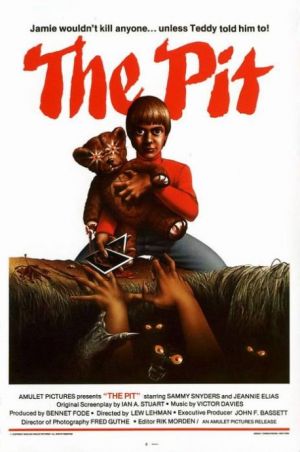
Thepitposter

For today’s horror on the lens, we have an odd little Canadian horror film from 1981.

The Pit tells the story of 12 year-old Jamie Benjamin (Sammy Snyders, giving a genuinely creepy performance), a weird kid who lives in rural Wisconsin.  Jame is an outcast who is regularly picked on by the other kids.  His only friend is a teddy bear with whom he has regular conversations and yes, Teddy does talk back.

One day, Jamie comes across a pit out in the middle of the woods.  The pit is full of cannibalistic monsters.  Jamie quickly takes a liking to them and starts to bring them raw meat.  However, Teddy has a better idea.  Maybe Jamie could start feeding them people…

In the original script, both Teddy and the monsters were supposed to be figments of Jamie’s imagination.  However, director Lew Lehman made the decision to make the monsters real and to keep the audience guessing as far as Teddy was concerned.  The end result is a very odd film about a very odd kid.

And you can watch it below!

(Warning: Though this film is tame by our standards, it would still probably be considered to be NSFW.)

6 Madly Scientific Trailers for Halloween


It’s been way too long since we posted a new edition of Lisa Marie’s Favorite Grindhouse and Exploitation Film Trailers!  Personally, I blame the Trailer Kitties.  You know how they can be!  But, earlier today, I sent them out and I told them to come back with 6 trailer for Halloween!

This is what they returned with!

1) Frankenstein (1931)

2) Bride of Frankenstein (1935)

3) Son of Frankenstein (1939)

4) Ghost of Frankenstein (1942)

5) Curse of Frankenstein (1957)

6) Andy Warhol’s Frankenstein (1973)

What do you think, Trailer Kitty?

Halloween Trailer Kitty

Horror On The Lens: Creation of the Humanoids (dir by Wesley E. Barry)


What makes us human?  What does it mean to have free will?  What is love?  What is freedom?  The questions and more are asked in the low-budget (and rather odd) science fiction epic The Creation of the Humanoids, which you can view below!

Now, I should warn that Creation of the Humanoids is an extremely talky film.  And the plot really doesn’t make much sense.  However, I still like it because it’s just such a strange movie.  I love it for the colorful set design, the contrast between the resentful robots and the paranoid humans, and the fact that the film — despite being made for next to nothing — actually has more ambition than anything ever made by Michael Bay.

First released in 1962, Creation of the Humanoids was reportedly one of Andy Warhol’s favorite films.  Keep an eye out for Plan 9 From Outer Space‘s Dudley Manlove.


Film Review: Jodorowsky’s Dune (dir by Frank Pavich)


Jodorowsky's_Dune_poster

I have to admit that I’m always a little bit cynical whenever I hear various film fans bemoaning films that were never made.  These are the films that were nearly made but ended up being abandoned because the production company ran out of money or maybe a lead actor died or maybe the studio refused to release it or else they released it in a heavily edited form.  There’s a certain tendency among hipsters to decide that any movie that they will never be able to see would automatically have been the greatest film ever.  It’s rare that anyone ever suggests that maybe it’s for the best that Stanley Kubrick never made his version of Napoleon or that maybe Ridley Scott’s version of I Am Legend would have been just as bad as the version that starred Will Smith or even that the footage that we have of Orson Welles’s unfinished The Other Side of The Wind doesn’t look that impressive.

In fact, some day, I want to see a documentary about an abandoned film where everyone says, “Oh my God, I’m glad that movie never got made.  It would have sucked!”

However, that documentary is never going to be made.  The great thing about praising a film that was never made was that you don’t have to worry about anyone watching the film and then going, “You have no idea what you’re talking about!”

For instance, I recently watched an excellent documentary called Jodorowsky’s Dune.  This film tells the story of how the iconoclastic director Alejandro Jodorowsky attempted to make a film out of the science fiction novel Dune in the mid-70s.  During the documentary, Jodorowsky explains that his version of the story would, in many ways, be different from the book.  Since I’ve never read the book nor have I seen any of the various adaptations that actually were eventually produced, I can’t say whether Jodorowsky’s changes would have been an improvement.  For that matter, I can’t say whether or not Jodorowsky’s film would have been great or if it would have been a legendary misfire.  I’ve seen El Topo and The Holy Mountain so I’m pretty sure that his version of Dune would have been uniquely his own.  But there’s no way for me — or anyone else for that matter — to say whether or not the film would have been any good because, after assembling an intriguing cast (Orson Welles, Mick Jagger, Salvador Dali, and David Carradine) and recruiting several talented artists and technicians (H.R. Giger, Dan O’Bannon, Chris Foss, and Moebius), Jodorowsky was never able to make his film. The Hollywood studios took one look at Jodorowsky’s vision and said, “There’s no way were paying for that.”

However, the documentary goes on to make a very intriguing argument that Jodorowsky’s Dune may be the most influential film never made.  Many of the people who collaborated with Jodorowsky would go on to work on other science fiction films and, when they did, they brought with them many of the ideas and concepts that were originally developed for Dune.  The documentary not only suggests that this might be true but also offers up some pretty compelling evidence, showing us how everything from Raiders of the Lost Ark to Prometheus has featured scenes that originally appeared in Jodorowsky’s Dune storyboards.

I may not be totally convinced that Jodorowsky’s Dune would have been the greatest film ever made but I love this documentary.  The majority of it is spent just listening as Jodorowsky, alternating between English and Spanish, tells us the story of what he hoped to do with Dune and how, ultimately, he could not do it.  Jordorowsky’s love of film and art is obvious with each word that he says.  Whether he’s talking about meeting Salvador Dali or passionately advocating for creativity and imagination, Alejandro Jodorowsky is never less than charming and inspiring.

If you love movies, you’ll love Jodorowsky’s Dune.  If you don’t love movies, Jodorowsky’s Dune will change your mind.

Horror On The Lens: The Legend of Boggy Creek (dir by Charles B. Pierce)


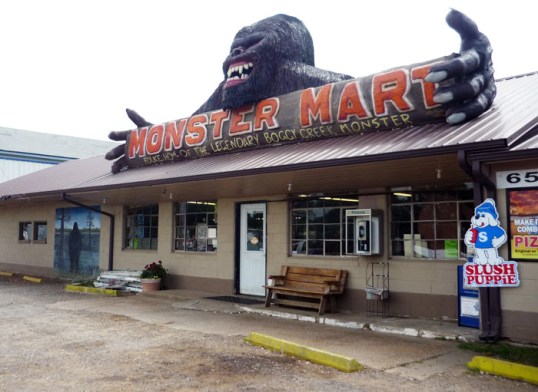
Monster Mart

Today’s Horror On The Lens is the 1972 documentary, The Legend of Boggy Creek.  The Legend of Boggy Creek tells the story of the legendary Fouke Monster, a bigfoot-like creature who has long been rumored to live near the small town of Fouke, Arkansas.  It was actually filmed in Fouke and, for better and often worse, it featured actual townspeople.  It was directed, produced, and distributed by a Texarkana businessman named Charles B. Pierce and apparently it was one of the most financially successful films of all time.


Of course, the main reason that I’m sharing this movie is because my family lived in Fouke back when I was 8 years old.  Before you ask, we never saw the monster.  But maybe some day…

Until then, enjoy The Legend of Boggy Creek!

Film Review: St. Vincent (dir by Theodore Melfi)


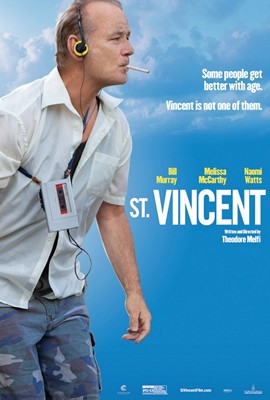
St_Vincent_poster

It’s the craziest thing.

Every year, we get another Black List.  Despite the name, the Black List is not the annual list of actors and directors who need to be run out of America because of their political beliefs.  Instead, the Black List is a survey of the “most liked” unproduced scripts that are currently floating around Hollywood.

Now, of course, to a large extent, the Black List is basically just another marketing gimmick.  A lot of the scripts that have appeared on the Black List were already in development at the time that they appeared and, undoubtedly, there are clever studio execs who think to themselves, “Juno might be a difficult sell so let’s make sure it gets on the Black List!”

However, every year, there are a few films that are put into production directly as a result of the script appearing on the Black List.  What’s interesting is just how many of these films turn out to be, if not quite terrible, at least rather forgettable.  Transcendence, for instance, was on the Black List.  Cedar Rapids was on the Black List.  Broken City was on the freaking  Black List. Consider this: The Beaver would never have been made except for the fact that it was on The Black List!

What’s particularly interesting is that the script was often the worst thing about these films.  These were films with overly complicated scripts that often tried too hard to be both crowd pleasing and quirky.  If nothing else, the Black List proves that being the “most liked” doesn’t mean that a script is good, interesting, or intelligent.  It just means that it covered all the bases.

Case in point: the new film St. Vincent.  St. Vincent sat on top of the Black List and was apparently so “well-liked” that screenwriter Theodore Melfi not only saw his script produced but he also got to direct it.  And wouldn’t you know it — the two biggest failings of St. Vincent are the script and the direction.

It’s easy to point out why the direction is bad so I’ll start there.  St. Vincent essentially looks like the pilot for one of those sitcoms that would be described as being edgy just because it was about a cranky old man.  There is no visual flair to the film.  The images just sit there flat on the screen.

As for the script, it would be likable if it didn’t try so hard.  St. Vincent is about a guy named Vincent, a war hero who is now a cantankerous old alcoholic and a pathological gambler.  His best friend is a pregnant Russian stripper.  He owes money to a violent bookie.  Every weekend, he visits his wife in a nursing home and he pretends to be a doctor.  His wife no longer recognizes him.  When the recently divorced Maggie and her awkward son Oliver move in next door, Vincent agrees to babysit after school.  At first, Vincent just does it for the money but, as the movie progresses, he teaches Oliver how to stand up for himself and Oliver makes Vincent a little less grumpy.  Eventually, Oliver has to do a report for a school about someone in his life that he considers to be a real-life saint and guess who he picks?

St. Vincent tells the type of story that would usually bring me to tears and I’ll admit that there were a few times when I did get teary-eyed.  But, ultimately, the script was too heavy-handed for me to maintain those tears.  I love crying at movies but, at the same time, I resent it when a movie demands that I cry just because it happens to be mashing down on all of the right buttons.  This is one of those movies that doesn’t trust the audience.  Instead of letting us react to the characters, it just keeps piling on development after development.  It’s not enough that Maggie is a single mother who feels guilty about not being able to pick her son up from school.  Instead, Maggie’s ex-husband has to suddenly sue for custody.  It’s not enough that Vincent is struggling to pay the bills.  Instead, he has to have a bookie who shows up at random and threatens to kill him.  There’s more to an effective dramedy than just having half of your cast act as if they’re in a sitcom while the other half acts as if they’re appearing in an old episode of Law & Order.

And yet, despite the script and despite Melfi’s direction, St. Vincent does work and it really works only for one reason.  Melfi has managed to assemble a truly outstanding cast.  In the role Maggie, Melissa McCarthy proves that she deserves better than having to spend her career making movies like Identity Thief.  Jaeden Lieberhrer is likable and sympathetic as Oliver.  Playing the pregnant Russian stripper, Naomi Watts does the best that anyone probably could do with that poorly written character.

But, ultimately, the film is totally about Bill Murray.  Bill Murray plays Vincent and he saves the entire film.  Whether he’s being funny or being serious, Bill Murray gives the type of great performance that justifies his reputation for being a national treasure.  When those tears did come to my eyes, it was all due to Murray’s performance.

St. Vincent is a deeply flawed film but it’s worth seeing for Bill Murray.

Horror On The Lens: Horror Express (dir by Eugenio Martin)


Today’s horror on the lens is the 1972 classic Horror Express!

And you can watch it below!


Horror Film Review: The Omen (dir by John Moore)


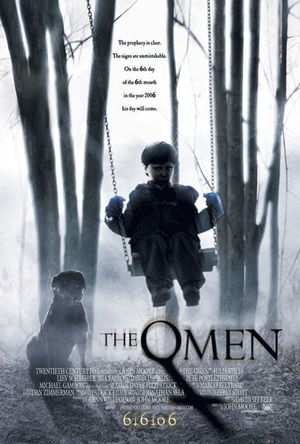
The_Omen_2006_poster

There’s really only one reason to see the 2006 remake of The Omen and that’s the fact that the priest who convinces Ambassador Thorn to adopt the Antichrist is played by the great Giovanni Lombardo Radice.

If you’re a fan of Italian horror, you’ll immediately know who Radice is and, whenever he appears in The Omen, you’ll be momentarily excited.  After all, Radice is an actor who has given memorable performances in films made by iconic directors like Lucio Fulci, Ruggero Deodato, Antonio Margheriti, Michele Soavi, and Martin Scorsese.  He’s appeared in everything from City of the Living Dead to Cannibal Apocalypse to The House On The Edge of the Park to Stagefright to Gangs of New York.  As both a horror icon and an excellent actor who has always been gracious and friendly to his fans, Giovanni Lombardo Radice is one of those actors who movie bloggers like me are always happy to see in any film.

(And, if anyone deserves a role in a Quentin Tarantino film, it’s Giovanni Lombardo Radice.)

And Radice gives a really great performance in The Omen.  He plays the role with just the right combination of menace and regret.  When he first appears, you can tell that he’s determined to get Robert Thorn to adopt Damien but that he’s not particularly happy about having to do it.  He may be one of the bad guys but he’s a bad guy with a conscience.  Later, when Radice makes a second appearance, it momentarily re-energizes the film.  He’s just got such a unique screen presence that, whenever he’s on-screen, Radice reminds you of the film that you want The Omen to be.

As for the rest of the remake — well, it’s all kind of pointless.  The film is largely a scene-by-scene remake of the first Omen and, unfortunately, it never quite answers the question of why the film needed to be remade in the first place.  The Gregory Peck role is played by Liev Schrieber while his wife is played by Julia Stiles.  The doomed photographer is played by David Thewlis.  Mia Farrow shows up in the role of the sinister nanny and Mia actually does a pretty good job but whenever she was delivering her lines, it was impossible for me not to imagine a remake of The Final Conflict where Ronan Farrow plays Damien.

Otherwise, the same characters die as in the original film and, often times, they die in the exact same way.  It’s really almost lazy how little the remake changes from the original.  And, ultimately, it makes the entire movie feel more than a little pointless.  You’re left with the feeling that the only reason the Omen was remade was so that it could be released on June 6th, 2006 (a.k.a. 6-6-06).

So, when it comes to The Omen, stick with the original but watch the remake for Giovanni Lombardo Radice.