The Fabulous Forties #11: The Strange Woman (dir Edgar G. Ulmer)


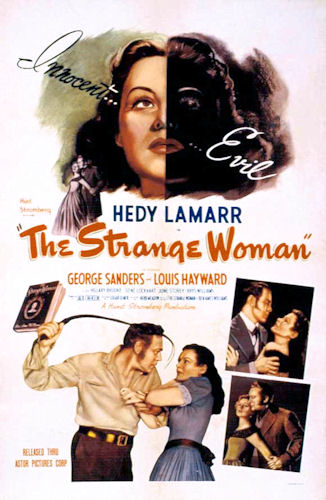
The_Strange_Woman_1946_poster

The eleventh film in Mill Creek’s Fabulous Forties box set was 1946’s The Strange Woman.  The Strange Woman is one of those film noir/small town melodrama hybrids that seem to have been something of a cinematic mainstay in the mid to late 40s.

The Strange Woman of the title is Jenny Hager (Hedy Lamarr) and she’s not just strange because she’s got an Eastern European accent despite having grown up in Bangor, Maine.  The film opens in 1824 and we watch as tween Jenny pushes one her classmates into a river, despite the fact that he can’t swim.  At first, she seems content to let him drown.  However, once she realizes that an adult is watching, Jenny jumps into the river and saves his life.

Ten years later, Jenny has grown up to be the most beautiful woman in Maine.  However, her father is abusive and regularly whips her as punishment for being too flirtatious.  Jenny has plans, though.  She wants to marry the richest man in town, a store owner and civic leader named Isaiah Poster (Gene Lockahrt).  Isaiah also happens to be the father of Ephraim (Louis Hayward), the young man who Jenny tried to drown at the beginning of the film.

And eventually, Jenny’s dream does come true.  She marries Isaiah, even though she doesn’t love him.  She just wants his money and is frustrated when the sickly Isaiah keeps recovering from his frequent illnesses.  She starts to flirt with the weak-willed Ephraim, trying to manipulate him into killing his father.

Of course, even as she’s manipulating Ephraim, she’s also flirting with John Everd (George Sanders), despite the fact that John is already engaged to the daughter of the local judge.  Though Everd is a good and decent guy, he still finds himself tempted by Jenny.

What makes all of this interesting is that Jenny isn’t just a heartless femme fatale.  Throughout the film, there are several instances when she wants to do good but can’t overcome her essentially heartless nature.  She gives money to charity and, whenever she listens to one of the local fire-and-brimstone preachers, she finds herself tempted to give up her manipulative ways.

The Strange Woman was directed by Edgar G. Ulmer, who is probably best known for directing the ultimate indie film noir, Detour.  He was a childhood friend of Hedy Lamarr’s and she specifically asked that he direct her in The Strange Woman.  As a result, this film represents one of the few times that Ulmer was given a budget that was equal to his talents.  What makes The Strange Woman stand out from other 40s melodramas — like Guest In The House, for example — is that, even with the larger budget, Ulmer’s direction retains the same deep cynicism and dream-like intensity that distinguished his work in Detour.  The film remains sympathetic to Jenny, even as she often suffers the punishments that were demanded by the production code.

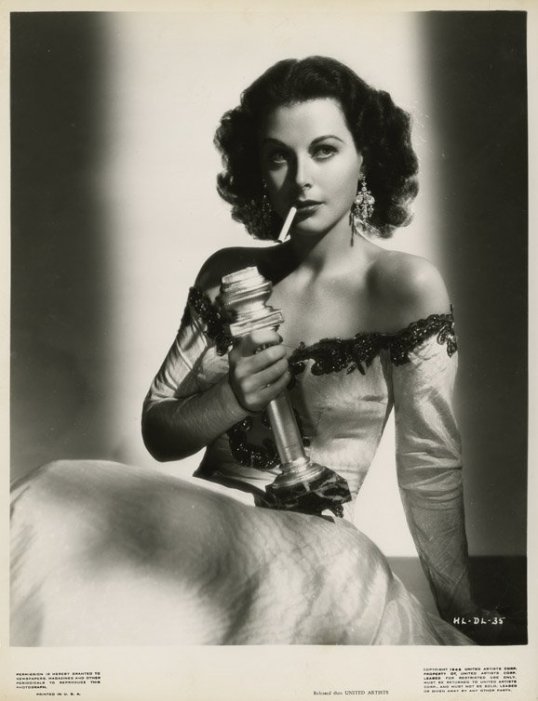
In the role of Jenny , Hedy Lamarr is a force of a nature.  She is so intense and determined that watching her as Jenny is a bit like seeing what Gone With The Wind would have been like if Scarlet O’Hara had been a total sociopath.  Even the fact that Lamarr’s accent is definitely not a Maine accent seems appropriate.  It sets Jenny apart from the boring people around her.

It reminds us that, even if she is “strange,” there is no one else like Jenny Hager.
6320831_3_l

4 Shots From 4 Films: Dracula, Island of Lost Souls, The Black Cat, Son of Frankenstein


Bela Lugosi was born 133 years ago today.  These 4 shots from 4 films are dedicated to him.

4 Shots From 4 Films

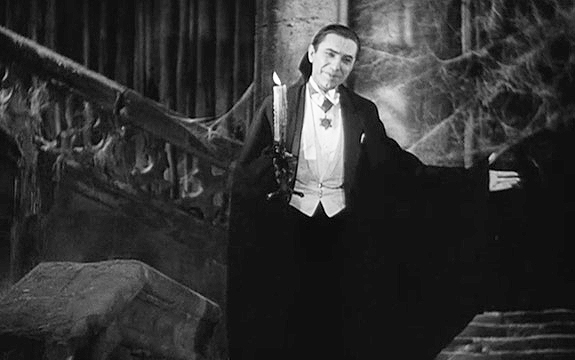
Dracula (1931, directed by Tod Browning)

Dracula (1931, directed by Tod Browning)

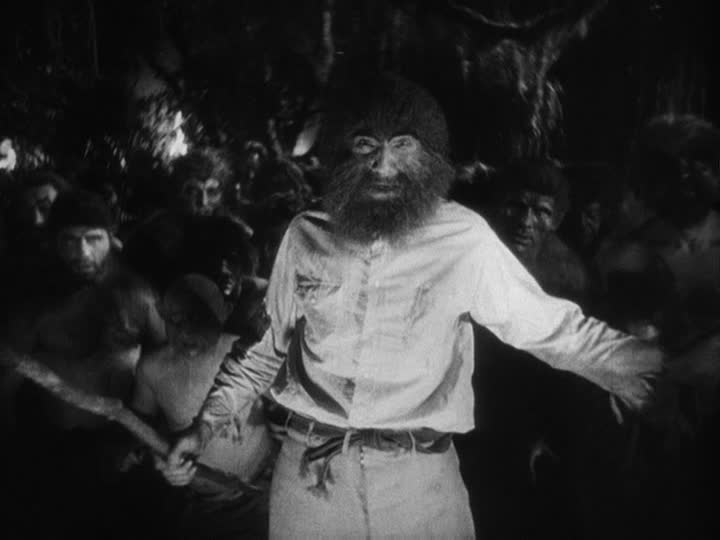
Island of Lost Souls (1932, directed by Erle C. Kenton)

Island of Lost Souls (1932, directed by Erle C. Kenton)

The Black Cat (1934, directed by Edgar G. Ulmer)

The Black Cat (1934, directed by Edgar G. Ulmer)

Son of Frankenstein (1939, directed by Rowland V. Lee)

Son of Frankenstein (1939, directed by Rowland V. Lee)

Embracing the Melodrama Part II #5: Damaged Lives (dir by Edgar G. Ulmer)


220px-Damaged_Lives_FilmPoster

First released in 1933, Damaged Lives is a prototypical example of the social issue exploitation film.  These were films that managed to escape the wrath of the censor by claiming to be an “educational” film that was specifically made to tell the public about a pressing social problem.  As a result, audiences could go to a movie like Damaged Lives and see all of the innuendo (and occasionally even a hint of forbidden nudity) that were censored out of mainstream films.  In return, the audience would have to spend five minutes or so listening to an authority figure talk about the dangers of juvenile delinquency, drug use, unplanned pregnancy, or venereal disease.

Damaged Lives deals with syphilis.  Young executive Donald Bradley (Lyman Williams) has been dating Joan (Diane Sinclair) for a long time but she is hesitant to get married.  This, despite the fact that she tells her best girlfriend that “I want a baby more than anything else in the world!” and, since this film is from 1933, good girls were apparently not allowed to have sex until getting married.

“Time for you two to get married!” another friend announces.

“What difference does it make?” Joan asks.

“A lot!” comes the reply.

“We should have been married a long time ago!” a bitter Donald exclaims.

Anyway, while waiting for Joan to finally be ready for marriage, Donald meets Elsie (Charlotte Merriam) and discovers that while good girls don’t have sex, bad girls do.  And they give you syphilis!  Unfortunately, Donald does not find out about the syphilis until after he and Joan have finally gotten married and Elsie has committed suicide.

What comes next?  Scandal, of course!  Suddenly, newsboys are screaming, “Extra!  Extra!” and everyone in town knows that Elsie had syphilis.  Donald doesn’t want to tell Joan that he slept with Elsie but then he’s taken on a tour through a hospital that’s full of people suffering from syphilis.  We’re told that the first two people who Donald meets are “innocent.”  They contracted syphilis accidentally, one by simply smoking a pipe after it had been used by an infected person.  Then Donald sees a man who is in the final stages of illness.

“He got it from a streetwalker!” a doctor barks out, “NOT SO INNOCENT!”

When Joan finds out that both she and Donald have been exposed and that she may have to wait to have a baby, she promptly makes plans to kill all of them…

It may not be obvious from the description above but Damaged Lives is actually rather subdued when compared to some other educational exploitation films.  This is no Reefer Madness.  In fact, the film’s final scenes — which involve Joan plotting a permanent end to her troubles — have a tragic sort of grandeur to them.  Damaged Lives is hardly an overlooked masterpiece but, as far as these type of films go, it’s not bad.

Interestingly enough, Damaged Lives was the first film to be directed by the legendary low-budget filmmaker Edgar G. Ulmer.  (Ulmer first came to Hollywood to work on F.W. Murnau’s Sunrise.)  Ulmer went on to direct such classic B-movies as The Black Cat, Detour, and The Man From Planet X.

You can watch Damaged Lives below!