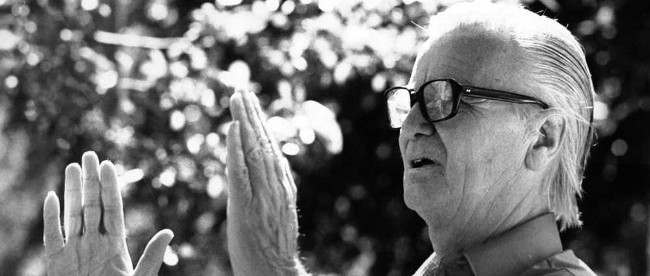
British director J. Lee Thompson was born on August 1, 1914. He directed some classics in the early 60’s, movies like THE GUNS OF NAVARONE (1961), where he received an Oscar nomination for Best Director, and the original CAPE FEAR (1962), which I personally consider superior to Scorsese’s 1991 remake. Gregory Peck, who starred in both films, once said there were only four directors he could trust to tell him whether or not he was faking his performance: Alfred Hitchcock, George Cukor, William Wyler and J. Lee Thompson. High praise indeed!
When the British film industry began caving in at the end of the decade, Thompson moved into Hollywood productions and continued to work steadily for the next couple of decades. He worked on films in all genres, like westerns (MACKENNA’S GOLD – 1968), science fiction (CONQUEST OF THE PLANET OF THE APES – 1972) and horror (HAPPY BIRTHDAY TO ME – 1981). After Thompson retired in 1989, he would sometimes lament that he had “sold out” his individual artistic desires in order to just keep working. But he would never be too hard on himself, because he enjoyed making movies and always brought professionalism and competence no matter the movie.
The main reason I like J. Lee Thompson is because he would make 9 films with actor Charles Bronson from 1976 to 1989. With Thompson as director, you knew the film would always have a certain level of quality, and Bronson loved his fast, no-frills method of shooting. In celebration of Thompson’s 112th birthday in cinema heaven, I thought it might be fun to provide my ranking of those 9 films. So here we go!

Coming in at #9 is MESSENGER OF DEATH (1988). Thompson is at his best during the incredibly tense and vicious opening sequence, but the script ultimately can’t keep the momentum going, and it’s one of Bronson’s more boring films. On some positive notes, it’s a different kind of movie for Bronson, more of a whodunnit than a straight action film. It has a strong cast, filled with veterans like John Ireland, Jeff Corey, and Trish Van Devere. It also has some beautiful Colorado scenery.
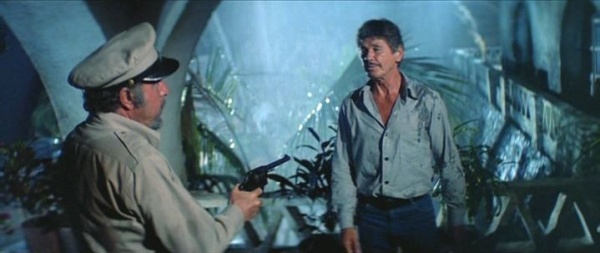
Next up at #8 is CABO BLANCO (1980). After years of poor video releases, Kino Lorber released the film on a special edition Blu-ray in 2016, which highlights how Thompson was able to capture the natural beauty of the Mexican locations. Bronson gives a committed performance as Giff Hoyt. The casting of legends like Jason Robards and Fernando Rey, in a fantastically corrupt turn, are a big plus as well. Unfortunately, the film’s script and story never really come together and the end doesn’t make much sense.

Coming in at #7 is KINJITE: FORBIDDEN SUBJECTS (1989). This would be Thompson’s final film, and he goes out with a slick and sleazy thriller. In my opinion, KINJITE contains one of Bronson’s stronger Cannon performances, but the subject matter is particularly dark and ugly, with themes of child exploitation, human trafficking, sexual violence, and prejudice. I think it’s a good film, but you definitely need a bath afterwards. Juan Fernandez is odd and memorable as the villainous pimp, Duke.

For #6, I’m going with DEATH WISH 4: THE CRACKDOWN. After the bonkers outrageousness of DEATH WISH 3, Thompson took the reins from Michael Winner for this entry, and delivered a much more straightforward action film. There is so much action in DEATH WISH 4, and the oilfield shootout contains some of Bronson’s more iconic imagery of the 80’s. The film was a huge renter at the video store, the most successful of the entire franchise in that department. John P. Ryan is also gleefully over the top as the bad guy.
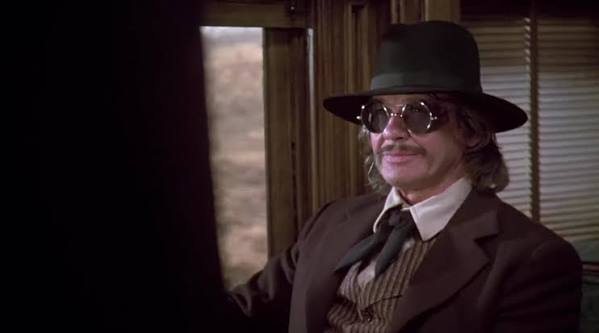
At #5, I’m going with THE WHITE BUFFALO (1977). This western has grown on me over the years. Thompson is able to pull strong performances out of Charles Bronson and Will Sampson in the lead roles of Wild Bill Hickok and Crazy Horse. Combined with John Barry’s musical score, he’s able to give the film an eery, otherworldly quality with each appearance of the white buffalo. The film may have bombed at the box office, but it’s pretty darn good movie.

At #4, I’m going with THE EVIL THAT MEN DO (1984). I’m especially appreciative of Thompson for his work on Bronson’s final badass hitman film. The original director, Fielder Cook, was fired and Thompson was brought in at the last minute with very little prep time. He was still able to deliver a violent, brutal thriller. This one has its rough moments, but I’ve always liked Bronson as the amoral instrument of justice. And his down-low takedown of the giant sexual predator in the slimy Mexican bar is one of the more memorable scenes in any action film!

Heading into the top 3, I’m going with ST. IVES (1976) at #3. In Thompson’s first movie with Bronson, he delivers a fun, little mystery thriller. I particularly enjoy Bronson’s performance as Ray St. Ives. He seems to always have a smile on his face as he makes his way through the various Los Angeles locations. With definitely less action than your average Bronson film, I enjoy the change of pace as well as the excellent supporting cast of veteran actors like John Houseman, Jacqueline Bisset, Maximillian Schell, Harry Guardino, Harris Yulin, Dana Elcar and Michael Lerner. Heck, Jeff Goldblum and Robert Englund even show up as some henchmen. This is Bronson at the peak of his movie stardom.
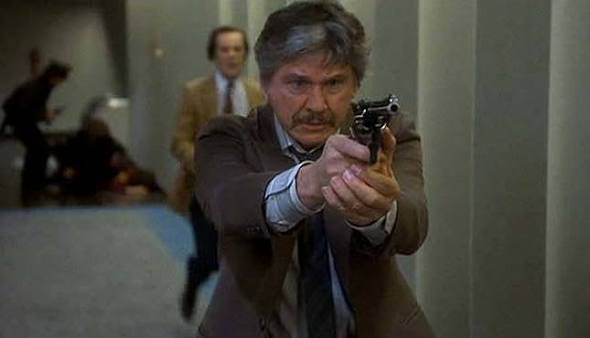
At #2, I make an extremely personal choice with MURPHY’S LAW (1986). While the film is definitely an 80’s Cannon time capsule, this is one of two movies that kicked off my lifelong obsession with Charles Bronson, with the other being DEATH WISH 3. Thompson keeps the action moving efficiently from one set piece to another as Jack Murphy and Arabella McGee (Kathleen Wilhoite) try to figure out who is framing him for the murder of his stripper ex-wife. Carrie Snodgress is enjoyably nuts as the bad lady. Not only have I watched this movie dozens of times, I have been blessed to meet the film’s composer (Val McCallum) and interview Murphy’s partner (Robert F. Lyons). This movie is just special to me in ways that critical analysis can never capture.
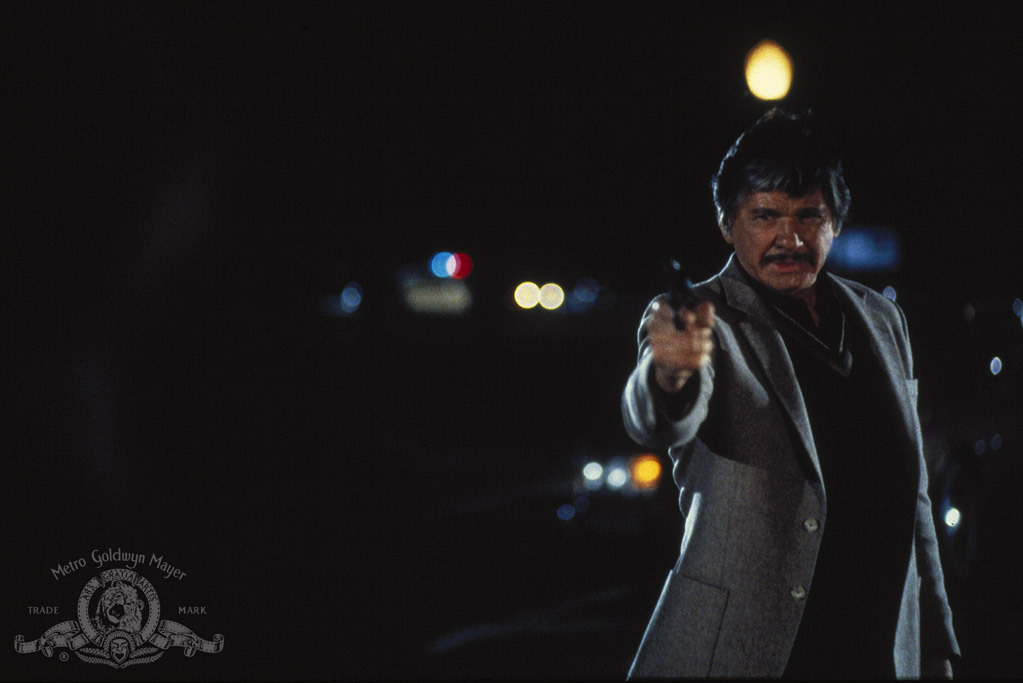
And at #1 in my list of Bronson-Thompson collaborations, I choose the 1983 tough cop/slasher hybrid TEN TO MIDNIGHT. Charles Bronson is particularly strong as Leo Kessler, the veteran detective and dad who will go to any length to bring down a vicious, impotent killer of women, played brilliantly by Gene Davis. It has one of the best and most controversial endings of Bronson’s career. I give credit to Thompson for delivering an entertaining thriller that would appeal to an audience outside of Bronson’s normal fanbase. 10 TO MIDNIGHT would be a major player on premium cable channels like HBO. When I met my wife, she didn’t know who Bronson was, but she knew the film and loved it. Even though he was already an aging action star, the success of this movie propelled Bronson’s theatrical leading man career to the end of the 80’s.
Thanks for all the memories, J. Lee. Your films have been an endless source of entertainment for me for over 40 years! Rest in peace, sir
 To quote The Main With No Name, “When a man’s got money in his pocket, he begins to appreciate peace.”

