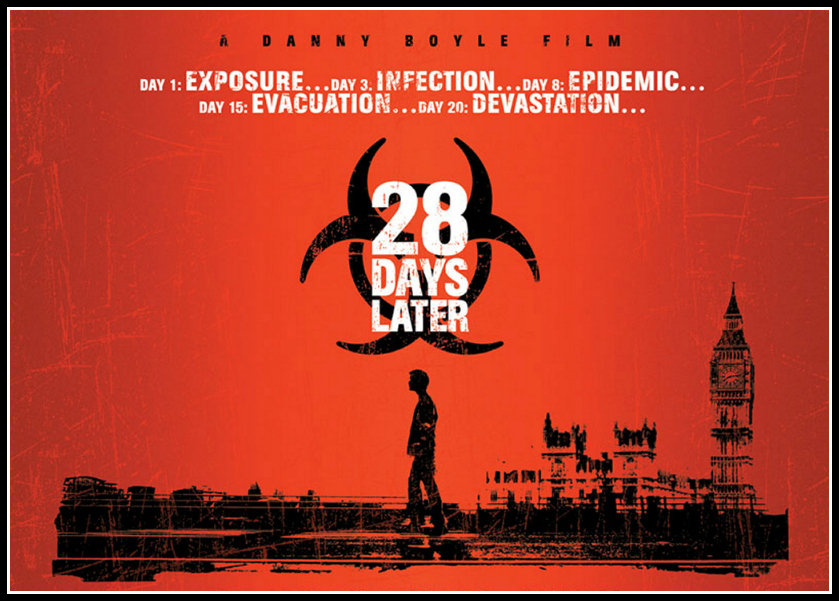
Horror Review: 28 Days Later (dir. by Danny Boyle)


For decades, the zombie film genre has been defined by the rules established by the grandfather of the modern zombie story, George A. Romero. His 1968 landmark horror film Night of the Living Dead transformed what had once been a gothic creature rooted in the voodoo folklore of Haiti and the Caribbean into an apocalyptic force symbolizing social collapse and human weakness. The film not only terrified audiences but also laid the foundational blueprint for every zombie movie that followed. Romero’s zombies weren’t merely monsters — they were a reflection of humanity’s fears, prejudices, and inner decay. His influence has remained so pervasive that, even today, filmmakers working in horror are inevitably responding to his legacy, whether they realize it or not.

Through the years, there have been numerous attempts to deviate from Romero’s formula. The most prominent early success came in the 1980s with the Return of the Living Dead series — a clever horror-comedy franchise that infused dark humor and punk aesthetics into the genre. Yet even that beloved cult entry eventually lost steam. True reinvention did not arrive until 2002, when British filmmaker Danny Boyle and screenwriter Alex Garland collaborated on 28 Days Later, a project that both revitalized the zombie genre and split its devoted fan base down the middle. Was it truly a “zombie” film, or something else entirely? That very debate remains unresolved more than twenty years later.

Boyle’s film begins not with a supernatural curse or the reanimation of the dead, but with a catastrophic act of human arrogance. A group of naïve animal-rights activists break into a research laboratory to rescue chimpanzees subjected to bureaucratic cruelty. However, they find that these animals have been injected with a rage-inducing virus — the product of bioengineering rather than black magic. One of the activists, horrified by what she witnesses, ignores the pleas of a desperate scientist and frees a chimp, unleashing a pandemic that will decimate Britain within weeks. This opening sequence is both economical and horrifying: the origins of the apocalypse come from compassion twisted into recklessness. Boyle establishes his tone immediately — quick editing, grainy digital video, and an oppressive sense of realism create a world that feels disturbingly possible.

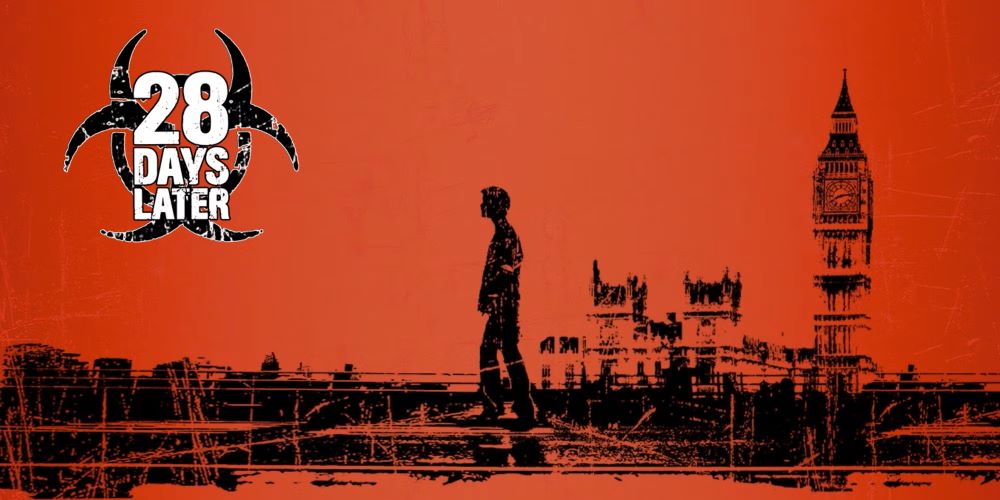
The narrative then leaps forward twenty-eight days. In a now-iconic sequence, the protagonist Jim (played by Cillian Murphy) awakens from a coma in an abandoned London hospital. His disorientation mirrors that of the audience: sterile hallways littered with trash, flickering lights, a haunting silence broken only by the hum of wind through the empty city. When Jim emerges into the sunlight, the camera captures a London entirely devoid of people, its majestic landmarks standing as hollow monuments to civilization’s sudden collapse. This is one of cinema’s most unforgettable depictions of isolation. The haunting score by John Murphy and the use of Godspeed You! Black Emperor’s instrumental “East Hastings” heighten the apocalyptic stillness, transforming London into a ghost metropolis.

Jim’s bewilderment only deepens when he seeks refuge in a church — a setting traditionally associated with salvation — only to find it desecrated by carnage. His presence awakens a horde of infected individuals who charge at him with terrifying speed. Unlike Romero’s slow, lumbering undead, Boyle’s infected are human beings transformed by a virus that amplifies their aggression to animalistic extremes. They move like predators, sprinting at prey with berserk fury. Jim narrowly escapes thanks to two survivors, Selena (Naomie Harris) and Mark (Noah Huntley), who introduce him to the brutal new rules of existence: infection spreads through blood contact, turning victims within seconds, and hesitation means death.

The trio’s uneasy alliance soon crumbles after Mark becomes infected, forcing Selena to kill him without hesitation. This harrowing moment establishes her as one of the film’s strongest and most pragmatic characters — a refreshing departure from the damsel archetype that has long haunted horror cinema. Jim and Selena later encounter Frank (Brendan Gleeson), a good-natured taxi driver, and his teenage daughter Hannah (Megan Burns), who have been surviving in a fortified apartment building. Together they form a fragile surrogate family and travel in search of a military broadcast promising safety and a potential cure.

Boyle deftly blends moments of human warmth amid horror. Scenes like the group’s scavenging trip through an abandoned grocery store — a darkly comic echo of Dawn of the Dead’s consumer satire — offer glimpses of joy and normalcy. The countryside sequences, shot with a painterly eye, contrast the urban decay of London with the serene beauty of a world reclaiming itself from human control. Nature, the film quietly suggests, endures long after people have vanished.

Their journey leads them to a fortified mansion commanded by Major Henry West (Christopher Eccleston), a British officer whose soldiers claim to have “the answer to infection.” The supposed sanctuary quickly reveals a darker truth. West’s band of men have descended into moral depravity, promising their commander that the promise of “women” will restore morale. The film shifts from survival horror to psychological thriller as the real threat emerges — not the infected outside, but the monstrousness within human beings when order collapses. In this descent into militaristic patriarchy and madness, Boyle channels the spirit of Romero’s Day of the Dead, where the military’s illusion of control becomes the true source of terror.

Boyle and Garland’s reinvention of the zombie mythos was revolutionary. Longtime fans of Romero’s shambling undead initially resisted the notion that 28 Days Later even qualified as a zombie movie. After all, its creatures weren’t reanimated corpses but living people overtaken by an uncontrollable virus. Yet their function within the story — relentless, dehumanized embodiments of contagion and rage — served the same thematic role as zombies always had: mirrors for society’s breakdown. The debate over whether the infected “count” as zombies is less important than the fact that Boyle redefined the genre’s emotional and kinetic language. His infected didn’t just pursue victims; they hunted them. Their blistering speed and screams injected pure chaos into what had once been slow, creeping dread.

The technical and artistic choices heightened the film’s intensity. Shot largely on digital video with handheld cameras, 28 Days Later looked raw and immediate, more like found footage than polished fiction. This realism bridged the gap between old-school horror and the new century’s fixation on viral outbreaks and global instability. Coming in the post-9/11 era, its images of deserted cities and military lockdowns felt eerily prescient, foreshadowing later fears of pandemics and authoritarian control.

The performances ground the film emotionally. Cillian Murphy’s portrayal of Jim evolves from bewildered innocence to hardened survivor, serving as the audience’s emotional compass. Naomie Harris delivers one of the genre’s most capable female performances, blending vulnerability with ferocity. Brendan Gleeson, always magnetic, brings compassion and tragedy to Frank — a man whose paternal instincts ultimately lead to heartbreak. Christopher Eccleston’s Major West stands as a chilling embodiment of human corruption in crisis: the soldier who insists he is saving civilization while replicating its worst impulses.

Despite being produced on a modest budget of roughly eight million dollars, Boyle’s film achieved a scale and impact far greater than its resources suggested. The empty London shots — achieved by closing key streets at dawn for only minutes at a time — remain astonishing feats of logistical precision and cinematic audacity. More importantly, the film’s minimalist production enhanced its believability. Everything about 28 Days Later feels lived-in, grimy, and plausible.

Two decades on, 28 Days Later continues to stand as one of the most influential horror films of the 21st century. Its success reinvigorated a genre that had grown stale and inspired a wave of imitators across film, television, and video games, from Zack Snyder’s Dawn of the Dead remake to AMC’s The Walking Dead. Beyond its cultural impact, it remains a haunting meditation on rage — personal, societal, and political. Boyle and Garland transformed horror into a canvas for existential dread, exploring how quickly civility unravels when survival becomes the only law.

Whether one calls it a zombie film or not hardly matters anymore. 28 Days Later breathed new life into the undead myth, shattering old rules and redefining what modern horror could be. The debate it sparked continues, but one truth is undeniable: the genre has never been the same since Jim first walked through that silent, ruined London — a world devoured not by the dead, but by the terrifying rage of the living.
Scene I Love: Sunshine (dir. by Danny Boyle)

The scene in Danny Boyle’s “Sunshine” where the crew reaches Mercury is one of my favorites. It may not be as powerful as Kaneda’s Death, but this is one of those moments I can watch and smile at. There are no words, but visually, It’s an awesome moment of reflection in the scheme of things. John Murphy and Underworld’s music add a nice touch to this.

Lisa And The Academy Agree To Disagree


The Oscar nominations were announced today and, for the most part, it’s pretty much what you would expect.  Below is the list of nominees.  If a nominee listed in bold print, that means they also appeared on my own personal list of nominations.

Best motion picture of the year

Black Swan
The Fighter
Inception
The Kids Are All Right
The King’s Speech
127 Hours
The Social Network
Toy Story 3
True Grit
Winter’s Bone

(The Academy and I agree on five of the ten nominees.  That’s actually more than I was expecting.)

Performance by an actor in a leading role

Javier Bardem (Biutiful)
Jeff Bridges (True Grit)
Jesse Eisenberg (The Social Network)
Colin Firth (The King’s Speech)
James Franco (127 Hours)

(The only real surprise here is Bardem.  I haven’t seen Biutiful but I’ve heard amazing things about it.)

Performance by an actor in a supporting role

Christian Bale (The Fighter)
John Hawkes (Winter’s Bone)
Jeremy Renner (The Town)
Mark Ruffalo (The Kids Are All Right)
Geoffrey Rush (The King’s Speech)

(Yay for John Hawkes!  Some people are surprised that Andrew Garfield wasn’t nominated for The Social Network.  I’m disappointed he wasn’t nominated for Never Let Me Go.)

Performance by an actress in a leading role

Annette Bening (The Kids Are All Right)
Nicole Kidman (Rabbit Hole)
Jennifer Lawrence (Winter’s Bone)
Natalie Portman (Black Swan)
Michelle Williams (Blue Valentine)

(I’m happy to see Lawrence and Portman recognized but I still so wish that the Academy had recongized Noomi Rapace and Katie Jarvis as well.  I knew it wouldn’t happen but still…)

Performance by an actress in a supporting role

Amy Adams (The Fighter)
Helena Bonham Carter (The King’s Speech)
Melissa Leo (The Fighter)
Hailee Steinfeld (True Grit)
Jacki Weaver (Animal Kingdom)

(Weaver — Yay!) 

Achievement in directing

Darren Aronofsky (Black Swan)
David O Russell (The Fighter)
Tom Hooper (The King’s Speech)
David Fincher (The Social Network)
Joel Coen and Ethan Coen (True Grit)

(The snubbing of Christopher Nolan for Inception is probably the closest thing to an outrage that the Oscars will produce this year.)

Adapted screenplay

127 Hours – Danny Boyle & Simon Beaufoy
The Social Network – Aaron Sorkin
Toy Story 3 – Michael Arndt (screenplay); John Lasseter, Andrew Stanton and Lee Unkrich (story)
True Grit – Joel Coen and Ethan Coen
Winter’s Bone – Debra Granik & Anne Rosellini

Original screenplay

Another Year – Mike Leigh
The Fighter – Scott Silver, Paul Tamasy and Eric Johnson (screenplay); Keith Dorrington, Paul Tamasy and Eric Johnson (story)
Inception – Christopher Nolan
The Kids Are All Right – Lisa Cholodenko and Stuart Blumberg
The King’s Speech – David Seidler

Best animated feature film of the year

How to Train Your Dragon
The Illusionist
Toy Story 3

 (I haven’t seen The Illusionist yet but I’m looking forward to it because the previews look great, it’s based on a script by Jacques Tati, and I love all things French.  Still, I kinda wish that Despicable Me had been nominated just so Arleigh could see the minions at the Academy Awards.)

Best foreign language film of the year

Biutiful (Mexico)
Dogtooth (Greece)
In a Better World (Denmark)
Incendies (Canada)
Outside the Law (Hors-la-loi) (Algeria)

Art direction

Alice in Wonderland – Robert Stromberg (production design), Karen O’Hara (set decoration)
Harry Potter and the Deathly Hallows Part 1 – Stuart Craig (production design), Stephenie McMillan (set decoration)
Inception – Guy Hendrix Dyas (production design), Larry Dias and Doug Mowat (set decoration)
The King’s Speech – Eve Stewart (production design), Judy Farr (set decoration)
True Grit – Jess Gonchor (production design), Nancy Haigh (set decoration) 

Achievement in cinematography

Matthew Libatique (Black Swan)
Wally Pfister (Inception)
Danny Cohen (The King’s Speech)
Jeff Cronenweth (The Social Network)
Roger Deakins (True Grit) 

Achievement in costume design

Colleen Atwood (Alice in Wonderland)
Antonella Cannarozzi (I Am Love)
Jenny Beavan (The King’s Speech)
Sandy Powell (The Tempest)
Mary Zophres (True Grit)

(That’s right, I ended up going 0 for 5 as far as Costume Design is concerned.  Which I guess goes to prove that I have better taste than the Academy.)

Best documentary feature

Exit Through the Gift Shop (Banksy and Jaimie D’Cruz)
Gasland (Josh Fox and Trish Adlesic)
Inside Job (Charles Ferguson and Audrey Marrs)
Restrepo (Tim Hetherington and Sebastian Junger)
Waste Land (Lucy Walker and Angus Aynsley)

 (If Banksy wins, I’ll be happy.  I have a feeling the award will go to Inside Job, however.  As a documentary, Inside Job reminded me a lot of Capt. Hindsight from the South Park Coon Vs. Coon And Friends trilogy.  Also, I’m a little bit surprised that Waiting for Superman wasn’t nominated.  I’m even more surprised that I actually saw enough feature documentaries last year to even have an opinion.  Also, interesting to note that Restrepo — a very nonpolitical look at military in the mid-east — was nominated while The Tillman Story, a much more heavy-handed and stridently political documentary was not.)

Best documentary short subject

Killing in the Name (Nominees to be determined)
Poster Girl (Nominees to be determined)
Strangers No More (Karen Goodman and Kirk Simon)
Sun Come Up (Jennifer Redfearn and Tim Metzger)
The Warriors of Qiugang (Ruby Yang and Thomas Lennon)

(It’s always interesting that nobody knows what these movies are about yet their producers always end up giving the longest speeches at the Oscars.  I’m hoping that Poster Girl wins because the actual producers have yet to be determined.  I imagine that means there might be some sort of legal action going on which means that, if it wins on Oscar night, there might be a big fight at the podium.  Plus, I like the title.  It makes me want to walk up to people I barely know, lean forward, and go, “Can I be your poster girl?”)

Achievement in film editing

Andrew Weisblum (Black Swan)
Pamela Martin (The Fighter)
Tariq Anwar (The King’s Speech)
Jon Harris (127 Hours)
Angus Wall and Kirk Baxter (The Social Network) 

Achievement in makeup

Adrien Morot (Barney’s Version)
Edouard F Henriques, Gregory Funk and Yolanda Toussieng (The Way Back)
Rick Baker and Dave Elsey (The Wolfman)

Achievement in music written for motion pictures (original score)

John Powell (How to Train Your Dragon)
Hans Zimmer (Inception)
Alexandre Desplat (The King’s Speech)
AR Rahman (127 Hours)
Trent Reznor and Atticus Ross (The Social Network)

Achievement in music written for motion pictures (original song)

Coming Home (from Country Strong, music and lyrics by Tom Douglas, Troy Verges and Hillary Lindsey)
I See the Light (from Tangled, music by Alan Menken, lyrics by Glenn Slater)
If I Rise (from 127 Hours, music by AR Rahman, lyrics by Dido and Rollo Armstrong)
We Belong Together (from Toy Story 3, music and lyrics by Randy Newman)

(I’ll just say it now — 4 nominations and I didn’t agree with a single one of them.  Seriously, they could have nominated up to 5 songs but instead of giving at least one nomination to Burlesque, they just nominated 4 songs.  What a load of crap.)

Best animated short film

Day & Night (Teddy Newton)
The Gruffalo (Jakob Schuh and Max Lang)
Let’s Pollute (Geefwee Boedoe)
The Lost Thing (Nick Batzias, Shaun Tan and Andrew Ruhemann)
Madagascar, carnet de voyage (Madagascar, a Journey Diary) (Bastien Dubois)

(I’ve actually seen Day & Night since it was shown before Toy Story 3.  I thought it went on a little bit too long, to be honest.)

Best live action short film

The Confession (Tanel Toom)
The Crush (Michael Creagh)
God of Love (Luke Matheny)
Na Wewe (Ivan Goldschmidt)
Wish 143 (Ian Barnes and Samantha Waite) 

Achievement in sound editing

Inception (Richard King)
Toy Story 3 (Tom Myers and Michael Silvers)
Tron: Legacy (Gwendolyn Yates Whittle and Addison Teague)
True Grit (Skip Lievsay and Craig Berkey)
Unstoppable (Mark P Stoeckinger)

Achievement in sound mixing

Inception (Lora Hirschberg, Gary A Rizzo and Ed Novick)
The King’s Speech (Paul Hamblin, Martin Jensen and John Midgley)
Salt (Jeffrey J Haboush, Greg P Russell, Scott Millan and William Sarokin)
The Social Network (Ren Klyce, David Parker, Michael Semanick and Mark Weingarten)
True Grit (Skip Lievsay, Craig Berkey, Greg Orloff and Peter F Kurland)

 (I would have probably had more matches in the sound category if I actually knew the difference between sound editing and sound mixing.)

Achievement in visual effects

Alice in Wonderland (Ken Ralston, David Schaub, Carey Villegas and Sean Phillips)
Harry Potter and the Deathly Hallows Part 1 (Tim Burke, John Richardson, Christian Manz and Nicolas Aithadi)
Hereafter (Michael Owens, Bryan Grill, Stephan Trojanski and Joe Farrell)
Inception (Paul Franklin, Chris Corbould, Andrew Lockley and Peter Bebb)
Iron Man 2 (Janek Sirrs, Ben Snow, Ged Wright and Daniel Sudick)

So there you go.  I went 50/50 on the Best Picture nominations and — well, it all pretty much went downhill from there, didn’t it?  Oh well.

If Lisa Marie Determined The Oscar Nominees…


With the Oscar nominations due to be announced this week, now seems like a good time to indulge in something I like to call “If Lisa Marie Had All The Power.”  Listed below are my personal Oscar nominations.  Please note that these are not the films that I necessarily think will be nominated.  The fact of the matter is that the majority of them will not.  Instead, these are the films that would be nominated if I was solely responsible for deciding the nominees this year.  Winners are listed in bold.

Best Picture

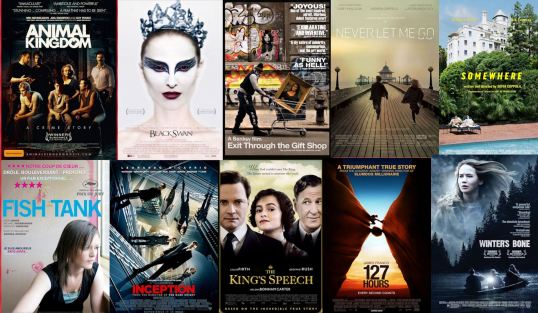
Animal Kingdom

Black Swan

Exit Through The Gift Shop

Fish Tank

Inception

The King’s Speech

Never Let Me Go

127 Hours

Somewhere

Winter’s Bone

Best Actor

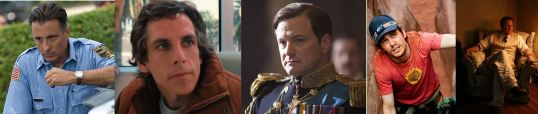
Patrick Fabian in The Last Exorcism

Colin Firth in The King’s Speech

James Franco in 127 Hours

Andy Garcia in City Island

Ben Stiller in Greenberg

Best Actress

Katie Jarvis in Fish Tank

Jennifer Lawrence in Winter’s Bone

Natalie Portman in Black Swan

Noomi Rapace in The Girl With The Dragon Tattoo

Emma Stone in Easy A

Best Supporting Actor

Christian Bale in The Fighter

Aaron Eckhardt in Rabbit Hole

Andrew Garfield in Never Let Me Go

John Hawkes in Winter’s Bone

Ben Mendelsohn in Animal Kingdom


Best Supporting Actress

Elle Fanning in Somewhere

Rebecca Hall in Please Give

Chloe Grace Moretz in Kick-Ass

Hailee Steinfeld in True Grit

Jacki Weaver in Animal Kingdom

(That’s right, everyone.  It’s a tie between the youngest nominee and the oldest nominee.  Don’t you just love the Oscars?)

Best Director

Andrea Arnold for Fish Tank

Darren Aronofsky for Black Swan

Danny Boyle for 127 Hours

Sofia Coppola for Somewhere

Christopher Nolan for Inception

Best Original Screenplay

Animal Kingdom

Black Swan

Fish Tank

Inception

The King’s Speech

Best Adapted Screenplay

Never Let Me Go

127 Hours

Rabbit Hole

Toy Story 3

Winter’s Bone

Best Editing

Black Swan

Exit Through the Gift Shop

Inception

127 Hours

Somewhere

Best Cinematography

Black Swan

Somewhere

True Grit

Twelve

Winter’s Bone

Best Art Direction

Black Swan

Harry Potter and the Deathly Hallows, Part One

Inception

The King’s Speech

Scott Pilgrim Vs. The World

Best Sound Mixing

Black Swan

Inception

Secretariat

Stone

Toy Story 3

Best Sound Editing

The Expendables

Inception

Scott Pilgrim Vs. The World

Secretariat

Toy Story 3

Best Costume Design

Black Swan

The Girl With The Dragon Tattoo

Harry Potter and the Deathly Hallows, Part One

Robin Hood

The Wolf Man

Best Original Score

Black Swan

Inception

Machete

127 Hours

Tron: Legacy

(Yes, I know that the Academy has ruled that the original score for Black Swan is not eligible to be nominated.  However, these are my nominations and I make the rules.)

Best Visual Effects

Harry Potter and the Deathly Hallows, Part One

Inception

Scott Pilgrim Vs. The World

Splice

Tron: Legacy

Best Makeup

Harry Potter and the Deathly Hallows, Part One

Let Me In

127 Hours

Splice

The Wolf Man

Best Song 

“Better Days” from Eat Pray Love

“Bound Together” from Burlesque

“Dear Laughing Doubters” from Dinner For Schmucks

“Sticks and Stones” from How To Train Your Dragon

“You Haven’t Seen The Last of Me” from Burlesque

Best Documentary Feature

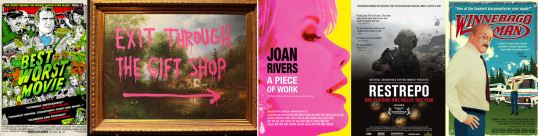
Best Worst Movie

Exit Through the Gift Shop

Joan Rivers: A Piece of Work

Restrepo

Winnebago Man

Best Animated Feature

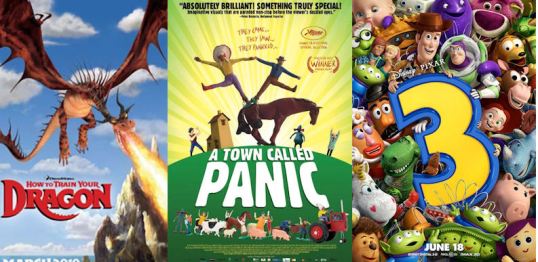
How To Train Your Dragon

A Town Called Panic

Toy Story 3

(Again, I am aware that the Academy ruled that A Town Called Panic isn’t eligible and again, I don’t care.)

Best Foreign Language Film

The Girl With The Dragon Tattoo (Sweden)

Mother (South Korea)

OSS 117 – Lost in Rio (France)

Police, Adjective (Romania)

A Prophet (France)

(While the Academy considers one submission per country for this award, I’m simply using it to recognize the best foreign language film released in the U.S. last year.  Or, at least, the best one that I got a chance to see.)

So, since I love lists, here’s a final tally of films by nominations:

10 Nominations — Black Swan

9 Nominations — Inception

7 Nominations — 127 Hours

5 Nominations — Somewhere, Winter’s Bone

4 Nominations — Animal Kingdom, Fish Tank, Harry Potter and the Deathly Hallows, The King’s Speech, Toy Story 3

3 Nominations — Exit Through The Gift Shop, The Girl With The Dragon Tattoo, Never Let Me Go, Scott Pilgrim Vs. The World

2 Nominations — Burlesque, How To Train Your Dragon, Rabbit Hole, Secretariat, Splice, Tron: Legacy, True Grit, The Wolf Man

1 Nomination — Best Worst Movie, City Island, Dinner For Schmucks, Easy A, Eat Pray Love, The Expendables, The Fighter, Greenberg, Joan Rivers: A Piece of Work, Kick-Ass, The Last Exorcism, Machete, Mother, OSS 117 — Lost in Rio, Please Give, Police, Adjective, A Prophet, Restrepo, Robin Hood, Stone, A Town Called Panic, Twelve, Winnebago Man

0 Nominations — The Social Network

And lastly, here’s a tally by imaginary Oscars won:

5 Oscars — Black Swan

2 Oscars — Toy Story 3

1 Oscar — Animal Kingdom, Burlesque, Exit Through The Gift Shop, Fish Tank, The Girl With The Dragon Tattoo, Harry Potter and the Deathly Hallows, Inception, Never Let Me Go, 127 Hours, Scott Pilgrim Vs. The World, Somewhere, Tron: Legacy, Twelve, Winter’s Bone, The Wolf Man

0 Oscars — The Social Network

(One final note: A big thank you to my sister, Erin Nicole Bowman, who created the banners used in this post.)

Film Review: 127 Hours (directed by Danny Boyle)


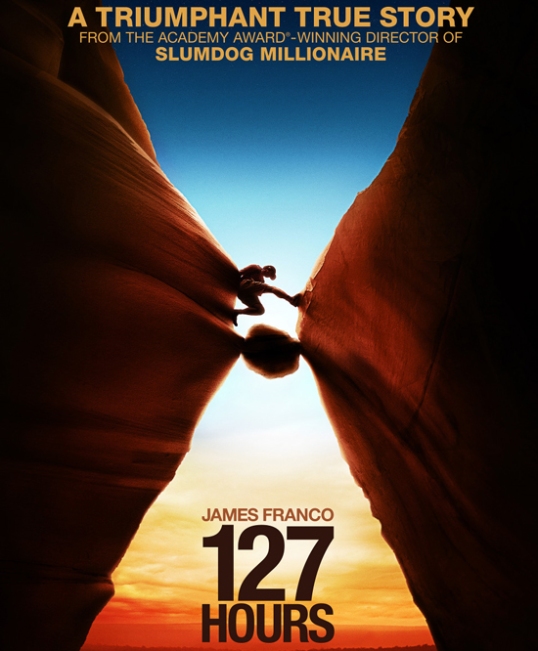
Last Friday night, my friend Jeff and I went down to the Plano Angelika and saw Danny Boyle’s new film, 127 Hours

I have to admit that I was a little bit uneasy about seeing this film.  First off, it’s a movie based on the true story about a mountain climber who spent 5 days trapped in a narrow canyon.  I am intensely claustrophobic, to the extent that I’ve had panic attacks just from finding myself trapped in a crowded grocery store aisle.  (Seriously, why does everyone in the world have to go shopping for La Choy Sweet and Sour sauce at the same time I do?)   Secondly, the trapped climber eventually escaped by using a dull knife to saw off his right arm.  I mean, ewwwwww! 

But I knew I had to see the film for three reasons.  Number one, it stars James Franco who I’m kinda in love with.  Number two, Danny Boyle is one of my favorite directors.  And, finally, 127 Hours is probably going to be nominated for best picture.  So, I worked up my courage and I tried not to think about the various news reports about audience members passing out while watching the film, and I went to the movie.  And I’m glad I did because 127 Hours is one of the best films that I’ve seen in quite some time.

James Franco plays Aron Ralston, a cocky but likable guy who decides to spend the weekend hiking across some place called Blue John Canyon.  (Sorry, I’m not really an outdoorsey type of girl.)  He tells no one of his plans and the only people who know he’s even at the canyon are two girls that he meets while there.  The girls have gotten lost in the canyon and they accept Aron’s help in finding whatever grand archeological thing it is that they’re looking for.  (See previous apology.) 

I have to be honest here.  As I watched these two girls go off with a perfect stranger, a part of me wanted to be all like, “Oh, I would never do something as stupid as go off with some stranger I met out in the middle of nowhere.”  But, then again, this isn’t just some stranger.  This is James Franco.  So, I’ll refrain from passing judgment.  I just hope that the girls had their pepper spray with them.

(The two girls, by the way, are played by Kata Mara and Amber Tamblyn.  I loved Joan of Arcadia.  Can you believe they cancelled it for Ghost Whisperer?  Not cool, CBS.)

Anyway, after frolicking in an underground pool, Aron and the girls part company.  They invite him to come to a party the next night.  They tell him to just look for a big, inflatable Scooby Doo.  Aron agrees, walks off, and promptly finds himself trapped in a canyon when a boulder falls on top of him and pins his right arm against the canyon wall.  As quickly as that, Aron goes from being  a carefree adventurer to literally being a prisoner, isolated and alone.  As Franco screams for help, Boyle pulls the camera upward from Aron until eventually he’s a barely noticeable speck surrounded by a barren (and otherwise unpopulated) desert.  It’s a moment that you know is coming but it’s still shocking and devastating because it stands in such stark contrast to the film’s first 20 minutes when both Boyle and Franco filled each scene with a sense of constant motion.  Suddenly, everything has stopped and we’re as trapped as Aron.

The rest of the film is pretty much a one-man show.  We watch as Aron spends the next five days fighting to just survive.  He tries to chip away at the rock with a knife (yes, that knife).  He talks to his camera, keeping a diary and leaving messages for his family.  He fights off hungry ants and tries to conserve his water.  He even manages to invent a pretty neat little pulley system to try to move the rock.  Finally, he starts to hallucinate, seeing everything from his family disdainfully watching his predicament to a gigantic inflatable Scooby Doo stalking him in the canyon.  And finally, of course, he starts to cut off his arm.

He also finds some time to think about the life he led up to the moment he found himself trapped underneath the rock.  This is where Boyle really shines because, in the hands of most directors, these scenes probably would have been very maudlin and heavy-handed.  However, Boyle presents these scenes in an almost impressionistic style.  We see hints of the life that Aron has led but Boyle never comes out and blatantly says that, up until this point, Aron never been willing to truly connect with others.  We sees scenes of Aron’s ex-girlfriend breaking up with him but we’re never specifically told what led to her leaving him.  And we don’t need to be.  Boyle presents us with the evidence and trusts us to draw the correct conclusion.

I am very proud to say that I watched the entire film without once having a panic attack though I did start to feel a little bit light-headed when Aron really started to get into sawing off his arm.  At this point, I did end up burying my head in Jeff’s shoulder and watching the scene out of the corner of my eye.  At the same time, it’s an oddly exhilarating sequence because we know that the only way Aron will survive is by cutting off his arm and, as a result of Franco’s performance, we really do want Aron to survive.

In retrospect, 127 Hours really is the ultimate guy film in that the film basically celebrates a guy who gets stranded in the desert for five days yet manages to survive without ever once having to ask for directions.  However, as a result of the whole experience, he comes to realize he should have been nicer to his ex-girlfriend which means that chicks like me can enjoy the movie as well.  My main concern is that the film is such a total guy flick that we might see a sudden epidemic of men amputating their limbs in order to show that they can handle it as well as James Franco did.  As we left the theater, I assured Jeff that he didn’t have to chop off his hand just to impress me.  Hopefully, he listened.

James Franco is generating a lot of Oscar buzz for his performance here and he should be.  Franco is one of those performers who is so pretty that it’s easy to forget that he’s actually a pretty good actor.  I thought he deserved a nomination for his performance in Milk.  He deserves the Oscar for his performance here.

Along with a best actor nod for Franco, it seems likely that 127 Hours will also pick up nominations for best picture and best director.  Interestingly enough, Boyle will probably find himself competing with the man he beat two years ago, David Fincher (previously nominated for The Curious Case of Benjamin Button and a probable nominee this year for The Social Network.)  This is somehow appropriate as Danny Boyle has consistently proved himself to be the director that David Fincher is supposed to be and, by being a massively hyped film that lives up to all the praise, 127 Hours is the anti-Social Network.  While The Social Network uses a “true” story as an excuse to judge and ridicule, 127 Hours uses its true story to celebrate humanity, flaws and all.  Whereas Fincher seems to only celebrate film, Boyle celebrates life.

127 Hours.

See it.

Song of the Day: East Hastings (by Godspeed You! Black Emperor)


We’re now halfway through the week-long horror-themed “Song of the Day” feature and the first three days has been all Italian composers. Two of them were known for working in the grindhouse film scene while the other has been more well-renowned for having worked in spaghetti westerns and more mainstream, albeit very artful, film projects. The fourth selection in this fourth day of the series is the epic song “East Hastings” by the Montreal-based eclectic band Godspeed You! Black Emperor.

“East Hastings” was chosen because of not just its apocalyptic sound and tone, but also how it was used in an excellent way to highlight the desolation in Danny Boyle’s “zombie-faux” film, 28 Days Later.

The song begins after a brief prologue and shows Cilliam Murphy’s character walk the deserted and silent streets of London after waking up from a coma. His lost and dazed travel through the empty streets and by-ways of England’s capital was quite haunting and the song by GY!BE just added to the tension building up on the screen. If there ever was a song that typified the British viewpoint about how the world ends it would be “East Hastings”.

20 Best Horror Films of the Past Decade


The Aught’s, as some people have come to call this decade about to end, was actually a pretty good decade in terms of the amount of quality horror that showed up on the big-screen. We had some channeling the nastiness of the 70’s exploitation era while a couple ushered in this decade’s era of the so-called “torture porn.” There were more than just a few remakes of past horror films. Most of these remakes were quite awful compared to the original, but more than a few managed to end being good and held their own against the original.

Some of the titles I will list will eschew gore and the shock scares for a more subtle and atmospheric approach. More than a few straddled not just horror but other genres like comedy, drama and sci-fi. If there was one major observation I was able to make, when collating what I thought was the 20 best horror films of the decade, it was that the Foreign studios really came into the decade with a vengeance.

While I consider these horror films on this list as “the best of…” it is still my opinion and I am sure there will be people who will disagree, but even if people do not agree with all my choices it would be hard to dispute any of them as not being good to great in their own way. Like my similar Sci-Fi list this one will be numbered but only for organizational sake and doesn’t determine which film is better than rest. They’re all equal in my eyes.

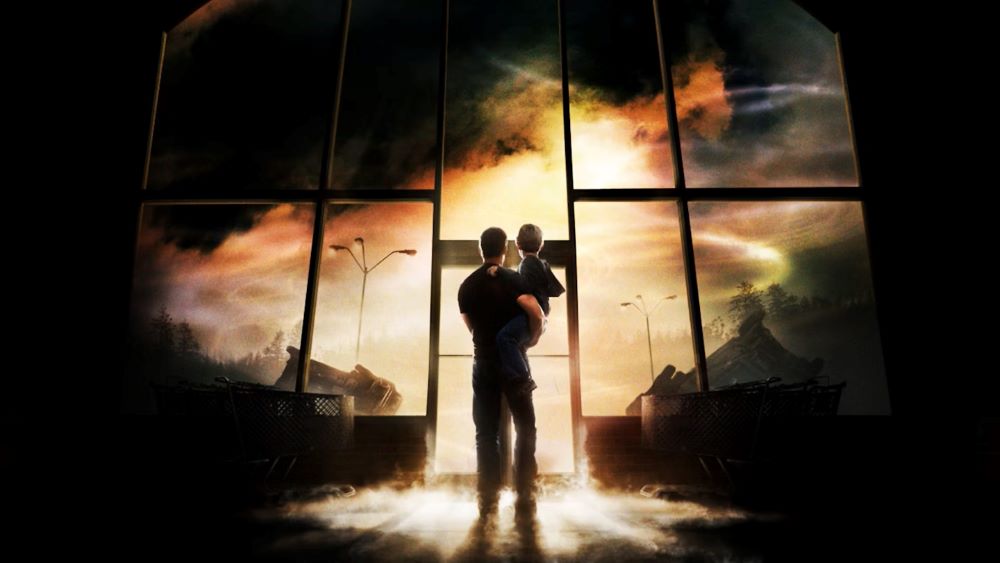
  1. The Mist (dir. Frank Darabont)
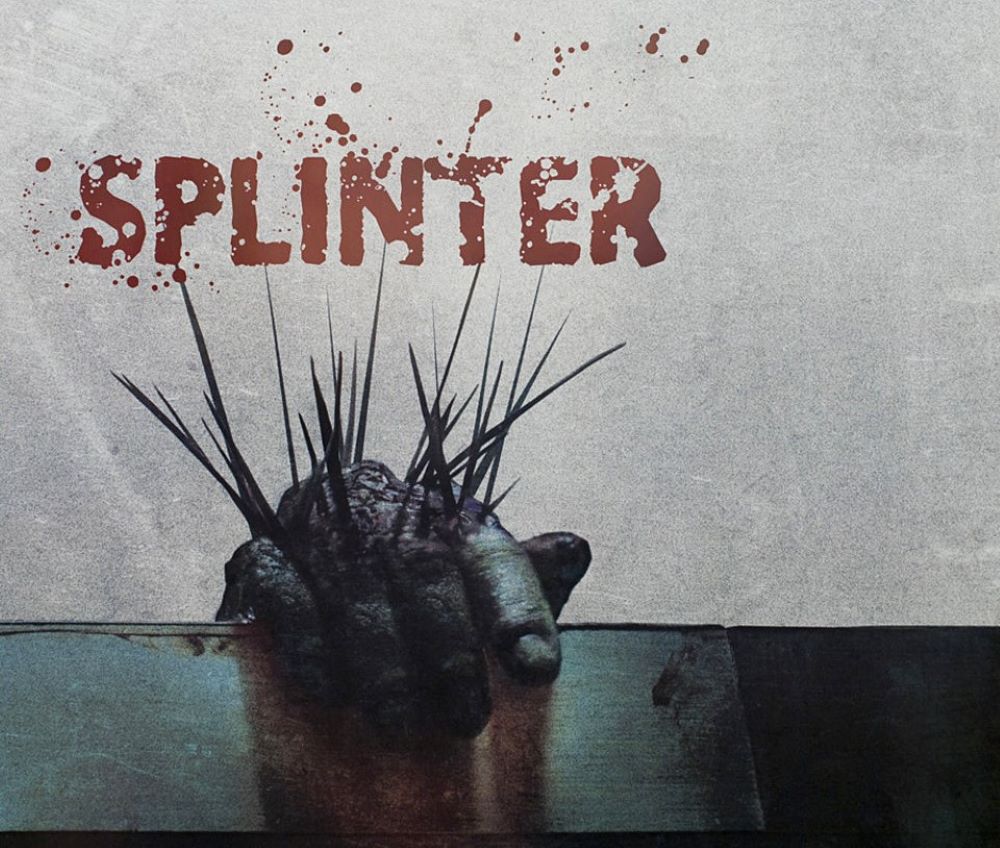
  2. Splinter (dir. Toby Wilkins)
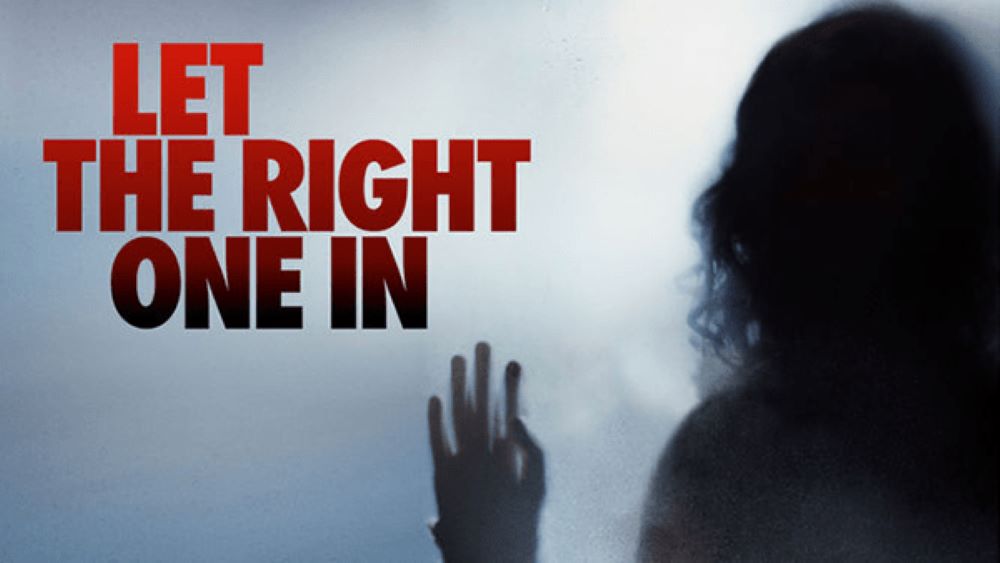
  3. Let the Right One In (dir. Tomas Alfredson)
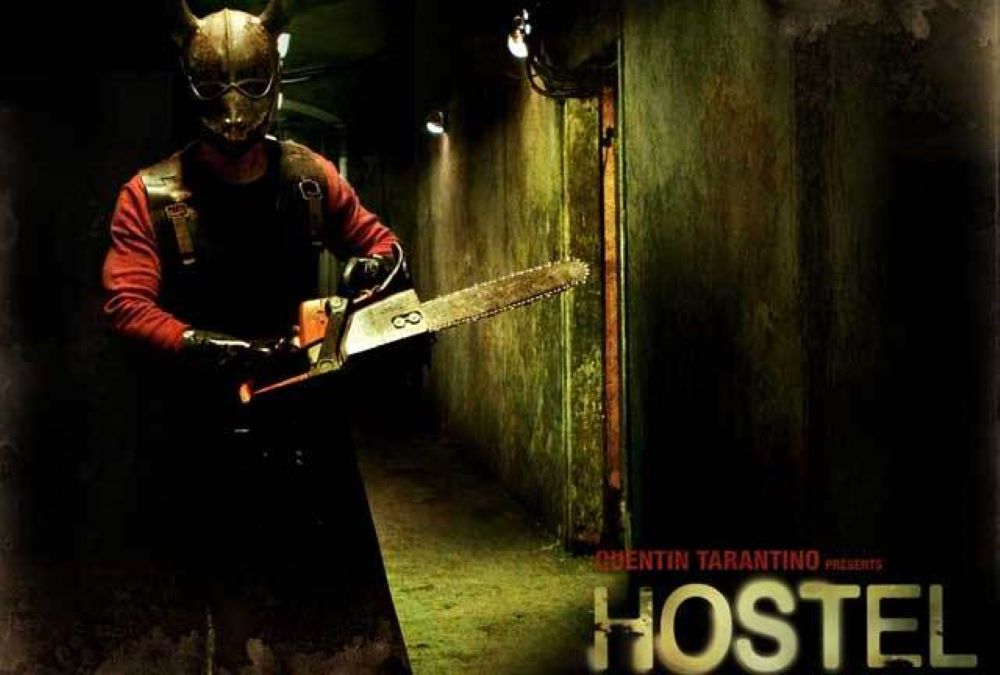
  4. Hostel (dir. Eli Roth)
  5. A Tale of Two Sisters (Kim Ji-woon)
  6. The Descent (dir. Neil Marshall)
  7. Martyrs (dir. Pascal Laugier)
  8. 28 Days Later… (dir. Danny Boyle)
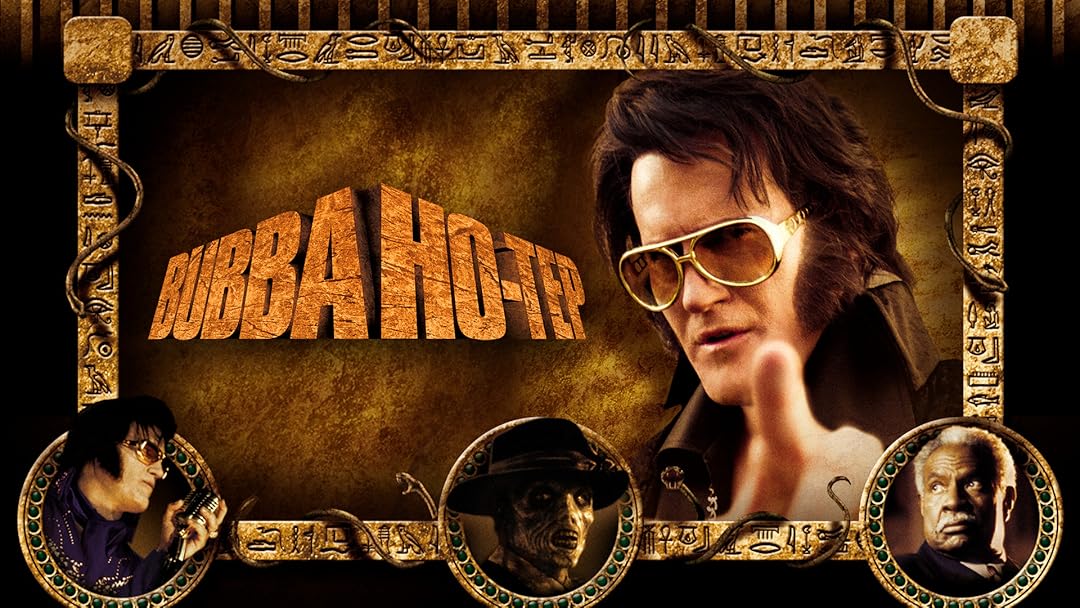
  9. Bubba Ho-Tep (dir. Don Coscarelli)
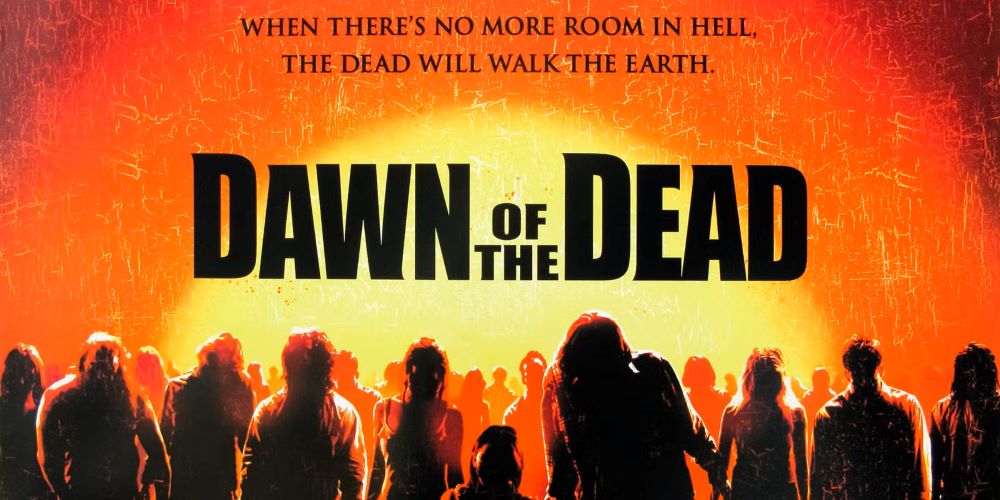
  10. Dawn of the Dead (dir. Zack Snyder)
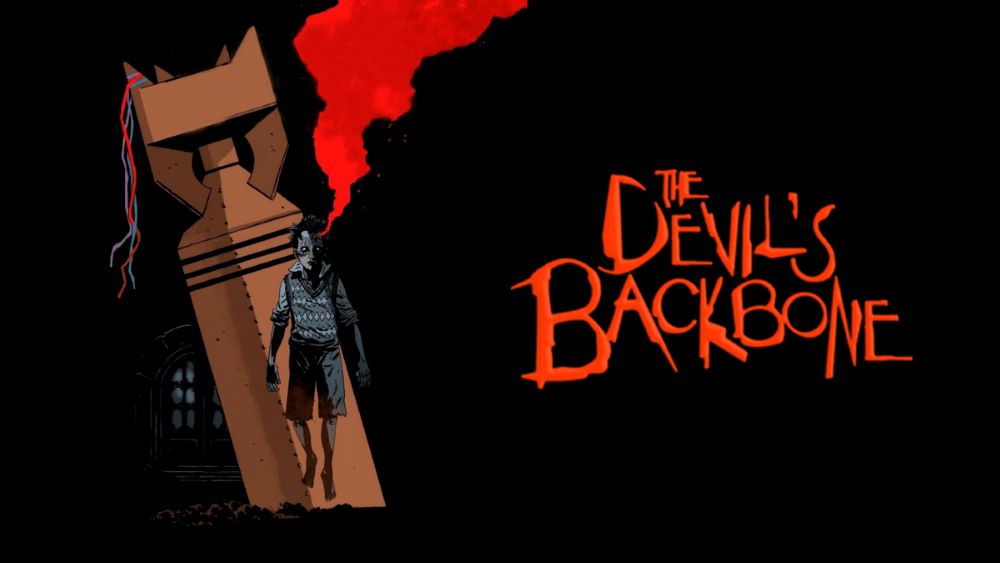
  11. The Devil’s Backbone (Guillermo del Toro)
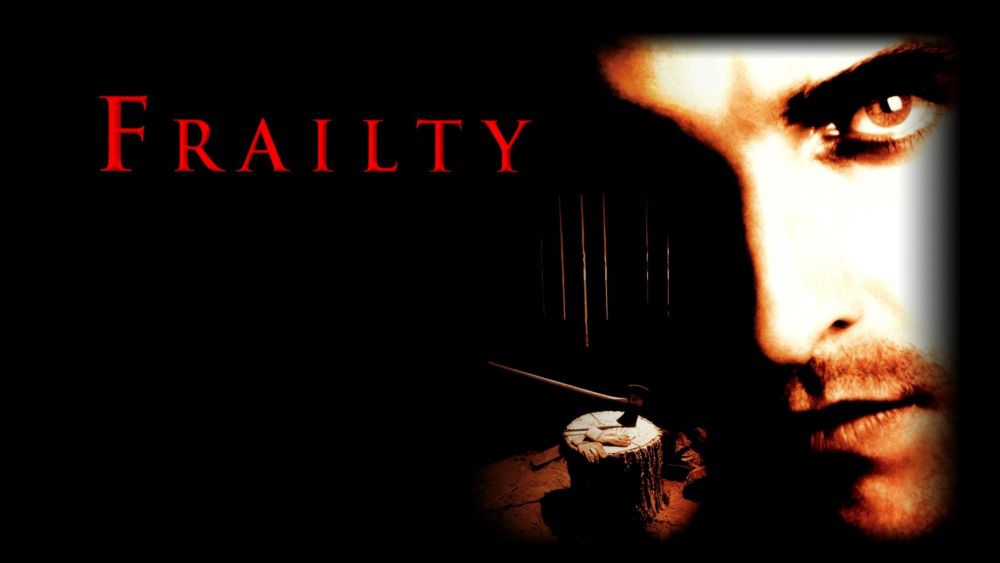
  12. Frailty (dir. Bill Paxton)
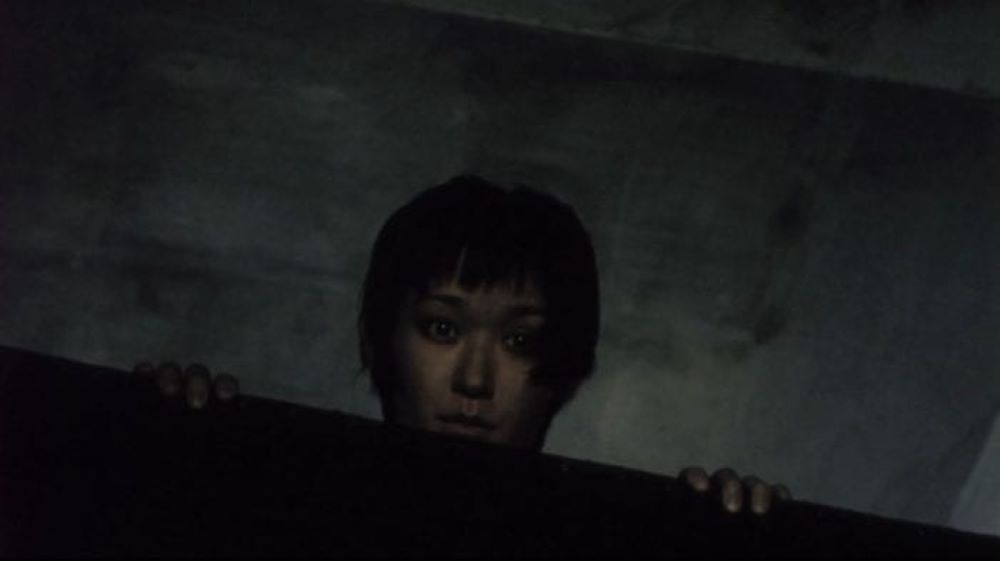
  13. Kairo (dir. Kiyoshi Kurosawa)
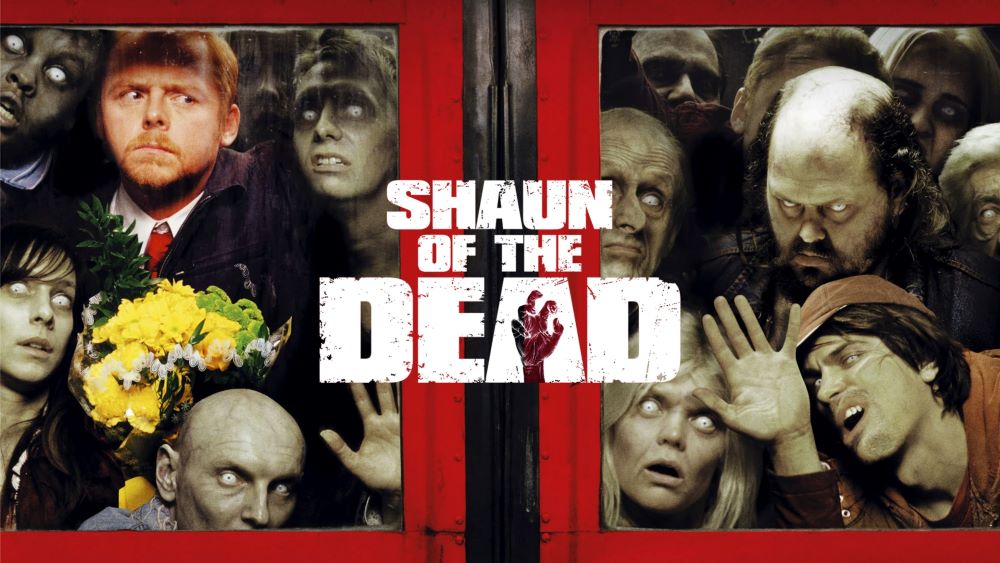
  14. Shaun of the Dead (dir. Edgar Wright)
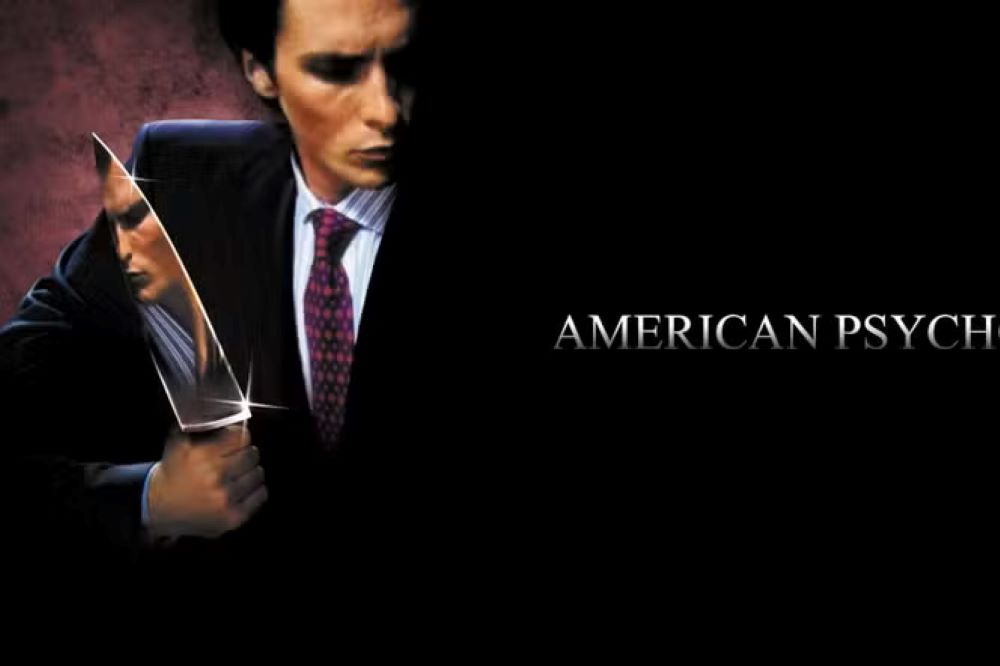
  15. American Psycho (dir. Mary Harron)
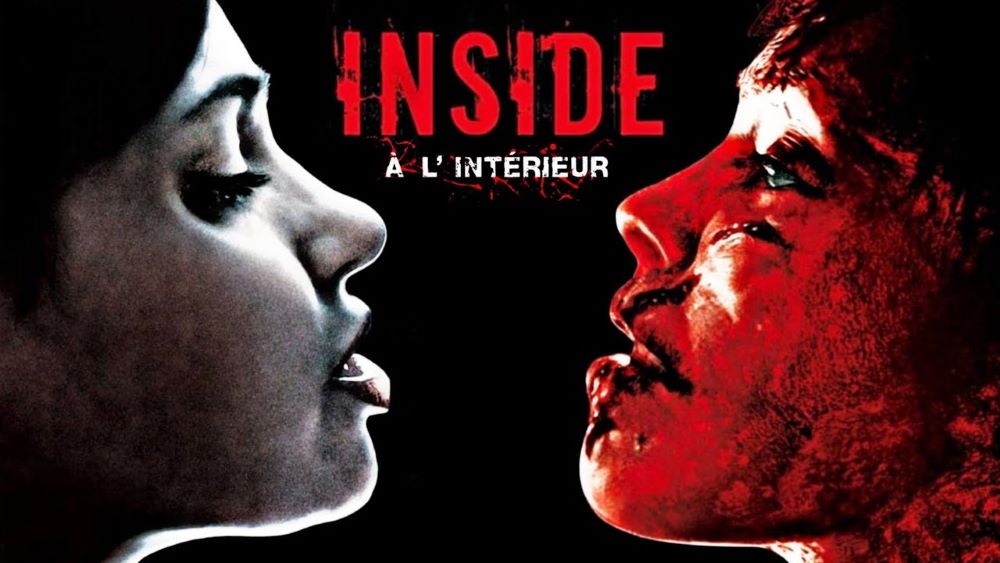
  16. Inside (dir. Alexandre Bustillo & Julien Mary)
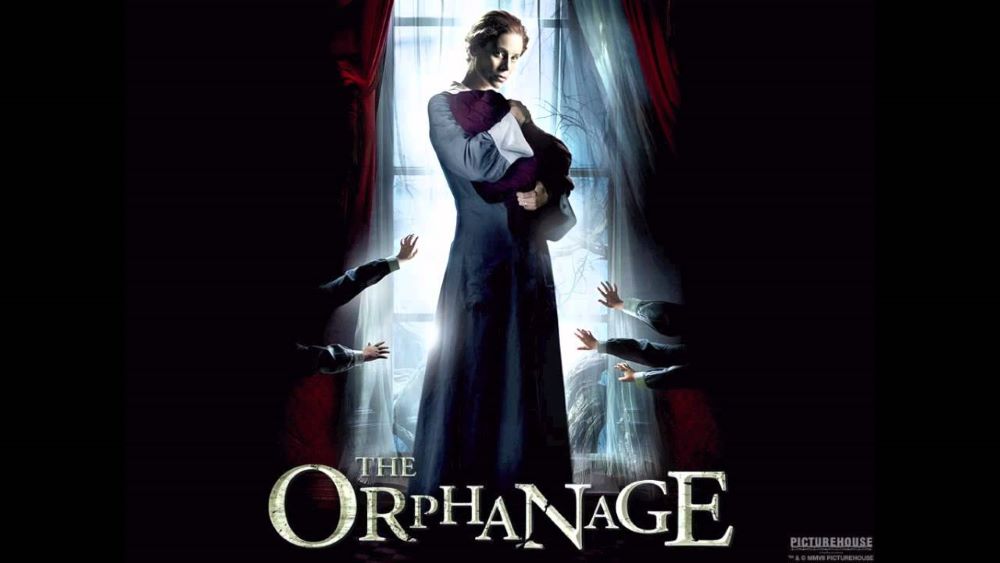
  17. The Orphanage (dir. Juan Antonio Bayona)
  18. The Devil’s Rejects (dir. Rob Zombie)
  19. Slither (dir. James Gunn)
  20. Audition (dir. Takashi Miike)

Honorable Mentions: Saw, Haute Tension, Drag Me To Hell, Trick ‘r Treat, Dog Soldiers, Ju-On, May, Midnight Meat Train, The Ruins, Jeepers Creepers, Ginger Snaps, Funny Games (remake), Shutter, Frontier(s), Behind the Mask: The Rise of Leslie Vernon…just to name a few.