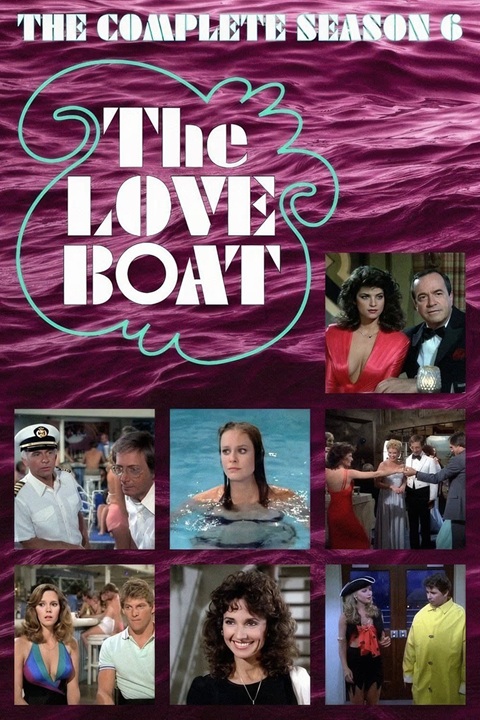
Retro Television Review: The Love Boat 6.25 “The Dog Show: Putting on the Dog/Going to the Dogs/Women’s Best Friend/Whose Dog Is It Anyway?”


Welcome to Retro Television Reviews, a feature where we review some of our favorite and least favorite shows of the past!  On Wednesdays, I will be reviewing the original Love Boat, which aired on ABC from 1977 to 1986!  The series can be streamed on Paramount Plus!
Come abroad, we’re expecting you….

Uhmm, maybe not this week, Love Boat.

Episode 6.25 “The Dog Show: Putting on the Dog/Going to the Dogs/Women’s Best Friend/Whose Dog Is It Anyway?”

(Dir by Bob Sweeney, originally aired on March 26th, 1983)

This week’s episode stressed me out.

The cruise line is co-sponsoring a dog show that is going to be held in Mexico.  The dog that wins will not only receive $10,000 but will also become the new “face” of Honeycutt Dogfood.  All the contestants bring their dogs onboard the ship and take the cruise to Mexico.

Seriously, imagine the scene.  Hundreds of dogs on cruise ship, floating in the pool and running through the passageways — YIKES!  I will admit that the majority of the dogs were cute.  There was a white Samoyed dog named Tundra who was just adorable and who could do all sorts of tricks.  But still, I spent the whole episode wondering what would happen if a dog accidentally jumped (or fell — oh my God!) overboard.  What if one of the dogs had fleas and now, everyone on the boat had them too?  Who was cleaning up after the dogs?  And what about a passenger — like me, for instance — who wasn’t really a dog person and who bought a ticket without the knowledge that the ship itself would be home to hundreds of canines?

The storylines also made me anxious, just because none of them made much sense.  (It was obvious that the main concern for this episode was getting as much cute dog footage as possible.)  So, we had Isaac and Gopher buying Tundra from $8 but not realizing that she was a brilliant dog who could do hundreds of tricks.  Isaac and Gopher sold the dog to the Captain and Vicki, just to then realize that Tundra was a sure winner in the dog show.  Isaac and Gopher tried to convince the Captain to sell the dog back but it turned out the Captain already knew Tundra was a winner.  Of course, as employees of the cruise line, neither Gopher nor Isaac nor Vicky should have been allowed to enter a dog in the show in the first place.

And then we had Isaac’s aunt Tanya (Isabel Sanford) running around with a Chihuahua while her husband (Mel Stewart) got jealous.  And we had Pamela (Catherine Bach) realizing that Gary (Dirk Benedict) was the new owner of a dog that she had lost two years before.  And then there was boozy Mrs. Honeycutt (Jo Anne Worley) boarding the ship and searching for her husband, not realizing that he wouldn’t be arriving until the ship reached Mexico.  For his part, Mr. Honeycutt (Gordon Jump) spent most of this episode in Las Vegas with his secretary.

Finally, Harold Pack (Ray Buktencia), who worked in Honeycutt’s mailroom, boarded the boat with some forms from Mr. Honeycutt and was immediately mistaken for his boss.  Pretending to be Mr. Honeycutt, Harold romanced a dog owner named Wendy (Heather Thomas).  Imagine Wendy’s surprise when she learned Mrs. Honeycutt was on the boat and looking for her husband….

Oh God, I’m getting stressed just writing about all this.

Things worked out in the end.  Mr. Honeycutt, having returned from Vegas, announced that there was a tie and all the dogs were winners!  Harold protected Honeycutt’s secret and got promoted to Vice President.  Pamela and Gary decided to own the dog together.  Vicki got Tundra!  Yay!  I was happy about that.  Tundra was adorable!

This episode was exhausting.  Too many dogs, too many half-baked stories, too much overacting on the part of Isabel Sanford, it was just too much.
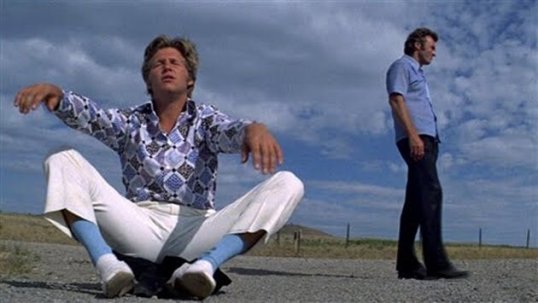
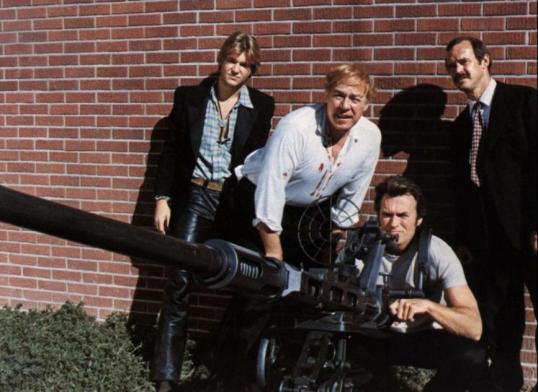
Film Review: Thunderbolt and Lightfoot (dir by Michael Cimino)


1974’s Thunderbolt and Lightfoot opens with two men, one young and one middle-aged, facing a moment of truth.

The younger of the two is Lightfoot (Jeff Bridges), a wild and hyperactive rich kid who is in his 20s and who steals a corvette right off of a used car lot.  The other man is simply known by his nickname, Thunderbolt (Clint Eastwood).  When we first see Thunderbolt, he’s giving a sermon in a small Montana church.  When a gun-wielding man steps into the church and promptly starts firing at Thunderbolt, he takes off running.  Pursued by his attacker, Thunderbolt runs through a field and just happens to jump onto Lightfoot’s speeding corvette.  Lightfoot runs over the Thunderbolt’s pursuer.  Thunderbolt slips into the car and Lightfoot drives on for a bit.  Lightfoot is excited and talkative.  Thunderbolt is more concerned with popping his shoulder back into its socket.  A stop at a gas station leads to the men stealing someone else’s car.

And so it goes for a good deal of the movie.  Thunderbolt and Lightfoot is a road movie, the majority of which is taken up with scenes of the two men just hanging out.  Thunderbolt and Lightfoot take an instant liking to each other.  When Lightfoot picks up a prostitute (Catherine Bach), he makes sure to ask that she bring along a friend for Thunderbolt.  When a criminal punches Lightfoot, Thunderbolt is quick to punch back.  “That’s for the kid,” Thunderbolt says.  That’s the type of friendship that they have.  Jeff Bridges is handsome and full of energy as Lightfoot and Clint Eastwood smiles more in this film than I think I’ve seen him smile in any other film.  For once, Eastwood is not playing a perpetually grumpy stranger or a supercop.  Instead, he’s just a blue collar guy who enjoys having a friend to travel with.

Eventually, Thunderbolt and Lightfoot meet up with two of Thunderbolt’s former associates.  Red (George Kennedy) is a brutal brawler who, it is suggested, served with Thunderbolt in the Korean War.  Goody (Geoffrey Lewis) is a gentle soul who takes orders from Red but still can’t bring himself to shoot anyone, no matter how much Red demands that he pull the trigger.  Red and Goody have always assumed that Thunderbolt stole the loot from a bank robbery that they pulled off.  Thunderbolt explains that he didn’t steal the money.  He just got arrested after hiding it.  Lightfoot suggests that maybe the four of them could pull off another bank heist….

Kennedy and Lewis are perfectly cast as the two criminals who end up working with Thunderbolt and Lightfoot.  In many ways, the relationship between Red and Goody mirrors the relationship between our lead characters.  The main difference is that Red is sadistic and quick to loose his temper, whereas Thunderbolt controls his emotions and tries not to hurt anyone while committing his crimes.  Lightfoot looks up to Thunderbolt and Goody looks up to Red.  Again, the difference is that Thunderbolt actually cares about Lightfoot, whereas Red is incapable of truly caring about anyone but himself.  Eastwood, Bridges, Kennedy, and Lewis make quite a team and it’s hard not to worry about all four of them, especially when the film takes an unexpectedly dramatic turn during its third act.

I really wasn’t expecting Thunderbolt and Lightfoot to make me cry but the final thirty minutes of the film brought tears to my eyes as what started out as a buddy comedy turned into a tragedy.  (I shouldn’t have been surprised.  I’ve seen enough 70s movies that I really should have known better than to have expected a happy ending.)  Thanks to the perceptive script by Michael Cimino (who would go on to make The Deer Hunter and Heaven’s Gate) and the performances of Eastwood and Bridges, the movie’s final moments carry quite a punch and they leave you wondering if Thunderbolt and Lightfoot’s road trip was worth the price that was ultimately paid.  The film works as not only a tribute to friendship but also as a fatalistic portrait of life on the backroads of America.

Thunderbolt and Lightfoot was the first Eastwood film to receive an Oscar nomination, with Jeff Bridges competing for Best Supporting Actor.  (He lost to Robert De Niro’s star turn in The Godfather, Part II.)  Eastwood, reportedly, felt that he deserved a nomination for his performance as Thunderbolt and, considering that that Oscar itself was won by Art Carney for his pleasant but hardly revelatory work in Harry and Tonto, Eastwood was correct.  Instead, Eastwood would have to wait for another 18 years before he finally received Academy recognition for starring in, producing, and directing Unforgiven.

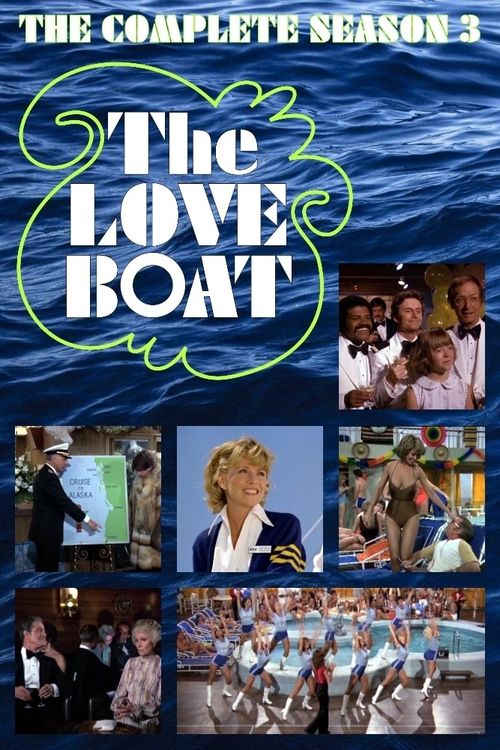
Retro Television Reviews: The Love Boat 3.28 “No Girls for Doc/Marriage of Convenience/The Caller/The Witness”


Welcome to Retro Television Reviews, a feature where we review some of our favorite and least favorite shows of the past!  On Wednesdays, I will be reviewing the original Love Boat, which aired on ABC from 1977 to 1986!  The series can be streamed on Paramount Plus!

This week, the third season of The Love Boat comes to a conclusion with an extra-long episode!

Episode 3.28 “No Girls for Doc/Marriage of Convenience/The Caller/The Witness”

(Dir by Gordon Farr and Richard Kinon, originally aired on May 3rd, 1980)

The finale of The Love Boat‘s third season features stage legend and two-time Oscar winner, Helen Hayes.  Hayes was considered to be such a big “get” for the show that she receives the zoom lens treatment when she steps onto the ship and all of the action seems to stop for a few minutes, presumably so the audience at home can give her a standing ovation.

Personally, I think Helen Hayes was pretty cool.  Along with being a hell of an actress (one whose career extended for over six decades), she was also the wife of Charles MacArthur, an acquaintance of the Algonquin round table, an outspoken Republican, a strong supporter of many charities, and a major benefactor of the Helen Hayes Hospital, a rehabilitation clinic in New York that has made major strides in treating physical disabilities.  To say that there are people in the world who can walk because of Helen Hayes is not hyperbole.

That said, Helen Hayes’s story is the dullest one on this cruise.  It’s not Hayes’s fault.  She is her usual outspoken and likable self.  It’s just the storyline itself doesn’t offer up much in the way of drama or comedy.  Hayes plays Agatha Winslow, a widow who was married to a friend of Stubing’s.  Stubing asks Julie to set Agatha up with someone but then they see Agatha hugging a younger man and Julie says that it won’t be necessary.

AGCK!  I HOPE NOT!  The younger man is played Helen Hayes’s son, James MacArthur!

No worries.  MacArthur is playing Scott Burgess, who is Agatha’s nephew.  Scott is a member of the protestant clergy who has never married because he feels that he has to take care of Agatha.  Scott and Beatrice Dale (Mildred Natwick) hope that Agatha will fall in love with and marry Beatrice’s brother, a businessman named Hollister (Maurice Evans).  Hollister owns a carpet company and he spends most of the episode look down at and commenting on the quality of the ship’s floor.  Agatha does not marry Hollister but she does realize that it’s time for her to move on and live her own life.  It’s all very pleasant but not very extremely interesting.

Far more interesting is the story of Gail Padgett (Christopher Norris), a woman who is boarding the ship because she needs to get away from her landline phone.  As she explains to Julie, someone has been calling and harassing her for months.  At no point does Julie suggest what I would suggest, which is that Gail should call the cops.  Indeed, when Gail starts to get calls on the boat, Julie never suggests calling the police or going to the captain or anything else.  Instead, Gail tells her stalker that she’ll meet him at the Pirate’s Cove Bar.  She tells Julie that she has a plan to humiliate him.  And again, you would think Julie might say, “How about we just arrest him when he comes in the bar?”  But instead, Julie smiles.  It’s the Love Boat!  No one is murdered on The Love Boat!  (Not yet, anyway.)

Gail’s stalker is a nerdy fellow named Melvin, who is played by a young Martin Short.  Before Melvin can arrive, Gail is approached by Jack Stander (Larry Breeding).  “Hi, I’m Robert Redford,” Jack says before admitting that he’s not Robert Redford and that he spent hours coming up with that opening line.  Thinking that Jack is her stalker, Gail takes Jack to her cabin where she get him to undress and then tosses all of his clothes out the porthole.  So now, Gail has not only flirted with and then stood up her stalker but she’s also committed theft.  WAY TO GO, GAIL!

Anyway, Gail eventually realizes that Jack is not her stalker and they fall in love.  Melvin is eventually revealed to be the caller but everyone laughs it off because he’s so nerdy.  (Because we all know how harmless nerdy stalkers are….)  This was a really weird story but, despite the stupidity of their characters, Christopher Norris and Larry Breeding made for a cute, likably vapid couple.

Maybe Gail should have gone to Wayne Dobson (Larry Wilcox) for help.  Wayne is an uptight assistant D.A. who has spent the last two months in a hotel room with Pat Bigelow (Catherine Bach), a witness to a crime who is in protective custody.  Even when Pat boards the cruise, Wayne has to come with her and stay in an adjoining cabin.  Pat is annoyed but she understand that Wayne is just doing his job. 

However, Wayne has fallen in love with Pat and he is upset to receive a telegram saying that the crooks have decided to plead guilty and that Pat can be released from protective custody.  Isaac, who was perhaps a bit too excited when he earlier thought Wayne was a male gigolo who was being paid to escort Pat, suggests that Wayne just lie and not let Pat know that her life is no longer in danger.  Wayne agrees and Isaac takes Wayne off to give him a makeover that will be so impressive that Pat will fall in love with him and reject notorious Love Boat lothario Mark Bridges (John McCook).

(Of course, any relationship that Wayne and Pat could ever have would be built on lies but whatever….)

Pat does fall for Wayne, though less because of the makeover and more because Wayne finally stops being so uptight.  She’s a bit miffed when she finds out that Wayne has been lying to her but she forgives him easily because this is The Love Boat.

Finally, after a night of skinny dipping leads to him losing his clothes and money, Doc announces that he’s through with women.  (And again, it doesn’t seem to occur to anyone that maybe Doc should call the police.)  That should be a relief to the crew because Doc really is a lawsuit waiting to happen.  Instead, they takes bets on how long it will take Doc to go back on his word.  It doesn’t take long.  Any story that centered around Doc being a Casanova just felt silly.  Bernie Kopell was likable as Doc but he was also a bit too naturally mild-mannered to be believable as a legendary lothario.

And so ends the third season of The Love Boat.  Vicki is now firmly a member of the crew.  Julie has given up on finding love.  Isaac and Gopher are as silly as ever.  And Doc is going to get the cruise line sued.  The 90-minute finale was a bit overextended and had some weak story elements but, overall, the third season was a lot of fun.  

Next week …. SEASON 4!

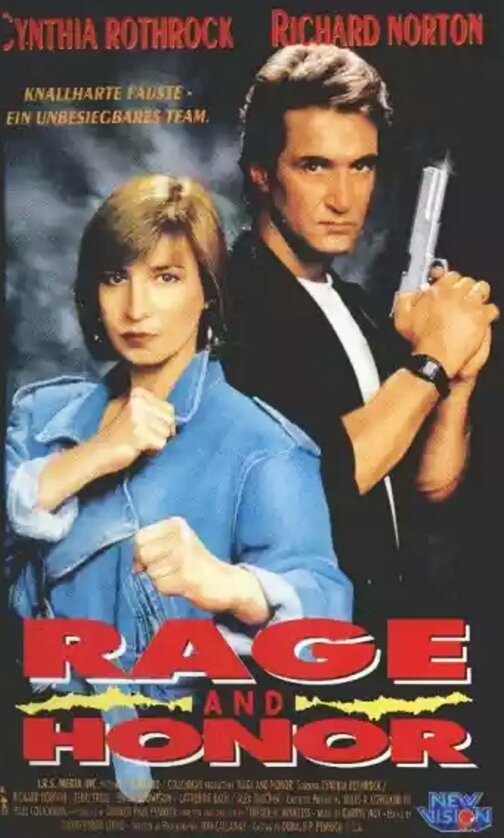
Guilty Pleasure No. 51: Rage and Honor (dir by Terence Winkless)


The 1992 film, Rage and Honor, tells the story of two people from different worlds, who come together to kick ass and save a declining American city.

Preston Michaels (Richard Norton) is a cop from Australia who has come to America as a part of an exchange program.  When he’s not working undercover, he’s supplementing his income by working as a bodyguard for what appears to be an 80s cover band.

Kris Fairfield (Cynthia Rothrock) is a teacher at the local high school who also moonlights as a karate instructor.  She’s haunted by the death of her parents and the subsequent disappearance of her brother.  She cares about her students, even though hardly any of them actually appear in the film.  In fact, the whole high school teacher thing never really matters much in the grand scheme of things.

Preston and Kris are teaming up to take down spacey drug lord Conrad Drago (Brian Thompson).  Conrad has a fierce mullet, a cocaine addiction, and a knowledge of all of the body’s pressure points.  His girlfriend is Rita (Terri Treas) and the only thing that could possibly prevent Drago and Rita from taking over the city is a tape that reveals Rita and a bunch of crooked cops killing someone.  Kris and Preston are trying to find the tape before Drago and Rita find it.  Somehow, it all eventually leads to a homeless stock broker named Baby (Stephen Davies) and a weird fight club that’s run by Hannah the Hun (Alex Datcher).

It’s an incredibly silly film, to be honest.  It’s the type of film where Preston gets shot once in the side and once in the leg and neither time does it slow him down.  (He does mention that his leg hurts at one point but he never starts to limp or anything like that.)  Kris, meanwhile, is given a tragic backstory that is explained to us in-between scenes of awkward comedic relief.  Hannah goes from being a calculating villainous to a heroic ally, without the film attempting any explanation as to why.  Meanwhile, despite Brian Thompson’s best efforts to be menacing, Conrad is written as being some sort of flakey, New Age drug dealer.  He’s about as intimidating as the biggest guy in a drum circle.  There’s really not much rage or honor to be found in Rage and Honor.

And yet, it was impossible for me to dislike the film.  Every time Cynthia Rothrock did a flying kick and sent some jerk flying, the film won me back.  Unfortunately, she didn’t really get to do as much fighting as she should have.  She had to share the screen with Brian Thompson and Richard Norton, who both received fight scenes of their own.  All three of them looked good fighting but Cynthia was the clear star.  What she lacked in actual acting ability, she made up for with pure enthusiasm.  Watching her, you realized that she was not only good at fighting but she enjoyed it as well.  For all the film’s flaws, Cynthia kicked everyone’s ass and that’s really all that mattered.  It was empowering and, even more importantly, it was a lot of fun to watch.

Go, Cynthia, go!

Previous Guilty Pleasures

  1. Half-Baked
  2. Save The Last Dance
  3. Every Rose Has Its Thorns
  4. The Jeremy Kyle Show
  5. Invasion USA
  6. The Golden Child
  7. Final Destination 2
  8. Paparazzi
  9. The Principal
  10. The Substitute
  11. Terror In The Family
  12. Pandorum
  13. Lambada
  14. Fear
  15. Cocktail
  16. Keep Off The Grass
  17. Girls, Girls, Girls
  18. Class
  19. Tart
  20. King Kong vs. Godzilla
  21. Hawk the Slayer
  22. Battle Beyond the Stars
  23. Meridian
  24. Walk of Shame
  25. From Justin To Kelly
  26. Project Greenlight
  27. Sex Decoy: Love Stings
  28. Swimfan
  29. On the Line
  30. Wolfen
  31. Hail Caesar!
  32. It’s So Cold In The D
  33. In the Mix
  34. Healed By Grace
  35. Valley of the Dolls
  36. The Legend of Billie Jean
  37. Death Wish
  38. Shipping Wars
  39. Ghost Whisperer
  40. Parking Wars
  41. The Dead Are After Me
  42. Harper’s Island
  43. The Resurrection of Gavin Stone
  44. Paranormal State
  45. Utopia
  46. Bar Rescue
  47. The Powers of Matthew Star
  48. Spiker
  49. Heavenly Bodies
  50. Maid in Manhattan

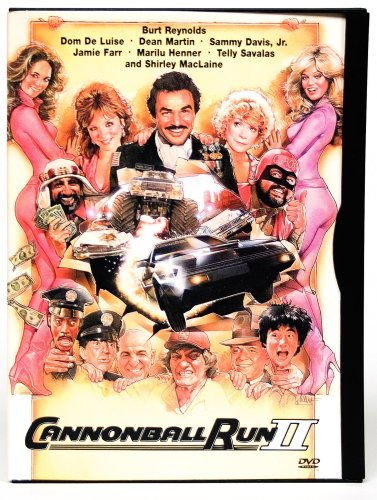
Cannonball Run II (1984, directed by Hal Needham)


In 1981, director Hal Needham and star Burt Reynolds had a surprise hit with The Cannonball Run.  Critics hated the film about a race from one end of America to the other but audiences flocked to watch Burt and a group of familiar faces ham it up while cars crashed all around them.  The original Cannonball Run is a goofy and gloriously stupid movie and it can still be fun to watch.  The sequel, on the other hand…

When the sequel begins, the Cannonball Run has been discontinued.  The film never explains why the race is no longer being run but then again, there’s a lot that the sequel doesn’t explain.  King Abdul ben Falafel (Ricardo Montalban, following up The Wrath of Khan with this) wants his son, The Sheik (Jamie Farr, returning from the first film) to win the Cannonball so he puts up a million dollars and announces that the race is back on.  Problem solved.

With the notable exceptions of Farrah Fawcett, Roger Moore, and Adrienne Barbeau, almost everyone from the first film returns to take another shot at the race.  Burt Reynolds and Dom DeLuise are back.  Jack Elam returns as the crazy doctor, though he’s riding with the Sheik this time.  Jackie Chan returns, riding with Richard “Jaws” Kiel.  Dean Martin and Sammy Davis, Jr. return, playing barely disguised versions of themselves.  They’re joined by the surviving members of the Rat Pack.  Yes, Frank Sinatra is in this thing.  He plays himself and, from the way his scenes are shot, it’s obvious they were all filmed in a day and all the shots of people reacting to his presence were shot on another day.  Shirley MacClaine also shows up, fresh from having won an Oscar.  She plays a fake nun who rides with Burt and Dom.  Burt, of course, had a previous chance to co-star with Shirley but he turned down Terms of Endearment so he could star in Stroker AceCannonball Run II finally gave the two a chance to act opposite each other, though no one would be winning any Oscars for appearing in this film.

Say what you will about Hal Needham as a director, he was obviously someone who cultivated a lot of friendships in Hollywood because this film is jam-packed with people who I guess didn’t have anything better to do that weekend.  Telly Savalas, Michael V. Gazzo, Henry Silva, Abe Vigoda, and Henry Silva all play gangsters.  Jim Nabors plays Homer Lyle, a country-fried soldier who is still only a private despite being in his 50s.  Catherine Bach and Susan Anton replace Adrienne Barbeau and Tara Buckman as the two racers who break traffic laws and hearts with impunity.  Tim Conway, Don Knotts, Foster Brooks, Sid Caesar, Arte Johnson, Mel Tillis, Doug McClure, George “Goober” Lindsey, and more; Needham found room for all of them in this movie.  He even found roles for Tony Danza and an orangutan.  (Marilu Henner is also in the movie so I guess Needham was watching both Taxi and Every Which Way But Loose while casting the film.)  Needham also came up with a role for Charles Nelson Reilly, who is cast as a mafia don in Cannonball Run II.  His name is also Don so everyone refers to him as being “Don Don.”  That’s just a typical example of the humor that runs throughout Cannonball Run II.  If you thought the humor of It’s A Mad, Mad, Mad, Mad World was too subtle and cerebral, Cannonball Run II might be right up your alley.

The main problem with Cannonball Run II is that there’s not much time spent on the race, which is strange because that’s the main reason why anyone would want to watch this movie.  The race itself doesn’t start until 45 minutes into this 108 minute film and all the racers are quickly distracted by a subplot about the Mafia trying to kidnap the Sheik.  Everyone stops racing so that Dean Martin and Sammy Davis, Jr. can disguise themselves as belly dancers to help rescue the Sheik.  By the time that’s all been taken care of, there’s only 10 minutes left for everyone to race across the country.  After a montage of driving scenes and a cartoon of an arrow stretching across the nation (the cartoon was animated by Ralph Bakshi!), we discover who won the Cannonball and then it’s time for a montage of Burt and Dom blowing their lines and giggling.  Needham always ended his films with a montage of everyone screwing up a take and it’s probably one of his most lasting cinematic contributions.  Every blooper reel that’s ever been included as a DVD or Blu-ray extra owes a debt of gratitude to Hal Needham.  Watching people blow their lines can be fun if you’ve just watched a fun movie but watching Burt and Dom amuse themselves after sitting through Cannonball Run II is just adding insult to injury.  It feels less like they’re laughing at themselves and more like they’re laughing at you for being stupid enough to sit through a movie featuring Tony Danza and an orangutan.

The dumb charm of the first Cannonball Run is nowhere to be found in this sequel and, though the film made a profit, the box office numbers were still considered to be a disappointment when compared to the other films that Reynolds and Needham collaborated on.  Along with Stroker Ace, this is considered to be one of the films that ended Reynolds’s reign as a top box office attraction.  Cannonball Run II was also the final feature film to feature Dean Martin and Frank Sinatra.  This could be considered the final Rat Pack film, though I wouldn’t say that too loudly.

Cannonball Run II is a disappointment on so many levels.  It’s hard to believe that the same director who did Smokey and the Bandit and Hooper could be responsible for the anemic stunts and chases found in this movie.  The cast may have had a good time but the audience is left bored.  Stick with the first Cannonball Run.


Embracing the Melodrama Part II #49: Hustle (dir by Robert Aldrich)


HustleContinuing our journey into the dark Hell of the 1970s, we now take a quick look at the 1975 cop film, Hustle.

Taking place in Los Angeles, Hustle tells the story of several different people who find their lives intertwined in the desperate dance of existence.  (Does that sound overdramatic?  Well, that’s the type of film that this is.)

There’s Leo Sellers (Eddie Albert), a lawyer with bright rosy cheeks and a friendly manner.  You look at Leo and you automatically assume that he must be a nice guy, the type of guy who puts on a fake beard and plays Santa Claus down at the local orphanage.  But actually, Leo is a lawyer for the mob.  He’s gotten rich through crime and his mansion hides all sorts of secrets.  He also has a weakness for violently abusing prostitutes.

Speaking of prostitutes, one of Leo’s favorite is Nicole (Catherine Deneuve), an icy French beauty who survives by holding the world at a distance.  Though Nicole doesn’t like Leo, she has to keep him happy because Leo could easily arrange for her to be deported back to France.

Nicole is also the girlfriend of Phil Gaines (Burt Reynolds), a cynical homicide detective who, like her, tries to keep the world at a distance.  Phil is obsessed with old films and frequently speaks of how much he wishes the real world could be like a movie.  Throughout the film, he talks about eventually moving to Rome.

Phil’s partner is Louis Belgrave (Paul Winfield), who is not quite as cynical as Phil but who is definitely getting there.  Whereas Phil is always talking about how much the world has disappointed him, Louis mostly accepts things without complaint.  He just wants to do his job and go home at the end of the day.

Phil and Louis’s boss is Santoro (Ernest Borgnine, giving a typical Ernest Borgnine performance).  Santoro is not a bad guy but, in order to hold onto his job, he has to keep powerful men like Leo Sellers happy.

Santoro also has to deal with the complaints of people like the Hollingers.  Marty Hollinger (Ben Johnson) is a veteran of the Korean War and handles the world in a gruff and suspicious manner.  Paula (Eileen Brennan) is Marty’s wife and, as a result of his emotional distance, has recently started having an affair.

And then there’s Gloria (Colleen Brennan), Marty and Paula’s daughter.  Gloria ran away from home a while ago and soon found herself working as a stripper, a porn actress, and eventually as a prostitute.  When Gloria is found dead, Phil and Louis get the case.  It’s obvious to them that Gloria committed suicide.  It’s not so obvious to Marty, who is convinced that his daughter was murdered and, disgusted by Phil’s cynical attitude, sets out to investigate the case on his own.

One of the more interesting things about Hustle is that really is no murder mystery.  Despite what Marty believes, Gloria really did commit suicide.  Marty’s insistence that she was murdered has more to do with his guilt over being a bad father than it does with any real evidence.  As Marty investigates his daughter’s life, he is exposed to a sordid world of strip clubs and prostitution.  He discovers that Gloria’s clients included many powerful men and he decides that the last client she saw must have murdered Gloria.

That client is Leo Sellers.  And while Leo may not have murdered Gloria, he is willing to kill Marty to keep his secret life from being exposed.  Phil and Louis are forced to choose between remaining detached or protecting Marty from himself.

And, since this film was made in the 70s, it all ends on a really dark note!

Hustle shows up on Encore occasionally.  It’s a strange film to watch, as it alternates between being a fairly predictable cop film and being a portrait of existential dread.  The movie doesn’t really work; it’s too long, it features some amazingly pretentious dialogue, and Reynolds, Winfield, and Deneuve all seem to be bored with their characters.  Probably the film’s best performance comes from Ben Johnson.  I imagine that has to do with the fact that Johnson is playing the only character who behaves in a fairly consistent way.

And yet, if you’re like me and you’re fascinated with the nonstop fatalism of 70s cinema, Hustle does have some historical value.  It’s one of those films that you watch and you wonder how anyone survived the 1970s!