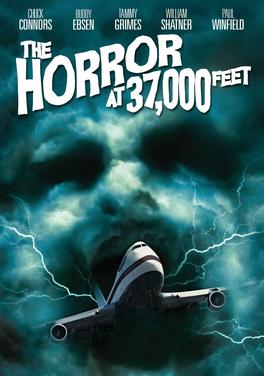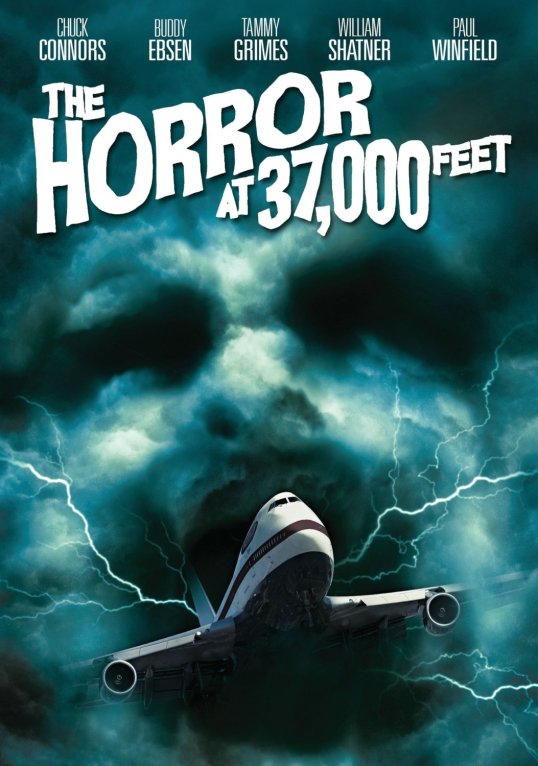
Guilty Pleasure #86: The Horror at 37,000 Feet (dir by David Lowell Rich)


I imagine that it should go without saying that, if you’re on an airplane and you’re flying high above the ground, the last thing that you want to deal with is a bunch of angry ghost druids.

And yet, that’s exactly what happens in this made-for-TV horror film from 1973.

The ghost druids are upset because two architects (played by Roy Thinnes and Jane Merrow) have traveled to England, specifically so that they can supervise the deconstruction of ancient druid altar. Now, they’re flying the pieces of the altar back over the ocean so that the altar can be reconstructed in the United States. The spirits of the ancient druids aren’t happy about being moved so they start doing everything they can to make the journey difficult.

First, they attempt to freeze the plane. When that doesn’t work, they decide to rip it in half. One of the passengers, Mrs. Pinder (Tammy Grimes), suggests that maybe the druids will settle down if they’re offered a sacrifice. When the druids reject an offer of a doll, the passengers start to wonder if maybe the spirits would be happier with a human sacrifice.

Although some of the passengers are reluctant to buy into the whole sacrifice thing, a few of them do start to come around. For instance, there’s a perpetually angry businessman who is played by Buddy Ebsen. Once he realizes that the druids aren’t going anywhere, he has no problem with the idea of a human sacrifice. There’s also a cowboy played by Will Hutchins. If sacrificing a human is what he has to do to have another chance to ride the range, that’s what he’s going to do. Paul Winfield plays a distinguished doctor who tries to keep everyone calm while Chuck Connors is stuck in the cockpit, trying to keep the plane in the air while his passengers and crew debate the ethics of human sacrifice.

And then there’s William Shatner.

Shatner plays a former priest who has lost his faith. From the minute he gets on the plane, he starts drinking and he doesn’t stop for almost the entire movie. It doesn’t matter what’s happening on the plane, Shatner always has a glass in his hand. Playing a character who never has anything positive to say, Shatner smirks through the entire film. Shatner delivers all of his lines in his standard halfting and overdramatic fashion and it’s something of a wonder to behold. Shatner has said that The Horror At 37,000 Feet may be the worst movie in which he ever appeared and just one look at his filmography will show why this is such a bold statement.

The Horror at 37,000 Feet is definitely a film of its time. The plane comes complete with a swinging cocktail lounge, William Shatner wears a turtle neck, and all of the flight attendants wear boots and miniskirts. Everything about this film screams 1973. It’s an incredibly silly but undeniably fun movie. With a running time of only 73 minutes, the pace is fast and the druids don’t waste any time getting down to business. The film’s on YouTube so check it out the next time you’ve an hour and 13 minutes to kill.

Previous Guilty Pleasures

  1. Half-Baked
  2. Save The Last Dance
  3. Every Rose Has Its Thorns
  4. The Jeremy Kyle Show
  5. Invasion USA
  6. The Golden Child
  7. Final Destination 2
  8. Paparazzi
  9. The Principal
  10. The Substitute
  11. Terror In The Family
  12. Pandorum
  13. Lambada
  14. Fear
  15. Cocktail
  16. Keep Off The Grass
  17. Girls, Girls, Girls
  18. Class
  19. Tart
  20. King Kong vs. Godzilla
  21. Hawk the Slayer
  22. Battle Beyond the Stars
  23. Meridian
  24. Walk of Shame
  25. From Justin To Kelly
  26. Project Greenlight
  27. Sex Decoy: Love Stings
  28. Swimfan
  29. On the Line
  30. Wolfen
  31. Hail Caesar!
  32. It’s So Cold In The D
  33. In the Mix
  34. Healed By Grace
  35. Valley of the Dolls
  36. The Legend of Billie Jean
  37. Death Wish
  38. Shipping Wars
  39. Ghost Whisperer
  40. Parking Wars
  41. The Dead Are After Me
  42. Harper’s Island
  43. The Resurrection of Gavin Stone
  44. Paranormal State
  45. Utopia
  46. Bar Rescue
  47. The Powers of Matthew Star
  48. Spiker
  49. Heavenly Bodies
  50. Maid in Manhattan
  51. Rage and Honor
  52. Saved By The Bell 3. 21 “No Hope With Dope”
  53. Happy Gilmore
  54. Solarbabies
  55. The Dawn of Correction
  56. Once You Understand
  57. The Voyeurs 
  58. Robot Jox
  59. Teen Wolf
  60. The Running Man
  61. Double Dragon
  62. Backtrack
  63. Julie and Jack
  64. Karate Warrior
  65. Invaders From Mars
  66. Cloverfield
  67. Aerobicide 
  68. Blood Harvest
  69. Shocking Dark
  70. Face The Truth
  71. Submerged
  72. The Canyons
  73. Days of Thunder
  74. Van Helsing
  75. The Night Comes for Us
  76. Code of Silence
  77. Captain Ron
  78. Armageddon
  79. Kate’s Secret
  80. Point Break
  81. The Replacements
  82. The Shadow
  83. Meteor
  84. Last Action Hero
  85. Attack of the Killer Tomatoes
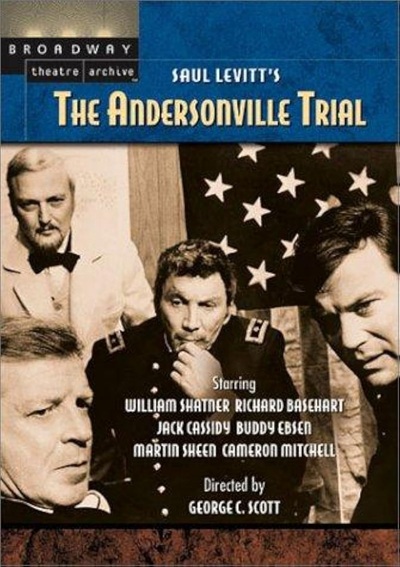
On Stage On The Lens: The Andersonville Trial (dir by George C. Soctt)


1970’s The Andersonville Trial takes place in one muggy military court room.  The year is 1865.  The Civil War is over but the wounds of the conflict are still fresh.  Many of the leaders of the Confederacy are still fugitives.  Abraham Lincoln has been dead for only a month.  The people want someone to pay and it appears that person might be Captain Henry Wirz (Richard Basehart).

Originally born in Switzerland and forced to flee Europe after being convicted of embezzlement, Henry Wirz eventually ended up in Kentucky.  He served in the Confederate Army and was eventually named the commandant of Camp Sumter, a prison camp located near Andersonville, Georgia.  After the war, Captain Wirz is indicted for war crimes connected to his treatment of the Union prisoners at the camp.  Wirz and his defense counsel, Otis Baker (Jack Cassidy), argue that the prison soon became overcrowded due to the war and that Wirz treated the prisoners as well as he could considering that he had limited resoruces.  Wirz points out that his requests for much-needed supplies were denied by his superiors.   Prosecutor Norton Chipman (William Shatner) argues that Wirz purposefully neglected the prisoners and their needs and that Wirz is personally responsible for every death that occurred under his watch.  The trial is overseen by Maj. General Lew Wallace (Cameron Mitchell), the same Lew Wallace who would later write Ben-Hur and who reportedly offered a pardon to Billy the Kid shortly before the latter’s death.  Wallace attempts to give Wirz a fair trial, even allowing Wirz to spend the trial reclining on a couch due to a case of gangrene.  (Agck!  The 19th century was a scary time!)

The Andersonville Trial started life as a 1959 Broadway production.  On stage, George C. Scott played Chipman, an experience he described as difficult because, even though Chipman was nominally the play’s hero, Wirz was actually a much more sympathetic character.  When the play was adapted for television in 1970, Scott returned to direct.  Admittedly, the television version is very stagey.  Scott doesn’t make much effort to open up the play.  Almost all of the action is confined to that courtroom.  We learn about the conditions at Fort Sumter in the same way that the judges learned about the conditions.  We listen as the witnesses testify.  We listen as a doctor played by Buddy Ebsen talks about the deplorable conditions at Fort Sumter.  We also listen as a soldier played by Martin Sheen reports that Wirz has previously attempted to suicide and we’re left to wonder if it was due to guilt or fear of the public execution that would follow a guilty verdict.  We watch as Chipman and Baker throw themselves into the trial, two attorneys who both believe that they are correct.  And we watch as Wirz finally testifies and the play hits its unexpected emotional high point.

As most filmed plays do, The Andersonville Trial demands a bit of patience on the part of the viewer.  It’s important to actually focus on not only what people are saying but also how they’re saying it.  Fortunately, Scott gets wonderful performances from his ensemble cast.  Even William Shatner’s overdramatic tendencies are put to good use.  Chipman is outraged but the play asks if Chipman is angry with the right person.  With many of the Confederacy’s leaders in Canada and Europe, Wirz finds himself standing in for all of them and facing a nation that wants vengeance for the death of their president.  Wirz claims and his defense attorney argues that Wirz was ultimately just a soldier who followed orders, which is what soldiers are continually told to do.  The Andersonville Trial considers when military discipline must be set aside to do what is morally right.

Admittedly, when it comes to The Andersonville Trial, it helps to not only like courtroom dramas but to also be a bit of a history nerd as well.  Fortunately, both of those are true of me.  I found The Andersonville Trial to be a fascinating story and a worthy production.

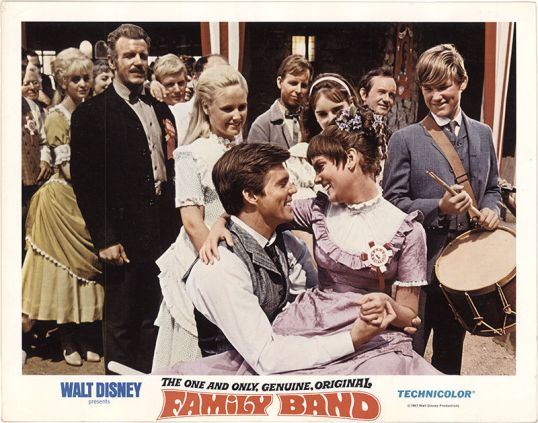
Shattered Politics: The One and Only, Genuine, Original Family Band (dir by Michael O’Herlihy)


First released in 1968, The One and Only, Genuine, Original Family Band is an old school Disney family film that almost feels like a rather mean-spirited parody of an old school Disney family film.  The songs are forgettable, the film has a cheap made-for-TV look to it, and the whole thing feels a bit too manufactured to  produce any sort of genuine emotion.

That said, it’s memorable for two reasons.  First off, it may be the only film ever made that centers on the presidential election of 1888.  In the Dakota territories, the citizens wait to see whether or not Democrat Grover Cleveland will be reelected or whether he’ll be defeated by Republican Benjamin Harrison.  Those who support the Dakotas joining the Union as one state hope to see Cleveland returned to the White House.  Those who favor the creation of a North and South Dakota hope that Benjamin Harrison will win the election, allowing for four new Republican senators to be sent to Washington.

Confederate veteran Renssaeler “Grandpa” Brown (Walter Brennan) supports the Democrats and he’s got his family singing songs to promote the cause of Grover Cleveland.  Grandpa’s son, Calvin (Buddy Ebsen), is a Republican who still has no problem performing at the Democratic Convention because he, much like his children, is a born performer.  His oldest son, Sidney (Kurt Russell, who was 16 at the time of filming), is not old enough to vote but I imagine he’d probably vote for the Republican ticket because he’s Kurt Russell and it’s hard to imagine Kurt voting for a Democrat.  The other children want to keep both Grandpa and their father happy.  Meanwhile, daughter Alice (Lesley Ann Warren) has fallen in love with newspaper editor, Joe Carder (a very bland John Davidson).  Joe’s a Republican and supports Benjamin Harrison.  Grandpa’s not happy but really Grandpa should just mind his own darn business.  At least, that’s my take on it.  (Also, I gave up cursing for Lent.)

On the one hand, the Bowman sisters are pretty evenly split politically, with two voting for the Democrats and the other two tending to vote Republican so I could definitely relate to the idea of a family that didn’t always agree on politics  At the same time, this film’s premise means that there are a lot of songs about Benjamin and Grover Cleveland in this film and they’re about as memorable and exciting as you would expect a bunch of songs about two of America’s forgotten presidents to be.  If you learn anything about the election of 1888 from this film, you’ll learn that Cleveland’s full name was Stephen Grover Cleveland.  You might also note that, for all the talk about how the country have never been as divided as it is today, people were saying the exact same thing in 1888.

The other thing that makes this otherwise forgettable film stand-out is that it features the film debut of Goldie Hawn, who appears as a Republican dancer in the film’s climax.  This was not only Hawn’s debut but it was also the first film that she made with Kurt Russell.  That said, don’t panic.  Hawn was 22 to Kurt’s 16 when she made this film but the two of them didn’t become a couple until they met again in 1983, while filming Swing Shift.  I read an interview with Kurt where, when asked whether he noticed Goldie Hawn in her film debut, he said that he did but he didn’t even think of talking to her because, “I didn’t even have a car.”

Fortunately, everything worked out in the end.  Benjamin Harrison vanquished Grover Cleveland (though Grover returned in 1892, becoming the first of two president to serve non-consecutive terms) and, after their second film together, Kurt Russell and Goldie Hawn are together to this day.


Horror on the Lens: The Horror at 37,000 Feet (dir by David Lowell Rich)


Today, we have the 1973 made-for-TV movie, The Horror at 37,000 Feet.  This film starts off like a typical disaster film, with a collection of familiar celebrities catching a flight from Heathrow Airport.    What they don’t know is that celebrity is not the only thing flying across the ocean!  There’s a sacrificial altar sitting in the baggage hold and soon, all sorts of strange things are happening!  Truly, it’s a horror at 37,000 feet!

This film is silly and perhaps even a little bit dumb but it’s also definitely a lot of fun.  To be honest, when you’ve got William Shatner playing an ex-priest who is wondering what happened to his faith, how can you go wrong?  Along with Shatner, keep an eye out for Chuck Conners, Buddy Ebsen, Roy Thinnes, Paul Winfield, Tammy Grimes, and France Nuyen.  Basically, every TV actor who needed a job in 1973 boarded The Horror at 37,000 Feet. 

Happy October and enjoy The Horror at 37,000 Feet!

Horror on the Lens: The Horror at 37,000 Feet (dir by David Lowell Rich)


Hi there and welcome to October! This is our favorite time of the year here at the Shattered Lens because October is our annual horrorthon! For the past several years (seriously, we’ve been doing this for a while), we have celebrated every October by reviewing and showing some of our favorite horror movies, shows, books, and music. That’s a tradition that I’m looking forward to helping to continue this year.

To start things off, we have the 1973 made-for-TV movie, The Horror at 37,000 Feet.  This film starts off like a typical disaster film, with a collection of familiar celebrities catching a flight from Heathrow Airport.    What they don’t know is that celebrity is not the only thing flying across the ocean!  There’s a sacrificial altar sitting in the baggage hold and soon, all sorts of strange things are happening!  Truly, it’s a horror at 37,000 feet!

This film is silly and perhaps even a little bit dumb but it’s also definitely a lot of fun.  To be honest, when you’ve got William Shatner playing an ex-priest who is wondering what happened to his faith, how can you go wrong?  Along with Shatner, keep an eye out for Chuck Conners, Buddy Ebsen, Roy Thinnes, Paul Winfield, Tammy Grimes, and France Nuyen.  Basically, every TV actor who needed a job in 1973 boarded The Horror at 37,000 Feet. 

Happy October and enjoy The Horror at 37,000 Feet!

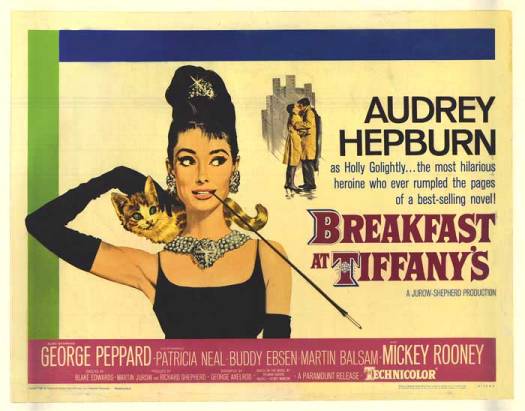
Scenes That I Love: Audrey Hepburn Says Goodbye to Buddy Ebsen in Breakfast at Tiffany’s


Wow.  I am really running behind!  I nearly let this day come to an end without paying tribute to the amazing Audrey Hepburn.  Hepburn was born 91 years ago, on May 4th, 1921 in Belgium.  She went on to become one of history’s best actresses, as well as a role model for us all.  It’s not every actress who could say that she was also an active member of the anti-Nazi Dutch resistance during World War II.  After she became famous and could have very easily gotten away with turning her back on the world, Hepburn continued to make a name for herself as a humanitarian, working as Goodwill Ambassador for UNICEF.

In honor of her birthday, here’s a wonderfully acted scene from 1961’s Breakfast at Tiffany’s.

Smash-Up On Interstate 5 (1976, directed by John Llewellyn Moxey)


Smash-Up On Interstate 5 begins with ominous shots of a crowded California interstate.  It’s the 4th of July weekend and old people are returning home, young people are looking for a party, and Sergeant Sam Marcum (Robert Conrad) of the California Highway Patrol is looking for a killer.  When one car swerves into the next lane and hits another, it leads to a chain reaction as hundreds of cars, trucks, and one motorcycle crash into each other.  While the vehicles crash, we see the people inside of them.  There’s Buddy Ebsen!  There’s Vera Miles!  There’s Sue Lyon (of Lolita fame) on the back of a motorcycle!  In a voice-over, Sam tells us that the accident will be classified as being due to “mechanical failure” and that 14 people are going to die as a result.  He might be one of them.

Smash-Up On Interstate 5 is a 70s disaster film so, after the pile-up, the movie flashed back 48 hours and we get to know everyone whose lives are going to eventually collide on Interstate 5.  Erica (Vera Miles) is recently divorced and trying to get back into the dating scene.  Albert (Buddy Ebsen) is trying to bring some joy to his terminally ill wife’s final days.  Lee (Scott Jacoby) and Penny (Bonnie Ebsen) are the hippies who are trying to get to Big Sur without getting arrested.  Burnsey (Sue Lyon) loves her biker boyfriend.  Some of them will survive the pile-up.  Some of them will not.

Smash-Up On Interstate 5 is an above average made-for-TV movie.  It’s got a notable cast and the movie does a good job of mixing together’s everyone’s subplots.  For instance, Burnsey and a group of bikers show up in the background of several scenes and harass Erica at one point long before the crash on the interstate.  It’s only a 100-minute film so the film doesn’t go into too much detail about everyone’s past but we learn just enough to make everyone stand out.  The crash itself is intense, even when seen today.  Made before the days of CGI, this is a film where the stunt crew definitely earned their paycheck.

Tommy Lee Jones plays a patrolman who is also Sam’s brother-in-law.  I was surprised when I first saw him but as soon as I saw the strained smile and heard the accent, I knew it was him.  Jones’s role is small and probably could have been played by anyone but the mere presence of Tommy Lee Jones definitely makes this film cooler than it would have been otherwise.

One final note: This film was directed by the made-for-TV horror specialist, John Llewellyn Moxey.  Be sure to read Gary Loggins’s tribute to this often underrated director.

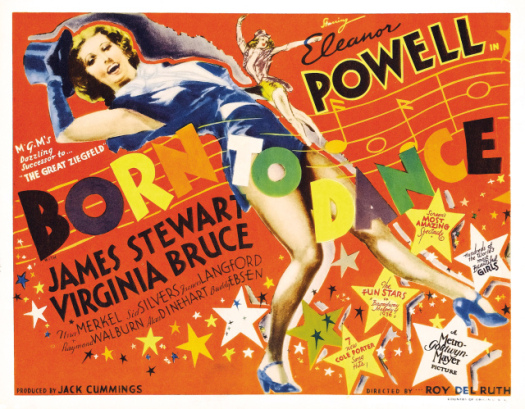
You’re The Top!: Eleanor Powell Was BORN TO DANCE (MGM 1936)


gary loggins's avatarcracked rear viewer

Dancing masters like Fred Astaire, Gene Kelly, and The Nicholas Brothers all agreed… Eleanor Powell was the tops! The 24-year-old star made a big splash in MGM’s BROADWAY MELODY OF 1936, and the studio quickly followed up with BORN TO DANCE, showcasing Eleanor’s tap-dancing prowess in a fun musical-comedy-romance featuring a cavalcade of stars, and an original score by Cole Porter. Yep, Leo the Lion was going big on this one!

The plot’s your typical Boy Meets Girl/Boy Loses Girl/Boy Wins Girl Back fluff, this time around concerning submarine sailors in port and the babes they chase after. Nora Paige (Eleanor) enters the Lonely Hearts Club (no, not Sgt. Pepper’s! ) looking for work as a hoofer (“You don’t use a fan?”, says wisecracking Jenny Saks, played by wisecracking Una Merkel ). Nora shows what she can do in the hot number “Rap, Tap On Wood”, a joyous dance number…

View original post 531 more words

My Huckleberry Friend: BREAKFAST AT TIFFANY’S (Paramount 1961)


gary loggins's avatarcracked rear viewer

(“Breakfast at Tiffany’s” airs tonight, 6/12/17 at 8:00 EST on TCM as part of their month-long salute to Audrey Hepburn.)

“You mustn’t give your heart to a wild thing. The more you do, the stronger they get, until they’re strong enough to run into the woods or fly into a tree. And then to a higher tree and then to the sky” – Audrey Hepburn as Holly Golightly in BREAKFAST AT TIFFANY’S.

From it’s hauntingly romantic theme “Moon River” to it’s sophisticated screenplay by George Axelrod, BREAKFAST AT TIFFANY’S is a near-perfect movie. The bittersweet comedy-drama stars Audrey Hepburn in an Oscar nominated performance as Holly Golightly, a New York “party girl” who winds up falling for struggling writer George Peppard. That Hepburn didn’t get the Oscar (Sophia Loren took it home that year for TWO WOMEN) is one of the Academy’s greatest crimes. The film has a very personal connection with…

View original post 1,020 more words

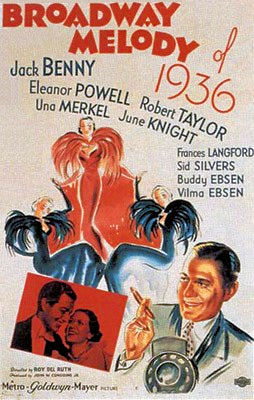
Lisa Reviews An Oscar Nominee: Broadway Melody of 1936 (dir by Roy Del Ruth)


PosterBroadwayMelody1936_01

It’s Oscar month and you know what that means!  It’s time for TCM to do their annual 31 Days of Oscars!  For the next 31 days, TCM is going to be showing movies that were nominated for and occasionally won Oscars.  This is a great month for me because it has long been my goal to see and review every single film that has ever been nominated for best picture.  Considering that close to 500 movies have been nominated, that’s no small task.  However, over the past four years, I have definitely made some progress, as you can see by clicking on this link and looking at a list of every single best picture nominee.  Thank you, TCM, for helping me get closer to my goal!

For instance, if not for TCM, how would I ever had the chance to watch Broadway Melody of 1936?  Broadway Melody of 1936 was one of the twelve films to be nominated for best picture of 1935 but it’s now largely forgotten.  When film loves discuss the best musicals of the 30s, it’s rare that you ever hear mention of Broadway Melody of 1936.

Technically, it can be argued that Broadway Melody of 1936 was the first sequel to ever be nominated for best picture, despite the fact that it has little in common with Broadway Melody, beyond taking place on Broadway and being nominated for best picture.  (Broadway Melody won the award.  Broadway Melody of 1936 lost to Mutiny on the Bounty.)  Silence of the Lambs, The Godfather, Part II, Mad Max: Fury Road, Toy Story 3, and The Bells of St. Mary’s are all sequels that were nominated for best picture but Broadway Melody of 1936 did it first.

As for what Broadway Melody of 1936 is about … well, it’s really not about anything.  Oh, don’t get me wrong.  The film has a plot.  Irene Foster (Eleanor Powell) wants her former high school boyfriend, Broadway director Robert Gordon (Robert Taylor), to cast her in his new show but Gordon refuses because he doesn’t want the innocent Irene to be exposed to the sordid world of show business.  Fortunately, Irene has some allies who are willing to help her get that role.  Ted Burke (Buddy Ebsen) is an appealingly goofy dancer who, at one point, wears a Mickey Mouse sweatshirt.  Bert Keeler (Jack Benny) is a columnist who rattles off his “New Yawk cynical” dialogue in the style of most 1930s news reporters.

Broadway Melody of 1936 has a plot but it’s not really that important.  The story is just an excuse for the songs and the dance numbers.  And while none of the numbers are spectacular (especially when compared to other 30s musicals, like 42nd Street), they are all definitely likable.

Seen today, Broadway Melody of 1936 seems like an odd best picture nominee.  It’s not bad but there’s nothing particularly great about it.  To truly appreciate the film, it’s probably necessary to try to imagine what it was like to watch the film in 1935.  At a time when the country was still in the throes of the Great Depression, Broadway Melody of 1936 provided audiences with an escape.  Audiences could watch the film and imagine that they, just like Eleanor Powell, could leave behind the dullness of reality and find stardom in the glamorous and glitzy world of Broadway.

Never doubt the power of escapism.