Embracing the Melodrama Part II #118: The Kids Are All Right (dir by Lisa Cholodenko)


Kids_are_all_right_poster

Dare I admit to thinking that the 2010 best picture nominee The Kids Are All Right is overrated?

The Kids Are All Right tells the story of Nic (Annette Bening) and Jules (Julianne Moore), married lesbians in Los Angeles.  The pragmatic Nic is an obstetrician while the more flighty Jules has a landscaping business.  They also have two children, Laser (Josh Hutcherson) and Joni (Mia Wasikowska).  When Laser and Joni decide to track down their anonymous sperm donor father, the trail leads to Paul (Mark Ruffalo), who owns an organic restaurant.  (Of course, he does…)  After Paul meets Nic and Jules, he eventually ends up having an affair with Jules, which threatens the family’s stability.

It’s been five years since the film first came out and, as a result, I think it’s easy to forgot what a big deal The Kids Are All Right was back in 2010.  It got a lot of attention for being both a film about a lesbian couple and a box office success.  To a certain extent, every LGBT-themed film to come out since owes a debt of gratitude to The Kids Are All Right for proving that audiences are willing to see films with LGBT characters.  As well, the film’s box office success was an early sign of the growing support for the legalization of gay marriage.  The Kids Are All Right can make a very valid claim to being a landmark film.

But, once you look past the film’s historic importance, it doesn’t hold up as well as you might hope.  The performers are all good, especially Annette Bening.  The film’s script also has a lot of good lines.  However, it also has a lot of lines that feel just a little bit too glib and obvious.  It’s not surprising that HBO considered turning The Kids Are All Right into a TV series because the entire movie really does feel like an above average episode of an hourly drama.  Lisa Cholodenko’s visually flat direction also feels more appropriate for television than for the big screen.

As much as I hate to admit it, I’d probably be more into The Kids Are All Right if the characters were a little less wealthy.  If you can look past the fact that this is a movie about a happy lesbian marriage being threatened by a clueless straight guy, you discover that The Kids Are All Right is essentially just another movie about rich white people with problems.

I guess my problem with The Kids Are All Right can be summed up by the scene where Jules fires her Mexican gardener because she suspects that he’s seen her with Paul.  The scene is largely played for laughs and, after the gardener has lost his job, he’s never seen again.  At one point, Jules does say that she feels guilty for firing him but again, the scene is played for laughs.  The film asks us to laugh with the rich white characters and to laugh at the one non-rich non-white.

The Kids Are All Right is a historically important film but that’s not necessarily the same thing as being a great film.

Embracing the Melodrama Part II #98: American Beauty (dir by Sam Mendes)


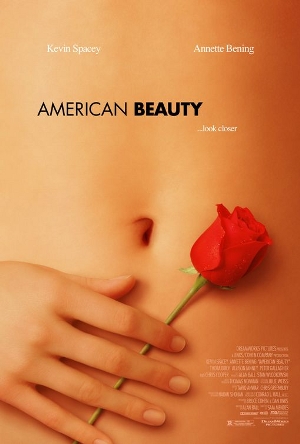
American_Beauty_posterWhat crap!

I know, I know.  “American Beauty is an incisive satire that looks at the stifling conformity of American suburbia with Kevin Spacey giving the definitive portrait of the male midlife crisis and blah blah blah blah blah blah.”  Listen, American Beauty is a terrible film.  I don’t care if it won a lot of Oscars, including the 1999 award for best picture.  American Beauty is a shallow film that, at its worst, is deeply misogynistic.

American Beauty tells the story of two people.  They’re married.  They live in the suburbs.  They have a teenage daughter who is a cheerleader.  They pretend to have the perfect life but actually, everyone’s extremely unhappy.

WOW!  OH MY GOD!  PEOPLE ARE SECRETLY UNHAPPY IN THE SUBURBS!?  MY MIND IS BLOWN!  WOW, NO ONE’S EVER HAD THAT THOUGHT BEFORE!  OH.  MY.  GOD!

Anyway, the husband is named Lester (Kevin Spacey).  Lester’s a loser.  He narrates the film and he’s played by Kevin Spacey so you’re supposed to think that he’s really this great guy who deserves better but honestly, Lester’s a whiny little jerk.  He’s upset because, now that he’s an adult, he misses being a teenager.  Life hasn’t turned out the way that he wanted it to.  Boo hoo.  As I said, Lester is kind of whiny but the film treats him like he’s an enlightened truth seeker.  In order to keep the audience from realizing that Lester is a loser, the film surrounds him with one-dimensional stereotypes.

And really, Lester is the ultimate male fantasy.  Everything that he says and thinks is wise.  His every thought and feeling matters.  To its discredit, the world has failed to recognize that Lester’s vapid thoughts are worthwhile.  Lester quits his job and finds employment working in fast food.  Lester fantasizes about fucking his daughter’s best friend (Mena Suvari).  Lester starts to smoke weed with his teenage neighbor (Wes Bentley).  In real life, Lester would just be another pathetic guy having a midlife crisis but, in the world of American Beauty, he’s a seeker of truth,

Anyway, eventually, Lester gets shot in the back of the head and dies but that doesn’t keep him from still narrating the film.  You just can’t shut him up.

Meanwhile, Lester’s wife is Carolyn (Annette Bening) and wow, is she evil!  Get this — she actually tries to keep the house clean, is obsessive about her job, and wants her family to eat dinner together.  Oh my God, so evil!  She ends up having an affair with Buddy Kane (Peter Gallagher) and, when they have sex, we’re supposed to laugh at them because they’re so cartoonishly loud.  And when Lester catches them, the audience is expected to applaud and say, “Way to go, Lester!”  The film ridicules Carolyn’s affair but it idealizes Lester’s sexual fantasies.  Lester’s determination to be independent and do what he wants is presented as being heroic.  Carolyn’s determination to have a life that does not revolve around her pathetic husband is presented as being villainous.

And why is that?

Basically, it comes down to the fact that Lester has a penis whereas Carolyn has a vagina.

American Beauty is probably one of the most misogynistic films that I have ever seen, one in which men are exclusively victims of all those unreasonable and untrustworthy women.  Whiny loser Lester is presented as being a hero.  Ricky, the next door neighbor played by Wes Bentley, spends his time going on and on about the beauty of an empty bag and we’re supposed to see some sort of higher truth in his pretentious blathering.  Meanwhile, Carolyn is portrayed as being a shrew.  Lester’s teenager daughter (Thora Birch) is a spoiled brat.  Lester’s sexual obsession, the cheerleader played by Mena Suvari, is presented as being a suburban seductress but, in the film’s eyes, she’s partially redeemed when she suddenly admits to being a virgin.

(The film seems to think that the revelation that teenagers lie about sex is truly shocking.  This is one of those films that makes you wonder if the filmmakers have ever hung out with anyone outside of their own small circle of friends.)

One huge subplot deals with Ricky’s father, a military guy played by Chris Cooper, mistakenly believing that Lester is gay.  And, honestly, American Beauty would have been a better film if Lester had been a gay man and if, instead of buying a new car and getting a crappy job, Lester had dealt with his identity crisis by coming out of the closet.  Certainly, a lot of Lester’s anger would have made a lot more sense if he was a man struggling to come to terms with his sexuality as opposed to being a man who just doesn’t like his job and is upset that his wife no longer has the body of a 17 year-old.

(We are, of course, supposed to be shocked when Cooper suddenly reveals that he himself is gay.  But, honestly, the film’s plans for Cooper are obvious from the minute he first appears on-screen and dramatically squints his eyes in disgust at the sight of two men jogging together.  Cooper is a good actor but he’s terrible in American Beauty.)

It would have taken guts to make Lester gay and, at heart, American Beauty is a very cowardly film.  It attacks easy targets and it resolutely refuses to play fair.  So desperate is it to make Lester into a conventional hero that it refuses to let anyone around him be human.  As a result, a talented cast is stuck playing a collection of one-note stereotypes.  No wonder a lot of people love this film — it makes you feel smart without requiring that you actually think.

American Beauty was written by Alan Ball and directed by Sam Mendes.  Both Ball and Mendes have subsequently done far better work, which is good because American Beauty is a terrible movie.  The script is a pretentious mess and Mendes never seems to be quite sure what exactly he’s trying to say from scene-to-scene.

American Beauty did win best picture but who cares?

It’s a crappy film.


Shattered Politics #56: The American President (dir by Rob Reiner)


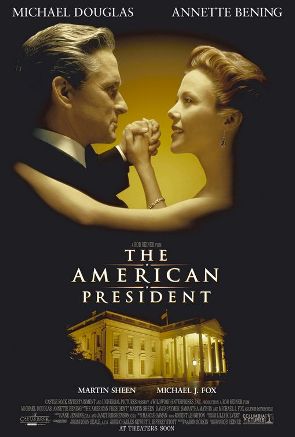
The_American_President_(movie_poster)

Way back in October, around the same time that I first decided that I would do a series of reviews of political films and that I would call it Lisa Gets Preachy (subsequently changed to Shattered Politics), I noticed that the 1995 film The American President was scheduled to be shown on TVLand.

“Hey,” I said, “I’ve definitely got to watch and review that!”

So, I set the DVR and I recorded The American President.

And then, I just left it there.

You have to understand that it’s rare that I ever leave anything unwatched on my DVR.  Usually, within an hour of recording a program, I’ll be watching it.  I have even been known to go so far as to make out very long lists of everything that I have on the DVR, just so I can make check them off after I’ve watched.  As a general rule, I am way too obsessive compulsive to just leave anything sitting around.

But, for whatever reason, I could never work up any enthusiasm for the prospect of actually watching The American President.  I knew that, eventually, I would have to watch it so that I could review it.  Unlike those folks criticizing American Sniper on the basis of the film’s trailer, I never criticize or praise a film unless I’ve actually watched it.  But  I just couldn’t get excited about The American President.

Can you guess why?  I’ll give you a hint.  It’s two words.  The first starts with A.  The second starts with S.

If you guessed Aaron Sorkin, then you are correct!  Yes, I do know that Sorkin has a lot of admirers.  And, even more importantly, I know that it’s dangerous to cross some of those admirers.  (I can still remember Ryan Adams and Sasha Stone insanely blocking anyone who dared to criticize the underwritten female characters in Sorkin’s script for The Social Network.)

But what can I say?  As a writer, Aaron Sorkin bothers me.  And since Sorkin is such an overpraised and powerful voice, he’s that rare scriptwriter who can actually claim auteur status.  The Social Network, for instance, was not a David Fincher film.  It was an Aaron Sorkin film, through and through.

And, after having to deal with three seasons of the Newroom and countless Aaron Sorkin-penned op-eds about why nobody should be allowed to criticize Aaron Sorkin, I’ve reached the point where dealing with all of Aaron Sorkin’s signature quirks is a bit like listening to the drill while strapped into a dentist’s chair.  I am weary of pompous and egotistical male heroes who answer every question with a sermon.  I am tired to endless scenes of male bonding.  I have had enough with the quippy, quickly-delivered dialogue, all recited as characters walk down an endless hallways.  I have no more sympathy for Sorkin’s nostalgic idealism or his condescending, rich, white dude version of liberalism.

Most of all, I’m sick of people making excuses for an acclaimed, award-winning, highly-paid screenwriter who is apparently incapable of writing strong female characters.  I’m tired of pretending that it doesn’t matter that Aaron Sorkin is apparently incapable of viewing female characters as being anything other than potential love interests or silly distractions who need to be told to go stand in a corner while the menfolk solve all the problems of the world.

Fortunately, as a result of The Newsroom, quite a few critics are finally starting to admit what they always knew to be the truth.  Aaron Sorkin is not the messiah.  Instead, he’s a somewhat talented writer who doesn’t understand (or, in my opinion, particularly like) women.  At his best, he’s occasionally entertaining.  At his worst, he’s pompous, didactic, and preachy.

And, of course, Aaron Sorkin is the man who wrote The American President.

So, The American President just sat there until a few days ago when I sighed to myself and said, “Okay, let’s watch this thing.”  As I watched it, I promised myself that I would try to see past the fact that it was an Aaron Sorkin-penned film and just try to judge the film on its merits.

But here’s the thing.  It’s nearly impossible to separate one’s opinion of Sorkin from The American President.  If you didn’t know that Sorkin had written The American President, you’d guess it after hearing the first few lines of dialogue.  The film, itself, was directed by Rob Reiner but it’s not as if Reiner is the most interesting of directors.  (What’s odd is that Reiner’s first films — This Is Spinal Tap, The Princess Bride, Stand By Me — are all so quirky and interesting and are still so watchable decades after first being released that you have to wonder how Reiner eventually became the man who directed The Bucket List.)  In short, The American President is totally an Aaron Sorkin film.

President Andrew Shepherd (Michael Douglas) is a liberal Democrat who, as he prepares to run for a second term, has a 63% approval rating.  However, when Shepherd decides to push through a gun control bill, he finds that approval rating threatened.  And then, when he listens to environmental lobbyist Sydney Wade (Annette Bening) and tries to push through legislation to reduce carbon emissions, his approval rating is again threatened.  And then, to top it all off, he starts dating Sydney.  It turns out that Sydney has protested American policy in the past.  And, since this is an Aaron Sorkin film, everyone outside of the Northeast is scandalized that President Shepherd is having premarital sex in the White House.

And, to top it all off, there’s an evil Republican named Bob Rumson (Richard Dreyfuss) who wants to be President and is willing to use the President’s relationship with Sydney to further his own evil Republican ambitions.

But, ultimately, it’s not just those evil Republicans who make it difficult for Sydney and the President to have a relationship.  It’s also the fact that the President agrees to a watered down crime bill and that he does not hold up his end of the bargain when it comes to reducing carbon emissions.

“You’ve lost my vote!” Sydney tells him.

But — fear not!  There’s still time for President Shepherd to give a speech that will be so good and so brilliant that it will, within a matter of minutes, totally change every aspect of American culture and save the day.  How do we know it’s a great speech?  Because it was written by Aaron Sorkin!

Actually, I’m being too hard on the film and I’ll be the first admit that it’s because I’m personally not a huge fan of Aaron Sorkin’s.  But, to be honest, The American President is Aaron Sorkin-lite.  This film was written before the West Wing, before the Social Network, before that Studio Whatever show, and before The Newsroom.  In short, it was written before he became THE Aaron Sorkin and, as such, it’s actually a lot less preachy than some of his other work.  It’s true that, much like The Newsroom, The American President is definitely Sorkin’s fantasy of how things should work but at least you don’t have to deal with Jeff Daniels throwing stuff or Emily Mortimer not knowing how to properly forward an email.

Instead, it’s a film that will probably be enjoyed by those who share its politics.  (And, make no mistake, The American President is more interested in politics than it is in the love story between Andrew and Sydney.)  Michael Douglas does well in the role of the President.  Meanwhile, Annette Bening is so likable and natural as Sydney that it almost make up for the fact that she’s yet another Sorkin woman whose existence is largely defined by looking up to her man while inspiring him to do the right thing and forgiving him when he doesn’t.  Personally, I would have been happy if the film had ended with Sydney telling the President, “Thanks for finally doing the right thing but I have a life of my own to lead.”

But that wouldn’t be the Sorkin way.

Embracing the Melodrama #40: Bugsy (dir by Barry Levinson)


Bugsy5lrg

Let’s continue to embrace the melodrama with the 1991 best picture nominee Bugsy.

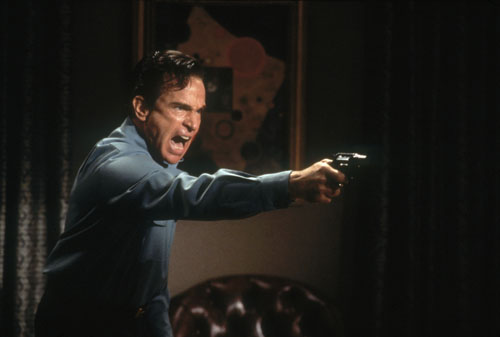
Gangster Benjamin Siegel (Warren Beatty) may be known as Bugsy but nobody dares call him that to his face.  Siegel may be best known for his quick temper and his willingness to murder anyone who gets in his way, but Ben insists that he’s not as crazy as everyone considers him to be.  Instead, Ben knows that he’s a very special person, a visionary businessman whose business just happens to be organized crime.  Along with his childhood friends Lucky Luciano (Bill Graham) and Meyer Lansky (Ben Kingsley), Siegel is one of the founders of the modern American crime syndicate.  Unlike his more practical-minded partners, Siegel revels in being a public figure.  Bugsy examines how Siegel became a celebrity gangster and how that celebrity eventually led to his downfall.

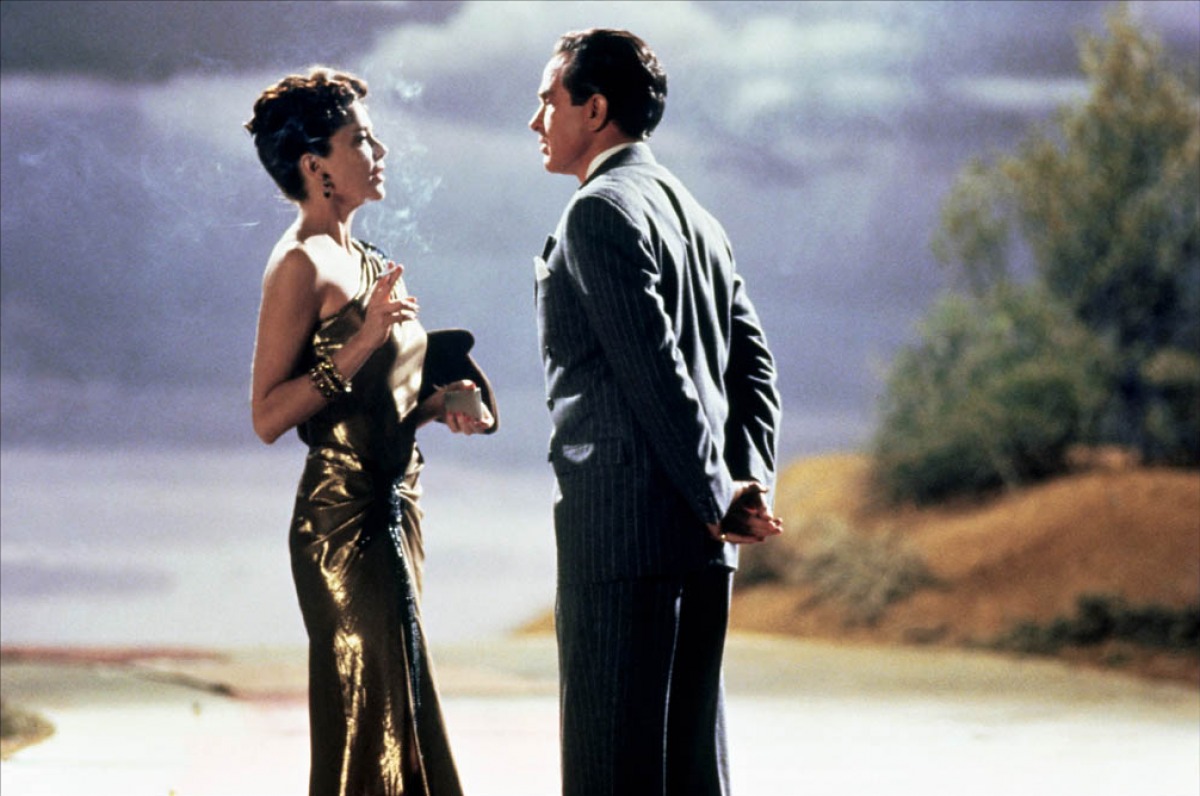
As the film opens, Luciano and Lansky send Siegel out to Los Angeles, specifically to look after their west coast business operations.  Before Siegel leaves, he is specifically told to keep a low profile.  So, of course, as soon as Siegel arrives in Los Angeles, he starts hanging out with actor George Raft (Joe Mantegna) and having a very public affair with actress Virginia Hill (Annette Bening).  Siegel quickly falls in love with the glamour and glitz of Hollywood and starts to think of himself as being a movie star.  When he’s not working with violent gangster Mickey Cohen (Harvey Keitel) to control the Los Angeles underworld, Siegel is attending film premieres and even shooting a Hollywood screen test.  Back in New York, Luciano and Lansky can only watch as their childhood friend goes out of his way to defy their instructions and become the most famous gangster in America.

Eventually, Siegel goes on a gambling trip to Nevada and comes up with an idea that is destined to change America forever.  With funding from Lansky and Luciano, Siegel begins construction on the Flamingo Hotel and Casino in Las Vegas, Nevada.  However, Siegel’s plans are so extravagant and, in many ways, impractical that the budget soon soars out of control.  Not helping matters is the fact that Virginia is embezzling money from the casino’s budget.  Even after Siegel finds out, he can’t bring himself to be angry at her.  He understand that he and Virginia are essentially cut from the same cloth.

However, back in New York, Luciano grows more and more frustrated with Siegel’s wasteful ways and Lansky comes to realize that he can only protect his friend for so long…

Bugsy is a big, extravagant movie that tries to be a few too many things at once.  Over the course of two and a half hours, it attempts to be a love story, a biopic, a classic gangster film, an allegory for the American dream, a history lesson, a period piece, and finally, a metaphor for the act of filmmaking itself.  (When Siegel complains that Luciano and Lansky don’t understand why the Flamingo has to be huge, it’s hard not to feel that he’s meant to be a stand in for every director who has ever had his budget cut by a meddling studio executive.)  When a film tries to be so many different things all at once, you can’t be surprised when the end result is a little uneven.  Bugsy starts out slowly but gradually picks up speed and the final part of the movie is everything that one could hope for from an epic gangster film.

The film works best as a character study of a man who, in the best American tradition, attempts to reinvent himself by moving out west.  Back in New York, Ben is known as a cold-blooded and dangerous killer.  However, once he arrives in Los Angeles, Ben attempts to recreate himself as a celebrity and then as a visionary.  For him, the Flamingo is about more than money.  The Flamingo is about being remembered for something other than his nickname.  The Flamingo is his way to escape from his past.  However, as Bugsy makes clear, the past can be ignored but it never goes away.

bugsy-1991-09-g

Lisa And The Academy Agree To Disagree


The Oscar nominations were announced today and, for the most part, it’s pretty much what you would expect.  Below is the list of nominees.  If a nominee listed in bold print, that means they also appeared on my own personal list of nominations.

Best motion picture of the year

Black Swan
The Fighter
Inception
The Kids Are All Right
The King’s Speech
127 Hours
The Social Network
Toy Story 3
True Grit
Winter’s Bone

(The Academy and I agree on five of the ten nominees.  That’s actually more than I was expecting.)

Performance by an actor in a leading role

Javier Bardem (Biutiful)
Jeff Bridges (True Grit)
Jesse Eisenberg (The Social Network)
Colin Firth (The King’s Speech)
James Franco (127 Hours)

(The only real surprise here is Bardem.  I haven’t seen Biutiful but I’ve heard amazing things about it.)

Performance by an actor in a supporting role

Christian Bale (The Fighter)
John Hawkes (Winter’s Bone)
Jeremy Renner (The Town)
Mark Ruffalo (The Kids Are All Right)
Geoffrey Rush (The King’s Speech)

(Yay for John Hawkes!  Some people are surprised that Andrew Garfield wasn’t nominated for The Social Network.  I’m disappointed he wasn’t nominated for Never Let Me Go.)

Performance by an actress in a leading role

Annette Bening (The Kids Are All Right)
Nicole Kidman (Rabbit Hole)
Jennifer Lawrence (Winter’s Bone)
Natalie Portman (Black Swan)
Michelle Williams (Blue Valentine)

(I’m happy to see Lawrence and Portman recognized but I still so wish that the Academy had recongized Noomi Rapace and Katie Jarvis as well.  I knew it wouldn’t happen but still…)

Performance by an actress in a supporting role

Amy Adams (The Fighter)
Helena Bonham Carter (The King’s Speech)
Melissa Leo (The Fighter)
Hailee Steinfeld (True Grit)
Jacki Weaver (Animal Kingdom)

(Weaver — Yay!) 

Achievement in directing

Darren Aronofsky (Black Swan)
David O Russell (The Fighter)
Tom Hooper (The King’s Speech)
David Fincher (The Social Network)
Joel Coen and Ethan Coen (True Grit)

(The snubbing of Christopher Nolan for Inception is probably the closest thing to an outrage that the Oscars will produce this year.)

Adapted screenplay

127 Hours – Danny Boyle & Simon Beaufoy
The Social Network – Aaron Sorkin
Toy Story 3 – Michael Arndt (screenplay); John Lasseter, Andrew Stanton and Lee Unkrich (story)
True Grit – Joel Coen and Ethan Coen
Winter’s Bone – Debra Granik & Anne Rosellini

Original screenplay

Another Year – Mike Leigh
The Fighter – Scott Silver, Paul Tamasy and Eric Johnson (screenplay); Keith Dorrington, Paul Tamasy and Eric Johnson (story)
Inception – Christopher Nolan
The Kids Are All Right – Lisa Cholodenko and Stuart Blumberg
The King’s Speech – David Seidler

Best animated feature film of the year

How to Train Your Dragon
The Illusionist
Toy Story 3

 (I haven’t seen The Illusionist yet but I’m looking forward to it because the previews look great, it’s based on a script by Jacques Tati, and I love all things French.  Still, I kinda wish that Despicable Me had been nominated just so Arleigh could see the minions at the Academy Awards.)

Best foreign language film of the year

Biutiful (Mexico)
Dogtooth (Greece)
In a Better World (Denmark)
Incendies (Canada)
Outside the Law (Hors-la-loi) (Algeria)

Art direction

Alice in Wonderland – Robert Stromberg (production design), Karen O’Hara (set decoration)
Harry Potter and the Deathly Hallows Part 1 – Stuart Craig (production design), Stephenie McMillan (set decoration)
Inception – Guy Hendrix Dyas (production design), Larry Dias and Doug Mowat (set decoration)
The King’s Speech – Eve Stewart (production design), Judy Farr (set decoration)
True Grit – Jess Gonchor (production design), Nancy Haigh (set decoration) 

Achievement in cinematography

Matthew Libatique (Black Swan)
Wally Pfister (Inception)
Danny Cohen (The King’s Speech)
Jeff Cronenweth (The Social Network)
Roger Deakins (True Grit) 

Achievement in costume design

Colleen Atwood (Alice in Wonderland)
Antonella Cannarozzi (I Am Love)
Jenny Beavan (The King’s Speech)
Sandy Powell (The Tempest)
Mary Zophres (True Grit)

(That’s right, I ended up going 0 for 5 as far as Costume Design is concerned.  Which I guess goes to prove that I have better taste than the Academy.)

Best documentary feature

Exit Through the Gift Shop (Banksy and Jaimie D’Cruz)
Gasland (Josh Fox and Trish Adlesic)
Inside Job (Charles Ferguson and Audrey Marrs)
Restrepo (Tim Hetherington and Sebastian Junger)
Waste Land (Lucy Walker and Angus Aynsley)

 (If Banksy wins, I’ll be happy.  I have a feeling the award will go to Inside Job, however.  As a documentary, Inside Job reminded me a lot of Capt. Hindsight from the South Park Coon Vs. Coon And Friends trilogy.  Also, I’m a little bit surprised that Waiting for Superman wasn’t nominated.  I’m even more surprised that I actually saw enough feature documentaries last year to even have an opinion.  Also, interesting to note that Restrepo — a very nonpolitical look at military in the mid-east — was nominated while The Tillman Story, a much more heavy-handed and stridently political documentary was not.)

Best documentary short subject

Killing in the Name (Nominees to be determined)
Poster Girl (Nominees to be determined)
Strangers No More (Karen Goodman and Kirk Simon)
Sun Come Up (Jennifer Redfearn and Tim Metzger)
The Warriors of Qiugang (Ruby Yang and Thomas Lennon)

(It’s always interesting that nobody knows what these movies are about yet their producers always end up giving the longest speeches at the Oscars.  I’m hoping that Poster Girl wins because the actual producers have yet to be determined.  I imagine that means there might be some sort of legal action going on which means that, if it wins on Oscar night, there might be a big fight at the podium.  Plus, I like the title.  It makes me want to walk up to people I barely know, lean forward, and go, “Can I be your poster girl?”)

Achievement in film editing

Andrew Weisblum (Black Swan)
Pamela Martin (The Fighter)
Tariq Anwar (The King’s Speech)
Jon Harris (127 Hours)
Angus Wall and Kirk Baxter (The Social Network) 

Achievement in makeup

Adrien Morot (Barney’s Version)
Edouard F Henriques, Gregory Funk and Yolanda Toussieng (The Way Back)
Rick Baker and Dave Elsey (The Wolfman)

Achievement in music written for motion pictures (original score)

John Powell (How to Train Your Dragon)
Hans Zimmer (Inception)
Alexandre Desplat (The King’s Speech)
AR Rahman (127 Hours)
Trent Reznor and Atticus Ross (The Social Network)

Achievement in music written for motion pictures (original song)

Coming Home (from Country Strong, music and lyrics by Tom Douglas, Troy Verges and Hillary Lindsey)
I See the Light (from Tangled, music by Alan Menken, lyrics by Glenn Slater)
If I Rise (from 127 Hours, music by AR Rahman, lyrics by Dido and Rollo Armstrong)
We Belong Together (from Toy Story 3, music and lyrics by Randy Newman)

(I’ll just say it now — 4 nominations and I didn’t agree with a single one of them.  Seriously, they could have nominated up to 5 songs but instead of giving at least one nomination to Burlesque, they just nominated 4 songs.  What a load of crap.)

Best animated short film

Day & Night (Teddy Newton)
The Gruffalo (Jakob Schuh and Max Lang)
Let’s Pollute (Geefwee Boedoe)
The Lost Thing (Nick Batzias, Shaun Tan and Andrew Ruhemann)
Madagascar, carnet de voyage (Madagascar, a Journey Diary) (Bastien Dubois)

(I’ve actually seen Day & Night since it was shown before Toy Story 3.  I thought it went on a little bit too long, to be honest.)

Best live action short film

The Confession (Tanel Toom)
The Crush (Michael Creagh)
God of Love (Luke Matheny)
Na Wewe (Ivan Goldschmidt)
Wish 143 (Ian Barnes and Samantha Waite) 

Achievement in sound editing

Inception (Richard King)
Toy Story 3 (Tom Myers and Michael Silvers)
Tron: Legacy (Gwendolyn Yates Whittle and Addison Teague)
True Grit (Skip Lievsay and Craig Berkey)
Unstoppable (Mark P Stoeckinger)

Achievement in sound mixing

Inception (Lora Hirschberg, Gary A Rizzo and Ed Novick)
The King’s Speech (Paul Hamblin, Martin Jensen and John Midgley)
Salt (Jeffrey J Haboush, Greg P Russell, Scott Millan and William Sarokin)
The Social Network (Ren Klyce, David Parker, Michael Semanick and Mark Weingarten)
True Grit (Skip Lievsay, Craig Berkey, Greg Orloff and Peter F Kurland)

 (I would have probably had more matches in the sound category if I actually knew the difference between sound editing and sound mixing.)

Achievement in visual effects

Alice in Wonderland (Ken Ralston, David Schaub, Carey Villegas and Sean Phillips)
Harry Potter and the Deathly Hallows Part 1 (Tim Burke, John Richardson, Christian Manz and Nicolas Aithadi)
Hereafter (Michael Owens, Bryan Grill, Stephan Trojanski and Joe Farrell)
Inception (Paul Franklin, Chris Corbould, Andrew Lockley and Peter Bebb)
Iron Man 2 (Janek Sirrs, Ben Snow, Ged Wright and Daniel Sudick)

So there you go.  I went 50/50 on the Best Picture nominations and — well, it all pretty much went downhill from there, didn’t it?  Oh well.

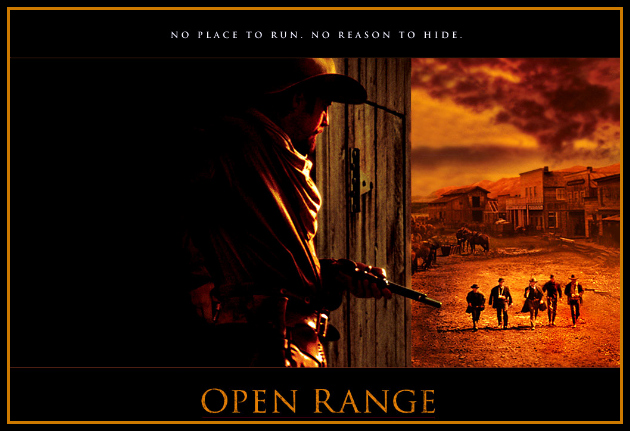
Review: Open Range (dir. by Kevin Costner)


2003 marked a sort of a small comeback for Kevin Costner both as a director and as an actor. The work in question was the very well-done Western, Open Range. Open Range was a moderately budgeted film which has more in common with Costner’s first directorial work, Dances with Wolves than his last big-budget flop, The Postman.

The film was an adaptation of the Lauran Paine novel, The Open Range Men, and it captures much of the themes found in the novel. This was probably due to the fact that screenwriter Craig Storper didn’t deviate from the novel’s basic story. There were no superfluous action sequences and gunfights to ratchet up the action. Everything about Open Range was about the gradual and inevitable final confrontation between the “free-grazers” and the “barbed-wire” men. The free-grazers were played by Kevin Costner and Robert Duvall as Charles Waite and Boss Spearman, respectively. On the other side of the conflict was Michael Gambon playing Denton Baxter, the ruthless land-baron whose attempt to keep the free-grazers from grazing on his land also hides another agenda. Caught in-between these two strong-willed groups were the people in the town Baxter pretty much controls through his “town marshal” (played with fake bravado by James Russo) and the herd helpers under Boss Spearman’s employ.

The theme of freedom to roam the open country versus the rights of a landowner echoes throughout the film. Set in the latter end of the 19th-century, Open Range shows the clash of the more natural ways of the Old West slowly eroding to be replaced by the more industrial, monopolistic practices that became prevalent during the 1880’s, also known in US History as the Gilded Age. Even the personalities of the conflicting characters mirror this theme as the free-grazers only want to use the land as it has been used for years upon years and thats sharing between all men of the West. The land-baron has other ideas in mind and everything boils down to him owning everything around him, even if it means using ruthless tactics to gather even more property.

Open Range also has a bit of modernism in its subplot of Charley Waite’s growing attraction to the sister of the town doctor and the same sister’s well-rounded characterization. It’s not often that a traditional Western shows women in a very positive light instead of the usual submissive and stay-at-home characters of Western’s past. This could also be attributed to the wonderful, underrated performance by Annette Bening who plays Sue Barlow, the doctor’s sister and Charley Waite’s love interest. Bening doesn’t play Sue as the traditional Western female. She also doesn’t go overboard and turn Sue into a 20th-century feminist. She instead plays the character as someone who knows her place in the world, but also one who is strong-willed and willing to stand for what is right.

Open Range was a wonderful throwback to what made such modern Westerns like Unforgiven and Tombstone such a success both for traditionalists and new fans. Kevin Costner’s direction was very low-key. Allowing the story to tell itself at its own pace until the final confrontation. The final gunfight in the end gets a lot of well-earned attention from critics and fans. The entire sequence takes at least 10-15 minutes from start to finish. The fight itself was done in a realistic fashion. There was no sharpshooter dead-eyes in this film, but individuals who had skill but still missed. It was a fight where it wasn’t who was the fastest, but who was the calmest under fire. There’s also a suddenness to the brutality in the final gunfight that demystifies the old-style Western shootouts of past. Some complained that the film was very slow and took too long to get to the “good stuff”, but I actually thought the gradual pacing of most of the film’s length gave the final confrontation even more impact. Costner seem to have learned the lesson all good directors know: less means more.

Open Range won’t go down as a great piece of film making. It surely won’t go down as one of the best in history. What Open Range did accomplish was putting the Western back to its epic and majestic roots, but at the same time keeping the intimacy of a character-driven story. In time, Open Range would probably go down as one of the underrated gems of the last decade and find a place next to its closest comparison, Unforgiven, as one of the best Westerns of the new era.

Hey SAG! Where’s Jacki?


Is there any organization out there right now that isn’t handing out either awards or nominations?  Earlier today, The members of the Screen Actors Guild became the latest organization to join in the fun when they announced their nominations for the best film performances of 2010.

Here’s the nominees.  I apologize, in advance, for the lack of sarcastic commentary but I have a headache and, as a result, my wit is sleeping on the couch for now.

Ensemble:
Black Swan
The Fighter
The Kids Are All Right
The King’s Speech
The Social Network

Actress, Lead:
Annette Bening, The Kids Are All Right
Nicole Kidman, Rabbit Hole
Jennifer Lawrence, Winter’s Bone
Natalie Portman, Black Swan
Hilary Swank, Conviction

Actor, Motion Picture
Jeff Bridges, True Grit
Robert Duvall, Get Low
Jesse Eisenberg, The Social Network
Colin Firth, The King’s Speech
James Franco, 127 Hours

Supporting Actor
Christian Bale, The Fighter
John Hawkes, Winter’s Bone
Jeremy Renner, The Town
Mark Ruffalo, The Kids Are All Right
Geoffrey Rush, The King’s Speech

Actress, Supporting
Amy Adams, The Fighter
Helena Bonham Carter, The King’s Speech
Mila Kunis, Black Swan
Melissa Leo, The Fighter
Hailee Steinfeld, True Grit

Well, okay, maybe I’ll make a few comments along the lines of “Yay for the love shown to Natalie Portman, John Hawkes, James Franco, Jennifer Lawrence, and Mila Kunis!”

But seriously, SAG, where’s Animal Kingdom’s Jacki Weaver?  I mean, I can understand why Noomi Rapace was snubbed.  The Mainstream doesn’t want to remind people that there was a perfect Lisbeth Salander before Rooney Mara.  That’s how the game is played.  That’s why the people over at awardsdaily.com are already trying to claim David Fincher’s remake of The Girl With The Dragon Tattoo as the film to beat for best picture next year.

But nobody’s remaking Animal Kingdom.  There’s nothing wrong with admitting that, in a year of excellent female performances, few were as a note perfect and unexpected as Jacki Weaver’s.

Who the Hell Are These People?


With the Golden Globe nominations set to be announced on Tuesday, I figured now would be a good time to recap which films and performances have already been honored by the various critics groups. 

One thing that I discovered as I researched this is that there are a lot of critics groups out there!   I don’t know who half these people are and most of them probably won’t have any bearing at all on who is actually nominated come Oscar time.  But since I’m a lover of trivia and lists, there you go.

The following films and performances were honored by either The National Board of Review, the D.C. Film Critics, the Boston Society of Film Critics, The New York Film Critics Online,The Los Angeles Film Critics, The Indiana Film Journalists, The Southeastern Film Critics, The New York Film Critics Circle, or the San Francisco Film Critics.

Best Picture:

The Social Network (All.  That’s right, it’s a clean sweep for an above average film.)

Best Director:

Darren Aronofsky for Black Swan (S.F)

Olivier Assayas for Carlos (LAFC)

David Fincher for The Social Network (BSFC, DC, NBR, NYFCC, NYFCO, SEFC, S.F.)

Christopher Nolan for Inception (IFJ)

Best Actor:

Jesse Eisenberg (BSFC, NBR)

Colin Firth for The King’s Speech (DC, LAFC, NYFCC, SEFC, S.F.)

James Franco for 127 Hours (IFJ, NYFCO)

Best Actress:

Annette Bening for The Kids Are All Right (NYFCC)

Kim Hye-ja for Mother (LAFC)

Jennifer Lawrence for Winter’s Bone (DC)

Lesley Manville for Another Year (NBR)

Natalie Portman for Black Swan (BSFC, IFJ, NYFCO, SEFC)

Michelle Williams for Blue Valentine (S.F.)

Best Supporting Actor:

Niels Arestrup for A Prophet (LAFC)

Christian Bale for The Fighter (BSFC, DC, IFJ, NBR, NYFCO)

John Hawkes for Winter’s Bone (S.F.)

Mark Ruffalo for The Kids Are All Right (NYFCC)

Geoffrey Rush for The King’s Speech (SEFC)

Best Supporting Actress:

Melissa Leo for The Fighter (DC, NYFCC, NYFCO)

Juliette Lewis for Conviction (BSFC)

Hailee Steinfeld for True Grit (IFJ, SEFC)

Jacki Weaver for Animal Kingdom (LAFC, NBR, S.F.)

Best Documentary:

Exit Through The Gift Shop (DC, IFJ, NYFCO)

The Inside Job (NYFCC, SEFC)

Last Train Home (LAFC)

Marwencol (BSFC)

The Tillman Story (S.F.)

Waiting For Superman (NBR)

Best Animated Feature:

How To Train Your Dragon (IFJ)

The Illusionist (NYFCC)

Toy Story 3 (BSFC, DC, LAFC, NBR, NYFCO, SEFC, S.F.)

Best Adapted Screenplay:

The Social Network (BSFC, DC, IFJ, LAFC, NYFCO, SEFC, S.F.)

Best Original Screenplay:

Inception (DC)

The Kids Are All Right (NYFCC)

The Kings Speech (SEFC, S.F.)


The New York Toadsuckers Have Spoken


As I mentioned in my last post, the New York Film Critics Circle voted on and announced their picks for the best films of the year today.  Looking over the winners, all I can say is — YAWN!

Best Film:
The Social Network

Best Director:
David Fincher, The Social Network

Best Screenplay:
The Kids Are All Right

Best Actress:
Annette Bening, The Kids Are All Right

Best Actor:
Colin Firth, The King’s Speech

Best Supporting Actress:
Melissa Leo, The Fighter

Best Supporting Actor:
Mark Ruffalo, The Kids Are All Right

Best Cinematography:
Black Swan

Best Animated Film:
The Illusionist

Best Non-fiction Film:
Inside Job

Best Foreign Language Film:
Carlos

Best First Feature:
Animal Kingdom

Over on Awardsdaily.com, the response to the New York Critics was: “NO ONE  wrote a better screenplay than Aaron Sorkin this year.” 

(And yes, they specifically put that statement in bold print with NO ONE capitalized, just to make sure that the point came through.)

Really?  NO ONE?  It’s time to admit the truth — The Social Network has gone from being a movie to being a cult.  Apparently, even suggesting that any other movie might deserve an honor or two this year is an act of heresy.  Sorry, New York Film Critics.  Prepare yourself to be eaten by lions while the Sorkinites watch and cheer.

That said, the screenplay for The Kids Are All Right had all the depth of a sitcom.  And Mark Ruffalo’s supporting performance was good but nothing that couldn’t have been done by just about any other scruffy actor in Hollywood.  And while Annette Bening did a good job with her role, this is the year of Natalie Portman in Black Swan, Noomi Rapace in The Girl With The Dragon Tattoo, Katie Jarvis in Fish Tank, and Jennifer Lawrence in Winter’s Bone.  This was a year in which so many actresses gave unique, unexpected performances in roles that redefined the stereotypical cinematic female lead.  Annette Bening was good but so many were great.

It’s also interesting to note that The Illusionist (which I haven’t seen and know very little about) was named best animated feature as opposed to the presumed favorite, Toy Story 3.  Just a few months ago, the general assumption seemed to be that Toy Story 3 would easily pick up a best picture nod but it seems like that storyline’s been forgotten in all the hype surrounding The Social Network.

For Your Oscar Consideration


It’s November and that means that we have now officially entered Oscar season.  For the next two months, movies specifically designed to win awards will be released in theaters across America.  Movies like Fair Game, The King’s Speech, True Grit, For Colored Girls, Another Year, and 127 Hours will be presented for “your consideration,” as they always put it in the Oscar ads.  Don’t get me wrong, I’m looking forward to seeing quite a few of those films.  Fair Game looks like its going to be a bit of a pain (seriously, Sean Penn, it’s great you were right about Iraq and all but get over yourself)  and For Colored Girls seems like it’ll be one of those films that people are scared to admit disliking.  However, The King’s Speech looks like it might be a funny and sweet little movie and  127 Hours looks like it might be the film that proves that James Franco is a major hottie who could use and abuse me in any way he…uhmm, sorry, where was I?  Oh yeah — Oscar season!

The unfortunate thing about Oscar season is that often it seems that movies that were released before the end of the year are either totally forgotten or only given a few sympathy nods.  So, here’s my personal list of a few contenders that, though released pre-Oscar season, I think are just as deserving of consideration as Fair Game.

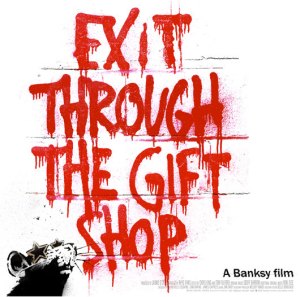
1) Best Picture — Exit Through The Gift Shop

People either love this film or they hate it.  I love it.  I think it’s a great mindfuck and, as of now, it’s my favorite film of 2010.  In a perfect world, it would not only be the first documentary to be nominated for best picture but the first one to win as well.  Unfortunately, the Mainstream hates having its mind fucked.  Which is why I say — Grindhouse Victory for Exit Through The Gift Shop!

2) Best Picture — Animal Kingdom

This grim yet compelling Australian crime thriller plays like an unromanticized version of The Town, which is probably why it will be no where to be seen once the nominations are announced.  Animal Kingdom also features award worthy work from actors Jacki Weaver, Ben Mendelsohn, Guy Pearce, and director David Michod.

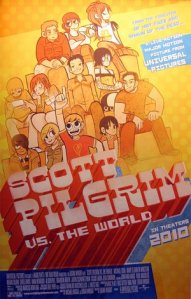
3) Best Picture — Scott Pilgrim Vs. The World

Yes, it crashed and burned at the box office and it’s been the victim of an anti-Michael Cera backlash but Scott Pilgrim Vs. The World was one of the best and most original films of the summer.  If the best movies succeed by creating their own unique worlds, then Scott Pilgrim Vs. The World deserves to be recognized as one of the best.

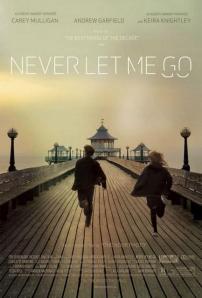
4) Best Picture — Never Let Me Go

Mark Romanek’s low-key but affecting adaption of Kazou Ishiguro’s award-winning novel takes a familiar Sci-Fi plot — clones are raised in seclusion so that their organs can eventually be harvested — and turns it into a haunting meditation on life, death, love, and fate.  Carey Mulligan, who deserved the Oscar last year for An Education, holds the film together with quiet strength while Kiera Knightley and Andrew Garfield make the most of the more showy supporting roles.

5) Best Actor — Patrick Fabian, The Last Exorcism

Yes, Fabian will never be nominated because The Last Exorcism was a box office flop, a horror film, and it had an ending that generated a lot of negative word of mouth.  However, I believe that Fabian gave the best performance of the year (so far) in this film.  One reason why that over-the-top ending upset so many viewers was because Fabian had kept the film so grounded in reality that the sudden appearance of the supernatural almost felt like a betrayal.  Incidentally, I think that Fabian’s performance was meant to be an homage to former child evangelist Marjoe Gortner.  (And yes, I realize that’s like the 100th time I’ve casually mentioned Marjoe Gortner on this site.  It doesn’t mean anything.  Or does it?)

6) Best Actress — Noomi Rapace, The Girl With The Dragon Tattoo

The Mainstream has pretty much already declared Annette Bening to be the winner for her work in The Kids Are All Right but the Grindhouse knows that 2010 was the year of The Girl With The Dragon Tattoo.

7) Best Actress — Katie Jarvis, Fish Tank

Fish Tank probably played too early in the year to be properly remembered by the Academy but that doesn’t change the fact that it’s one of the best films of the year.  Playing an angry but naive British teen, Katie Jarvis gives a fearlessly vulnerable performance.  Just consider the harrowing scene where, after kidnapping her older lover’s daughter, she realizes what a mistake she’s made.

8 ) Best Supporting Actor — John Hawkes, Winter’s Bone

While I hope Winter’s Bone, at the very least, receives nominations for best picture, best actress for Jennifer Lawrence, and a best director nod for Debra Granik, I fear that John Hawkes will be forgotten.  That’s a shame because Hawkes, arguably, gives the strongest performance in the film.  As Lawrence’s drug addicted uncle, Hawkes is both scary and heroic.  If Lawrence represents hope for the future, Hawkes epitomizes the doom of the present.

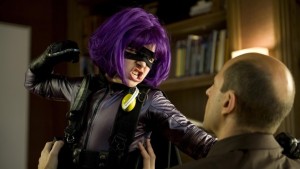
9) Best Supporting Actress — Chloe Grace Moretz, Kick-Ass

If Moretz is nominated, it’ll probably be for her performance in Let Me In.  However, good as she was in that film, I think her performance in Kick-Ass is even better.  Playing the controversial character of Hit-Girl, Moretz was the film’s foul-mouthed, borderline-psychotic heart.

10) Best Cinematography — Twelve

Yes, Twelve is a dire film that manages to turn a good book into a silly melodrama but the movie is gorgeous to look at.

11) Best Original Score — Machete

As performed by the band Chingon (which features the film’s director, Robert Rodriguez, on guitar), Machete’s score was much like the film itself: over-the-top, shameless, and a lot of fun.   In much the same way that Hans Zimmer’s score made you believe in the world of Inception, Machete’s score literally forces the viewer into the proper Grindhouse mindset.

12) Best Original Song — “Pimps Don’t Cry” from The Other Guys

Oh, why not?

13) Best Feature-Length Documentary — Best Worst Movie

A charming documentary about the making of that infamous film, Troll 2, Best Worst Movie is also a look at how a movie can be so amazingly bad that it eventually becomes a beloved classic.

14) Best Animated Feature — A Town Called Panic 

This surreal, French, stop-motion film only played for a week down here in Dallas and I nearly didn’t get to see it.  I’m glad I did because, seriously, this movie — oh my God.  The best description I’ve heard of it comes from Empire Magazine where it was referred to as being “Toy Story on absinthe.”  Of course, since apparently California can’t even handle legalized weed, it’s probably hoping too much that they’ll be willing to drink the absinthe.

As just a sidenote, isn’t the poster for A Town Called Panic just adorable?  I swear, just looking at it makes me feel happy.