Retro Television Review: St. Elsewhere 2.6 “Under Pressure”


Welcome to Retro Television Reviews, a feature where we review some of our favorite and least favorite shows of the past! On Fridays, I will be reviewing St. Elsewhere, a medical show which ran on NBC from 1982 to 1988.  The show can be found on Hulu and, for purchase, on Prime!
This week, the hospital staff is under pressure!

Episode 2.6 “Under Pressure”

(Dir by David Anspaugh, originally aired on November 30th, 1983)

What a depressing episode!

It’s another day at St. Eligius and almost everyone seems to be in a bad mood.  Patients are complaining that Dr. Craig is so obsessed with his heart transplant that he’s ignoring them.  Dr. Westphall wakes up in a bad mood and continue to be in a bad mood for the entire episode.  Dr. Morrison is upset because he’s treating two Irish teens who nearly killed each other because one is Protestant and the other is Catholic.  (One of the teens is played by a young Eric Stoltz.)  Bobby Caldwell has to figure out how to put together the face of one of the Irish boys.  Ehrlich is complaining  nonstop.  Morrison is missing his wife.  Auschlander is dealing with his approaching mortality.  (There’s a wonderful moment when Norman Lloyd rolls his eyes while Auschlander listens to Westphall whine.)

Finally, a man calling himself Mr. Entertainment (Austin Pendleton) took over one of the hospital’s elevators and sang to the patients.  That cheered some people up.  It would have annoyed the Hell out of me.  Mr. Entertainment is checked into the psych ward, where he meets the new head psychiatrist, Michael Ridley (Paul Sand).  (Hugh Beale apparently no longer works at the hospital.  Both he and Dr. Samuels were dropped after the first season, with no onscreen explanation.)  The episode ends with Mr. Entertainment singing for a collection of nurses and doctors and bringing some happiness to their lives.

Everyone in this episode is under pressure.  That’s fine.  That’s realistic.  Being a doctor cannot be an easy job.  But it just made for a rather melancholy episode and I have to admit that I couldn’t wait for the end credits and that meowing cat.

Perhaps next week will be better.
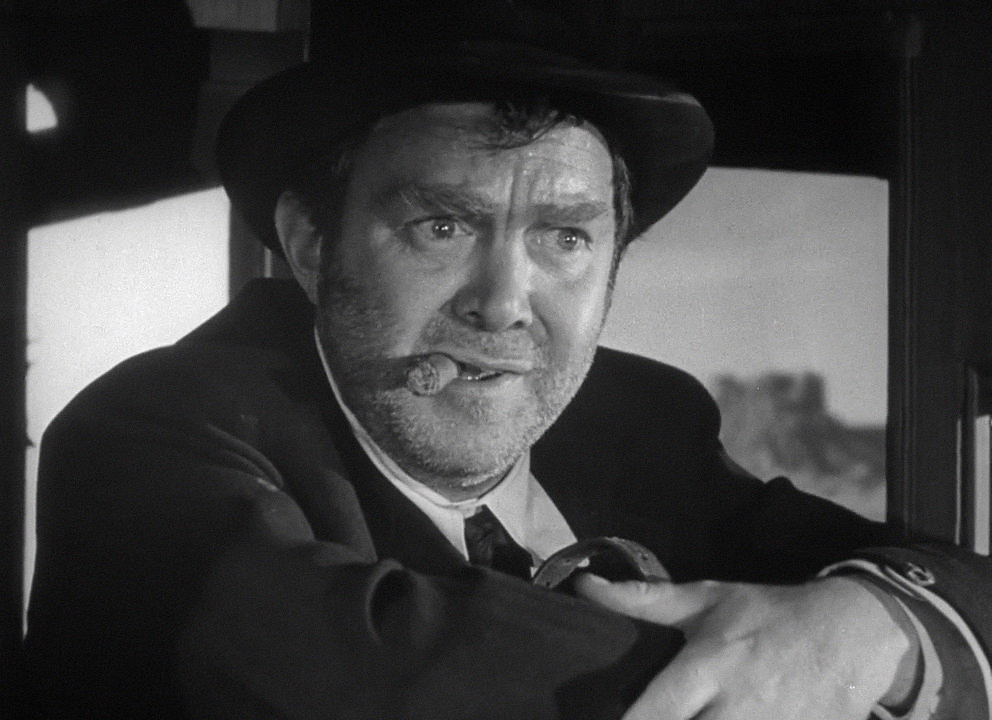
4 Shots From 4 Films – Thomas Mitchell Edition!


4 Shots From 4 Films is just what it says it is, 4 shots from 4 of our favorite films. As opposed to the reviews and recaps that we usually post, 4 Shots From 4 Films lets the visuals do the talking.

I noticed that today, July 11th, 2025, is actor Thomas Mitchell’s 133rd birthday in cinema heaven! I can guarantee that I, along with most of you, watch him every year around Christmas time. I also found out today that he worked with my movie hero Charles Bronson on THE O. HENRY PLAYHOUSE TV series back in 1957. That combination of appearances makes Mitchell about as close to a cinematic immortal as a person can get!

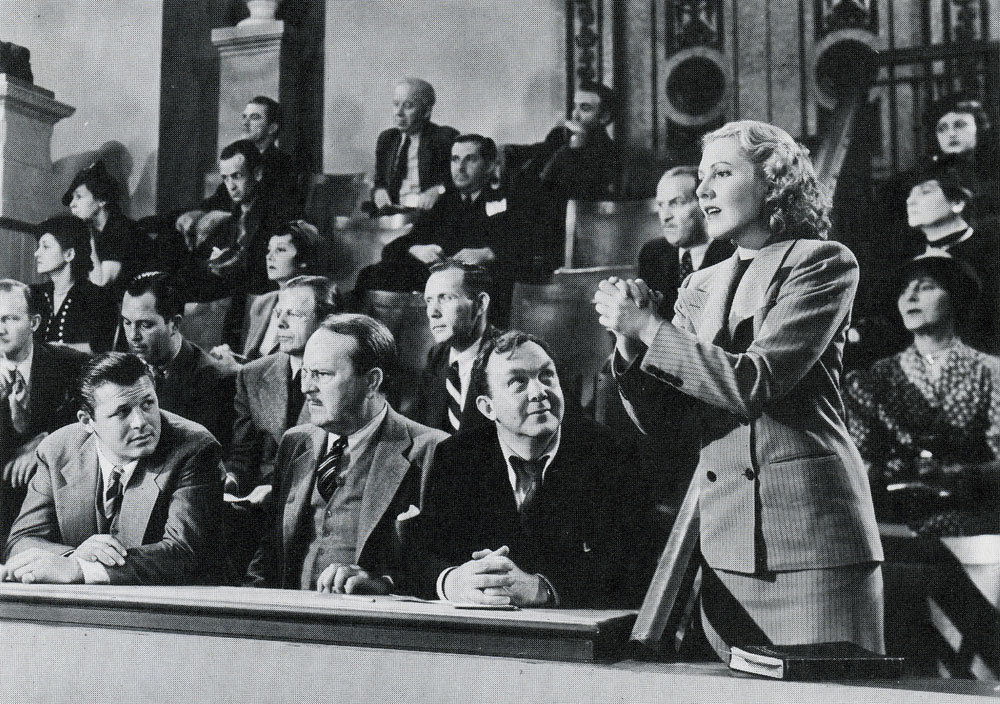
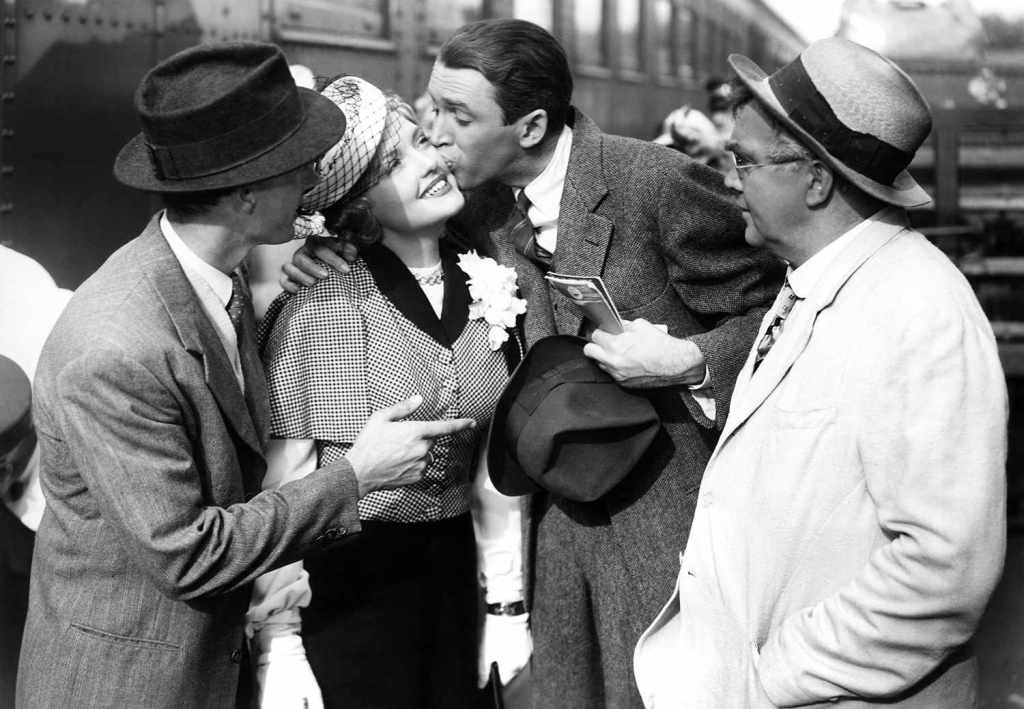
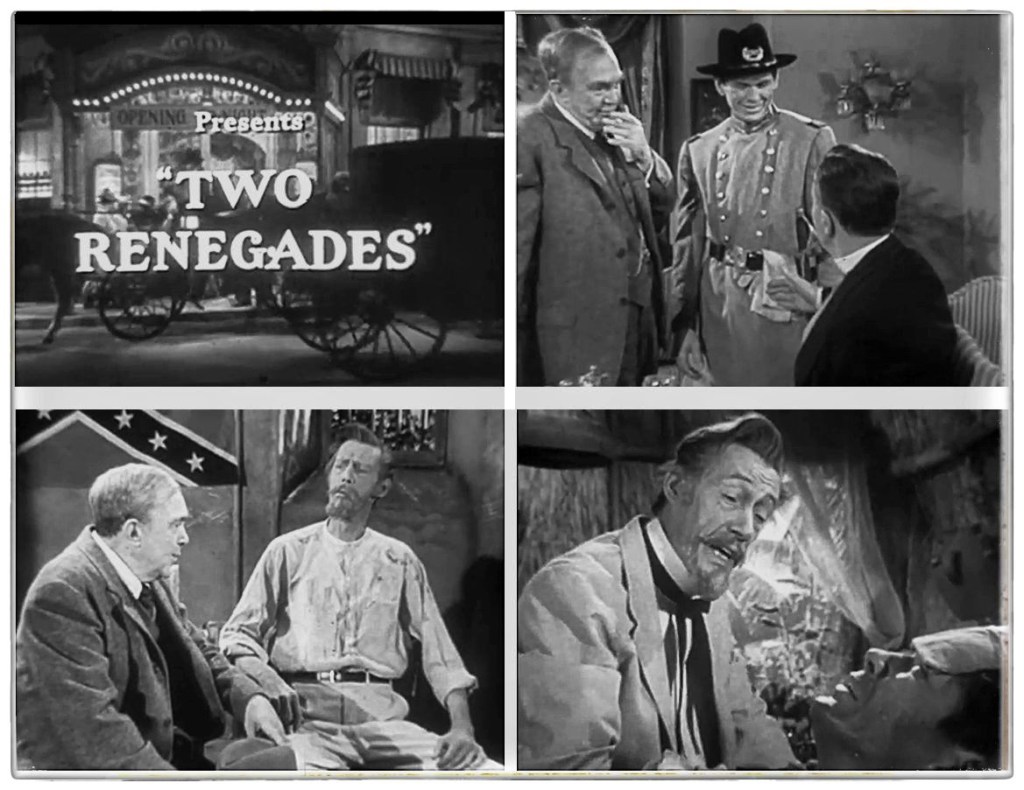
Enjoy 4 shots from 4 films, with Thomas Mitchell!

Stagecoach (1939)
Mr. Smith Goes to Washington (1939)
It’s a Wonderful Life (1946)
The O. Henry Playhouse: Two Renegades (1957)

Brad’s “Scene of the Day” – Standoff at the Cemetery from THE MAGNIFICENT SEVEN (1960)!


Happy Birthday in cinematic heaven to one of the great actors and movie stars, Yul Brynner! Brynner was born on July 11th, 1920, in Vladivostok, Russia. He would win an academy award in his career for his performance as King Mongkut of Siam in THE KING AND I (1956), but I will always appreciate him the most for his part as Chris, the leader of those seven magnificent men on the lookout for justice! In honor of Brynner’s birthday, my scene of the day is from the classic western, THE MAGNIFICENT SEVEN!

Live Tweet Alert: Join #FridayNightFlix for Ninja Warlord!


As some of our regular readers undoubtedly know, I am involved in a few weekly watch parties.  On Twitter, I host #FridayNightFlix every Friday and I co-host #ScarySocial on Saturday.  On Mastodon, I am one of the five hosts of #MondayActionMovie!  Every week, we get together.  We watch a movie.  We tweet our way through it.

Tonight, at 10 pm et, I will be hosting #FridayNightFlix!  The movie?  1973’s Ninja Warlord!

If you want to join us this Friday, just hop onto twitter, start the movie at 10 pm et, and use the #FridayNightFlix hashtag!  I’ll be there tweeting, probably while fireworks shake the windows of my office.  It’s a friendly group and welcoming of newcomers so don’t be shy.

Ninja Warlord is available on Prime and Tubi!

See you there!

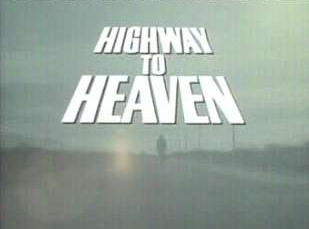
Late Night Retro Television Review: Highway to Heaven 4.4 “The People Next Door”


Welcome to Late Night Retro Television Reviews, a feature where we review some of our favorite and least favorite shows of the past!  On Thursdays, I will be reviewing Highway to Heaven, which aired on NBC from 1984 to 1989.  The entire show is currently streaming on Tubi and several other services!

This week, Jonathan and Mark take on prejudice.

Episode 4.4 “The People Next Door”

(Dir by Michael Landon, originally aired on October 21st, 1987)

Dr. William Martin (David Spielberg) is living a double life.  His family and his neighbors know him as a white doctor who lives in a suburban community and who is a part of the homeowner’s community.  He’s told his wife and his son that his parents died before he met them.

His mother knows him as Dr. Guillermo Martinez, who works at the free clinic in the economically disadvantaged area of town.  Anna Martinez (Mariam Colon) works as a maid and has no idea that her son is married and that she’s a grandmother.

Guillermo changed his name and lied about his ethnicity so that he could get ahead as a doctor and it’s worked for him.  His best friend is Brad Bowman (John Lawlor), the real estate agent who is dedicated to making sure that only “the right people” move into the neighborhood.  But when Jonathan and Mark show up as rival real estate agents and hire Anna to help them clean up the house next door, William/Guillermo is forced to face the truth about who he is.

At the start of this episode, Jonathan tells Mark that their assignment is not only to show William the foolishness of denying his heritage but to also help William’s neighbors become more tolerant.  They definitely help out William but they don’t really seem to have much luck with the neighbors.  Brad Bowman (no relation!) is as much of a bigot at the end of the show as he was at the start.  Jonathan and Mark do arrange for a black family to move into the empty house and then Jonathan and Mark promptly leave the neighborhood.  So, I guess the responsibility for teaching everyone else tolerance is going to be on the new homeowners.  This is one of those episodes where you wish Jonathan had actually gone to extremes to make his point, instead of just arranging for people to run into each other while wandering around the neighborhood.  I know that some people would say, “Well, Brad’s just a bad person,” but wasn’t one the original themes of this show that everyone had the potential to see the light, learn the errors of their ways, and be redeemed?

While the show suggested that there was no hope for Brad to see the error of his ways, it also let Guillermo off way too easy.  His wife was surprisingly understanding about her husband lying to her for years.  And, in the end, his mother was surprisingly forgiving about him lying about the fact that she had a grandson.  Jonathan scolded him briefly but that was pretty much it.  My grandmother, who came to this country from Franco’s Spain, would not have been as forgiving.

This episode was well-intentioned but didn’t quite work.

Brad’s “Scene of the Day” – Train of the Living Dead from TRAIN TO BUSAN (2016)


Korean Actor Gong Yoo was born on July 10th, 1979, in Busan, Korea. He stars in one of my favorite South Korean films, TRAIN TO BUSAN, which also happens to be one of my favorite zombie films. I highly recommend it, and for those interested, it’s currently streaming on Netflix. In honor of Gong Yoo’s birthday, enjoy this graphic and intense scene from TRAIN TO BUSAN.

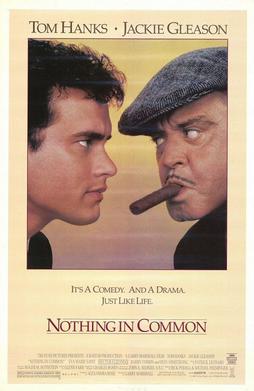
Nothing In Common (1986, directed by Garry Marshall)


Tom Hanks plays David Basner (Tom Hanks), an advertising executive whose immature lifestyle gives him insight into what sells but has also left him totally unprepared to deal with the fallout when his mother (Eva Marie Saint) leaves his father, Max (Jackie Gleason).  David, who is struggling to come up with the perfect commercial for a demanding client (Hector Elizondo), has to come to terms with both his father’s bad health and his history of infidelity.

This isn’t my favorite Tom Hanks movie.  It comes from that awkward period when Hanks was trying to make the transition from comedy to drama and its attempt to mix the two genres is not always successful.  The scenes of Hanks at the ad agency are often so cartoonish that they don’t seem like they belong in a movie where Jackie Gleason loses a foot to diabetes and realizes that he spent his entire marriage emotionally abusing his wife.  The movie, though, is worth watching for the teaming of Hanks and Gleason, two comedic actors who eventually proved themselves to equally as skilled at playing it serious.  Gleason, especially, gives a strong performance.  This was his final film and Garry Marshall convinced him to take it by asking, “Do you really want to go out on Smokey and the Bandit 3?”  Gleason would die a little over a year after the release of Nothing In Common and this film, even if it wasn’t perfect, gave the world a chance to see what a good actor he really was.

This film is often cited as the the movie that started Hanks on the way to becoming a dramatic actor.  Like Punchline, Nothing In Common played a role in Hanks becoming more than just a comedian but  I think Big was ultimately the better showcase for Hanks’s ability to mix pathos with laughs.  Nothing In Common was directed by Garry Marshall and, as was usually the case with Marshall, he often doesn’t trust the audience to figure things out for themselves.  He goes overboard trying to force an emotional response instead of just trusting the material.  Tom Hanks still does a good enough job in Nothing In Common.  Hanks is as likable as always and you can see the dramatic actor emerging in Hanks’s performance even if Hanks still wasn’t totally comfortable with it.

Nothing In Common is flawed but it was definitely a better swan song for Jackie Gleason than Smokey and the Bandit 3.