Before I left for my vacation, I watched several of the free horror movies that are available on Fearnet and, to a large extent, I got what I paid for. That said, seeing as how it is October and how this Horror Month here at the Shattered Lens, I committed myself to reviewing each film that I watched via Fearnet, regardless of how thoroughly awful any particular film might turn out to be.
And that brings us to The Amityville Curse, a Canadian film from 1990 that was made to capitalize on the whole Amityville Horror scam.
In the Amityville Curse, a group of 6 friends spend the night in a haunted house and things work out as you might expect. You’d be justified in assuming that the haunted house is the same house from the Amityville Horror but you’d be wrong. Instead, they’re staying in a different house that just happens to also be in Amityville and which just happens to be haunted as well. (One lesson to be learned from this mess of a movie: when it comes to haunted house stories, it’s often best to keep things simple.)
Apparently, decades earlier, a priest was murdered in the house while taking confession and the local community has scorned the house ever since. However, at the start of the film, a fat, balding guy and his boring wife buy the house and their friends come down to help with the remodel. Unfortunately, one of those friends is played by Kim Coates and, as everyone knows, the minute Kim Coates shows up in a horror movie, he’s going to end up getting possessed and killing a lot people.
Which is pretty much what happens here.
I have to admit that I feel sorry for Kim Coates whenever I see him in a movie like this. Kim Coates (who is currently a member of the cast of Sons of Anarchy) is a talented character actor and, when given the chance, he has proven that he can play likable and sympathetic characters. But, he’s got these slightly off-center eyes and a nervous, jumpy manner about him. As a result, whenever he shows up in a movie, he always seems to be killing people. Whenever I see a talented actor like Kim Coates in a movie like The Amityville Curse, I clench my little hand into a fist and I shake it at the unkind Gods of typecasting.
As for The Amityville Curse, well, what can I really say about it? This is a truly terrible movie, one of the worst that I’ve ever seen. It’s a horror movie without a single scare. It’s the type of movie that I would warn everyone to stay away from except that I doubt this already obscure film will ever again see the light of day.
‘Looper’, the mind bending and smart new time-travel film by Rian Johnson is one of the most effective and balanced science fiction films to be released in the last few years. Its mix of realism and sci-fi elements bring a level of emotion and heart to its own unique and complex universe in a way that reminded me of classics such as ‘Blade Runner’ and ‘Twelve Monkeys’.
The film takes place in a futuristic, though familiar, 2044 city where the buildings are bigger, poverty is more prevalent and organized crime seems to hold much of the power. The focus of the story is Joe (Joseph Gordon Levitt) who is a “Looper”, a specialized assassin hired and trained to kill individuals from the future.
We are told early on through narration that time travel has not yet been invented in the story’s present but it will be in thirty years. In that time it will be outlawed; but criminal organizations who have to deal with increased technological advances in solving murders use “black market” time travel devices to send their living victims back to the present. There they are killed by assassins like Joe, who dispose of the bodies. This leaves no trace of the person’s death in the future, and the Looper is killing and disposing of a body that technically should not exist in his present.
Joe, like other Loopers, is paid well and lives a fairly extravagant lifestyle that includes lots of drinking, drugs, women and nice cars. The only down side of being a Looper is that a provision in their contract states that in the future their older selves will be sent back in time, to be disposed of, by their younger self. This is to “close the loop” as the film explains, a way of disposing of those individuals still around who are no longer needed but have knowledge of these criminal acts.
The main narrative of the story kicks off when Joe’s older self, played by Bruce Willis, is sent back in time to be killed. Joe hesitates when the time comes and ‘Old Joe’ escapes, causing Joe to be hunted by his bosses for this mistake. At the same time Joe tries to track down his older self in an attempt to “make things right”. The situation is made all the more complicated because Old Joe has plans of his own, turning what most going in expecting to simply be an action thriller into a much more complex and emotional story.
The thing that I loved most about Johnson’s “Looper” is how grounded it managed to feel while also still containing some very interesting fictional elements. There is a level of detail in the story to support a whole series of films; but Johnson smartly decided to focus more on the human element. Much of this comes in the second half, and some people will certainly begin to lose interest as the pace slows and the story takes a turn most wouldn’t expect. But for me, this is where the film really comes into its own. This is where they take all the exposition and style that came early in the film and use it to support that much more relatable, and honestly much more interesting, human element. Yes, Johnson could have easily copped-out and turned this into nothing more than a straight forward action thriller but instead he slows down enough to contemplate the themes of regret, sacrifice and loss that most time-travel films tend to ignore.
Of course, whenever anyone makes this sort of film there are continuity and logic issues that tend to pop up. With “Looper”, although one could try to nit-pick and question the logic of this FICTIONAL time-travel film (a rather pointless endeavor if you ask me), most of what occurs works within the narrative. Films such as this, no matter how absurd their stories may at times be, only need to work within the universe created by the writer and luckily it works brilliantly here. Johnson plays around with the ideas of paradoxes and time lines, but the film doesn’t take itself too seriously. Smartly even its own characters acknowledge the “over-complicatedness” of time travel logic.
What it does establish is that things are not fixed. Time, and life in general, is much more ‘cloudy’ and unclear than we might think. And yet, it also hints at the idea that changes in the present don’t have as big of an effect on the future as long as other timelines continue down the path they initially started. In this sense Johnson could make major changes to his character’s present and still promise them that their futures could still be the same. For some this prospect drives them to do unspeakable things. For others this loop that we are caught in, always heading towards the same future, might not be worth the effects it has on those they come in contact with. These questions and ideas, and how the characters choose to approach them, lead to what I felt was a very powerful ending.
Besides the intelligence and heart of the script, the other big surprise here is the wonderful acting across the board. Joseph Gordon Levitt, with the help of prosthesis, truly becomes his character and at times I forgot it was even him. Emily Blunt managed to help anchor much of the story’s heart and her performance truly sold the more emotional moments of the story, which was key to the film’s success.
The true stand out, in my opinion, was Bruce Willis. He brought so many layers to his character, something I haven’t seen him do this well in this sort of film in many years. (He did give another great performance this year in the much different ‘Moonrise Kingdom’). Willis managed to make it so you can not forgive but could at least empathize with his character’s terrible actions. He not only expressed the pains of what he has done, but also sells the ‘necessity’, at least from his perspective, of what is to come. Credit again must also be given to Johnson for providing just enough develop of these characters to support their emotion, motivations and decisions.
I could not end without mentioning the score by Nathan Johnson. A perfect mood setter and at times quite beautiful. I don’t think it gets nearly enough recognition and so I had to mention it. Other than that I’d have to say that ‘Looper’ not only lived up to my expectations, but surpassed them. It did it in a way that reminded me of ‘Drive’ last year. I had a lot of anticipation going in for both but really didn’t know what to expect. What I got from each was a lot of style, great performances, smart scripts and stories that deviated away from the norm; stories that took the risk of focusing on character more than anything and although the end results were totally different than what I expected going in, I could not be more happy with what I got. Because of that I’d say ‘Looper’ is one of the best films of its kind, a soon to be classic, and also one of the best films so far this year. I’d highly recommend this great movie going experience to all.
Season 5 of HBO’s hit series True Blood just ended over the weekend and the verdict seems to be a season that was better than the previous one though still plagued with some slow moments and uninteresting subplots. It also had what many termed as a WTF cliffhanger that should make Season 6 quite interesting. But this post is not about focusing on the show, but one a particular actress in the show who plays one of my favorite characters since she arrived on the scene.
The latest “Hottie of the Day” is none other than Deborah Ann Woll who plays the immature and naively, sweet baby vamp Jessica Hamby. Better known amongst the show’s fans as “Baby Vamp” the character played by Deborah Ann Woll continues to be a fan favorite. It elps that Ms. Woll’s performance as “Baby Vamp” ranges from alluring, sexy yet also sweet-natured. While she may be a gorgeous redhead to behold it doesn’t mean that Ms. Woll’s acting skills are lacking. She’s not just a pretty face for the audience to gawk at. As evidenced by this season’s episode where she says a final goodbye to her first love, Ms. Woll can act circles around her co-stars when allowed to do so.
I’ve also selected Ms. Woll as the latest hottie because sooner or later site co-founder Lisa Marie will complain that there’s not enough redheads being featured. Good thing True Blood reminded me that there is one hot ginger out there right now for me to pick and profile.
The latest “Hottie of the Day” arrives courtesy of the Spanish horror film sequel REC 3: Genesis.
Miss Leticia Dolera takes on the role of Clara who happens to be the bride of the wedding setting that makes up the second sequel to the Spanish horror franchise REC. I won’t go into detail about whether this latest sequel is worth checking out. For some it was and for others it was a major letdown. One thing that everyone who has seen the film could agree on was Leticia Dolera being one of the highlights of the film. Ms. Dolera was something fierce in REC 3: Genesisand her performance made the film worth watching.
A Spanish actress who began her career in 2000 with the Spanish tv series Al salir de clase and who has become a fixture in Spanish entertainment, Ms. Dolera should become even more well-known around the world especially with the genre crowd because of her appearance in performance in REC 3: Genesis. She has that exotic look that Spanish women are always able to pull off without even trying. I wouldn’t be surprised if she one day makes the jump from Spain to Hollywood.
It’s been over a year since I’ve chosen a new “Hottie of the Day”. Fellow site writer Leonard made the last choice with Lynn Collins just in time for the release of John Carter. I thought it was a good follow-up that my newest choice also be just in time for a new film release. Making a second return to the site is the ridiculously beautiful British actress and all-around badass Kate Beckinsale.
Ms. Beckinsale made her first appearance on this feature just a little under two years ago. She now returns just in time for the release of the Len Wiseman directed (aka Mr. Beckinsale) remake of the 1990’s Paul Verhoeven/Schwarzenneger collaboration Total Recall. To say that she shined in every scene she was in during this remake would be an understatement. The film was fun, but Kate and her scenes just made it better if just for those moments.
So, without further adieu time to gaze on the lovely Kate Beckinsale.
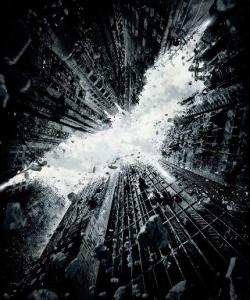
After four years in the making and tons of hype, it’s hard to walk out of The Dark Knight Rises without some disappointment. Some of us won’t get the story we wanted, but that shouldn’t keep one from viewing it.
The Dark Knight Rises isn’t the strongest Batman film that Christopher Nolan’s made. It’s also not the cerebral tango that The Dark Knight was, but it does present a unique problem for Bruce Wayne and the city of Gotham that left me shocked that they went there. On top of that, the movie gives a sense of closure in such away in that you can almost forgive Nolan for every ambiguous ending he’s given us since Batman Begins.
The Dark Knight Rises takes place about eight years after the events of The Dark Knight, with Gotham City a better place after the creation of the Dent Act. Named after the fallen DA Harvey Dent, the Dent Act allowed for the Gotham Police force to round up most of the major mob bosses, based off the truths hidden by Commissioner Gordon (Gary Oldman) and Batman (Christian Bale). The Act renders the Batman unnecessary (as he’s also considered a vigilante by the police) and Wayne himself has become a recluse, rarely venturing out of Wayne Manor. He keeps pretty much to himself with only Alfred (Michael Caine) to talk to. Both his body and business are wracked with damage, either by neglect or from the years of abuse.
When a new enemy appears, Wayne decides it’s time for the Batman to reappear, though he receives warnings from Alfred that his ego may be a little too much here. The theme of Batman Begins was Fear. I felt that the theme of The Dark Knight was Chaos. The theme of The Dark Knight Rises for me was more along the lines of Rebirth. Being the Batman, Bruce Wayne believes himself to be unstoppable, but that hubris gets him in more trouble than he plans, and he eventually has to get past that if he’s going to save Gotham and himself from the threat. That’s the rough plot, without giving anything else away.
Of all the characters / actors, I like that Anne Hathaway’s Selina Kyle is never really named as Catwoman. She may literally be the best Catwoman on-screen from a real world perspective. Truth be told, there was nothing cat-like about her, other than how graceful she was. We know who she is, but in Nolan’s universe, characters are given more solid backgrounds. Without making it a comic character type – like Batman Returns or going over the edge like in Halle Berry’s Catwoman, Hathaway’s Kyle was just right. She seems like she had so much fun working on this, and her scenes really worked well for me. Give this girl her own movie, please.
And then we have Bane. In the strangest role I’ve seen Tom Hardy in since Star Trek Nemesis, his Bane is like someone dressed up wrestler Kevin Nash, and gave him Blofeld’s voice from the Bond Franchise. Where Heath Ledger’s Joker was more about handling things with mind games, Bane’s approach is more in your face. While he lacks the finesse that the Joker had, he’s not the stupid grunting goon you’d come to find in Batman & Robin. This is a calculating villain that takes his crime seriously. He’s not perfect, or used nearly as well as he could, but he’s literally the first bad guy that had me worrying about Batman in every scene they shared. That’s a first.
Between all of the explosions, gunfire and mayhem, the story has to have a heart. The heart of the story comes from Michael Caine, who gives one of his best performances of the series. As someone who’s walked the road with Wayne and is pained by where it’s leading him, their relationship becomes further pushed by both Alfred’s actions in The Dark Knight, and Bruce’s ego on stepping back into the suit. He gives some of the best emotional parts of the story and without him, I don’t think the film would be as powerful. Gary Oldman also adds a sense of heart from the police side of things, as he’s wracked with guilt over having the carry the secret of what really happened to Harvey Dent. Joseph Gordon-Levitt’s beat cop was the man on the scene, and for me felt like he was ushering in a new kind of cop in Gotham, one who followed the rules and wasn’t so corruptible (because let’s face it, some of those Dark Knight cops were dirty). Marion Cotillard rounds out the cast as Miranda Tate, who more or less plays the Vicki Vale of the series. Personally, I didn’t see the need for trying to give Wayne a would be love interest, but considering the character was still pained over the loss of Rachel Dawes, it made sense.
On a Cinematography level, Academy Award Winner Wally Pfister gives us some grand shots of Gotham city on a whole, from it’s streets during the evening to the daytime landscapes. Most of it seems larger than life, really. While I have yet to see the film in it’s IMAX format, I can’t imagine it’s not impressive. The editing has also been tightened in what seems like an effort to fix the problems from The Dark Knight.
If the movie has any weak spots, it’s not in the acting, the action or the direction. It’s the writing. The movie gives us an impressive challenge in presenting dangers that affect all of Gotham and that was downright incredible in what was presented, but in hindsight, it all boiled down to almost the same problem that was introduced in Batman Begins, save that its escalated to a higher level. I found that just a little annoying and disappointed, but understood why it went that route. One could say that it’s similar to Return of the Jedi in that you have another Death Star that could cause a problem, but the stakes in taking it out are that much greater. The same applies here. The performances surrounding the issue are greater, but you’re still dealing the same story arc, it felt like.
What ultimately saves the film is the closing. The Legend does indeed end, and in a way that gives some closure in a much shorter amount of time than Return of the King. The last twenty minutes of the film are worth the time it takes to get there. When I try to think of how the story could have been improved, I really can’t come up with anything.
Again, The Dark Knight Rises isn’t the strongest story of the Nolan Franchise – that’s still The Dark Knight – but it’s a better 3rd chapter than many of the ones out there and may end up being my personal favorite overall.
Well, here it is mid-June, and I’ve yet to write any album reviews. Getting back into the habit is the hardest part, especially in the wake of one of the finest years for music I can recall. But after half a year of enjoying 2011’s finest fruits, I can no longer pretend that there are no new releases out there. Serpent Sermon seemed like a logical place to begin. Marduk, after all, have been lurking in the shadows for 22 years now, and it’s nice to start things off somewhere familiar.
Video removed by the capitalist pigs at Century Media who don’t want you to sample their products before buying them.
Serpent Sermon
I had very mixed expectations going into Serpent Sermon. The band has gone through a number of transitions over the years, and since the replacement of vocalist Legion with Mortuus in 2004 they just haven’t appealed to me all that much. On the other hand, last year’s Iron Dawn ep was some of the most appealing material they’ve yet released. I read that the band did not intend Serpent Sermon to be a continuation of Iron Dawn, but you never know.
This album kicks off in typical Marduk fashion, with blast beats entering precisely where you expect them and, soon enough, that quintessential Marduk climbing chord progression (around 1:25). The song briefly perks up with a strikingly catchy chorus twenty seconds later, then repeats, with some nuance variations and a particularly tortured howl out of Mortuus towards the end.
It is immediately apparent that, just as the band had stated, Serpent Sermon does not take the same approach as last year’s effort. But where it is headed is hard to say. My love/hate relationship with Mortuus shines in the opening track, where he bores me to tears at 1:10 and 2:20 and then gives me shivers at 3:45. It feels to me as though the singer and the rest of the band aren’t always on the same page. Where they hit it off they’re better than ever, but they just as often seem to be in opposition. Do Mortuus’s twisted vox require a stronger break from standard Marduk riffs than Morgan Håkansson and co are ready to grant, or does he ham it up just a bit too much to lend the songs consistency? Serpent Sermon exemplifies a persistent problem throughout the album: a lot of songs have their greatness broken by sudden lapses into drivel.
Video removed by the capitalist pigs at Century Media who don’t want you to sample their products before buying them.
Messianic Pestilence
The more I listen to the album, the more I am inclined to define it by Mortuus and Håkansson’s successes and failures to engage each other. The album as a whole is widely varied in style, much to its benefit. It provides samples of the various ways in which the band functions together, sometimes for better and sometimes for worse. On tracks like Messianic Pestilence, Mortuus willingly embraces an older school of Marduk with great success, and you get a taste for what they might sound like today if no real stylistic variance had accompanied 2004’s change in lineup. Good stuff, but nothing new.
Video removed by the capitalist pigs at Century Media who don’t want you to sample their products before buying them.
M.A.M.M.O.N.
But M.A.M.M.O.N. is where it really all clicks. From the driving blast-beat opening, erratic deviations into darkness and twisted chaos writhe forth. The initial sudden cessation of aggression is complete, giving Mortuus uncontested center stage, and from the ooze he spews across the soundscape a chaotic torment of guitar fury explodes. The entire song structure repeats, typical of Marduk, but in the end we are treated to a twisted amalgamation of slow, demented guitar tones laid over seemingly incompatible blast beats that give off an air of madness. On this track more than any other, I really feel as though the band has all come together and really accepted their own new sound without any misgivings.
That being said, I must confess that I’ve barely given Marduk’s last few full-length albums the time of day. I listened to them in the background a handful of times at best and quickly lost interest. It is quite possible that what struck me as great on M.A.M.M.O.N. was nothing “new”, and I simply failed to notice it before. But either way, I think it’s Serpent Sermon’s strongest point.
Video removed by the capitalist pigs at Century Media who don’t want you to sample their products before buying them.
Into Second Death
What makes late ’90s/early 2000s era Marduk my favorite is its unrelenting, almost comical brutality. Songs like Christraping Black Metal and Fistfucking God’s Planet are so aurally and lyrically offensive that I can’t help but love them. The whole Swedish black metal sound is perfect for this sort of thing. It’s a style with little room for variation, and it always seems to work best for me when taken to extremes, whether the result is comical, as on Panzer Division Marduk, or gut-wrenching, as on the Iron Dawn ep. I would absolutely love to hear a follow-up of Iron Dawn, but in the meantime, harking back to Panzer Division, let’s not forget that this band has a sense of humor.
If they didn’t, I don’t think Into Second Death would be entirely possible. It’s the most “black and roll” song I’ve heard since Carpathian Forest released Fuck You All!!!! (one of the best things to ever happen to metal), and if Marduk could throw together a full album of it I would be absolutely delighted.
As a whole, Serpent Sermon has a lot of ups and downs. Expect a lot of variation both in style and in quality (at least by Swedish black metal standards). It is no landmark album, but it’s true to Marduk past and present, and as such it’s better than most else out there. At the same time, it leaves me really wondering where the band is headed. It’s a definite to be continued… M.A.M.M.O.N. showed a lot of promise for the path they’re currently on, while the album’s total distinction from Iron Dawn leaves me wondering whether the band has had two separate full lengths in mind all along. On the other hand, you just know they’re going to love playing Into Second Death live, and my biggest hope is that that inspires an album.
I’ll admit that I’m not very experienced in writing about The Hottie of the Day. The things that move me about women may not be what moves everyone else. Along with that, you have to find something really cool and interesting to say about the subject, when in fact, you’re taking the phrase “Wow, she’s hot.” and expanding on that. Maybe if I get better, I’ll do more.
This may be a tough one, though.
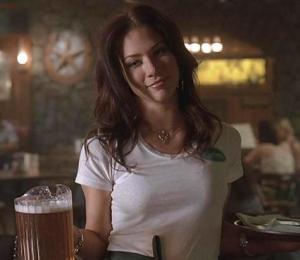
My last entry in this part of the Shattered Lens was Olive Oyl. On seeing John Carter this past Friday, though, I couldn’t take my eyes off of Lynn Collins on the scenes she was in. Playing a princess with a warriors spirit (and an awesome tan), Collins quit smoking and went through a bit of training for the fight sequences. For this, and a number of other example, she becomes the Shattered Lens’ Hottie of the Day for March 11, 2012.
If she looks at all familiar, it’s probably because she’s had a number of films under her belt. Although she had a small part in Joel Schumacher’s “The Number 23” some years ago, Collins may be remembered best as Wolverine’s former love in X-Men Origins: Wolverine. In that film, she played Kayla Silverfox, a mutant with the ability to sway people’s minds via touch. She was later featured in Alan Ball’s Towelhead, as the girlfriend of the protagonist’s father. Ball would later go on to feature Collins in the first few episodes of HBO’s True Blood as Dawn, one of the barmaids at Merlotte’s who had a tryst with Jason Stackhouse. Though her character didn’t last through too many episodes, she made her short stay a memorable one.
Lynn has been in a number of independent films, such as Numb with Matthew Perry, where she had to deal with Perry’s penchant for Kleptomania. She also starred in Uncertainty with Joseph Gordon-Levitt. Collins, a mix of Irish and Native American backgrounds, is married to fellow actor Steven Strait, who was in The Covenant (also with John Carter’s Taylor Kitsch) and Roland Emmerich’s 10,000 B.C.
Here’s hoping that we see a lot more of Collins in the years to come.
On a side note, I wouldn’t mind if it’s her face behind Tali’Zorah’s Quarian mask in Mass Effect 3. That’s just me. 🙂
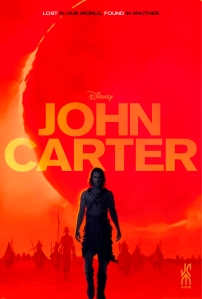
John Carter is a cute Disney film that you may enjoy more than you’d thought you would. It’s lively like The Rocketeer was and really has some great moments and interesting characters. Both the leads carry their roles well, and are eye candy for the audience. It’s worthy of all of the love it should get, but obvious comparisons to movies that came before it (even though the story predates those films), along with a shockingly forgettable score by Michael Giacchino may actually hurt it. If you’re expecting blood and guts, not so much. It’s a Disney film. The kids should love it, though the pace of the film in the beginning may seem a little slow for younger audiences. Skip the 3D version and go for the 2D instead.
The Longer Version:
It’s really sad when you see a movie that deserves all the love in the world, but for some reason just doesn’t quite hit the mark. Part of that is due to the way this was marketed. It really didn’t feel to me that Disney was putting their all behind this. When you look at how heavily marketed Tron: Legacy was, this seemed like a “Hey, we made it, just give us money.” kind of push.
As far as John Carter is concerned, maybe it’s better to look at it like this. We tend to compare things to make sense of them:
This object reminds me of that object.
All of James Cameron’s Avatar reminds me of Ferngully.
Remember, Short Controlled Bursts. What movie comes to mind when I say that?
This is ultimately the problem with Andrew Stanton’s John Carter. In watching it, you’ll end up making comparisons to so many other films that came before it. However, knowing that it was based on the stories of Edgar Rice Burroughs, it’s a lot like seeing Lord of the Rings for the first time when all you know of Elves and Dwarves comes from Dungeons & Dragons, The Elder Scrolls games or World or Warcraft. Burroughs’ material predates just about everything it showcases, from a pop culture standpoint. Hell, for all I know, John Carter was probably the original inspiration for the Kwisatz Haderach in Frank Herbert’s Dune (though that’s just my speculation). The problem is, with comparisons being what they are, audiences may view John Carter as a copycat of all the movies that were probably influenced by it.
I didn’t walk into John Carter with a lot of expectations. Andrew Stanton, for me, has the track record of being Pixar’s Dark Horse. This is the same guy that killed off a mother and a hundred of her babies in the opening moments of Finding Nemo. A man who gave a bleak, dirty and desolate future in Wall-E. Yet, both of those films had a theme of love and of heroes that rose to the occasion, so seeing the previews for John Carter told me enough.
John Carter is the story of a man in search of a cave full of gold. He wants no part of anyone’s battles and when he’s asked to join a faction, he does his best to avoid it. This leads him to a situation where he’s transported to another world. Just as it was with Earth, he encounters a number of different factions (all of which seem to feel he could aid them), but he simply wishes to return home. When he meets a fierce female fighter (who also happens to be a scientist), they work on figuring out how he arrived on Barsoom and how to get back.
The beautiful thing about John Carter is that it really feels like one of those old serials, or to make a more modern comparison, like an adventure film on the Indiana Jones level of things. There are a number of scenes where I found myself genuinely laughing at what was on screen. The visuals could be better in some places, but it’s nothing that’s groundbreaking. I look at John Carter as a pop culture lesson. You can see where other stories have used elements in the Burroughs tale. In that, it worked for me. The action scenes were really enjoyable for me, but some of the scenes between that could have been tighter. When you find out the reasoning behind Carters arrival, you may end up wondering why more wasn’t done with it with that story arc (on a technical level, anyway). As I’m unfamiliar with the original John Carter stories, I watched a few interviews of the cast and Taylor Kitsch noted that in the books themselves, Carter was pretty much the same person through every one. Stanton added a bit of character depth to him, with a little help from Spider-Man 2 scribe Michael Chabon. Chabon’s also responsible for the great Wonder Boys and The Adventures of Kavalier and Clay, which I still haven’t finished as of this writing. Carter is a conflicted individual for Disney purposes, but you shouldn’t expect Oscar performances here. It’s far better then Immortals was, in that sense.
Both Taylor Kitsch and Lynn Collins do well with their roles. Having worked together for about a hiccup in X-Men Origins: Wolverine, they have a good chemistry together. Kitsch is gruff with his mannerisms, and I can almost forgive him for playing Gambit. Collins is beautiful, statuesque even, and her character really does a lot of damage, fight wise. She’s very strong in some areas, though later on in the film, it felt like they may have eased that down a bit. Willem Dafoe has an inspired role in the leader of one of the alien groups that find Carter first when he arrives in Barsoom. Of course, no film would be complete without a villain and John Carter features two in Dominic West (Zack Snyder’s “300”) and Mark Strong (who’s almost always a go to bad guy). West’s character is more of the take action baddie, while Strong’s character is more of a calculating, behind the scenes one. Of note are Samantha Morton (“Minority Report”) as Sola and a little creature called Woola, that really reminded me a lot of Dug from Disney / Pixar’s Up. I wouldn’t mind having a few of those around the house.
The music for this film worked when the scenes were slow. However, when it called for action, I really didn’t feel anything special about it. I stayed to watch the credits only to find that it was Michael Giacchino’s work, who’s normally really good. I don’t know, this one seemed like it was phoned in for the action scenes. It’s okay, but I didn’t have that urge to buy the soundtrack afterward (which I have done for more memorable scores after leaving the theatre).
Overall, John Carter was a fun film in the vein of Disney’s earlier movies, but it’s not anything you absolutely have to run out to the theatre for. I’d love to see it do well and hope that there’s a sequel on the way, but when you’re paying a good $15 dollars for a 3D movie ticket ($20 for an IMAX 3D showing), the visual return on investment isn’t all that great. The story was enjoyable and didn’t slow down too much, but you may find yourself thinking that you’ve seen this film before in the way that so many other movies reference Burrough’s tale.
As a bonus, Disney released 10 minutes of the film. Enjoy:
Last Night, while getting ready to see John Carter, one of the trailers shown was for Pixar’s Brave. It’s one I haven’t seen before, but I really like the way it ended. Here, suitors perform in an archery competition for what appears to be Merida’s (Kelly MacDonald) hand in marriage. Looks like fun!























 Through the Shattered Lens