Retro Television Reviews: Fantasy Island 3.6 “The Red Baron/Young At Heart”


Welcome to Retro Television Reviews, a feature where we review some of our favorite and least favorite shows of the past!  On Tuesdays, I will be reviewing the original Fantasy Island, which ran on ABC from 1977 to 1986.  Almost entire show is currently streaming is on Youtube!

This week, Tattoo gets bullied and Mr. Roarke gets psychedelic!

Episode 3.6 “The Red Baron/Young At Heart”

(Dir by Earl Bellamy, originally aired on October 27th, 1979)

This week, Tattoo greets Mr. Roarke while disguised as Frankenstein’s Monster.

Tattoo explains to Mr. Roarke that he’s trying to look scary because there’s a bully that’s picking on him “because of my size.”  OH MY GOD, POOR TATTOO!  Seriously, my heart broke for him when he explained the reason behind his disguise.  As usual, Mr. Roarke was far less sympathetic and ordered Tattoo to put on his usual white tux so that they could greet their guests.

This week’s fantasies ….. well, let’s just get straight to the point.  Neither one is particularly memorable.  In the first one, Cornelius Wiselfarber (Don Adams) is an expert on World War I whose fantasy is to experience the real thing.  From the start, this storyline has two huge flaws.  Number one, it makes the mistake of assuming that a character is automatically funny just because he has a silly name.  Secondly, what expert on World War I would seriously want to experience it firsthand?  There’s a reason why World War I was called the Great War.  It was one of the most destructive and wasteful conflicts ever fought, one that will be forever identified with the horrors of trench warfare and mustard gas.  Thousands died, many more were wounded both physically and psychologically.  Even those who survived with their bodies and their minds intact still ran the risk of catching the Spanish Flu.  This is one of those fantasies that just doesn’t make any sense.

That said, Cornelius gets his chance to experience what it was like to be a World War I flying ace.  He even meets the Red Baron (Ron Ely)!  The majority of the fantasy is played for laughs, with Mr. Roarke continually mispronouncing Cornelius’s last name and Cornelius himself getting recruited, by the Resistance, to pretend to be a German officer behind enemy lines.  It falls flat, mostly because Don Adams himself doesn’t seem to know whether he wants to play his character straight or as a variation of his bumbling secret agent, Maxwell Smart.  By the end of the fantasy, Cornelius says that he now understands how terrible World War I truly was but, seeing as how he didn’t see much combat and spent most of his fantasy trading one liners with Monique of the Resistance (Martine Beswick), you have to wonder how that could be.

As for the second fantasy, Helen Phillips (Diana Canova) is a 40-something nurse who wants to be young again.  Mr. Roarke gives her a magic potion to drink.  Drinking the potion leads to Helen having a psychedelic vision of Mr. Roarke explaining that that the potion wears off after 12 hours so she’ll have to keep drinking it if she’s going to remain young.

No longer having to wear glasses and without a touch of gray in her hair, Helen meets and falls for a handsome young named David Hanks (David Ladd) but she worries about what will happen when she runs out of the potion and he discovers that she’s old enough to be his mother.  Fear not!  It turns out that David has been drinking the potion as well!  He’s actually in his 50s and his fantasy was to be reunited with the nurse who looked after him when he injured himself as a young man!  To be honest, the twist felt a little bit too convenient and the old-age makeup worn by both Canova and Ladd was not particularly convincing.  There was also an oddly played scene in which Helen’s ex-fiancé (played by Dave Madden) came to the Island searching for her but then promptly left when he discovered that Helen and David were in love.  On the plus side, I did like the psychedelic Mr. Roarke scene.

As for Tattoo, he resorts to disguising himself as a vampire in his attempt to scare off his bully.

Later, when it is time to bid farewell to this week’s guests, Tattoo shows up wearing dark glasses because his bully gave him a black eye.  Mr. Roarke finally shows some concern about the fact that someone is harassing his assistant manager.  However, when Tattoo reveals that his bully is a chimpanzee wearing boxing gloves, Mr. Roarke laughs and laughs.

Seriously, Mr. Roarke really hates his second-in-command.

Retro Television Reviews: Hang Time 5.11 “Finals Fury” and 5.12 “The Upset”


Welcome to Retro Television Reviews, a feature where we review some of our favorite and least favorite shows of the past!  On Mondays, I will be reviewing Hang Time, which ran on NBC from 1995 to 2000.  The entire show is currently streaming on YouTube!

The Tornadoes are going to the championship tournament …. again!

Episode 5.11 “Finals Fury”

(Dir by Miguel Higuera, originally aired on November 27th, 1999)

The Tornadoes are once again in the championship tournament, which means that it is once again time for Hang Time to make use of its University of Indiana set.  As Coach K. explains, the team cannot afford to lose one game if they want to be the state champions.  Unfortunately, Michael is currently playing like crap, missing easy shots, getting distracted, and even getting so angry over a call that he gets thrown out of a game.

What’s the problem?  Michael’s lifelong but never previously mentioned rival is also at the championship and he is continually taunting Michael, whether from the stands or on the court.  Michael gets so upset that he can’t concentrate.  Coach K. decides that the best way to solve this problem would be to get kicked out of the game.  So, Coach K yells at a ref until he’s sent to the locker room.  At half-time, Coach K. tells Michael that now he knows what it’s like to be abandoned in the middle of a big game.  I’m not really sure that I follow Coach K’s logic here but the important thing is that it somehow causes Michael to play better and Deering once again wins by one basket.  They won despite not having a coach on the floor so maybe the real point of this episode was that Coach K really wasn’t that important.

Meanwhile, Antonio runs into an old friend from Texas and attends a frat party.  Even though Kristy trusts Antonio, she still gets jealous when one too many sorority girls say hi to her man.  At the next fraternity party, Kristy and Mary Beth sneak in, wearing fake beards and pretending to be frat pledges.  Yes, it’s another wacky disguise plot!  I usually hate wacky disguise plots but I’ll make an exception here because Jay Hernandez is just so unbelievably likable an Antonio.  In a Hang Time first, Antonio doesn’t overreact to Kristy and Mary Beth spying on him but instead gives them a fraternity paddle as a gift.  It was kind of sweet.

Still, you have to wonder how Coach K would have felt about Antonio going to a party on the night before a big game.  Remember when Coach K made the team sign that stupid contract, promising not to party, skateboard, or do anything that could possibly make them less effective on the court?  If you do, congrats.  The show appears to have forgotten about it.

Episode 5.12 “The Upset”

(Dir by Miguel Higuera, originally aired on December 4th, 1999)

As the Tornadoes prepare for their next game in the championship tournament, Kristy and Mary Beth notice a familiar face setting up a video camera to record the action.  Why, it’s Ronald!  Who is Ronald?  As Kristy and Mary Beth explain it, Ronald was a kid who they tormented when they were younger, forcing him to wear makeup and totally embarrassing him when he wanted to try out for Little League.  Not realizing that Ronald (played by Micgael Cornacchia) has been permanently traumatized by their actions, Kristy and Mary Beth decide to go say hi.  They’re shocked when Ronald says that he wants nothing to do with them.  They decide to make it their mission to convince Ronald that they’re not as bad as he thinks they are.

I had mixed feelings about this plotline.  On the one hand, I could relate to both Kristy and Mary Beth because it’s always been hard for me to understand how anyone could actually be angry about anything that I’ve ever done.  When Kristy and Mary Beth learned that what they remembered as childhood fun was actually Ronald’s nightmare, I could relate to how confused and guilty they felt and also their desire to fix things with Ronald.  At the same time, Ronald was himself such a jerk that I couldn’t help but feel that he deserved to be miserable.  Ronald gets his revenge by casting Kristy and Mary Beth in a commercial that he’s making for the student union.  (Seeing as how he was a childhood friend of Mary Beth and Kristy’s, I’m assuming he’s a freshman at the University of Indiana.  Are freshmen film students often hired to direct commercials?)  He films Kristy and Mary Beth eating ice cream and then, in the commercial, he transposes their faces on two pigs.  Not cool, Ronald!  Seriously, what a jerk.

While Mary Beth and Kristy are potentially putting their lives in danger by spending time with the obviously sociopathic Ronald, the Tornadoes are looking forward to playing their next game.  Their opponent is from Muncie, Indiana and no one expects the Tornadoes to lose.  Despite Coach K’s warning about getting cocky, the Tornadoes do just that.  Coach K even invites a pro basketball player to come to practice and tell the Tornadoes to never take victory for granted.  Judging by how awkward and stiff the guy was while delivering his lines, I’m assuming he was a real-life player.

Of course, Coach K has a point.  The Tornadoes have gotten extremely cocky, especially when you consider that they rarely seem to win a game by more than one point.  When a local paper refers to them as being “the team of the decade,” the Tornadoes let it go to their head.  (Really, shouldn’t the team of the decade occasionally win by more than a handful of points?)  The game against Muncie is close but — well, you already know that this episode is entitled The Upset.  Do I need to tell you that, this time, it’s Muncie that wins by one basket?

Humbled, The Tornadoes return home and are shocked to discover all of their fans waiting and cheering for them.  Coach K says that he’s proud of the team.  Michael gives a speech in which he promises to bring home the championship next season.  Next season!?  Are any of these people ever planning on graduating!?

I had mixed feelings about this episode.  I liked the fact that the Tornadoes lost the big game because even a good team is going to lose a game or two.  I thought that part of the episode was really well-directed, acted, and written.  But all of the stuff with Ronald was just icky and it made me never want to apologize to anyone.  Still, on the whole, this was a good episode with which to end the season.

Except, of course, there’s two more episodes to go in this season.  We’ll look at them next week!

Retro Television Reviews: Can Ellen Be Saved (dir by Harvey Hart)


Welcome to Retro Television Reviews, a feature where we review some of our favorite and least favorite shows of the past!  On Sundays, I will be reviewing the made-for-television movies that used to be a primetime mainstay.  Today’s film is 1974’s Can Ellen Be Saved!  It  can be viewed on YouTube!

Ellen Lindsey (Katharine Cannon) is an intelligent but depressed teenager who feels that she just doesn’t belong anywhere in the world.  She’s not interested in the money and class-obsessed lifestyle of her parents, Arnold (Leslie Nielsen, back in his serious actor days) and Bea (Louise Fletcher).  At the same time, she’s also not interested in the silly lives of her friends, who spend all of their time chasing boys and talking about celebrities.  Ellen is looking for something deeper and she thinks that she may have found it when she attends a religious retreat led by a charismatic man named Joseph (Michaele Parks).

Everyone at the retreat is very friendly and very dedicated and very concerned with finding more to life than just surface pleasures.  They spend hours listening to sermons.  They spend even longer singing hymns.  The leaders of the retreat emphasize that anyone can leave whenever they want but, if they do, they’ll still be making the biggest mistake of their life.  Ellen is happy because she’s finally found a group of friends who seem to feel the same way that she does about society and materialism.  Joseph is happy because he’s brainwashed another member of his cult who he can now send out to panhandle for him and the compound.

Arnold and Bea are not happy when Ellen runs away to join Joseph’s commune.  When Arnold visits the commune, he discovers a secretive world where outsiders are not welcome.  He also discover that Ellen no longer seems to be capable of thinking for herself.  With the police unwilling to help, Arnold and Bea turn to an enigmatic deprogrammer named James Hallbeck (John Saxon).  Hallbeck specializes in grabbing kids that have joined cults and bringing them back to their parents.  Of course, it’s hard not to notice that neither Joseph nor Arnold seems to be giving much thought to what Ellen actually wants from her life.

Can Ellen Be Saved? is a well-made TV movie that has a lot in common with later films like Split Image and Ticket To Heaven.  As in both those movies, the first half of the film details how cults initially brainwash their members while the second half deals with the sometimes harsh process of reversing that brainwashing.  And, just as in those two later films, Can Ellen Be Saved? features parents who mistakenly assume that their child can be returned to them exactly as she was before.  Though all three of the films feature cults that are definitely sinister, they also feature main characters who were lost before they joined the cult and all three of them end on an ambiguous note, leaving us to wonder if the characters have regained their free will or if they’ve just traded one brainwashing for another.

Along with being a well-written and well-acted film, Can Ellen Be Saved features one of those once-in-a-lifetime casts.  Popping up in small roles are familiar faces like William Katt, Rutanya Alda, and Kathleen Quinlan.  Michael Parks and John Saxon are both convincing as two morally ambiguous characters whose own motives are left enigmatic.  Katherine Cannon is sympathetic as Ellen, whose need to be a part of something leaves her vulnerable to manipulation.  Finally, it must be said that Leslie Nielsen — despite his reputation for having been a dull dramatic actor — is actually very effective as Ellen’s confused but well-meaning father.  Usually, when I watch Neilsen in a dramatic film, I find myself expecting him to wink at the camera or deliver a silly line in a deliberately flat and unemotional tone.  But, in this film, I actually forgot I was watching Leslie Nielsen.  Instead, he just become a suburban dad, trying to understand why his daughter was so dissatisfied with the life that he had worked so hard to give her.

I wasn’t expecting much from Can Ellen Be Saved? but it turned out to be surprisingly effective.

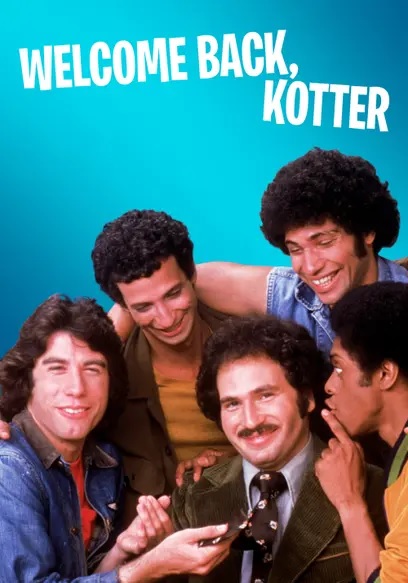
Retro Television Reviews: Welcome Back, Kotter 1.13 “Arrivederci, Arnold” and 1.14 “The Longest Weekend”


Welcome to Retro Television Reviews, a feature where we review some of our favorite and least favorite shows of the past!  On Saturdays, I will be reviewing Welcome Back Kotter, which ran on ABC  from 1975 to 1979.  The entire show is currently streaming on Tubi!

This week, Horshack gets promoted and Julie finally leaves Gabe!

Episode 1.13 “Arrivederci, Arnold”

(Directed by Bob LaHendro, originally aired on December 16th, 1975)

In their tiny apartment, Gabe tells Julie about his uncle, Malcolm Kotter.  Malcolm was a traveling salesman who left an umbrella in his hotel room.  When he went to retrieve the umbrella, he discovered the room was now occupied by a couple on their honeymoon.  Listening to their coital exchange from out in the hallway, Malcolm shouted, “Listen, when you get to the little umbrella, it’s mine!”  For once, Julie laughs at the joke.

At school, Mr. Woodman interrupts Gabe’s lesson on Thomas Edison to announce that Arnold Horshack has been doing so well in Gabe’s class that he is now eligible to attend regular classes.  Gabe is excited because not only does he now feel like a good teacher but he also sees Horshack as a symbol that proves that even the most difficult of students can be taught.  As for the other Sweathogs, they’re just confused.

Horshack, meanwhile, is miserable about going to a class without his friends and he’s even more upset when Gabe tells him that he should try to make new friends and fit in with the regular students.  Horshack is so upset that he goes to Kotter’s apartment building and turns down the heat so that Gabe will leave the apartment to complain.  With Gabe gone, Horshack slips in through the window and begs Julie (who seriously has the patience of a saint in this episode) to convince Gabe to “like me again.”

Awwwwwwwww!

Seriously, Horshack is a character about whom I usually have mixed feelings.  Of all the Sweathogs, he’s always come across as being the most cartoonish.  In fact, one could even say that Horshack’s a bit annoying.  But, in this episode, Ron Pallilo really broke my heart with how he played Horshack’s desperation to return to his old class.  He breaks Julie’s heart too and, after Horshack says that he’ll jump off the highest building in Brooklyn if he’s not returned to his old class (yikes!), Julie makes Gabe see the error of his ways.

How can the Sweathogs convince Mr. Woodman to put Horshack back in Kotter’s class?  They put on a play for him, in which they all talk about how important Horshack is to them.  Gabe plays the role of Horshack, just for the real thing to wander into the classroom and announce, “I don’t have a mustache.”

Woodman agrees to let Horshack be a Sweathog again.  For the most part, I think Mr. Woodman just wanted to escape Gabe’s classroom and return to the safety of his office.  I don’t blame him!

Back at the apartment, Gabe tells Julie about the parrot that his cousin bought for his aunt.  His aunt ate the parrot.

I felt bad for the parrot but otherwise, this was a sweet episode.  I’m glad Horshack returned to where he belonged.

Episode 1.14 “The Longest Weekend”

(Directed by Bob LaHendro, originally aired on January 6th, 1976)

At the apartment, Gabe tells Julie about his aunt Esther, who has always dreamed of getting a singing telegram.

Because she feels like her life has gotten boring, Julie goes to Vermont for a weekend ski vacation.  Gabe says that he’s not worried about her being away from him but then he has a conversation with Mr. Woodman in which Woodman tells Gabe about how his fiancée went to Vermont on a ski trip and never returned because she fell in love with a German ski instructor.  Woodman says that, as far as he knows, his ex is currently living in the Alps with her husband, who is now pretending to be Swiss.  So Mr. Woodman’s fiancée left him for a Nazi war criminal?  No wonder Mr. Woodman seems to have so little faith in humanity!

Feeling lonely, Gabe invites the Sweathogs over to his apartment so that they can play poker.  However, even the Sweathogs realize that this is a strange thing for a teacher to do with his students and they leave after playing just a few hands.  Just as Gabe is about to go up to Vermont himself, Julie comes home early.  Apparently, her friend Candy Lieberman was getting on her nerves by talking too much.

With Julie back from Vermont, Gabe tells her about his Uncle Sanford the lumberjack.

This was an odd episode.  This show works best when it focuses on the school and not Gabe’s homelife.  Other than giving the great John Sylvester White a chance to reveal a little more of just how damaged a person Mr. Woodman truly is, this episode was fairly forgettable.

Next week: The Sweathogs protest the new cafeteria menu!  It’s time for a sit-in!

Retro Television Reviews: The Master 1.10 “The Java Tiger”


Welcome to Retro Television Reviews, a new feature where we review some of our favorite and least favorite shows of the past! On Fridays, I will be reviewing The Master, which ran on NBC from January to August of 1984.  The show can be found on Tubi!

This week, the action moves off the mainland!

Episode 1.10 “The Java Tiger”

(Dir by Bruce Kessler, originally aired on April 13th, 1984)

Max and McAllister go to Hawaii!

I have to admit that I was really excited about this episode, precisely because it did feature Max and McAllister heading to Hawaii.  I love Hawaii.  Some of my favorite memories come from the summer that me, my sisters and our mom spent in Hawaii.  It doesn’t matter how bad a show or a movie may sound, I’ll give it a chance if it features the promise of Hawaii.

Unfortunately, this episode of The Master never really takes advantage of the beauty of the islands.  In fact, other than for a few generic shots of Honolulu, it appears that this episode was filmed in California.  About the only thing that says Hawaii about this episode are the shirts worn by the bad guys and the lei hanging around Max’s neck when he and McAllister check into their hotel.

Max and McAllister are in Hawaii because McAllister has received a letter from an old friend of his, a private investigator/treasure hunter named Leo Fairchild (Dick O’Neill).  Just as with last week, one has to wonder how McAllister got the letter when he doesn’t have a fixed address and he’s supposedly been laying low in America to avoid getting track down by the ninjas who want him dead.  As well, how does McAllister have all of these old friends in the United States and how do they all know that he’s a ninja?  When the series started, the whole idea was that McAllister had been Japan since the end of World War II and that he had spent the majority of that time either being trained or training others.  And yet, as of last week’s episode, McAllister is now suddenly a minor celebrity.

When Max and McAllister arrive in Japan, they meet Leo’s daughter, Shelly (Cynthia Cypert).  Shelly tells Max and McAllister that her father was killed while searching for the location of a priceless statue, the fabled Java Tiger.  Leo, she explains, was the only person in Hawaii to have a map leading to the tiger’s location.  However, whoever killed Leo, stole half of the map.  Now, if she’s going to fulfill her father’s dream, she needs to get that half of the map back.  She’s pretty sure that Kruger (Kabir Bedi), a notorious and greedy practitioner of the martial arts, has the missing half.  So, once again, it’s time for McAllister to put on his black uniform and break into a compound with Max!  When things don’t go as well as Max and McAllister might have hoped, they’re saved by an old friend of McAllister’s….

As you may have guessed, Leo isn’t actually dead.  He faked his own death so that McAllister would agree to help him find the Java Tiger.  As Leo explains it, he needs McAllister to enter the cave where the Tiger is hidden because the cave is full of booby traps and McAllister, being a ninja, is the only man alive who can dodge falling rocks and darts.  And, of course, time is of the essence because the cave is on an island that is also home to a volcano that is about to erupt.

This is what the volcano looks like:

To be honest, there’s something oddly charming about how fake the volcano looks.  I was pretty annoyed that the episode didn’t have any pretty shot of Hawaii but, as soon as I saw that miniature, plaster volcano spewing smoke, I couldn’t help but smile.

McAllister, Max, Leo, and Shelly arrive at the island with Kruger’s men closely behind.  With the volcano erupting all around them, they find the cave and eventually McAllister grabs the Java Tiger.  But, when it appears that Kruger might be killed by a booby trap, McAllister drops the statue and saves the life of his enemy because McAllister is a man of honor.  As a result, no one gets the tiger but McAllister stays true to his ideals.

To be honest, this episode was so silly that it was almost charming.  Unfortunately, the usually reliable character actor Dick O’Neill gives an annoyingly mannered performance as Leo Fairchild, hamming it up and chewing every piece of scenery in sight.  Leo is one of those characters who never stops talking and it’s hard not to get annoyed both the character and the actor playing him.  In fact, so much time is devoted to Leo talking and talking that the episode almost feels like a pilot for a Leo Fairchild show.  Who knows?  Maybe it was.  All I know is that the episode needed more Hawaii and less Leo.

This was a underwhelming week for The Master.  There’s only three episodes left and Max and McAllister don’t seem to be any closer to finding Teri than when they started.  Get to work, guys!  You’re running out of time!

Retro Television Reviews: City Guys 5.13 “Weight on Jamal” and 5.14 “Basket Case”


Welcome to Retro Television Reviews, a feature where we review some of our favorite and least favorite shows of the past!  On Thursdays, I will be reviewing City Guys, which ran on NBC from 1997 to 2001.  Almost the entire show is currently streaming on YouTube!

This week, it’s a trip to the rec center with a stop off at the Manhattan Diner.  There’s only a few more episodes left and this show cannot end soon enough.

Episode 5.13 “Weight on Jamal”

(Dir by Frank Bonner, originally aired on October 27th, 2001)

Here’s the plot description, according to Wikipedia:

Jamal wants to get into USC, but his coach tells him that he isn’t in shape enough to be considered for the team. He starts working out and is offered steroids at the health club. Meanwhile Dawn, Cassidy, Chris and Al have to deal with a cruel pottery teacher. Ms. Hotz scares the students and they eventually fight back. She reveals that she is only mean because most people take her class due to her sexy looks.

Seriously, the pottery teacher is named Ms. Hotz?  Considering that L-Train apparently didn’t take the pottery class, I’m going to guess that he was busy convincing Jamal to give up the steroids.  Since when has Jamal wanted to go to USC?  Plus, didn’t he already get a baseball scholarship?

Eh, who cares?  I’m glad this episode isn’t on YouTube.

Episode 5.14 “Basket Case”

(Dir by Frank Bonner, originally aired on October 27th, 2001)

God, this episode is stupid.

Jamal’s father is out-of-town and he’s left Jamal with a big responsibility.  Jamal has to run the diner, hire some new waitresses, and impress a food critic.  Here’s my problem with this.  Why is the food critic wasting her time with a generic hamburger place that seems to be exclusively used by the students of Manny High?  With all the restaurants in New York, why review that one?  As well, how irresponsible and stupid is Jamal’s father to leave Jamal in charge of the diner when something this important is about to happen?  When has Jamal ever shown that he can handle that type of responsibility?

Anyway, to the surprise of no one, Jamal screws everything up, misidentifies a friend of Ms. Noble’s as the food critics, and can only watch in horror as the actual food critics leaves in a huff due to not even getting a glass of water while waiting for someone to take her order.  Desperate to get the food critic to give the diner a second chance, Chris calls the food critic and pretends to be Jamal’s father.  (It’s just as cringey as it sounds as Chris lowers his voice and laughs heartily at his own jokes.)  The food critics agrees to give them a second chance.  As soon as Chris hangs up, Ms. Noble wanders by and informs Chris, Jamal, and Cassidy that the food critic is in her tango class and that she loves to dance.

This leads to perhaps the stupidest moment ever in the history of this show and that’s saying something.

The food critic returns to the diner.  She has a bowl of soup as Jamal and Cassidy watch.  She tells them that the diner’s food is some of the best that she had ever had.  Now, at this point, Jamal and Cassidy should be happy because the food critic has just told them that she loves the food.  There’s no need to do anything else, right?  Instead of just taking the victory when they can, they decide bring out “the chef.”  The chef turns out to be Chris, wearing a fake mustache.  Chris says that he loves to tango and then spins the food critic right out of the diner.  WHY!?  SHE WAS ALREADY GIVING THE PLACE A GOOD REVIEW!  HOW STUPID ARE THESE PEOPLE!?  Anyway, Ms. Noble then enters the diner and says that actually, the food critic was not in her tango class but in her Bible study class.  WHAT!?

Anyway, the food critic still gives the diner a good review.  She recommends that anyone who likes to tango ask for the chef.  Except, of course, Chris isn’t actually the chef so anyone who asks is going to be massively disappointed.

GOD, THAT WAS STUPID!  And it was only the B-plot!

The A-plot dealt with a rec center, which we’ve never seen before despite the fact that everyone on the show acts as if it’s a huge part of their lives.  Dawn has a crush on the 50 year-old head of the center and when he says that the Rec Center may have to close down due to lack of money, Dawn decides to hold a fund raiser.  Her plans involves a basketball shoot out and apparently, it’s imperative that both L-Train and his new girlfriend, Kianna, compete.  (I’m not sure why.)  However, L-Train worries that competing against his girlfriend will lead to them breaking up.  Kianna reluctantly agrees not to take part in the shoot out but then, at the last minute, L-Train realizes he’s being a jerk and asks her to compete.  And, of course, she wins.

Why did L-Train have a change of heart?  I have no idea but the important thing is that the Rec Center stays open.

This was a dumb episode, all-around.  Graduation cannot come soon enough!

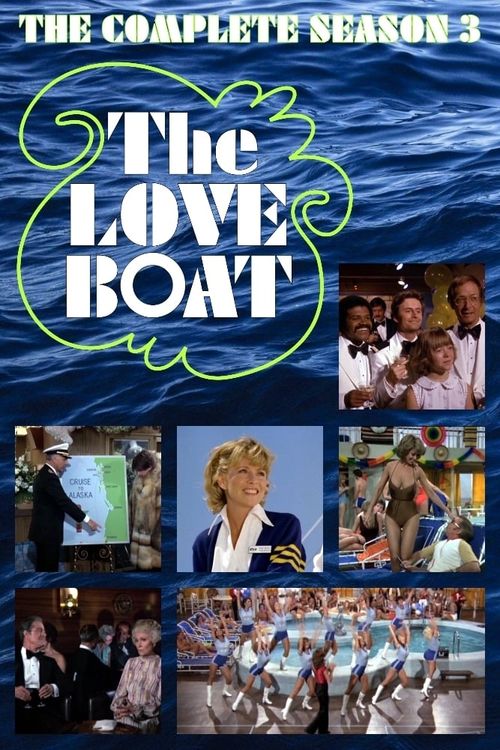
Retro Television Reviews: The Love Boat 2.23 “A Funny Valentine/The Wallflower/Home is Not a Home”


Welcome to Retro Television Reviews, a feature where we review some of our favorite and least favorite shows of the past!  On Wednesdays, I will be reviewing the original Love Boat, which aired on ABC from 1977 to 1986!  The series can be streamed on Paramount Plus!

After the past few cruises, I think we’re overdue for a good episode of The Love Boat.  Let’s see if this week’s episode can deliver!

Episode 2.23 “A Funny Valentine/The Wallflower/Home is Not a Home”

(Dir by George Tyne, originally aired on March 3rd, 1979)

Julie has decided that this week’s voyage is going to have a carnival theme and, in order to get everyone in the mood, she’s hired a fortune teller!  Mary Louise (Samantha Eggar) claims that she can read palms but she’s even more interested in the art of phrenology, the study of heads.  When she sees that Captain Stubing is bald, she can’t wait to see what the top of his shiny head says about his romantic future.  Unfortunately, Stubing is in one of his depressed moods and says that fortune telling is for the young.  He explains that he’s old and he already knows that he’s destined to spend the rest of his life alone.

Awwwww!

Luckily, Mary Louise has other ideas!  The Captain is soon won over by Mary Louise’s free-spirited ways and her joi de vivre.  But the Captain also realizes that, unless he holds a carnival every cruise, there’s really not much place for a fortune teller on the ship.  The best that he can offer Mary Louise is a job in the gift shop.  Realizing that their lives are just too different, Mary Louise leaves the boat without saying goodbye the Captain …. but then she returns to tell the Captain that maybe she will take that gift shop job.

Awwwwww!

But then the Captain tells her that she would be miserable working in a gift shop.  (Hopefully, none of the other gift shop employees overheard him.)  The Captain and Mary Louise part ways.

Again, awwwwwww!

It was a simple story but I have to say that Samantha Eggar and Gavin MacLeod had a surprising amount of chemistry and both of them gave really heartfelt performances in this episode.  I found myself caring about them as a couple and hoping that things would work out.  Of course, I knew things couldn’t work out because then the show would have to find a new captain.

While all that is going on, shy Sylvia (Patty Freedman) has finally taken the advice of her neighbor, Gopher.  She has booked a cruise on the Love Boat!  However, Sylvia is painfully shy and doesn’t even realize that there’s a passenger named Monroe (Zane Lasky) who has a crush on her.  (Of course, Monroe is pretty shy himself.)  Gopher decides that Sylvia needs a confidence boost so he sends her a rose at dinner and tells her it’s from a secret admirer.  Unfortunately, Sylvia becomes so obsessed with finding her secret admirer that she continues to fail to notice Monroe trying to talk to her.  When Sylvia returns to her cabin, she discovers hundreds of roses.  When she tells Gopher about it, Gopher is confused because he didn’t send any roses to her cabin.  For some reason, Gopher assumes that Sylvia is now delusional and that she only thought she saw all of the flowers in her cabin.  Seeking to restore her sanity, Gopher confesses that he sent Sylvia the rose.  Sylvia assumes that Gopher means that he sent all of the roses so, when Monroe confesses to sending the flowers to her cabin, she assumes that Monroe is making fun of her and….

AGGGGGGGGGGGGGGGGGGGG!

Yes, this is another story where all of the problems could have been easily resolved by everyone not acting like an idiot.  But you know what?  As much as stories like this usually tend to drive me crazy, I actually enjoyed this one.  Patty Freedman and Zane Lasky both gave charming performances, even if their characters did things that didn’t always make sense.  I was happy when they finally got together.  This was a rare case where two passengers really did seem perfect for each other.

Finally, the third storyline featured Arthur Godfrey and Minnie Pearl as Ned and Molly, two seniors who were eloping.  Looking to stop the marriage was Ned’s son, Francis (Warren Berlinger), and Molly’s daughter, Rowena (Elinor Donahue).  Of course, Francis and Rowena fell in love and the episode ended with everyone planning to get married in a big double wedding.  This story was pretty predictable and Berlinger and Donahue went a little bit overboard playing their characters as being uptight prudes in their first few scenes.  But, still, at least everyone got a happy ending.

I liked this episode.  The crew was likable, the passengers were charming, and everyone found love.  Yay!

Retro Television Reviews: Fantasy Island 3.5 “The Chain Gang/The Boss”


Welcome to Retro Television Reviews, a feature where we review some of our favorite and least favorite shows of the past!  On Tuesdays, I will be reviewing the original Fantasy Island, which ran on ABC from 1977 to 1986.  Almost entire show is currently streaming is on Youtube!

What I’ve long-feared has happened.

Tubi has removed the original Fantasy Island from its site.  The recently-canceled Fox version can be viewed but not the original.  Don’t get me wrong.  I liked the new Fox version.  But these are Retro Television Reviews and a show that premiered in 2021 is not yet retro.

Fortunately, quite a few episodes are on YouTube and it’s probable that the original complete series will again end up streaming somewhere.  So, I’m going to try to continue to review this show.  I can’t guarantee that I won’t run out of episodes at some point.  For instance, it doesn’t appear that much of seasons 6 or 7 can be found, even on YouTube.  (Unfortunately, it appears that only the first three seasons of Fantasy Island have been released on DVD.)  But I’m going to do my best!

Episode 3.5 “The Chain Gang/The Boss”

(Dir by Michael Vejar, originally aired on October 19th, 1979)

Tattoo has decided that he wants to be an artist!  Mr. Roarke demands to know why because God forbid Tattoo have a life outside of spotting the plane.  Tattoo admits that he wants to get the island women to pose for him.  Mr. Roarke orders Tattoo to abandon his art career and head down to the docks to meet the plane.

The plane is carrying two guests who hope, much like Tattoo, to change their lives.

Cindy Carter (Donna Mills) is a switchboard operator who has a crush on her boss, Brent Bailey (Brett Halsey).  Her fantasy is to be the boss of her own company.  Mr. Roarke grants her wish and soon, Cindy is in charge of her own multi-national corporation.  In fact, her corporation owns Brent Bailey’s business!  Cindy also gets a executive assistant named Gary Pointer (Roddy McDowall).  Unfortunately, it turns out that Brent isn’t a very nice person and he’s been siphoning money out of the pension fund.  He threatens to frame Cindy to keep her from approving an audit of the fund.  However, with Gary’s support and eventual love, Cindy stands up to Brent and reveals his wrong-doing.  Mr. Atwell (Stacy Keach, Sr.), the presumed-dead head of the company, suddenly shows up at the stockholder’s meeting and announces that he faked his own death to discover who was embezzling from the pension fund.  The stockholders applaud as Brent Bailey is taken away from the police.  It’s all rather silly and melodramatic but the likable presence of Roddy McDowall kept the story entertaining.

Meanwhile, Mike Jenner (Dennis Cole) came to the Island to confront Eddie Collins (Cameron Mitchell), the criminal that Mike believes murdered his father and framed him for a theft.  (There’s a lot of theft in this episode.)  Mr. Roarke reveals that Eddie lives in a nearby fishing village.  Mike goes to the village, spots Eddie, and punches him.  Eddie hits back….

….and both of them are sentenced to spend a year on a chain gang!

Fantasy Island has a chain gang!?  And the chain gang is overseen by a redneck named Captain Hawks (R.G. Armstong)!?  Why has this never been mentioned before?  I mean, is it normal to sentence paying guests to spend a year on the chain gang?

Anyway, Eddie and Mike set aside their difference and break out out the prison camp.  (Fantasy Island has prison camps!?)  During their escape, Eddie gets trapped in quicksand.  Mike does eventually rescue him but only after Eddie confesses to having framed Mike’s father.  As soon as Eddie confesses, Mr. Roarke shows up in his jeep.  Apparently, Mike is now free to leave the Island with his fiancee (Pat Klous) while Eddie is sent to the Fantasy Island prison for the rest of his life.  Much as the other fantasy was saved by the reliable likability of Roddy McDowall, this episode was saved by Cameron Mitchell’s grouchy presence.  One could always trust Mitchell to give it his all while playing a bad guy.

With the fantasies taken care of, Tattoo returns to his art.  When he asks his model to pose naked, she destroys all of his paintings while Mr. Roarke laughs and laughs.  Mr. Roarke really does hate his assistant.

Retro Television Reviews: Hang Time 5.9 “Tolerance” and 5.10 “Big Brother Blues”


Welcome to Retro Television Reviews, a feature where we review some of our favorite and least favorite shows of the past!  On Mondays, I will be reviewing Hang Time, which ran on NBC from 1995 to 2000.  The entire show is currently streaming on YouTube!

This week, many important lessons are learend.

Episode 5.9 “Tolerance”

(Directed by Miguel Higuera, originally aired on November 13th, 1999)

Even though none of them have ever been seen or mentioned over the course of the previous 87 episodes, the episode reveals that Deering High is home to several students who dress in black, wear black eye-liner, and who hang out at a coffeehouse called The Morgue.

I know what you’re thinking.  They’re Goths, right?

No, according to Hang Time, they’re called Grotes, which is short for Grotesques.  Uhmmm …. okay.  Was Grote actually a term that was used in 1999?  Maybe it’s an Indiana thing.  Who knows?

Anyway, everyone at school is scared of the Grotes, which makes it awkward when Kristy is assigned to work with one of them for her science class.  At first, Syd (Alicia Lagano) dismisses Kristy as just being a typical popular cheerleader but she’s impressed with Kristy actually shows up at the Morgue.  Kristy learns that the Grotes are human underneath all of their dark makeup and she also realizes that her two best friends are incredibly shallow when they start making fun of the Grotes.  While it’s in character for Mary Beth to be judgmental of someone else’s fashion choices, I was a little bit surprised to see that the show portrayed Julie as being equally close-minded.  Usually, Julie is portrayed as being a near-saint.  You would think that, with all trouble Julie has supposedly had getting people to accept her as a basketball player, she would be a bit less …, well, mean.  Mary Beth makes fun of the Grotes for wearing too much makeup.  Julie goes as far as to say that the Grotes should expect to be picked on if they’re going to insist on being so different.

Kristy decides to teach her friends a lesson by dressing up like a Grote.  At first, Julie and Mary Beth are shocked to see Kristy dressed in black and wearing too much eyeliner.  Later, they’re stunned to learn that Kristy has been beaten up by two non-Grote bullies.  At the homecoming dance, Mary Beth is elected Homecoming Queen and she spends her acceptance speech apologizing for judging the Grotes.  She gives her crown to Kritsy as way to thank Kristy “for teaching me about tolerance.”  The audience goes, “Awwwww!” but it’s hard not to notice that none of the Grotes are at the dance.

Meanwhile, Eugene is dating a woman who has graduated from college!  It turns out that he lied to her about his age.  Despite the fact that everything about Eugene screams “High School Sophomore!,” Eugene convinces her that he’s a college student.  But then Eugene’s girlfriend (Veronica Lauren) is hired to teach at the school!  Uh-oh!  Is Deering about to become a crime scene?  Fear not.  It turns out that Eugene’s girlfriend is a genius who graduated from high school when she was 12 and is only 16 years old.  Uhmm, okay.

This episode aired a year after “A Guy and a Goth,” the episode of City Guys where Chris dated a goth girl and briefly dressed up like a goth himself.  This is actually a rare example of City Guys handling a topic better than Hang Time.  First off, City Guys actually used the term “goth” as opposed to “grote.”  As well, there’s something painfully self-congratulatory about the Hang Time version of this story.  Mary Beth apologizes to the Grotes but there aren’t any Grotes at the dance so it’s not really going to do them a lot of good.  In the end, the audience said “awwwww,” not because Mary Beth was being tolerant but because Kristy, Mary Beth, and Julie agreed to still be friends.

How much you want to bet that we’ll never see Eugene’s girlfriend or the Grotes again?

Episode 5.10 “Big Brother Blues”

(Directed by Miguel Higuera, originally aired on November 20th, 1999)

The Tornadoes are one victory away from making the playoffs!

Yes, apparently, the Tornadoes have been having another successful season.  Up until this episode, we really haven’t heard much about Deering’s latest season.  I imagine this is because Season 5 and 6 were originally meant to be one season before NBC decided to not only split the show’s final 26 episodes into two seasons but also to show the episodes out of order.  Just judging from the episode descriptions that are available on Wikipedia, it appears that most of the basketball episodes were moved to the sixth season.

Anyway, as I said, the Tornadoes are once again one game away from making the playoffs.  However, they have to defeat the Mustangs, a team that Deering hasn’t defeated in over 11 years.  The team is convinced that they’re jinxed.  Coach K. brings in a “jinx exorcist” who works with the NBA.  He dramatically banishes the jinx from the locker room.  With their confidence intact, the Tornadoes dominate the first half.  However, at halftime, they discover that the jinx exorcist was just some random guy that Coach K paid to fool them.  The Tornadoes lose their confidence and nearly lose the game.  In the end, thanks to Silk’s final shot, the Tornadoes win by …. you guessed it …. one point!

Meanwhile, Michael and Silk sign up for the Big Brother program and are assigned to spend time with a kid named Daniel.  Daniel loves hanging out with Michael and Silk but it turns out that Daniel’s mom is a racist who doesn’t want her son to hang out with anyone black.  Daniel still comes to the game but, after the Tornadoes win, he’s dragged away by his mom.  Daniel runs back into the locker room to give Silk a hug but it’s pretty clear that the two of them will never see each other again,

What a sad ending!

This episode featured both Mary Beth and Julie talking about how much they hate it when people are judged by how they look.  Interestingly enough, no one says, “You mean like how you judged the Grotes?”  That said, it was a heartfelt episode with a good message and Danso Gordon does a good job of portraying Silk’s anger and sadness.  The final scene was far more moving that what one would typically expect of a Peter Engel-produced sitcom.

Next week: the team gets cocky!

Retro Television Reviews: Dawn: Portrait of a Teenage Runaway (dir by Randal Kleiser)


Welcome to Retro Television Reviews, a feature where we review some of our favorite and least favorite shows of the past!  On Sundays, I will be reviewing the made-for-television movies that used to be a primetime mainstay.  Today’s film is 1976’s Dawn: Portrait of a Teenage Runaway!  It  can be viewed on YouTube!

Dawn Wetherby (Eve Plumb) is fifteen years old.  She’s naive.  She’s innocent.  She’s …. well, let’s just be honest and admit that she’s not particularly bright.  Sick of being embarrassed by her alcoholic mom (Lynn Carlin), Dawn decides to hop on a bus and travel to Hollywood.  Maybe she can make a new life for herself in California.

Of course, it doesn’t take long for Dawn to discover that Los Angeles is not a city where dreams magically come true.  It’s a tough and harsh town and it’s not like Dawn has any money or any particular skills.  When she tries to get a job, she’s told that she’s too young.  When she tries to rent a room, she’s told that ten dollars is not enough to cover two weeks rent.  When she gives a dollar to a boy who says that he needs it, he responds by mugging her for the rest of her cash.  A prostitute named Frankie Lee (Marguerite DeLain) takes some sympathy on Dawn and tells her to call if she ever wants to make some money.

Eventually, a nasty cough leads to Dawn going to the free clinic.  That’s where she meets Alexander (Leigh McCloskey).  Alexander is a teen runaway, just like Dawn.  However, Alexander also can somehow afford an apartment and food to eat.  Alexander invites Dawn to live with him and Dawn, realizing she has no where else to go, agrees.  Alexander offers to look after her but, after Dawn discovers that Alexander makes his money by working as a male prostitute, Dawn decides that she needs a job of her own.

It’s time to call Frankie Lee!  And it’s time for Frankie Lee to introduce Dawn to Swan (Bo Hopkins), a pimp who lives in a nice house and who offers to put Dawn to work….

Dawn: Portrait of a Teenage Runaway is an earnest film that was obviously made with the best of intentions and which actually did have something say, in its melodramatic way, about the dangers of running away from home and trying to make it on your own when you’re not even old enough to drive.  That said, I imagine that most people who go through the effort to track down this film will do so because it stars The Brady Bunch‘s Eve Plumb as an underage runway who ends up walking the streets and taking men back to her motel room.  The movie might as well be called Jan Brady Goes Bad, because Eve Plumb does essentially give the same performance that she gave when she was playing the whiniest member of the Brady Bunch.  There’s nothing tough or streetwise about her, which works for the first half of the film but not during the second half.  Once Dawn has been on the streets for a bit, you would expect her to toughen up a bit but she still comes across like she’s mad at Greg and Bobby for tying up the phone.  Dawn goes through a lot and becomes a bit jaded as a result but, every time she speaks, you expect her to exclaim, “Why does Marcia get to runaway from home but I don’t?  It’s not fair!”  Far more impressive are the performances of Bo Hopkins and, in the role of Dawn’s probation officer, George Stanford Brown.  William Schallert also has a good bit as Dawn’s first client, who ends up feeling so sorry for Dawn that he just give her twenty dollars and then tells her to go back home.

Dawn: Portrait of a Teenage Runway is one of those film that was obviously designed to make parents worry about their kids.  It seems to be asking, “Do you know where your children are tonight?”  In 1976, I imagine they were busy watching Jan Brady try to make it on the mean streets of Hollywood.