Retro Television Review: Fantasy Island 7.18 “Mermaid and the Matchmaker/The Obsolete Man”


Welcome to Retro Television Reviews, a feature where we review some of our favorite and least favorite shows of the past!  On Tuesdays, I will be reviewing the original Fantasy Island, which ran on ABC from 1977 to 1984.  The show is once again on Tubi!

This week, an acquaintance returns to the Island.

Episode 7.18 “Mermaid and the Matchmaker/The Obsolete Man”

(Dir by Philip Leacock, originally aired on March 24th, 1984)

Nyah (Michelle Phillips) is back!

Okay, maybe you don’t remember Nyah.  This  is Nyah’s first appearance since the fourth season.  In between the last time that Michelle Phillips played Nyah and her resurfacing in this episode, Phillips played five other characters on Fantasy Island.

So, to refresh your memory, Nyah is a mermaid.  During seasons three and four, she tried to tempt men to their death in the ocean and she was presented as being a friendly enemy of Mr. Roarke’s.  In this episode, however, Nyah is a bit nicer.  She’s not malicious as much as she’s just immature.  Roarke, for his part, treats her like a wayward teenager.  Nyah has a fantasy, of course.  She’s tired of being immortal and she wants Roarke to make her a mortal.  Roarke says that he can’t do that.  “You’re the only man who understands immortality!” Nyah says.

Nyah wants to die but instead, Roarke plays matchmaker and arranges for her to meet Duke McCall (Dennis Cole), a sailor who believes in mermaids.  He doesn’t have any issue with Nyah being a mermaid but Nyah, having fallen in love with him, fears that Duke will drown if he tries to pursue her.  Fortunately, for everyone involved, Duke turns into a merman.  Don’t ask me how these things work.  I’m just glad that Roarke didn’t have to kill anyone.

Meanwhile, banker Mitchell Robinson (Bert Convy) fears that he’s going to be replaced by a computer.  Charlene Hunt (Gloria Loring) claims that her computer is just as good at checking loan applications as any human.  She stages a competition between the computer and Mitchell.  Mitchell tries to explain to the computer that it’s important to judge people not just on their credit rating but also their body language.  This somehow causes the computer to explode and Mitchell keeps his job.

“Yay!” viewers in 1984 cheered, “computers will never replace us!”  HA!  Joke’s on you, Mitchell Robinson!

Seriously, you don’t have to tell me about the dangers of a fully automated world.  A.I. is fun for making silly images but it’s going to ultimately lead to a lot of people believing a lot of false things.  But Mitchell was so smug about beating the computer that I’m kind of glad that he still probably lost his job a few years later.  You can’t stop the march of technology, Mitchell!

As for this trip to the Island, the computer storyline didn’t really go anywhere but I did enjoy Michelle Phillip’s return as Nyah.  She and Ricardo Montalban had an enjoyable chemistry and it was fun to watch them bicker.  This week’s episode was uneven but, thanks to Michelle Phillips, it was still more enjoyable the most of what we’ve seen for the seventh season.

Late Night Retro Television Review: CHiPs 4.21 “A Special Operation”


Welcome to Late Night Retro Television Reviews, a feature where we review some of our favorite and least favorite shows of the past!  On Mondays, I will be reviewing CHiPs, which ran on NBC from 1977 to 1983.  The entire show is currently streaming on Prime!

This week, the fourth season comes to an end.

Episode 4.21 “A Special Operation”

(Dir by Leslie H. Martinson., originally aired on May 17th, 1981)

Season 4 comes to an odd end with A Special Operation.

Getraer is injured when he crashes his motorcycle.  He takes a piece of metal to the face and he nearly loses his eyesight.  Luckily, the abrasive but brilliant Dr. Patterson (James Sloyan) is able to save both Getraer’s eye and his ability to see with it.  However, the idealistic young Dr. Rhodes (A Martinez) worries that Patterson may have missed something.  Can Patterson set aside his ego long enough to listen to his younger colleague?

Hey, wait a minute, isn’t this CHiPs?

I don’t have any way to prove this but there’s a part of me that strongly suspects the season finale of CHiPs was also a backdoor pilot for a medical show.  So much time is spent with Patterson, Rhodes, and the nurses at the local hospital that it just feels like there was some hope that viewers would call in and demand to see more of Dr. Rhodes.  A Martinez even gives a very Erik Estrada-style performance in the role of Rhodes.

Speaking of Estrada, he’s barely in this episode.  (Ponch, we’re told, is preparing for to testify in a big court case.)  It largely falls to Jon Baker to stop the assassin (Eugene Butler) who has been hired to try to take Getraer out of commission.  This, of course, leads to the assassin stealing an ambulance and Baker chasing him.  The ambulance flips over in slow motion but somehow, the assassin survives to that Baker can arrest him.

It was a strange end for a season that’s largely been dominated by Erik Estrada and his performance as Ponch.  (Larry Wilcox, I will say, looked happy to have the finale to himself.)  For the most part, Season 4 was an uneven season.  The writing so favored Estrada over Wilcox that the show sometimes felt like it was turning into a parody of itself.  The show that started out about two partners on motorcycles became a show about how Ponch could literally walk on water and do no wrong.

Next week, we start season 5!

Retro Television Review: Miami Vice 5.6 “Line of Fire”


Welcome to Retro Television Reviews, a feature where we review some of our favorite and least favorite shows of the past!  On Mondays, I will be reviewing Miami Vice, which ran on NBC from 1984 to 1989.  The entire show can be purchased on Prime!

This week, Crockett and Tubbs are assigned to protect a witness.

Episode 5.6 “Line Of Fire”

(Dir by Richard Compton, originally aired on December 16th, 1988)

Carlos Cantero (Aharon Ipalé) is on trial for murdering Ian Sims, one of Crockett’s confidential informants.  Crockett is the number one witness against him, which is a problem because Crockett just spent the last few months under the impression that he was Sonny Burnett, one of Miami’s biggest drug dealers.  Cantero’s defense attorney dismantles Crockett’s testimony by pointing out that Crockett had a “psychotic breakdown.”

(And you know what?  The attorney is actually very correct about that.  Crockett acts shocked when his mental health history is brought up but why wouldn’t it be?)

Luckily, there is an eyewitness to the murder of Ian Sims.  The FBI asks Crockett and Tubbs to keep an eye on Keith (Justin Lazard), a heavy metal fan who is willing to testify against Cantero.

I have to admit that I nearly gave up on this episode because my first impression of Keith was that he was the most annoying character to ever appear on a television show.  However, I’m glad that I didn’t because this episode actually introduced a very clever twist.  Keith is not actually Keith.  Instead, he’s DEA agent Joey Hardin, who has been assigned to pretend to be Keith to keep Cantero from going after the real Keith.  It turns out that FBI Agent Bates (Kevyn Major Howard, the “Do you believe in Jesus?” guy from Death Wish II) is crooked and he’s giving information to Cantero.

Unfortunately, Crockett doesn’t find out the truth until Joey has already been shot multiple times by Bates.  (Tubbs and Crockett proceed to gun down Bates.)  Joey nearly dies while the prosecutor chortles about how all of this is actually going to help him get a conviction.  It turns out that the prosecutor doesn’t know what he’s talking about.  The real Keith is now too terrified to testify against Cantero, leading to Cantero going free.  Joey does recover from being shot but, at the end of this episode, it’s hard not to feel that it was all for nothing.

This is one cynical episode!  But that’s okay.  Miami Vice was always at its best when it was being cynical and this episode is a throwback to old school Vice, back when the emphasis was on how no one could trust anyone and the government was often its own worst enemy.  Miami Vice was definitely a left-wing show but occasionally, it did reveal a libertarian streak.  That was certainly the case with this episode, in which the war on drugs is portrayed as being unwinnable because the government is naturally incompetent.  Young idealists like Joey Hardin are sent off to battle and are ultimately abandoned once they’re no longer needed.

This was a good episode.  I’m still having a hard time buying that Crockett could just go back to being a cop after being Miami’s top drug lord but whatever.  It’s the final season.  I’ll suspend my disbelief a little.

A Scene That I Love: The Final Scene of Band of Brothers


I defy you not to tear up at the final scene of HBO’s 10-hour tribute to the soldiers who fought in World War II, Band of Brothers.  In this scene, we learn what happened to the surviving members of Easy Company after the war and we are reminded that World War II was fought by men from all walks of life who were all united by one greater purpose.

All of the men depicted in this miniseries are gone now.  The last surviving member of Easy Company died in 2022.  But, thanks to Band of Brothers, their heroism will never be forgotten.

Miniseries Review: Death by Lightning (dir by Matt Ross)


Death by Lightning, a four-episode miniseries that recently dropped on Netflix, tells the story of two “forgotten men,” as the show itself puts it.

Michael Shannon plays James A. Garfield, the Ohio farmer and former Congressman who, despite attending the 1880 Republican convention solely to give the nominating speech for Secretary of Treasury John Sherman (Alistair Petrie), found himself nominated for President after the convention found itself deadlocked between supporters of Former President Grant (Wayne Brett) and Senator James Blaine (Bradley Whitford).  Garfield did not want to run for President and he certainly did not want to run with Chester A. Arthur (Nick Offerman), an associate of New York political boss, Roscoe Conkling (Shea Whigham).  However, in November of 1880, James Garfield was narrowly elected the 20th President of the United States.

Matthew MacFayden plays Charles J. Guiteau, a failed lawyer and self-proclaimed newspaper publisher who felt that a stump speech he had given at a small rally was responsible for Garfield’s victory.  Guiteau expected to be appointed to a position in the Garfield administration, perhaps as Consul to France.  In those days of no Secret Service protection and an open White House, Guiteau was one of the many random office seekers who managed to get a face-to-face meeting with Garfield.  What Guiteau did not get was a job.  While Guiteau may have deluded himself into thinking that he was an inside player, everyone else viewed him as being a pesky and disreputable character.  On July 2nd, 1881, Guiteau shot Garfield in the back.  After Garfield died in September, Guiteau was convinced that he would be pardoned by the newly sworn-in President Arthur.  Instead, Guiteau was hanged on June 30th, 1882.

(It’s now generally agreed that Guiteau was such a bad shot that Garfield would have survived his wounds if not for the incompetence of his doctors, who probed his wounds with their bare hands in an effort to extract the bullet.  Garfield died as a result of multiple infections caused by his medical treatment.)

Again, Death by Lightning describes Garfield and Guiteau as both being forgotten men.  That’s not quite true.  I knew who both of them were before I watched the miniseries but then again, I’m also a history nerd.  As much as I don’t want to admit it, it is true that the majority of today’s Americans don’t know either Garfield or Guiteau.  And yet, in 1881, America revolved around them and their fate.  Everyone checked every day for news on Garfield’s health and Guiteau’s trial was heavily covered by the press.  That’s something to remember whenever you hear people talking about how “history will remember” whatever may be happening in the news today.  History may remember but people are quick to forget.

As for Death by Lightning, it does a good job of telling not only the stories of Garfield and Guiteau but also Chester Arthur as well.  The miniseries takes place at a time when political machines dominated American politics and also at a time when the Spoils system and the widespread corruption that it engendered were both accepted as immutable political realities.  Guiteau, having spent his life seeing other people receive jobs for supporting the right candidate, felt that he was naturally entitled to whatever position he requested.  Guiteau’s actions actually did lead to reformation of the Spoils system, with President Arthur emerging an unlikely reformer.  Never again would a random office seeker by allowed through the front doors of the White House and never again would a President casually walk around Washington D.C. without some sort of guard.  With a smart script, good performances, and even a few moments of unexpected cringe humor, Death by Lighting recreates that moment in American history and it pays tribute to James A. Garfield, who was universally described by his contemporaries as being a decent man who was struck down before he could reach his full potential.

How historically accurate is Death by Lightning?  That’s a fair question.  Death by Lightning sticks to the established facts about Garfield and Guiteau but a scene in which Garfield’s daughter argues with him about immigration is undoubtedly meant to be more of a commentary on 2025 than 1880.  I think it can be argued that no film or series can be 100% historically accurate because those who actually witnessed the events in question are no longer with us.  Inevitably, the past is always viewed and recreated through the filter of the present.  And indeed, it is tempting to compares Garfield and Guiteau to our modern-day politicians and activists.  Guiteau, with his constant excuses for his own dumb decisions and his ranting and raving about how he speaks for the people, was a particularly familiar character.  As for the modest and honest Garfield, it’s sadly difficult to think of any modern-day politicians from the same mold.

As a final note, my favorite part of this miniseries occurred during the first episode.  The recreation of the 1880 Republican Convention is wonderfully entertaining.  It’s amazing to think that, in the days before television coverage required political conventions to become carefully choreographed and tightly controlled, there actually was legitimate suspense about who would end up being nominated.  Sadly, those days seem to be over.

MAN WITH A CAMERA (TV Series) – starring Charles Bronson – S1, E7: Another Barrier


Originally airing on November 28th, 1958, “Another Barrier” opens with free-lance photographer, Mike Kovac (Charles Bronson), in the middle of the California desert working on a photo layout of Major Sandy Dickson (Grant Williams), a hotshot U.S. Air Force pilot who’s in the process of testing the latest X-2 plane. Kovac wants to follow Sandy around for a couple of days leading up the next big test flight, which means he also gets to meet Sandy’s fiancé, Liz (Norma Crane). While having dinner with the couple, Kovac sees just how scared and worried she is about her lover’s dangerous job. Sandy later confides to Mike that Liz has had bad luck with the “men in her life,” in this case being her father and her brother, who both died tragically years earlier. It seems she thinks her love is a curse, and now she’s afraid she’s going to pass it on to Sandy. Maybe she has a point, because on Sandy’s next test flight, his X-2 goes down, losing contact with the control tower ninety-four seconds after being released from its mothership B-50. With the rescue teams looking for Sandy, and with his survival chances being somewhere between slim and none, Kovac tells Liz what happened, and then takes her back to her apartment. Believing it’s her fault that Sandy’s plane went down, as soon as she gets her chance, Liz crawls out on the balcony of the top floor of her multi-story apartment complex. Kovac begins to try his best to convince her not to jump, to at least find out for sure if Sandy is dead or alive. But will anything work on a woman who’s convinced she’s a curse?!

This review may surprise some of my readers, but I didn’t really enjoy this episode at all. I didn’t like its entire concept. I enjoy episodes of the series where Kovac’s pictures help solve crimes, or he’s getting to mix it up with bullies and bad guys. This episode is just melodrama, and boring melodrama at that. Okay, so Sandy loves his job and Liz, and he wants Liz to accept the danger of his job, but she just seems to be a scared and anxious ball of emotions waiting around for him to die. And all Kovac does is take some pictures, listen to Sandy go on and on about Liz, and then beg Liz not to jump once everyone thinks he’s as dead as a doornail. Boring! About the only mildly amusing thing that happens is when Kovac convinces Sandy that a picture of a pilot in his long johns is just what the layout really needs. Boring AND kinda creepy! And I know that Norma Crane is a fine actress, having recently reviewed her episode of ALFRED HITHCOCK PRESENTS: “There Was an Old Woman,” where she also works with Bronson. They were good together in that episode, but neither have anything to work with when it comes to this story. She’s sad and wants to die, and he’s worried and doesn’t want her to jump. The characters barely know each other, having only met the day before, and the drama does not play out convincingly at all. Grant Williams is likewise boring as the “hot shot” Sandy Jackson. If the Air Force wanted to feature a pilot, they should have probably found one with at least a little bit of personality. I’ve always said that I love Bronson so much that I’d pay to watch him read the phone book. Good Lord willing, this episode is the closest I’ll ever get to seeing that happen.

There was one interesting thing that I noted while watching “Another Barrier,” and that’s the connection that its plot shares with a movie that Charles Bronson would star in a few years later, X-15 (1961), the theatrical debut of director Richard Donner. In X-15, which includes narration by the legendary James Stewart, Bronson plays an Air Force pilot with the dangerous job of testing X-planes, and Patricia Owens is his wife who’s worried about him back at home. It’s not one of Bronson’s best, and frankly, it’s kind of boring too. There may be a great movie or show about X-plane test pilots out there. I just know they don’t star Charles Bronson!     

Lisa’s Retro Television Reviews Will Return On November 17th


I will be taking a small break from my Retro Television Reviews so that I can celebrate my birthday this weekend and enjoy a little mini-vacation.  This feature will return on Monday, November 17th, with reviews of Miami Vice and CHiPs!

Late Night Retro Television Review: Highway to Heaven 4.21 “A Dolphin Song For Lee: Part One”


Welcome to Late Night Retro Television Reviews, a feature where we review some of our favorite and least favorite shows of the past!  On Thursdays, I will be reviewing Highway to Heaven, which aired on NBC from 1984 to 1989.  The entire show is currently streaming on Tubi and several other services!

This week, Mark finally gets the stuff.

Episode 4.21 “A Dolphin Song For Lee: Part One”

(Dir by Michael Landon, March 9th, 1988)

After he complains for the hundredth time about not having “the stuff,” Mark finally gets the boss’s attention in this episode.  Suddenly, Mark is the one who doesn’t need to eat, who knows where to go for the assignment, and who instinctively realizes that the young woman they’ve been assigned to help — Lee (Bess Meyer) — desperately needs a bone marrow transplant.  Meanwhile, Jonathan becomes human yet again.

That’s not a bad idea for a story, though it’s hard not to notice that this is the second time that Jonathan’s gone from being an angel to being mortal during season four.  One would think that either Jonathan or Mark would have noted this fact but neither one does.  Maintaining continuity has not been season four’s strong point.

As for the story itself, it’s pretty simple but then again, it’s only Part 1 of a two-parter.  Lee refuses to get the bone marrow transplant because she fears her parents won’t be able to afford it.  Using “the stuff,” Mark essentially commands a local news producer to do a story on Lee and her need for a transplant.  In a scene that feels like a fantasy today, we see people apparently all across the country watching the news story on Lee.  One guy in a bar yells at everyone to be quiet so he can hear the story.  It feels incredibly dated and almost too earnest for its own good, if just because it’s hard to imagine people actually sitting around the TV and watching a network newscast nowadays.  (It’s also hard not to wonder if Mark essentially zapping the producer and taking over his mind is a good example of what the Boss wants done with the stuff.  That’s not something that Jonathan has ever done, even though it would have made things a lot simpler.)

People across the country donate money so that Lee can get her operation.  Lee’s cancer goes into remission but the “To Be Continued” announcement at the end of the episode feels a bit ominous.  If Lee’s going to be okay, why does the story need to be coninuted?

We’ll find out next week!

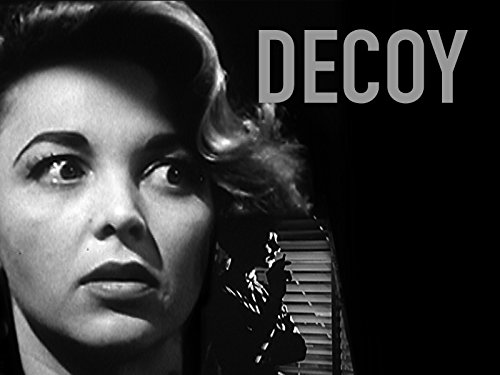
Retro Television Review: Decoy 1.11 “Two Days To Kill”


Welcome to Retro Television Reviews, a feature where we review some of our favorite and least favorite shows of the past!  On Thursdays, I will be reviewing Decoy, which aired in Syndication in 1957 and 1958.  The show can be viewed on Tubi!

This week’s episode is really, really good!

Episode 1.11 “Two Days To Kill”

(Dir by Stuart Rosenberg, originally aired on December 23rd, 1957)

Selma Richmond (played by a young Diane Ladd!) is the girlfriend of gangster Johnny Troy (Michael Strong).  Johnny is about to go on trial and Selma’s testimony about his crimes is the key piece of evidence against him.  Knowing that Johnny wants Selma dead, the police put her up in an apartment.  Casey is assigned to protect her.

At first, Casey and Selma seem to become unlikely friends.  Selma is flighty and obsessed with Hollywood.  Even though she’s testifying against him, she claims that Johnny is just misunderstood.  Casey, taking some sympathy on her, tells Selma about the man that she loved.  For the first time, we learn something about Casey’s background.  We learn that her husband was a cop and he died in a shoot out.  It’s a surprising moment and one that’s poignantly played by Beverly Garland.  (The camera closes in on her face while she slowly smokes a cigarette.)  Not only does it help us understand why Casey sometimes to seems to be emotionally detached but it also shows the friendship between the two women.  Casey doesn’t open up for many people but she does for Selma.

However, that friendship ends when Selma realizes that Johnny will be facing the death penalty.  Selma manages to sneak a letter Johnny, letting him know where she’s being held.  Johnny shows up at the apartment, carrying a knife.  Casey is waiting for him with her gun drawn.  During the stand-off, Johnny tells Selma that he loves her and Selma believes it.  The Johnny uses his foot to unplug the apartment’s lamp.  In the darkness, he lunges at Selma and Casey opens fire, killing Johnny.  Selma’s response is to shout, “I bet you’re glad you killed him!”

This was an outstanding episode.  Director Stuart Rosenberg, taking over from Teddy Sallis, makes good use of the gritty New York locations.  Each scene is lit like a film noir, with Johnny literally emerging from the shadows at one point.  Rosenberg also gets excellent performances from both Ladd and Garland.  This was a strong episode and the best of the series so far.

Late Night Retro Television Review: 1st & Ten 2.4 “Quarterbacks Tell No Tales”


Welcome to Late Night Retro Television Reviews, a feature where we review some of our favorite and least favorite shows of the past! On Wednesdays, I will be reviewing 1st and Ten, which aired in syndication from 1984 to 1991. The entire series is streaming on Tubi.

This week, a player’s reputation is on the line.  Can he clear his name, even though all the evidence is stacked up against him?

Episode 2.4 “Quarterbacks Tell No Tales”

(Dir by Bruce Seth Green, originally aired on September 15th, 1986)

T.D. Parker (played by O.J. Simpson) is pissed off!  The normally affable former player is angry that someone is dealing cocaine to the Bulls.  The press and the commissioner both assume that the dealer is rookie quartebrack Tim Yinessa.  (That guy that Yinessa caught searching his room last week?  He was a reporter.)  T.D. isn’t so sure.  He thinks that start quarterback Johnny Valentine (Sam Jones) is responsible for the team’s cocaine problem.  T.D. eventually confronts Johnny and tells him to stop with the drugs.

“25% of this league retires injured,” Johnny says, “You’re proof of that.”

T.D. gets so angry that he proceeds to stab Johnny to death punch Johnny in the chest.  “Welcome to the 25%,” he says.

No, T.D.  Johnny said “retired” players.  Johnny’s not retiring yet.  Anyway, Johnny was so coked up that he probably didn’t even feel the punch.

As for Yinessa, he nearly gets kicked off the team when the real dealer plants some cocaine in his locker.  Luckily, his roommate — Jamie Waldren (Jeff Kaake) — steps forward and confesses that he was the owner of the cocaine that the reporter found in the room.  Diana orders Jamie to go to rehab.  “Sure, I guess,” Jamie replies.

While that’s going on, Dr. Death and Mad Dog Smears continued to harass the rookies by ordering one of them to fake a suicide attempt as a part of a practical joke.  At the bar where they hang out, they also sang a song against urine testing.  I’m not really sure why anyone would want to hang out at the bar, as it seems like the whole place only exists so that Dr. Death and Mad Dog can put on painfully unfunny stage shows.  Dr. Death and Mad Dog also told Yinessa that they would kill him if he agreed to random urine testing in order to prove his innocence.  Personally, I think Dr. Death and Mad Dog should focus on their jobs.  Maybe if they did a better job protecting the other players, T.D. wouldn’t have had to retire.  I mean, you can tell it’s really cutting T.D. apart that he can’t play anymore.

So, Jamie is off to rehap, Yinessa is still on the team, and T.D. didn’t have to kill anyone.  All in all, it was a productive week.  To be honest, it’s difficult to judge this show based on traditional standards of good and bad.  Technically, every episode is bad.  This week, however, was slightly less bad than usual.