Part of the ‘appeal’ of the second wave of black metal as it manifested in Norway is the feeling that you are listening to a product of truly deranged minds. Granted most of the artists in the scene were fairly normal kids who matured and went on to enjoy long-term musical success, the genre’s focus on the occult, Satanism, and all things traditionally “evil” brought a few real wackos into the fold. Most of them wound up dead and behind bars. Gorgoroth pressed on.
This is a band that continues to project itself as dead-serious Satan-worshiping masochists long after their peers evolved away from the genre’s early image or else dropped sufficient hints to be recast as a sort of warm cuddly metal-spiked parody. Does their sound reflect this? I like to believe it does. “Procreating Satan” is the opening track to Twilight of the Idols, the band’s sixth studio album, released in 2003. It features the most notorious of the many vocalists the band has had over the years: Gaahl.
Lars Jensen has been working on his solo project, Myrkgrav, since 2003, but his discography is pretty brief. Trollskau, skrømt og kølabrenning (2006) is his only full-length album, and it’s a pretty solid entry into the annals of pagan metal. The album is a bit brooding overall, with a lot of slower tempo black metal-infused hymns, but the optimistic closing track has always stood out to me the most.
“Endetoner” feels like a victory anthem–a celebration of Norse history and tradition that honors those old gods who always seem to make a brief return to Midgard around this time of the year.
If I asked a random metal fan to name ten folk/viking metal bands, chances are they wouldn’t drop Sweden’s Månegarm among the contenders. It’s a bit odd, considering they’ve been around since 1995. But besides having a name that isn’t entirely easy to reproduce on a standard keyboard, there’s no reason to leave “Månegarm” off the list. Their ability to fly under the radar is something I don’t really understand; this band has definitely drawn less attention than they deserve over the years.
I am guilty to an extent, with nothing prior to Vargstenen–their 2007 release–in my collection, but I was still a little surprised to realize I had never featured this band before let alone this song. Following a brief intro track, “Ur själslig död” kicks off Vargstenen with epic bombast and a creative progression that avoids the easy temptation to repeat the track’s catchy main melody in excess. One thing that always stood out to me on this song was the vocals. Erik Grawsiö demonstrates a level of diversity I’m more accustomed to out of Slavic metal bands than their Germanic counterparts, and I absolutely love how he transitions back and forth between guttural singing and atonal growls. I couldn’t resist the urge to belt out a death metal roar of my own at the 40 second mark when I was listening to this in my car earlier today. So much for not scaring the new neighbors. <_<
Well, I started out this series featuring a couple of songs I’ve been enjoying for the better part of two decades. Here is one I discovered less than a week ago. It’s not too often that music successfully creeps me out these days, but I suppose I should have known I was in for a treat when Veilburner were described to me as a bad acid trip.
“Scorched Earth Exorcism” is a great example of this band’s unique, psychedelic mix of death and black metal. It’s some seriously twisted stuff, and nothing on the album better captures the deranged spirit of the season than the melody that takes over this song around the 4 minute mark. I’ve been watching AMC’s The Walking Dead marathon over the past few days, and I seriously had a dream about hunting zombies with this screwed up tune playing in the background. It was disturbing and awesome.
Throughout the 2000s, Agalloch unleashed a series of albums that have influenced countless bands across the metal spectrum. Not only did Ashes Against the Grain (2006) play an enormous role in ushering in the era of post-black metal, but Pale Folklore (1999) pioneered the folk metal aesthetic for a nation whose traditional genres stood leagues apart from the metal scene. (It would be another decade before Austin Lunn nailed a metal interpritation of bluegrass.) Most American folk metal bands carry Agalloch’s stamp of influence with them, and why not? Pale Folklore perfectly captures a sense of melancholy mystery that reflects a land whose native sons were slaughtered, leaving their secrets only a faint whisper in the air.
If there’s one thing that will draw me back out of obscurity no matter how much work I’m bogged down with, it’s Horror season here on Shattered Lens. As a de facto film blog’s one author who pretty much never watches movies, I like to do my part by digging out a mix of tunes appropriate for the season.
This is always the time of year when I stop focusing on new releases and revisit a lot of my metal and folk favorites of old. From b-side Satanic cheese to authentic pagan anthems to the truly deranged, all the music I love most seems to find a home when that oppressive summer sun gives way to pleasant temperatures and dimming lights. It’s my favorite time of year, and my music collection rises to the occasion.
Opeth is pretty common fair in the textbooks of heavy metal these days, but Mikael Akerfeldt’s finest works came before the fame, in my opinion. Their 1995 debut, Orchid, ranks highest for me. While Akerfeldt’s trademark progressive rock experimentation was present from the get-go, those early albums had a sort of hollow, natural tone to them that lent the band a distinctly folk vibe. Orchid (and Morningrise) seem to drift through the crisp, foggy air surrounding a lake on the edge of a forest, the sun just beginning to rise over the horizon. I don’t wake up early when I can help it, but if a morning commute is necessary, Opeth always sees a spike in my play count. The vision that songs like “The Twilight is My Robe” paint is stunningly vivid, and surprisingly peaceful in contrast to Akerfeldt’s harsh vocals.
The song itself doesn’t sound very much like horror. It’s got the down home country rock, but listening to the lyrics it’s very much belongs with any song full of doom, gloom and horror. It may be down home country with toe-tapping melody, but make no mistake the latest “Song of the Day” is quite horrific when one listens to it carefully.
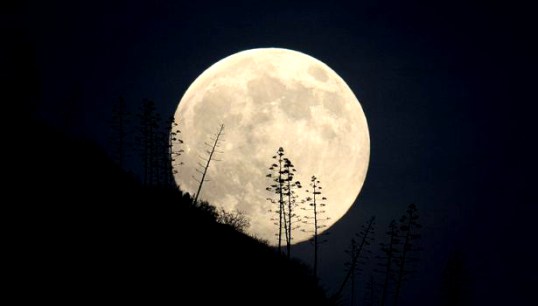
I’m talking about Creedence Clearwater Revival’s 1969 hit “Bad Moon Rising”.
One of the singles to come out of their classic Green River album, “Bad Moon Rising” is all about the titular bad moon on the rise. A sign of a bad omen or, if one was to take things to the extreme, of an impeding doom. The lyrics to the song speaks of natural disasters, catastrophic events and just about anything bad that would kill you the moment you step out onto the streets.
It’s a song of existential horror as it points out that no matter what we do there’s no preventing the infinite ways that Death can just come in and take one’s life. It’s quite the nihilistic tune and one that fits in well with Through the Shattered Lens horror-themed month.
Bad Moon Rising
I see a bad moon rising. I see trouble on the way. I see earthquakes and lightning. I see bad times today.
Don’t go around tonight, Well, it’s bound to take your life, There’s a bad moon on the rise.
I hear hurricanes a-blowin’. I know the end is comin’ soon. I feel rivers overflowin’. I hear the voice of rage and ruin.
Don’t go around tonight, Well, it’s bound to take your life, There’s a bad moon on the rise. Alright!
Hope you got your things together. Hope you are quite prepared to die. Looks like we’re in for nasty weather. One eye is taken for an eye.
Well, don’t go round tonight, Well, it’s bound to take your life, There’s a bad moon on the rise.
Don’t come around tonight, Well, it’s bound to take your life, There’s a bad moon on the rise.
It’s that time of the year. It’s October here in Through the Shattered Lens and that means one thing: horror-theme month.
October has become a sort of favorite month for us over here at Through the Shattered Lens. While other genres and topics will be posted and and get their time in the sun, this month always brings the site back to the shadows and things that made us fear the dark. Horror has been a common thing which drew Lisa and I to continue the site from it’s fledgling early months to going on almost 6 years.
I’d like to start my contribution to all-things horror by introducing those who haven’t experienced one of the best shows on TV which also has one of the most unique horror theme’s on either big or small screen.
The theme for Showtime’s Penny Dreadful was composed by Abel Korzeniowski. It’s a theme that gives an audience of hint at the show’s Victorian Age gothic setting with just the right amount of dark romance and psychological themes the show has become famous for.
So, here’s the latest “Song of the Day” set for the witching hour.
It was in the Fall of 1990 when I first heard of the latest Song of the Day. It was during Ken Burns’ excellent The Civil War documentary series on PBS where I heard “Ashokan Farewell.” This haunting “Scottish Lament” by Jay Unger and Molly Mason made Burns’ documentary on the U.S. Civil War feel more alive instead of just another academic exercise on learning one of the pivotal events in U.S. history.
The song became an instant classic the moment it started playing during the series. Ken Burns’ loved the song so much that he used it several times (25 times officially) during the 11-hour running times of the series. Each time it played the song evoked strong emotions from all who heard it, but none moreso than when it was the accompanying music for a reading of a Union Major Sullivan Ballou to his wife prior to the start of the First Battle of Bull Run. Even the most critical viewer of Ken Burns’ documentary sees this sequence and the accompanying “Ashokan Farewell” a major reason why this series became an instant classic and continues to be the standard bearer of how a documentary should be done and done well.
Through good times and bad I have always been a huge fan and follower of Metallica. Even as they foolishly went off track following the path Bob Rock set for them throughout most of the 1990’s through the disastrous St. Anger debacle as they tried to return to their earlier sound, I have always followed this band which made up the original Big 4 of thrash metal (Metallica, Anthrax, Slayer and Megadeth).
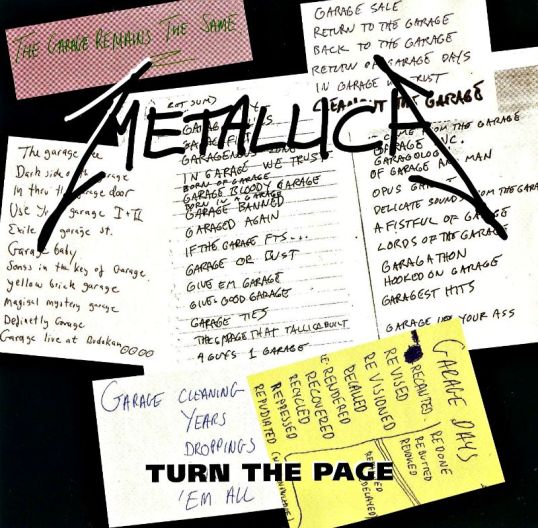
It was on their 1998 cover album, Garage Inc., that the band released one of their most popular songs. It wasn’t an original, but a cover of the classic Bob Seger hard rock song about the hard road and life of a musician. Seger’s “Turn the Page” is just one of those hard rock tunes that latches onto the listener and forces them to listen and understand. Most such songs tend to be quite pretentious with nothing much to say once the listener really pays attention. The same cannot be said about Seger’s song.
Metallica decided to cover this song for their Garage Inc. album which was all about them covering their own favorite hard rock and metal songs of the past. While Metallica kept the original’s tempo, they added their own heavier and harder edge to song that straddles the line between hard rock and heavy metal. Even James Hetfield’s alcohol and cigarette ravaged vocals lent a sense of the hard road and life the track sings about.
The biggest change from the Seger song to Metallica’s cover has to be the accompanying music video which still remains one of the most controversial in MTV’s music video history (well, when they still played music videos). Seger’s song was released in 1973 when the concept of music video was nonexistent. With Metallica’s cover it was almost a guarantee that it would get a music video and what a video it was and still is.
The video was directed by Jonas Akerlund who had made a name for himself directing some of the most creative and innovative music videos of the day. His take on the song switches from a musician’s hard road and life on the road to that of a single mother trying to make ends meet as an erotic dancer by day and a prostitute by night to provide for her young daughter. The video was banned from receiving any sort of airplay on MTV as it dealt and showed the disturbing side of such a life. The fact that the tamer version of the video (below) still couldn’t make it on the airwaves just showed how much more haunting and controversial the uncensored version turned out to be.
Turn the Page
On a long and lonesome highway, East of Omaha You can listen to the engines Moanin’ out it’s one note song You can think about the woman, Or the girl you knew the night before But your thoughts will soon be wanderin’, The way they always do When you’re ridin’ 16 hours, And there’s nothin’ much to do And you don’t feel much like ridin’, You just wish the trip was through
(Chorus)
Here I am, on the road again, There I am, up on the stage There I go, playin’ star again, There I go, turn the page
So you walk into this restaurant, All strung out from the road And you feel the eyes upon you, As you’re shakin’ off the cold You pretend it doesn’t bother you, But you just want to explode Yeah, most times you can’t hear ’em talk, Other times you can
All the same old cliches, Is it woman, is it man And you always seem outnumbered, You don’t dare make a stand Make your stand
(Chorus) Ah But here I am, on the road again, There I am, up on the stage Here I go, ah playin’ star again, There I go, turn the page Woah
Out there in the spotlight, You’re a million miles away Every ounce of energy, You try and give away As the sweat pours out your body, Like the music that you play
Later in the evenin’, As you lie awake in bed With the echoes of the amplifiers, Ringin’ in your head You smoke the day’s last cigarette, Rememberin’ what she said
What she said
Yeah, and here I am, On the road again, There I am, up on that stage Here I go, playin’ star again, There I go, turn the page And there I go, turn that page
There I go, yeah, Here I go, yeah, yeah There I go, yeah, Here I go, yeah Here I go, There I go And I’m gone