Rest in peace, Bonnie Tyler.

Let’s be real for a second: if you had to pick one single album that perfectly encapsulates the moment arena rock shook off its 70s blues-rock hangover and planted its flag square in the middle of the 1980s, it’s Escape. Journey’s seventh studio album, dropped in the sweltering summer of 1981, wasn’t just a commercial smash—it was a cultural re-calibration. It’s the record that took a band of former San Francisco prog-rockers, gave them a glossy sheen, and turned them into the house band for every stadium, coliseum, and municipal auditorium from coast to coast. This wasn’t a sellout; this was a breakthrough. Escape didn’t just ride the wave of arena rock—it basically built the wave, grabbed a surfboard, and rode it straight to diamond-certified immortality.
The secret to Escape’s world-conquering power starts with the lineup, plain and simple. This was the first full album with keyboardist Jonathan Cain fully integrated into the songwriting engine, and his arrival cannot be overstated. Before Cain, Journey had a more progressive, meandering sound—great musicianship, sure, but lacking that killer hook that could stop a radio dial in its tracks. Cain, alongside guitar virtuoso Neal Schon and the golden-throated Steve Perry, formed a triumvirate that just clicked. They started writing songs that were lean, mean, and built for maximum emotional impact. Cain’s keyboard riffs became the melodic anchor, Schon’s guitar work shifted from noodly solos to these wide, shimmering power-chord landscapes, and Perry? Man, Perry just did what he did best—singing his lungs out with that raspy, soulful tenor that could make a breakup feel like a Shakespearean tragedy and a triumph feel like winning the lottery. The production, helmed by the legendary Kevin Elson and Mike Stone, was pristine, layering every synth pad and backing vocal until it sounded like a cathedral of rock sound. It was expensive, it was ambitious, and it worked like a charm.
Now, let’s talk about the hits, because you literally cannot escape them—pun absolutely intended. The opening salvo of Don’t Stop Believin’ is arguably the most iconic album opener in rock history, and I’ll fight anyone who disagrees. That plinking piano intro, the creeping bass line, the way it builds and builds until Perry finally explodes with that “streetlight people” chorus—it’s pure adrenaline in musical form. It peaked at number nine on the Billboard Hot 100, but that statistic is laughable considering it’s become a karaoke national anthem for multiple generations. Then you’ve got Open Arms, the ultimate power ballad that sat at number two for six agonizing weeks, kept from the top spot by Olivia Newton-John’s Physical. But honestly? Open Arms is the one that still makes grown adults tear up at weddings and funerals alike. It’s tender without being saccharine, huge without being bombastic. And you can’t forget Who’s Crying Now, the first single, which kicks off with that unforgettable synth hook and rides a funky, almost new-wave groove that proved Journey could adapt without losing their identity. Still They Ride rounds out the hit parade, a more melancholic, bluesy number that showed they had range beyond the stadium anthems.
But here’s the thing that makes Escape a true landmark: the deep cuts are just as vital as the singles. This isn’t a two-hit wonder padded with filler. The title track, Escape, is a turbo-charged rocker that might actually be the most inspiring song on the whole record, a call to break free from whatever’s holding you down. Stone in Love became a massive FM radio staple in its own right, a nostalgic trip back to teenage summers that feels both specific and universal. Keep on Runnin’ and Lay It Down bring the raw energy, with Schon’s guitar biting harder than anywhere else on the album, while Mother, Father closes out the A-side with a dramatic, almost cinematic sweep that hints at the band’s prog-rock past. Every single track clocks in under five minutes, every chorus is built for a crowd of twenty thousand people to shout back, and every guitar solo feels like it was recorded in an echo chamber the size of a football field. It’s a record that was deliberately, meticulously designed for live performance, and it shows in every note.
So how did Escape usher in the 80s arena rock era? Let’s break it down. Before this album, the arena rock landscape was dominated by the bombastic blues of Led Zeppelin, the theatrical metal of Van Halen, and the working-class heartland rock of Bruce Springsteen. Those were all massive acts, sure, but they were holdovers from the 70s. Journey, with Escape, offered something different: a sound that was cleaner, brighter, and more synth-forward, yet still packed enough guitar muscle to satisfy the headbangers. They basically invented the template that bands like Bon Jovi, Def Leppard, and REO Speedwagon would ride to glory for the rest of the decade. The massive, layered backing vocals, the anthemic “whoa-oh” choruses, the gleaming keyboard patches that sounded like they were beamed in from a sci-fi future—all of that became the default setting for 80s rock. Escape proved that you didn’t need gritty distortion or bluesy swagger to fill a stadium; you just needed a killer hook, a relatable lyric about love or dreams, and a chorus that could be heard over the roar of twenty thousand screaming fans. It was rock music that was aspirational, not confrontational—music for the masses, not the misfits. And the industry took notice. Suddenly, every major label was hunting for their own Steve Perry, their own Jonathan Cain, their own glossy production team to replicate that Escape magic.
Looking back over forty years later, Escape hasn’t aged a day. It still sounds massive, still sounds fresh, and still sounds like the definitive blueprint for 80s arena rock. It’s the album that made Journey a household name, that turned Don’t Stop Believin’ into an eternal anthem, and that showed the world how to marry melody with muscle in a way that filled seats and sold records. Sure, you can argue that Infinity or Departure had more adventurous moments, but neither of those albums had the cultural reach, the radio dominance, or the sheer, unadulterated swagger of Escape. This was the moment when Journey stopped being a band and started being an institution. Escape didn’t just capture the sound of 1981—it predicted the sound of the next decade. It’s a time capsule, a greatest-hits collection in its own right, and a masterclass in how to build a rock album that’s built to last. Put it on, turn it up, and try not to sing along. I dare you.
I’ve starting my summer job of writing about Big Brother at Reality TV Chat Blog. In honor of that, today’s song of the day is the little-remembered theme song from the first season of Big Brother!
After listening to this, you’ll understand why they’ve gone with an instrumental theme song from season two on.
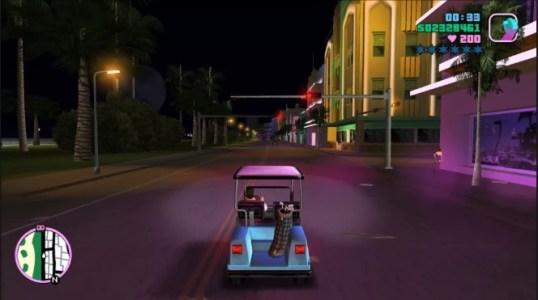
Today’s music video of the day is for another song that I discovered while driving around Vice City in a stolen car.
(Several stolen cars, actually.)
Talk Talk’s Life’s What You Make It is one of the most popular songs on Grand Theft Auto: Vice City‘s FLASH FM. It’s the perfect song to listen to when you’re heading out to take down some drug dealers or if you just want to drive along the beach and wonder why Tommy Vercetti never learned how to swim.
The song was a hit both when it was originally released in 1985 and when it re-released in 1990. The video was filmed in Wimbledon Common, London, during the early hours of the day. The video was directed by Tim Pope, who directed videos for almost everyone in the 80s and 90s but is probably best-regarded for his work with The Cure.
Pope also directed the film, The Crow” City of Angels and was the original director for The Last King of Scotland. Though Pope eventually left and was replaced on that project, he was responsible for casting Forest Whitaker as Idi Amin, the role that would eventually win Whitaker an Oscar.
Enjoy!

Latest song of the day once again comes courtesy from the German power metal lads of Blind Guardian. This time around the song chosen comes from their latest album which has already seen a European release and set to drop in North America in August 24, 2010. The song I’ve picked from their latest album, “At the Edge of Time”, is the seventh track: “Control the Divine”.
This latest album’s sound harkens back to Blind Guardian’s seventh full-length album, “A Night at the Opera”, which brought the band into the realm of epic power metal and some progressive rock elements which showed the band willing to experiment with their sound to come up with some new hybrid style. “Control the Divine” definitely combines the epic power and proggy sounds evident in ANATO. While it doesn’t have the old-school speed metal riffs of “Tanelorn (Into the Void)” (second track in the new album), the mid-tempo of “Control the Divine” remains consistent throughout the song from André’s lead guitar to Ehmke’s drumming. But it’s the singing of lead vocalist Hansi Kürsch which makes this song my overall favorite in the album.
Kürsch has a distinct singing voice and with his penchant for overdubbing his vocals to create Blind Guardian’s epic sound of having a “huge chorus” singing along (there’s not just Hansi) definitely fits in well with the song’s lyrics. Lyrics which tells within a span of 5mins and 25secs John Milton’s epic poem, Paradise Lost. The song tells of Lucifer’s downfall, to the rebellion in Heaven against God, and right up to the Lord of the Morningstar’s bitter brooding and vow to destroy God’s chosen (humans). That sounds quite a lot to put into a song which is just under five-and-a-half minutes long, but Blind Guardian accomplished it.
Oh yeah, this song also has a very kick-ass melody.
Control the Divine
For what I was
I’m doomed to be
The tempter and the secret foe
Cause I am hell and hell is me
Pure hate will grow
Still I claim to be the chosen one and
Still I claim
This is rebellion rising
[Bridge 1]
First amongst equals
We’re bound to no law
There’s no one before us
Ethereal sons
Now disobey
Awake and arise
You’ll be free
[Chorus]
How can we take it away
From someone who has no right?
No right to control the divine
Night shall invade
Suspicion awakes
Wherefore He’s greater than I
[Lead: Andre]
Stay silent
Until the end of the world
So just like slaves we may deem him
Dead silence
Until the end of the world
Hence from this moment we’re doomed
I feel
It hurts though
Disburdened spirits we will be
I’ve learned my lesson
Pure and sore
An offer divine
We’re far beneath them
They consider us slaves
They steal our pride
Don’t trust them blindly
Cause truth they conceal
As it seems
I’ll reign
Cause here in my tower
Impassioned, I’ll show you a way
[Bridge 2]
I can feel your hallowed rage
Now enter my realm
Awake and arise, you’ll be free
[Chorus]
How can we take it away
From someone who has no right?
No right to control the divine
Night shall invade
Suspicion awakes
Wherefore He’s greater than I
[Solo: Andre]
[Bridge 3]
Descend – just keep moving
All things shall proceed
It’s freedom you’re choosing
Preserve our hate
Eternalize
Awake and arise
You’ll be free
[Chorus]
How can we take it away
From someone who has no right?
No right to control the divine
Night shall invade
Suspicion awakes
Wherefore He’s greater than I
How can we take it away
From someone who has no right?
No right to control the divine
Night shall invade
Suspicion awakes
Wherefore He’s greater than I
This video was directed by the French mime, dancer, and choreographer, Philippe Decouflé. Starting with a slap fight to end all slap fights, it also features a person in green makeup hand signing the song’s lyrics. As is so often the case with New Order, what it all actually means is open to interpretation.
Philippe Decouflé went on to direct the video for the Fine Young Cannibals’ She Drives Me Crazy, as well as choreographing the opening ceremony of the 1992 Winter Olympics.
Enjoy!
Bonnie Tyler, RIP.
This song spent 109 weeks on the charts after its release and it remains one of Mötley Crüe’s most popular singles.
Nikki Sixx, who wrote the song, later told Rolling Stone that the song was based on several different drug dealers that he had done business with before getting sober. Just two years before Dr. Feelgood became a hit, Sixx had been a notorious junkie who, after a heroin overdose, was actually legally dead for two minutes before a paramedic was able to revive him with two shots of adrenaline.
Dr. Feelgood became Mötley Crüe’s first and, to date, only gold single in the United States. The video follows the song’s title character as he goes from working the streets to owning a mansion. In a repeat of what happened to Tony Montana, Dr. Feelgood’s own hubris eventually brings him down. As for why Mötley Crüe is performing in a revival tent, it probably just looked cool.
Director Wayne Isham is one of the most recognizable names when it comes to music video directors. If you were someone who was anyone in the music business, Isham probably directed at least one video for you.
Enjoy!

Okay, so you have to listen to Into the Storm by Blind Guardian. I know, I know, it’s easy to dismiss power metal as just another fantasy genre, but trust me on this one. This track is the perfect storm of aggression and melody, and it kicks off the Nightfall in Middle-Earth album with such incredible energy that you’ll be hooked from the first riff. It’s a furious, catchy, and surprisingly deep dive into the lore of The Silmarillion, capturing the raw desperation of Morgoth and Ungoliant squabbling over the Silmarils. But seriously, don’t let the subject matter intimidate you; just let the music do its thing and you’ll be chanting along to the chorus before you know it.
The track is a masterclass in how to build intensity, but the real reason I’m writing this is to talk about the guitar solo by André Olbrich. It is, without a doubt, one of the most underrated moments in their entire catalog. If you pull up the remastered version, the solo hits right at the 2:37 mark and doesn’t let up until about 3:07. It’s a short, sharp shock of pure melodic bliss. What makes it so special is that it completely eschews the typical speed-demon shredding you might expect. Instead, it’s a soaring, beautifully constructed lead that sounds like it’s carrying the entire weight of the song’s story on its shoulders. It perfectly mirrors Hansi Kürsch’s vocal style, acting as another voice in the track to carry you forward into the chaos.
André is often listed among the greatest metal guitarists for a reason, and this solo is a prime example of his genius. He’s not interested in showing off; he’s interested in serving the song and elevating the epic feel. During those 30 seconds, his guitar weeps and soars over the frantic rhythm section, creating this incredible feeling of hope and tragedy all at once. It’s a moment of pure clarity and emotion amidst the storm, and it’s the perfect payoff to the frantic energy that came before it. It’s a piece of music that gets stuck in your head for days, and it’s a big part of why this track is such a fan favorite.
So, if you consider yourself a fan of powerful, storytelling metal or just appreciate a killer guitar solo, do yourself a favor and cue up Into the Storm. Turn it up loud, wait for that solo to hit, and let yourself get swept away. It’s a gateway into one of the most epic albums ever written, and I promise you, that brief, beautiful guitar break will be the moment that makes you understand exactly what Blind Guardian is all about.
Into the Storm
Give it to me
I must have it
Precious treasure
I deserve it
Where can I run
How can I hide
The Silmarils
Gems of treelight
Their life belongs to me
Oh it’s sweet
how the Darkness is floating around
We are following
The will of the one
Through the dark age
And into the storm
And we are following
The will of the one
Through the dark age
And into the storm
Lord I’m mean
(guitar solo @2:37)
Blackheart show me
What you hold in hand
I still hunger for more
Release me
From my pain
Give it to me
How I need it
How I need it
How I need it
I did my part
Now it’s your turn
And remember
What you’ve promised
Great Guitar Solos Series
A New York-based band that once featured Madonna on drums, Breakfast Club’s biggest hit was Drive My Car, a cover of a song that had previously been made famous by The Beatles. The cover appeared on the soundtrack of License to Drive, one of the better films to co-star Corey Haim and Corey Feldman.
The video is the usual combination of clips from the film and scenes of the band acting crazy. Since they were already covering a Beatles song, it made sense to go ahead and put Breakfast Club in a 1980s version of Hard Day’s Night and have them spend most of the video trying to escape their obsessed fans. Luckily, they’ve got an invisible car.
Breakfast Club split up shortly after the release of License to Drive.
Enjoy!