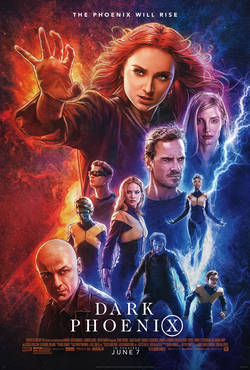
Last Stand Of The X-Men: Dark Phoenix (2019, directed by Simon Kinberg)


Last week, I finally watched Dark Phoenix and I could tell within 15 minutes that it wasn’t going to be good.  From the start, everything about it seemed to be off, particularly compared with other, more recent comic book films.  This is not Logan or Joker.  It’s not even as good as Apocalypse.  Dark Phoenix felt like a comic book film from 2002 that somehow got made and released in 2019.

The latest installment of the X-Men film saga opens in 1992.  The X-Men have been hailed as heroes and it finally looks like like the dreams of Charles Xavier (James McAvoy) are going to come true.  Humans and mutants are going to co-exist.  Unfortunately, all of that progress is undone when Jean Grey (Sophie Turner) connects with a surge of energy and her powers go supernova.  Jean discovers that she was responsible for her mother’s death and her father rejected her as a result.  She also learns Xavier placed a mental block in her mind.  Seriously pissed off, Jean flees to the island of Genosha, which is ruled over by Magneto (Michael Fassbender).  She also accidentally kills Mystique, therefore freeing Jennifer Lawrence from having to appear in any more of these movies.  All the while, a shape-shifting alien named Vuk (a slumming Jessica Chastain) wants to capture Jean’s powers and use them for herself.

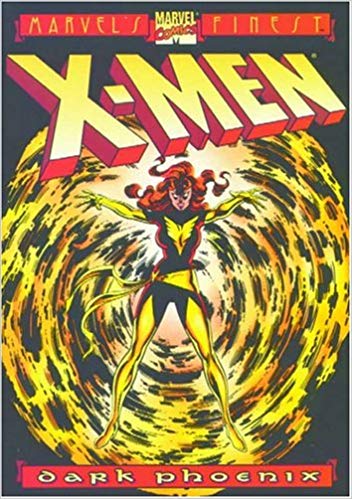
This was the second attempt to bring the Dark Phoenix saga to the screen and somehow, it was even more bland and forgettable than X-Men: Last Stand.  The Dark Phoenix saga is one of the greatest comic book storylines of all time but it seems destined to never be the basis of a good movie.  In the comic books, the Dark Phoenix saga was the accumulation of two decades of storytelling.  After being the most forgettable member of the original X-Men, Jean suddenly became the most powerful mutant in the world.  When she sacrificed herself for the good of the universe, it was not only the end of her life but also the end of one of Marvel’s longest-running love stories, as Cyclops could only cradle her body afterwards.  As usual, Marvel later lessened the emotional impact by revealing that the Phoenix wasn’t actually Jean but just an alien force that took on her memories and personality while the real Jean remained in suspended animation at the bottom of Jamaica Bay.  Despite this, the Dark Phoenix saga still remains a prime example of Marvel at its best.

Why, with such great source material and a talented cast, was this latest film version of the Dark Phoenix saga so cumbersome?  No one seemed to care.  Unlike in the comic books, there was no emotional depth to the story of Jean Grey losing herself and becoming the Dark Phoenix.  Instead, every scene felt like it was just there to set up the next CGI-fueled confrontation.   Sophie Turner and Tye Sheridan (who played Cyclops) seemed to barely know each other and the film spent more time on Nicholas Hoult’s Beast mourning for Mystique than on the relationship that should have been at the center of the film.  None of the actors seemed to be invested in the story.  I’ve never seen Jennifer Lawrence, Michael Fassbender, and James McAvoy look so bored.  The inevitable Magneto scene felt pointless.  The comic books could take a break from Magneto and let other villains have a turn.  The movies have to find an excuse to force him into every story.

It’s been said that the X-Men will be moving into the MCU and will get a whole new reboot.  We’ll probably get a third Dark Phoenix film someday.  I hope this one gets it right.
4 Shots From 4 Films: Dellamorte Dellamore, Nadja, The Stand, Wes Craven’s New Nightmare


4 Shots From 4 Films is just what it says it is, 4 shots from 4 of our favorite films. As opposed to the reviews and recaps that we usually post, 4 Shots From 4 Films lets the visuals do the talking!

This October, we’re using 4 Shots From 4 Films to look at some of the best years that horror has to offer!

4 Shots From 4 1994 Horror Films

Dellamorte Dellamore (1994, dir by Michele Soavi)

Nadja (1994, dir by Michael Almereyda)

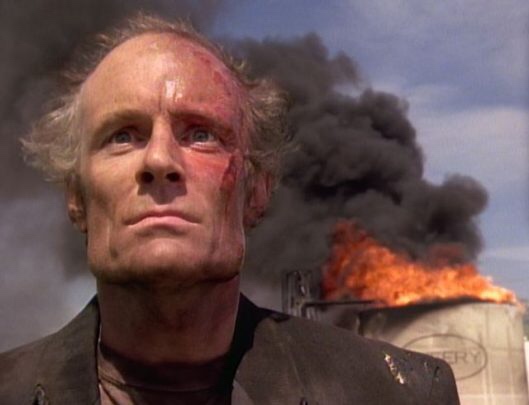
The Stand (1994, dir by Mick Garris)

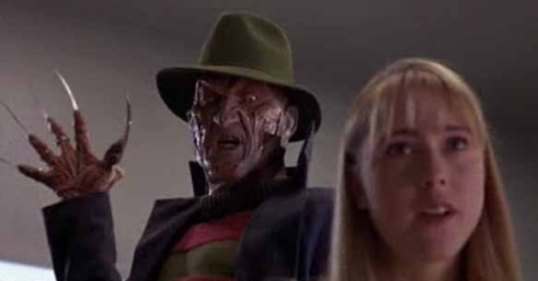
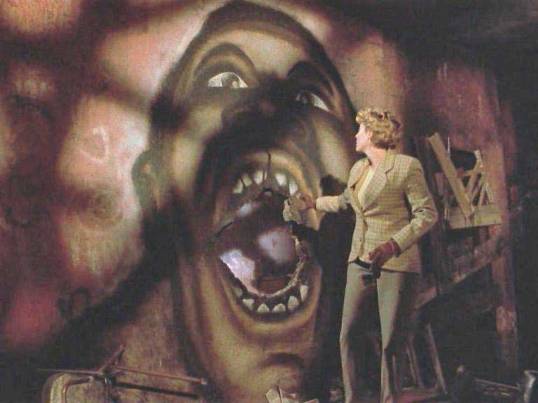
Wes Craven’s New Nightmare (1994, dir by Wes Craven)


Horror Film Review: Psycho II (dir by Richard Franklin)


Norman Bates is back!

No, I don’t mean Freddie Highmore from Bates Motel or Vince Vaughn from the odd Psycho remake that I keep seeing on Showtime.  No, I’m talking about the original Norman Bates, Anthony Perkins!

First released in 1983, Psycho II is a direct sequel to the classic shocker from Alfred Hitchcock.  The film opens with a replay of the original film’s famous shower scene and then immediately jumps forward 22 years.  Having been found not guilty by reason of insanity, Norman Bates has been in a mental institution ever since he was arrested for the murders of Marion Crane and Milton Arborgast.  However, Norman’s psychiatrist, Dr. Raymond (Robert Loggia, who was considered for the role of Sam Loomis in the original film), now feels that Norman has been cured and is no longer a danger to himself or others.  A judge agrees.  Marion Crane’s sister, Lila Loomis (Vera Miles, reprising her role from the original) does not.  She presents the judge with a petition demanding that Norman not be released.  When the judge ignores her, Lila yells that Norman will murder again!

Now free, Norman returns to the Bates Motel and discovers that it’s now being run by the sleazy Warren Toomey (Dennis Franz).  When Norman finds various party favors in the motel rooms and asks Warren what they are, Warren laughs and says, “They’re drugs, Norman.”  Norman’s not too happy about that.  As Dr. Raymond tells him, the world has changed considerably over the past two decades.

However, Norman has other issues to deal with.  For the most part, most of the people in town are not happy that their most famous resident has returned.  Emma Spool (Claudia Bryar) gets Norman a job at a local diner because, in her words, she believes in forgiveness and second chances.  Norman gets to know the new waitress, Mary Samuels (Meg Tilly) and, when Mary tells him that she’s had a fight with her boyfriend, he invites her to stay at the hotel until she can get things together.

From the minute that he returns home, Norman is struggling to keep it together.  When he first reenters his former house, he hears his mother’s voice but he tells himself that she’s not really there.  But if his mother isn’t there, then who keeps calling him on the phone and yelling at him about the state of the motel?  Who keeps taunting him about his awkward (yet rather sweet) relationship with Mary?  And when two teenagers are attacked after breaking into the house, who else could it possibly be but Norman’s mother?

I was really surprised by Psycho II, which turned out to be a really entertaining little movie, an effective thriller with a healthy dash of dark humor.  It’s a very plot-heavy film, with almost every scene introducing a new twist to the story.  With the exception of the sleazy Warren Toomey, no one in this film turns out to be who you initially expected them to be, including Norman.  Meg Tilly does a good job in the somewhat oddly written role of Mary Samuels and even manages to make an awkward line like “Norman, you’re as mad as a hatter” sound natural.  Not surprisingly, the film is dominated by Perkins’s performance as Norman Bates and what a great performance it is.  The best moments are the ones where Norman awkwardly tries to fit back in with society, nervously laughing at his own jokes and struggling to maintain eye contact with whoever he’s talking to.  You really can’t help but feel sorry for him, especially as the film progresses.

Wisely, Psycho II set out to establish it own identity as a film, as opposed to just trying to duplicate the shocks of Psycho.  (There is a shower scene that’s filmed similarly to the one from the first scene, with a key difference that I won’t spoil.)  It’s what a sequel should be, not a remake but a continuation of the original’s story.  This is definitely a film that’s far better than you may expect.


Horror On The Lens: The Phantom of the Opera (dir by Rupert Julian)


Today’s horror movie on the Shattered Lens is both a classic of silent era and one of the most influential horror films ever made.  It’s one that I previously shared in 2013, 2015, 2016, and 2108 but it’s such a classic that I feel that it is worth sharing a second (or fifth) time.

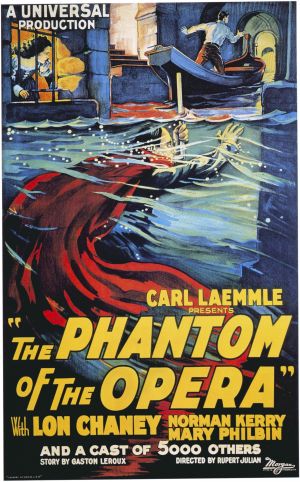
First released in 1925, The Phantom of the Opera is today best known for both Lon Chaney’s theatrical but empathetic performance as the Phantom and the iconic scene where Mary Philbin unmasks him. However, the film is also a perfect example of early screen spectacle. The Phantom of the Opera was released during that period of time, between Birth of the Nation and the introduction of sound, when audiences expected films to provide a visual feast and Phantom of the Opera certainly accomplishes that. Indeed, after watching this film and reading Gaston Leroux’s original novel, it’s obvious that the musical was inspired more by the opulence of this film than by the book.

This film is also historically significant in that it was one of the first films to be massively reworked as the result of a poor test screening. The film’s ending was originally faithful to the end of the novel. However, audiences demanded something a little more dramatic and that’s what they got.

Home Invasion: Twice Dead (1988, directed by Bert Dragin)


Twice Dead is twice dumb but also twice the fun.

The fine and upstanding Cates family have recently inherited a mansion and are eager to move in.  The only problem is that the mansion is already inhabited!  Not only has a gang of street punks declared that the mansion belongs to them but the house is also home to the ghost of Tyler Walker (Jonathan Chapin).  A great actor, Tyler committed suicide after being swindled out of his possessions by the love of his life, Myrna.  After the Cates family plays an elaborate practical joke on the street gang (and the joke simply has to be seen to believed), the gang declares that they will take revenge.  Because the Cates’s daughter, Robin (Jill Whitlow), is dead ringer for Myrna, Tyler’s ghost decides to help take out the street punks.  Death by shotgun, dirt bike, and dumb waiter follows.

The two Cates children are played by Jill Whitlow and Tom Bresnahan.  Whitlow and Bresnahan ended up dating after they finished shooting the film and their obvious chemistry brings an apparently unintended subtext to all of their sibling interactions in Twice Dead.  Jill Whitlow also appeared in Night of the Creeps and, with her ability to be both sexy and wholesome at the same time, was one of the first crushes of many an 80s and 90s child.

A mix between The Amityville Horror and Death Wish 3, Twice Dead was one of the many horror films to come out of Roger Corman’s Concorde Pictures in the 80s.  It’s dumb but it has both Jill Whitlow and enough of a sense of humor to be entertaining.  The street punks, who all have names like Crip, Silk, Stony, and Candy, are all annoying so you don’t mind seeing them get killed in various ways.  Todd Bridges proves that the world don’t move to the beat of just one drum by playing a Petie, a friendly guy who likes to hang out at the library, while the amazing Charlie Spradling, who appeared in several films like this back in the day, plays a member of the gang.  Sadly, neither one of them comes to a good end.


Horror Scenes That I Love: The Gas Station Attack From The Birds


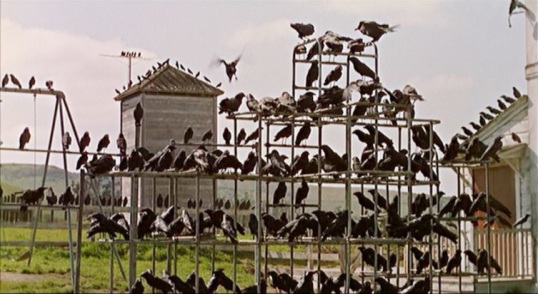
This scene, of course, is from Alfred Hitchcock’s 1963 revenge of nature film, The Birds.

Seriously, what type of idiot smokes a cigar near a gas station?  It kind of makes you think that maybe the birds had a point.


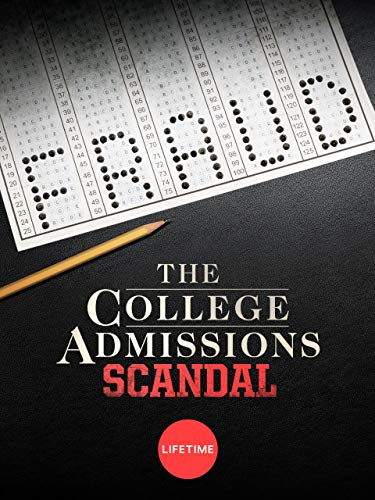
What Lisa Watched Last Night #200: The College Admissions Scandal (dir by Adam Salky)


Last night, like all good Americans, I watched The College Admissions Scandal on Lifetime!

Why Was I Watching It?

How could I not watch it!?

Seriously, Lifetime has been advertising the Hell out of this thing for the past few months.  I haven’t been able to turn on the channel without seeing a few hundred commercials for The College Admissions Scandal.

Add to that, I have to admit that this is the rare national scandal that I’ve actually been following.  When the news first broke that certain rich people had cheated and broken the rules to get their child into a good college, my initial reaction was, “Well, isn’t that what a parent’s supposed to do?”  Of course, I made the mistake of saying that on twitter and I immediately ended up with a bunch of finger-wagging nags screaming at me about how it wasn’t something to make a joke about and how it wasn’t fair and blah blah blah.  They sure told me!  Of course, it didn’t really change my mind or anything but at least everyone else got to feel like they had stuck up for truth and justice.  That said, I think my point remains valid.  Don’t get mad at the parents for taking advantage of the system.  They’re just trying to look after their kids.  Instead, get mad at the colleges that were willing to be bribed.  Get mad at a system that’s been specifically set up to be corrupted.  The solution is reform, not necessarily imprisonment.

Perhaps not surprisingly, I kinda love the fact that, while Felicity Huffman basically begged everyone to forgive her, Lori Loughlin pretty much said, “Fuck you, I’m not apologizing for anything.” That’s the spirit!

What Was It About?

Penelope Ann Miller plays a character who is definitely not Felicity Huffman, just as Mia Kirshner is playing someone who is definitely not Lori Loughlin.  That said, like Miller and Loughlin, they’re two wealthy mothers who are concerned about getting their children into the right school.  Fortunately, Rick Singer (Michael Shanks) is willing to sell his services as an admissions consultant.  Pay him enough money and he’ll fix your child’s grades, improve their test scores, and even make them look like athletes!

It sounds like a great plan!  Of course, it’s also illegal and, even as the parents are looking forward to sending their kids to Stanford and Harvard, the FBI is looking forward to sending the parents to prison!

What Worked?

Miller and Kirshner were both well-cast and Kirshner was especially good as the mother who definitely was not Lori Loughlin.  Michael Shanks was also wonderfully repellent in the role of Rick Singer.

It was fascinating to watch the lengths that Singer and the families went to remaking their children.  My main memory of this film will probably always be Sarah Dugdale standing in front of a blue screen and kicking a soccer ball so that she can later be photoshopped into a picture of an actual soccer game.

What Did Not Work?

Where were the real people!?  Yes, Rick Singer is a real person but why were all the parents fictional?  I assume for legal reasons.  For instance, Lori Loughlin has yet to be convicted of anything and I imagine that Lifetime didn’t want to get on the bad side of either Felicity Huffman or William H. Macy by portraying them in the movie.  But seriously, it was hard not to be disappointed by the lack of real world gossip.

“Oh my God!  Just like me!” Moments

Hmmmm …. I got into college legally but then again, I also didn’t go to an Ivy League school, nor did I ever particularly want to.  To be honest, it didn’t really occur to me that college was actually that important until my senior year.  That’s when I was like, “Oh, I’m actually supposed to do something with this art history degree….”

Lessons Learned

If you want to send your child to a good college, get them interested in soccer early.

4 Shots From 4 Films: Army Darkness, Candyman, Bram Stoker’s Dracula, Dust Devil


4 Shots From 4 Films is just what it says it is, 4 shots from 4 of our favorite films. As opposed to the reviews and recaps that we usually post, 4 Shots From 4 Films lets the visuals do the talking!

This October, we’re using 4 Shots From 4 Films to look at some of the best years that horror has to offer!

4 Shots From 4 1992 Horror Films

Army of Darkness (1992, dir by Sam Raimi)

Candyman (1992, dir by Bernard Rose)

Bram Stoker’s Dracula (1992, dir by Francis Ford Coppola)

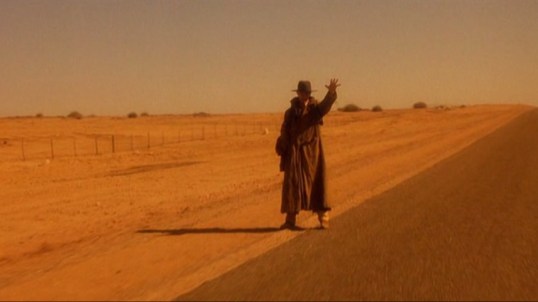
Dust Devil (1992, dir by Richard Stanley)

Horror on the Lens: Hotline (dir by Jerry Jameson)


Yay!  Brianne O’Neill (Lynda Carter) has a got a new job, working at a crisis hotline!

Boooo!  The serial called known as the Barber is now obsessed with calling her!

The Barber is known as the Barber because he cuts his victims’s hair before killing them, which as far as I’m concerned, make him even worse than a normal serial killer.  You have to wonder if he resents being known as the Barber as opposed to The Stylist.

Anyway, it’s up to Brianne to figure out why The Barber keeps calling her and to hopefully discover his identity.  For whatever reason, no one else seems to be that concerned about it.

That’s the plot of Hotline, a 1982 made-for-TV movie that is today’s horror on the lens.  It’s not a bad film, though it does inspire a certain amount of snarkiness while you’re watching it.  For the most part, though, it’s well-acted and effectively directed.  If you’ve got 95 minutes to kill, why not kill them with Lynda Carter, The Barber, and Frank Stallone?

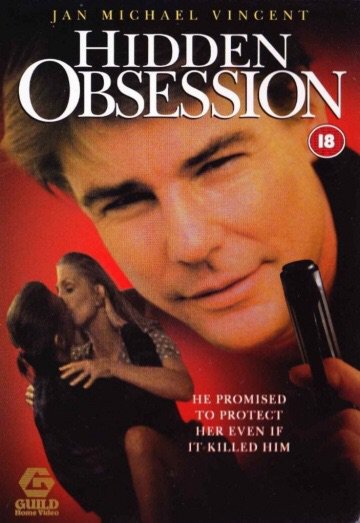
From The Cinemax Vault: Hidden Obsession (1993, directed by John Stewart)


Hidden Obsession comes to us from the glorious days of late night 90s Cinemax. 

Ellen Carlyle (Heather Thomas) is a TV anchorwoman who is looking forward to taking some time off.  The only problem is that everyone — from a crazed homeless man to an escaped convict that she helped put behind bars — wants to kill her.  She assumes that she’ll be safe if she just spends her vacation in a remote cabin in the mountains.  Fortunately, she’s got Deputy Ben Scanlon to look after her and keep her company in bed.  Unfortunately, Deputy Scanlon is played by Jan-Michael Vincent and Jan-Michael Vincent in a 90s direct-to-video flick is always bad news.  Ellen’s cameraman (Nick Celozzi) discovers that Scanlon is not really who he says he is but will he be able to warn Ellen in time?

By the standards of late night Cinemax, Hidden Obsession is tame.  Ellen Carlye is a role that Shannon Tweed could have worked wonders with but instead, television actress Heather Thomas gives a flat, listless, and usually clothed performance in the starring role.  Fortunately, this movie was made just before Jan-Michael Vincent started his final decline so, even though it is obvious that he had seen better days by the time he got around to playing Ben Scanlon, Vincent is still capable of giving a halfway decent performance.  Vincent throws himself into playing the psycho and he shows that, if not for the liquor and the drugs, he could have had a long and decent career as a B-movie villain.  Imagine if Vincent had been sober enough for Quentin Tarantino to give him the opportunities that he gave to Robert Forster and Michael Parks.  Unfortunately, it was not to be.

“Love hurts!” Ellen says.  It would be easy to say that this film hurts too but it’s really not memorable enough to be so bad that it’s good.  Like Witchtrap and Deadly Compansion, this film’s main appeal is to nostalgia.  These are the type of films that not only used to show up on late night Cinemax but which also lined the walls of your local Blockbuster.  These are movies of a bygone era.  Watch while you still can.