
In honor of Canadian Thanksgiving, today’s horror scene that I love comes from one of the greatest of the Canadian slasher films, 1980’s Prom Night!
Remember everyone …. Prom Night! Everything is alright!
In honor of Canadian Thanksgiving, today’s horror scene that I love comes from one of the greatest of the Canadian slasher films, 1980’s Prom Night!
Remember everyone …. Prom Night! Everything is alright!
4 Shots From 4 Films is just what it says it is, 4 shots from 4 of our favorite films. As opposed to the reviews and recaps that we usually post, 4 Shots From 4 Films lets the visuals do the talking!
This October, we’ve been using 4 Shots From 4 Films to pay tribute to some of our favorite horror directors! Today, in honor of Canadian Thanksgiving, we recognize the talents of the one and only David Cronenberg!
4 Shots From 4 Films

Scanners (1981, dir by David Cronenberg)

The Dead Zone (1983, dir. by David Cronenberg)

The Fly (1986, dir. by David Cronenberg)

Naked Lunch (1991, dir by David Cronenberg)
The Cabinet of Dr. Caligari is a film that I’ve shared four times previously on the Shattered Lens. The first time was in 2011 and then I shared it again in 2014, 2015, 2016, 2017, 2018, and 2019! Well, you know what? I’m sharing it again because it’s a classic, it’s Halloween, and everyone should see it! (And let’s face it — it’s entirely possible that some of the people reading this post right now didn’t even know this site existed in any of those previous years. Why should they be deprived of Caligari just because they only now arrived?)
Released in 1920, the German film The Cabinet of Dr. Caligari is one of those films that we’ve all heard about but far too few of us have actually seen. Like most silent films, it requires some patience and a willingess to adapt to the narrative convictions of an earlier time. However, for those of us who love horror cinema, The Cabinet of Dr. Caligari remains required viewing. Not only did it introduce the concept of the twist ending (M. Night Shyamalan owes his career to this film) but it also helped to introduce German expressionism to the cinematic world.
My initial reaction to The Cabinet of Dr. Caligari was that it simply wasn’t that scary. It was certainly interesting to watch and I was happy that I was finally experiencing this film that I had previously only read about. However, the film itself was obviously primitive and it was difficult for my mind (which takes CGI for granted) to adjust to watching a silent film. I didn’t regret watching the film but I’d be lying (much like a first-year film student) if I said that I truly appreciated it after my first viewing.
But you know what? Despite my dismissive initial reaction, the film stayed with me. Whereas most modern films fade from the memory about 30 minutes after the end credits,The Cabinet of Dr. Caligari has stuck with me and the night after I watched it, I even had a nightmare in which Dr. Caligari was trying to break into my apartment. Yes, Dr. Caligari looked a little bit silly staring through my bedroom window but it still caused me to wake up with my heart about to explode out of my chest.
In short, The Cabinet of Dr. Caligari passes the most important test that a horror film can pass. It sticks with you even after it’s over.
For the curious with an open mind to watch with, here is Robert Wiene’s The Cabinet of Dr. Caligari!
Enjoy!

Man on the Prowl is a surprisingly intense film from 1957.
Doug Gerhardt (played by James Best) is an overly friendly young man with a pompadour and a quick smile. Doug works as a deliveryman for a car dealership and he seems like a nice enough person. He’s maybe a little bit goofy and, if you talked to him, you might think that he’s a little bit slow. Still, it’s hard not to get caught up in his endless enthusiasm. Doug is a very friendly man and he certainly does seem eager to help everyone that he meets.
Of course, Doug is also a sociopathic murderer. He’s just been released from a mental hospital and, as we see when he strangles his date during the first few minutes of the movie, he’s still got some issues. However, no one ever seems to really notice, just because he is so friendly and kind of dorky. Even though his own mother (Vivi Janiss) tries to warn people that Doug is not well, most people just think that he’s a little bit eccentric.
When Doug nearly runs over Marian Wood (Mala Powers) and her son, Marian is not very happy with him. Doug apologizes for driving too fast and he even insists on helping Marian carry in her groceries. Marian goes from hating Doug to being somewhat forgiving of his reckless driving. That’s the power of Doug’s charm. He can go from nearly killing someone to making a new friend in just a matter of minutes.
Marian is married to Woody (Jerry Paris), though it’s not a particularly happy marriage. Woody is always traveling on business, leaving Marian to take care of the house on her own. Seeing an opening, Doug starts to casually drop by so that he can do things like help Marian fix the washing machine. Of course, it’s hinted that Doug might be the one who broke the washing machine in the first place. Doug is determined to replace Woody in Marian’s life. When it turns out that Marian isn’t ready for husband to be replaced by a delivery boy (even if that delivery boy can fix a washing machine) …. well, Doug doesn’t take it well.
Man on the Prowl really took me by surprise. For a film made in 1957, the story didn’t feel particularly dated, beyond a few things that couldn’t be helped. (Doug’s pompadour comes to mind.) If anything the film feels refreshingly honest in its willingness to admit that not all marriages are happy and not all wives are content with the idea of just sitting at home and waiting for their husband to return. However, the thing that really took me by surprise was how Doug was portrayed. Considering that the term “serial killer” wouldn’t be coined until 23 years after this film was originally released, Man on the Prowl is a surprisingly realistic portrayal of a serial killer. Doug is someone who is empty on the inside but who keeps the world from noticing by deploying a charming smile and a friendly manner. He’s Ted Bundy, decades before Bundy became a household symbol of evil. As played by James Best, Doug is a very realistic and very frightening modern monster.
In many ways, Man on the Prowl is a prophetic film. In 1957, someone like Doug was probably seen as being an aberration, a once-in-a-lifetime example of the natural order of things getting screwed up. Now, however, we know that the world is full of Doug Gerhardts. And we all feel a little less safe as a result.
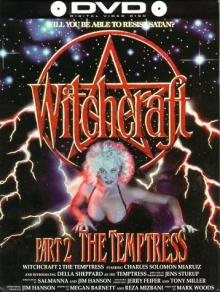 The second of the never-ending Witchcraft series continues the saga of William Churchill Adams Spanner.
We last we saw William, he was just a baby and he and his mother had only barely managed to escape from two 300 year-old witches. In Witchcraft II, William is now 18 years old, which leads to some odd continuity issues. Since the first Witchcraft was clearly set in the late late 80s, this would suggest that Witchcraft II is taking place in the early 21st Century. However, judging by the clothing, the cars, and the slang, Witchcraft II is taking place in the year that it was made, 1990. So, I guess despite all appearances to the contrary, Witchcraft was actually taking place in 1972.
(Then again, Witchcraft II is a Troma film so it’s even more probable that no one involved gave it any of that any thought.)
Having been adopted by Mr. and Mrs. Adams (two white witches who fled the evil coven), William (Charles Solomon) is now a typical teenager and is obsessed with getting laid. Unfortunately, his girlfriend, Michelle (Mia Ruiz), isn’t sure if she’s ready to do that, which leads to William whining and trying to change her mind be playing air guitar. Yes, air guitar.
While William is playing his invisible instruments, the evil witches are coming up with a plan to bring William back over to the dark side and, not surprisingly, it all centers around William’s need for sex. Elizabeth, who was the main witch in the first film and who apparently didn’t actually die at the end of that film despite the fact that everyone who watched it saw that she very clearly did, has been transformed into Deloris Jones (Penthouse model Delia Sheppard), and she is now living next door to the Adamses. While William has hallucinations of Michelle cheating on him with his best friend, Deloris plans to capture William’s soul (and much more) by leaving strange packages on his doorstep and frequently baring her breasts.
The first Witchcraft was low-budge but it still felt like a real movie, albeit not a very good one. Witchcraft II, on the other hand, is very much a direct-to-video production. It has the look of an amateur 80s music video and the actors struggle with even the simplest of lines. The film’s tone is unexpectedly serious, which makes it even stranger when mysterious pentagrams starts to appear on everyone’s chest.
Probably because of the buxom presence of Delia Sheppard (who was very prominently featured on the movie’s VHS and, later, DVD covers), Witchcraft II was a direct-to-video hit. This, of course, led to Witchcraft III.

The 1985 film, Spiker, is an attempt to make an exciting movie out of the one of the most boring sports in the world, men’s volleyball. Not only does the film attempt to make volleyball look exciting but it attempts to do it on absolutely no budget. Anyone who doesn’t appreciate the combination of guts and foolishness necessary to even attempt this is not a real film fan.
Spiker follows a group of college volleyball players as they train to qualify for the Olympics. Or, at least, that’s what I think is supposed to be going on. The plot is really difficult to follow, not because it’s complex but just because it’s volleyball and who cares? We learn that the coach of the team (played by Michael Parks) is a tough taskmaster. We learn that one of the players needs to get his act together and be more mature. We learn that another member of the team has a wife who is jealous of all of his volleyball groupies. Eventually, the team competes in Japan and Poland. In Japan, the teammate who needs to get his act together gets drunk and wanders around with two prostitutes. Poland, meanwhile, is represented by a high school gym and four women doing the polka. One Polish woman asks a member of the team to smuggle out some letters. Which he does. Yay. Exciting.
As I said, there’s a lot of volleyball in Spiker but you’re never really sure if the American team is winning or not. Unless it’s being played on a beach and everyone’s wearing a skimpy bathing suit, volleyball is a thoroughly uncinematic sport. I mean, what do you think of when you think about volleyball in the movies? You think about Carrie White not hitting the ball and then burning down the school. What you don’t wonder is, “I wonder who was winning when Carrie missed that hit?”
What makes Spiker a pleasure is it’s determination. The film is truly convinced that it can somehow make volleyball exciting and you have to admire it for being so sure of itself. It’s kind of like those people who spend night after night in Marfa, waiting for the UFOs to arrive. They may be crazy but you can’t help but admire their dedication, even while you’re laughing at some of the absolutely atrocious dialogue.
The other thing that makes Spiker a guilty pleasure is the extremely intense and almost unhinged performance of Michael Parks at the volleyball coach. Parks plays the coach as being tough-as-nails and always in a bad mood. The film’s best scene features him throwing volleyball after volleyball at a player who has displeased him. Parks does so with a look of grim determination on his face, the sign of a dedicated method actor giving it his best even in a B-movie that he probably agreed to do because he needed to pay the rent. What makes Parks’s performance so memorable is that he never really seems angry. Instead, he just seems to be perpetually annoyed and that makes him all the scarier. Anger, after all, passes. Annoyance is forever.
Spiker is a bad film but it’s endlessly watchable precisely because it so misjudged. You can’t help but find both it and Michael Parks’s performance to be oddly fascinating.

Previous Guilty Pleasures
Don’t ever play with mysterious board games, especially if you find them in the basement of a dead person’s house.
That would seem to be the main lesson of Deseo, Deseo.
The other, secondary lesson would be to be careful what you wish for. You might just get it and all that.
Then again, I guess you could argue that the lesson is less about board games and less about wishes and more about the importance of not spending too much time hanging out with your cousins. Because it really does seem as if a lot of the bad things that happen in Deseo Deseo could have been avoided if the cousins involved hadn’t all been so peculiarly close. I mean, don’t get me wrong. I come from a big Irish/Italian/Spanish family and I love my cousins but even I’m smart enough not to spend every waking moment with them.
(Basically, a cousin is a sibling for whom you’re not obligated to buy a birthday present.)
Anyway, Deseo Deseo is a Mexican horror film. (The title translates to I Wish, I Wish.) Though it’s listed on Prime as being a 2020 film, it’s actually been around for a while. It was filmed and started making the rounds on the festival circuit in 2016. It spent four years playing festivals before being “released” on Prime in August. I point this out not to criticize. Instead, I just always find interesting how we’ll refer to a film as if it belongs to the year that it finally got a wide release whereas many films — especially independent horror films — are usually one or two years old by the time they’re finally made available to the viewing, non-festival public. I think sometimes there’s a tendency to assume that a film is shot and then it’s magically released a month or two later. Actually, it takes a lot of work to not only make a movie but also to get it distributed.
Deseo Deseo tells the story of five cousins who visit the dilapidated home of their dead grandmother. Each cousin is a very definite type. You’ve got the fat nerdy guy and the arrogant wannabe rich guy and the awkward virgin guy and the girl who wants to be Salma Hayek and the other girl who is just normal enough that she might have a chance to survive the film. They’ve all got their hopes and dreams, some of which are better than others. The aspiring actress wants to be a star, which is understandable. The awkward virgin guy wants to bang his cousin, which is really icky.
They find a board game in the basement and they make the mistake of playing it. While holding a magical token, each one makes a wish. The game then tells them what they have to do to make that wish come true. (“I want to be a star.” “Cheat on your boyfriend.”) The game also tells them who will be punished if they fail to follow the instructions. “It’s just a stupid game!” the arrogant rich guy says, despite the fact that the game gives some very specific recommendations.
One way or another, everyone’s wish come true. Of course, this being a horror movie, the wishes usually come true in a totally unexpected way that kind of messes up everyone’s life. And, of course, people have to die. Eventually, our five cousins end up back in the basement, trying to wish their lives back to normal which …. yeah, don’t try to trick the demonic board game, folks.
“I wish for this all to end!” someone says.
“Kill them all,” the game suggests.
Seriously, don’t mess with board games!
So, the plot is a bit predictable but honestly, that really didn’t matter. I mean, yes, the board game is obviously bad news and playing with it was a huge mistake but part of the deal that we enter into when we start watching a film like this is a willingness to accept that the film’s characters are going to do dumb things. I liked Deseo Deseo, even if it wasn’t exactly the most original horror film that I’ve ever seen. It was fast-paced, the atmosphere was creepy, and the actors were all likable enough that you at least felt a little bit of regret when they started dying. I look forward to seeing what director Eduardo M. Clorio does next.

4 Shots From 4 Films is just what it says it is, 4 shots from 4 of our favorite films. As opposed to the reviews and recaps that we usually post, 4 Shots From 4 Films lets the visuals do the talking!
This October, we’ve been using 4 Shots From 4 Films to pay tribute to some of our favorite horror directors! Today we recognize the talents of the master of Hammer horror, Terence Fisher!
4 Shots From 4 Films
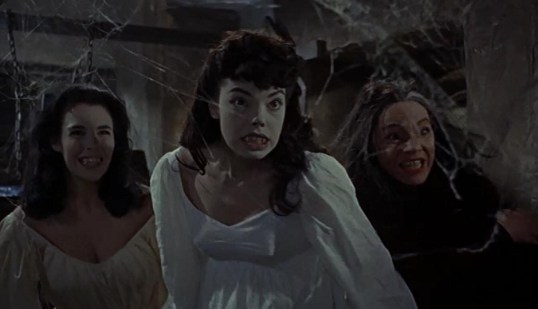
The Brides of Dracula (1960, dir by Terence Fisher)
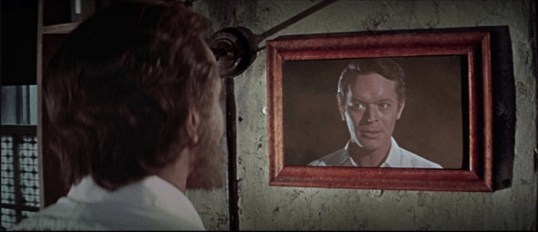
The Two Faces of Dr. Jekyll (1960, dir by Terence Fisher)
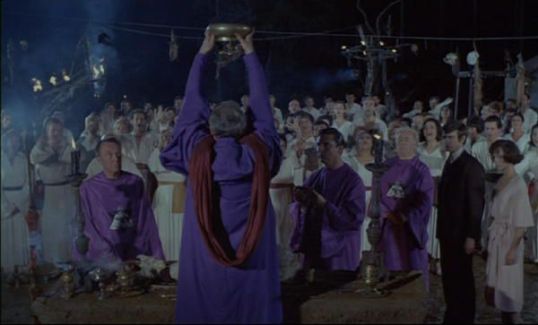
The Devil Rides Out (1968, dir by Terence Fisher)

Frankenstein and the Monster From Hell (1973, dir by Terence Fisher)
Hi, and welcome to the 100th remake of The Wicker Man.
In this version from 2006, our victim is played by Jeremy Sisto. He’s a good actor but he’s no Nicolas Cage. He played Steve Kady, who works for the U.S. Census Bureau so let’s all take a moment to boo the federal government. Booooo! Steve has been sent to the small town of Rockwell Falls, North Dakota so that he can count the citizenry and I guess help to determine whether North Dakota should get a second congressional district.
Anyway, Steve arrives in town and he quickly meets Deputy Bobby Caine, who is played by Fred Durst. A town where Fred Durst is responsible for maintaining law and order? It’s a madhouse! Actually, it’s a bit of a exaggeration to call the town a madhouse but there’s definitely something a little bit off about it. The people seem to be old-fashioned and very religious. Could it be that they’re Mennonites? If so, Steve’s gotten lucky because we’ve got a lot of Mennonites in Texas and, for the most part, they’re the nicest people you could hope to meet.
Anyway, Steve does some research and he discovers that the town has a long history of losing people to a mysterious fever and that somehow the town has never had more nor less than 436 citizens. It’s almost as if something’s being done to specifically make sure that the town’s population always remains at 436. The people who live there can’t leave without falling victim to any number of mysterious accidents. The people who show up — like folks from the Census Bureau, for instance — are expected to stay. Is it a supernatural thing or is it just an amazing religious-based coincidence?
Steve is going to have to figure it out because he’s falling in love with Courtney Lovett (Charlotte Sullivan) and she apparently doesn’t want to spend the rest of her life in a small town in North Dakota. Also, it turns out that Bobby Caine is also in love with Courtney and he’s not happy about losing her to someone who works for the Census Bureau. I don’t blame him. I guess this where I would insert a joke about some song written by Limp Bizkit but, to be honest, I haven’t thought about Limp Bizkit in nearly twenty years and I’m not going to start now.
Anyway, this is kind of a padded review because there’s really not a lot to say about Population 436. It’s an okay horror movie but it’s not a particularly interesting one. By this point, we’ve seen so many messed up little towns and so many weirdly old-fashioned people with strange religious beliefs that it’s hard to be shocked by any of it anymore. Even the movie’s “shock” ending feels predictable. On the plus side, the film does make good use of the inherent creepiness of living in a state that’s defined by wide open spaces. The town of Rockwell Falls does look convincingly creepy. On the negative side, the film is a bit superficial and never bothers to really explore any of the issues that it raises. It’s content to just say, “Religious people are crazy,” and while many will agree with that sentiment, it’s hardly as subversive a statement as Population 436 seems to think that it is.
Of course, if Population 436 encourages just one viewer to be paranoid about census takers and government bureaucracy, it will have all been worth it.

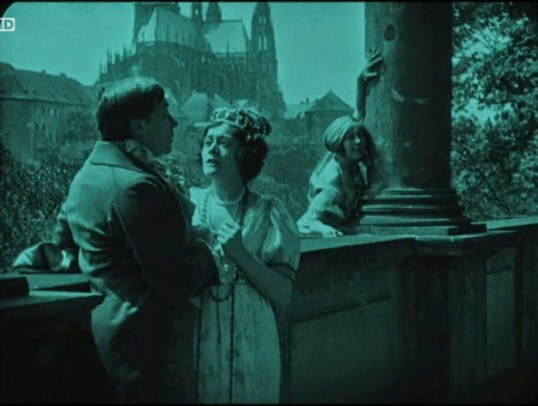
For today’s horror on the lens, we have a film from 1913! A German adaptation of Edgar Allan Poe’s William Wilson, The Student of Prague is often considered to be the first feature-length horror film. Featuring Paul Wegener (who also co-directed the film) in the lead role, this is the story of what happens when the popular but poor Balduin attempts to get rich by dealing with the dark arts. These things never work out well, as Balduin discovers once his reflection steps out of a mirror and goes out of its way to make Balduin’s life difficult.
Of course, to watch the film today, audiences have to adjust both their expectations and the way that they take in and process cinematic storytelling. As of this writing, The Student of Prague is 106 years old and it’s definitely a film of its time. The camera largely remains stationary and, from a modern perspective, the film is rather slow-paced. And yet, the film’s story remains rather intriguing. Despite the static camera work, the film manages to create and maintain a properly ominous atmosphere and a scene in which Balduin and Margit attempt to meet in a cemetery is effectively creepy. Paul Wegener’s performance holds up well. Largely eschewing the overly theatrical acting style that we usually tend to associate with silent cinema, Wegener gives a nuanced and effectively subtle performance as both Balduin and his doppelganger. When he’s acting opposite of himself, you don’t think about the fact that you’re witnessing an early camera trick. Instead, Wegener creates two separate but believable versions of the same character. The doppelganger represents all of Balduin’s undesirable impulses and everything that has kept Balduin from achieving happiness. By the end of the film, Balduin can’t live with his doppelganger but he can’t live without him as well.
The Student of Prague is an interesting piece of history and one that every true student of horror should watch and learn from at least once.
And here’s your chance!
Enjoy!
 Through the Shattered Lens