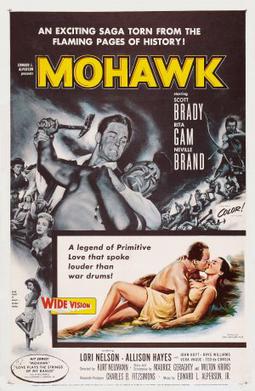
Mohawk (1956, directed by Kurt Neumann)


In the late 18th century, Boston socialite Cynthia Stanhope (Lori Nelson) travels to Fort Alden in upstate New York to visit her fiancé, a painter named Jonathan Adams (Scott Brady), who has been commissioned to paint the local scenery.  As soon as Cynthia and her mother arrive, they are shocked to discover that not only Jonathan has been painting pictures of the members of the Native local tribes but that he is also now flirting with a barmaid named Greta.  Greta is played by Allison Hayes so who can blame him?  Cynthia wants to return to their normal upper class life in Boston but Adams has fallen for the untamed wilderness of the frontier.

When Onida (Rita Gam), the daughter of Iroquois chief Kowanen (Ted de Corsia) is captured during a raid on the fort, Adams is assigned to escort her back to her tribe.  Leaving behind Cynthia and Greta, Adams falls in love with Onida over the course of the journey.  When he meets the Iroquois, he earns the respect of her father and the entire tribe when he agrees to paint the chief’s portrait.

Meanwhile, a haughty settler named Butler (John Hoyt) is trying to play the army and the Iroquois against each other, feeding both of them false information in an attempt to spark a war.  Butler is hoping that a war will lead to both sides wiping each other out so that he can once again have the valley to himself.  When it turns out that his words might not be enough to spark a war, Butler resorts to murder.  When Kowanen’s son is killed, the Iroquois prepare for war while Adams is framed for the crime and finds himself tied to a stake.

Mohawk is a standard B-western, with a plot that is largely lifted from John Ford’s Drums Along The Mohawk.  Unfortunately, Adams is about as sympathetic hero as you would expect someone manipulating three different women to be and, when it comes to depicting the Iroquois, Mohawk resorts to too many clichés.  This is one of those westerns where the Native characters speak broken English, even when they are just talking to each other.

Mohawk does have three things to recommend it.  Number one, John Hoyt was a master at playing haughty villains and Butler is easy to root against.  You will look forward to seeing him get his comeuppance.  Number two, Allison Hayes was a force of nature and that’s true even in this film, where she’s not given nearly enough to do.  Number three, one of Iroquois braves is played by Neville Brand.  A highly decorated World War II veteran, Brand built a long career playing tough guys.  In Mohawk, it only takes one look at Neville Brand to know that this isn’t someone you want to mess with.  Anyone watching would want to stay on Neville Brand’s good side.

Otherwise, Mohawk is forgettable.  Two years after it was released, Mohawk’s director Kurt Neumann, would be responsible for the much more memorable The Fly.

6 Shots From 6 Films: Special Robert Duvall Edition


4 Or More Shots From 4 Or More Films is just what it says it is, 4 shots from 4 of our favorite films. As opposed to the reviews and recaps that we usually post, 4 Shots From 4 Films lets the visuals do the talking!

Today, we celebrate the 91st birthday of one of the finest American actors out there, Mr. Robert Duvall.  Ever since he made his film debut in 1962’s To Kill A Mockingbird, Duvall has been a regular presence in American cinema.  He’s an actor who has appeared in some of the best American films ever made (The Godfather, Network, Apocalypse Now, To Kill A Mockingbird, Tender Mercies, and others) and he’s played a wide variety of characters.  He’s been everything from a lawyer to a cowboy to a network executive to a professional criminal to a cop and he’s never been less that convincing.  He’s got a filmography about which anyone would be jealous.  And, at an age when most actors have retired, Duvall is still working and taking the occasional part.

On a personal note, I have to say that, for someone who was born in California, raised in Maryland, and who started his career in New York, Robert Duvall is one of the few actors to have perfected both the Southern and the Southwestern accent.  Whenever I see him playing a Texan, I always have to remind myself that he’s not actually from around here.

In honor of Robert Duvall’s birthday, here are….

6 Shots From 6 Robert Duvall Films

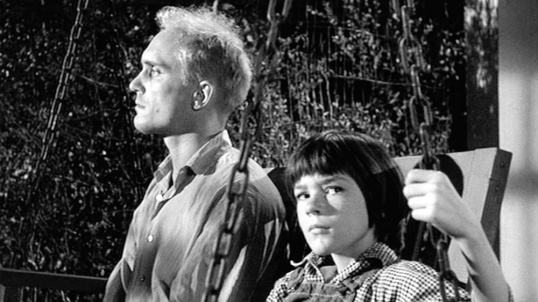
To Kill A Mockingbird (1962, dir by Robert Mulligan, DP: Russell Harlan)

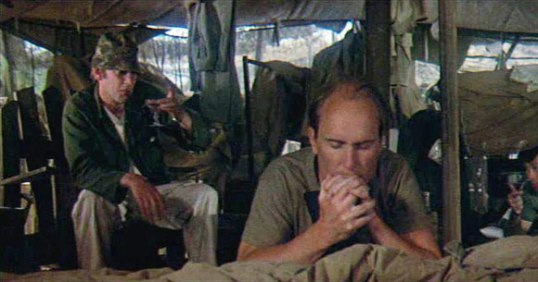
MASH (1970, dir by Robert Altman, DP: Harold E. Stine)

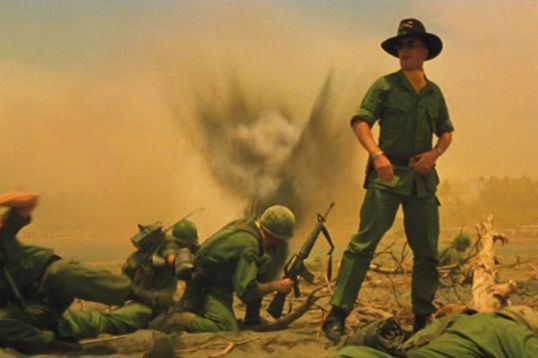
Apocalypse Now (1979, dir by Francis Ford Coppola, DP: Vittorio Storaro)

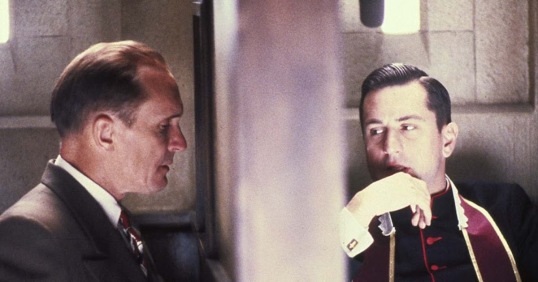
True Confessions (1981, dir by Ulu Grosbard, DP: Owen Roizman)

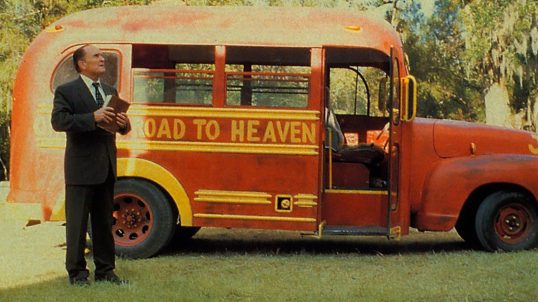
The Apostle (1997, dir by Robert Duvall, DP: Barry Markowitz)

The Judge (2014, dir by David Dobkin, DP: Janusz Kamiński)

The Gatling Gun (1971, directed by Robert Gordon)


In the post-civil war west, two Calvary troopers steal a Gatling Gun, the weapon that was invented to be such a powerful instrument of death that people would stop fighting wars just to avoid finding themselves in front of its barrel.  (It didn’t work out that way, of course.)  With the help of a pacifist reverend named Harper (John Carradine), they smuggle the gun into Apache territory.  Rev. Harper thinks that the gun is going to be destroyed and, thus, another instrument death will be eliminated. from the world  Instead, the greedy troopers are planning on selling the gun to Apache Chief Two Knife (Carlos Rivas).  Two Knife has promised a fortune’s worth of gold to anyone who can deliver to him the deadliest weapon in the west.

Before the gun can be exchanged, the reverend, his daughter, and the two deserters are intercepted by a group of Calvary troops led by Lt. Wayne Malcolm (Guy Stockwell).  One of the deserters is killed while the other, Pvt. Sneed (Robert Fuller) is captured.

However, Chief Two Knife still wants what he calls “the king gun.”  Malcolm and his troops find themselves pinned down by the Apaches.  Can Malcolm, with the help of a rancher (Phil Harris), a scout (Woody Strode), and a cook (Pat Buttram), keep both the gun and the all important firing pin from falling into the hands of Two Knife?

The Gatling Gun is a low-budget western that would probably be today forgotten except that it has fallen into the public domain and has been included in several DVD box sets.  It has the flat, generic look of a Western television show and Guy Stockwell’s stiff performance may be believable for a 19th century Calvary captain but it’s still doesn’t exactly make for compelling viewing.  The main problem is that the most exciting and interesting part of the story, the two deserters stealing the gun and tricking the Reverend into helping them, occurs off-screen and the movie instead begins with Malcolm capturing Sneed.

Western fans will mostly want to watch this one to see John Carradine and Woody Strode, two very different actors who were both favorites of John Ford’s and who appeared in several other, better westerns.  (Strode and Carradine had both previously appeared in The Man Who Shot Liberty Valance, to name just one example.)  Carradine is typically theatrical, delivering his lines like the old Shakespearean that he was.  Strode, as usual, is stoic but his imposing screen presence makes him the most memorable of the film’s heroes.  Also keep an eye out for Patrick “son of John” Wayne, playing the rancher’s son.

Though The Gatling Gun has the look of a film that was shot on a studio backlot in Hollywood, it was actually filmed, on location, in New Mexico.  The state’s then-governor, David Cargo, has a small role as Corporal Benton and is listed in the credits as “Honorable Governor David Cargo.”  A look at his imdb page reveals that David Cargo appeared in four films while he was governor.  All of them were filmed in New Mexico so I guess casting the governor was a requirement for filming in that state.  When Cargo left office in 1971, his movie career ended.

Scenes That I Love: The Robot Montage from George P. Cosmatos’s Cobra


On this date, in 1941, future director George Pan Cosmatos was born in Italy.  Cosmatos would go on to direct some of the most financially successfully (if critically lambasted) films of the 80s.  He’s also credited as being the director on Tombstone, though it’s generally agreed that Cosmatos largely deferred to Kurt Russell on that film.  (Cosmatos was a last minute replacement for the film’s original director.)

Other than Tombstone, Cosmatos is best-known for the films that he did with Sylvester Stallone.  And today’s scene that I love comes from the 1986 film, CobraCobra stars Stallone as a motorcycle-riding cop who never asks question when he can just shoot a big gun instead.  Stallone’s show-no-mercy attitude may upset his superiors but it turns out to be just what’s needed to take care of a murderous cult.  Now, Cobra may be a fairly dumb film but it does have one sequence that pretty much epitomizes an era.  If nothing else, George Pan Cosmatos deserves to be remembered for Cobra’s famous robot montage.  While Sylvester Stallone searches for the murders who are decimating his city, model Brigitte Nielsen poses with a bunch of life-size robots.

One reason why this sequence works is because it really does seem to come out of nowhere.  The film goes from Stallone promising to wipe out the bad guys to a bunch of adorable robots.  It’s all very 80s.  And we have George Pan Cosmatos to thank for it.

Here’s a scene that I love:

Film Review: East of the Mountains (dir by SJ Chiro)


Sometimes, a good film just sneaks up on you.

That was certainly the case with me and East of the Mountains, an independent film which came out last September.   I have to admit that the film completely slipped past me when it was initially released.  In fact, I didn’t even know that the film existed until it was nominated for Best Motion Picture Drama by the Satellite Awards in December.  I wasn’t alone in that.  I remember when the Satellite nominations were announced, there were a lot of people who looked at the list of nominees and, upon seeing an unfamiliar title mixed in with West Side Story, The Power of the Dog, and Don’t Look Up, said, “East of what?”

Because I’m always on the lookout for an overlooked gem, I rented East of the Mountains on Prime. I watched it yesterday.  My initial reaction was that it was a well-made film, featuring both pretty scenery and an excellent lead performance from veteran actor Tom Skerritt.  (Skerritt is also credited as being an executive producer on the film.)  I appreciated that, in a time when so many film feels as if they’re at least ten minutes too long, East of the Mountains was a remarkably short film.  It only needed 79 minutes to tell its simple but effective story and it didn’t waste a single one of them.  At the time, I also thought that the film’s direction was perhaps a bit too low-key for the film to really work.  I thought it was a good film but I also thought it was one that I would probably forget about in a day or two.

Instead, the opposite has happened.  East of the Mountains has stuck with me.  Even as I sit here typing, I can still picture the film’s final few scenes in my head.  That’s the type of film that East of the Mountains is.  It’s a film that sneaks up on its audience, capturing their attention so subtly that it’s not until several hours later that they realize that they’re still thinking about the film.

Based on a novel by David Guterson, East of the Mountains is a character study.  Tom Skerritt plays Ben Givens.  Ben is a retired doctor and a veteran of the Korean War.  He lives in Seattle.  His wife has passed away.  He’s estranged from his brother.  His daughter is busy with a family of her own.  Ben’s only companion is his dog, Rex.  When he tells his daughter (played by Mira Sorvino) that he’s planning on going bird hunting for the weekend, she’s concerned.  She knows that her father has been depressed.  She also knows that Ben has recently been diagnosed with cancer.  Ben assures her that he just wants to see his “old stomping grounds” one last time but his daughter worries that Ben may be planning on never coming back.

She’s not wrong.  Since we’ve already seen Ben pressing the barrel of a rifle against his forehead, we know that she has every reason to be concerned about his plans.  Ben is considering ending it all, east of the mountains where he grew up, fell in love, and experienced his happiest moment.  However, from the minute that Ben sets off on what he plans to be his final hunting trip, fate seems to be determined to keep him alive.  After his SUV breaks down, he’s given a ride by a mountain climbing couple and their love reminds Ben of when he first met the woman who he would eventually marry.  After a run-in with a half-crazed mountain man, Ben loses his prized rifle, the one that was given to him by his father and which Ben planned to use to end his own life.  After an unexpected dog fights leads to Ben taking Rex to the local animal hospital, he meets a young veterinarian who can tell that Ben needs someone to talk to.

The plot is rather simple but Tom Skerritt’s performance brings the story a certain depth that it might not otherwise possess.  It would be easy to sentimentalize a character like Ben or to portray him as being flawless.  Instead, Skerritt plays Ben as someone who is genuinely well-meaning and naturally kid but who also can occasionally be a bit self-absorbed.  Watching Ben, one can understand why his brother is estranged from him, which makes their eventual, if rather prickly reunion all the more poignant.  (Ben’s brother is well-played by an actor named Wally Dalton.  He and Skerritt play off of each other with such skill that it’s hard to believe that they actually aren’t brothers.)  The viewer hopes that Ben will find what he needs to find in order to achieve some sort of peace for himself, even if Ben himself doesn’t always seem to be quite sure what that possibly mythical thing would be.

Skerritt’s performance here is comparable to Robert Redford’s turn in All Is Lost, with the main difference being that Ben is far more lost than even Reford’s unnamed sailor.  However, much like the sailor in All is Lost, it’s impossible to look away from Ben’s journey.  It’s also tempting to compare Skerritt’s performance to Rchard Farnsworth’s Oscar-nominated turn in David Lynch’s The Straight Story.  (Indeed, the scene between Skerritt and Dalton is comparable to the final scene between Farnsworth and Harry Dean Stanton.)  Much like Farnsworth in Lynch’s film, Tom Skerritt may move slowly but the viewer is always aware of his mind working.

East of the Mountains may sound like a depressing or heavy-handed film but actually it’s not.  If anything, it’s life-affirming.  The audience is right alongside Ben, learning with him that the world is not as terrible a place as he had convinced himself it was.  In the end, the viewer cares about Ben and worries about what his ultimate fate will be.  The film’s ending sneaks up on you and it stays with you afterwards.

There is one scene involving a dog fight that is difficult to watch but otherwise, East of the Mountains is a simple but poignant film that deserves more attention than it’s received.

4 Shots From 4 Carlos Saura Films: Los Golfos, Carmen, Taxi, Tango


4 Or More Shots From 4 Or More Films is just what it says it is, 4 shots from 4 of our favorite films. As opposed to the reviews and recaps that we usually post, 4 Shots From 4 Films lets the visuals do the talking!

Today, we celebrate the 90th birthday of Spanish director Carlos Saura.  Born in Huesca, Spain in 1932, Saura began his career directing documentaries in the 50s and has been directing feature films since the early 60s.  Saura was originally known as a neorealist, which was not necessarily the safest thing to be when you were a filmmaker in Francisco Franco’s Spain.  His later films have relied more on symbolism and surreal imagery to comment on both Spanish history and culture.  He’s also acclaimed for his dance films.  12 of Saura’s films have competed at Cannes and three of his films were nominated for the Oscar for Best International Film.

In honor of Carlos Saura’s career and vision, it’s time for….

4 Shots From 4 Carlos Saura Films

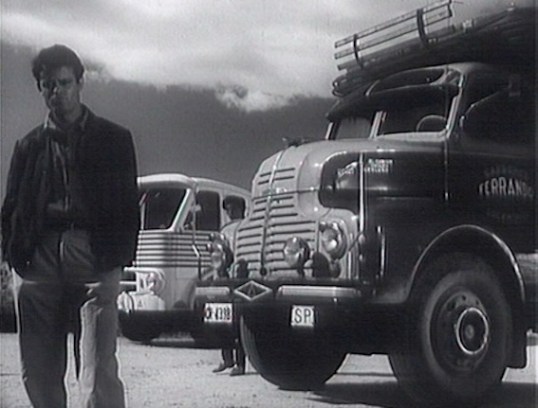
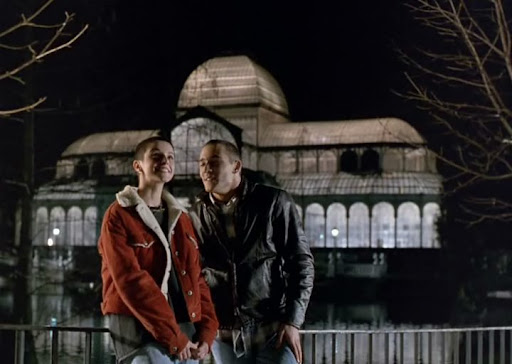
Los Golfos (1962, dir by Carlos Saura, DP: Juan Julio Baena)

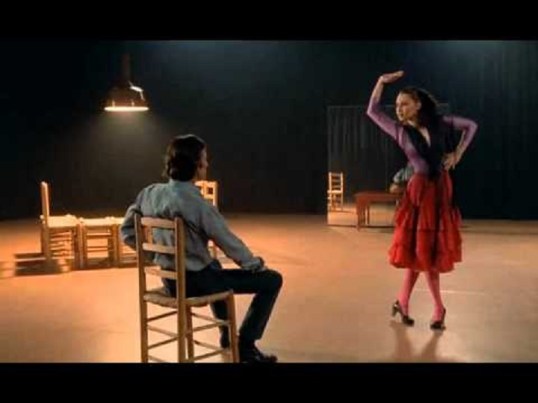
Carmen (1983, dir by Carlos Saura, DP: Teo Escamilla)

Taxi (1996, dir by Carlos Saura, DP: Vittorio Storaro)

Tango (1998, dir by Carlos Saura, DP: Vittorio Storaro)

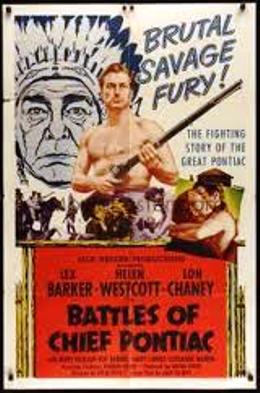
Battles of Chief Pontiac (1952, directed by Felix E. Feist)


A decade before the start of the American Revolution, the British have managed to force the French out of the Great Lakes region.  Fort Detroit has been established to oversee the area and provide protection from the Odawa tribe.  Chief Pontiac (Lon Chaney, Jr.) believes that the Odawa and the White Man can live in peace but his beliefs are challenged when the British bring in a brutal German mercenary, Col. von Weber (Berry Kroeger), to patrol the land.  After Col. von Weber and his soldiers massacre a village, Pontiac and the Odawa prepare for war.

Lt. Kent McIntire (Lex Barker, who was best known for playing the role of Tarzan in several movies) is a Colonial officer and a scout who is convinced that he can broker a peace between the Odawa and the British.  Odawa respects and trusts McIntire but when von Weber tries to wipe the Odawa out by sending them small pox-infected blankets, Pontiac realizes that there can be no peace and he launches an attack on Fort Detroit.

Though hardly a great film, Battles of Chief Pontiac deserves some credit for its sympathetic portrayal of the Odawa People.  From the start, the film makes clear that everything that the Pontiac does, he does out of self-defense.  Even the most enthusiastic of his warriors, Hawkbill (Larry Chance), is not fighting because he wants to fight but he’s fighting because it is evident that von Weber is not going to leave the Odawa any other choice.  Though the small pox-ridden blankets were actually given to a different tribe, just the fact that Battles of Chief Pontiac acknowledges that it happened sets it apart from many other B-movies of the period.  Though not a Native American himself, Lon Chaney, Jr. gives a surprisingly dignified performance as Pontiac and he doesn’t allow the character to become a caricature.  Again, that alone is enough to set Battles of Chief Pontiac apart from a lot of the other films of the period.

Battles of Chief Pontiac still cheats by laying the blame on the Hessians, the German mercenaries who, historically, were not even present in North America until they were hired by the British during the American Revolution, which happened ten years after Pontiac’s siege of Fort Detroit.  Berry Kroeger plays Von Weber as if he was a high-ranking Gestapo officer who somehow found himself in the 18th Century.  By making Von Weber the villain, the film lets the British off the hook.  The only mistakes that the British officers make in Battles of Chief Pontiac is that they trust a German and fail to listen to the advice of the all-American Lex Barker.

Battles of Chief Pontiac has a narrator who sounds like he would have been better suited for an educational filmstrip about hygiene and its epic ambitions are thwarted by its low-budget.  There’s a not very interesting love story between McIntire and a white woman (Helen Westcott) who is being held prisoner by the Odawa.  The movie’s intentions go a long way towards making up for the flaws but they can’t do all the work.  At least, Barker, Chaney, and Kroeger manage to keep thing interesting.

What Could Have Been: The Godfather Part III


If only Tom Hagen had returned….

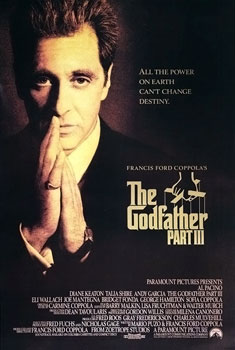
Recently, when asked about The Godfather Part III‘s somewhat lackluster reputation, director Francis Ford Coppola said that the biggest mistake that Paramount made was refusing to meet Robert Duvall’s salary demands.  While Duvall wasn’t demanding to be paid as much as Al Pacino, he still felt that their salaries should be “comparable.”  Paramount, who had already gone through a lot of protracted negotiations to get Coppola, Pacino, and Diane Keaton to agree to do the film, disagreed.  Originally, Coppola had planned for Duvall’s Tom Hagen to be a major part of Godfather Part III.  When Duvall refused to return, the film had to be reimagined.

Coppola’s right.  There’s a lot that I do like about The Godfather Part III but it’s undoubtedly a flawed film.  (It’s a good gangster film but it never feels like a worthy follow-up to the films that came before it.)  And one of the major problems with the film is that Al Pacino’s Michael Corleone doesn’t have anyone with whom he can really confide.  Kay (Diane Keaton) holds him at arm’s length for most of the film.  Connie (Talia Shire) is too busy scheming and plotting on her own.  The rest of the family — Mary (Sofia Coppola), Vincent (Andy Garcia), and Anthony (Franc D’Ambrosio) — are too young to truly understand the sins of the past.  If Tom Hagen had been in the film, Michael would have had someone to whom he could relate.  He would have had an equal.  Hagen’s absence is felt far more than Paramount expected it would be.  They should have paid Duvall his five million.

(For his part, Duvall has defended his salary demands by saying that the only reason anyone was making Godfather Part III was for the money so why shouldn’t he get paid?  And again, Duvall has a point….)

Salud, you bastards.

Of course, for a long time, it seemed like The Godfather Part III would never be made.  After The Godfather Part II swept the 1974 Academy Awards and proved wrong everyone who felt that it would fail, Paramount wanted a sequel.  The only problem was that Coppola and Pacino both said they wouldn’t return.  And, after Coppola disappeared into the jungle for several years and reportedly went mad directing Apocalypse Now, Paramount wasn’t quite sure that they wanted him to return either.

As unthinkable as it may seem now, it was originally quite probable that The Godfather Part III would have featured neither Pacino nor Coppola.  Between 1975 and 1988, several different scripts and treatments were written for a possible Part III.  Many of them opened with Michael either dying or already dead and his son, Anthony, taking over the family business.  Several of the scripts imagined Sonny’s son, Santino, waging war against Anthony and Tom Hagen (yep, Tom again) being forced to take a side.  In the 70s, many of the scripts featured the Mafia working with the CIA to take out Castro and there were more than few that suggested the Corleones were responsible for the Kennedy assassinations.  As the 70s gave way to the 80s, the scripts started to deal with the Corleones getting involved in the drug trade and going to war with the South American drug cartels.  Think of it as The Godfather vs. Scarface, which would have actually been an intereting concept if they could have gotten Al Pacino to return as both Michael Corleone and Tony Montana.  These scripts all reflected the concerns of the time in which they were written but, reportedly, none of them felt like a Godfather movie.  The idea that The Godfather was meant to be the story of a family as much as a story about organized crime was frequently missed by those who tried to stop into the shoes of Coppola and Puzo.

Over the years, with Coppola saying that he wouldn’t return under any circumstances, Paramount considered a lot of different directors as a successor.  Among those who were considered over the years:  Martin Scorsese, Costa-Gavras, James Bridges, Robert Benton, Michael Mann, Philip Kaufman, Alan Pakula, Warren Beatty, Sidney Lumet, Lewis Carlino, and Michael Cimino.  (Scorsese seems like the obvious choice out of that list but, personally, I would love to see what Michael Mann would have done with the Corleones.)  Sylvester Stallone was also apparently interested in both directing and playing the role of Anthony Corleone.  (John Travolta, whom Stallone directed in Staying Alive, was another frequently mentioned Anthony.)  It probably came closer to happening than most people are willing to admit.

Still, it wasn’t until 1989 that The Godfather Part III finally went into production and, as Duvall said, it was all for the money.  Paramount needed money.  Pacino needed money.  Coppola, after a string of flops and several financial setbacks, definitely needed the money.  Coppola wanted to present the film as being an “epilogue” as opposed to a direct sequel.  Paramount was probably correct when they argued that people don’t pay money to watch epilogues.  They pay money for sequels.

The eventual script, by Coppola and Mario Puzo, focused on the forbidden relationship between Sonny’s illegitimate son, Vincent, and Michael’s daughter, Mary.  As written, Mary was supposed to be 23 years old and savvy about the ways of the Corleone family.  Vincent, meanwhile, was a 31 year-old, out-of-control street criminal who, under Michael’s tutelage, became a refined gangster over the course of the film.  We all know that Vincent was eventually played by Andy Garcia while 18 year-old Sofia Coppola was cast, at the last minute, as Mary.  For all the criticism that Francis Ford Coppola took for casting his inexperienced daughter in a role that she was too young for, just imagine the critical reaction if Coppola had followed Paramount’s wishes and cast Madonna.
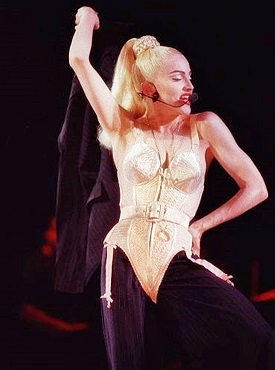
Yes, Madonna was Paramount’s suggestion for Mary and Coppola was interested enough to film a screen test with her.  Acting opposite of Madonna was Robert De Niro, who was interested in playing Vincent!  Though De Niro was in his 40s, he argued that he could still pass for 31 and, having played Vito in Part II, De Niro was intrigued with the idea of playing his own grandson.  However, the screen tests did not convince anyone.  Both Madonna and De Niro were determined to be too old for the roles.  De Niro went on to do Goodfellas and The Awakening instead.

The first choice for Vincent was reportedly Alec Baldwin but, for reasons unknown, Baldwin turned down the role.  (Baldwin was also an early possibility for Henry Hill in Goodfellas.)  Matt Dillon, Vincent Spano, Kevin Anderson, and Luke Perry all tested for the role.  Val Kilmer, Nicolas Cage, Charlie Sheen, and Billy Zane were all considered at one point or another.  The studio pushed Coppola to pick Tom Cruise.  In the end, Coppola went with Andy Garcia.  Garcia received his only Oscar nomination for playing Vincent and his performance is one of the highlights of the film.  Still, Nicolas Cage as Vincent is a fascinating idea.

With Madonna out of the running, Coppola offered the role of Mary to Julia Roberts but Roberts was committed to Pretty Woman.  A television actress named Rebecca Schaeffer was also highly considered but she was shot and killed by an obsessed fan on the same night that she received the script.  Bridget Fonda, Linda Fiorentino, Laura San Giacomo, Annabella Sciorra, and Trini Alvarado were all considered but, in the end, Winona Ryder was selected for the role.  Ryder flew out to Rome to do the film and there’s some debate as to what happened next.  Ryder has said that she arrived in Italy exhausted after having done two previous films back-to-back.  Other reports have said that Ryder had a nervous breakdown in Rome.  Either way, her then-boyfriend, Johnny Depp, requested that she leave the film and return to the States and Ryder did just that.

Reportedly, after Ryder left the film, the role was again offered to Julia Roberts and Roberts again turned it down to focus on Pretty Woman.  At the time, Sofia Coppola happened to be visiting her father in Rome.  Sofia had done a little modeling and had appeared in a few of her father’s films, always in small roles.  She had also co-written her father’s segment of New York Stories.  Francis announced that Sofia would be playing Mary and, with the studio desperate for The Godfather Part III to be ready in time for a Christmas release in 1990, Paramount had little choice but to go along.  The role was rewritten for Sofia.  Mary became a far more innocent and naïve character, sometimes to the point of implausibility.  Sofia, who is one of my favorite directors, has taken a lot of criticism for her performance over the years.  Personally, I think she was pushed into a no-win situation.  She was an inexperienced actress, stuck with a hastily rewritten character and all the worst lines.  Plus, making out with Andy Garcia while her Dad watched from a few feet away had to be awkward.  On the plus side, Sofia’s hair was very pretty in Godfather Part III.

As for the rest of the cast, Joe Spinell was originally meant to return as Willi Cicci but Spinnel died before filming began.  Cicci’s character was transformed into Joey Zasa, New York’s best-dressed gangster.  Dennis Farina, Mickey Rourke, and John Turturro were all considered for Zasa.  The role went to Joe Mantegna, who had a lot of fun with the part.  I’ve always felt one of Part III’s biggest mistakes was killing of Joey Zasa too early in the film.  None of the film’s other villain quite have Zasa’s style.

Virginia Madsen and Diane Lane wee both considered for the role of Grace Hamilton, the photojournalist who has a memorable one night stand with Vincent.  After it was decided that she wouldn’t play Mary, Madonna was also briefly considered.  In the end, the role went to another potential Mary, Bridget Fonda.

For Archbishop Gilday, the corrupt Vatican banker, many international stars were considered.  Presumably, Gilday’s nationality would have changed depending on who got the role.  Vittorio Gassman, Phillipe Noiret, Gian Maria Volonte, Yves Montand, Marcello Mastroianni, and Albert Finney were all possibilities before the role went to Donal Donnelly.

Many of those who were considered for the Archbishop were also considered for the role of Pope John Paul I.  Vittorio Gassman, Yves Montand, and Michel Piccoli were all considered.  The role went to Raf Vallone, who was also considered for the role of Don Vito in the first Godfather.
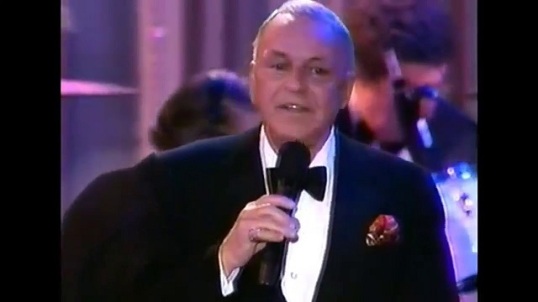
Finally, there was Don Altobello.  Altobello was the latest former Corleone ally to try to betray Michael.  Frank Sinatra, whose offense at being used as the model for Johnny Fontane in Part One was legendary, was reportedly interested in the role.  Timothy Carey, who was considered for both Luca Brasi and Hyman Roth in Parts One and Two, was a possibility until he suffered a stroke.  In the end, Coppola went with Eli Wallach.

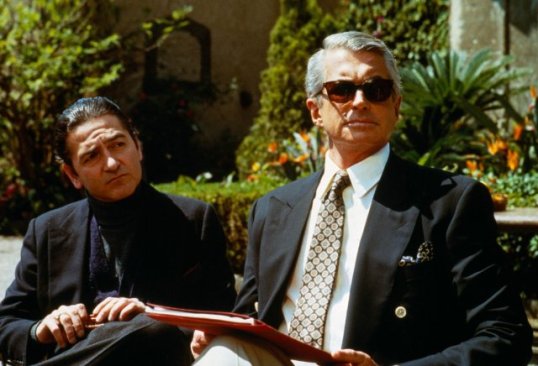
As for Tom Hagen, he was gone.  He was written out of the film and described as having died off-screen.  However, Coppola brought in a replacement lawyer.  B.J. Harrison was played by George Hamilton.  Unfortunately, Harrison was never as close to Michael as Hagen had been.  It’s a shame because Godfather Part III definitely could have used a bit more George Hamilton.
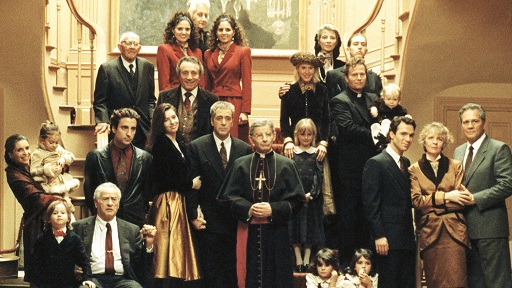
Godfather Part III was released in December of 1990.  It did well at the box office.  It received a number of Oscar nominations.  As a film, The Godfather Part III is heavily flawed but, when it works, it really does work.  It may not live up to the standard set by the first two Godfathers but then again, what does?  I recently watched Coppola’s re-edit of Part Three, the Godfather Coda.  It actually is an improvement.  There aren’t any added scenes but the new version does considerably tighten up the film’s pace.  The opera at the end no longer drags on forever.  Godfather Part III may not be great but it’s not terrible, either.  It’s better than it’s reputation.

Still, it’s hard not to wonder what could have been.  If only Tom Hagen had come back….
Here Are The 2021 Nominees Of The Chicago Indie Critics!


The Chicago Indie Critics have announced their nominees for the best of 2021!  The winners will be announced on January 8th.

Personally, I like the fact that they give an award for both Best Independent Film and Best Studio Film.  I sometimes think that the Oscars should do the same.  Then I remember how the Oscars manage to screw up nearly every cool idea and I change my mind.

BEST INDEPENDENT FILM (budgets under $20 million)
CODA
NINE DAYS
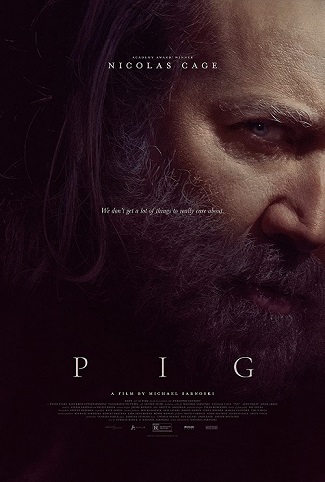
PIG
SPENCER
SUMMER OF SOUL

BEST STUDIO FILM (budgets over $20 million)
THE HARDER THEY FALL
LICORICE PIZZA
THE POWER OF THE DOG
SPIDER-MAN: NO WAY HOME
TICK, TICK… BOOM!

BEST FOREIGN LANGUAGE FILM
BENEDETTA
DRIVE MY CAR
FLEE
A HERO
PARALLEL MOTHERS

BEST DOCUMENTARY
FLEE
THE RESCUE
ROADRUNNER: A FILM ABOUT ANTHONY BOURDAIN
THE SPARKS BROTHERS
SUMMER OF SOUL

BEST ANIMATED FILM
ENCANTO
FLEE
LUCA
THE MITCHELLS VS. THE MACHINES
RAYA AND THE LAST DRAGON

BEST DIRECTOR
Paul Thomas Anderson – LICORICE PIZZA
Kenneth Branagh – BELFAST
Jane Campion – THE POWER OF THE DOG
Pablo Larrain – SPENCER
Edson Oda – NINE DAYS

BEST ORIGINAL SCREENPLAY
THE FRENCH DISPATCH – Wes Anderson
A HERO – Asghar Farhadi
LICORICE PIZZA – Wes Anderson
NINE DAYS – Edson Oda
PIG – Michael Sarnoski

BEST ADAPTED SCREENPLAY
CODA – Sian Heder
DRIVE MY CAR – Ryusuke Hamaguchi, Takamasa Oe
PASSING – Rebecca Hall
THE POWER OF THE DOG – Jane Campion
THE TRAGEDY OF MACBETH – Joel Coen

BEST ACTOR
Nicolas Cage – PIG
Benedict Cumberbatch – THE POWER OF THE DOG
Andrew Garfield – TICK, TICK… BOOM!
Will Smith – KING RICHARD
Denzel Washington – THE TRAGEDY OF MACBETH

BEST ACTRESS
Jessica Chastain – THE EYES OF TAMMY FAYE
Olivia Colman – THE LOST DAUGHTER
Alana Haim – LICORICE PIZZA
Emilia Jones – CODA
Kristen Stewart – SPENCER
Tessa Thompson – PASSING

BEST SUPPORTING ACTOR
Ben Affleck – THE LAST DUEL
Colman Domingo – ZOLA
Mike Faist – WEST SIDE STORY
Troy Kotsur – CODA
Kodi Smit-McPhee – THE POWER OF THE DOG
Jeffrey Wright – THE FRENCH DISPATCH

BEST SUPPORTING ACTRESS
Ariana DeBose – WEST SIDE STORY
Kirsten Dunst – THE POWER OF THE DOG
Aunjanue Ellis – KING RICHARD
Marlee Matlin – CODA
Ruth Negga – PASSING

BEST ENSEMBLE CAST
BELFAST
CODA
THE FRENCH DISPATCH
THE HARDER THEY FALL
THE POWER OF THE DOG
SPIDER-MAN: NO WAY HOME

BEST CINEMATOGRAPHY
BELFAST
DUNE
THE GREEN KNIGHT
THE POWER OF THE DOG
THE TRAGEDY OF MACBETH

BEST PRODUCTION DESIGN
DUNE
THE LAST DUEL
NIGHTMARE ALLEY
THE TRAGEDY OF MACBETH
WEST SIDE STORY

BEST COSTUME DESIGN
CRUELLA
DUNE
THE GREEN KNIGHT
NIGHTMARE ALLEY
WEST SIDE STORY

BEST MAKEUP
CRUELLA
DUNE
THE EYES OF TAMMY FAYE
HOUSE OF GUCCI
NIGHTMARE ALLEY

BEST EDITING
DUNE
THE HARDER THEY FALL
NINE DAYS
SPIDER-MAN: NO WAY HOME
WEST SIDE STORY

BEST MUSICAL SCORE
DUNE
ENCANTO
THE HARDER THEY FALL
THE POWER OF THE DOG
SPENCER

BEST ORIGINAL SONG
“Be Alive” – KING RICHARD
“Guns Go Bang” – THE HARDER THEY FALL
“Just Look Up” – DON’T LOOK UP
“No Time to Die” – NO TIME TO DIE
“So May We Start” – ANNETTE

BEST VISUAL EFFECTS
DUNE
FREE GUY
THE MATRIX RESURRECTIONS
SHANG-CHI AND THE LEGEND OF THE TEN RINGS
SPIDER-MAN: NO WAY HOME

BEST STUNTS
BLACK WIDOW
DUNE
THE MATRIX RESURRECTIONS
NO TIME TO DIE
SHANG-CHI AND THE LEGEND OF THE TEN RINGS
SPIDER-MAN: NO WAY HOME

SPECIAL AWARDS

TRAILBLAZER AWARD 
Honors the work of an artist who truly pushes the boundaries of the medium in terms of form and content
Paul Thomas Anderson, filmmaker
Rebecca Hall, filmmaker
Ryusuke Hamaguchi, filmmaker
Sian Heder, filmmaker
Lin-Manuel Mirandafilmmaker

IMPACT AWARD
Given to a person whose work has had a positive impact on society
Rebecca Fons, Director of Programming – Gene Siskel Film Center
Rebecca Hall, filmmaker
Ryan Oestreich, General Manager – Music Box Theatre
Steven Spielberg, filmmaker
Jill Wheeler, Director of Publicity and Promotions – Allied Global Marketing

Film Review: Monster (dir by Patty Jenkins)


Aileen Wurnos was often described as being America’s first female serial killer.

Wurnos was born in 1956, in Rochester, Michigan.  From the start, her life was a mess.  Her father was both a diagnosed schizophernic and a sex offender who was incarcerated when Aileen was born and who hung himself in his jail cell when Aileen was 13.  (Aileen reportedly never met him.)  Aileeen’s mother abandoned her children when Aileen was four, leaving Aileen and her younger brother to be raised by their alcoholic grandparents.  Aileen later said that she was regularly beaten by both grandparents and sexually abused by her grandfather.  Aileen also said that she spent her youth dreaming of being famous and being loved, like Marilyn Monroe.

By the time she was eleven, Aileen was already having sex in return for food, cigarettes, and drugs.  She was pregnant at 14, which she later said was the result of being raped by a friend of her grandfather’s.  She gave up her son for adoption and dropped out of school when she was 15, the same year that her grandmother died of live failure.  Kicked out of the house shortly afterwards, Aileen survived through sex work and lived a semi-nomadic existence.  While other people her age were starting high school and looking forward to the future, Aileen was living in the woods and going for days without food.

Aileen Wurnos and her husband

By 1976, she had hitchhiked her way down to Florida and her life briefly seemed to turn around when she met and married a wealthy 69 year-old man named Lewis Fell.  Fell was president of a yacht club and prominent enough that his marriage to Aileen was announced in the society pages.  That marriage didn’t last, however.  Aileen was arrested and served with a restraining order for reportedly beating Fell in much the same way that she later said her grandfather beat her.  They were divorced within weeks and, for the next 13 years, Aileen’s life consisted of one arrest after another.  She returned to sex work, hitchhiking on the highways.  With her looks fading due to her lifestyle, Aileen resorted to carrying around a picture of her adopted sister’s children, showing it to potential customers and telling them that she needed money so that she could go to Miami and be with them, in an attempt to play on her customer’s sympathy.  Wurnos was repeatedly raped and beaten by the men who picked her up.  By the time she came to fame, she was suffering from PTSD and, in her own words, hated the world and men especially.

Wurnos shot and killed at least seven men in Florida in 1989 and 1990.  At her trial, she claimed that every shooting was self-defense.  She said that she had been raped and nearly killed by her first victim, who had previously be arrested for rape.  She went on to say that all of her subsequent victims had been planning on raping but sh shot them first.  Once she was on death row and waiting to be executed, she changed her story several times and said that only the first of the shootings was in self-defense and that the rest were simple robberies.  The men, she explained, picked her up.  She took their money and then she shot them because she didn’t want them reporting her to the police.  Of course, she then later told documentarian Nick Broomfield that all of the killings actually were self-defense but that she changed her story because she hated Death Row and she was eager to die.  There were a lot of stories when it came to Wurnos and determining what was true was often difficult.

That said, while Wurnos was undoubtedly a female serial killer, I doubt that she was our first.  It depends on what you consider a serial killer to be, with some FBI profilers claiming that Wurnos was unique in that she eventually grew to enjoy killing and that she set out each night looking for someone to kill.  That said,  throughout history, there have been stories about women who married and murdered multiple men, the infamous black widows.  Between 1884 and 1908, Belle Gunness murdered at least 14 people in Illinois and Minnesota.  Working with her boyfriend, Martha Beck murdered an estimated 20 people in the late 40s.  If so inclined, one could go all the way back to ancient Rome and read about the poisoner Lucasta, whose victims reportedly included at least one emperor.

So, no, Aileen Wurnos was not the first female serial killer but she was the first one to come to prominence after the term was coined.  She was the first well-known female serial killer of the post-Ted Bundy era.  And because she also committed her crimes at the dawn of the 24-hour media cycle, she achieved a level of fame that was denied to Gunness, Beck, and even Lucasta.  Aileen held press conferences as she waited for her execution date.  She made the news by alternatively praising and cursing the people who had arrested her and sent her to Death Row.  She yelled at judges and threatened reporters.  She was, for lack of a better term, good television.  She became an icon to some, a sex worker who turned the tables on the potential killers who picked her up.  She was also the subject of two documentaries from Nick Broomfield.

That was how I first found out about her.  2003’s Aileen: Life and Death of a Serial Killer used to air on HBO frequently.  The film followed the final days of Wurnos’s life and featured an interview with her in which she went from being surprisingly lucid and articulate to being frighteningly unhinged.  While a sympathetic Broomfield tried to get her to discuss the circumstances that led to her committing the murders, Wurnos ranted about how the prison was using “sonic pressure” to control her mind.  In 2002, when Wurnos was executed, her last words were to compare herself to the “mother ship” from Independence Day and to promise that she would return.  With her wild eyes, rotting teeth, and unpredictable anger, Wurnos was frightening but, at the same time, there were brief moments of clarity where Wurnos seemed to understand the gravity of both what she had done and her current situation.

Charlize Theron as Aileen Wurnos

The same year that Broomfield released his documentary and a year after Wurnos was executed, a film called Monster was released.  The feature directorial debut of Petty Jenkins, Monster starred Charlize Theron as Aileen Wurnos.  Theron, who also signed on as a co-producer, would win her first Oscar for her performance as Wurnos and, indeed, when the film was first released, the majority of the attention centered on how the glamorous Theron transformed herself into the not-so glamorous Aileen Wurnos.  Theron famously gained weight and wore prosthetic teeth in order to resemble Wurnos but, as anyone who has seen Broomfield’s documentaries can tell you, she also captured Wurnos’s odd speech patterns and her jittery physical movements.  Theron perfectly recreated Wurnos’s trademark wide smile, which somehow managed to be both vulnerable and menacing at the same time.  Theron deserved the praise that she got for her performance and she certainly deserved to win that Oscar.  And yet, so much attention was paid to Theron’s performance and her physical transformation, that the overall film itself was a bit overshadowed.  Along with being one of the saddest films ever made, Monster is a portrait of life on the fringes and of existence in the shadows of conventional American society.

The film opens with Wurnos siting underneath a highway overpass and staring down at a loaded gun, debating whether or not she should just end it all.  Occasionally, she provides narration, discussing how she eventually came to find herself homeless and struggling to survive.  Her narration frequently switches from being insightful and darkly comedic to being angry and bitter, often in the same sentence.  Deciding not to kill herself, she instead goes to a gay bar when she meets another outsider, Selby Wall (Christina Ricci). Selby awkwardly flirts, telling Aileen that she’s the most beautiful woman in the bar.  Aileen replies that she’s “not into women.”  (Of course, she also lies and claims that she’s only in the bar because her truck broke down and she’s just waiting for a ride.)  Yet, before long, Selby and Aileen are in love.

Selby was a heavily fictionalized version of Aileen’s real girlfriend, who didn’t want to have anything to do with Monster and who requested that her real name not be used in the film.  In the film’s reimagining of the story, Selby has been exiled to Florida from Ohio, rejected by her religious father.  Selby lives with her homophobic aunt but yearns for escape.  That’s what Aileen provides for her and, to an extent, Selby provides the same thing to Aileen.  There’s an unexpected sweetness to the early scenes between Aileen and Selby, albeit a sweetness that it continually undercut by the fact that we know we’re watching a movie about a serial killer.  We watch as they go roller skating together and as they share their first kiss afterwards.  We watch as they run off together and as they get their first place together and yet, at the same time, we also watch as Selby pressures Aileen to continue “hooking” so that Aileen will have enough money to support the two of them.  As played by Ricci, Selby is a character about whom many viewers will have mixed feelings.  When she first appears, it’s hard not to have sympathy for her.  She seems to be a naïve outsider.  But, as the film continues, she sometimes reveals herself to be just as manipulative as Aileen.  Selby may claim to be shocked when she discovers that Aileen has been killing and robbing the men who pick her up but, just like Aileen, we don’t quite buy it.  Selby knew what was going on, even if she wasn’t willing to admit it to herself.

In the film, Aileen’s first murder is presented as having been committed in self-defense.  The man is a rapist and a sadist and was clearly planning to kill Aileen once he was done with her.  Again, as portrayed in both the film and Wurnos’s version of events, he unquestionably got what he deserved.  With one notable exception, Aileen’s subsequent murders are presented a bit more ambiguously.  The majority of the men that Aileen meets are threatening, even if she shoots most of them before they get a chance to try anything.  One can understand why some felt that the film was a bit too sympathetic to Aileen while, at the same time, also acknowledging that the men who would pick up a hitchhiker and expect sex in return are not exactly going to be the greatest group of guys.

Only Aileen’s final victim is presented as being a sympathetic figure.  Played by the great Scott Wilson, he picks up Aileen just to get her out of the rain, refuses her offer of sex, and says that he and his wife would be willing to help her get to wherever she needs to go.  He picks Aileen up for her own safety but, when Aileen tries to get out of the car, he sees her gun and Aileen kills him to keep him quiet.  It’s a powerful scene, brilliantly acted by both Theron and Wilson and it’s hard to watch.  (It’s also debatable whether or not it actually happened, which is the danger when it comes to making a movie about someone like Aileen Wurnos.)  It’s this scene that shows how far Wurnos has gone.  “You don’t need to do this,” he tells her and Wurnos knows that he’s right but, by this point, she’s beyond going back.

The only other truly and unconditionally kind character in the film is Thomas (Bruce Dern), a former biker who allows Aileen to keep her things in his storage locker and who is perhaps the only character to really care about Aileen as a human being.  (Even Selby mostly views Aileen as a way to escape her current life.)  Thomas is a Vietnam vet, one who suffers from PTSD and who, as a result, understands Aileen’s anger and mood swings.  Dern doesn’t get a lot of screen time but he’s a welcome presence whenever he shows up.  In the end, though, Aileen knows that even Thomas’s kindness can’t save her from what’s going to happen.

As I said before, it’s a sad film.  It’s always watchable because Theron, Ricci, and Dern all give such good performances but it’s still a film that’ll leave you shaken.  It’s a trip to the fringes, the corners of existence where there are no exits beyond death.  Those who have criticized the film for taking Wurnos at her word do have a point but, at the same time, Theron is often as frightening as she is sympathetic.  The viewer may understand why Wurnos does what she does but they still would not want Wurnos anywhere near them.  I imagine that, for every viewer who sympathizes with Wurnos, an equal number will breathe a sigh of relief at the knowledge that Wurnos was subsequently executed by the state of Florida.  Myself, I’ve always been against the death penalty, regardless of who is sitting on death row or what their motives may have been.  At the same time, I can understand why others support it.  It’s a frightening world and the death penalty allows people to feel that there are consequences for committing the worst of crimes.

Monster was a critical and, somewhat surprisingly, a commercial hit.  Theron won an Oscar and proved herself to be a serious actress.  (One doubts Theron would have ever played Furiosa if she hadn’t first played Aileen Wurnos.)  Though Patty Jenkins were struggle to get several other projects going, it wasn’t until 2017 that she would make a second film.  That film, of course, would be Wonder Woman, a film that was as joyous as Monster was dark.