(WARNING: The movie I’m about to review is so bad, I can’t even find a proper poster for it. Beware… )
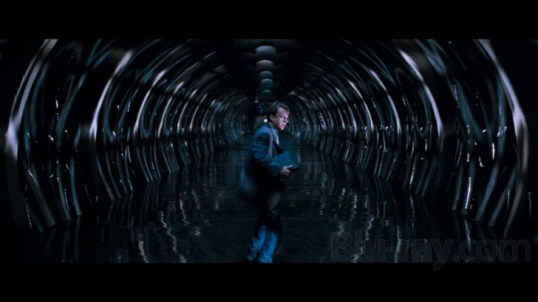
I was so excited when I found out TCM was airing THE PHYNX at 4:00am! I’d heard about how bad it for years now, and couldn’t wait to view it for myself today on my trusty DVR. I wasn’t disappointed, for THE PHYNX is a truly inept movie, so out of touch with its audience… and just what is its audience? We’ve got a Pre-Fab rock band, spy spoof shenanigans, wretched “comedy”, and cameos from movie stars twenty years past their prime. Just who was this movie made for, anyway?
The film defies description, but I’ll give it a whirl because, well because that’s what I do! We begin as a secret agent attempts to crash into Communist Albania in unsuccessful and unfunny ways, then segue into some psychedelic cartoons…
How is it that, this weekend, so much hype is being given to War Dogs and Ben-Hur — two films that you knew weren’t going to be any good from the minute you first saw their trailers — while one of the best films of the year is running the risk of being overlooked?
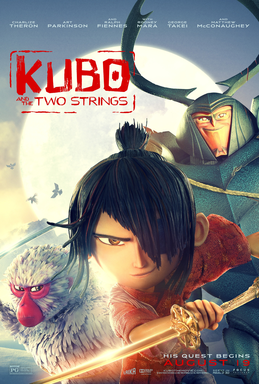
I just got back from seeing Kubo and The Two Strings and I am insisting that, if you haven’t already, you go out and see it right now. If you’re busy today, I understand. See it on Sunday. You can even see it on Monday if you have to. But the important thing is that you see it soon. For the most part, 2016 in cinema has almost been as bad as 2016 in politics. The year has been dominated by big spectacles, the majority of which do not even attempt to create any sort of emotional connection with the audience. Don’t get me wrong — there have been some good films but not hardly enough. Fortunately, Kubo and the Two Strings is the type of film that, if people actually go and see it, can help to redeem an entire year.
In short, I want to wake up on Monday and I want to read that Kubo and The Two Strings won the weekend. Make it happen!
Kubo and The Two Strings is an animated film and yes, you need to see it in a theater and yes, you need to see it in 3D. It’s one of the most visually stunning films that I’ve seen this year and, even better, it’s a film that actually has a heart. When I watched Kubo and The Two Strings, I found myself both laughing and crying and feeling a renewed excitement about the potential of cinema.
Somewhat appropriately, this magical film is about magic, not just spell-casting magic but also the magic that we all have within our soul and locked away in our memories. Taking place in ancient Japan, it tells the story of Kubo (voiced by Art Parkinson), a one-eyed child who lives in a cave with his sickly mother. Most of the time, his mother is so out-of-it that she can only sit at the cave entrance and stare out at the distant ocean. But occasionally, she is lucid enough that she remembers her past and she tells stories about how Kubo’s father was a mighty warrior who battled monsters and went on heroic quests. She also remembers that Kubo’s grandfather is an evil demon, who is searching for his grandson and who hopes to take away his other eye.
Kubo supports his mother by going into a nearby village and, through the use of origami, magic, and music, telling stories to the townspeople. His mother always warns Kubo not to say out after sunset. Inevitably, however, Kubo does just that and soon, his demonic aunts appear in the village. (The aunts, who are voiced by Rooney Mara, are truly scary.) The village is destroyed and Kubo’s mother sacrifices her life to save him.
This, of course, all leads to Kubo going on a quest of his own. He has to find his father’s armor so that he can defeat his grandfather. Helping him in his quest is Monkey (Charlize Theron) and Beetle (Matthew McConaughey, providing comic relief to an occasionally grim film). But really, the quest is less about finding the armor and more about Kubo both growing up and coming to terms with the loss of his parents. Yes, Kubo and The Two Strings may be an animated film and it may be a fantasy and it may feature bits of comedy but it’s a film that inspires very real emotions. It’s a film that made me cry and it earned every single tear.
(Seriously, I dare you to watch the final five minutes of Kubo and The Two Strings without tearing up.)
Visually, this is an amazing film. The images are often beautiful, sometimes frightening, and occasionally awe-inspiring. Kubo’s aunts are pure nightmare fuel and his confrontation with his grandfather (voice by Ralph Fiennes) is magical in more ways than one. Even beyond that, Kubo and the Two Strings creates a world that feels as real as our own. It not only visualizes and celebrates film magic but also real-life magic as well.
Kubo and the Two Strings is a great and magical film and it’s one of the best of the year so far. If you haven’t seen it, go out and see it. If you’ve already seen it, go see it again. Don’t wait for it to come out on Blu-ray. Don’t say, “I’ll see it on cable.” Don’t wait for Netflix. See it on a big screen and see it now.
Seriously, don’t miss your chance to experience this movie the way it was meant to be experienced!
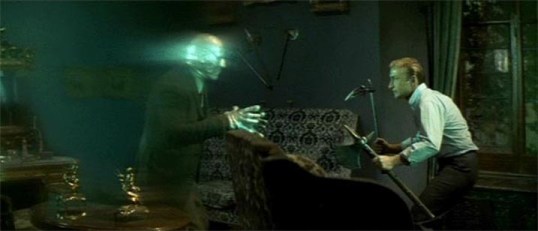
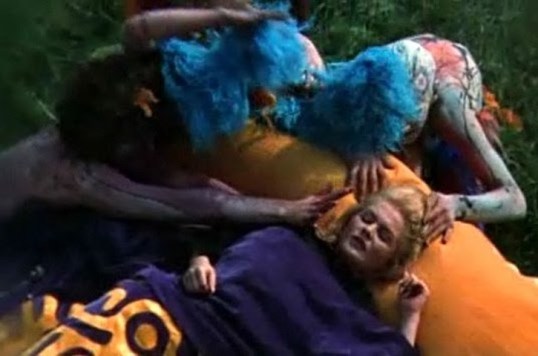
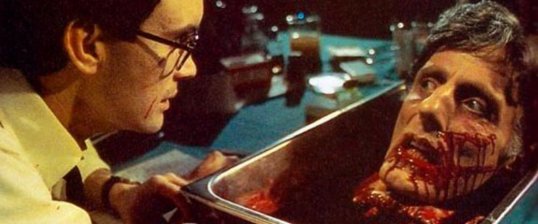
4 Shots From 4 Films is just what it says it is, 4 shots from 4 of our favorite films. As opposed to the reviews and recaps that we usually post, 4 Shots From 4 Films is all about letting the visuals do the talking. H.P. Lovecraft was born on this date in 1890. The “Weird Tales” author and creator of the Cthulhu Mythos wasn’t appreciated in his time, but his work enjoyed a revival beginning in the psychedelic 60’s that’s still going strong today. Here are 4 Shots From 4 Films inspired by the stories of H.P. Lovercraft:
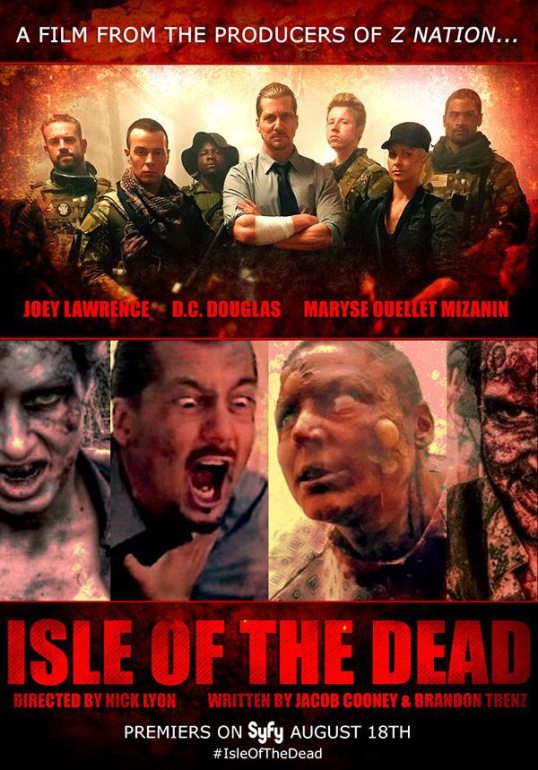
I just finished watching the premiere of the latest Asylum-produced SyFy film, Isle of the Dead!
Oddly, this film premiered on a Thursday night at 10:00 pm and, especially when compared to Sharknado 4 or 2 Lava 2 Lantula, it did so with relatively little fanfare. Fortunately, I just happened to see the premiere mentioned on Facebook. Otherwise, I probably would have missed it all together.
And that would have been a shame because, for a low-budget zombie film that was reportedly filmed in just 12 days, Isle of the Dead was actually a pretty effective little film.
The film’s plot will probably sound familiar but there’s a reason for that. The action starts at a secret Army research post that is located on an isolated tropic island. While Dr. Wexler (D.C. Douglas) watches, a virus spreads through the lab, turning doctors and soldiers into ravenous zombies and leaving death and terror in its wake. Jump forward ten years later. A team of Navy Seals has disappeared on the island and a strike force has been sent to find out what happened to them. Leading the strike force is the tough Lt. Gibson (Joey Lawrence). Accompanying them is a CIA agent named Mikaela Usylvich (Maryse Mizanin). Early on, Mikaela establishes a simple run: If you’re bitten by a zombie, you’re as good as dead. A zombie bite means a bullet to the brain.
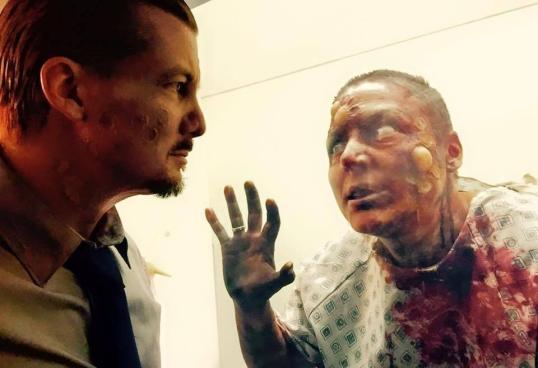
Eventually, the strike force makes their way to the old research post, where they discover a lot of zombies and one rather crazed Dr. Wexler. Wexler, who turns out to have a personal connection to Mikaela, has spent the last ten years experimenting on zombies. As a result, we now have zombies who can shoot guns as well as zombies who can talk and who can plot and plan…
If all of this is sounding familiar, it’s because Isle of the Dead is an homage to the Resident Evil games. (Douglas may play Dr. Wexler here but he’s best known for voicing Albert Wesker in the games.) As such, the film follows a pretty standard formula: we watch as the members of the strike force try to move from one area to another without getting ripped to pieces by zombies. Admittedly, I’m not a huge expert on the Resident Evil games but I’ve been told by people who are that Isle of the Dead was full of references that were both subtle and occasionally obvious.
What I can tell you is that, taken on its own terms, Isle of the Dead was an effective, no-nonsense zombie film. The zombies were relentless (and I personally like the idea of talking zombies), the gore was both credible and copious, and the entire film maintained a proper atmosphere of impending doom. Douglas did a good job as crazy Dr. Wexler and Maryse Mizanin got to kick a lot of ass as Mikaela Usylvich. If you’re into zombie films or you just enjoy the unique Asylum aesthetic, I suggest keeping an eye out for Isle of the Dead.
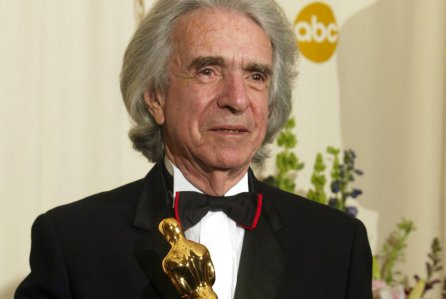
The name Arthur Hiller doesn’t really spring to mind when I think about great directors. However, when I heard the news he passed away last night at age 92, I looked him up on the IMDb. Much to my surprise, Arthur Hiller was responsible for some of my favorite funny films. Hiller wasn’t a distinct stylist or auteur, just a skillful handler of actors with a deft touch for comedy. In remembrance of the man, here are a few of my favorite Hiller-directed films, in chronological order:
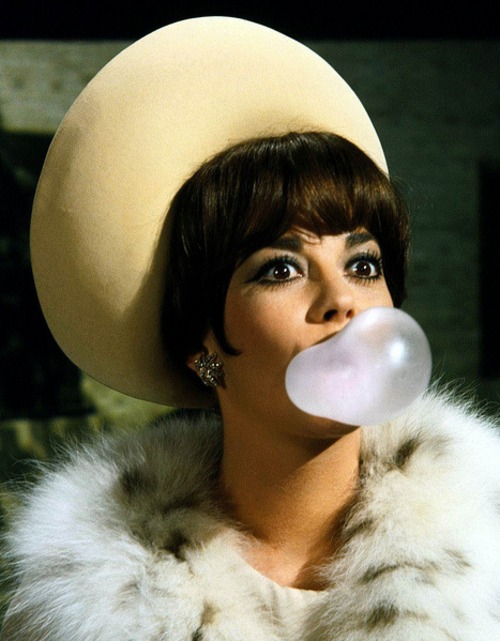
PENELOPE (1966): I covered this movie in-depth at this link about a year ago. It’s a silly, saucy comedy starring Natalie Wood as a neglected housewife who robs a bank. A quintessentially 60’s flick with comic support from Peter Falk, Dick Shawn, Jonathan Winters, and a good turn by Arlene Golonka as a hooker. It’s definitely worth your time if you haven’t discovered it yet.
Welcome back to the decadently dark world of film noir, where crime, corruption, lust, and murder await. Let’s step out of the light and deep into the shadows with these five fateful tales:
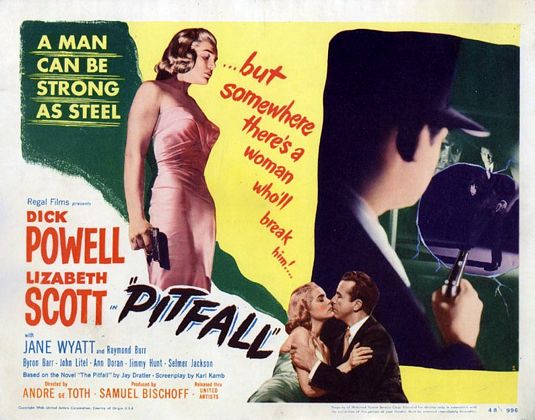
PITFALL (United Artists 1948, D: Andre DeToth) Dick Powell is an insurance man who feels he’s stuck in a rut, living in safe suburbia with his wife and kid (Jane Wyatt, Jimmy Hunt). Then he meets hot model Lizabeth Scott on a case and falls into a web of lies, deceit, and ultimately murder. Raymond Burr costars as a creepy PI who has designs on Scott himself. A good cast in a good (not great) drama with a disappointing ending. Fun Fact: The part of Scott’s embezzler boyfriend is played by one Byron Barr, who is not the Byron Barr that later changed his name to Gig Young.
THE BRIBE (MGM 1949, D:Robert Z. Leonard) Despite an…
So, as you may know, there’s a new version Stephen King’s It coming out. It’s scheduled to be released next year and it’ll star Bill Skarsgard as everyone’s favorite killer clown, Pennywise!
A new image of Pennywise’s costume appeared earlier today in Entertainment Weekly and here it is:
I have to admit that I’m not a huge fan of this look. According to the EW article, the film’s costume designer decided to incorporate ideas from all eras of clowning, in order to show that Pennywise has been around for centuries.
But, to me, that kind of misses the point. In the book, It appeared in many different forms, depending on who it was dealing with and it’s goal was at the time. It used the form of Pennywise the Clown to both get the attention of and to scare the Hell out of children. In the book, Pennywise kills Georgie Denbrough in 1957. In the upcoming film, the timeline has been updated so that Georgie dies in 1989. But, in both cases, why would Pennywise use the form of a Victorian-era clown to attack children in the 20th Century? Wouldn’t Pennywise appear as a contemporary clown?
I may be overthinking this but, honestly, it’s difficult for me to look at this Pennywise without thinking about the time that Bobby Hill performed as Tartuffe the Spry Wonder Dog on King of the Hill.
Am I right? Am I wrong? What do you think of this new Pennywise?
Amy Adams and Jeremy Renner in a movie directed by Denis Villeneuve? Could Arrival be this year’s sci fi best picture nominee? Or will it turn out to be more like Interstellar?
The first, the best, the original Godzilla — HE’S BACK!
Check out this trailer for Shin Godzilla (a.k.a. Godzilla Resurgence). Eventually, it’ll make its way over the States. Until it does, why not reread my review of my favorite Godzilla film, Godzilla vs. Destoroyah?
I know that Blades of Glory is about the Winter Olympics and not the Summer Olympics but it’s always a good time to watch Will Ferrell and Jon Heder take it to the ice!