8 Sure Shot Best Picture Nominees That Were Not


Let’s be honest.

Predicting the Oscar nominees is not an exact science.  The fact of the matter is that a lot of it is guesswork, especially in the early months of the year.

“Oh, Scorsese has a movie coming out?  Well, Martin Scorsese’s movies are always nominated!”

“Last year’s best seller is being adapted into a movie?  The Academy loves best sellers!”

“David Fincher’s directing High School Musical 4?  I LOVE DAVID FINCHER!  Best Picture for sure!”

That’s why, every year, there are films that seem like they’re guaranteed to reap Oscar glory.  These are the films that, in July, are listed on all of the awards sites as probable best picture nominees.  And every year, several of those sure shots turn out to actually be long shots.

Since Arleigh founded Through the Shattered Lens back in 2009, there’s been many guaranteed Best Picture contenders that, when the nominations were announced, were nowhere to be found.  Here are just 8 examples:
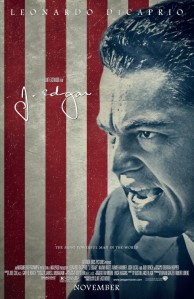
1. J. Edgar (dir by Clint Eastwood)

Remember how Leonardo DiCaprio was going finally win his first Oscar for playing J. Edgar Hoover in the 2011 Oscar biopic?  There was also some speculation that Armie Hammer would pick a supporting nod and, of course, the film was going to be a best picture nominee.  Then the movie came out, fell flat, and received not a single Oscar nomination.

2. The Dark Knight Rises (dir by Christopher Nolan)

I was not as big of a fan of this movie as some people who write for this site.  In fact, I thought it was kind of a mess.  Still, back in 2012, a lot of people assumed the Academy would make up for not nominating The Dark Knight by nominating the sequel.  (In a particular noxious example of fanboy culture, Christy Lemire was attacked online when she gave The Dark Knight Rises its first negative review.)  For all of the hyper and controversy, The Dark Knight Rises was totally ignored when the 2012 Oscar nominations were announced.

3. The Monuments Men (dir by George Clooney)

As strange as it may seem today, this now-forgotten World War II film was originally considered to be a surefire Oscar contender.  Throughout most of 2013, the majority of the experts on Gold Derby listed The Monuments Men as their number one prediction for Best Picture.  The logic was that it was based on an interesting true story, it featured Bill Murray in a serious role, and it was directed by George Clooney.  Then, suddenly, the release date was pushed back to 2014.  That was the first sign of trouble.  Then the movie came out and it turned out to be a complete mess, one that underused Murray and which reminded us that, regardless of his skill as an actor, George Clooney is a remarkably dull director.
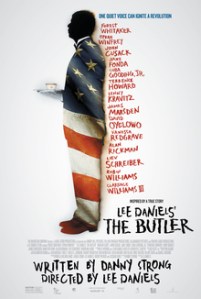
4. Lee Daniel’s The Butler (dir by Lee Daniels)

From 2013, this is a good example of a film that tried so hard to be an Oscar contender that it basically knocked itself right out of contention.  Between the blind and dated worship of JFK and John Cusack’s performance as Richard Nixon, this film almost seemed like a parody of a bad Oscar contender.

5. Interstellar (dir by Christopher Nolan)

Personally, I liked 2014’s Interstellar more than I liked The Dark Knight Rises but ultimately, this turned out to be just another Christopher Nolan film that didn’t get much of a reaction from the Academy.  (Despite the nominations given to both Dunkirk and Inception, it’s hard not to feel that the Academy will always resent Nolan for being both successful and ambitious.)

6. Joy (dir by David O. Russell)

Many of us thought it would be one of the films to be nominated for best picture of 2015.  That was until we actually saw the damn thing.  David O. Russell’s worst movie still managed to net Jennifer Lawrence a nomination but not much else.
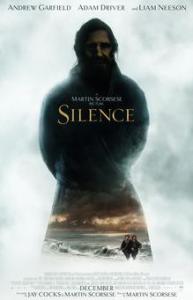
7. Silence (dir by Martin Scrosese)

Martin Scrosese’s 2016 passion product was expected to be a major contender and, on many sites, it was listed as a probable winner all the way through December.  However, when the nominations were announced, Silence only received one nomination, for cinematography.

8. Logan (dir by James Mangold)

At the start of 2017, a lot of critics stated that Logan might be the first comic book movie ever nominated for Best Picture.  For a month or two, I certainly thought it would be.  Ultimately, though, it only picked up a nomination for adapted screenplay.

Which 2018 sure short will turn into a long shot?  We’ll find out next year!

Lisa Reviews An Oscar Nominee: 49th Parallel (dir by Michael Powell)


Hello and welcome to the TSL’s continuing coverage of Oscar Sunday!  Today, along with some other Oscar-related things, I’m going to post reviews of some of the films that have been nominated for best picture over the years!  Let’s start things off with the 1941 Best Picture nominee, 49th Parallel!

Before anything, I should clear up some confusion about this film.  This is a British film about Nazis trying to reach the border between Canada and the U.S.  When it was first released in the UK, it was named after the coordinates of the border.  However, in the actual film, the Nazis never actually go to the 49th Parallel.  Instead, the film concludes at Niagara Falls.  However, it was probably reasonable assume that British audiences would not necessarily know or care whether Niagara Falls was actually located on the 49th Parallel.  Considering that they were currently at war with Germany, they had more important things to concern themselves with.

However, it was apparently felt that American audiences would notice that Niagara Falls wasn’t actually located on the 49th Parallel.  (Personally, I think the British may have been giving us too much credit.)  So, when the film was released in the United States, the title was changed to The Invaders.  When the film was subsequently nominated for Best Picture, it was nominated under the name The Invaders.  I’ve actually come across some online sources that claim that The Invaders and 49th Parallel are two separate films.  No, they’re the same film, it’s just that the film in question has two different titles.  Out of respect to the people who actually made the movie, I’ve decided to use the original title in this review.

When watching 49th Parallel (it’s available on YouTube), it helps to know something about history.  Today, there’s a tendency to overlook the fact that World War II had already been raging for nearly two years before the United States got involved.  Though the U.S. was an ally to Britain, it remained officially neutral until the Japanese bombed Pearl Harbor.  Up until that moment, many prominent Americans were isolationists and took the attitude that the war was Europe’s problem.  (On the other hand, Canada, as a Dominion of the British Empire, followed Britain into the war in 1939.)  Though the 49th Parallel may have been a British film that was largely set in Canada, it was also meant to frighten Americans and hopefully bring them over to the British side.

(When interviewed about the film, screenwriter Emeric Pressbruger said, “”Goebbels considered himself an expert on propaganda, but I thought I’d show him a thing or two.”)

Directed by Michael Powell, 49th Parallel opens with a German U-boat creeping into the waters around Canada.  The Nazis are hoping to disrupt shipping operations but it turns out that they’re no match for the Royal Canadian Navy.  (GO CANADA!)  When the U-boat sinks into the Hudson Bay, only six Nazis manage to survive.  Led by the arrogant Lt. Hirth (Eric Portman), the Nazis attempt to make their way to the border and to the safety of America.

Of course, it doesn’t turn out to be an easy journey.  Not only are the Germans in an unfamiliar country but they also keep running into Canadians.  Without fail, nearly every Canadian they meet is polite but willing to fight and die for his country.  The Canadians themselves are played by actors who, in the 40s, would have been familiar faces.  Laurence Olivier plays a fur trapper, getting top-billing for his cameo appearance.  Raymond Massey, who was best known for playing Abraham Lincoln, shows up as a Canadian solider.  Leslie Howard is the writer who discovers that Nazis have no respect for art.  Anton Walbrook is a German-Canadian farmer who rejects the attempts of Lt. Hirth to bring him over to the Nazi side.  The Canadians are so sympathetic that one of the Nazis is even moved to reject the Third Reich and is promptly executed by his compatriots, showing the audience the foolishness of hoping that the “good Germans” would ever be able to overthrow the bad ones.

It’s pure propaganda but it’s anti-Nazi propaganda so that’s not really a problem.  Powell keeps the story moving at a steady pace and all of the actors get impassioned performances.  You can tell this movie was more than just a job for them.  Instead, it was their way of fighting for their country and hopefully inspiring others to join in the battle against Hitler.  The film is both a love letter to Canada and a plea to the United States to renounce neutrality.  (Interestingly enough, by the time 49th Parallel made it to U.S. screens, America had finally declared war on the Axis Powers.)

49th Parallel was nominated for best picture but it lost to another World War II propaganda film, Mrs. Miniver.

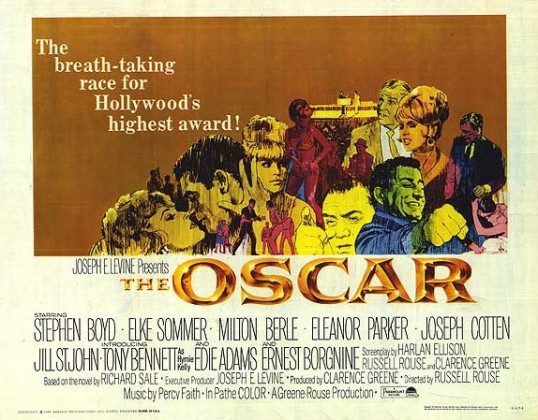
Scenes That I Love: Tony Bennett Has A Meltdown in The Oscar


Have you ever wondered what it takes to win an Oscar?  The 1966 film, The Oscar, revealed to audiences just how sleazy a world Hollywood can be.  Frankie Fane (Stephen Boyd) does everything he can to win an Oscar and he doesn’t care who he hurts!

But fear not — Hollywood may not be perfect but it has no room for someone like Frankie Fane!  At the end of the movie, a man named Frank does win the Oscar but his last name is Sinatra and Frankie Fane is left humiliated.  That’ll teach him to try to take advantage of Hollywood!

Yes, The Oscar is an incredibly silly film but it’s also a lot of fun.  In this scene that I love, Frankie’s best friend — played by Tony Bennett of all people — confronts Frankie about the type of star that he’s become.

Six Other Films From Crown International Pictures That Deserved An Oscar Nomination!


An hour ago, I told you about the only Oscar nomination that was ever received by Crown International Pictures, one of the most prolific B-movie distributors of the 70s and 80s.  That nomination was for Best Original Song for Crown’s 1972 film, The Stepmother.

Here are 6 more films from Crown International Pictures that I think deserved some Oscar consideration:

The Teacher (1974)

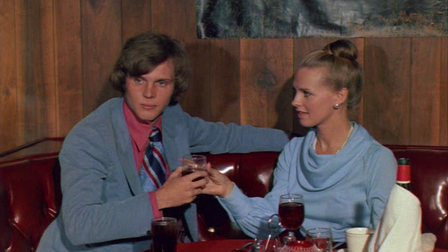
“She corrupted the youthful morality of the entire school!” the poster screamed but actually, The Teacher was a surprisingly sensitive coming-of-age story about a relationship between a younger man and an older woman.  Jay North and Angel Tompkins both give excellent performances and Anthony James shows why he was one of the busiest character actors of the 70s.

2. The Sister In Law (1974)

John Savage has been acting for several decades.  He’s appeared in a number of acclaimed films but he’s never received an Oscar nomination.  One of his best performances was in this melancholy look at love, betrayal, and ennui in the early 70s.

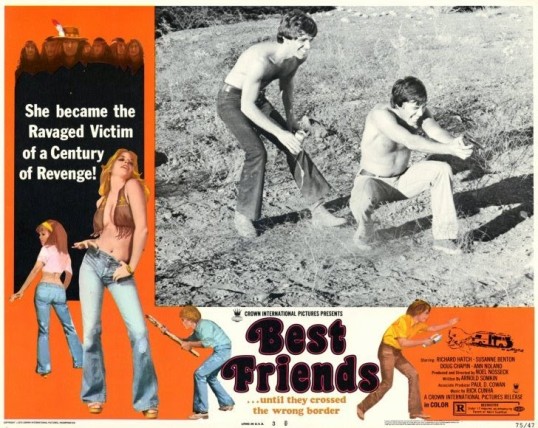
3. Best Friends (1975)

One of the strangest films ever released by Crown International, Best Friends is also one of the best.  A road trip between two old friends goes terribly wrong when one of the friends turns out to be a total psycho.  This well-acted and rather sad film definitely deserves to be better-known than it is.

4. Trip With The Teacher (1975)

Zalman King for Best Supporting Actor?  Hell yeah!

5. Malibu High (1979)

Surely Kim Bentley’s performance as a high school student-turned-professional assassin deserved some sort of consideration!

6. Don’t Answer The Phone (1980)

Don’t Answer The Phone is not a particularly good movie but it certainly is effective.  It made me want to go out and get a derringer or some other cute little gun that I could carry in my purse.  That’s largely because of the performance of Nicholas Worth.  Worth plays one of the most perverse and frightening murderers of all time and Worth throws himself into the role.  It’s one of the best psycho performances of all time and certainly worthy of a Best Supporting Actor nomination.

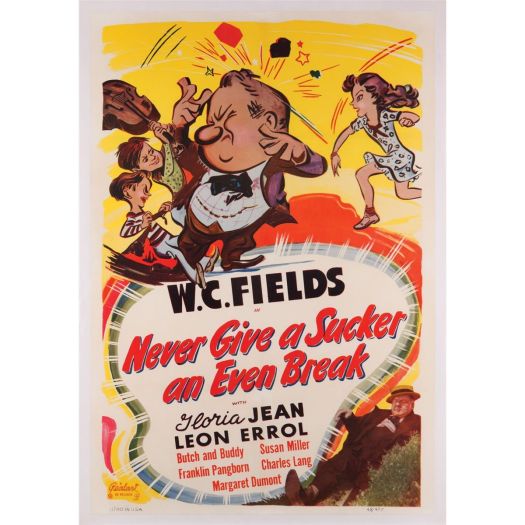
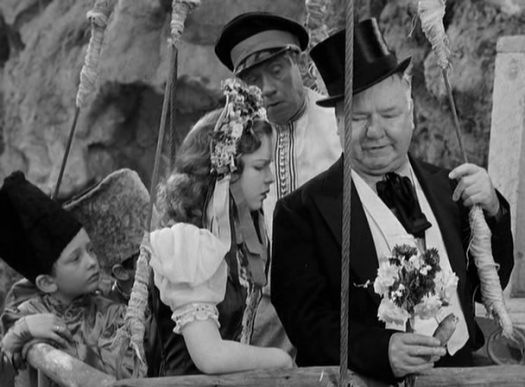
A Flask of Fields: W.C. Fields in NEVER GIVE A SUCKER AN EVEN BREAK (Universal 1941)


gary loggins's avatarcracked rear viewer

I’ve professed my love for W.C. Fields before on this blog , and NEVER GIVE A SUCKER AN EVEN BREAK is undoubtedly my favorite Fields flick. This inspired piece of lunacy is The Great Man’s commentary on getting films made in Hollywood his way. In fact, Fields wanted to title the movie “The Great Man”, but Universal execs nixed the idea, instead using a line from POPPY, his stage and screen hit. The change caused Fields much consternation, quipping that the movie’s overlong title would be boiled down on movie marquees to “Fields – Sucker”!!

Universal starlet Gloria Jean with “Uncle Bill”

The film’s plot (and I use that term as loosely as possible!) has Fields playing himself, delivering his latest script to Esoteric Pictures head Franklin Pangborn . The story he’s concocted may have the long-suffering Pangborn rolling his eyes, but it’ll have you the viewer rolling on the…

View original post 628 more words

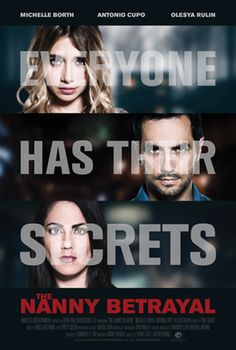
What Lisa Watched Last Night #175: Devious Nanny (dir by Devon Downs and Kenny Gage)


Last night, I turned over to the Lifetime Movie Network and I watched Devious Nanny!

Why Was I Watching It?

I’ve got a long history with Lifetime nanny films.  I’ve watched films about Bad Nannys, Betrayed Nannys, Nightmare Nannys, Evil Nannys, Killer Nannys, and Dangerous Nannys.  So, how could I resist something called Devious Nanny?

(Actually, it was apparently also called both The Nanny Betrayal and The Au Pair.  Devious Nanny, though is an improvement on both of those.)

What Was It About?

Elise (Michelle Borth) and Brian (Antonio Cupo) have it all.  Elise works at an art gallery.  Brian works in … well, I think it was advertising but I could be wrong.  All I know is that he worked in an office and he was worried about landing a big account and he wore a suit to work.  Isn’t that what they do in advertising?  Anyway, it’s a good job.  Brian and Elise have a nice house and an adorable son.  All they need to complete the picture is … an au pair!

Enter Amber (Olesya Rulin), who appears to be the perfect nanny.  She loves kids and she’s even okay with cleaning up around the house!  Of course, Amber did lie a little to get her job.  And she didn’t tell her new employers that she grew up in the foster system and that she has a history of mental instability.  Soon, Brian and Amber are exchanging lustful glances and people are turning up dead.

But here’s the thing.  I’ve seen enough killer nanny films that I immediately realized that it was probably significant that the film never actually showed Amber killing anyone.  So, is Amber the murderer or is it someone else?  The film is full of suspects!

What Worked?

It all worked.  This was the type of Lifetime movie that made me fall in love with the unique Lifetime aesthetic in the first place.  Well-acted and full of snarky lines, Devious Nanny also featured a rather clever last-minute plot twist.  The end of the film also features a line of dialogue that is perhaps the coldest sentiment over to be offered up in a Lifetime film.

Needless to say, this was a fun movie to live tweet.  Those of us on twitter last night had a blast trying to figure out who the killer was and who was going to be the next victim.

All in all, it was a very entertaining movie.

What Did Not Work?

It all worked!  At first, I was worried that the film would turn out to be just another Lifetime Nanny film but the script, by Adam Rockoff, was full of unexpected plot twists.  I’m going to guess that Rockoff has seen enough nanny films that he knew exactly what most people would be expecting and he very skillfully manipulated those expectations.

In fact, my only issue is that Lifetime aired this on Friday night and it didn’t really seem like they made much of an effort to publicize it.  Sometimes, I think Lifetime doesn’t truly understand just how many people love watching their movies.  They’ll promote the Hell out of some forgettable (and often regrettable) celebrity biopic but entertaining thrillers, like this one, rarely get the fanfare that they deserve.

“Oh my God!  Just like me!” Moments

I’ve been lucky, in that I’ve never had to work as an au pair.  I’ve also never been suspected of murder.  I guess I’ve just lived a sheltered life.  However, if any of that did happen to me, I would hope, when it was all over, that I could be as snarky about it as Amber.

Lessons Learned

Life’s not easy when you’re a nanny.

Lisa Reviews An Oscar Winner: Cimarron (dir by Wesley Ruggles)


(With the Oscars scheduled to be awarded on March 4th, I have decided to review at least one Oscar-nominated film a day.  These films could be nominees or they could be winners.  They could be from this year’s Oscars or they could be a previous year’s nominee!  We’ll see how things play out.  Today, I take a look at the 1931 best picture winner, Cimarron!)

“Be careful, Hank!  Alabaster may be a little dude but he’ll mess you up.”

“No offense … but he’s from Oklahoma.”

— King of the Hill Episode 5.13 “Ho Yeah”

Some best picture winners are better remembered than others.  Some, like The Godfather, are films that will be watched and rewatched until the end of time.  Others, like Crash, seems to be destined to be continually cited as proof that the Academy often picks the wrong movie.  And then you have other films that were apparently a big deal when they were first released but which, in the decades to follow, have fallen into obscurity.

1931’s Cimarron would appear to be a perfect example of the third type of best picture winner.

Based on a novel by Edna Ferber (who would later write another book, Giant, that would be adapted into an Oscar-nominated film), Cimarron is an epic about Oklahoma.  The film opens in 1889 with the Oklahoma land rush.  Settlers from all across America rush into Oklahoma, searching for a new beginning.  Among them is Yancey Cravat (Richard Dix) and his wife, Sabra (Irene Dunne).  Yancey is hoping to become a rancher but, upon arriving at the settlement of Osage, he discovers that the land he wanted has already been claimed by Dixie Lee (Estelle Taylor).

So, Yancey gives up on becoming a rancher.  Instead, he becomes a newspaper publisher and an occasional outlaw killer.  Soon, Yancey and Sabra are two of the most prominent citizens in Osage.  Under the guidance of Yancey, Osage goes from being a wild outpost to being a respectable community.  It’s not always easy, of course.  Criminals like The Kid (William Collier, Jr.) still prey on the weak.  As the town grows more respectable, some citizens try to force out people like Dixie Lee.  Struck by a combination of personal tragedy and wanderlust, Yancey occasionally leaves Osage but he always seems to return in time to make sure that people do the right thing.  When even his wife reveals that she’s prejudiced against Native Americans, Yancey writes a vehement editorial demanding that they be granted full American citizenship.

The film follows Sabra and Yancey all the way to the late 1920s.  Oklahoma becomes a state.  Sabra becomes a congresswoman.  Oil is discovered.  Throughout it all, Yancey remains a firm voice in support of always doing the right thing.  In fact, he’s such a firm voice that you actually start to get tired of listening to him.  Yancey may be a great man but he’s not a particularly interesting one.

By today’s standards, Cimarron is a painfully slow movie.  The opening land rush is handled well but once Yancey and Sabra settle down in Osage, the film becomes a bit of a chore to sit through.  Richard Dix is a dull lead and the old age makeup that’s put on Dix and Dunne towards the end of the movie is notably unconvincing.  Considering some of the other films that were eligible for Best Picture that year — The Front Page, The Public Enemy, Little Caesar, Frankenstein — Cimarron seems even more out-of-place as an Oscar winner.

And yet, back in 1931, it would appear the Cimarron was a really big deal.  Consider this:

Cimarron was not only well-reviewed but also a considerable box office success.

Cimarron was the first film to ever receive more than 6 Academy Award nominations.  (It received seven and won 3 — Picture, Screenplay, and Art Direction.)

Cimarron was the first film to be nominated in all of the Big Five categories (Picture, Actor, Actress, Director, and Screenplay).

Cimarron was the first film to be nominated in every category for which it was eligible.

Cimarron was the first RKO film to win Best Picture. The second and last RKO film to win would be The Best Years of Our Lives, a film that has held up considerably better than Cimarron.

Cimarron was the first Western to win Best Picture.  In fact, it would be 59 years before another western took the top award.

Though Cimarron may now be best known to those of us who watch TCM, it’s apparent that it was a pretty big deal when it was first released.  Though it seems pretty creaky by today’s standards, they loved it in 1931.

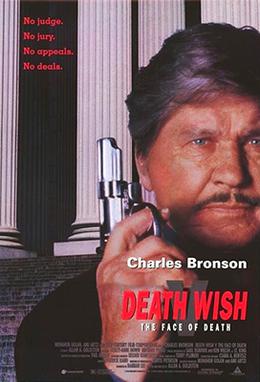
Bronson One Last Time: Death Wish V: The Face of Death (1994, directed by Allen Goldstein)


To quote Geoffrey Chaucer, “All good things must come to an end.”
Death Wish V: The Face of Death marked the end of the original Death Wish franchise, concluding the violent saga of Paul Kersey 20 years after it began.  It probably should have ended sooner.

After the box office failure of Death Wish IV and the subsequent bankruptcy of Cannon Films, future plans for the Death Wish franchise were put on hold.  After the collapse of Cannon, Menahem Golan started a new production company, 21st Century Film Corporation.  In 1993, needing a hit and seeing that the previous Death Wish films were still popular on video, Golan announced that Paul Kersey would finally return in Death Wish V: The Face of Death.  Charles Bronson also returned, though he was now 72 years old and in poor health.  Death Wish V would also mark the end of Bronson’s feature film career.  He would make appearances in a few television movies before subsequently retiring from acting.

Death Wish V finds Paul in the witness protection program.  His latest girlfriend, Olivia (Lesley-Anne Down), just happens to be the ex-wife of a psychotic mobster named Tommy O’Shea (Michael Parks).  Throughout the entire franchise, the Death Wish films argued that crime is so out of control that no one was safe and that Paul had no choice but to pick up a gun and shoot muggers.  But, judging from Death Wish V, Paul just seems to have incredibly bad luck.  What are the odds that a mild-mannered architect would lose his wife, his maid, his daughter, his best friend from the war, his next two girlfriends, and then end up dating the ex-wife of New York City’s craziest gangster?

The district attorney’s office wants Olivia to testify against her ex-husband so Tommy gets his henchman, the dandruff-prone Freddie Flakes (Robert Joy), to kill her.  Looks like it’s time for New York’s favorite vigilante to launch a one-man war against the Mafia!

The only problem is that New York’s favorite vigilante is too old to chase people down dark alleys and shoot them.  He has to get creative, which means using everything from poisoned cannoli to a vat of acid to take out his targets.  One gangster is killed by an exploding soccer ball!

With both Bronson and Lesley-Anne Down giving an indifferent performances, it is up to the supporting cast to keep the movie interesting.  Appearing here after his bravura turn as Jean Renault in Twin Peaks but before Robert Rodriguez and Quentin Tarantino introduced him to a whole new generation of filmgoers, Michael Parks is flamboyantly evil as Tommy O’Shea and injects the movie with what little life that it has.  Speaking of Twin Peaks alumni, Kenneth Welsh (who played Windom Earle in the last few episodes of season 2) plays this installment’s understanding police detective.  Saul Rubinek plays the district attorney who is willing to look the other way when it comes to killing gangsters.

Dull and cheap-looking, Death Wish V was a box office bomb and it brought the original franchise to a definite end.  Will the Eli Roth/Bruce Willis reboot of Death Wish also lead to a reboot of the franchise?  Time will tell!

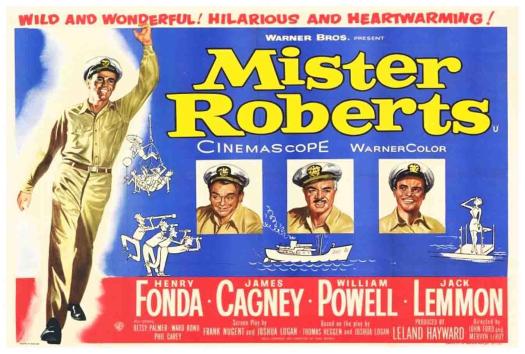
Navy Blue & Gold: MISTER ROBERTS (Warner Brothers 1955)


gary loggins's avatarcracked rear viewer

I grew up a “Navy brat”, often accompanying my dad to bases in Newport, RI. and Bethesda, MD. I’d hang out at the Enlisted Men’s Club he ran, watching Bugs Bunny and Road Runner cartoons with the sailors while dad did the books. I remember going aboard ship plenty of times, and saw one of my first movies with the crew on Family Night (the Cary Grant/Doris Day flick THAT TOUCH OF MINK). So naturally, I have a soft spot for nautical tales, and one of my favorites has always been MISTER ROBERTS.

The film marked Henry Fonda’s return to the screen after an eight year absence. Fonda had starred in the original Broadway production to great acclaim, and his performance is imbued with his own experiences during WWII. Douglas Roberts is a lieutenant (j.g.) assigned to the cargo ship Reluctant in the South Pacific, run by the vain…

View original post 733 more words

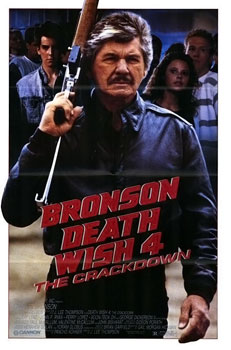
Bronson’s Rich: Death Wish 4: The Crackdown (1987, directed by J. Lee Thompson)


To quote The Main With No Name, “When a man’s got money in his pocket, he begins to appreciate peace.”

Two years have passed since Paul Kersey (Charles Bronson) last visited and cleaned up New York.  He is back in Los Angeles, the president of his own successful architectural firm.  Now a rich man, he has retired from killing criminals, though he still has dreams where he shoots muggers in parking garages.  Paul has a new girlfriend, journalist Karen Sheldon (Kay Lenz).  When Karen’s teenage daughter, Erica (Dana Barron), dies of a cocaine overdose, it’s time for Paul to get his gun out of storage and blow away a drug dealer.

Shortly after shooting that drug dealer, Paul finds a note on his front porch.  “I know who you are,” it reads.  Paul then gets a call from a mysterious man (John P. Ryan) who identifies himself as being a reclusive millionaire named Nathan White.  Nathan explains that his daughter also died of a cocaine overdose.  He wants to hire Paul to take out not just the drug dealers but also the men behind the dealers, the bosses.  Using his vast resources, Nathan has prepared a file on every major drug operation in Los Angeles.  He offers to share the information with Paul.

“I’ll need a few days to think about it,” Paul says but we all know he’s going to accept Nathan’s offer just as surely as we know that Nathan White has an ulterior motive that won’t be revealed until the movie’s final twenty minutes.

For the first time, Paul is no longer just targeting muggers and other street criminals.  This time, Paul is going after the guys in charge and trying to bring an end to drug trade once and for all.  (The idea that the best way to win the war on drugs was just to kill anyone involved in the drug trade was a very popular one in the late 80s.)  L.A.’s two major drug cartels are led by Ed Zacharias (Perry Lopez) and the Romero Brothers (Mike Moroff and Dan Ferro).  Along with their own activities, Paul and Young work the turn the two cartels against each other.

It’s not just the criminals that have changed in Death Wish 4.  Paul has changed, too.  Paul used to just shoot criminals and run away.  In Death Wish 4, he gets more creative.  He sneaks into Zacharias’s mansion and bugs the phone so that he can keep track of what’s going down.  When it comes time to kill a table full of drug dealers (one of whom is played by Danny Trejo), Paul doesn’t shoot them up.  Instead, he sends them a bottle of champagne that explodes when they open it.  By the end of the movie, Paul is blowing away the bad guys with a grenade launcher!  How many former conscientious objectors can brag about that?

The biggest difference between Death Wish 4 and the films that came before it is the absence of director Michael Winner.  Winner and Bronson had a falling out following Death Wish 3 and, as a result, Winner had little interest in returning to the franchise.  Instead, Winner was replaced by J. Lee Thompson, who had already directed Bronson in several other Cannon films.  As a result, Death Wish 4 is less “heavy” than the previous Death Wish films.  Whereas Winner’s direction often felt mean-spirited and exploitive, Thompson plays up the film’s sense of airy adventure.

Though it barely made a profit at the box office and has been dismissed by critics, Death Wish 4 is an enjoyable chapter in Paul’s story.  If you’re looking for mindless 80s mayhem, Death Wish 4 gets the job done with admirable efficiency.  It would have made a great ending for the franchise but Bronson would return to the role one last time.

Tomorrow: Death Wish V: The Face of Death!