Let’s Talk About Monster Island (dir by Mark Atkins)


Oh hell yeah, the Asylum strikes again!  And this time, it’s all about Kaiju, helicopters, and Eric Roberts!

Listen, folks, if you don’t get automatically excited when you see the words “Kaiju,” “helicopters,” and “Eric Roberts” all in the same sentence, I don’t know what to tell.  Obviously, you’re not the audience that this film was made for.  This is a film for people who enjoy monster mayhem, things exploding, and helicopters.  Seriously, it’s not an Asylum film without a helicopter.

Admittedly, Eric Roberts’s role is actually pretty small.  He plays Admiral Butler and he’s got an entire fleet of warships at his disposal.  You’d think that would be just what you would want when dealing with a bunch of recently awakened ancient monsters but it turns out that  the Admiral is pretty stubborn.  He’s better at shouting into telephones than understanding the logic behind Kaiju.  And if you’re saying to yourself, “Would we really want Eric Roberts to be in charge of the U.S. Navy?,” you are again missing the point.  Asylum films, like this one, create their own parallel universe.  It’s a universe where monsters live, sea creatures can take down helicopters, and, of course, Eric Roberts is going to be in charge of a battleship.

The main character is Billy Ford (Adrian Bouchet, giving a cheerfully flamboyant performance), a billionaire who operates out of a beach house and whose underwater sea mining operation may be responsible for awakening the fearsome Tengu.  (Tengu looks kind of like a giant starfish and has molten magma for blood.)  Billy has two people working in the basement of his beach house.  Cherise (Donna Cormack Thompson) has been working with him forever.  Riley (Chris Fisher, giving a nicely neurotic performance) is such a recent hire that Billy still calls him “James.”  When it becomes apparent that something has awakened at the bottom of the ocean, Billy, Cherise, and Riley head underwater to investigate.

Coming along with them is Sarah Murray (Natalie Robbie), who works for the government and who is an expert in geomythology.  Geomythology is the study of alleged references to actual geological events in mythology.  Geomythology is a real thing and, after having watched this movie, I kind of wish that I had at least minored in it.  At one point, Sarah has to go to her former Geomythology professor (Margot Wood) for advice on how to stop Tengu from destroying the world and it turns out the professor lives in this huge cabin.  There’s money to made in keeping track of the world’s Kaiju.

Anyway, needless to say, once Tengu is awakened, it’s pretty much determined to end the world.  This movie, as you can probably guess from the title, pays homage to the Japanese monster movies of old.  When flying, fire-breathing monsters start hatching from eggs and attacking the world, their battle shrieks will be familiar to anyone who has ever seen a movie featuring Godzilla, Mothra, or Rodan.  When the film reaches the point of two giant monsters fighting each other while a bunch of human beings watch on, it’s impossible not to be reminded of Godzilla fighting King Kong.  It’s all in good fun, a monster movie made by people who loves monster movies for people who love monster movies.

Monster Island is a film to watch and to enjoy for the mayhem and the destruction.  Watch it to enjoy Eric Roberts bragging about the Navy’s new “sonar weapon.”  Watch it for the scene where one person makes the mistake of taunting one of the monsters.  (Piece of advice: Don’t ever yell “Come on!” at a create that can breathe fire.)  Watch it for giant starfish rising out of the ocean and the crashing helicopters.  Get a group of your friends together and enjoy the movie because the Asylum is back and so are the monsters and the helicopters!

Monster Island aired on the SyFy Network last night and it’ll probably air again.  Keep an eye out!

Godzilla: King of the Monsters, Review by Case Wright, Dir: Michael Dougherty


GOD.jpg

Godzilla: King of the Monsters is like eating a huge handful of different colored Jelly Bellys all at once; it’s fun and kinda sticky.  It was written and directed by Michael Dougherty (Trick ‘r Treat, Krampus, or anything that’s filmed for a few hundred bucks and a sandwich).  Dougherty is known for inexpensive genre films like Krampus, which was kind of fun in a goofy way.  This is a much bigger budget and if it weren’t for the dialogue, it would’ve been great.  Honestly, you don’t really need to listen to the dialogue and Dougherty is a lousy writer; so you’re better off tuning the people out.

The cast was everyone you like: Coach Taylor, Eleven, Tywin Lannister, That Lady from the Conjuring, That Science Teacher from Stranger Things, West Wing Guy, What’s His Face, and the guy who was in the last one who wanted the monsters to fight.  On the monster side: there was Mothra, King Ghidora, Rodan, Michaelangelo, Godzilla, and the rest.  They were all thrown at the screen like water balloons hitting you in the face.

The movie opens with Dr Emma Russell (Vera Farmiga) and Madison (Millie Bobby Brown) at a Monarch facility where baby Mothra wakes up and everyone seems to want to touch it.  Gross.  They’re gonna get a dino-rash! Terrorists enter, kill everyone, and take ….. did I write take … I meant pick up Dr. Russell and Madison.

Why? Dr. Russell lost her son to the last Godzilla attack and has decided that everyone should die because that makes sense…somehow. So, she sets up her Doctor Doolittle machine to talk/wake up all the Kaijus to kill everyone.  Her argument is really annoying and has a makeshift powerpoint presentation.  She is the embodiment of every sanctimonious Seattleite, Vegan, Composting, Apologist, Whiner all rolled into one; she figures if the monsters kill all the people that the world will be better off- think if that horrible Lorax finally got the money to kill for the trees.  They’re why I refuse to recycle …. EVER!

Anywho….she wakes up all the monsters and Coach Taylor who is Dr Russell’s quasi-ex-husband scientist is granted crazy authority over the military to figure out how to stop all the monsters from killing everyone.  And man do they ever fight?!!! I mean it do they ever fight?  I counted only four monster on monster fight scenes- kinda skimpy.  Also, Godzilla had to be recharged with nukes or radioactive spa time to keep going; I guess Godzilla decided to upload the latest Apple Update.

Godzilla ends up on top….literally. He gets on top of a mound in Boston and all the other monsters bow down to Godzilla, except Mothra – She curtsies (she’s from another time).  There’s good CGI and Monster fighting- when they do fight.  Just don’t go trying to find deeper meaning.  I loved these movies because they’d be on tv for the nerd set when I was a kid.  I saw them all.  In fact, in King Ghidora v Godzilla, Godzilla tries to help the Japanese win world war II or at least one battle. It was awesome.  These movies are great because you can unplug and watch some awesome destruction.  This movie brings the boom.  Enjoy!

Clear eyes.gifgod3.gif


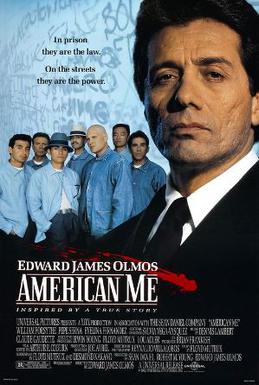
Film Review: American Me (1992, directed by Edward James Olmos)


American Me tells the story of Montoya Santana (Edward James Olmos).  Conceived during the Zoot Suit Riots of the 1940s, Santana is first arrested when he’s just 14 years old.  It’s only a breaking-and-entering charge but, on his first night in juvenile hall, Santana is raped by another inmate.  When Santana retaliates by murdering his rapist, his fate is set.  As soon as he’s 18, he’s transferred to Folsom Prison but, by that time, he and his friend J.D. (William Forsythe) have already formed what will become La Eme, the Mexican Mafia.  Running things from their cells, Santana and J.D. not only control the prison’s drug trade but they also keep an eye on who, from their old neighborhood, is going to be joining them behind bars.  Santana establishes early on that the punishment for any sign of weakness or disloyalty is death.

When Santana is finally released from prison, he finds that the world has changed since he was first incarcerated.  La Eme has become powerful both inside and outside of prison and nearly everyone in Santana’s old neighborhood looks up to him.  But Santana, himself, is lost.  In prison, Santana was feared and respected but, on the outside, he’s a 34 year-old man who has never had a job or a relationship.  He’s never even learned how to drive.

After meeting and falling in love with Julie (Evelina Fernandez) and seeing firsthand the damage that the drug trade is doing to his community, Santana starts to have second thoughts about La Eme.  But, according to the rules that he previously established, trying to leave La Eme is punishable by death.

American Me is a classic gangster film and I’m always surprised that it doesn’t have a bigger following than it does.  Along with starring in the film, Olmos made his directorial debut with American Me and he provides an unflinchingly brutal look at the drug trade and the violence that goes along with it.  Olmos was allowed to film inside Folsom Prison and even used actual prisoners are extras, bringing a touch of neorealist verisimilitude to the prison scenes. Early on, there’s a sequence that follows a baggie of heroin from one orifice to another until it finally reaches it destination in the prison.  It leaves you with no doubt that if people are willing to go through that much trouble to get drugs, it’s going to take something more than just zero tolerance laws to dissuade them.

Once Santana is released, Olmos does a good job, as both an actor and director, of showing just how lost he is.  In prison, Santana was in charge and feared but, when dealing with people in the real world, he’s just as awkward as he was when he was a teenager on his way to juvenile hall.  Olmos gives a tightly-wound, subtle performance as a man who is as much a prisoner of his outlook as he is of the state of California.

The men who served as the real-life inspiration for Olmos’s film were reportedly outraged by American Me.  They weren’t upset by the film’s portrayal of the drug trade or their callous disregard for the members of their community.  Instead, the film’s crime was suggesting that their organization was founded by someone who had been previously raped in prison.  (That Santana subsequently killed his rapist made no difference.)  Three people associated with the Mexican Mafia, all of whom has served as consultants to American Me, were subsequently murdered in the days immediately following the release of the film.

As for Edward James Olmos, he has remained busy as an actor.  One generation got know him on Miami Vice and then the next came to know him from Battlestar Galactica.  He’s subsequently directed four other films.  For me, his strongest work, as both an actor and a director, remains American Me.

Riot On Ice: Paul Newman in SLAP SHOT (Universal 1977)


gary loggins's avatarcracked rear viewer

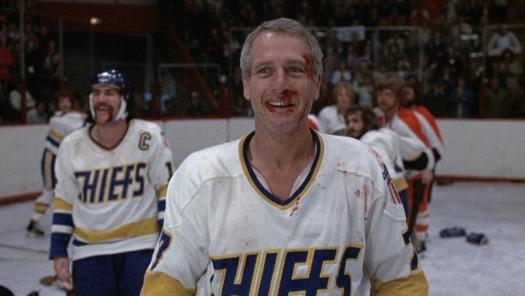
Hockey fans are excited about this year’s Stanley Cup Finals between the Boston Bruins and the St. Louis Blues, so I figured now’s the time to take a look at the quintessential hockey movie, George Roy Hill’s SLAP SHOT. Hill and star Paul Newman, who’d previously collaborated on BUTCH CASSIDY & THE SUNDANCE KID and THE STING, reunited for this raucous, raunchy sports comedy about a failing minor league hockey team who reinvent themselves as a hard-hitting goon squad.

Newman plays Reg Dunlap, an aging rink rat now the player-coach for the Chiefs, a dying franchise in a dying mill town. The team is on a massive losing streak, and attendance is at an all-time low. Two-bit GM Joe McGrath (Newman’s COOL HAND LUKE antagonist Strother Martin) is trying to sell the Chiefs, and things look bleak until Dunlap begins taunting his opponents and the rink violence escalates. Enter a…

View original post 470 more words

After The French Connection: Popeye Doyle (1986, directed by Peter Levin)


In this made-for-television movie, a pre-Married With Children Ed O’Neill takes over the role that won Gene Hackman an Oscar.
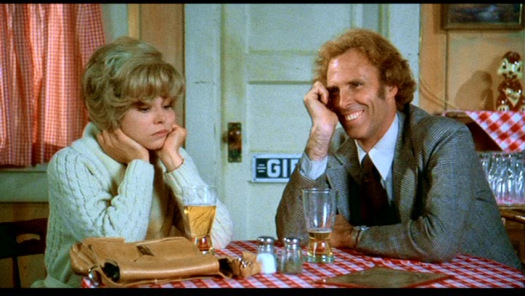
Popeye Doyle (played by O’Neill) is a hard-drinking, hard-living Irish police detective working out of New York City.  Along with his more emotionally stable partner, Tony Parese (Matthew Laurence), Doyle spends his time busting drug dealers, going on stakeouts, and chasing junkies through the mean streets of NYC.  When Jill, a beautiful young model (Audrey Landers) turns up dead, everyone assumes that it was an overdose.  Doyle, however, has his doubts.  All of her friends say that Jill never used drugs and, when Popeye searches her apartment, he doesn’t find any evidence that would point to her being junkie.  Instead, he finds tapes that Jill made for various wealthy men.  Convinced that Jill was murdered, Popeye is soon investigating the type of powerful people who are not used to being investigated.

In 1986, someone at NBC thought it would be a good idea to launch a series based on The French Connection.  Since Gene Hackman was busy making movies and hadn’t come anywhere close to appearing on television since losing the role of the father on The Brady Bunch to Robert Reed, the role of Popeye was given to Ed O’Neill.  At that time, O’Neill was an unknown who had appeared in a handful of plays, two movies, and one Red Lobster commercial.  The movie, Popeye Doyle, was meant to serve as a pilot for the proposed television series.  Needless to say, the film did not lead to a series.  If it had, Ed O’Neill probably wouldn’t have been available to take the role of Al Bundy on Married With Children.

O’Neill is probably the main reason that anyone today would want to see Popeye Doyle, which is otherwise a routine cop movie.  Except for a few scenes where he seems to be trying too hard to imitate Hackman’s iconic performance, O’Neill brings authentic working class swagger to the role.  He drinks too much, he often says the wrong thing, and he pisses off all the right people.  There are some scenes where O’Neill seems to blend right in with the pilot’s gritty visual style.  (It was shot on location in Ed Koch-era New York.)  There are other scenes where he gets so manic that he seems to be a man possessed.  In the scene where he watches Candy Clark do an impromptu striptease, O’Neill as Doyle gets so excited that you worry about him.  Interestingly, Doyle wanders through the film dressed like a slob and acting like a schlub but every beautiful woman he meets wants to have sex with him.  In that regard, it is easy to imagine the movie as being some sort of elaborate daydream that Al Bundy had while selling shoes.

As for the events in The French Connection, they’re mentioned briefly at the start of the movie, when a reporter asks Doyle about that time he accidentally shot and killed a federal agent.  Popeye Doyle still has many scenes that are meant to remind viewers of the first film.  There’s a stakeout scene, where Doyle and Parese sit out in the cold while their target enjoys a nice night.  There’s a scene where Doyle works undercover as a bum.  And, of course, there’s a car chase, though it’s nowhere near as exciting as the one from The French Connection.

Popeye Doyle has never been officially released on DVD (or even VHS), though it is available on YouTube.

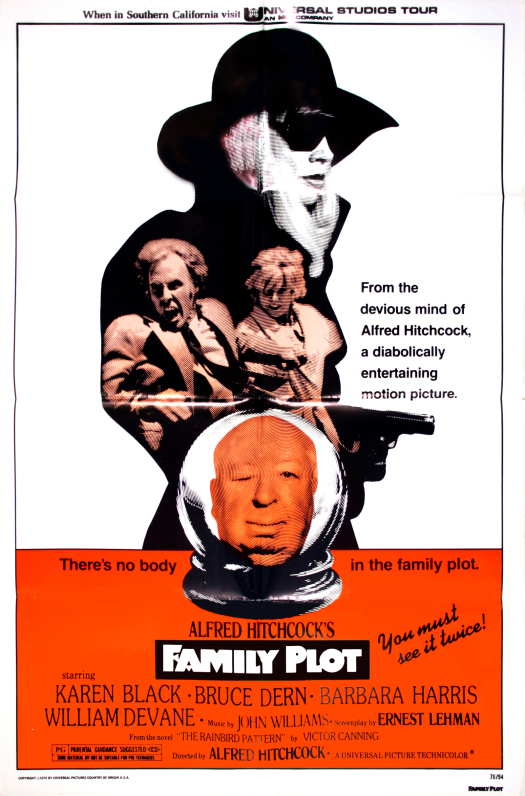
Alfred Hitchcock’s Last Ride: FAMILY PLOT (Universal 1976)


gary loggins's avatarcracked rear viewer

Critics in 1976 were divided over Alfred Hitchcock’s FAMILY PLOT, which turned out to be his final film. Some gave it faint praise, in an “it’s okay” kinda way; others decried it as too old-fashioned, saying the Master of Suspense had lost his touch – and was out of touch far as contemporary filmmaking goes. Having recently viewed the film for the first time, I’m blessed with the gift of hindsight, and can tell you it’s more than “okay”. FAMILY PLOT is a return to form, and while it may not be Top Shelf Hitchcock, it certainly holds up better than efforts made that same year by Hitch’s contemporaries George Cukor (THE BLUE BIRD), Elia Kazan (THE LAST TYCOON), and Vincente Minnelli (A MATTER OF TIME).

Hitchcock reunited with screenwriter Ernest Lehman (NORTH BY NORTHWEST) to concoct a devilishly clever black comedy about phony psychic Blanche Tyler who, along with…

View original post 469 more words

The First Police Story: Slow Boy (1973, directed by William A. Graham)


Long before The Wire, Homicide, Chicago PD, NYPD Blue, or even Hill Street Blues, there was Police Story.

Co-created by cop-turned-writer Joseph Wambaugh, Police Story aired on NBC from 1973 to 1978.  It was an anthology series, with each episode following a different member of the LAPD as they deal with crime and social issues in Los Angeles.  For its time, it was ground-breaking in its realistic approach to the life and work of the police.  Interestingly, the show wasn’t always blindly pro-cop.  Often the cops featured were deeply flawed and the war on crime was frequently portrayed to be unwinnable.  Over the course of its run, Police Story was a regular Emmy nominee and won the award for Best Drama Series in 1976.

Police Story started, in 1973, with a two-hour TV movie.  At the time it aired, the pilot was called Stakeout but it has since aired in syndication under the title Slow Boy.  Vic Morrow stars as Sgt. Joe LaFrieda, a plainclothes detective who can’t keep his marriage together but who can take criminals off the street.  LaFrieda is the second-in-command of a special squad of detectives who specialize in watching and taking down high-profile criminals.  Their methods frequently come close to entrapment but they usually work.  Their current target is Slow Boy (Chuck Conners), the son of a mafia chieftain, who enjoys robbing stores.  When LaFrieda’s first attempt to put Slow Boy in jail is thwarted by a liberal judge and departmental bureaucracy, he and the squad come up with a second, less-than-legal plan to take Slow Boy down.

Considering the involvement of Joseph Wambaugh, it’s no surprise that plot is secondary to exploring the day-to-day lives of the blue-collar cops trying to take Slow Boy down.  The heart of the movie is in the scenes of the cops shooting the breeze and trying to keep each other amused during length shakeouts.  Their humor is often grim and the fascinating dialogue is cynical, dark, and, even by today’s standards, surprisingly raw.  One of the detectives (played by Harry Guardino, who specialized in loud-mouth city cops) is an unapologetic racist.  Though he gets a comeuppance of sorts, the way the film and the rest of his squad handle his racism will undoubtedly make modern audiences uncomfortable, even if it is authentic to the era in which Slow Boy was made.

The underrated Vic Morrow gives one of his best performances as the tough but sympathetic LaFrieda, who is bad at everything but his job.  He is ably supported by a host of familiar character actors.  Ed Asner plays LaFrieda’s reactionary lieutenant while Sandy Baron is great in the role of an informant.  Diane Baker was also perfectly cast as LaFrieda’s potential girlfriend.  (She first meets the detective while Slow Boy is holding a gun to her head.)  Finally, Chuck Conner is as intimidating as always as the sadistic Slow Boy.

Slow Boy is a tough and uncompromising police procedural and it provided a great start for Police Story.  Reruns of Police Story currently air on H&I on Sunday morning.

Special Memorial Day Edition: Randolph Scott in GUNG HO! (Universal 1943)


gary loggins's avatarcracked rear viewer

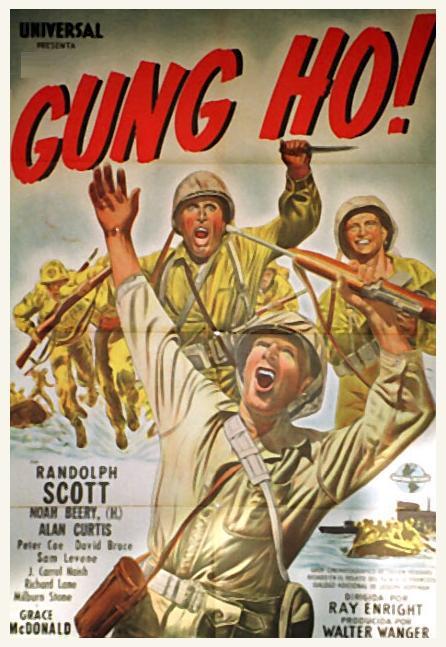
Duke Wayne wasn’t the only movie cowboy who fought WWII in Hollywood. Randolph Scott battled fascism in quite a few war dramas, and one of his best is 1943’s GUNG HO! (currently streaming on The Film Detective ). The rock-solid Mr. Scott plays tough-as-nails Col. Thorwald, an expert in guerilla warfare thanks to his experience with the Chinese army, who whips a diverse crew of Marines into fighting shape to launch the first American ground offensive against the Japanese on Makin Island.

Scott and his second-in-command, the versatile character actor J. Carrol Naish (playing a Marine of Greek descent this time around), gather up a motley crew of misfits and reprobates ala THE DIRTY DOZEN:  there’s battling stepbrothers Noah Beery Jr. and David Bruce (who’re also rivals for the affections of pretty Grace McDonald in a subplot), hillbilly farmboy Rod Cameron, murderous minister Alan Curtis , “no good kid” Harold…

View original post 369 more words

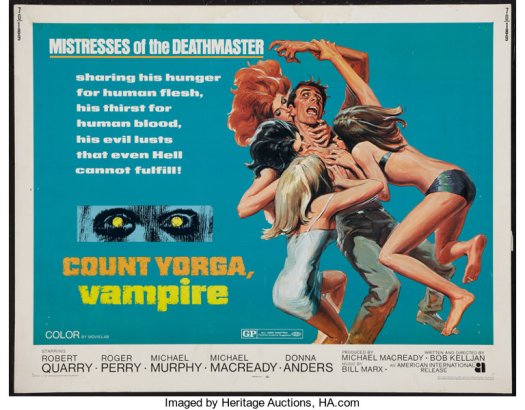
Bloody Good Show: Robert Quarry as COUNT YORGA, VAMPIRE (AIP 1970)


gary loggins's avatarcracked rear viewer

Robert Quarry’s screen career wasn’t really going anywhere by 1970. He had a good part in 1956’s soapy noir A KISS BEFORE DYING , but mostly he was relegated to uncredited bits in movies and guest shots on episodic TV. Quarry kept busy on the stage, until being approached by producer/actor Michael Macready to star in THE LOVES OF COUNT IORGA, originally envisioned as a soft core porn flick with horror elements. The actor said he would accept the job but only if it were turned into a straight modern-day vampire tale, and thus was born COUNT YORGA, VAMPIRE, launching Quarry into a new phase as a 70’s horror movie icon.

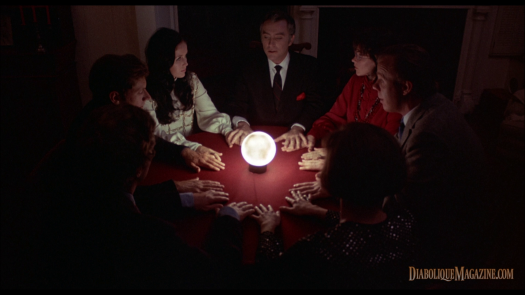
The plot is an updated version of Stoker’s DRACULA, with a few changes. Here, the Bulgarian-born Count Yorga is a recent transplant to California, and we first meet him conducting a séance on behalf of Donna, whose late…

View original post 758 more words

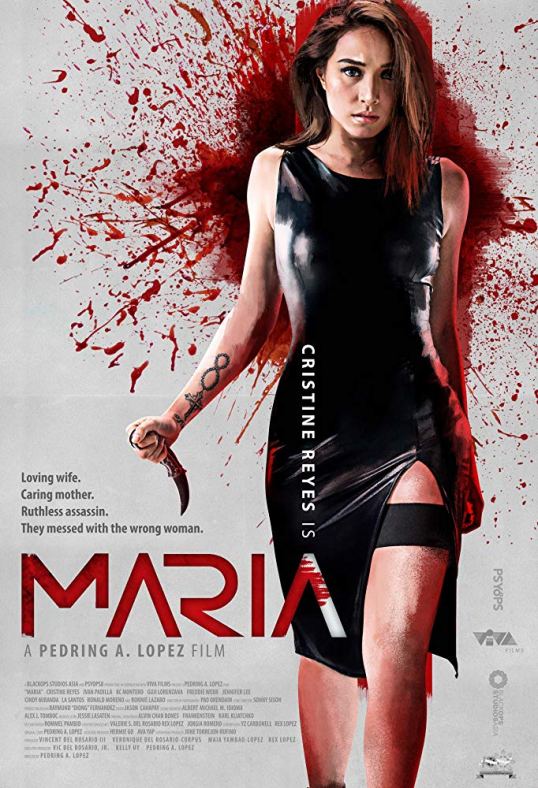
The Things You Find On Netflix: Maria (dir by Pedring Lopez)


Once upon a time, Lily (Cristine Reyes) was one of the most feared cartel assassins in the Philippines.  Working with her lover, Kaleb (Ivan Padilla), Lily killed a lot of people and she did so with the an unstoppable ruthlessness.  However, she soon grew tired of the killing.  When she told Kaleb that she wanted out, he told her that there was no way to get out.  Lily decided to prove him wrong by betraying the cartel, faking her own death, and building a new life for herself.

Years later, Lily is now knows as Maria.  She’s a wife and a mother.  While her new husband is enthusiastic about a politician who says that he’s going to do whatever needs to be done to put the cartel out of business, Maria is always careful to remain apolitical.  In fact, she does nothing that might bring attention to herself.

Unfortunately, disappearing is easier said than done.  The cartel learns of her new location and Kaleb and his men are sent to kill her and her family.  They easily manage to kill both her husband and her daughter.  However, Maria escapes.  While Kaleb is forced to deal with the machination of a rival member of the cartel, the brutal Victor (KC Montero), Maria once again enters the criminal underworld.  She now only has one mission and that’s revenge.  She’s going to kill anyone who had anything to do with the death of her family….

Earlier tonight, I watched the Filipino film Maria on Netflix.  It’s pretty much a standard revenge thriller.  The action scenes and the over-the-top violence were clearly inspired by films like The Raid and John Wick.  One could just as easily replaced the cartel with the Russian mafia and Maria’s family with a collection of house pets and then sold that film as being about John Wick’s long-lost sister.  However, Maria didn’t have any of the winking self-awareness that makes both The Raid and the John Wick films so memorable.  Really, the only thing that Maria has to distinguish itself from other action films is that the lead character is female but, at times, that’s enough.  Even though the whole “action girl” character has become a bit of a cliche in the years since Kill Bill and the original Resident Evil, there’s still something undeniably satisfying about watching a woman kick ass.  If nothing else, this makes Maria an appropriate film to watch if you’re having a bad day and you need the catharsis that comes from watching some really bad dudes not get a fair trial.

The film itself is a bit oddly paced.  The first fourth of the film is a bit-heavy on torture scenes with one in particular being drawn out to a painful degree.  Things pick up once Maria starts beating people up and Christine Reyes gives a sympathetic and highly-charged performance in the title role.  Maria is not a particularly challenging film, nor is it one that you’ll necessarily remember two hours after you’ve watched it.  That said, for what it is — i.e., a modest revenge flick, it gets the job done.  Just like Maria!