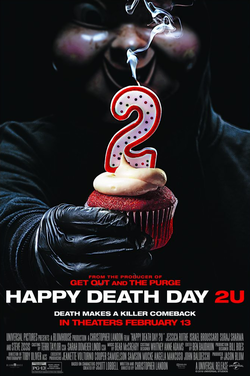
Film Review: Happy Death Day 2U (dir by Christopher B. Landon)


I have to admit that, when I first heard that Blumhouse was going to be producing a sequel to 2017’s Happy Death Day, I wasn’t surprised.  After all, every successful horror film gets a sequel.  That’s just the way the business work.  However, I will admit to being very skeptical.

I mean, the first film was a genuinely clever and witty mix of Groundhog Day and Scream.  It was often laugh-out-loud funny and, in a perfect world, Jessica Rothe’s lead performance as Tree Geldman would have been nominated for, at the very least, a Golden Globe.  It was also a surprisingly effective horror film.  The Baby Face Killer was as frightening as she was ludicrous.  Still, at the end of the film, it was hard not to feel that Tree’s story was finished.  When I heard there was a sequel, I was like, “What?  Is she going to start reliving a second day with a new killer over and over again?”

Well, it turns out that I was partially correct about the plot but I was pretty much wrong in my skepticism.  This is a sequel that works surprisingly well.

In Happy Death Day 2U, Tree once again finds herself having to live September 18th over and over again.  However, this time, it’s not just so Tree can become a better human being and discover who is targeting her.  This time, we actually find out why Tree ended up stuck in that time loop in the first place.  It turns out that Carter’s (Israel Broussard, returning from the first film) roommate, Ryan (Phil Vu), has built some sort of experimental quantum reactor and, whenever it’s turned on, it can create time loops and send people to alternate realities.  It’s all very science-y and director Christopher B. Landon is smart enough not to spend too much time lingering over all the details.  Everyone in the film agrees that quantum reactor does what they say that it does and that’s really all we need to know.

Anyway, Tree is once again reliving her birthday but now, she’s reliving it in an alternate reality.  That means that there’s a bunch of little difference to deal with.  For one thing, even though someone is still determined to kill her, it’s no longer her roommate, Lori (Ruby Modine).  For another thing, Carter is now dating the wonderfully shallow Danielle (Rachel Matthews).  Perhaps the biggest change of all is that Tree’s mother (played by Missy Yager) is still alive in this alternate reality.

Not wanting to lose her mother for a second time, Tree decides that she wants to stay in this new reality.  But, to do this, the time loop that was opened by the big science thing needs to be closed.  Otherwise, Tree is going to be doomed to keep reliving the same day over and over again….

And it get even more complicated from there.  Happy Death Day 2U is an extremely busy film, mixing Back To The Future-style science fiction with the Groundhog Day/slasher film plot of the first film.  And yet, surprisingly, the sequel actually works really well.  If the first film was a horror film with elements of comedy, this sequel is a straight-out comedy that cheerfully satirizes both the horror and the science fiction genres.

Jessica Rothe gives another wonderful performance in the lead role.  Her fury upon discovering that she’s going to have to relive September 18th all over again is both funny and relatable.  The film’s emotional heart is found in Tree’s relationship with her mother and the scene where Tree discovers that she now has pictures that document years of new memories with her mom is wonderfully played Rothe and is one of the best in the film.  That scene brought tears to my mismatched eyes.  I lost my mom a little over ten years ago so, in that moment, it didn’t matter that there was a Babyface Killer out there or that there was some sort of quantum reactor doing something.  At that moment, I knew exactly what Tree was feeling and the movie’s emotions became very real.

Happy Death Day 2U took me by surprise.  While it may not have the freshness of the first film (and really, that’s to be expected when it comes to sequels), it’s still a heartfelt and entertaining mix of comedy, horror, and science fiction.  Unfortunately, it did not duplicate the first film’s box office success so it may be the final Death Day film.

Then again, Tree’s earned a few days off….
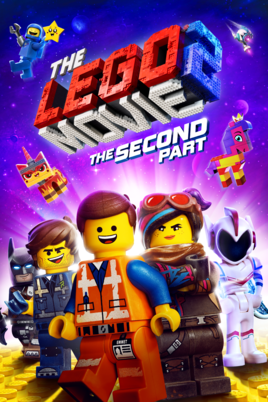
Film Review: The Lego Movie 2: The Second Part (dir by Mike Mitchell)


Sometimes, it’s hard not to feel that the Lego movies are their own worst enemy.

I mean, they’re just so cute and fun and likable and cheerfully dorky that it’s easy to overlook just clever they often are.  Everything is Awesome may have been a cute song but it was also a pitch perfect parody of mindless conformity.  And yes, The Lego Batman Movie got a lot of laughs out of Will Arnett’s guttural growl but it was also the best Batman film since The Dark Knight and it also had a lot to say about how lonely it can be when you’re an extremely paranoid super hero.  As for The Lego Ninjago Movie …. well, give me a minute and I’ll think of something.  Uhmmmm …. it had that cute kitty!  Woo hoo!

Beyond all that, all of the Lego movies — from the best to the less-than-the-best — celebrate imagination.  They celebrate being an individual and the joy of creating your own world as opposed to just conforming to someone else’s rules.  As much as I loved Chris Pratt as Emmett and Elizabeth Banks as Wyldstyle, the heart of the first Lego Movie is to be found in the scene where Will Ferrell essentially realizes that he’s being a jerk when he won’t let his son build what he wants to build.

That said, the main appeal of the Lego movies is that they’re incredibly cute.  Just take The Lego Movie 2: The Second Part for instance.  Especially when compared to the first Lego Movie and The Lego Batman Movie, this sequel has its flaws.  Admittedly, some of those flaws are unavoidable.  Just the fact that we start the movie knowing that everyone is in Will Ferrell’s house means that the sequel can’t take us as much by surprise as the first Lego Movie did.  Though the film’s original directors, Christopher Miller and Phil Lord, wrote the script and contribute some genuinely witty dialogue, the sequel’s pacing occasionally seems a little bit off.  There’s a few slow spots, the majority of which are really only noticeable when you compare the sequel to the flawlessly paced first film.  And yet, in the end, it’s such a cute movie that it’s easy to overlook those flaws.

The sequel begins immediately where the first ended, with Will Ferrell decreeing that both his son and his daughter are now allowed to play with his Lego collection.  Jump forward five years and this has basically led to chaos.  The Lego Universe is now a Mad Max-style wasteland.  Not surprisingly, both Wylstyle and Batman have really gotten into their new dystopian lifestyle.  Meanwhile, Emmett remains just as blindly cheerful and optimistic as ever.  He still feels that everything is awesome.

Or, at least Emmet feels that way until all of his friends are kidnapped to the Systar System, where Queen Watevra Wa’Nabi (Tiffany Haddish) wants to marry Batman.  Determined to rescue his friends, Emmett decides to travel to the Systar System himself.  Helping him out is Rex Dangervest, who seems like the type of adventurer that Emmett has always dreamed of becoming.  Chris Pratt voices both Rex and Emmett and the film has a lot of fun playing with Pratt’s post-Guardians of the Galaxy stardom.  Rex is not just an intergalactic explorer.  No, he’s also a cowboy, a dinosaur trainer, an archaeologist, a first baseman, and — we’re told — a script doctor.  (Those, of course, are references to Pratt’s roles in The Magnificent Seven, Jurassic World, and Moneyball.  Interestingly enough, his work in Passengers goes unmentioned.)  Rex pressures Emmett to become more cynical and ruthless in his efforts to save his friends and destroy the Systar System and Chris Pratt does a great job voicing both roles.  Indeed, if nothing else, this film will always stand as a tribute to the incredible and unending charm of Chris Pratt.

If Lego Movie 2 never reaches the glorious heights of the first film, that’s because the element of surprise has been lost.  There’s no moment  in the sequel that’s as memorable as when a live action Will Ferrell suddenly showed up in the first movie.  (In the second movie, Ferrell appears in a flashback and has a brief voice cameo as President Business.  Maya Rudolph does show up as his wife but the sequel’s live action scenes just don’t have the emotional impact of the first film’s.)  But, with all that in mind, it’s still an undeniably cute and entertaining movie.  All of your old favorites back — everyone from Channing Tatum and Jonah Hill as Superman and Green Lantern to Alison Brie as Unikitty to Charlie Day as the astronaut. (Sadly, Liam Neeson did not return as the Good Cop/Bad Cop and his absence is felt.)  The film is full of clever parodies, my favorite being the references to Mad Max: Fury Road.  There’s more than enough witty lines, visual gags, and sweet moments that Lego Movie 2 will hold your interest and bring a smile to your face.

At the box office, Lego Movie 2 fell victim to the same Lego fatigue that took down the Lego Ninjago film and it did not become quite the phenomenon that the first movie did.  Regardless, it’s still a worthy sequel.  I wouldn’t quite say it’s awesome but it’s definitely a lot of fun.

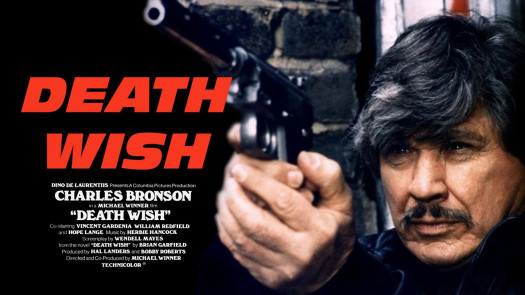
Bang, You’re Dead!: Charles Bronson in DEATH WISH (Paramount 1974)


gary loggins's avatarcracked rear viewer

Most people think of DEATH WISH as just another 70’s revenge/exploitation flick, right? Nope. Far from it. Sure, there’s loads of graphic violence, but this gem of a movie contains just as much political commentary as ALL THE PRESIDENT’S MEN, with an added dose of black comedy to boot. The film had its finger firmly placed on the pulse of 1970’s America, with all its fear and paranoia about rampant urban crime, and is among the decade’s best.

Director Michael Winner and star Charles Bronson had made three films together up to that time: the revisionist Western CHATO’S LAND, the actioner THE MECHANIC , and the cops-vs-Mafia drama THE STONE KILLER . All were hits with the drive-in crowd, and helped Bronson go from supporting player to major star. Strangely enough, Bronson wasn’t the first actor considered for the part of Paul Kersey. Jack Lemmon was original choice, and that…

View original post 826 more words

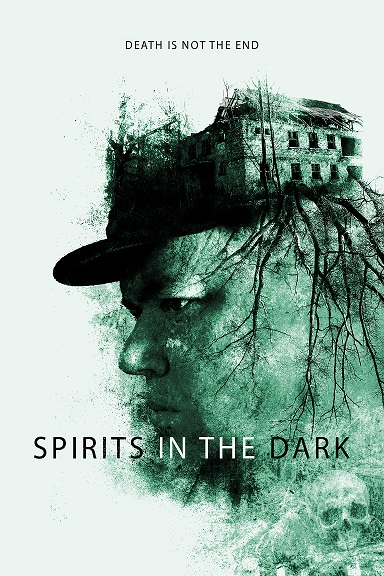
Film Review: Spirits In The Dark (dir by Jozsef Gallai)


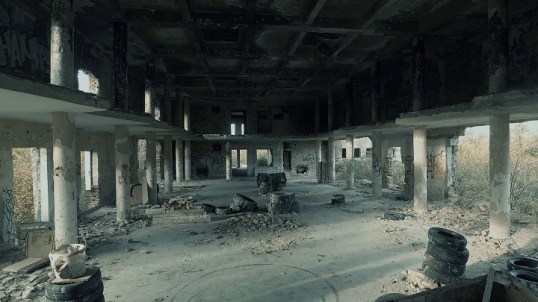
An abandoned building is just inherently creepy.

I mean, think about it.  Unlike a forest or a mountain or a canyon, a building is not something that forms naturally.  People actually have to build buildings.  Plans have to be drawn up.  Materials have to purchased.  Hours of backbreaking labor are required.  Creating a building requires work, resources, and time.  It’s not something that you do on a whim.  It’s something that’s done as a part of a larger plan.  With all of the effort that goes into creating the building, it’s always strange to come across one that has subsequently been abandoned.  You find yourself wondering what could have happened that made the inhabitants or the owners say, “We’d rather have all that hard work be for nothing than remain in this location?”

Walking through an abandoned building, it’s difficult not to think about the fact that, once upon a time, strangers that you’ll probably never meet moved through these now deserted hallways.  People worked in those empty rooms.  For a period of time, the building was probably the center of someone’s life.  Where are those people now?  Do they ever think about the past?  Do they still have memories of things that were said or thought while walking through those now-empty hallways?

Finally, there’s the constant reminders that even an abandoned building isn’t never truly abandoned.  There’s the animals that move in after the people leave.  There’s the plants the continue to grow around and, in some cases, consume the empty structure.  And, of course, there’s the reminders that you might not be the first person to have explored this empty building.  There’s the broken windows or the empty bottles or the crumpled cigarette pack, all of which remind you that others may even consider this building to be their home.  And, of course, there’s the graffiti.  Graffiti and abandoned buildings tend to go hand-in-hand.  For whatever reason, it’s often the graffiti that makes an abandoned building feel especially ominous.  Are those words on the wall a sign of ownership, an act of rebellion, or a warning?

Of course, the only thing more creepy than one abandoned building is when you come across an entire town of abandoned buildings….

And yet, as creepy as an empty building can be, it’s also hard not to be fascinated by them.  You look at them and you wonder why?  Why did everyone leave and how long will the building stand there deserted before it’s either torn down or destroyed by nature?  That’s one reason why ghost towns remains such a popular tourist destination.  They’re a reminder of just how short and fragile life can be.  You can build a home or an office but, once your time is up, it’s just going to be another abandoned building.

That’s something that Gil Spencer, the protagonist of Spirits in the Dark, understands.  Gil (played by the film’s director, Jozsef Gallai) used to love exploring abandoned buildings with his wife.  Ever since his wife’s death, Gil has struggled with being lonely and depressed.  But then, one day, something mysteriously appears on his laptop.  It appears to be a video shot by someone exploring an abandoned military complex.  The person shooting the video comes across a white pendant, one that looks exactly like the one that Gil’s wife used to wear.  While the person holds the pendant, we catch a glimpse of a ghostly figure standing a few feet away, watching.

Intrigued, Gil searches for and manages to track down the deserted complex.  As creepy as the abandoned and graffiti-covered buildings may be, Gil — who films his exploration — informs us that it’s nothing he hasn’t seen before.  Even when he spots blood on the wall, he figures that it was probably just someone shooting “an indie horror film.”  But then, he comes across a mask hanging in a corner.  And then his car’s horn starts honking for no reason.  And then, things start to get really creepy!

Spirits in the Dark is a haunting and moody exercise in atmosphere and genuine creepiness.  Wisely, instead of going for easy jump scares, the film takes its time to set up both the location and the situation.  We get to know Gil and, as he makes his way through them, we also get to know the abandoned building and the surrounding wilderness.  Like Gil, we find ourselves looking at every shadow, searching for some sort of explanation.  Just like Gil, we can feel the menacing atmosphere closing in on us and we become aware of every strange noise and every possible movement in the darkness.  When the scares do come, they’re all the more effective because the film has earned the right to frighten us.  It’s a wonderfully effective and creepy movie, one that has an intriguing plot and which is distinguished by the moody cinematography and the ominous score, both of which are credited to Gergo Elekes.

Wild Eye Releasing is going to be releasing Spirits in the Dark via DVD and VOD early in 2020 so keep an eye out for it!

Film Review: The Top Rope (dir by Cody Broadway)


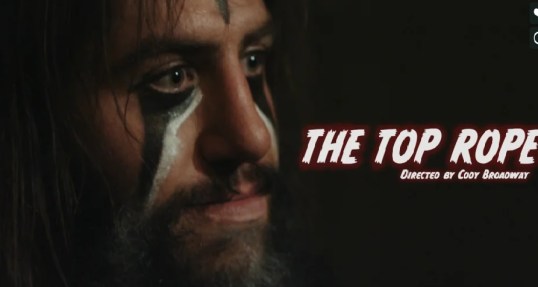
About halfway through the 20 minute documentary, The Top Rope, a soft-spoken, bearded man named Billy Gray says, “It’s how I’m wired.”

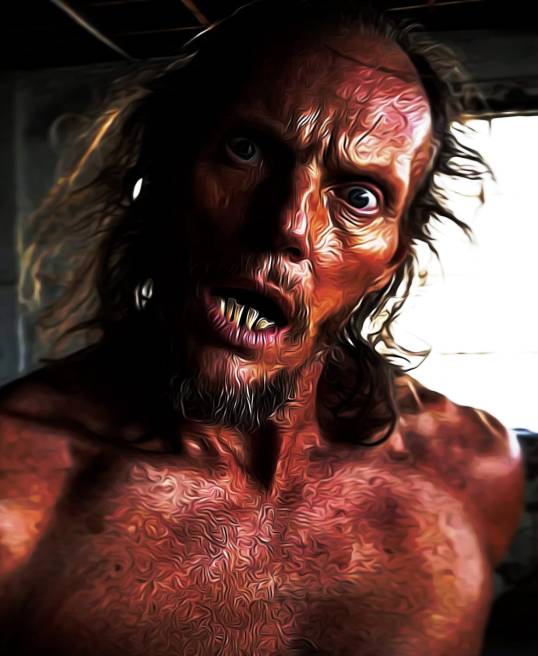
Billy is explaining why he spends most of his time playing a character named Hunter Grey, a viking who is, at one point, seen carrying a big axe.  (By being a viking, he explains, he can make people laugh while still being believably intimidating.)  Billy, who was a championship wrestler in high school and who comes from a long line of wrestlers, now makes his living traveling the pro wrestling circuit in Colorado.  It’s hardly glamorous.  Billy tells us stories about having to change in parking lots and says that if you have a locker room, you should consider yourself to be lucky.  He also tells us about how his family was initially dismissive of his career and how it took a while before they actually started coming to his matches.  But, whenever we actually see Billy performing and in the ring, we understand why he does it.  The crowds love watching him.  When Billy Gray’s in that ring, he’s a star.

Billy is one of several wrestlers to be interviewed in The Top Rope.  Considering that one of the main appeals of pro-wrestling is the flamboyance of the people involved, it’s tempting to be surprised to discover that, outside the ring, the majority of the participants come across as being rather soft-spoken.  Then again, maybe we shouldn’t be surprised at all.  One of the joys of performing, after all, is assuming a new and different persona.

For instance, a wrestler named Zach Anaya is obviously somewhat bemused with his villain status but, when we see him in the ring, we see someone who is truly enjoying playing his role.  A scene in which he jumped off a ledge and landed on top of two wrestlers below left me cringing because you could tell that, for all the talk about how pro-wrestling matches are essentially a type of performance art, the participants can still get seriously injured.  Scripted or not scripted, you have to be willing to push yourself to extremes in order to pursue it.

Also interviewed is Curtis Cole, a wrestler who rather touchingly talks about how he used to watch wrestling with his mother.  You get the feeling that, to a certain extent, he’s wrestling in her memory.  Cole also discusses the importance of having a storyline in the ring.  Without a storyline, it’s just two guys jumping on each other.  With a storyline, it becomes an epic battle of good and evil.  Cole tears up while discussing once past storyline and I have to admit that he got so emotional that even I, who has never even watched a wrestling match, started to get emotional too.  In a film full of great storytellers, Curtis Cole might be the best.

This documentary was directed by Cody Broadway, who previously directed 4 Quarters of Silence, a film about the Texas School for The Deaf’s football team.  He brings the same empathetic touch to this film.  Though the film did not make me a pro wrestling fan (to misquote Billy Gray, it’s just not how I’m wired), it did make me a fan of the men who were interviewed and it made me happy that they have this in their lives.  We’re all wired differently but, as this film demonstrates, there’s a place for all of us if we’re willing to look for it.

Short Film Review: Fried Barry (dir by Ryan Kruger)


I just watched a three-minute short film called Fried Barry.  Now, you may ask: “How much of a story can you tell in three minutes?”  Well, the answer is that you can tell a lot more than you might think.  For instance, Fried Barry might only last 180 seconds but it tells the story of a lifetime.

Fried Barry tells the story of Barry (Gary Green), a man who has obviously fallen on hard times.  When we first see him, he’s dirty, he’s scruffy, he’s twitching, and he’s wandering around in what appears to be a deserted warehouse.  His eyes appear to be full of madness as they dart from one side of the warehouse to the other.  A series of quick cuts, taking us from extreme close-ups of Barry to medium shots back into Barry’s face (and potentially his mind), keep us just as disorientated as he is.  The soundtrack is full of the sounds of the chaos that is erupting in Barry’s mind and we wonder if Barry is insane or maybe if we’ve just entered someone else’s dream.  It’s when we see the spoon and the hypodermic needle that we come to understand that Barry is a heroin addict.

When he shoots up, the short film just gets more chaotic.  Shots of Barry looking somewhat blissful are followed by shots of Barry looking even more pissed off.  Occasionally, a peaceful image appears but the sounds of chaos continue to erupt in the background.  By the time Barry is using his tongue to catch flies like a frog, we find ourselves wondering once again if we’re watching Barry from the outside or if we’ve entered his head.

Looking over the notes that I jotted down while watching Fried Barry, I see that I originally wrote that Barry was “a crazy dude in a warehouse.”  That’s probably not entirely fair to Barry.  When you see someone at a certain point in their life, you never fully understand how they reached that point.  That’s true of the desperate people that we see everyday and certainly, that’s true of someone like Barry.  Who knows who Barry was before he became “a crazy dude in a warehouse.”  The film is full of hints but it’s up to us, as the viewer, to put them together.

David Lynch once describes Eraserhead as being “a dream of dark and disturbing things,” and I think the same description applies to this 3-minute film.  It’s a film that will definitely stick with you.  iHorror released it this week so check it out.

The short film Fried Barry has been adapted into a feature film, which has just completed post-production and should be coming out at the end of 2019.

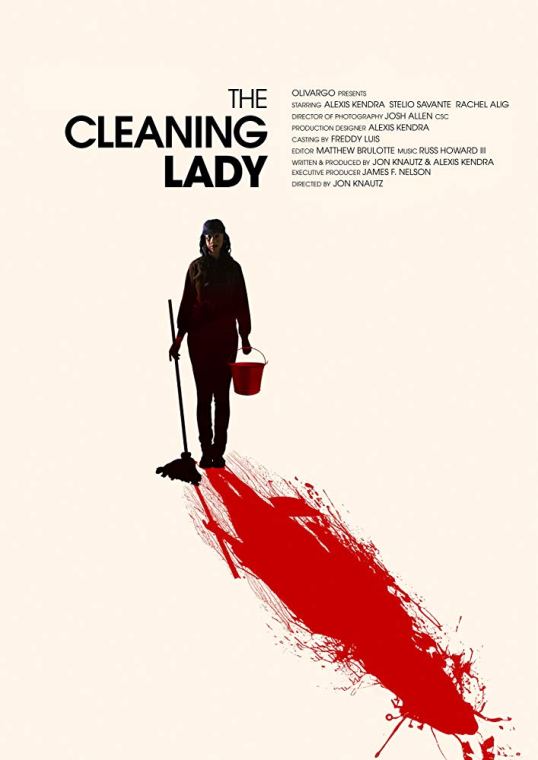
Film Review: The Cleaning Lady (dir by Jon Knautz)


The Cleaning Lady opens with a close-up of several mice in a box.  A hand reaches down and scoops up the mice, one-by-one.  The mice are dropped into a blender.  We watch as a finger turns the blender on.  Now, before anyone panics, we don’t actually see the mice get turned into puree or anything like that.  (Indeed, if we had, I would have stopped watching the movie right at that moment.)  Still, just the sound of that blender coming to life was enough to make me cringe.

It’s also a signal of the type of film that The Cleaning Lady is going to be.  This is a dark horror movie about some seriously damaged individuals.  If you think that things can’t get any darker than mice being dropped in a blender, just you wait.

The film opens with the travails of Alice (Alexis Kendra), who has a nice apartment and a married boyfriend.  The problem with having a married boyfriend is that, no matter how much you love him, you still have to deal with the guilt of being a homewrecker.  Unfortunately, Alice is “addicted to love” and she simply cannot seem to resist the urge to call Michael (Stelio Savante) and ask him to come over to her place.  Not even attending a support group seems to help.  (Of course, Michael does invite her to to go to Italy with him and, seriously, who could resist a free trip to Italy?)

As for Alice’s apartment, it’s nice and big but what’s the point if you can’t keep it clean and neat?  Fortunately, Shelly (Rachel Alig) is here to help!  Shelly is the cleaning lady and she has a habit of mysteriously materializing in Alice’s apartment.  At first, Alice is a little bit nervous around the heavily scarred and withdrawn Shelly.  However, Alice soon comes to appreciate Alice’s ability to unplug a drain and dispose of dead rodents.  Soon, Alice is making Shelly dinner and inviting her to stay over and watch movies.  Alice even drives Shelly home one night and is shocked to discover that Shelly apparently lives out in the middle-of-nowhere.

Now, admittedly, Alice’s motives aren’t entirely altruistic.  There’s a hint of elitism to Alice’s attempts to be nice to “the help.”  Even more importantly, spending time with Shelly gives Alice something to do other than calling up Michael.  Alice is using Shelly to break her addiction.

What Alice doesn’t realize is that 1) Shelly’s become a bit addicted to her company and 2) Shelly is willing to do just about anything to get closer to Alice.  I’m not going to spoil things by discussing just how far Shelly goes but let’s just say that things do a get a bit extreme.  And that’s even before the knives and the axes come out!

The Cleaning Lady is hardly the first horror film to be made about obsession, nor will it be the last.  That said, it’s still an effectively creepy film.  By making Alice as obsessed with Michael as Shelly is with Alice, the film brings a few unexpected wrinkles to its plot and both Alexis Kendra and Rachel Alig do a good job bringing their characters to life, with Alig even managing to generate some sympathy for poor, scarred Shelly.  Alig especially deserves credit for underplaying a few key scenes, as opposed to going full psycho.  The fact that Shelly rarely speaks above a whisper actually makes her far more intimidating than she would have been if she had spent the entire movie screaming at her prey.

All in all, this is an effective indie horror film.  Of course, after seeing the film, it’s possible that you might never look at a blender the same way again….

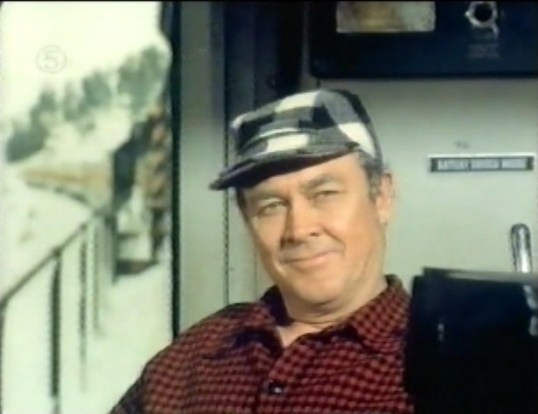
Coming Down The Mountain: Runaway! (1973, directed by David Lowell Rich)


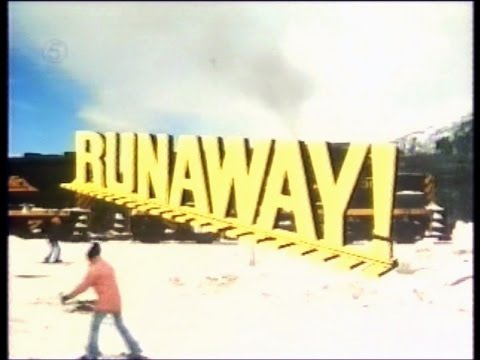
Runaway! begins with a train starting a slow descent down a snowy mountain.  On board the train are collection of skiers, gigolos, conductors, and engineers.  One couple discusses their upcoming divorce.  An athletic father tries to bond with his less-athletic son.  A slick con artist tries to convince a depressed young woman not to throw herself from the train.  A group of skiers put on an impromptu concert, banging on their suitcases like bongo drums.  They get so loud that the conductor doesn’t even hear the engineer desperately trying to contact him.  What none of the passengers realize is that the train’s brake engines have frozen and the train is about to start hurtling down the mountain.  Unless the chief engineer can figure out a way to stop the train, everyone’s going to die!

Made for television in the year between the release of The Poseidon Adventure and The Towering Inferno, Runaway! is a low-key but entertaining disaster movie.  With a running time of only 70 minutes, Runaway! doesn’t waste any time getting down to business and, even if it is a low-budget movie, there’s no way that an out-of-control train racing down a mountain can’t be exciting.

Compared to the other disaster movies of the era, Runaway! does not exactly have an all-star cast though there are some familiar faces.  Vera Miles and Ed Nelson are the divorcing couple while Martin Milner is the father who puts too much pressure on his son.  Ben Murphy is the gigolo who refuses to pay for a ticket on general principle while Darleen Carr is the woman who wants to jump to her death.  Most of them are just there as placeholders.  It’s obvious from the start that the real stars of the film are going to be the train and the mountain.  However, the famously gruff character actor Ben Johnson manages to make an impression just by being Ben Johnson.  Johnson plays the chief engineer and, as long as he’s manning the engine, you know that the train’s passengers are in good hands.

Runaway! has never been released on DVD or even VHS but it is currently available on YouTube.

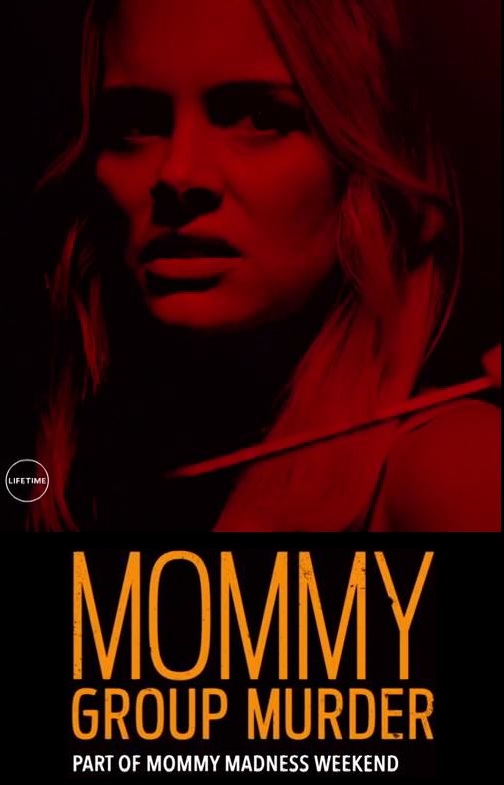
Lifetime Film Review: Mommy Group Murder (dir by Nick Everhart)


There are a few lessons that I’ve learned from Lifetime movies in general and the film Mommy Group Murder in specific.

First off, don’t live in the suburbs.  Like, seriously, don’t do it.  Yes, the houses are big and everyone’s got a nice lawn and there’s always some hot guy working shirtless across the street from you.  Yes, it may seem like a nice and fun place to live but don’t be fooled.  You want to know why all those pretty and handsome people are living in the suburbs?  Because they’ve all got something to hide!  The minute they see you and your sensitive husband and your baby moving into the big, white house next door, they’re going to start plotting against you.  Next thing you know, strangers will be putting cameras in your house and having sex on your kitchen counters and you’ll be hearing weird noises at all hours of the night.

(Of course, I already live in the suburbs so I’m learning this lesson a bit too late.  Admittedly, my suburban neighborhood seems to be a bit safer than the average Lifetime suburban neighbor.  I have yet to find any hidden cameras in the house and the kitchen counters are thoroughly cleaned every day.)

Lesson number two: no matter how appealing the mysterious mansion next door might look, resist the temptation to break in and look around.  In fact, for that matter, don’t even accept an invitation to visit.  Nothing good ever happens in those mansions.  There’s always either a dead body hidden in an ice chest or someone chained up in the basement.  Once you discover something like that, you’re pretty much required by law to get involved and go to the police.  So, seriously, think before you invade.

Lesson number three: You know that person who shows up out of nowhere and suddenly wants to be your new best friend?  DON’T TRUST THEM!  When all of your old friends or your husband says that they think there’s something strange about your new BFF, LISTEN!  And when you discover that your new best friend is using an alias, ask yourself why.  Don’t just shrug and say, “Well, she just changed her name.  Big deal.”

Finally, lesson number four — and this is one that was specifically driven home by this movie: Don’t join a mommy group!  Sure, it’s tempting.  I mean, you’re suffering from crippling depression.  You’re having nightmares about someone trying to kidnap your baby.  Your new best friend suggests that maybe you need to join a mommy group so that you can talk about all of this with people who actually understand what you’re going through.  It seems like a great idea but, if Lifetime has taught us anything, it’s that these mommy groups always lead to secrets, lies, and murder!

That’s what Natalie (Leah Pipes) discovers after she befriends the mysterious Grace (Helena Mattsson).  Natalie and Grace are the center of Mommy Group Murder, a film which aired on Lifetime back in March.

Plotwise, Mommy Group Murder may seem like a typical Lifetime film.  Suburbs, adultery, murder, and a best friend that no one listens to until it’s too late, it’s all here!  However, Mommy Group Murder also features a wonderfully nuanced performance from Leah Pipes and a few twists and turns that take the movie to a slightly darker place than the average Lifetime film.  Director Nick Everhart emphasizes the darkness at the heart of the film’s story, opening with a harrowing montage of Natalie struggling to bond with her daughter and ending with a shadowy sequence that has as much in common with a horror film as a Lifetime film.

Mommy Group Murder is a nicely done, melodramatic thriller.  Watch it and learn.

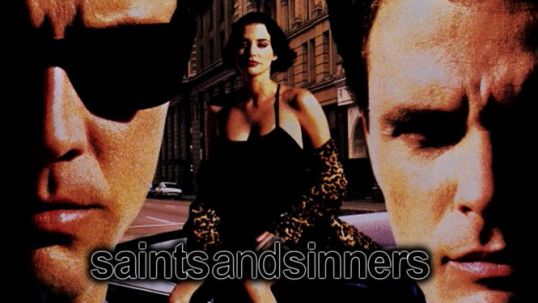
From the Golden Age of Cinemax: Saints and Sinners (1996, directed by Paul Mones)


From the golden age of late night, straight-to-video Cinemax comes Saints and Sinners!

After spending years away, Pooch (Damian Chapa) has finally returned to the old neighborhood.  As soon as he returns, he partners up with his childhood best friend, Big Boy (Scott Plank).  The violent and erratic Big Boy is a low-level gangster with big plans.  He wants to take over the neighborhood and he’s sure that, working with the level-headed Pooch, he’ll be unstoppable.  Complicating matters is that both Pooch and Big Boy have fallen for the same woman, the mysterious Eva (Jennifer Rubin) and, quicker than you can say Jules and Jim, all three of them are soon sharing a bed.  Complicating matters even further is the fact that Pooch is an undercover cop who has recently been caught up in a corruption sting.  His superiors have given him a choice.  He can either help them take down Big Boy or he can go to jail himself.

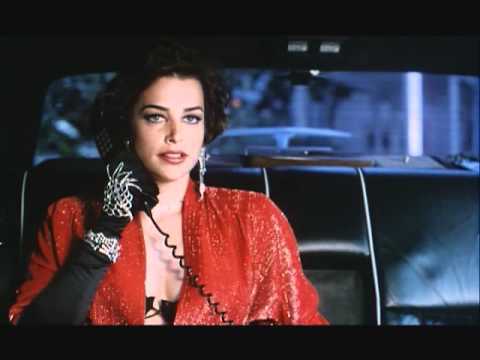
Though the plot of Saints and Sinners may seem familiar (think of it as being a low-budget version of the Sean Penn/Gary Oldman gangster flick ,State of Grace), it’s distinguished by gritty locations, energetic direction, and two good performances from Damian Chapa and Scott Plank.  But, to be honest, Jennifer Rubin was the main reason that 14 year-old me used to stay up to watch this movie on Cinemax.  In the role of Eva, she’s sexy, enigmatic, and potentially dangerous.  You’re never sure what her game is and, as a result, the movie is not as predictable as you might expect it to be.  Jennifer Rubin was one of the best of the femme fatales to appear in the straight-to-video neo-noirs of the 1990s and shes’ at her best and most uninhibited here.

Saints and Sinners may not have many saints but it has enough sin that it doesn’t matter.

Jennifer Rubin in Saints and Sinners