What Lisa Watched Last Night #201: Mommy’s Little Princes (dir by Curtis Crawford)


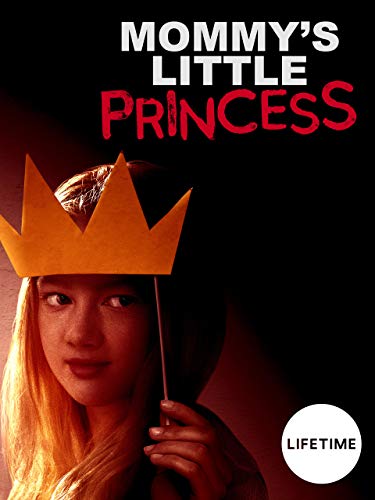
Last night, as soon as I got home from work, I turned over to the Lifetime Movie Network and I watched Mommy’s Little Princess!
Why Was I Watching It?

Why not?

No, actually, I did have a very specific reason for watching it.  Mommy’s Little Princess was a film that I watched earlier this year but, for whatever reason, I didn’t review it.  Unfortunately, I didn’t record it either.  So, by watching it yesterday, I was able to reacquaint myself with the film before reviewing it.

Because that’s what ethical reviewers do!

What Was It About?

12 year-old Lizzy (Sarah Abbott) is haunted by the memories of her abusive mother and a fear that she’s not that special.  In order to make Lizzy feel a bit better about herself, her adoptive mother, Julianna (Alicia Leigh Willis), decides to send away for a DNA testing kit!

When the results are returned, Lizzy discovers that she’s a little bit French, a little bit English, and a whole lot German!  In fact, she’s even descended from German nobility!  Soon, Lizzy is walking around and telling everyone that she’s a princess.  She covers an entire wall of her bedroom with pictures of European nobility and tells everyone that it’s a collage of her real family.

Unfortunately, not everyone is impressed with Lizzy’s heritage.  Some of them even go so far as to suggest that being distantly related to royalty is no big deal.  Those people, Lizzy kills.

What Worked?

I have to admit that I kind of enjoyed the irony of Lifetime broadcasting a movie about someone being driven crazy as a result of obsessing on royalty when Lifetime is also the same network that has, so far, done one movie about William and Kate and two movies about Harry and Meghan!  It was kind of fun, like Lifetime was saying, “Don’t spend too much time living in a fantasy and, by the way, stick around for the next royal wedding movie….” Mommy’s Little Princess felt wonderfully subversive.

Sarah Abbott did a really good job as poor, psychotic little Lizzy.  You feared her but, at the same time, you felt sorry for her.  As a flashback to her time with her birth mother showed, Lizzy really never had a chance.

What Did Not Work?

It all worked!  This was a fun little Lifetime melodrama and it had just the right amount of self-awareness.

“Oh my God!  Just like me!” Moments

As far as DNA goes, I’m primarily Irish, Italian, and Spanish.  As far as I know, I’m not related to royalty.  If I was related to royalty and in line for the throne of some country, I would totally hold it over everyone’s head.  Seriously, I would find a way to sneak it into every conversation.  “You’re going to the store?  Hey, could you pick me up some a tiara or something because, after all, I am royalty and I could have you executed.”  My friends would probably get tired of hearing about it.

So, all in all, I guess it’s good that I’m not yet a part of the royal family.

Lessons Learned

DNA tests only lead to pain and misery.
Cleaning Out The DVR: Headline Shooter (dir by Otto Brower)


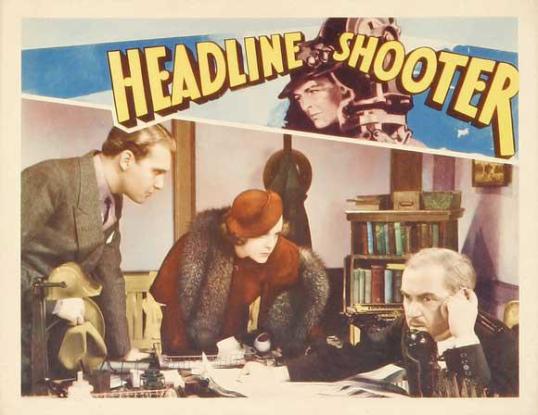
Bill Allen (William Gargan) is cynical newsreel cameraman.  Everywhere he goes, he’s got a tripod and a camera ready to go.  He films the disasters that other people are too scared to go near.  When there’s an earthquake, he runs outside to film it.  When a building catches on fire, he risks life and limb to record the event.  When a dam breaks, Bill is there to not only record the devastation but also help expose the man responsible for the poorly constructed dam.  When the man later commits suicide, Bill shrugs it off.  The public, he says, had a right to know.

Jane Mallory (Frances Dee) is a reporter.  She tough and she can just as sarcastic as Bill.  When she’s held hostage by  bunch of gangster, she proceeds to not only challenge them to a game of gin rummy but she beats them too!  Jane loves pursuing a good story but she worries that she might end up as cynical and callous as some of her colleagues.  As much as Jane loves it, a part of her is desperate to get out of the news business and, instead, marry the decent but boring Hal Caldwell (Ralph Bellamy, of course).

Together, Bill and Jane …. SOLVE CRIMES!

Actually, they do.  Of course, that doesn’t happen until towards the end of this zippy 61 minute film from 1933.  Before they solve a crime and run afoul some gangsters, Bill and Jane fall in love.  Of course, it’s a cynical journalist type of love, where quips and snarky put-downs replace the traditional endearments.  But it’s love just the same.  Bill and Jane share an understanding of what it feels like to pursue a big story.  It’s something that Hal, as decent a person as Ralph Bellamy ever played in a 1930s movie, just cannot understand.

This is a pre-code film, which means that the characters are allowed to smoke and drink and the dialogue is full of double entendres.  When Bill mentions that a woman he knows has a cold, Jane replies, “Let me guess.  It kept you up all night.”  That’s the type of dialogue that, in just a few short years after the release of Headline Shooter, studio productions would no longer be allowed to get away with.

Headline Shooter is a fast-paced film, one where everyone speaks almost exclusively in the fast rat-a-tat style of 1930s New York.  Considering that it’s only an hour long, it still manages to fit in a lot of plot.  There’s also a lot of real footage of actual disasters, the majority of which is passed off as being footage that was shot by either Bill or his colleagues.  Watching the film today, it’s interesting to consider that the newsreel cameraman were essentially early versions of the paparazzi, searching the city for anything worth shooting and, for the most part, not concerning themselves with the ethical concerns of exploiting disaster.  Many of the issues raised by Headline Shooter are still pertinent today.  One could almost argue that a film like Nightcrawler is a direct descendant of Headline Shooter.

Of course, Headline Shooter in never as dark as something like Nightcrawler.  Instead, all things considered, it’s a rather cheerful melodrama.  Gargan and Dee are wonderful in the lead roles and the cast is full of wonderful 1930s character actors.  This film shows up occasionally on TCM so keep an eye out for it!

(Unless, of course, you’re a Comcast customer….)

Guilty Pleasure No. 43: The Resurrection of Gavin Stone (dir by Dallas Jenkins)


Well, we’re halfway through October and the annual Shattered Lens Horrorthon and what better time than now to review a …. faith-based comedy about an irresponsible actor who pretends to be a Christian so that he can star in a megachurch’s Easter play?

Embrace the unexpected!

The 2017 film, The Resurrection of Gavin Stone, tells the story of Gavin Stone (Brett Dalton), a former child star who is now better known for his stints in rehab than for his acting.  After a trip to his hometown ends with Gavin getting arrested for public intoxication and apparently firing a catapult off the top of his hotel, Gavin is sentenced to do community service.  He has to live with his estranged father (Neil Flynn) and he can’t leave Ohio until he’s completed his hours.  What about Gavin’s career back in California?  What career?

Anyway, Gavin ends up doing his community service at the local Protestant megachurch.  The well-meaning pastor (D.B. Sweeney) suggests that Gavin just do maintenance work until his hours are up.  Gavin would rather try out for the lead role in the church’s annual Easter play, both because he wants to act and because he has a crush on the play’s director (Anjelah Johnson-Reyes), who just happens to be the pastor’s daughter.

“Well, the play is a part of our ministry,” the pastor explains, “so we do ask that everyone involved be a Christian.”

“I am a Christian!” Gavin announces, even though he’s totally not.

Naturally, Gavin gets cast in the role of Jesus.  Along with learning about his role, Gavin spends rehearsals shaking up the church’s somewhat stodgy play and, slowly but surely, becoming a better human being.  However, when Gavin is suddenly offered a role on a television series, he must decided whether to do what’s best for the play or what’s best for his career.  You can probably already guess what’s going to happen.

Obviously, a lot of people are going to be turned off by the film’s Christian origins but The Resurrection of Gavin Stone is actually a surprisingly sweet movie and, compared to most faith-based films, it’s not particularly heavy-handed.  Unlike a lot of Christian films, Gavin Stone actually has a sense of humor about itself and it’s hard not smile a bit when Gavin, after spending a night with Google, shows up for church on Sunday with a Jesus fish on his bumper and loudly greeting everyone with “Blessings!”  Brett Dalton (who we all know as Grant Ward on Agents of SHIELD) is sincere and likable in the lead role.  Anjelah Johnson-Reyes is stuck with the underwritten stock role of being the preacher’s daughter who loosens up over the course of the movie but she actually does a pretty good job of bringing some spark to the character.

The Resurrection of Gavin Stone has its flaws, of course.  There’s a few times that the dialogue gets a bit clunky and you never quite buy the film’s positive conclusion.  But what this film’s does very well is that it captures the excitement of being a part of a production.  The best parts of the film are the ones that just focus on the characters rehearsing.  Anyone who has ever been involved with a community theater will be able to relate and it’s kind of fun to watch everyone progress from stiffly reading from the script to delivering their lines like fully committed amateur thespians.  The Resurrection of Gavin Stone is at its best when it celebrates the joy of performing.

Previous Guilty Pleasures

  1. Half-Baked
  2. Save The Last Dance
  3. Every Rose Has Its Thorns
  4. The Jeremy Kyle Show
  5. Invasion USA
  6. The Golden Child
  7. Final Destination 2
  8. Paparazzi
  9. The Principal
  10. The Substitute
  11. Terror In The Family
  12. Pandorum
  13. Lambada
  14. Fear
  15. Cocktail
  16. Keep Off The Grass
  17. Girls, Girls, Girls
  18. Class
  19. Tart
  20. King Kong vs. Godzilla
  21. Hawk the Slayer
  22. Battle Beyond the Stars
  23. Meridian
  24. Walk of Shame
  25. From Justin To Kelly
  26. Project Greenlight
  27. Sex Decoy: Love Stings
  28. Swimfan
  29. On the Line
  30. Wolfen
  31. Hail Caesar!
  32. It’s So Cold In The D
  33. In the Mix
  34. Healed By Grace
  35. Valley of the Dolls
  36. The Legend of Billie Jean
  37. Death Wish
  38. Shipping Wars
  39. Ghost Whisperer
  40. Parking Wars
  41. The Dead Are After Me
  42. Harper’s Island

The TSL’s Horror Grindhouse: Psycho III (dir by Anthony Perkins)


Norman Bates is back!

Released in 1986 and directed by Anthony Perkins himself, Psycho III picks up a few months after Psycho II ended.  Norman (Anthony Perkins, of course) is still free.  He’s still got his motel.  He’s still talking to his dead mother.  Of course, at the end of Psycho II, Norman was told that the woman who Norman thought was his mother actually wasn’t his mother.  Instead, Emma Spool told Norman that she was his mother, which led to Norman promptly hitting her with a shovel and then keeping her preserved body hidden away in the motel.  Got all that?  Great, let’s move on….

In Psycho III, business suddenly starts booming at the Bates Motel!  All sorts of people come by to visit.

For instance, there’s the obnoxious tourists who show up at the motel so they can watch a football game and get drunk.  Future director Katt Shea plays one of the unfortunate tourists, who ends up suffering perhaps the most undignified death in the history of the Psycho franchise.  Shea later ends up being stored in the motel’s ice chest.  At one point, the local sheriff grabs a piece of ice and tosses it in his mouth without noticing that it’s covered in blood.

And then there’s Duane Duke (a young Jeff Fahey!), who is superhot but also super sleazy.  For reasons that are never quite clear, Norman hires Duke to be the assistant manager at the motel.  Duke turns out to be thoroughly untrustworthy but he’s Jeff Fahey so he remains strangely appealing even when he shouldn’t be.

Red (Juliette Cummins) shows up at the motel so that she can have sex with Duke and then get stabbed to death while taking off her top in a phone booth.  That, I guess, is Psycho III‘s equivalent of the first film’s shower scene.  Later, Duke comes across Norman mopping up all the blood in the phone booth but he doesn’t say anything about it.  Duke knows better than to ask why there’s blood in the phone booth.

Tracy Venable (Roberta Maxwell) is a journalist whose sole purpose in life is to prove that Norman murdered Emma Spool.  Tracy’s main function in this film is to explain just why exactly so many different women have claimed to be Norman’s mother.  It’s a rather complicated story and you’ll get a migraine if you think about it for too long.

And finally, there’s Maureen (Diana Scarwid), the former nun who has lost her faith and her sanity.  She shows up at the motel and stays in Marion Crane’s old room.  She takes a bath instead of a shower and slits her wrists.  When Norman storms into the room to kill her, the barely lucid Maureen mistakes him for the Virgin Mary and sees his knife as being a crucifix.  Maureen survives and Norman is hailed as a hero for rescuing her.  Later, Norman and Maureen fall in love.  You can guess how that goes.

When compared to the first sequel, Psycho III is much more of a standard slasher film and there’s certainly never any doubt over who is doing the killing.  However, Perkins again does a great job in the role of Norman, making him both sympathetic and creepy.  Fahey, Scarwid, Maxwell, and Hugh Gillin (as the hilariously clueless sheriff) all provide good support.  There’s really not a single character in this film who doesn’t have at least one odd or memorable quirk.  Duane Duke, for instance, is one of the most amazingly sleazy characters in the history of American cinema.  Just when you think that the character can’t get any worse, he proves you wrong.

As mentioned above, Perkins directed this film.  It was one of two movies that Perkins would direct before his death.  As a director, Perkins had a good visual sense, even if he did allow the narrative to meander a bit.  There’s nothing particularly subtle about Perkins’s direction and several of the scenes — like the sex scene between Duke and Red — are so over the top that they become rather fascinating to watch.  That said, there was really no longer any need to be subtle when it came to Norman Bates and his story.

With the exception of the weird Gus Van Sant remake with Vince Vaughn, Psycho III would be the last Psycho film to be released into theaters.  It would also be Perkins’s second-to-last time to play Norman.  (The last time would be in a 1990 made-for-TV sequel, Psycho IV: The Beginning.  Despite it’s title, Psycho IV pretty much ignored everything that happened in the previous two sequels.)  Perkins passed away in 1992, at the age of 60 but the character of Norman Bates would live on, both in his own performances and in the later work of Freddie Highmore in Bates Motel.

Missed Opportunities: Alien Nation (1988, directed by Graham Baker)


Alien Nation starts out with an intriguing premise but sadly doesn’t do enough with it.

In 1988, a spaceship lands in Mojave Desert.  Inside are 300,000 humanoid aliens, known as the Newcomers.  Intended to serve as intergalactic slaves, the Newcomers are now stuck on Earth.  (Of course, in the view of many humans, it’s Earth that’s stuck with them.)  Three years later, the Newcomers have settled in Los Angeles and they have adopted human names.  Some of them, like businessman William Harcourt (Terrence Stamp), have become successful and have been accepted by the human establishment.  The majority remain second-class citizens, facing discrimination and feeling alone in a world that doesn’t seem to want them.

Detective Matthew Sykes (James Caan) does not like the Newcomers but, after his partner is killed by one of the aliens, he ends up working with one.  Sam Francisco (Mandy Patinkin) is the first Newcomer to have been promoted to the rank of detective and is eager to prove himself.  Sykes renames him George and enlists him to investigate a series of recent Newcomer deaths.  Sykes’s real goal is to use Francisco’s Newcomer connections to investigate the death of his partner.  What the two of them discover is that the deaths are linked to a drug called Jabroka, which has no effect on human but was previously used to keep the Newcomers enslaved.

Alien Nation starts out with an intriguing premise.  I love the early scenes of Sykes driving down the streets of Los Angeles and seeing Newcomer prostitutes, Newcomer families, and even a Newcomer dance studio.  There is a lot promise in those scenes and they capture the feeling of a familiar world that has been irrevocably changed.  Both Caan and Patinkin give good performances and the alien makeup is still impressive.  Unfortunately, once Sykes and George start their investigation, the movie becomes a standard-issue police movie with a plot that could easily have been lifted from a Lethal Weapon rip-off.  So many interesting ideas are left unexplored, making Alien Nation an intriguing missed opportunity.  (There was later a television series based on the movie, which explored the Newcomer culture in greater detail.)

Alien Nation still has a strong cult following and I wouldn’t be surprised if it influenced District 9.  In 2016, it was announced that Jeff Nichols would be writing and directing a remake.  Nichols seems like the ideal director for a film like this and this is the rare case of a remake that I’m actually looking forward to.

Scenes That I Love: Norman and Arborgast Talk In Psycho


When it comes to Psycho, everyone always talk about the first half of the film, in which Marion Crane steals the money, gets interrogated by the highway patrolman, meets Norman Bates, and eventually takes that fateful shower.

Those are all great scenes that are wonderfully acted and directed.  But they’re also the scenes that always get shared whenever anyone shares something about Psycho.  So, for today’s scene that I love, I’m sharing a scene from the 2nd half of the film.  In this scene, Milton Arborgast (Martin Balsam) attempts to question Norman (Anthony Perkins, of course!) about whether or not Marion came by the motel.  Detective Arborgast thinks that Norman is hiding something.  Norman thinks that he can out talk the detective.

This scene is a master class in great acting.  Balsam and Perkins are like two tennis players, just knocking the ball back and forth without missing a beat.  What I love is that both men are pretending as if they’re having a friendly conversation, whereas they both know that they’re not.  Of course, when audience saw this movie for the first time (before the famous ending became common knowledge), they probably thought that Norman was trying to protect Arborgast from his mother.

Anyway, here’s the scene.  It’s Arborgast vs. Bates, Balsam vs. Perkins, and it’s rather brilliant:

A Blast From The Past: The Griper (dir by Herk Harvey)


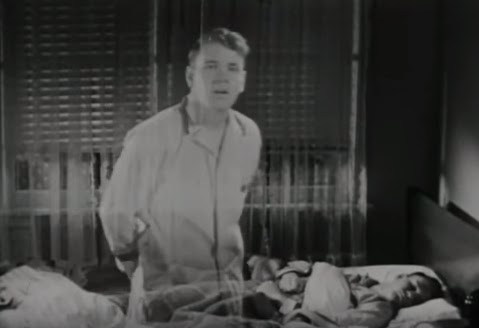
Oh my God, it’s a ghost!

No, actually, that’s not a ghost.  That’s George’s conscience, who apparently leaves George’s body while George is asleep and tells strangers all of the sordid details of George’s home life.  Hmmm …. actually, that sounds scarier than a ghost.

Anyway, George is the anti-hero of the 1954 educational short film, The Griper.  George’s problem can be found right in the title.  He’s a teenager who complains about everything and he’s ruining high school for not only his classmates but for his teachers as well!  George isn’t happy during the basketball game.  George isn’t happy about his class assignment.  Even when his only friend, Betty, tries to show him a cute cartoon, George snaps at her.

George’s problem, of course, is that he was born 60 years too early.  If he had been born several decades later, he could have just joined twitter and then he could spend all day cancelling people and getting all of the likes and retweets that come along with being a judgmental jackass.  But sadly, George is a teenager in the 50s and he’s expected to be a lot more positive.

Personally, I think everyone in the film’s being a bit too judgmental of George.  I mean — yes, he’s a jerk.  And yes, I would probably avoid him because I love snark but I hate negativity.  But if George is always in a bad mood, that’s his right!  He can always make new friends or pursue a career as a film critic.

George is going to be alright.

This short film was directed by Herk Harvey.  Harvey made a career out of doing short films like this but horror fans will always know him as being the director of the incredibly influential Carnival of Souls.  We’ll be watching that movie later this month but for now, enjoy watching George isolate himself while destroying everyone else’s happiness and be sure to ask yourself,

“What would you do?”

International Horror Film Review: Incubus (dir by Leslie Stevens)


The 1966 film Incubus is unique for being one of the few films to have been made in the international language.

What?

No, not love!  WE’RE TALKING ABOUT ESPERANTO!

Esperanto is a language that was invented in 1887 by a Polish idealist who wrote under the name — I kid you not — Dr. Esperanto.  The idea behind Esperanto was that it was a simple language that anyone could learn and, if the whole world learned to speak this one language, there would be far less misunderstandings, conflicts, and wars.  There’s probably some truth to that idea and the language has gone through the occasional period of popularity.  (If Lincoln Chafee runs for President again, I’m sure he’ll probably make learning Esperanto a part of his platform.)  Still, Esperanto never really caught on.  I imagine that most people were like, “But what if I go through the trouble to learn a new language but no one else does?  Then I’d look stupid!”  That’s what kept me from learning trigonometry.

Still, when director Leslie Stevens and producer Anthony Taylor was trying to decide what gimmick they could use to set Incubus apart from other low-budget horror films, they decided that the entire film would be in Esperanto.  Since the film was about a succubus trying to steal soul of a “pure man,” the feeling was that Esperanto would give the film an otherworldly feel.  The idea of having the demons all speaking Esperanto actually worked out well because, seriously, why wouldn’t otherworldly denizens have their own language?  But of course, then William Shatner shows up as the pure man and he’s speaking Esperanto too.  It gets a bit confusing.

The film takes place in the village of Nomen Tuum, where there’s a well that can both heal the sick and make the ugly look reasonably more appealing.  As a result, the village has become a popular spot for not only those who are dying but also those who are incredibly vain.  Kia (Alyson Ames) is one of the many succubi who hang out around the village, leading arrogant and foolish men into the ocean where their souls are claimed by the Incubus (played by Milos Milos).  Kia, however, has grown bored with only tempting the morally corrupt.  She wants a challenge!  She wants to tempt someone pure of heart!  All the other succubi tell her to be careful because dealing with the pure of heart might make it difficult for her to retain her demonic nature, which would upset the Incubus.  Kia shrugs them off and heads out to seduce a clergyman….

Unfortunately, all the available clergymen turn out to be just as vain, greedy, and corrupt as the people drinking from the well!  Whatever is a succubus to do!?  Kia is on the verge of giving up when she spies a wounded soldier named Marc (William Shatner) and his sister, Arndis (Ann Atmar).  They’ve come to the village to heal Marc of his wounds.  And yes, they are “pure of heart.”

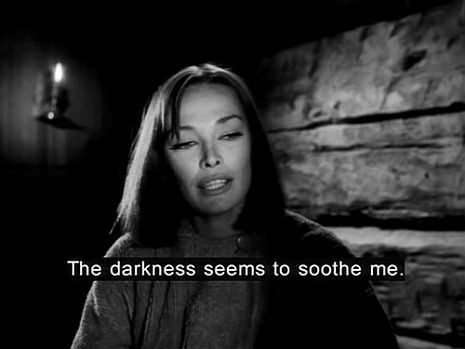
It would be easy (and, let’s be honest, a bit tempting) to glibly dismiss Incubus as being the film that proves that, in the 60s, William Shatner could overact even in Esperanto.  And William Shatner does give a very Shatneresque performance.  But Incubus is actually a surprisingly effective film.  The film’s black-and-white cinematography was by Conrad Hall (with the uncredited assistance of William A. Fraker) and the film is full of wonderfully atmospheric images.  When Marc dreams, he sees haunting images of dead men floating in the ocean.  When the Incubus abducts Arndis, they travel through a shadowy landscape before finally arriving at a house that that appears to be on fire with demonic evil.  As the film progresses, the imagery becomes more and more surreal, as if we’ve entered into a dream, a filmed nightmare of sorts.  And, long before The Witch, Incubus features a character wrestling with a Satanic goat.

Incubus was filmed with the actors learning their lines phonetically and with no one on set to correct their pronunciations.  When the film was previewed for 60 people who spoke Esperanto, the audience laughed at how the actors butchered their precious little international language.  After that, Milos Milos — the actor who played the Incubus — was found dead with his girlfriend in what was assumed to be a murder/suicide, though many continue to claim that it was a murder/murder.  (Milos’s girlfriend was also Mickey Rooney’s wife and both were discovered dead at Mickey’s house and, well …. I don’t like where this is heading.  Sorry, Mick!)  As a result of all of the scandal, no reputable U.S. distributor would handle Incubus.  (This was 1966, after all.)  So, the film was only released in France.  Though I have no evidence to say for sure, I choose to believe that the French got it.

The film was long believed to be lost until the last remaining print was discovered in the collection of the Cinematheque Francaise in Paris.  From that badly damaged print, Incubus was restored and, as a result, history’s first Esperanto horror film can once again be appreciated by audiences everywhere!

Mi amas feliĉan finon!

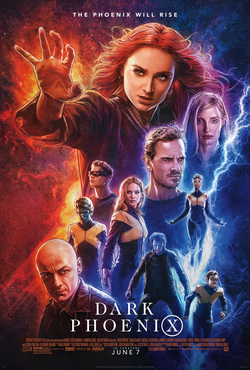
Last Stand Of The X-Men: Dark Phoenix (2019, directed by Simon Kinberg)


Last week, I finally watched Dark Phoenix and I could tell within 15 minutes that it wasn’t going to be good.  From the start, everything about it seemed to be off, particularly compared with other, more recent comic book films.  This is not Logan or Joker.  It’s not even as good as ApocalypseDark Phoenix felt like a comic book film from 2002 that somehow got made and released in 2019.

The latest installment of the X-Men film saga opens in 1992.  The X-Men have been hailed as heroes and it finally looks like like the dreams of Charles Xavier (James McAvoy) are going to come true.  Humans and mutants are going to co-exist.  Unfortunately, all of that progress is undone when Jean Grey (Sophie Turner) connects with a surge of energy and her powers go supernova.  Jean discovers that she was responsible for her mother’s death and her father rejected her as a result.  She also learns Xavier placed a mental block in her mind.  Seriously pissed off, Jean flees to the island of Genosha, which is ruled over by Magneto (Michael Fassbender).  She also accidentally kills Mystique, therefore freeing Jennifer Lawrence from having to appear in any more of these movies.  All the while, a shape-shifting alien named Vuk (a slumming Jessica Chastain) wants to capture Jean’s powers and use them for herself.

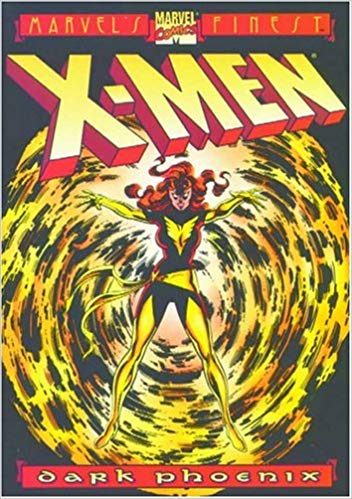
This was the second attempt to bring the Dark Phoenix saga to the screen and somehow, it was even more bland and forgettable than X-Men: Last Stand.  The Dark Phoenix saga is one of the greatest comic book storylines of all time but it seems destined to never be the basis of a good movie.  In the comic books, the Dark Phoenix saga was the accumulation of two decades of storytelling.  After being the most forgettable member of the original X-Men, Jean suddenly became the most powerful mutant in the world.  When she sacrificed herself for the good of the universe, it was not only the end of her life but also the end of one of Marvel’s longest-running love stories, as Cyclops could only cradle her body afterwards.  As usual, Marvel later lessened the emotional impact by revealing that the Phoenix wasn’t actually Jean but just an alien force that took on her memories and personality while the real Jean remained in suspended animation at the bottom of Jamaica Bay.  Despite this, the Dark Phoenix saga still remains a prime example of Marvel at its best.

Why, with such great source material and a talented cast, was this latest film version of the Dark Phoenix saga so cumbersome?  No one seemed to care.  Unlike in the comic books, there was no emotional depth to the story of Jean Grey losing herself and becoming the Dark Phoenix.  Instead, every scene felt like it was just there to set up the next CGI-fueled confrontation.   Sophie Turner and Tye Sheridan (who played Cyclops) seemed to barely know each other and the film spent more time on Nicholas Hoult’s Beast mourning for Mystique than on the relationship that should have been at the center of the film.  None of the actors seemed to be invested in the story.  I’ve never seen Jennifer Lawrence, Michael Fassbender, and James McAvoy look so bored.  The inevitable Magneto scene felt pointless.  The comic books could take a break from Magneto and let other villains have a turn.  The movies have to find an excuse to force him into every story.

It’s been said that the X-Men will be moving into the MCU and will get a whole new reboot.  We’ll probably get a third Dark Phoenix film someday.  I hope this one gets it right.

Horror Film Review: Psycho II (dir by Richard Franklin)


Norman Bates is back!

No, I don’t mean Freddie Highmore from Bates Motel or Vince Vaughn from the odd Psycho remake that I keep seeing on Showtime.  No, I’m talking about the original Norman Bates, Anthony Perkins!

First released in 1983, Psycho II is a direct sequel to the classic shocker from Alfred Hitchcock.  The film opens with a replay of the original film’s famous shower scene and then immediately jumps forward 22 years.  Having been found not guilty by reason of insanity, Norman Bates has been in a mental institution ever since he was arrested for the murders of Marion Crane and Milton Arborgast.  However, Norman’s psychiatrist, Dr. Raymond (Robert Loggia, who was considered for the role of Sam Loomis in the original film), now feels that Norman has been cured and is no longer a danger to himself or others.  A judge agrees.  Marion Crane’s sister, Lila Loomis (Vera Miles, reprising her role from the original) does not.  She presents the judge with a petition demanding that Norman not be released.  When the judge ignores her, Lila yells that Norman will murder again!

Now free, Norman returns to the Bates Motel and discovers that it’s now being run by the sleazy Warren Toomey (Dennis Franz).  When Norman finds various party favors in the motel rooms and asks Warren what they are, Warren laughs and says, “They’re drugs, Norman.”  Norman’s not too happy about that.  As Dr. Raymond tells him, the world has changed considerably over the past two decades.

However, Norman has other issues to deal with.  For the most part, most of the people in town are not happy that their most famous resident has returned.  Emma Spool (Claudia Bryar) gets Norman a job at a local diner because, in her words, she believes in forgiveness and second chances.  Norman gets to know the new waitress, Mary Samuels (Meg Tilly) and, when Mary tells him that she’s had a fight with her boyfriend, he invites her to stay at the hotel until she can get things together.

From the minute that he returns home, Norman is struggling to keep it together.  When he first reenters his former house, he hears his mother’s voice but he tells himself that she’s not really there.  But if his mother isn’t there, then who keeps calling him on the phone and yelling at him about the state of the motel?  Who keeps taunting him about his awkward (yet rather sweet) relationship with Mary?  And when two teenagers are attacked after breaking into the house, who else could it possibly be but Norman’s mother?

I was really surprised by Psycho II, which turned out to be a really entertaining little movie, an effective thriller with a healthy dash of dark humor.  It’s a very plot-heavy film, with almost every scene introducing a new twist to the story.  With the exception of the sleazy Warren Toomey, no one in this film turns out to be who you initially expected them to be, including Norman.  Meg Tilly does a good job in the somewhat oddly written role of Mary Samuels and even manages to make an awkward line like “Norman, you’re as mad as a hatter” sound natural.  Not surprisingly, the film is dominated by Perkins’s performance as Norman Bates and what a great performance it is.  The best moments are the ones where Norman awkwardly tries to fit back in with society, nervously laughing at his own jokes and struggling to maintain eye contact with whoever he’s talking to.  You really can’t help but feel sorry for him, especially as the film progresses.

Wisely, Psycho II set out to establish it own identity as a film, as opposed to just trying to duplicate the shocks of Psycho.  (There is a shower scene that’s filmed similarly to the one from the first scene, with a key difference that I won’t spoil.)  It’s what a sequel should be, not a remake but a continuation of the original’s story.  This is definitely a film that’s far better than you may expect.