Horror On The Lens: Attack of the Giant Leeches (dir. by Bernard Kowalski)


For today’s public domain horror film, I present to you 1959’s Attack of the Giant Leeches.  This 60-minute film is a classic Drive-in film.  While it has its slow spots, it also features an iconic performance from Yvette Vickers, who is like one of my favorites of the strong, confident, unapologetically sexy women who dominated the old B-movies.  (Plus, she was only 5’3 and it’s not easy being brave when you’re having to look up at everyone.  Trust me, I know.)   This short little film is steamier than Louisiana in August and is full of bayou atmosphere.

I have to admit that I’m kinda freaked out by the scenes of people floating underwater in this film.  And leeches … agck!  Don’t even get me started on leeches.  Especially giant leeches…

The Last Halloween, Short Film Review, by Case Wright


ALter2

Trick or Treaters in the post-apocalypse or is it just San Francisco?

Four kids in traditional costumes go out for candy and find a survivalist house with loads of guns, but hey candy is on the line! The home is occupied buy a very tired husband and wife.  The wife is getting sick, but it appears that the kids might be in the house!!!

The wife disappears and the husband is confronted by one of the kids in a ghost costume. These aren’t ordinary trick or treaters and those costumes aren’t store bought!!!!  It’s kind of cool figuring out what’s going on in the end.  It’s a very fun short!


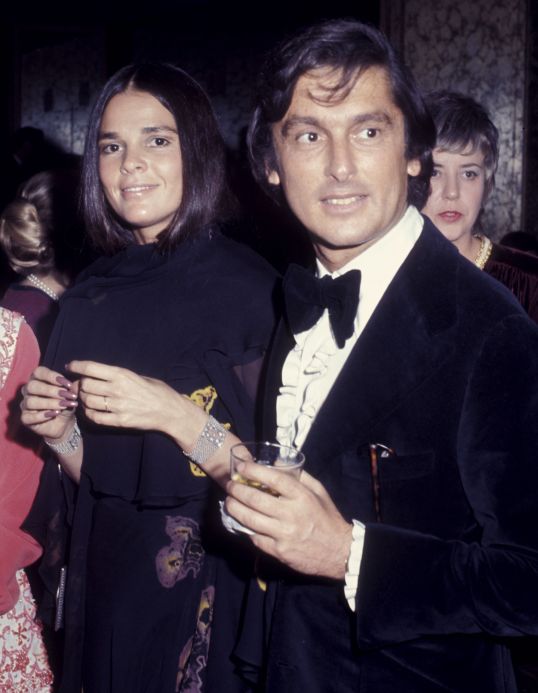
6 Trailers In Memory of Robert Evans


As Jeff reported earlier today, the famed Hollywood producer Robert Evans passed away this weekend.  As a student of both Hollywood and history, I have to say that I always found Evans to be a rather fascinating figure.  It seemed inevitable that his name would pop up whenever I read a book, an article, or even just an interview concerning the films of the 60s, 70s, and 80s.  Robert Evans was nice enough to follow me on twitter and we even exchanged tweets on occasion.

As a producer, Robert Evans is probably more associated with gangster movies like The Godfather and The Cotton Club than horror films.  But Evans was involved in a few “scary” and horror-adjacent films, both as an actor and a producer.  So, tonight’s edition of Lisa Marie’s Favorite Grindhouse Trailers is dedicated to Robert Evans.

  1. Man of a Thousand Face (1957)

As an actor, Evans began his career by playing Irving Thalberg in this biopic of Lon Chaney, Sr.  Evans was specifically chosen for the role by Thalberg’s widow, Norma Shearer.  Not surprisingly, the trailer below concentrates on James Cagney’s performance as legendary horror star, Lon Chaney, Sr.

2. The Fiend Who Walked The West (1958)

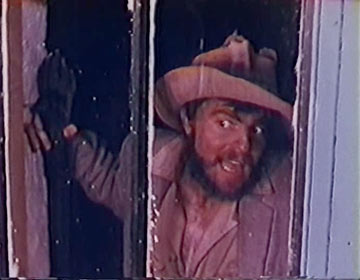
One of Evans’s rare starring roles was in this western-horror hybrid.  Yes, that’s Robert Evans as the “kooky killer.”

3. Rosemary’s Baby (1968)

As head of production at Paramount, Evans was responsible for greenlighting this classic horror film, starring Mia Farrow.  Reportedly, Evans arranged for his friend, Jack Nicholson, to screen test for the role of Rosemary’s husband.

4. Marathon Man (1976)

Evans produced this film.  Technically, Marathon Man was a thriller/spy movie.  But the scenes of Dustin Hoffman in the dentist chair definitely qualify as horror.

5. Sliver (1993)

After spending the 80s financially bereft and an almost forgotten figure, Evans made a comeback by producing this incredibly silly “erotic” thriller.

6. Jade (1995)

Sliver did well enough at the box office that Evans followed it up with another, similarly silly thriller.

Of course, while it’s tempting to laugh at films like Jade and Sliver, it should be remembered that Evans was also involved with some of the best and most important films of all time.  Next time you watch The Godfather, be sure to say a little thank you to Robert Evans.

R.I.P.

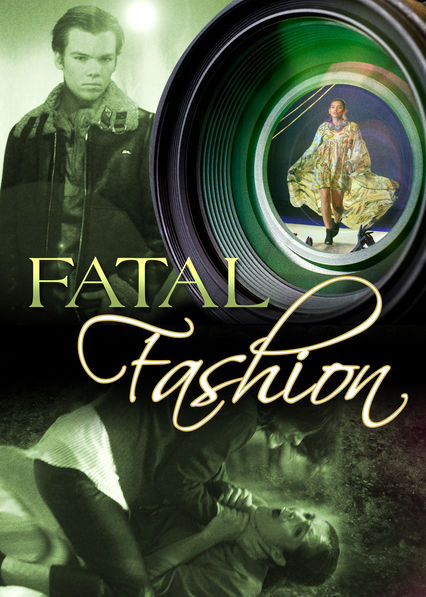
What Lisa Watched Last Night #203: Designed to Kill, a.k.a. Deadly Runway, a.k.a. Fatal Fashion (dir by Doug Campbell)


Last night, I turned over to the Lifetime Movie Channel and I watched a movie that has many names.  When it was originally released on Netflix last year, I believe it was called Deadly Runway.  According to the imdb, it’s also known as Fatal Fashion.  Lifetime aired it under the title Designed To Kill.

Well, no matter which title you want to go with, I watched it!
Why Was I Watching It?

How can I review it without watching it first?  This isn’t rocket science, people!  Beyond that, though, I was in the mood for a good Lifetime melodrama.  Of course, right now, Lifetime is currently only showing Christmas movies from here to eternity.  So, if you want to see the type of Lifetime film that we all know and love, you’re only place to turn is the Lifetime Movie Network.

What Was It About?

Basically, it’s a murderous remake of Pygmalion!

Oh, you doubt me?  Well, consider this — Jennifer Higgins (Linsey Godfrey) — is given a job at the local high school, teaching a class about fashion.  David (Joshua Hoffman) ends up in her class, hoping that he can practice his skills as a photographer.  David is awkward, shy, wears glasses, has no fashion sense, and his hair is almost always a mess.  Jennifer takes one look at him and decides to prove that she can turn anyone into a super model.  Next thing you know, David has new clothes, a new haircut, and a new career.  He almost gets a new girlfriend until Jennifer gets jealous and pushes her off a ledge.

See, there are a few differences between Jennifer and Henry Higgins.  Some of them are obvious.  Jennifer is a woman and is flirtatious.  Henry was a man and a bit of a prick.  But perhaps the biggest difference is that Jennifer Higgins has a tendency to get obsessed with her models and, as mentioned above, Jennifer’s willing to kill people.

Anyway, David is enjoying his new life as a model and Jennifer is enjoying being his mentor but then it turns out that David’s friend, Caitlyn (Ellen Michelle Monohan) has model potential as well!  How will Jennifer handle it when Caitlyn and David are soon appearing on covers together?

What Worked?

Oh Hell, it all worked.  This was so over the top and fun and melodramatic that there was no way not to love it.  Linsey Godfrey was wonderfully insane as Jennifer Higgins and Monhan and Hoffman made for a very adorable couple.  This movie was a lot of fun.

And before anyone starts nitpicking this film or debating whether or not the plot fully made sense, allow me to remind you that if you’re taking a film like this seriously, you’re doing it wrong.  This film was designed to deliver pure entertainment and that’s exactly what it does!

What Didn’t Work?

It all worked!

“Oh my God!  Just like me!” Moments

I related to Caitlyn, mostly because we both have red hair, bad eyesight, and a low tolerance for alcohol.

Lessons Learned

Henry Higgins could have been worse.
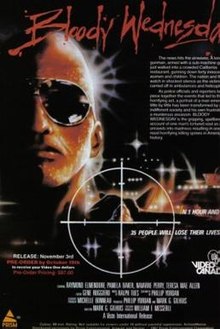
See You Next Thursday: Bloody Wednesday (1987, directed by Mark G. Gilhuis)


Harry (Raymond Elmendorf) is an auto mechanic with a problem.  He has lost his mind.  When he’s found staring at an engine that he’s taken apart and saying that he can’t put it all back together, he’s fired.  When he shows up in church naked, he’s institutionalized.  When his brother arranges for him to live in an abandoned and condemned Hollywood hotel (because that would be the perfect place for a man with deep mental issues to live), Harry loses it completely.  After playing Russian roulette with a street gang and interacting with a hotel staff that only exists in his mind, Harry goes crazy on one bloody Wednesday.

Bloody Wednesday is a prototypical mediocre white man with a gun movie.  Think of Taxi Driver, The Shining, The Joker, or even The King of Comedy, if all four of those films were terribly written, acted, and directed.  It starts out strong, with Elmendorf doing a convincing job of portraying Harry’s growing psychosis, but goes downhill once Harry moves into the hotel and starts to interact with the people in his head.  When he gets into argument and even fights with them, it doesn’t matter because we know that they don’t really exist outside of Harry’s imagination.  Even worse is the street gang that actually does exist but which decides that they’re going to spare Harry’s life because he challenges them to a game of Russian Roulette.  The gang leader, who looks like he’s trying to be Rambo for Halloween, is impressed by Harry’s self-destructive tendencies.  The film’s final scenes, with Harry going on a shooting rampage, are disturbing not because of anything that’s happened in the film leading up to that moment but instead, because it feels like even more of a reflection of America today than it probably did in 1987.

Interestingly, this film was written by Philip Yordan, who began his career as a writer in 1942, won multiple Oscars, and who was later revealed to have worked as a front for blacklisted screenwriters at the height of the McCarthy era.

Horror on the Lens: Manos: The Hands of Fate (dir by Harold P. Warren)


torgo

I should start things off with a confession.  This is actually not the first time that I’ve shared Manos: The Hands of Fate here on the Shattered Lens.  I previously shared it on both October 8th of 2013 and October 15th of 2015 and, both times, I even used the exact same picture of Torgo.

However, Manos proved to be such a popular choice that I simply had to post it again.  As I pointed out two years ago, Manos has a reputation for being one of the worst films ever made.  And, honestly, who am I to disagree?  However, it’s also a film that is so bad that it simply has to be seen.

By the way, everyone who watches Manos ends up making fun of Torgo, who was played by John Reynolds.  What they may not know is that Reynolds committed suicide shortly after filming on Manos wrapped.  So, as tempting at it may be to ridicule poor Mr. Reynolds’s performance, save your barbs for Torgo and leave John Reynolds alone.

And be sure to enjoy Manos: The Hands of Fate!

Icarus File No. 3: Glass (dir by M. Night Shyamalan)


Oh, Glass.  We all had such hopes for you.

Glass, as you may remember, came out in January and was one of the first big cinematic disappointments of the 2019.  People were certainly excited about it before the film was released.  Glass was a sequel to not only Split but also Unbreakable.  James McAvoy, Samuel L. Jackson, and Bruce Willis would all be returning to the roles that they played in those original films.  Glass was viewed as being the film that would establish whether director M. Night Shyamalan was truly back after the critical and commercial success of Split or if he was going to return to being the kinda hacky director who we all remembered from the mid to late-aughts.

Actually, it can probably be argued that, as a director, M. Night Shyamalan managed to go from being slightly overrated to being wildly underrated.  Even his worse films aren’t exactly terrible.  Even the incredibly silly The Happening had a few effective scenes.  Shyamalan wasn’t a bad director as much as he was a director who, at times, seemed to be way too convinced of his own cleverness.  The Shyamalan twist became both his trademark and his curse.  I can still remember an entire theater audibly groaning during The Village, not because the twist was necessarily bad as much as just because it was so expected.  Was Shyamalan capable of making a film that didn’t end with a gimmicky twist?  Interestingly, for most of its running time, Split seemed like a straight forward story about a psychotic man with multiple personalities.  It was only at the last minute, when Bruce Willis showed up in that bar, the people realized that Split had a Shyamalan twist.

Glass has a few twists of its own, most of them dealing with how Kevin Wendell Crumb (James McAvoy) became the killer known as The Beast.  It’s all connected to Elijah Price (Samuel L. Jackson), who is also the supervillain named Mr. Glass.  Kevin, Elijah, and David Dunn (Bruce Willis) all end up in a mental asylum together.  Dr. Ellie Staple (Sarah Paulson) insists that the three of them do not have any super powers and instead, they’re all suffering from a shared delusion.  Of course, Dr. Staple has an agenda of her own.  It’s not a particularly interesting agenda but then again, who cares, right?  I mean, the main reason people are going to watch this movie is so they can watch James McAvoy and Bruce Willis square off against each other, right?

Well, those people are out of luck.  The audience may not care about Dr. Staple’s agenda but Shyamalan certainly does and, as a result, McAvoy, Jackson, and Willis often seem to be bystanders in their own film.  When the long-promised confrontations between our three main characters finally do occur, it all leads to a finale that leaves a rather sour aftertaste.  You can’t help but feel that the characters (and their actors) deserved better.  What ultimately happens to David Dunn in Glass feels almost like an extended middle finger to anyone who has ever defended Unbreakable.  One gets the feeling that Shyamalan was so eager to work in one of his trademark surprises that he never stopped to consider whether the film’s storyline was strong enough to support his ambition.

The other problem is that Bruce Willis’s David Dunn and James McAvoy’s The Beast really don’t belong in the same movie together.  Willis gives an understated and rather haunted performance as David but McAvoy is so flamboyantly evil as the Beast that it destroys whatever gritty reality Willis had managed to develop.  Both McAvoy and Willis give good performances but they appear to be performing in different films.  As for Jackson, nobody glowers with the power of Samuel L. Jackson.  But, oddly, he never seems to have much to do.  Glass may be named after his character but Mr. Glass often feels superfluous to the overall plot.

Glass is ultimately a rather forgettable movie.  One gets the feeling that Shyamalan was truly trying to say something profound about heroism and pulp mythology in the final part of the trilogy that began with Unbreakable.  But, ultimately, Glass‘s message is too muddled to have much of an effect.  In the end, Glass leaves Shyamalan’s ambitions unfulfilled.

Previous Icarus Files:

  1. Cloud Atlas
  2. Maximum Overdrive

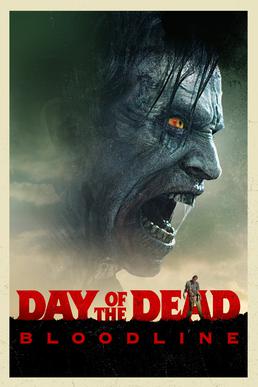
The TSL’s Horror Grindhouse: Day of the Dead: Bloodline (dir by Hèctor Hernández Vicens)


Hey, it’s another zombie film!

Eh, who cares?

At this point, there’s been so many zombie films that I’m a bit burned out on the whole genre.  I can still get enthusiastic for zombie films that attempt to put a new spin on the material and I still love the classic zombie films of the past.  But, for the most part, new zombie films just leave me bored.

2018’s Day Of The Dead: Bloodline is technically a remake of George Romero’s Day of the Dead but, then again, almost every American zombie film that’s come out over the past twenty or so years has been a remake of something that Romero did earlier.  The whole idea of an isolated military compound where soldiers plot to kill zombies (or rotters, as they’re called here) while scientists try to understand and maybe cure them has been done to death.  Once again, we’ve got a fascist army guy (Jeff Gum) and, once again, we’ve got a dedicated scientist who doesn’t like taking orders from the military.  The scientist is named Zoe (Sophie Skelton).  She was a medical student when the zombie apocalypse began.  Now, five years later, she’s trying to find a way to end it and blah blah blah, wake me when it’s over.

A good deal of the film centers around Max (Jonathon Schaech).  In life, Max was a pervy stalker who was so obsessed with Zoe that he craved her name into his arm.  In death, he’s a rotter who has retained some of his personality and bits of memory.  For instance, he’s still obsessed with Zoe and spends a lot of time saying, “You are mine, you are mine….”  However, Max’s blood potentially holds the cure for the zombie plague.  And, to be honest, that’s kind of an interesting premise.  In life, Max was the worst that humanity had to offer.  In death, he might hold the secret for saving the world.  Even as a rotter, he remains obsessed with Zoe and Zoe has to decide whether or not to destroy the man who tried to rape her or to keep him functional for the good of the world.

But …. eh.  I mean, it’s intriguing but the film doesn’t really do much with it.  It just becomes another zombie movie with a bunch of hardass soldiers and some scientists who don’t understand why the soldiers keep shooting everything.  Who cares?  We’ve already seen all of this in a hundred other movies, not to mention on shows like The Walking Dead.  Neither the script nor the characters in this film are interesting enough to really justify seeing it again.

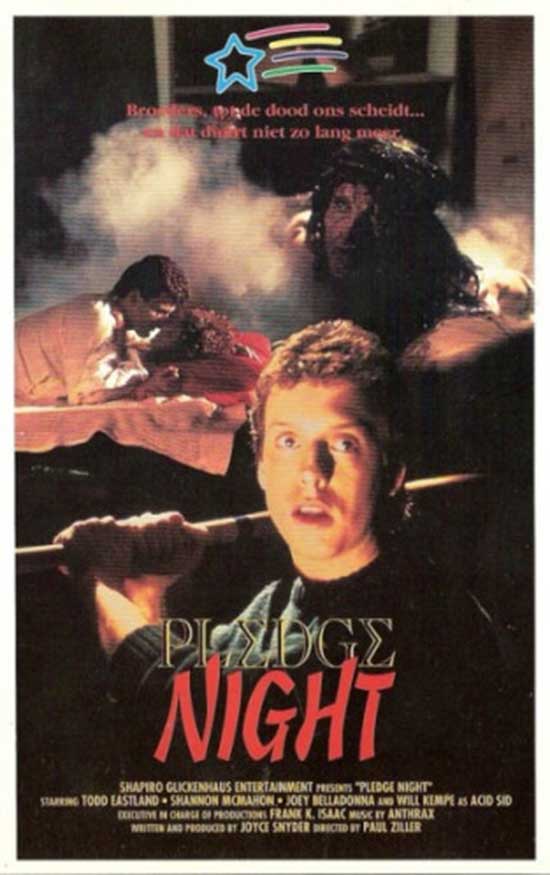
Spreading The Disease: Pledge Night (1990, directed by Paul Ziller)


It’s same old song and dance.  In the 60s, a hippie named Sid (Joey Belladonna) is accidentally killed during a hazing gone wrong.  In the 90s, during another fraternity hazing, Sid (now played by Will Kempe, who, the same year that Pledge Night was released, played Rick Von Slonecker in Whit Stillman’s Metropolitan, a film that about as different from Pledge Night as a apple is from a banana) emerges from a toilet and kills everyone almost everyone at the frat house.  His name is now Acid Sid now and he has more one-liners than Freddy Krueger.  “That’s for Spiro Agnew!” he says as he dispatches one victim who probably didn’t even know who Spiro Agnew was.  Other deaths include death by castration, an egg beater, and, of course, a radio dropped in a bath tub.  Pledge Night is interesting in that it does occasionally have a sense of humor about itself.  It starts out as a frat comedy and there is actually more time spent on the absurdity of pledges being hazed than on them being killed.  Once Sid does arrive, it becomes your standard Nightmare on Elm Street rip-off, albeit one where the majority of the victims are male jocks instead of the usual victims who show up in slasher films.  Most of the frat boys are fairly obnoxious so you’ll be on Sid’s side the entire time.  The film certainly is.

If Pledge Night gets any attention today, it is probably because of a mix of Metropolitan fans who want to see Rick Von Slonecker kill frat bros and Anthrax fans who have heard that Joey Belladonna is in the movie.  Belladonna is only in the movie for a few minutes, just long enough to get submerged in acid as a part of absurdly cruel fraternity prank.  Anthrax also provided the film’s forgettable soundtrack.

Pledge Night is a typical 90s college slasher, clearly influenced more by Nightmare on Elm Street than Friday the 13th.  If the movie had been made a few years later, it could have taken full advantage of the self-referential style of horror that was introduced to the slasher genre by Scream and Pledge Night probably would have been a better movie.  Pledge Night does have a sense of humor about itself and the slasher genre but it often seems to be held back by the requirements of also trying to satisfy what horror fans were expecting to get in 1990.  By trying to toe the line between horror and comedy, Pledge Night is never scary enough to work as horror or funny enough to work as comedy.

International Horror Review: The Two Orphan Vampires (dir by Jean Rollin)


Louise (Alexandra Pic) and Henriette (Isabelle Teboul) are two orphaned sisters.  They’re both blind and, as the nuns at the orphanage explains to Dr. Dennary (Bernard Charnacé), innocent to the ways of the world.  When Dr. Dennary adopts them, everyone tells him that he’s made the right choice.  Never have there been two sisters as sweet and beatific as Louise and Henriette.

Of course, what neither the nuns nor Dr. Dennary know is that, when the sun goes down, Louise and Henriette’s vision returns.  They sneak out of Dennary’s home, exploring the nearby cemeteries and meeting other beings who can only move freely during the night.  The sisters tells each other stories of their past and we see memories that seem to suggest that they have been alive for centuries.  But, the sisters also often talk about how they can’t remember their past and it’s suggested that their “memories” are just stories that they’ve created to give themselves a history that they don’t otherwise possess.

At times, you wonder if they’re even sisters.  Perhaps they’re just two vampires who manged to find each other at some point over the past few centuries.  Still, you can never doubt the strength of their bond.  When one of them is weak from a lack of blood, the other allows her to drink from her neck.  When they find themselves being pursued by angry villagers, they refuse to be separated.  Even if it means dying, at least they’ll die together.

Throughout the film, the orphans eagerly await for night to fall so that they can see and sneak out of the house.  But, at the same time, they know that their time is limited.  When the sun rises, they will again lose their sight.  These vampires don’t need to sleep in coffins.  In fact, they don’t need to sleep at all.  But they need the night to see the world around them.

Unfortunately, Dr. Dennary may be kind-hearted but he’s still not happy about the idea of the two orphans sneaking out of his house during the night.  When the sisters go to drastic means to ensure their freedom, they find themselves in even greater danger….

First released in 1997, The Two Orphan Vampires is perhaps my favorite Jean Rollin film.  Rollin, himself, once described it was being one of his best films because it was a film that told a story that went beyond his own personal obsessions.  That may be true but this is definitely a Jean Rollin film.  It’s not just the use of the vampirism or the fact that frequent Rollin co-star Brigitte Lahaie has a cameo.  It’s that the film centers not just on the supernatural but also the way that our memories and our fantasies can provide comfort in an uncertain world, which was a favorite Rollin theme.  Whether their memories are true or not is not important.  What’s important is that the two sisters share them.

In typical Rollin fashion, the movie unfolds at its own deceptively leisurely pace.  The imagery is frequently dream-like, with the orphan vampires discovering an underworld of paranormal creatures.  The film also reflect Rollin’s love of the old serials, with frequent cliffhangers.  By the final third of the movie, you can already guess what’s going to end up happening to the two orphan vampires but I still had tears in my eyes by the time the end credits started to roll up the screen.

For whatever reason, Two Orphan Vampires seems to get a mixed reaction from several Rollin fans, who perhaps are disappointed that it’s considerably less bloody and/or sordid as some of Rollin’s other vampire films.  The film is one of Rollin’s more contemplative films and it has more in common with The Night of the Hunted and The Iron Rose than some of Rollin’s other vampire films.  That said, Two Orphan Vampires is my personal favorite of Rollin’s filmography.  It’s a film that bring me to tears every time that I watch it.