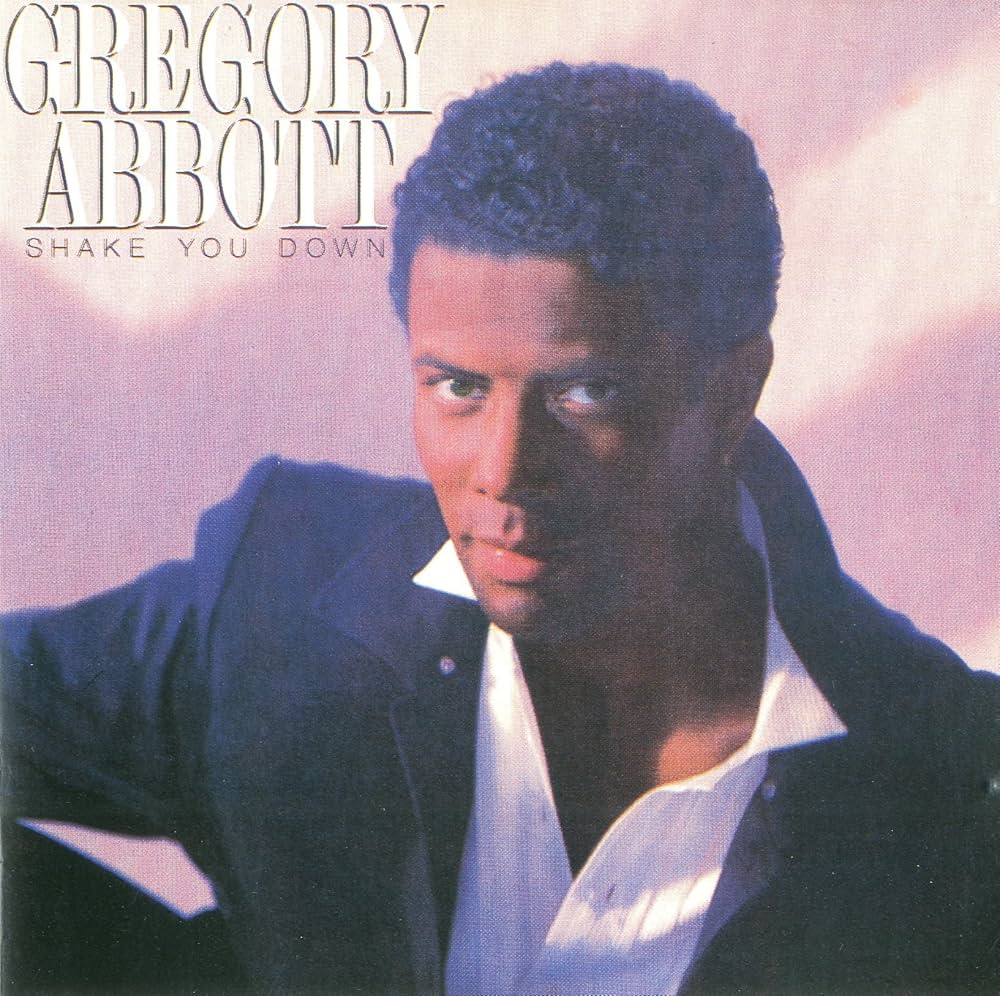
There’s something instantly recognizable about Gregory Abbott’s “Shake You Down.” From that opening synth line to the smooth, almost whispered vocals, it feels like pure ’80s romance bottled into four silky minutes. This wasn’t a loud song — it didn’t need to be. Abbott’s voice doesn’t demand attention; it draws you in with that gentle charm that made it the perfect track for dimly lit gym floors, disco balls spinning, and teenagers swaying in slow circles, trying not to step on each other’s shoes.
What made “Shake You Down” stand out wasn’t just the melody but how effortlessly seductive it was without ever being explicit. The song oozes quiet confidence — cool, easy, and slightly shy — the way the best R&B hits of the era did. It’s the kind of tune that made every listener feel like they were starring in their own movie moment: that hesitant glance, that first slow dance, that unspoken “this might be something” energy. Even now, it triggers a rush of nostalgia for a more innocent kind of intimacy.
Decades later, it’s no wonder “Shake You Down” still sneaks its way into prom playlists and retro nights. It doesn’t chase trends or rely on flashy production — it’s just a solid, soulful groove that makes you want to close your eyes and sway. For anyone who grew up in the ’80s or ’90s, hearing those first notes is like being transported back to a simpler time when a slow song at the end of the night could mean everything.
Shake You Down
Girl, I’ve been watching you From so far across the floor, now, baby That’s nothing new, I’ve watched you So many times before, now, baby I see that look in your eyes (look in your eyes) And what it’s telling me And you know, ooh girl, that I’m not shy I’m glad you picked up on my telepathy, now, baby
You read my mind (you know you did) Girl, I wanna shake you down (oh well, oh well) I can give you all the lovin’ you need (I’m gonna love you) Come on, let me take you down (oh, baby) We’ll go all the way to Heaven Ooh, I been missing you And the way you make me feel inside What can I do? I can tell you’ve got your pride now, baby Come to me (oh well, oh well) Let me ease your mind (oh babe) I’ve got the remedy, yes I do Now give me just a little time
I wanna rock you down (I can give you all the lovin’ you need) I’m gonna love you (Come on, let me take you down) Oh well, oh well (We’ll go all the way to Heaven)
Girl, I’ve been missing you And you know, it’s funny Every time I get to feelin’ this way I wish I had you near me I wanna reach out and touch you
I can’t stop thinking of the things we do The way you call me “baby” when I’m holding you I shake and I shiver when I know you’re near Then you whisper in my ear (oh baby, well, well)
Oh baby (I can give you all the lovin’ you need) I’m gonna love you (Come on, let me take you down) Oh well, oh well (We’ll go all the way to Heaven)
Eeny-meeny-miny-mo (you read my mind) Come on, girl, let’s shock the show (girl, I wanna shake you down) (I can give you all the lovin’ you need) Roses are red and violets are blue I’m gonna rock this world for you Hey baby (We’ll go all the way to Heaven) (You read my mind) Girl, I wanna shake you down I can give you all the lovin’ you need Come on, let me take you down We’ll go all the way to Heaven
“Well, I hate to break it to you, darlin’, but the way you was raised wasn’t real.” — The Ghoul to Lucy
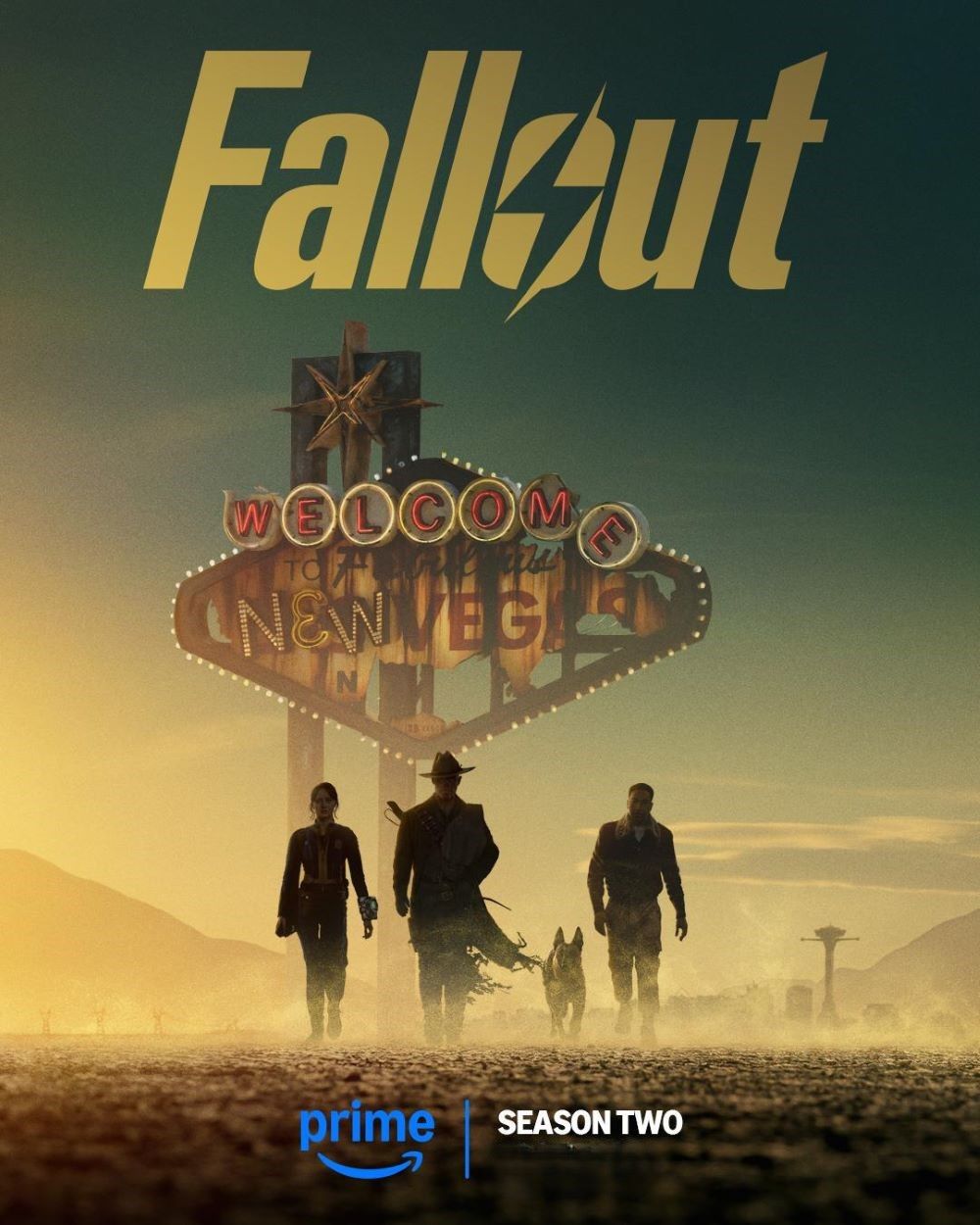
Fallout season 2 already felt like the show leveling up into a bigger, stranger, and more emotionally loaded story; stretching that out to look at specific standout hours just underlines how confidently it plays with tone, lore, and character this year. The season still has its pacing and bloat issues, but episodes like 4, 6, and the finale remind you why this world is worth spending time in: they mix monster‑movie mayhem with sharp character turns and some surprisingly pointed world‑building.
From the outset, season 2 signals that it’s done playing small. Where season 1 often kept things contained to a handful of locations and a relatively tight triangle of conflicts, this run treats the wasteland like a map that’s finally fully unlocked. New Vegas, the Mojave, multiple Vaults, NCR outposts, Enclave facilities, and Legion‑touched territories all start jostling for attention. That expansion comes with an “everything louder” philosophy: more factions, more lore, more experiments gone wrong, and more moral gray areas. The show leans into the idea that the real horror of this world isn’t just the radiation or the monsters; it’s the legacy of people who convinced themselves they were saving humanity while quietly deciding which parts of humanity didn’t deserve to make it.
The overarching cold fusion storyline is the clearest expression of that. Season 1 treated it as a sort of mysterious MacGuffin hovering in the background, but season 2 drags it fully into the spotlight and ties it directly to the choices that triggered the Great War. By steadily revealing how Vault‑Tec, the Enclave, and figures like Hank and House circled the same piece of technology, the show paints a picture of an apocalypse that was less an accident and more an inevitable collision of greed, fear, and hubris. The tragedy is that many of these people genuinely believed they were securing a better future — they just defined “future” in terms that erased anyone outside their bubble. That added nuance gives the season a heavier emotional punch, because the fallout (pun intended) is no longer just a backdrop; it’s the direct consequence of personal betrayals we’ve watched unfold in flashback.
Cooper Howard, now fully embraced as the Ghoul, remains the emotional spine of that history lesson. Season 2 deepens his arc by closing the gap between the smiling pre‑war cowboy and the bitter, sand‑blasted killer stalking the Strip. His encounters with Robert House, especially in the finale, turn into confrontations not just with a technocrat who survived the bombs, but with the version of himself that let things get this far. The realization that he didn’t just lose his family to the apocalypse, but that his own patriotic image and complicity helped build the machine that destroyed them, hits like a slow‑motion punch. Walton Goggins plays those beats with a mix of brittle humor and raw self‑loathing that keeps the character from slipping into pure nihilism; you can see the man he was flicker through the monster he’s become, which makes every choice he makes in the present feel loaded.
Lucy, in contrast, is the series’ ongoing experiment in whether idealism can survive honest contact with the truth. Season 2 pushes her far beyond the naive Vault dweller who stepped into the sun in season 1. Over these episodes, she’s forced to confront not just her father’s lies, but the systemic rot embedded in every power structure she encounters. Vault‑Tec’s “protection,” Brotherhood righteousness, NCR order, Enclave science — every banner comes with its own flavor of atrocity. The brilliance of her arc is that the show doesn’t simply break her and call it growth. Instead, it lets her anger simmer quietly until it finally erupts during the operating‑room showdown with Hank in the finale, where she makes a calm, devastating choice that redefines their relationship forever. That moment isn’t just shock value; it’s the natural endpoint of a season spent watching her tally up cost after cost.
Maximus, meanwhile, evolves from wobbling wannabe knight into one of the show’s most grounded points of view, and episodes 4 and 6 mark very different turning points around him. Episode 4 is where the Brotherhood’s internal fractures stop being subtext and explode into open conflict. It’s the beginning of the Brotherhood civil war, and the first time Maximus is forced to confront the idea that his “family” might be rotten at the core. Watching knights and scribes turn on each other, watching command structures splinter, he starts to see that the Brotherhood’s rhetoric about honor and protection doesn’t hold when power and ideology clash. The moment he realizes the people he idolized are willing to kill their own to maintain control is the moment the halo really slips; he begins to understand that the Brotherhood may not be the good guys after all. It’s not a neat, one‑scene epiphany, but that episode is where denial stops being an option and he starts making choices that reflect his own moral compass rather than the codex.
Episode 6, by contrast, steps away from Maximus’ internal war and digs deeper into the past that shaped the wasteland he’s fighting in. This is much more a Barbara‑and‑Ghoul hour, fleshing out their backstory and giving emotional context to the cold fusion plot and the eventual apocalypse. The episode spends time with Cooper and Barbara before the bombs, letting us see their relationship in more detail: the compromises, the arguments, and the quiet ways Barbara pushes back against Vault‑Tec’s glossy promises. It also charts Cooper’s slide from working actor and family man into patriotic mascot and unknowing cog, showing how easy it was for him to rationalize each step as “doing the right thing.” By anchoring those flashbacks in Barbara’s perspective as much as Cooper’s, the episode makes her more than just a tragic absence — she becomes the person who saw the danger, tried to steer them away from it, and got overruled.
Those mid‑season episodes also shine when it comes to pure lore and creature work. Episode 4’s introduction of the Deathclaws as a real force in the story is one of the season’s best sequences. Rather than just dropping them in for a cameo, the show frames them as the culmination of whispered rumors, suspicious carnage, and mounting dread. When a Deathclaw finally tears into the frame, the direction emphasizes scale and unpredictability: these aren’t just big lizards, they’re apex predators that shrug off conventional tactics. The way they rip through defenses and send even seasoned fighters scrambling instantly re‑calibrates the power dynamics of the wasteland. Later, when they become central to the Strip’s Earth‑shaking siege, you already understand that their presence means no one is safe, no matter how shiny their armor or how fortified their stronghold.
On the lore side, episodes like 4 and 6 weave the Deathclaws and other horrors into a broader tapestry of FEV experimentation and Enclave meddling, making them feel like part of the same long chain of sins that gave us super mutants and other abominations. That connection reinforces the season’s larger point: the worst monsters in Fallout aren’t random mutations, they’re the descendants of carefully planned projects whose creators never fully accepted the consequences. It’s a neat bit of storytelling economy, turning what could have been a simple monster‑of‑the‑week into another thread in the show’s ongoing conversation about responsibility.
Season 2 also benefits from spending more quality time with its side characters instead of just treating them as quest givers or comic relief. Barbara is the most poignant of these. Where she once existed mostly as a memory in Cooper’s flashbacks, she now feels like a fully realized person with her own fears, instincts, and lines she isn’t willing to cross. We see her wrestle with Vault‑Tec’s promises and start to question the cost of all that gleaming corporate optimism. Those glimpses of her pushing back, or trying to pull Cooper back from the brink of total complicity, retroactively deepen every ounce of his guilt. He didn’t just lose a wife and child; he ignored the one person who saw the moral cliff edge coming and still jumped.
Thaddeus, while still often played for uneasy laughs, gets just enough shading to keep him from tipping into cartoon territory. Season 2 makes it clear that his brand of cowardly self‑preservation is less a personality quirk and more a survival strategy in a world that punishes idealism. When he’s swept up in vault‑side chaos and the grotesque side effects of FEV and forced evolution, his panic and bad decisions feel depressingly understandable. He’s the guy with no faction backing, no armor, no immortal body — the perfect lens for showing how regular people get crushed when the big players start moving pieces around. The fate he stumbles into is darkly ironic, but there’s a sting to it because the show has taken the time to make him more than just the butt of the joke.
Stephanie emerges as the wild card of the season, but not for the usual “chaotic Vault teen” reasons. What really drives her is that she’s a product of a very specific trauma: she’s Canadian in a universe where Canada was annexed, occupied, and turned into a horrifying internment state. That history isn’t just backstory flavor — it’s the furnace that forged her worldview. She grew up knowing that her country wasn’t just defeated; it was erased, abused, and folded into an American narrative that pretends it all happened for the greater good. So when she pushes against authority or digs into restricted information, it’s not just adolescent rebellion or a desire to impress anyone in the Vault hierarchy. It’s the instinct of someone who has seen, or inherited, the consequences of letting American power go unquestioned.
That’s why Stephanie’s personal agenda feels so out of step with the usual factional chess game. NCR, Brotherhood, Enclave, House — none of them really matter to her in ideological terms. To her, they’re all just different masks on the same face: American power structures rearranging themselves after the bombs, pretending the past is settled and the ledger is closed. Her curiosity about hidden tech, sealed records, and buried atrocities is less about “how can I leverage this for my people right now?” and more about “how can I expose what America did, and is still doing, to people like me?” Her animosity is directed at the idea of America itself — its myths, its revisionism, its insistence on calling conquest “security” and occupation “peacekeeping.” That’s why she doesn’t fit neatly into anyone’s strategy; she’s playing a longer, more personal game, one where the win condition isn’t territory or tech, but forcing the truth about what happened to Canada and to her people into the light.
What makes Stephanie compelling is that the show lets that animus sit in a morally messy place. She’s not some pure avenger with a perfect plan. Her choices are often reckless, sometimes cruel, and frequently blind to the collateral damage she’s creating in the here and now. But they make sense when you remember her context: she comes from a lineage that was caged, brutalized, and then largely written out of the post‑war power conversation. Of course she doesn’t care about which American faction ends up on top; from her perspective, the game is rigged no matter who’s holding the pieces. That’s why she feels less like a quirky side character and more like a slow, ideological time bomb buried in the story. Everyone else is fighting over the wasteland’s future, but Stephanie is here to settle a very old score with the idea of America itself — and that makes her one of the most unpredictable, and potentially explosive, figures in Fallout’s second season.
All of this character and lore work feeds into the finale, “The Strip,” which plays like the entire season compressed into one frantic, blood‑spattered hour. The Deathclaw assault, NCR push, Legion maneuvering, Enclave gambits, and House’s machinations collide on a single battlefield, turning the Strip into both a literal and symbolic crossroads for the wasteland’s future. Maximus’ rejection of blind Brotherhood obedience, Lucy’s definitive break with Hank, and Cooper’s reckoning with House and his own past all converge in a series of confrontations that feel earned precisely because the season has spent so much time setting the pieces on the board. It’s explosive and overwhelming, and it leaves plenty of threads dangling, but it also makes one thing crystal clear: there’s no going back to the relatively simple story this show started as.
Taken as a whole, Fallout season 2 is still a fair trade‑off, even with its occasional narrative overload. You give up some of the clean, streamlined storytelling of season 1 and accept that a few side plots and characters will drift in and out of focus, but in return you get a richer, more dangerous wasteland where Deathclaws stalk neon streets, the Brotherhood’s halo has visibly slipped, and characters like Barbara, Thaddeus, and especially Stephanie complicate the moral landscape in satisfying ways. It’s a season that believes in escalation — of spectacle, of lore, of emotional stakes — and while that sometimes leads to messiness, it also makes the highs genuinely memorable. If the show can channel that energy into a slightly tighter, more focused third season, this run will stand as the wild, necessary expansion pack that blew the world wide open and dared its characters to survive the consequences.
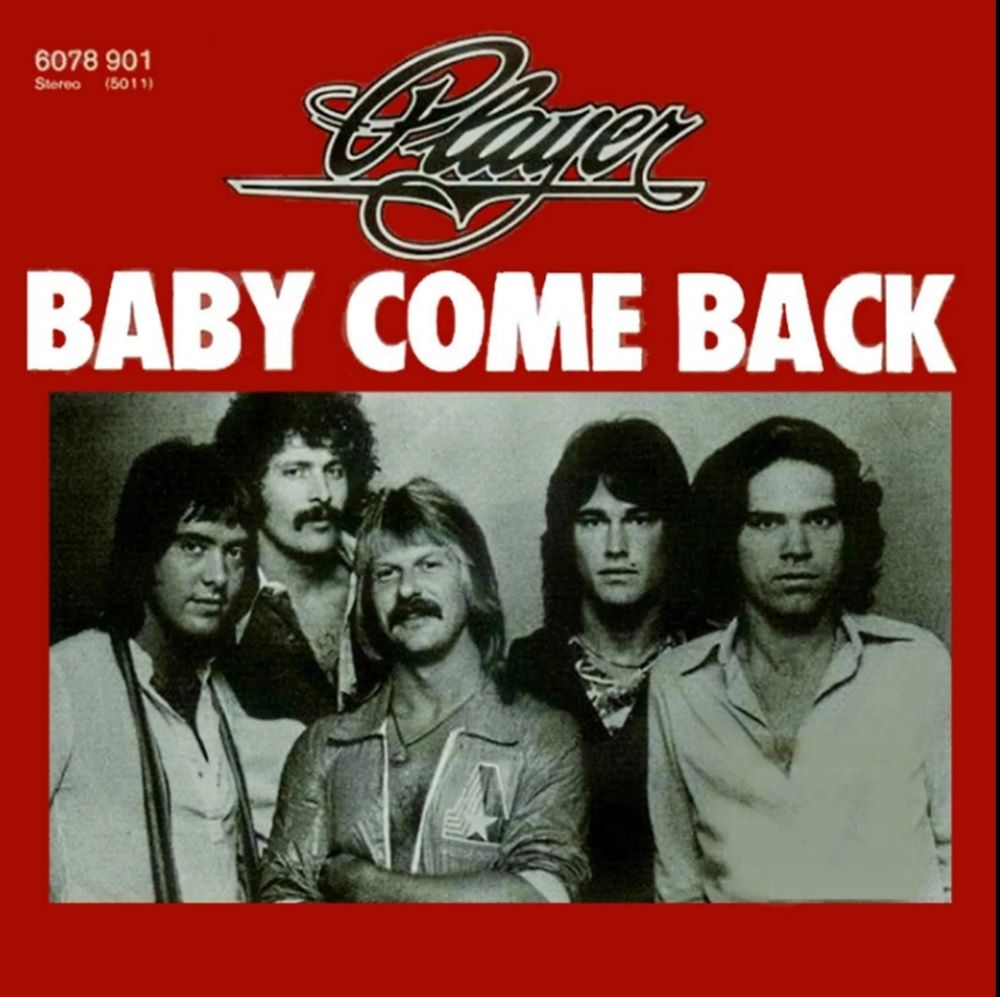
There’s something timeless about Player’s “Baby Come Back.” The moment that smooth, shimmering guitar riff kicks in, you’re instantly transported to an era of feathered hair, smoky bars, and love songs that meant exactly what they said. Released in 1977, it’s the sound of a guy trying to keep it together after heartbreak — and not quite succeeding. Honestly, any song that uses the phrase “mask of false bravado” earns its “timeless” badge automatically. That’s pure emotional poetry hiding inside a silky yacht‑rock groove.
What makes it work is how effortlessly cool it sounds while being totally sincere. The production is sun‑drenched, the harmonies glide, and the rhythm section keeps everything smooth without ever getting sleepy. You can hear the singer trying to play it off, pretending he’s fine — but those gentle falsettos betray him at every turn. It’s heartbreak with charm, regret you can actually dance to. The song doesn’t wallow; it sways.
Nearly five decades later, “Baby Come Back” still hits that sweet spot between sad and suave. It’s for those quiet, reflective nights when you’re too proud to text first — but not too proud to sing along. There’s a warm nostalgia baked into every note, and that lyrical honesty feels a little rarer each passing year. Turns out, love and vulnerability age beautifully when wrapped in a melody this smooth.
Baby Come Back
Spending all my nights, all my money going out on the town Doing anything just to get you off of my mind But when the morning comes, I’m right back where I started again And tryin’ to forget you is just a waste of time
Baby come back, any kind of fool could see There was something in everything about you Baby come back, you can blame it all on me I was wrong and I just can’t live without you
All day long, I’m wearing a mask of false bravado Trying to keep up a smile that hides a tear But as the sun goes down, I get that empty feeling again How I wish to God that you were here
Baby come back, oh baby, any kind of fool could see There was something in everything about you Baby come back, you can blame it all on me I was wrong and I just can’t live without you, oh
Now that I put it all together, oh, oh Give me the chance to make you see Have you used up all the love in your heart? Nothing left for me? Ain’t there nothing left for me?
Baby come back, oh darling, any kind of fool could see There was something in everything about you Baby come back, listen baby, you can blame it all on me I was wrong and I just can’t live without you I was wrong and I just can’t live
“There’s something wrong with Ben.” — Lucy Pinborough
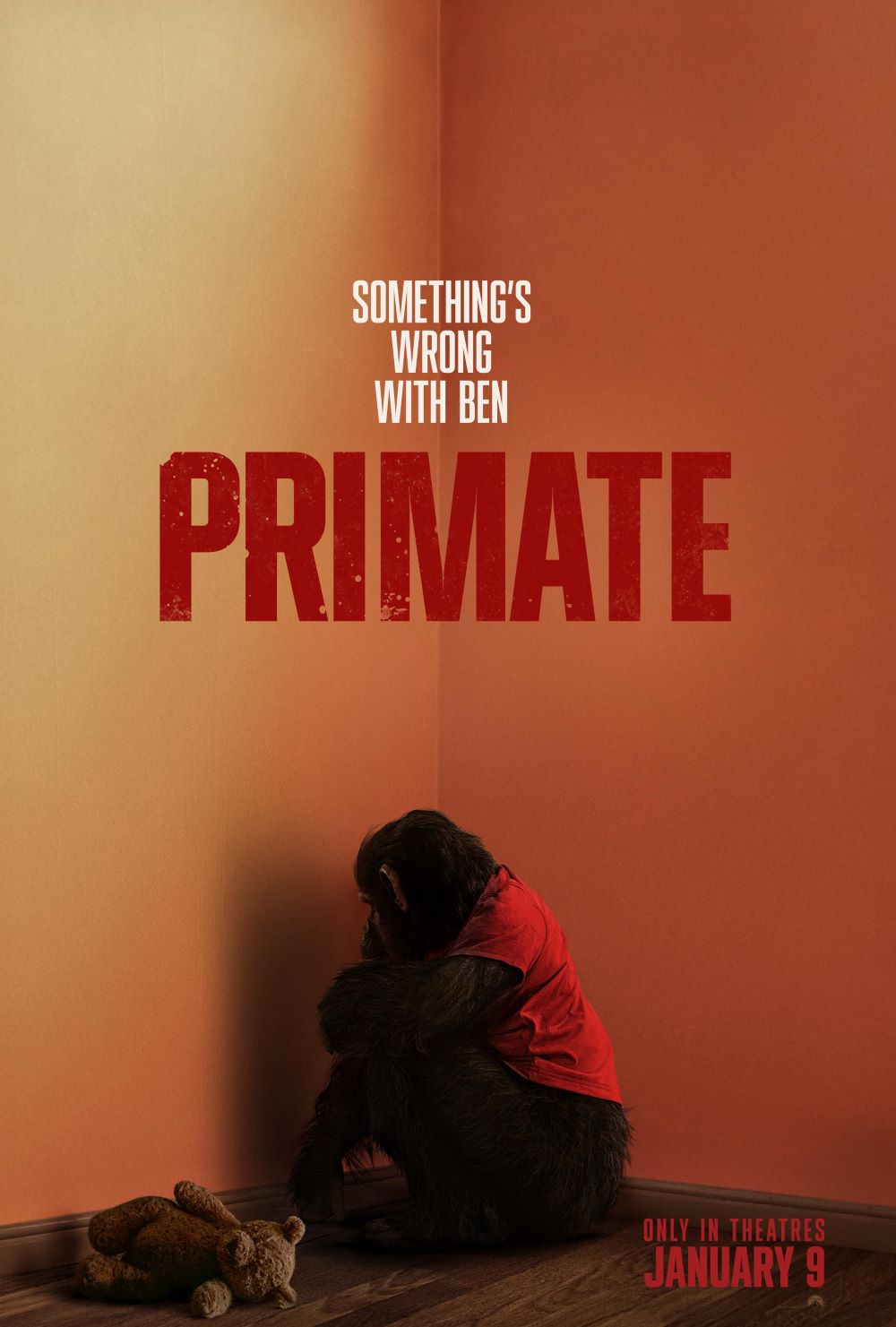
Primate is the kind of nasty little horror movie that knows exactly what it is: a killer-chimp siege flick with a mean streak, a surprising amount of craft, and just enough emotional texture to keep it from feeling like pure junk food. It is also, very unapologetically, a January-release bloodbath built around one simple promise: you came to watch a chimp rip people apart, and the film is absolutely going to deliver on that.
Set on a remote, luxury house carved into a Hawaiian cliffside, Primate follows Lucy, a college student returning home to her deaf father Adam, younger sister Erin, and Ben—their adopted chimpanzee, who has been taught to communicate using a custom soundboard. The setup leans a bit into family melodrama and awkward-friends-on-vacation vibes: Lucy brings her buddies Kate and Nick, Kate drags along wildcard Hannah, and a pair of party bros, Drew and Brad, orbit the group on the way to a weekend of drinking by the infinity pool. Things tilt into horror when Ben is bitten by a rabid mongoose, starts behaving erratically, and eventually tears the face off the local vet before busting out of his enclosure and turning the house into a kill zone. From there, the movie pretty much drops the pretense of being about anything except survival, creative carnage, and the miserable logistics of trying to outrun a furious primate on a cliff.
Director Johannes Roberts, who previously did 47 Meters Down and The Strangers: Prey at Night, brings that same B-movie efficiency here—minimal fat, fast escalation, and a willingness to lean into the ridiculous without winking too hard. Once Ben escapes, the film basically becomes a series of tightly staged, high-tension set pieces: kids trapped in a pool while a chimp stalks the edge, frantic dashes through glass corridors, and messy, up-close attacks where you really feel the weight and speed of the animal. The pool sequence in particular is a great example of Roberts finding one strong visual idea—humans stranded in water because the predator can’t swim—and milking it for all the dread he can. It’s simple, almost old-fashioned monster-movie blocking, but it works because the geography is clear and the danger feels immediate rather than abstract.
Visually, the film is punching above what you might expect from “rabid chimp horror.” The cliffside house setting gives Roberts and his team a lot to play with: long glass walls, sharp drops, tight stairwells, and that infinity pool hanging over nothing. The camera favors clean, legible compositions instead of frantic shaky-cam, which means when the violence happens, you actually see it—and the movie is proud of that. There’s a grimy 80s-video-store energy to the way kills are framed and lingered on just long enough to be uncomfortable, but not so long that they turn into camp. Adrian Johnston’s synth-heavy score leans into that retro horror vibe too; it buzzes and screeches like someone let a demon loose on a cheap keyboard, and it matches the film’s mix of nasty and playful pretty well.
The real secret weapon here is Ben himself. Rather than going full CGI or trying to work with a real chimp, the production uses a combination of suit performance, animatronics, and careful staging, with Miguel Torres Umba giving the creature its physical personality. The result is surprisingly convincing; there are stretches where it feels like you’re watching a real animal charge people on stairs or slam into doors, which makes the violence land harder. You can tell the effects team put in serious work on the costume and facial mechanics—Ben’s expressions shift from confused, childlike attachment to full-on feral rage, and that emotional readability helps sell him as a character instead of just a prop. Importantly, the film avoids the “PS3 cutscene” problem of bad CG animals, which would have killed the tension immediately.
Performance-wise, this is very much “do your job and don’t get in the way” acting, and that’s mostly a compliment. Johnny Sequoyah makes Lucy feel grounded enough that you buy her as both final girl and guilty older sister who’s been away too long. Troy Kotsur, as Adam, is probably the standout human presence; his scenes use sign language not as a gimmick, but as part of how the family actually lives, and his mixture of vulnerability and stubbornness gives the movie a little heart. The rest of the cast—Jessica Alexander, Victoria Wyant, Gia Hunter, Benjamin Cheng, and the cannon-fodder guys—do what’s asked: they feel like actual young adults rather than complete idiots, which helps when the film needs you to invest in whether they make it out. Nobody is delivering awards-caliber work, but nobody is embarrassing themselves either, and in a film where a chimp tears someone’s jaw off, that’s honestly the sweet spot.
Tonally, Primate walks a line between brutal and darkly funny, and your mileage will depend on how much you enjoy mean-spirited genre films. This is not a movie that’s precious about its characters; the script makes it clear that almost anyone can get obliterated at any moment, and the kill scenes are loud, wet, and often abrupt. There’s a streak of black comedy in how casually some of the deaths happen—a rock to the head here, a shovel to the face there—but Roberts never tips fully into self-parody. At the same time, the film does gesture at something sadder in the idea of a beloved family member suddenly turning dangerous because of a disease, and in the way Lucy has to reconcile her childhood bond with Ben with the reality of what he’s become. The movie doesn’t dig into that theme deeply, but it’s present enough to keep things from feeling completely hollow.
Where Primate stumbles is mostly in its limitations, and whether those feel like flaws or just genre boundaries will depend on what you’re looking for. The script is extremely straightforward: characters have clear, basic motivations, relationships are sketched in a few lines, and then everyone gets funneled into the survival engine. If you want layered character work, subtext about animal ethics, or a big commentary on captivity and communication, this is not that movie, even though the setup with a sign-literate chimp and a linguist mother hints at richer territory. The film also indulges in the usual horror conveniences—texts ignored, warnings missed, people splitting up when they probably shouldn’t—though to its credit, the characters generally behave less stupidly once they understand the situation. And as gnarly as the gore is, the movie’s reliance on shock and escalation can make the back half feel a bit repetitive: Ben appears, someone gets mauled, survivors scramble, repeat.
From an honesty standpoint, Primate is absolutely worth watching if you have a soft spot for creature-features, killer-animal movies, or throwback 80s-style horror that doesn’t pretend to be more than a vicious good time. It’s tightly paced, well shot, and anchored by a genuinely impressive creature performance that justifies the whole exercise. If you’re squeamish about animal violence, or you want your horror to come with metaphor, political commentary, or emotional catharsis, you’ll probably bounce off this pretty quickly. But if you can meet it on its own trashy, committed wavelength, there’s something satisfying about watching a studio-backed film go this hard, this graphically, on such a simple premise. It feels like the kind of bloody, fast-moving B-movie you’d have rented on VHS for a sleepover, only now it’s playing in theaters with a slicker finish and a killer chimp named Ben waiting to wreck your night.
There’s something about nostalgia that hits differently. It gets a bad rap sometimes—mostly because it can make us label anything from our past as a “classic” just because it’s tied to some fond memory. But when it’s genuine, nostalgia can feel like stepping back into a moment you never wanted to end.
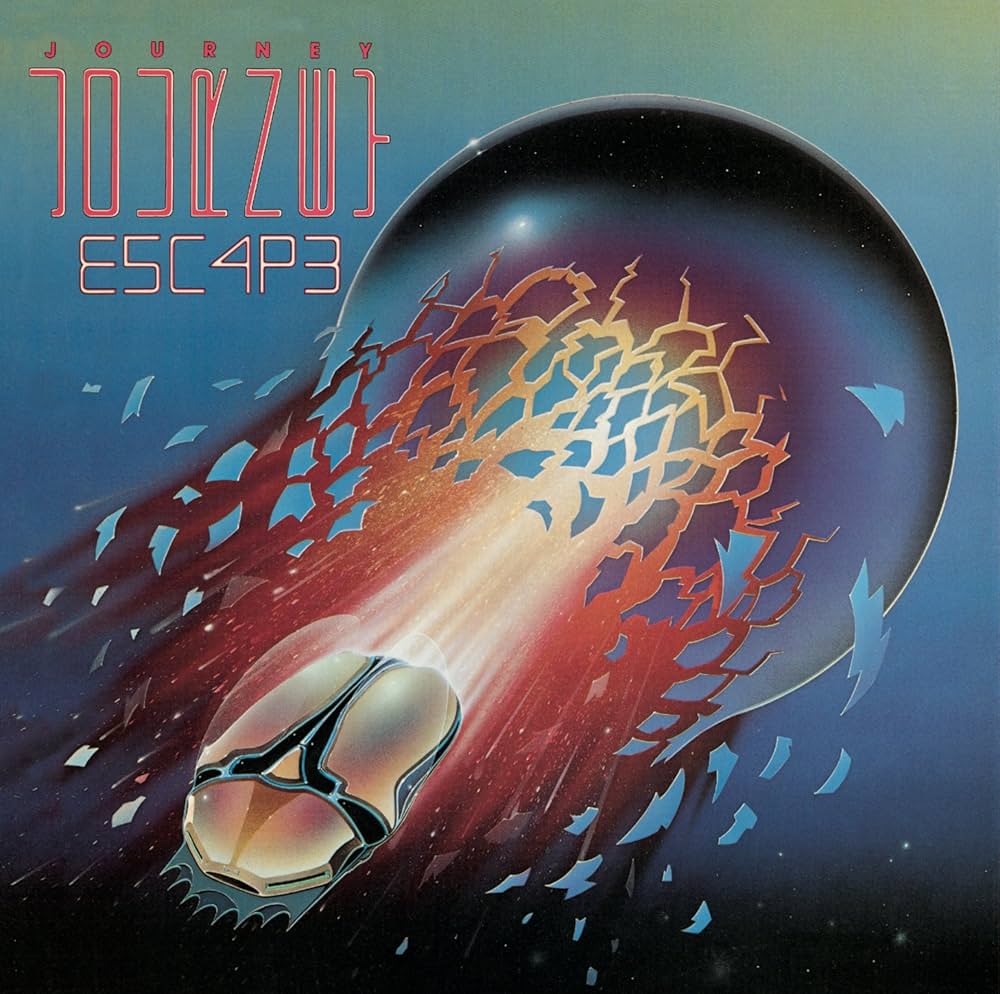
That’s exactly what today’s “Song of the Day” does—it stirs up those feelings of the past and reminds me why some songs never lose their magic. I’m talking about one of the all-time great power ballads: Journey’s “Open Arms.”
Released in 1982 on Journey’s seventh album, Escape, the song was an instant hit, both on the radio and in their arena shows. “Open Arms” quickly became the rock power ballad—the one all others get compared to. Like any good ballad, it’s about losing love and finding it again. Honestly, I don’t know anyone—no matter their music taste—who hasn’t slow danced to this song at least once.
It wasn’t exactly the go-to tune at my high school dances, but I definitely heard it plenty once I was older—at weddings, anniversaries, and other celebrations. The song’s staying power comes from more than just its lyrics—it’s Steve Perry’s voice. His delivery is powerful without feeling overdone or corny. There’s this sincerity in his singing, like he’s sharing something deeply personal, and that’s what gives the song its timeless emotional pull.
Open Arms
Lying beside you here in the dark Feeling your heart beat with mine
Softly you whisper you’re so sincere How could our love be so blind We sailed on together We drifted apart And here you are by my side
So now I come to you with open arms Nothing to hide believe what I say So here I am with open arms Hoping you’ll see what your love means to me Open arms
Living without you living alone This empty house seems so cold
Wanting to hold you wanting you near
How much I want you home But now that you’ve come back Turned night into day I need you to stay
So now I come to you with open arms Nothing to hide believe what I say So here I am with open arms Hoping you’ll see what your love means to me Open arms
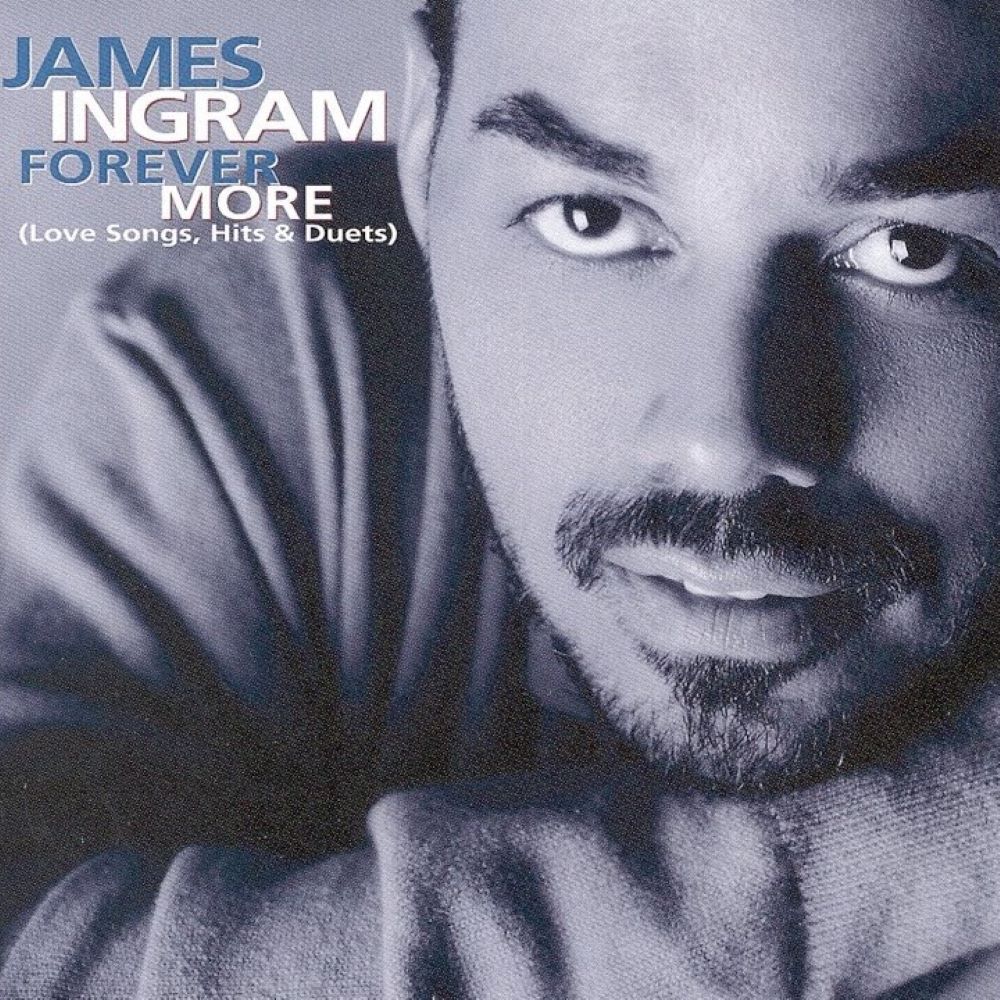
“Just Once” by James Ingram is one of those early ‘80s ballads that somehow hits twice as hard decades later. Produced by Quincy Jones for his 1981 album The Dude, the song carries that signature Jones polish—smooth arrangement, soft piano lines, and a tasteful rhythm section that gives Ingram’s soulful vocals all the space they need. It’s the kind of track that sneaks up emotionally on you; what sounds like a classic love ballad at first slowly reveals itself to be something heavier, an inner plea for emotional connection that never quite worked out right.
A huge part of the song’s lasting impact came from its unexpected use at the end of The Last American Virgin (1982). That film, a teenage sex comedy on the surface, ends on a gut punch of heartbreak and disillusionment—and “Just Once” rolls in right as the realization sinks in. Instead of tying things up neatly, the song underscores the protagonist’s pain and futility, matching the moment perfectly. It’s almost cruel how the film pairs that kind of emotional devastation with a song this beautiful.
And that’s what makes “Just Once” stand apart from other ballads of its era: it’s not syrupy or idealistic. It’s a bittersweet confession wrapped in a soulful groove, about trying your best and still losing. The honesty in Ingram’s delivery gives the song an authenticity few pop hits manage to capture. Whether you first heard it through Quincy Jones’ production or that unforgettable movie ending, it’s hard to shake off once it finds you—it’s heartbreak with melody, regret with elegance.
Just Once
I did my best But I guess my best wasn’t good enough Cause here we are Back where we were before Seems nothin’ ever changes We’re back to being strangers Wondering if we ought to stay Or head on out the door
Just once
Can we figure out what we keep doin’ wrong Why we never last for very long What are we doin’ wrong?
Just once
Can we find a way to finally make it right Make the magic last for more than just one night We could just get to it I know we could break through it Hmm hmm
I gave my all But I think my all may have been too much Cause Lord knows we’re not gettin’ anywhere Seems we’re always blowin’ Whatever we’ve got goin’ And it seems at times with all we’ve got We haven’t got a prayer…
Just once
Can we figure out what we keep doin’ wrong Why the good times never last for long Where are we goin’ wrong?
Just once
Can we find a way to finally make it right Make the magic last for more than just one night I know we could break through it If we could just get to it
Just once I want to understand… Why it always comes back to goodbye Why can’t we get ourselves in hand And admit to one another We’re no good without each other Take the best and make it better Find a way to stay together
Just once…
Can we find a way to finally make it right Whoa Make the magic last for more than just one night I know we could break through it If we could just get to it
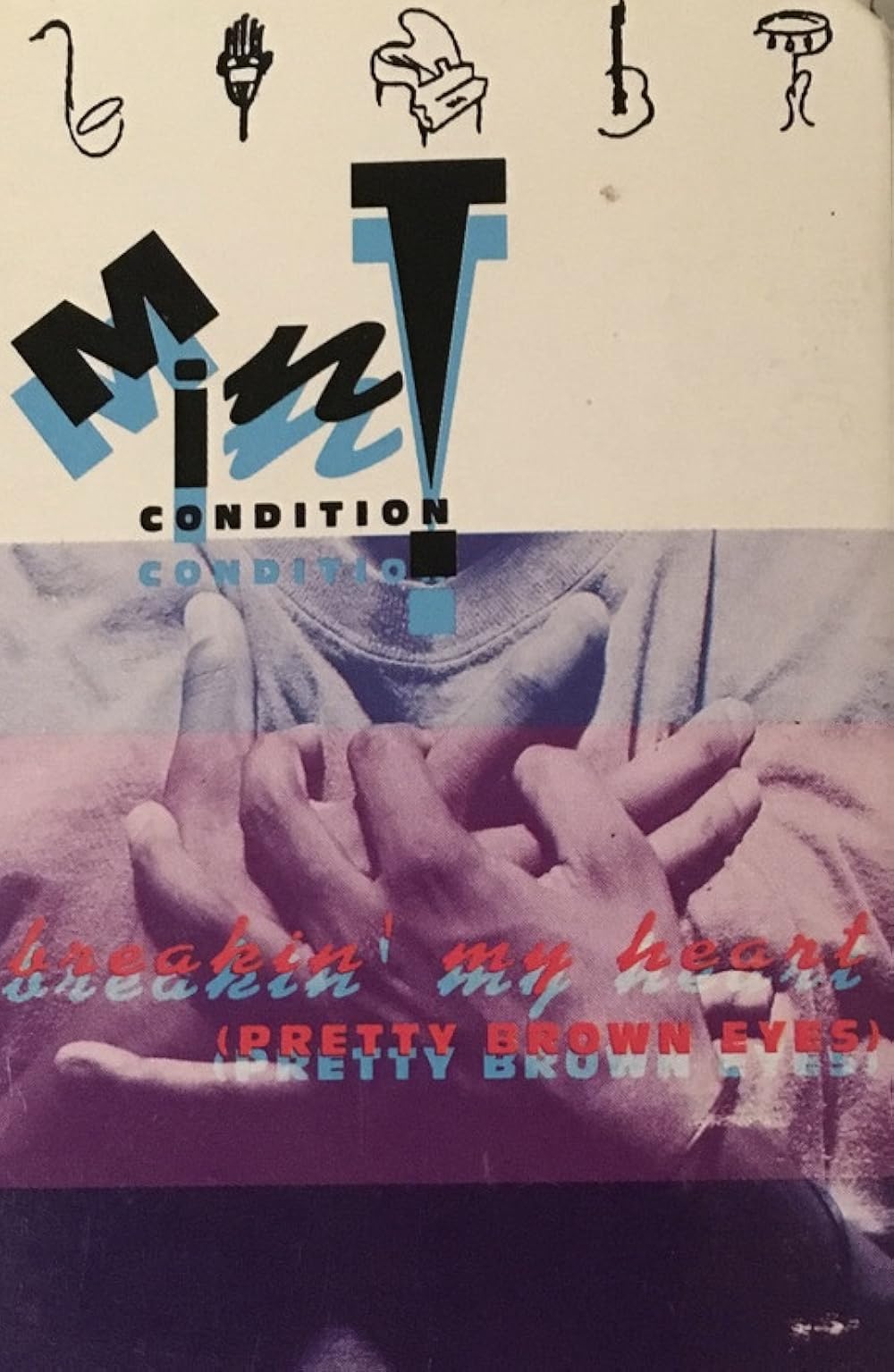
Whenever “Breakin’ My Heart” by Mint Condition comes on, it’s like flipping back to the spring of ’91 — those final high school days buzzing with possibility and that sweet uncertainty of what came next. I remember those silky keys and that laid-back groove spilling out of boomboxes in the parking lot after school, turning ordinary afternoons into something electric. It was the ultimate slow jam for passing notes in class and those marathon phone calls about crushes that felt like the whole world.
What made the track stick so deep was its smooth, patient vibe, like it was custom-made to linger in those tender high school romance moments — Stokley’s voice carrying that perfect mix of ache and hope. At senior prom, when “Pretty Brown Eyes” finally hit, the gym lights dimmed, and suddenly every sway felt like a promise. It bridged those innocent, heart-on-your-sleeve high school flings right into the haze of early college, where relationships got messier, longer-distance, and way more real, with calls late at night from someone met through college halls and weekend jaunts to clubs.
That song soundtracked our whole transition that summer before freshman year — cruising with windows down, radio cranked, as we traded high school goodbyes for the thrill and nerves of campus life. Mint Condition’s harmonies wrapped up all the nostalgia of backyard parties and first kisses, while hinting at the tougher navigations ahead, like figuring out if those feelings could stretch across states. Even now, it pulls me right back to that bridge between worlds — young love evolving, full of promise and those first real heartbreaks.
Breakin’ My Heart (Pretty Brown Eyes)
Pretty Brown Eyes
Pretty brown eyes, you know I see you It’s a disguise, the way you treat me (The way you treat me, pretty brown eyes) You keep holding on to your thoughts of rejection If you’re with me, you’re secured
You keep telling me that your time is always taken But I keep seeing you out alone (Out alone, pretty brown eyes) yeah Listen to love, your heart is pounding with desire Waiting to be unleashed
Quit breakin’ my heart Breakin’ my heart (pretty brown eyes) Yeah, breakin’ my heart, oh, yeah Breakin’ my heart (pretty brown eyes) Sugar, yeah, yeah
Don’t tell your friends That I don’t mean nothing to you Please, don’t deny the truth (Pretty brown eyes) Tell me right now, I know your heart is in the right place You know I won’t let you down, oh, yeah, yeah
You can’t disguise all the pounding of your heart, yeah (I see your eyes) I see your eyes (Pretty brown eyes) and you can’t hide Start to make sense and quit playing These love games (silly little games) Tell me what you’re gonna do, yeah
Quit breakin’ my heart Breakin’ my heart (pretty brown eyes) Yeah, breakin’ my heart, ooh Breakin’ my heart (pretty brown eyes), yeah
I just want to know one thing Will you be with me? (Pretty brown eyes) Ooh, ooh, ooh, oh, oh Here comes my darlin’ (here comes my darlin’) Here comes romance (here comes romance) Here comes my lovin’ (here comes my lovin’) (Please, honey will you dance?)
Quit breakin’ my heart Breakin’ my heart (pretty brown eyes) Breakin’ my heart, yeah Breakin’ my heart, whoa
Got me cryin’ all inside (pretty brown eyes) Ohh, ho, ho, ooh, I’m talking ’bout (breakin’ my heart) I’m talkin’ ’bout you, I’m talkin’ ’bout me I’m talkin’ ’bout we, I’m talkin’ ’bout we, we (pretty brown eyes)
Here comes my darlin’ (here comes my darlin’) Here comes romance (here comes romance) Here comes my lovin’, will you dance (here comes my lovin’, please, honey will you dance?) Oh yeah, sugar pie, baby Breakin’ my heart
Here comes my darlin’ (here comes my darlin’) Here comes romance (here comes romance) Will you dance (here comes my lovin’, please, honey will you dance?) Oh, hoo, ohh, yeah (pretty brown eyes) Heart, breakin’ my heart (pretty brown eyes) Breakin’ my heart (pretty brown eyes) Breakin’ my heart, breakin’ my heart
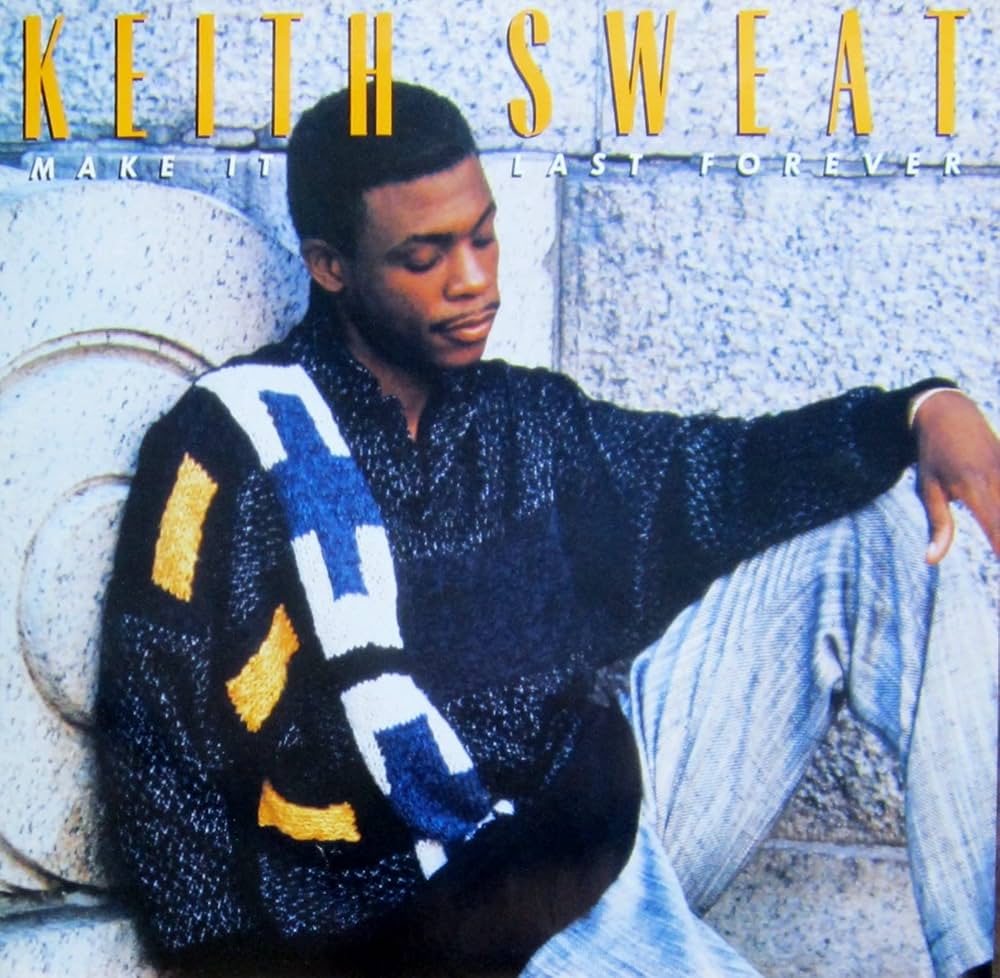
It’s funny how just the first few notes of “Make It Last Forever” can take you straight back to those smoky gymnasiums where the lights were dim, the disco ball spun slow, and everyone pretended not to care who asked who to dance. Keith Sweat’s voice had that raw, pleading edge — smooth but vulnerable — the kind that cut right through all the teenage coolness. This track wasn’t just background music; it was the moment when couples swayed a little closer, trying to hang on to a feeling that was bigger than any senior year could hold.
The thing about that late ’80s R&B scene is that it knew how to make time stop. Between Sweat’s silky tone and Jacci McGhee’s soft harmonies, the song felt like a brand-new kind of intimacy. It wasn’t flashy, just honest — the kind of slow jam that made you believe love could actually last forever, at least for the length of that dance. You didn’t need fancy choreography or a booming beat; the groove did all the talking. It was warm, romantic, and a little bittersweet — the perfect soundtrack for that fleeting stretch between youth and adulthood.
Even now, when it plays on an old-school radio mix or at a 40th high school reunion, something in it still hits home. You remember the scent of cheap cologne, the click of high heels on the gym floor, and that mix of nerves and hope that only a slow dance can bring. “Make It Last Forever” wasn’t just a song — it was a promise whispered in the dark, a memory that never quite fades, no matter how many years go by.
Make It Last Forever
Make it last Make it last forever (ever) Don’t let our love end (ooh-ooh, ooh-ooh-ooh-oh) Let’s make it last (ooh-ooh-ooh-oh) Let’s make it last forever and ever Mm, don’t let our love end (oh, don’t let love end) mm
Let me hear you tell me you love me Let me hear you say you’ll never leave me Ooh, girl, that would make me feel so right Let me hear you tell me you want me Let me hear you say you’ll never leave me, baby Until the morning light (ah)
Let me tell you how much I love you Let me tell you that I really need you Baby, baby, baby, I will make it all right No one but you, baby, can make me feel The way you make me, make me, make me feel
Whoa, oh-oh-oh Mm, mm, mm Don’t let our love end (oh, ooh-oh) Just make it last forever (oh, make it last) and ever (forever)
Your touch is wonderful Your love is so marvelous Joy, that’s what I feel when I’m with you Nothing, no one (no one, boy) Could compare to what we have (oh, my baby) Love, it feels so good I’m so glad you’re mine (oh, oh)
Whoa, oh-oh-oh (ooh, baby) Make it last forever (ooh, ooh, ooh) Don’t let our love end (no-no, no-no-no) Make it last forever and ever (yeah, yeah)
Ooh, give me kisses (kisses) Love me (love me), hold me (hold me) Squeeze me (squeeze me) Chillin’ (chillin’), come on (come on) I love it (you know I do), baby
Whoa, oh-oh-oh Mm, mm, mm Make it last forever (no-no) and ever (no-no-no) Don’t let our love end (and ever)
Ooh, whoa, oh-oh, oh-oh-oh (no, don’t you let it end) You got to make it last Never, never, never let it end Just make it last forever and ever (ooh-ooh, oh)
I want our love to last a lifetime (I’d give it up, give it up for you) Ooh, tell me, tell me you’ll always be mine (I love you, love you, love you, love you, love you) To make love forever and ever (ooh-ooh) We’ve got to make it last Got to make it, got to make it, got to make it, got to make it Oh, baby, oh, honey (oh, honey) I love you (ooh, oh, oh, I love you)
Ooh, you’re my best thing in the world (oh) The only thing in the world, I love you so
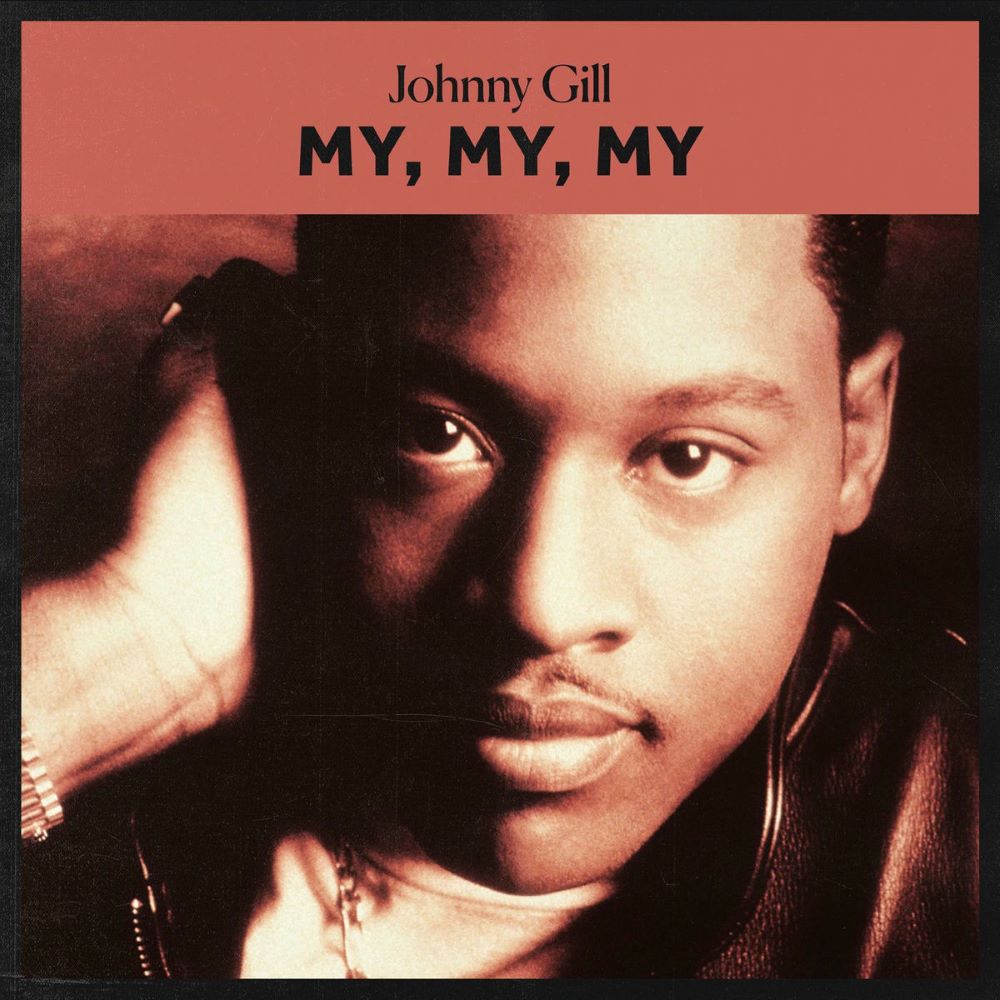
When “My, My, My” first floated across the airwaves in 1990, it felt like smooth perfection — the kind of song that made time slow down just a little. Johnny Gill’s voice carried that deep, unmistakable mix of confidence and tenderness that defined R&B at its best. It was the slow jam every prom DJ had queued up, waiting for the lights to dim and for couples to drift onto the floor. For anyone in high school back then, this was the dance moment — the one you replayed in your head for days afterward.
But what made it special was how it lived beyond those prom nights. This was one of those early-’90s R&B staples that found its way onto countless mixtapes — the kind carefully labeled and slipped into someone’s hand with a hopeful grin. It was the soundtrack of summer romances, of those shy exchanges that felt like the beginning of forever. With Gill’s velvet delivery and that lush Babyface-L.A. Reid production, even teenage crushes suddenly felt legendary.
And honestly, let’s be real — you don’t even need to take my word for it. Just one listen to Johnny’s sweet, dulcet tones and you know this was the kind of track that did more than inspire slow dancing. It’s baby-making music, through and through — smooth, soulful, and absolutely irresistible.
My, My, My
Yeah Mmmh, mmh, mmmh, so good
My, My, My (you look so sweet) Listen Put on your red dress And slip on your high heels And some of that sweet perfume It sure smells good on you
Slide on your lipstick and Let all your hair down Cause Baby when you get through I’m going to show you
Tonight will be a special night No matter where we go And I’m so proud to be with you I just wanna let you know
You got my saying My, My, My My, My, My You sure look good tonight And you’re so damn fine I wanna say My, My, My My, My, My
You sure look good tonight
After all this time Slip on your nightgown Step in our bedroom First I wanna take sometime
I just wanna look at you Girl you are so fine I can’t believe you’re mine And all that I wanna do
I wanna make love to you Tonight will be a special night Of many more to come
And I’m so proud to be with you So proud to share you’re love
My, My, My My, My, My (You sure look good tonight) I wanna say, My, My, My My, My, My My, My, My
Make love all night long Make love ’til the break of dawn
Come on Come on Sweet little thing yes you do
Yes you do, yes you do, you do, do, do
And I’m so proud to be with you So proud to share you’re love My, My, My My, My, My You sure look good tonight
I wanna love you, in every way, every way Let me Let me Show you how sweet it’s gonna be I wanna show you things that you
Never, ever, ever seen before Put your nightgown on Let your hair hang low Step into our room I’m in the mood to love you all night long
You got me saying My, My, My My, My, My My, My, My My, My, My My, My, My My, My, My My, My, My
Say My, My, My See all you gotta do All you gotta do Is say that you’ll be mine all mine, My, My, My My, My, My (You’ll be all mine tonight baby) You sure look good tonight Let me, let me, show you how sweet it’s gonna be
Oh, My, My, My My, My, My (You sure look good tonight) My, My, My My, My, My My, My, My (You sure look good tonight) My, My, My My, My, My (You sure look good tonight) My, My, My
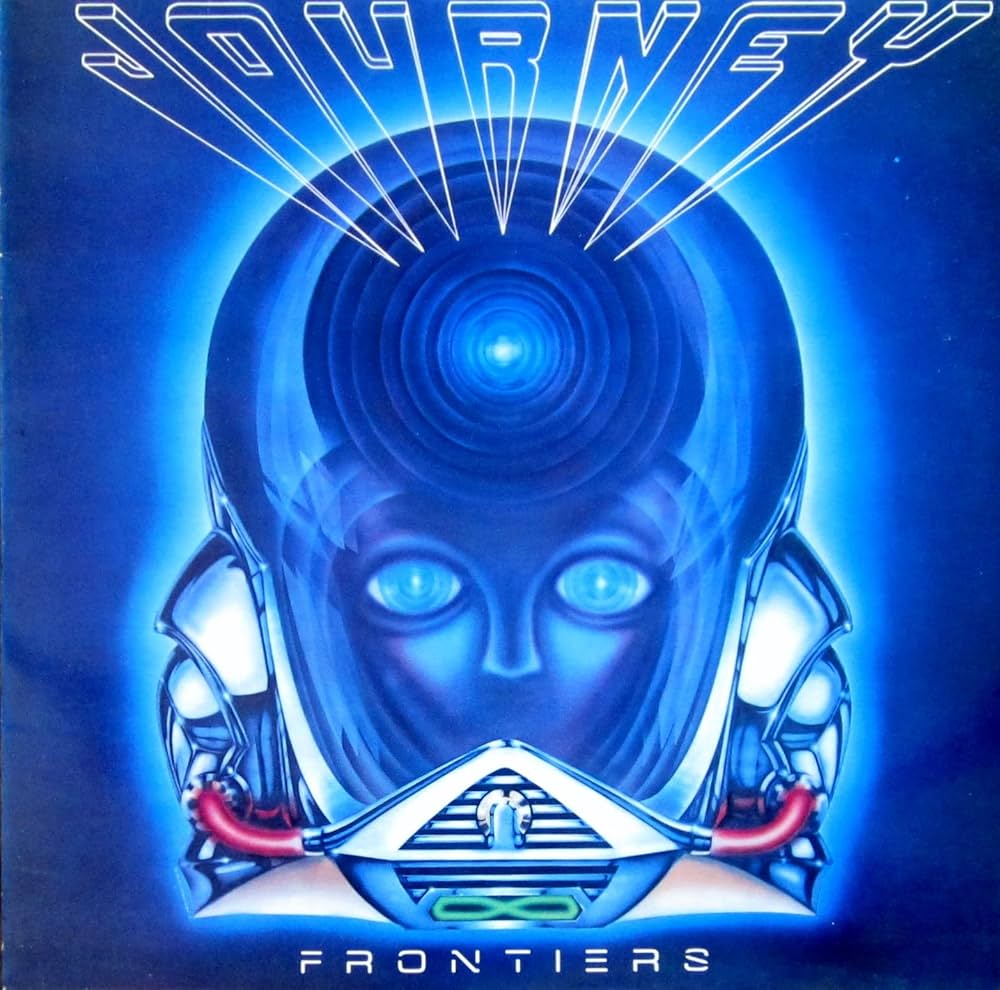
Back in junior high in the early ’80s, Faithfully dropped in 1983 on Journey’s Frontiers album, and those haunting piano chords instantly hooked us during slow skates or late-night mix tapes. Steve Perry’s raw, soaring voice captured the ache of young love stretching across town, turning everyday pangs into something profound. Even by 1988, deep into high school, it had evolved into a staple power ballad at dances and teen parties, standing tall among the era’s anthems.
What elevated it to one of Journey’s all-time greatest was its blend of emotional depth and universal appeal—highways symbolizing distance, hearts straining but vowing “to be there faithfully,” all without the bombast of hair metal excess. It felt authentic, perfect for those fog-shrouded bus rides home, fueling dreams amid neon-lit awkwardness. Rock historians often hail it as the pinnacle of ’80s power ballads, outshining peers with its sincerity and that unforgettable guitar climb.
Hearing it today still transports me to cassette decks and feathered hair, a true time capsule of innocence. Journey mastered crafting songs that promised soul-deep connection against all odds, cementing Faithfully as their crown jewel and the era’s ballad benchmark.
Faithfully
Highway run into the midnight sun Wheels go ’round and ’round, you’re on my mind Restless hearts sleep alone tonight Sendin’ all my love along the wire
They say that the road ain’t no place to start a family Right down the line it’s been you and me And lovin’ a music man ain’t always what it’s supposed to be Oh, girl you stand by me, I’m forever yours, faithfully
Circus life under the big top world We all need the clowns to make us smile Through space and time, always another show Wondering where I am lost without you
And bein’ apart ain’t easy on this love affair Two strangers learn to fall in love again I get the joy of rediscovering you Oh girl, you stand by me, I’m forever yours, faithfully
Faithfully, I’m still yours I’m forever yours, ever yours Faithfully
 Through the Shattered Lens